

On September 4, Nepal’s government decided it could no longer look the other way. Young people, mainly members of Generation Z — those born between 1997 and 2012 — kept up a campaign of mockery aimed at the children of politicians and elites.
They themselves were buckling under stagnant wages, for those who could find work at all, and runaway inflation, while the others filmed themselves at lavish parties and restaurants, on dream vacations or posing beside Christmas trees surrounded by stacks of Louis Vuitton bags. They were dubbed “nepo babies,” children whose only talent was being born into the right family and benefiting from unchecked nepotism.
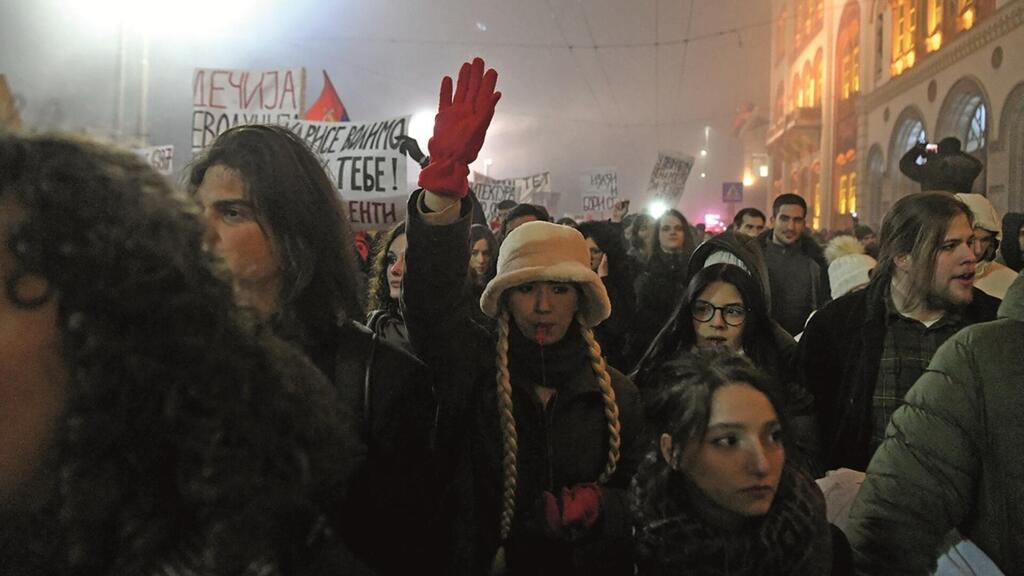
The government issued an order under which 26 social media networks and news platforms were shut down. Two days later, a government minister's car ran over an 11-year-old girl in the street and sped away instead of stopping to help her. “It’s just another accident,” Prime Minister K. P. Sharma Oli said dismissively.
The anger, pent up for so many years over inequality, corruption, promises the government failed to keep and a future shrouded in uncertainty, began to boil and reached a breaking point. The number of users on Discord, a messaging platform primarily used by gamers, jumped from 3,000 to hundreds of thousands within a matter of hours. Information spread, and a decision was made: they are taking to the streets to protest.
On Monday, September 8, began three days that reshaped Nepal’s political, social and national landscape, and more. Karma, dharma and samsara were locked away in storage. Spirituality and Buddhist values gave way to chaos, rage and violence. Protesters flooded Parliament and set it ablaze, followed by luxury hotels, presidential palaces, the prime minister’s residence and the homes of senior politicians. The wife of one of them was set on fire and barely survived. Thousands of prisoners escaped their cells, looted whatever they could, then hunted down people identified with the government or the establishment and meted out brutal punishment.
One image seared into public memory showed a police officer stripping off his uniform and fleeing the crowd in his underwear. Kathmandu was on fire. There is nothing more dangerous than the anger of the calm.
Protesters hurled stones, fireworks and Molotov cocktails, and police responded with escalating force: tear gas, smoke grenades, water cannons and rubber bullets. Eventually, magazines of live ammunition were loaded into rifles. There were fatalities and hundreds of wounded, along with hundreds more brutally arrested by authorities. But the protesters did not stop for a moment. They were beyond restraint.
“At that point,” Trazin Chadkarai, a 19-year-old computer science student from Nepal, recalled in an interview with ynet's sister publication 7 Days, “we knew we had nothing left to lose except our country and our future. But none of us planned for it to go where it went. We planned a peaceful protest, just to get some of the anger out.”
In the wake of the protests, the prime minister was removed from office and fled the country, and the army spirited politicians and senior officers to an isolated camp where they could not communicate with the outside world. An interim prime minister was chosen in a digital vote on Discord: Sushila Karki, 73, a former Supreme Court chief justice and a well-known anti-corruption campaigner. Parliament was also dissolved, and new elections were set for March 2026.
The three days of protest in Nepal marked the peak of Generation Z unrest, the demonstrations that have come to define it as a “generation of protest.” In their aftermath, protests spread virally to every corner of Asia, Africa and the Americas, and to European countries as well. Each place had a different trigger, but the roots of the anger were similar. Nepal’s protests are widely viewed as a success. But in hindsight, many participants regret the violence and struggle to understand how it erupted on such a scale. There, and in other countries where Generation Z has taken to the streets, a lingering question remains: Can anything truly change, or be changed at all?
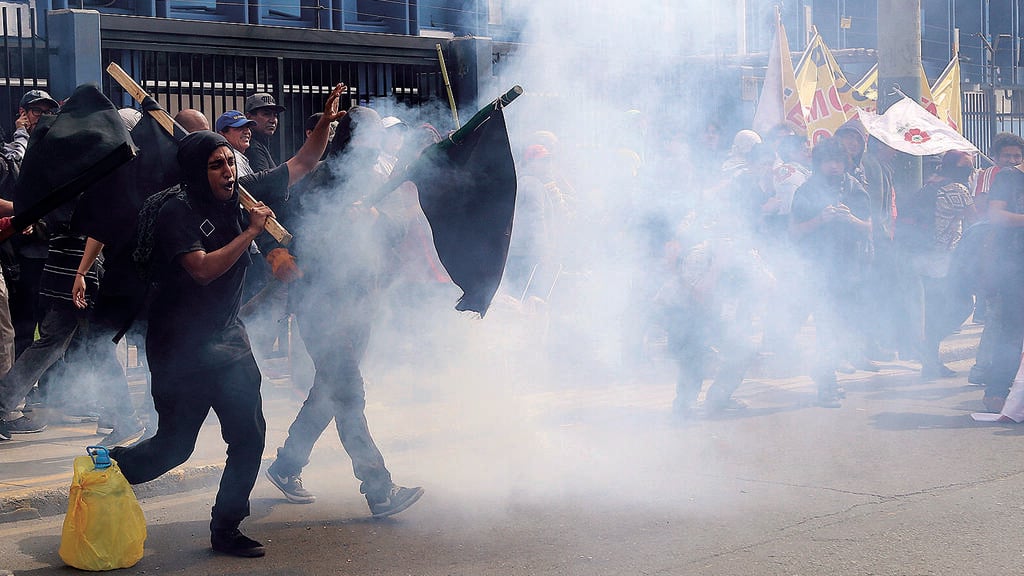
A protest in Lima, capital of Peru
(Photo: Geraldo Caso Bizama/AP)
In 2018, international organizing efforts and networks began to take shape, with most members drawn from Gen Z. The most prominent group was Fridays for Future, which led student strikes demanding government action on climate change. The movement was spearheaded by Greta Thunberg of Sweden, but it quickly spread far beyond its country of origin to dozens of nations worldwide.
During the COVID-19 pandemic, Gen Z went into a kind of social hibernation. In that period, its members deepened their knowledge of technology, how to use it and, above all, the immense power it holds to mobilize ideas and people. The emergence from the pandemic was accompanied by a war in Eastern Europe, political uncertainty and an economic crisis that drove up the cost of living and made it harder to find work. It was only a matter of time before all of this boiled over.
It began in Thailand in early 2020, and two years later, Gen Z protesters brought down the government in Sri Lanka. The protests spread to Iran and, by late 2024, to Bangladesh and Kenya as well. This year marked the peak of Gen Z protests, with demonstrations in Mozambique, Mongolia, Turkey and Serbia. After the dramatic events in Nepal, protests also erupted in Indonesia, Madagascar, the Philippines, Morocco, Mexico and Peru.
In Madagascar, a country with an average age of 21, young people took to the streets demanding change after a series of crises. Severe water shortages, unreliable electricity that caused blackouts even during emergencies and the stench of uncollected garbage mixed with sewage water came to dominate daily life. As in past cases, violent protests were met with even greater force by security services. Ultimately, in October, an elite military unit crossed the lines and joined the protesters. The same unit that had helped President Andry Rajoelina return to power sealed his fate: he was ousted and fled into exile.
In Morocco, the decision to protest followed the deaths of eight pregnant women at a hospital in the city of Agadir. The Z-212 Collective, named after Morocco’s international dialing code, mobilized tens of thousands of protesters across the kingdom. They decried neglect of public services and underinvestment in infrastructure, particularly in education and health care. Many demonstrators carried signs reading, “Yes to health and education, no to football,” protesting the billions of dollars spent on renovating and building stadiums ahead of the Africa Cup of Nations and the country’s joint hosting of the 2030 World Cup.
In Peru, crowds took to the streets over an attempt to pass pension legislation. In Indonesia, protesters demanded action on the rising cost of living. In Turkey, hundreds of thousands demonstrated against the arrest of Istanbul’s mayor, seen as a threat to President Recep Tayyip Erdogan’s grip on power. Protests in Ankara brought together parents who had demonstrated in 2013 and their children, who returned to the streets this year.
In Mexico, hundreds of thousands protested the lack of personal security, the protection money extorted by gangs from businesses and the takeover of entire neighborhoods and cities by drug cartels. The immediate trigger was the assassination of a mayor named Carlos Manzo, who founded the Sombrero movement, declared war on the cartels and even offered cash rewards to security personnel who killed their members.
In Serbia, the spark that drove masses to the capital, Belgrade, for weeks of protests was a November 2024 accident in which a station canopy collapsed at a railway station in the city of Novi Sad, killing 16 civilians. But that was only the trigger. The deeper causes were exhaustion with a long-ruling leader steering the country toward autocracy without independent courts or media, and a steady erosion of civil rights and freedom of expression. Those forces ultimately outweighed fear of the security services and pushed people into the streets.
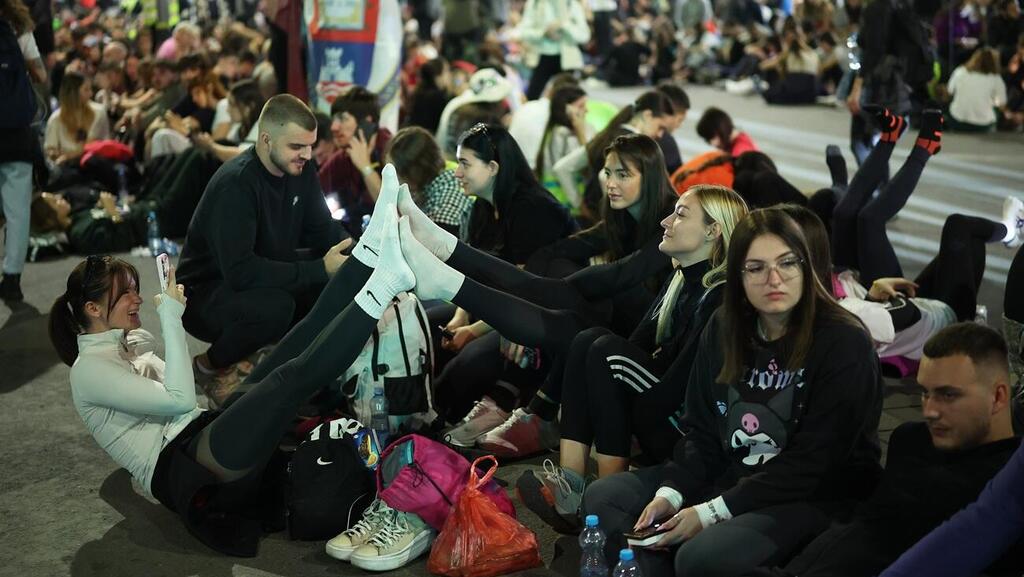
A pause in the protests in Serbia
(Photo: Armin Durgut/AP)
Gen Z has also protested in Western Europe, including Switzerland and Italy, though those demonstrations focused mainly on the war in Gaza.
It is a tsunami of protests, crossing borders and languages, erupting in heat waves and cold snaps alike. They are unfolding in countries with little in common except a vast demographic of young people who feel neglected, unheard and ignored. Young people crying out against widening inequality, against an unreasonable distribution of wealth and assets in their countries, against the nepotism of senior officials and rulers and against corruption. The engine behind these protests has consistently been leaderless groups, most of whose members belong to Gen Z — masters of the online space they were born into, and deeply distrustful of older generations, lawmakers, leaders and decision-makers.
Even after hundreds of protesters were killed in various demonstrations during government crackdowns, that did not deter young people in other countries from taking to the streets. “We are the generation of technology and the internet. Social networks generate ideas, they are contagious and they turn everything into something that can be replicated,” Chadkarai explains. “People saw us as a lazy generation wasting its time watching videos or uploading meaningless clips to TikTok. I think we managed to surprise everyone, but we had no choice. All the institutional channels are blocked and sealed off to us, so the logical outlet was the streets. And once it worked in Bangladesh and Nepal, people looked to us for inspiration.”
There is one physical symbol that unites the protests across countries: a black flag bearing exaggerated, grinning skull and crossbones, topped with a straw hat adorned with a red band. The symbol comes from the Japanese manga ONE PIECE, which is nearly as popular in Asia as Harry Potter is in the West. The series follows the Straw Hat Pirates and their leader, Monkey D. Luffy, who dreams of becoming the Pirate King. For 29 years, they have roamed from place to place fighting evil regimes and corrupt elites, seeking freedom for themselves and for the people they encounter.
These flags are flown at Gen Z protests everywhere. They were even raised atop the ruins of Nepal’s burned-out parliament building. According to many demonstrators, the flag represents their values, including opposition to elites, equality, the fight against racism, oppression and exploitation, and support for friendship and freedom. During protests in Indonesia, flying the flag was grounds for arrest, and one lawmaker claimed it was an act of treason.
“But there are other things that bind them together,” said Alberto Matenga of the International Institute for Democracy and Electoral Assistance in Stockholm. “These are global citizens in a digital world, connected in a space of their own, one that older generations have no access to, no understanding of and, above all, no control over. The real shift over the past year has been their ability to turn digital dissatisfaction into leaving the comfort zone of Netflix and Spotify and going out to protest in the real world. They are also bypassing intermediaries like political parties or labor unions, and doing so in numbers and with an intensity that makes it impossible for authorities and leaders to ignore them.”
There are additional shared traits among protesters across countries. In Morocco, one of Africa’s most visited nations, half the population is under 35, yet unemployment among the 15–24 age group stands at 36 percent. It is a national sense of despair, reflected in the fact that half of Moroccans under 35 are considering emigration.
In Nepal, where the average age is 28, between 1,500 and 2,000 citizens leave every day in search of opportunity and economic stability abroad. One in four Nepali families has a relative living and earning overseas, and remittances sent home by Nepalis working abroad amount to roughly one-third of the country’s annual gross domestic product. “The dream of most of our generation is to find work outside Nepal,” Chadkarai said.
“In many countries, tens of percent of citizens live below the poverty line. Many lack access to drinking water, and only a small share has adequate sanitation,” said Helga Klerzon of the Center for African Studies at the University of Würzburg. “This primarily affects children, who suffer from hunger and chronic disease. Many of those children are now in the streets protesting
“So you have a massive demographic that has suddenly realized the electoral power it holds, living with the boot of the authorities on its neck, while at the same time watching those in power live lives of luxury. They understand that something is fundamentally broken and that if they do not act, no one else will. And when the reasons for protest are transnational, it creates solidarity and inspiration without borders. All of these factors are multiplying in ways we have never seen historically because of social networks and the connectivity they enable.”
“According to Nepal’s Economic Forum,” Chadkarai said, “the richest 10 percent in Nepal hold 26 times more wealth than the poorest 40 percent of the population. So when the son of a senior politician posts a selfie on Instagram surrounded by Louis Vuitton bags while we have nothing to eat, of course we are angry. And when the authorities dismiss us and call us digital masturbators, at some point we understand that this cannot remain only in the digital sphere.”
There are many more figures and data points casting earlier generations, such as millennials, in an unflattering light, for having failed to confront injustice, hunger and wages eroded by rising prices. “They are not preoccupied with debates over gendered language,” Klerzon remarked wryly. “They are focused on daily survival. They fear the future. But when we in the West talk about the future, we mean our pensions. They are talking about tomorrow, about what there will be to eat. We talk about climate change as a problem. They are living through floods, earthquakes and other disasters that are climate change in practice.”
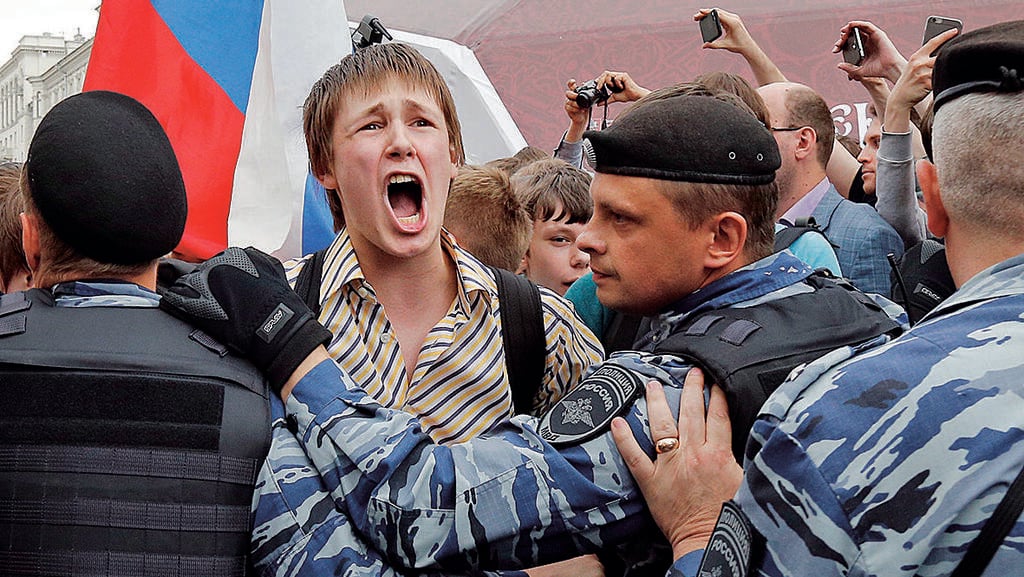
A protester in Russia demonstrating against corruption
(Photo: Alexander Zemlianichnko/AP)
Alongside countries with weak socioeconomic conditions, there are also nations with a very different narrative that only underscores the depth of Gen Z’s despair. Take Kenya, for example. A relatively wealthy country long seen as an anchor of stability and a model African state, where half the population is under 20. It is closely aligned with the West and stood with it against Russia in the war in Ukraine.
Even there, masses took to the streets after the government threatened to impose heavier taxes on citizens. Security forces responded with violence. The Kenyan model is also one of the few in which protesters openly chanted against Western countries, blaming inequality, corruption and their inability to enter the job market and live with dignity. One reason for Kenya’s comparatively strong economy is the massive loans it received from the International Monetary Fund, which it is now required to repay. As a result, the government is operating in a pincer movement: One hand raises taxes to generate revenue and service the debt, while the other freezes investment in infrastructure.
Another factor unique to Kenya is that it has created a golem that has now turned against it. Over recent decades, the state provided free education to hundreds of thousands of citizens. Today, it is home to large numbers of people with education, credentials and advanced digital skills, but with no practical use for those skills or the education they acquired. Africa today has the youngest population in the world, with a median age of 19. Under current conditions, there is no government capable of fulfilling its promise to provide jobs for such a vast youth demographic. The result is disappointment, bitterness, despair, emigration — and yes, protests.
The COVID-19 pandemic was the incubation period for these protests. Members of Gen Z were at a critical stage in their social development. Ultimately, they went through a global social experiment that included mass death. They were forced to make sacrifices and felt they received nothing in return.
Peru, for example, recorded the world’s highest COVID-19 mortality rate, and on March 15, 2020, a nationwide curfew was imposed. According to a 2023 World Bank report, there was a dramatic decline in education levels and learning outcomes, which has translated, and will continue to translate, into a sharp drop in future incomes. The report said the pandemic erased a decade of social progress. The climate crisis has also weighed on young people psychologically. Not only do they experience it personally, but they also feel their generation will bear its consequences, while earlier generations neglect the issue.
In every case, existing regimes were quick to blame protesters for violence that spiraled out of control. But the reality, protesters say, is that Gen Z sought to keep demonstrations peaceful and nonviolent. As crowds swelled, however, they were joined by far-right opportunists, or by monarchists in Nepal’s case, who sought to ignite the streets. Gen Z protesters argue that leaders deliberately allowed violence to escalate in order to justify the lethal force used by security services against demonstrators.
“We built up courage,” Chadkarai said, holding up images over Zoom of graffiti depicting an Adidas sneaker — a white high-top with black stripes, stained with blood. The image appears on walls, bridges and buildings across Nepal. It symbolizes the death of Prakash Bohara, who was shot dead at the entrance to the parliament building during the protests.
“The successes in Bangladesh, Indonesia, Madagascar and Nepal gave us courage. We wanted more. We wanted everything to be new. We wanted to protest on the first day until 3 p.m., singing Bob Dylan and the Beatles, and suddenly our reforms were gone. Someone hijacked our uprising and stained it with the blood of our friends,” Chadkarai added.
The questions he raises are shared by many Gen Z protesters. “You look back at the hundreds who were killed and ask yourself: Was it worth it? Did we really manage to change anything structural? Did we achieve anything?” he said. “There are so many question marks, especially because of the brutal violence and the burning of national symbols. We made an unspoken decision not to establish leadership, so we couldn’t be taken out by eliminating leaders. But once we succeeded, there was no one to represent us before the authorities and present our demands. The fact that we don’t have political parties will hurt us in elections and bring the same people back to power.”
Naturally, Chadkarai and his peers are now looking back at the Arab Spring protests of 2010. “We asked ourselves what came of that. People died after taking to the streets to fight for more democratic and more just lives, but what did they achieve?” he said. “It’s a terrible thought and a crushing realization that maybe all those young people died for nothing. You look in the mirror and say, ‘OK, you destroyed this and that, but you went out into the streets to build.’ You try to figure out the solution and start to realize there isn’t one. There aren’t enough jobs for all the young people entering the labor market. So we managed to change things, but nothing really changed. We wanted hope and we got beaten.”
Gen Z has no more room to carry its anger, and the older generation has no ability to find a way to their hearts, to speak to them, to lift even part of the heavy burden of rage and despair over their homelands. More and more young people around the world do not want talk, but food. They do not want rubber bullets, but hope, something to hold on to. They are coming to terms with the idea that they may no longer be able to bring about change, but not showing up to protest is not an option. They have nothing left to lose, except the country itself.