

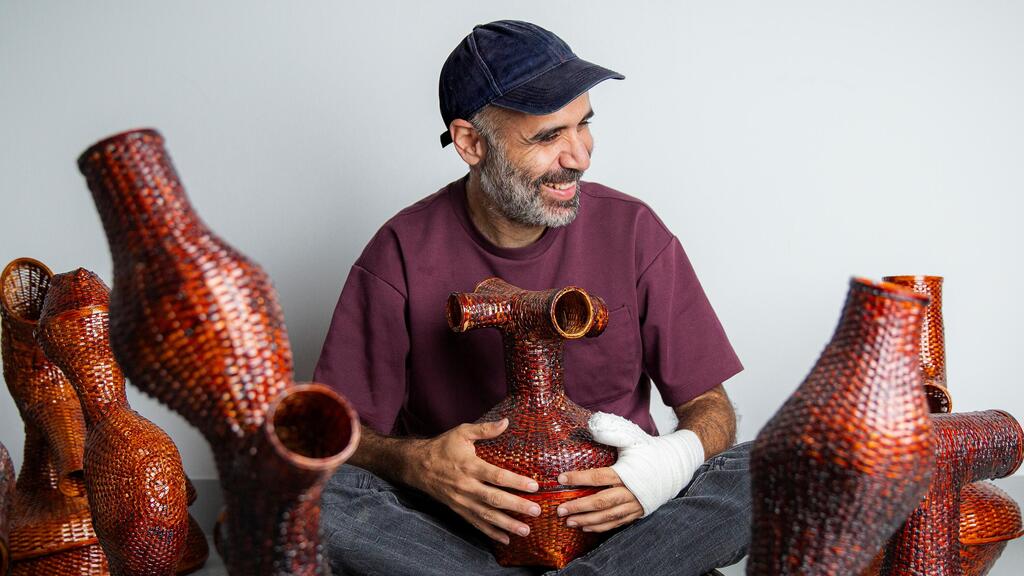
Israeli designer Erez Nevi Pana was on his way to visit his parents in Ramat Gan when a Hezbollah rocket from Lebanon struck nearby. The blast injured five people, including him. Thrown to the ground by the explosion, Pana suffered damage to his hand—the one he relies on for his work. Since then, he has been in rehabilitation, learning how to create again.
Pana, 42, is one of Israel’s most distinctive designers, known for crafting functional and artistic pieces from natural, vegan materials. For over a decade, he has built his practice on ethical, plant-based design. Now, he is releasing a book titled "X", summing up ten years of work while also marking a turning point in his career after the injury. “The book saved me,” he told Ynet. “It transformed along with me.”
(Photo: Patty van den Elshout)
From 'X' by Erez Nevi Pana
(Photo: Dor Kedmi)
(Photo: Dor Kedmi)
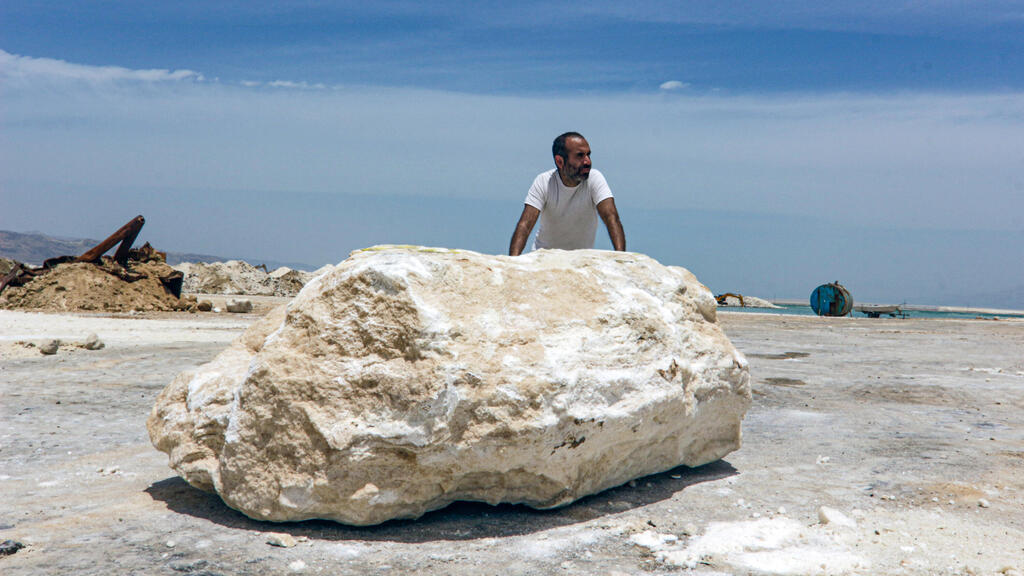
(Photo: Caludia Rotkagel)
The injury forced him to rethink his methods. His studio, once reliant on traditional handicraft, has now turned to 3D printing. “Out of a conversation about printing me a new hand, we decided instead to build a ceramic printer that may be my closest partner for the next decade,” he explained, acknowledging that some fine motor skills may be lost for good.
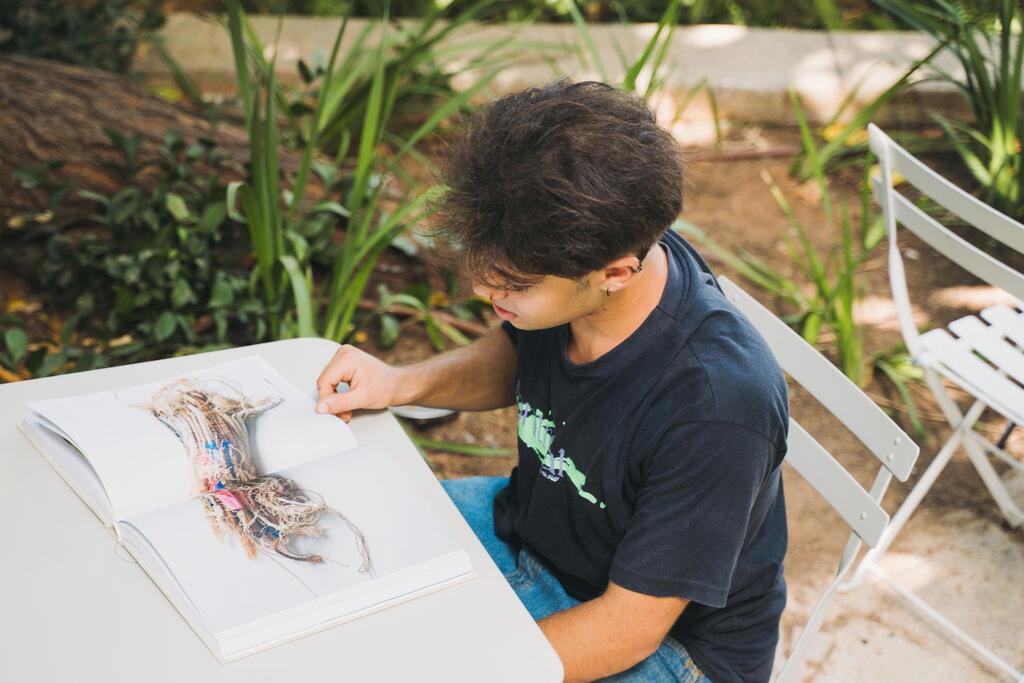
The book, produced through a crowdfunding campaign, is more than a catalog. Sewn rather than glued to avoid animal products, printed on vegan paper, and bound in linen, it reflects his commitment to both ethics and aesthetics. “Every choice—paper, ink, even the typeface—was examined through a moral lens,” he said.
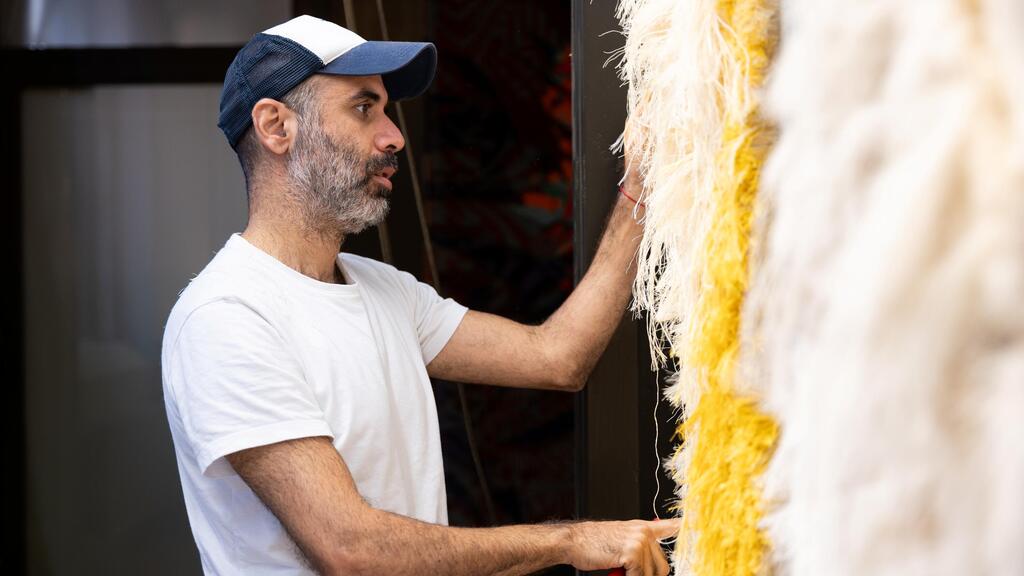
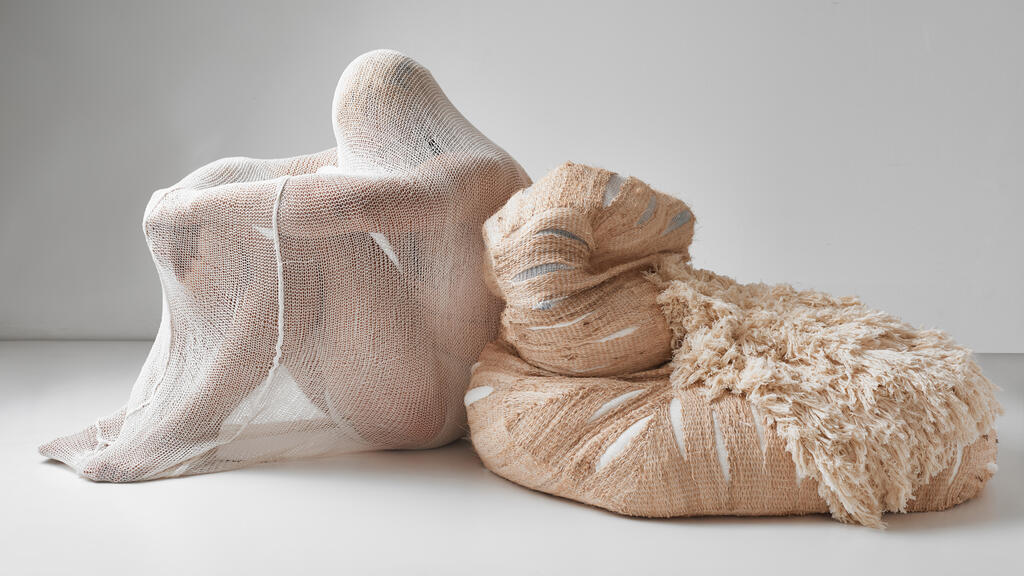
Pana’s journey into veganism began in 2013 at the insistence of his partner. What started as a dietary shift soon became a guiding philosophy for his design. He abandoned animal-based materials and began experimenting with fibers, salts, minerals, mushrooms, algae, hemp, and earth. He even studied traditional Bedouin weaving techniques, adapting them to vegan fibers. For him, design is not only aesthetic but also political and ethical.
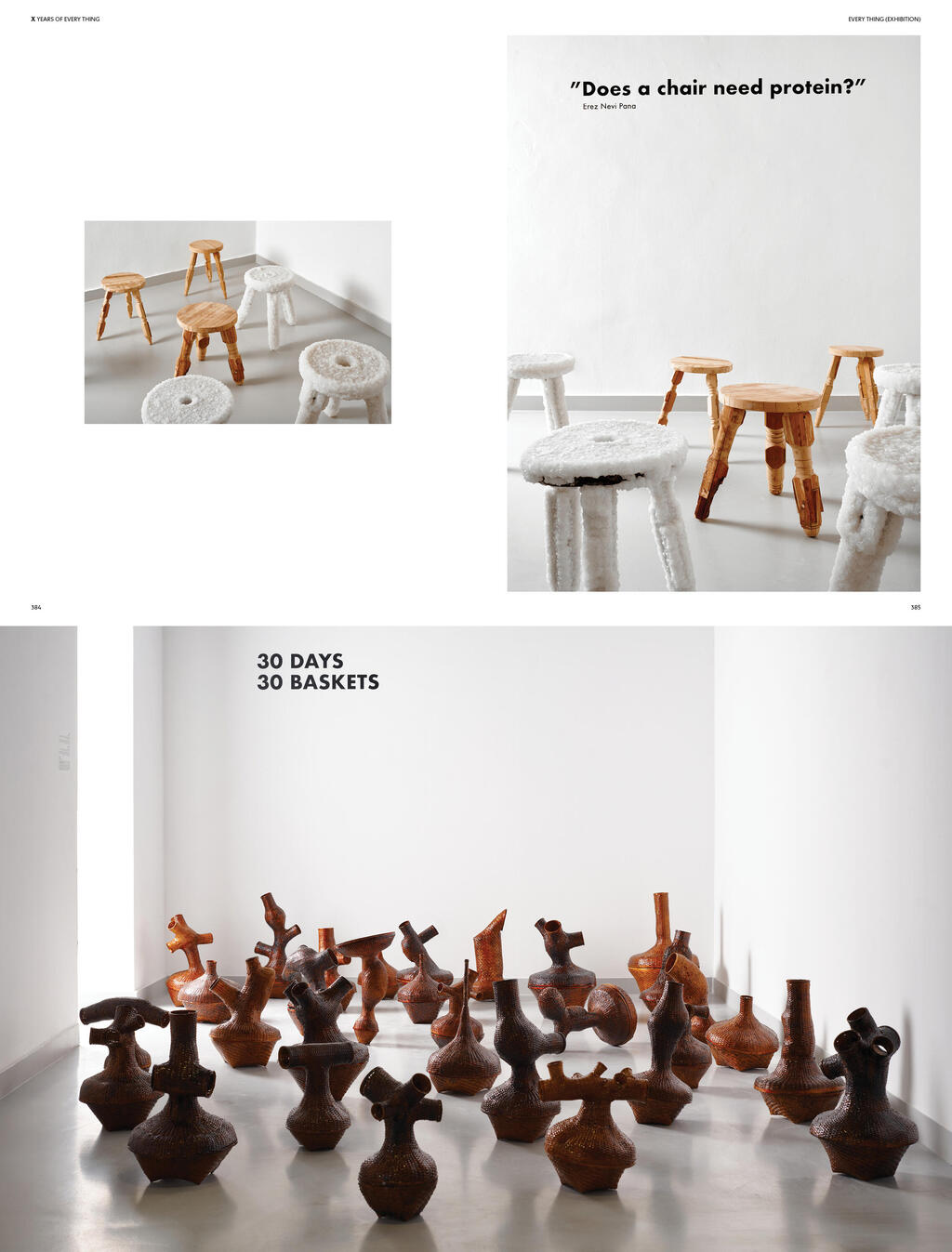
“I insist my studio stays vegan, and even interns from abroad must commit while working here,” he said. His works include stools crystallized in Dead Sea salt ponds, banana-fiber armchairs, and tiles made entirely of salt.
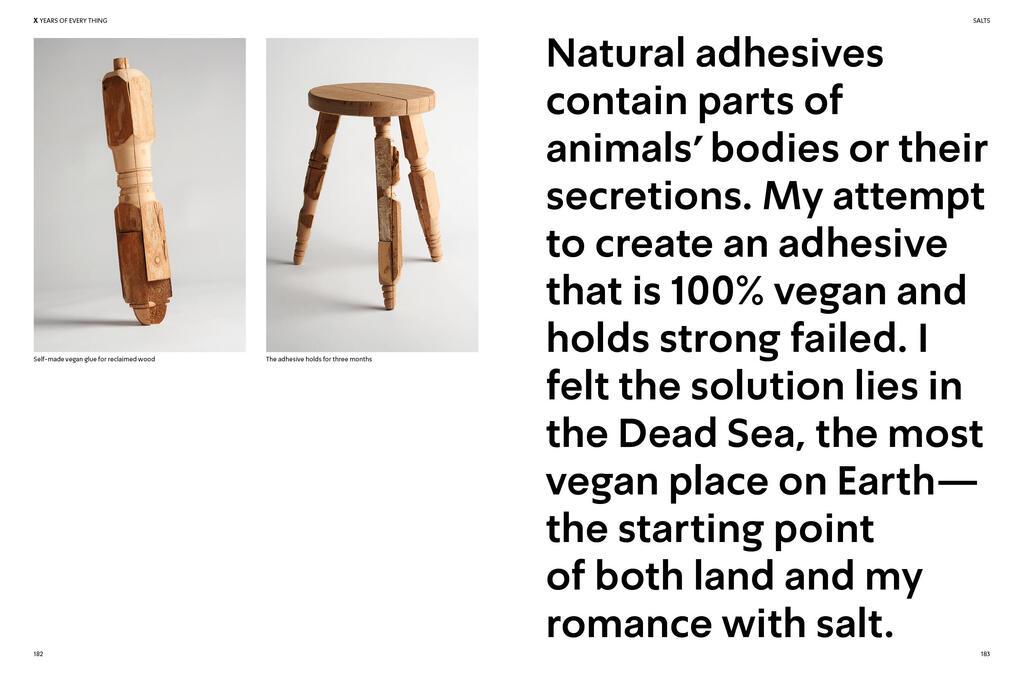
From 'X' by Erez Nevi Pana
(Photo: Amir Farzad)
(Photo: Yom Omer)
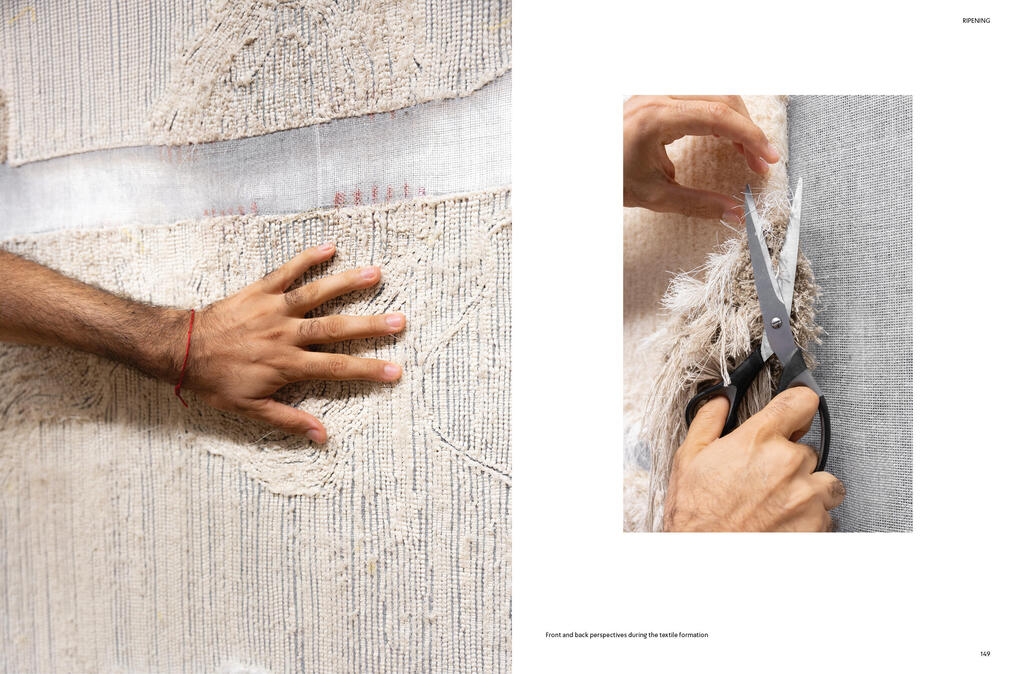
From 'X' by Erez Nevi Pana
(Photo: Amir Farzad)
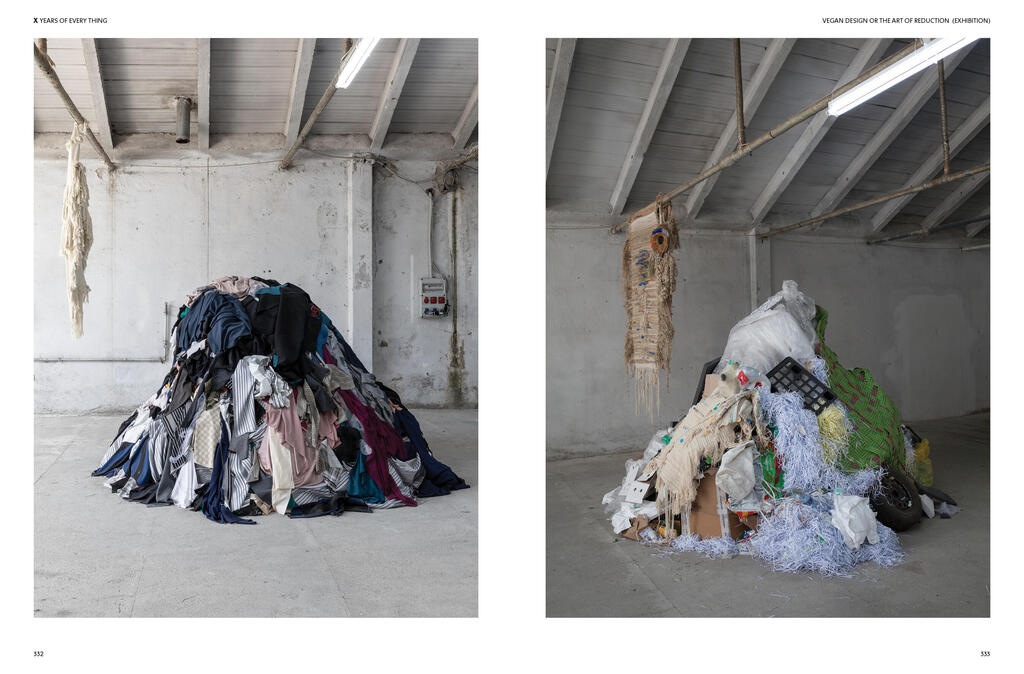
From 'X' by Erez Nevi Pana
(Photo: Amir Farzad)
Despite his identification with the global vegan movement, Pana has publicly opposed controversial activist Greta Thunberg after her repeated criticism of Israel. “I’m Israeli, and it shows in my work,” he said. “Her obsession with Israel highlights the hypocrisy of those waving the banner of morality while ignoring other atrocities.”
That stance has come at a cost. Recently, a major U.S. museum wanted to buy one of his salt works, but only if it could present him as an Indian artist. Pana refused. “Of course, I said no,” he recalled. “They didn’t buy it. But at the same time, museums in Colorado and the Netherlands acquired my work during the war.”
Although internationally acclaimed—with solo shows at Friedman Benda Gallery in New York and Jerusalem’s Museum on the Seam—Pana insists he is first and foremost a designer. “Design isn’t just art,” he said. “Objects have a role. Even when experimental, they are meant to solve, provoke, or offer alternatives.”
For Pana, who grew up in Bnei Brak surrounded by flowers at his parents’ nursery, design has always been about color, material, and imagination. The new book, which evolved into a healing process during his rehabilitation, now includes essays, reflections, and theoretical writings. “It became a constant anchor,” he said. “And it’s only the beginning of a series.”