

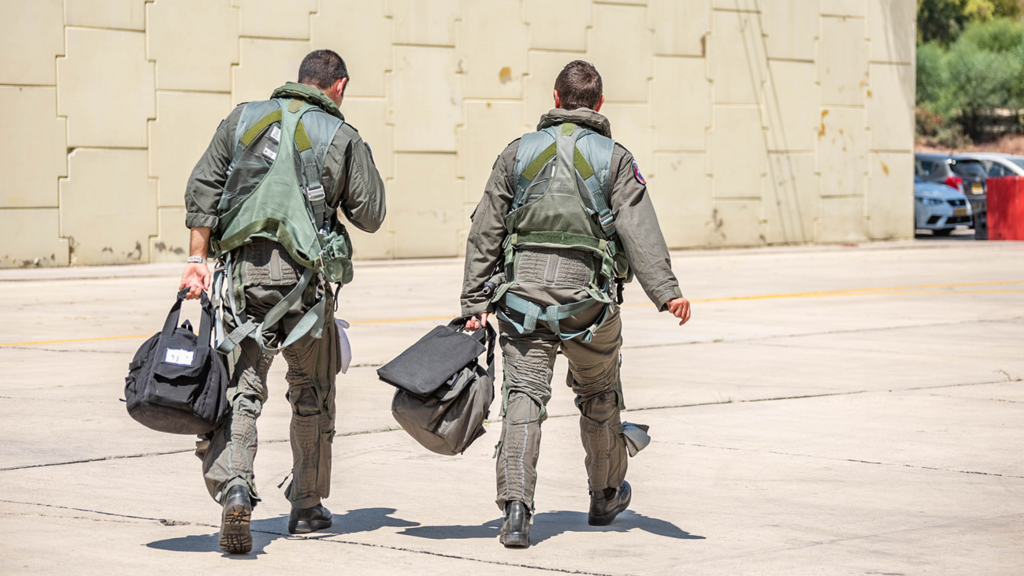
“I had no idea what the day would bring. I came to reserves as usual, for a weekend alert that was supposed to be standard, maybe even quiet. During the morning, I realized something was brewing, and then the mission came, and the calm weekend turned into a sudden operation,” describes fighter pilot Lt. Col. (res.) E. about last Saturday, when he released the bomb that killed Abu Obaida, the spokesperson for Hamas’s military wing.
E., 45, has served 25 years in the Israeli Air Force combat division. Married with children, he lives in the north of Israel. Since October 7, he has completed over 450 days of reserve duty. “I participated in every mission and operation since then, including last Saturday’s elimination of the Hamas spokesperson,” he confirms matter-of-factly.
This was not his only high-profile strike. About a year ago, on July 13, 2024, he was the pilot who attacked and killed Mohammed Deif in the Al-Mawasi area on the outskirts of Khan Younis. (“Wow, that was a long time ago,” he says.)
Khadifa Samir Abdullah al-Kahlout, known as Abu Obaida, was appointed to his role after the disengagement about 20 years ago. His first appearance as a spokesperson was the announcement of Gilad Shalit’s kidnapping. He was responsible for Hamas’s information campaign and, even before the war, was a well-known and admired figure among supporters of the terror organization in the Arab world. He often appeared with his face covered by a red keffiyeh. Israel tried to eliminate him for 17 years.
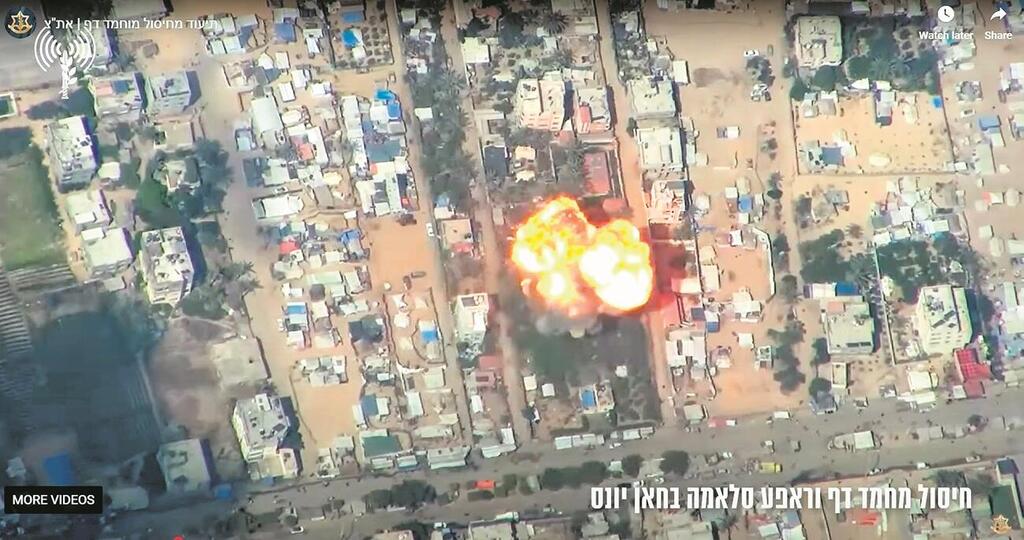
The elimination of Mohammed Deif
(Photo: IDF)
Mohammed Deif was an even bigger symbol of Hamas. Commander of the Izz ad-Din al-Qassam Brigades, the group’s military wing, he led, alongside Yahya Sinwar, the October 7 massacre and was previously responsible for mass killings of Israelis. Israel attempted to eliminate him multiple times over three decades, but he always escaped—until now.
“These were very complex missions,” Lt. Col. E. says.
Specially chosen for high-profile targets?
“Absolutely not, it doesn’t work that way. The squadron carries out the mission with the people and tools available at that moment. It just happened to be me, but anyone else could have carried out the mission. With both Abu Obaida and Deif, I didn’t know at the start of the day how it would end.”
Yet it was you. They were symbols of the enemy. I imagine it feels different.
“Of course, yes. A very different feeling. A sense of significance. And I feel great pride that I was there, that I’m part of an organization that has been fighting for a home for so long and knows how to execute complex missions under tough constraints. Including in environments with a significant civilian presence where they were located. And still, it was necessary to neutralize them while minimizing harm to uninvolved civilians.”
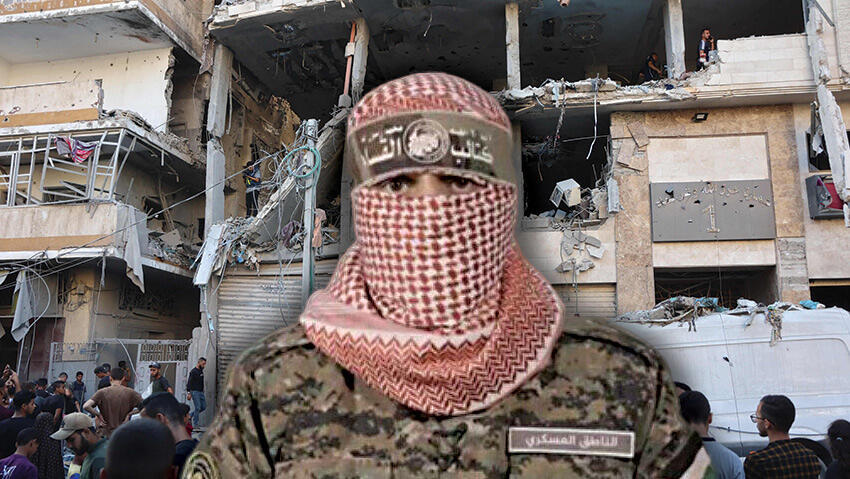
Abu Obaida
(Photo: Omar aL-Qattaa / AFP)
“In these targeted strikes, there’s symbolism—not just for me. Think about what it does for the technical teams, the intelligence personnel, and the entire chain involved in the operation. There’s a huge sense of pride and a deep desire to advance the war, to do the best possible. I’m glad I got to carry out these missions, but I would have been just as happy if another pilot had done it.”
Do you celebrate after a strike like that? Drinks?
“No. Often, you don’t even know the result when you return. If anything, a lot of thoughts run through your head until confirmation arrives that the target was neutralized; did we achieve all the mission goals? Sometimes it takes time. I’m proud to have participated and had an impact, but what is there to celebrate? You have to remember the period we’re in.”
Does your family know you’re the one who eliminated Abu Obaida and Mohammed Deif?
“No. I try to keep as little information leaking as possible. There are things I tell my wife, my confidante, and of course, the people in the squadron, but basically, you live with these things alone. I wouldn’t want my child to know about it, constantly thinking about what they heard, what they understood, what they felt, who they told. These operations are shown on the news, and sometimes civilians die, including families. I don’t want to create anxiety for them. These are very hard things. Even for me, they’re hard. After 25 years in the army, I know how to manage these tensions myself, but I wouldn’t want to bring others into them.”
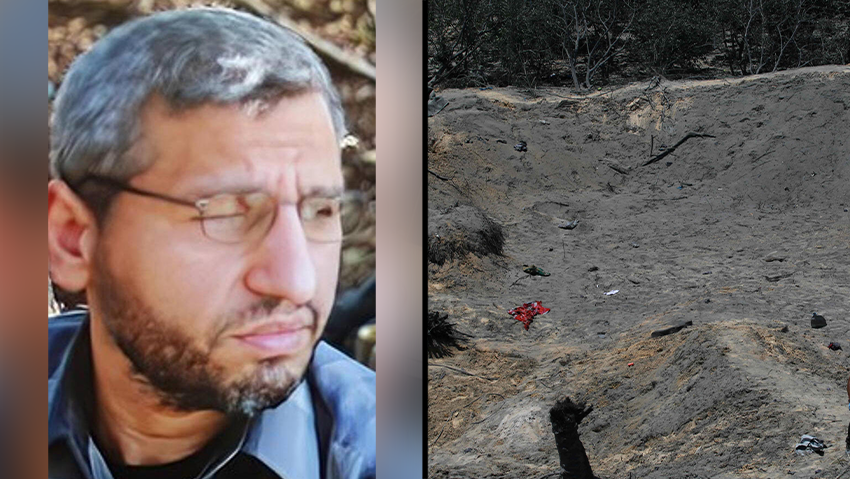
The scene of Mohammed Deif's elimination
(Photo: Bashar Taleb/ AFP)
In high-profile eliminations, do you bring personal grudges, revenge, or anger, or is it purely professional, Air Force-style?
“No. I approach missions very calmly, neutralizing external pressures and noise. There’s no revenge motive here. This is war. We remember October; we want to bring back the hostages, protect our ground forces. We do everything with that understanding. We’re not happy when uninvolved people are harmed. But of course, we’re satisfied if we neutralize those individuals—the essence of the organization’s evil. When I’m in the air, I’m fully in the mission. Afterwards, I can reflect on the events and my feelings more deeply.”
Can you share?
“After October 7, there was more anger and frustration. Today, it’s a sense of heavy responsibility and mission. I think about the war, the hostages, and the many fallen. I’m willing to invest all my time. This is not a time to say no; it’s a time to carry out missions, contribute, and win the war. We defend Israeli citizens; I defend my family.”
In the air and at sea, there were many other high-profile eliminations. On May 13 this year, Maj. (res.) A., an F-15 pilot, eliminated Mohammed Sinwar, who succeeded his brother Yahya both in role and as the IDF’s most wanted. Alongside him, other Hamas commanders were also killed.
A., 30, left active service about three years ago. “I traveled for about a year. I returned on October 5, started working in a completely different field from the Air Force—at sea. Studying for a master’s in systems engineering. Since the war began, I’ve been a full-time reservist.”
He lives with his partner and has completed over 500 days of reserve duty. “Gaza, Lebanon, Syria, Iran, Yemen. Everything.”
Have you seen the world?
“Yes.”
Was the elimination of Mohammed Sinwar your most precise strike?
“Possibly. I think so.”
What does it feel like to take down the most wanted?
“I had no idea. I found out afterward. That day, I was in reserves, and a planned flight was canceled, but I said, ‘I’m in a crazy work period; instead of driving back in traffic, I’ll stay at the base and work from here.’ Suddenly, all sorts of movements started. I went to ask what was happening, and hours later, I got on the plane, flewexecuted, execute, landed, interrogated, and immediately returned to immerse myself in work. At night, I get home, see the news, and put one and one together.”
They didn’t tell you who you were going to eliminate?
“I assume if I had asked, they would have told me, but after almost two years, you learn to focus, detach,,,, and reconnect. Now I fly. I land. I interrogate. Now I’m at work. Now I’m with my partner.”
And when you saw it on the news?
“Honestly, I had a small, shy smile. I told myself, go, we got him. Good, we’re reaching these people. Maybe it will advance the war, help bring back the hostages.”
Did you celebrate?
“No. It’s nice to know this person is gone and that you contributed, but it’s really thanks to so many people behind it. I was in the squadron that day, and I brought the bombs to the target. But everything was prepared for:e; aircraft, munitions, intelligence, and command. You’re the pilot, at the end, but behind you is a massive operation. Just as I trust everyone in the squadron, my squadron trusts me. In my eyes, far more impressive is the person who brings the intelligence. The achievement is theirs.”
Does your partner know you took down Sinwar? Parents?
“My partner knows. Parents don’t. I don’t go around telling people.”
Without theatrics, it’s hard to draw out the emotions and disclosures of these pilots. Honestly, it’s refreshing. While every massacre is described with a grandiose flair—the heroic landing on the moon, the statements of politicians, athletes, or influencers dramatized—speaking with more modest people is pleasant. Those who share credit and don’t see themselves as demi-gods. This is indeed the classic pilot stereotype, but even that has been cracked since October 7, both outwardly and internally, like so many other things. Ultimately, real life concerns them.
How are you after more than 500 days of reserve duty?
“You try to satisfy everyone, and everyone is always a little disappointed. Your partner is disappointed you’re not home, work is disappointed you’re not at the office, and the squadron is disappointed you’re not there anymore. You try to disappoint everyone as little as possible; that’s life, basically. I’m lucky my job has owners and managers who are also fighters who did reserves. They understand, accommodate, and back me, even when I disappear for periods. I know many other stories.”
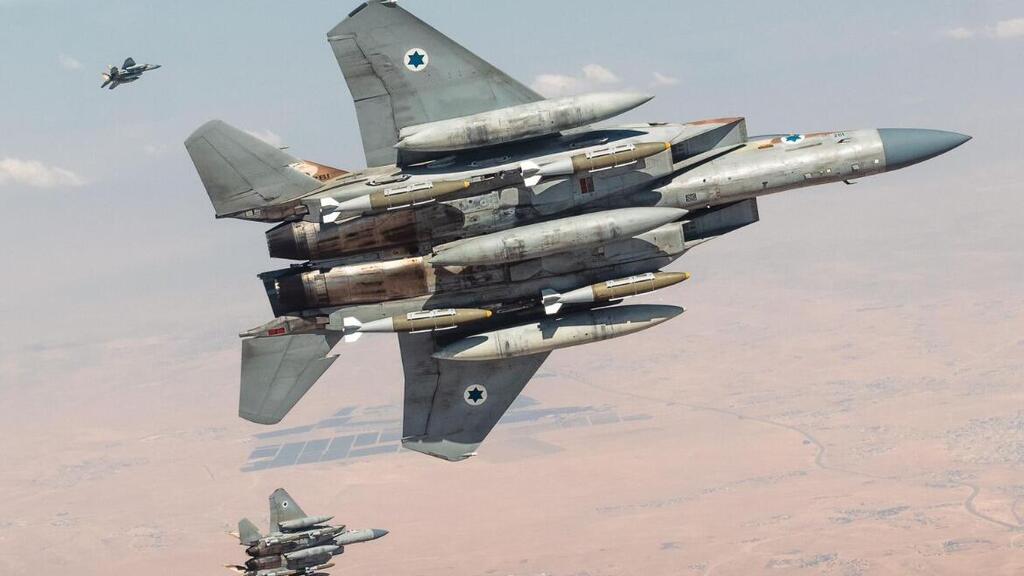
Israeli Air Force
(Photo: IDF)
“Every period brings additional challenges for a reservist trying to maintain what they had outside,” says Lt. Col. E. “Maintaining a family, ensuring everyone is okay up north, knowing they stay sane with everything civilians go through during war. Beyond that, kids have very challenging periods, too. At school, socially. But for a reservist, the war is the core, and the family has to live in parallel or around it. My wife manages things. The kids understand that and what their father does is important, but they also need attention. Then you return home from reserves, they want you immediately, but you need about 12 hours just to regain composure, function, after two days without sleep of shifts, alerts, and flights.”
“I had bosses who didn’t understand,” says Maj. A. “Before the Iran war, for example, you go away for a long time but can’t tell work what you’re doing and why. You explain it’s important, ask them to trust you, but people ask questions, and start getting upset. Later, they say, Sorry, I got angry. But that creates a lot of challenges. These things also have to be sorted later.”
They trust their second-in-command
We discuss the burnout after almost two years of war—not just with employers and family, but with themselves, with the heavy toll the war takes on Gaza civilians. In the three targeted killings mentioned, hundreds of Gazans were killed or injured, some uninvolved. Including failed attempts, the numbers rise even higher. These things do not pass by unnoticed for A. and E.
Lt. Col. E. sighs when speaking about uninvolved civilian casualties. “As I said, I know how to manage these tensions, but it’s a very complex process. If I made a mistake or there was a malfunction, it definitely weighs on the conscience. Still, I know everything is done to minimize such damage. If civilians die, there’s a thorough investigation. For me, if I executed the mission with precision and followed the plan exactly, I am at peace with myself. I trust the army, the operation planners, and the field decision-makers in real time. I trust the people in the control room, the technicians, my second-in-command, and myself. At the decisive moment, you must be very focused and precise. A small mistake can cause major damage. There are ammunition failures, planning errors, and inaccurate execution. It all exists. We’re all human. Mistakes happen, and we need to minimize them. But in the end, this is war. And we’re not fighting for nothing. I trust the people, and still—the challenge is complex.”
Do you feel your work, applying military pressure, helps bring back hostages?
“It’s hard to answer. I can’t say from my position what pressure the strikes create. I can say that if I’m asked to apply military pressure, I will do my utmost. This is a defensive war for the home, and the objectives have not yet been achieved. The workload is clear. It’s also clear one can talk about it, but everyone I know will show up because of the workload.”
Do you encounter refusal?
“In my world, it doesn’t exist. You come to reserves, fight, and if another day is needed, you give it. I also see reservists around me, friends and family, from field units, experiencing far more intense situations than I, in immediate life-threatening danger, yet continuing to serve.”
“Some things hurt me,” says Maj. A., including disproportionate harm to uninvolved civilians, “but I have full confidence in the system. There are many checks before an attack, making sure there are no uninvolved civilians, our forces are safe, and addressing many technical issues. Very few cases occur where a pilot decides independently what to strike. I don’t decide. What I do know, and we discuss a lot, whenever there’s an incident, a mistake, uninvolved civilians or friendly fire—God forbid—we investigate how it happened. How it won’t happen again. There are malfunctions, but as long as this process occurs, and it’s transparent to me, I feel comfortable continuing missions.”
Boutique targets: Sgt. N., from the routine security department, was responsible for planning several of the most high-profile strikes mentioned, including these. 22, from intelligence. Earlier this week, she completed two years of active service, immediately continuing in reserves in the department.
“I’m experiencing the first moments of civilian life,” she laughs, then corrects herself. “Together with Southern Command and the Shin Bet, we lead the targeted strikes in Gaza on the Hamas command chain, from initial idea when intelligence arrives, through planning, approvals, briefing, and execution. The goal is to achieve the best result, neutralize the person, but with minimal harm to uninvolved civilians. Planning is basically the process of adapting and precision of the mission.”
And yet, hundreds of deaths and great damage occur.
“The trigger finger is far from easy. Every target is examined thoroughly, goes through a long process of planning and approvals in cooperation with many bodies. They sit until they reach minimal impact on uninvolved civilians. These are unpleasant feelings, knowing civilians were killed. It’s always difficult. But I know we do everything to avoid that as much as possible.”
The strikes we are discussing, according to N., are “boutique targets, so to speak. Such missions have symbolic value, giving a sense of satisfaction, responsibility, and mission, while also advancing the army and state.”
At home, family, friends—do they know what you do and your involvement?
“They know generally my role, but not the daily details. When I return in the middle of the night, they don’t know what preceded it, and then they see the news like everyone else. I don’t tell, but there is satisfaction that they see what I do and are proud, just in a different way. For me, it’s a sense of patriotism. Without cynicism. To directly influence the fighting, in one way or another. It’s immense pride.”
Feeling the burnout after almost two years?
“It’s really tough and exhausting, but it’s our country’s most important mission, and if we wear down, who will do it in our place? If there are moments of crisis—and there are—when you know such a mission will directly affect the fighters on the ground and help them, it rises above everything. In the end, these are people who lead and influence Hamas and the command chain. When such a person is neutralized, it delivers a strong blow that takes time to recover from. Sure, someone will replace them, but the things they’ve done to us as a country remain. And the organization diminishes. It shakes the system.”
“I have family in the Gaza envelope. Every target and plan of what I and we do is to protect their home. Every mission advances the return of everyone home. It feels good to know I plan and execute operations that will impact my family’s security.”
Meanwhile, the war continues endlessly with no end in sight.
Do you think about this?
“It’s far above me. I believe the war is just. Our most important mission is to return the hostages, and I will do whatever is required for the state’s security. From my compulsory service in the West Bank until today, in every role I’ve handled, I’ve been involved in preventing attacks and stopping terror. It’s a very important mission I’ve participated in.”
And then you go home and tell no one.
“You always want family and friends to be proud, but I keep these feelings to myself. Even the feelings of pride.”