

We sat beneath a cluster of eucalyptus trees as the roar of F-15 engines shook the ground beneath us. It was the evening of the fourth day of the war with Iran, and at the “Spearhead” squadron at the Israeli Air Force’s Tel Nof base, the pace had not slowed.
It was nearly 8 p.m., and on the runway the Air Force’s oldest workhorses were racing for takeoff.
Gallery
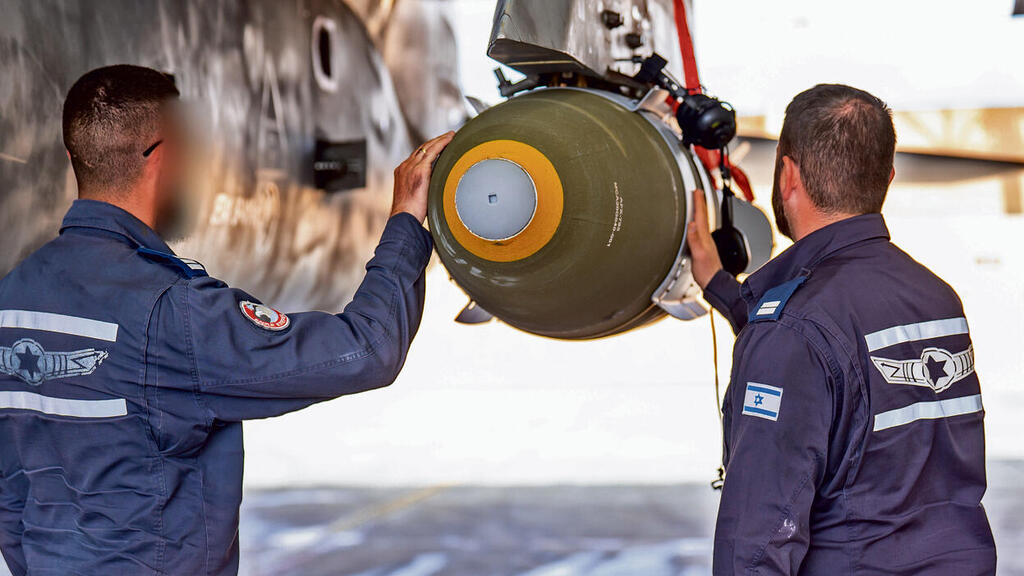
Two young officers from the squadron’s technical branch, Capt. Y. and Lt. B.
(Photo: Maya Shafir)
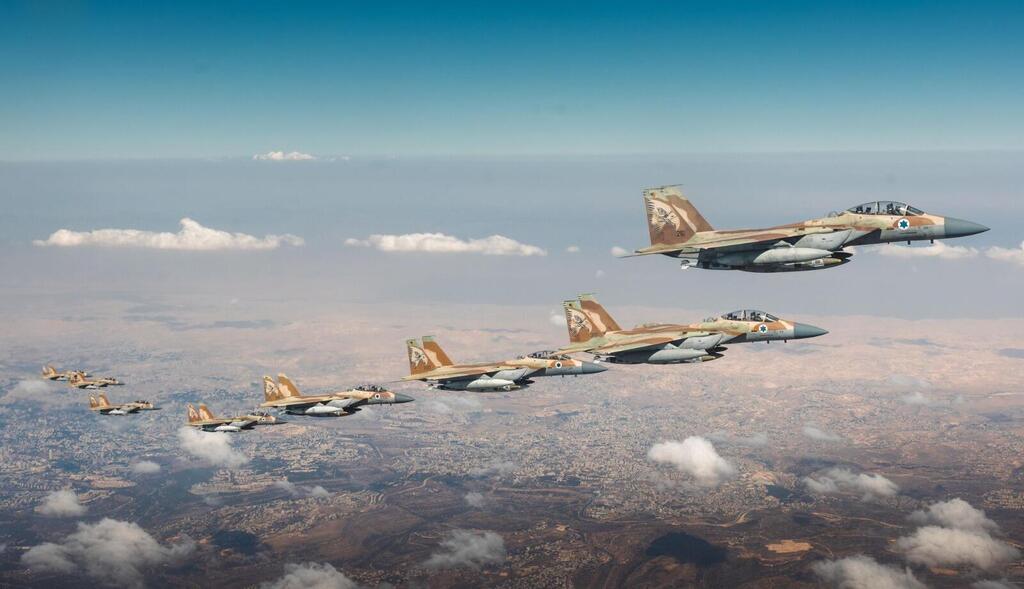
The squadron operates two models, a two-seat and a single-seat version. They fly the entire distance to Iran and back, again and again, without pause, day after day. They may not be as new or sophisticated as the F-35, but with a climb rate of 254 meters per second and a maximum range of 3,459 kilometers, the F-15C that had just taken off had nothing to be ashamed of.
Loaded with bombs, the jets sped down the runway one after another, gaining speed and lifting into the air. One takeoff followed another, and after a few moments, another group launched. Hours later, shortly after midnight, the IDF spokesman would announce another wave of airstrikes across Iran.
Usually, we are shown the pilots seated inside the cockpit, helmets on, the canopy closing over their heads. Or walking beneath the aircraft with helmets in hand, wearing a G-suit over their flight suits.
A small tube runs from beneath their waist that connects to the aircraft’s air system to prevent dangerous pressure on blood vessels during high speeds and sharp maneuvers. A soft cloth cap dangles from their thigh, worn beneath the helmet.
There is no denying that for many people, the sight is impressive. Behind them always stands a perfectly prepared aircraft, fueled and armed. All that remains is to start the engine and go.
But that image is only possible thanks to the technical crews.
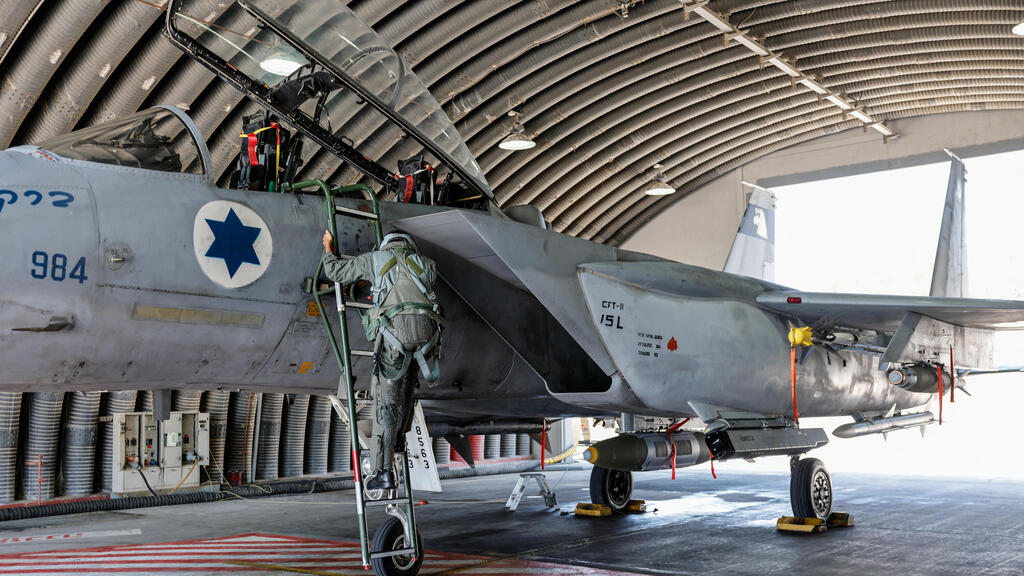
Israeli F-15
(Photo: Amir Cohen/ Reuters)
Two young officers from the squadron’s technical branch, Capt. Y. and Lt. B. sat with us beneath the eucalyptus trees at Tel Nof in the cool evening air. They know intimately the aircraft now taking off on yet another mission over Iran.
With four to five waves of flights a day involving dozens of fighter jets, the scale of the technical operation is no less impressive than the missions themselves. In the largest strike, the surprise attack on Saturday morning, about 200 aircraft took part.
After all, these are aircraft more than 40 years old. They have logged extraordinary mileage, accumulated tens of thousands of flight hours, flown to Yemen several times and operated over Iran almost daily during the 12-day war last summer and again since Saturday.
They have undergone upgrades and modernizations, had countless engines and parts replaced and received advanced systems. But in the end, they remain machines more than four decades old.
Few people would drive a 40-year-old car regularly, and even then, probably only on a spring weekend for a short spin around town.
“This aircraft may not be new, but it definitely does the job,” said Capt. Y. from the technical branch. “Each aircraft has a tail number, and each aircraft also has a name. For example, ‘Ayelet Hashachar.’ It has its own identity and character.”
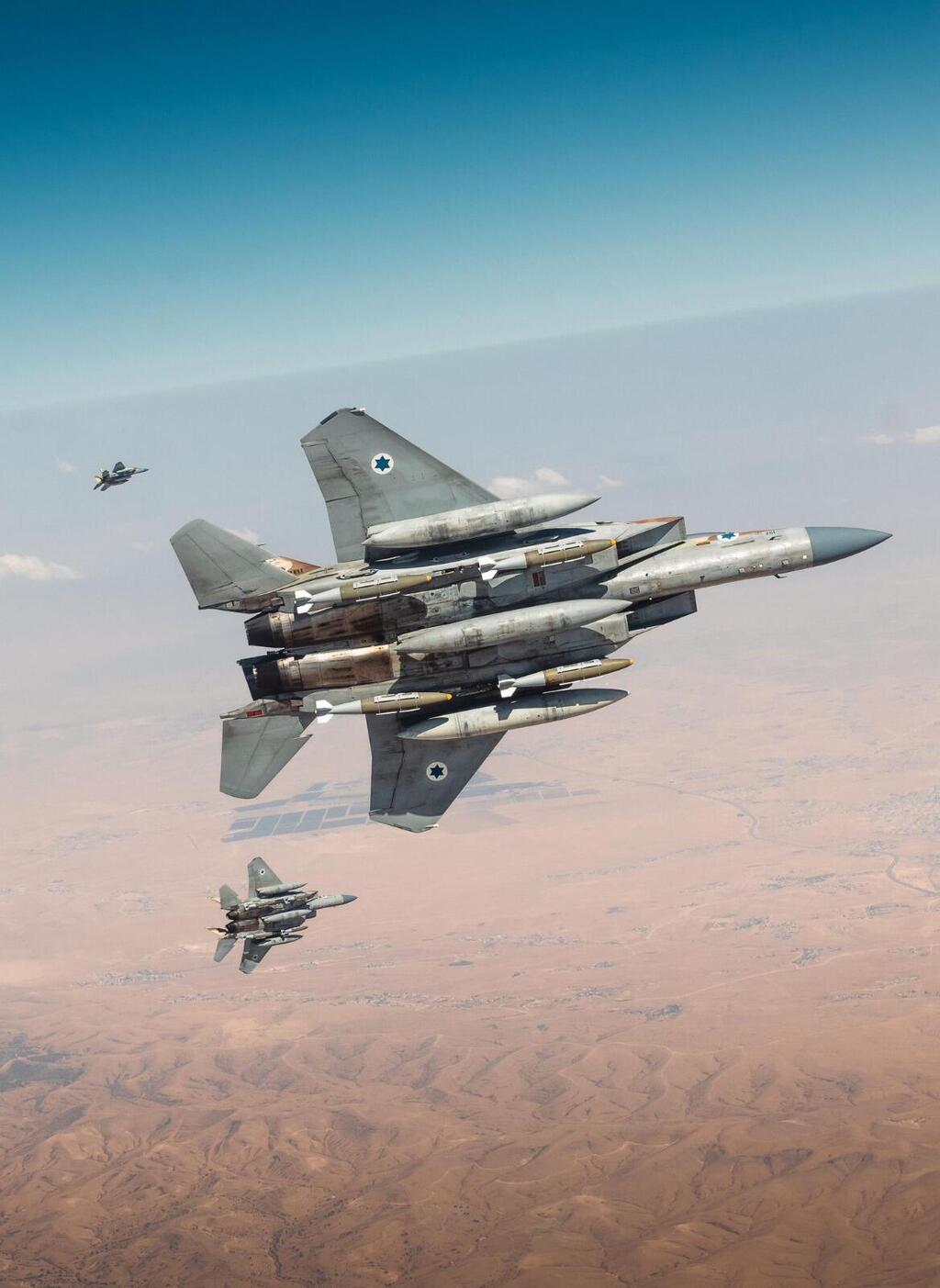
F-15s take off for strikes in Tehran
(Photo: IDF)
Lt. B., the squadron’s weapons officer, said hundreds, perhaps even thousands, of technicians have worked on these F-15s over the years. He also insists each aircraft is unique.
“Every aircraft has its own soul. I’m not exaggerating,” he said. “They don’t behave the same way. We even have a slogan: ‘A machine with a soul.’ It’s the same model from the same manufacturer, but each one is different.
“We live these aircraft, breathe them. We go to sleep with them and wake up with them.”
Capt. Y. nodded.
“We’re very connected to the aircraft in this squadron. This isn’t a garage where different cars arrive every day, one day a Subaru and Toyota and the next day an Audi or Peugeot. I live and breathe our aircraft day after day. They don’t change.
“One aircraft is known for a certain type of malfunction, while the one next to it, from the same model and year, has completely different issues.”
Everything is documented.
Each aircraft has a system that records its entire history, from malfunctions and maintenance to parts replaced, from engines down to the smallest bolt. It tracks fuel consumption in different flight configurations, the amount of weapons released and the number of sorties.
“We know the history of every aircraft,” he said.
“And we appreciate that history,” Lt. B. added.
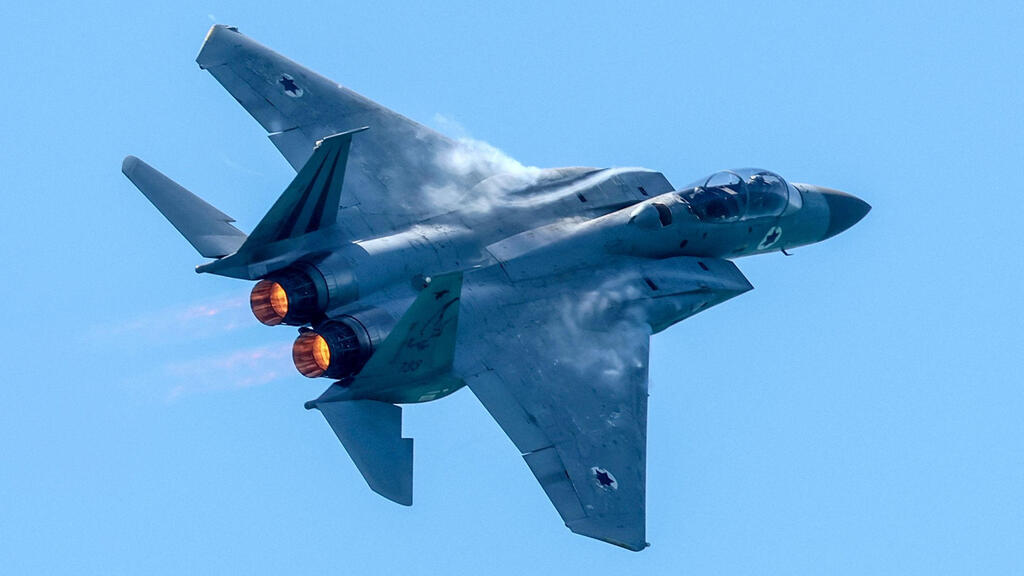
(Photo: AFP)
When the aircraft lands
When a jet returns from a mission and enters the hardened aircraft shelter, the crew descends on it like a Formula One pit team.
“It’s something you have to see to understand,” said Capt. Y. “During the war the turnaround times are extremely short between sorties. The pace is high and everything must happen exactly on schedule.”
A strict inspection routine begins immediately.
Technicians check tire pressure, landing gear, the ramps regulating airflow into the engines, the elevators and rudders. Every centimeter of the aircraft is inspected for scratches, dents, or damage.
“In a car you check the oil every certain number of kilometers,” Lt. B. said. “In an aircraft, you check oil after every flight. And there are several types. Hydraulic oil pressure, engine oil pressure. A whole series of checks.”
Capt. Y. laughed.
“There’s grease, jet fuel. You get sprayed with everything. We work with our heads, but we’re not afraid to get our hands dirty.”
(Photo: IDF)
The aircraft is surrounded by an entire team: aircraft technicians, electrical technicians and weapons technicians.
“It’s like an orchestra playing in harmony around the aircraft,” he said.
They examine the engine intake, the exhaust nozzle and the entire airframe, searching for even the smallest crack.
“A tiny crack is potential trouble,” Capt. Y. said. “With a crack, you don’t fly to Isfahan. Not even to Ramat Gan. An aircraft with a crack is not allowed to take off.”
If the problem is complex, additional specialists are brought in. Each system has experts responsible for it, including electrical, mechanical, hydraulic and engine systems.
Engine replacements happen even during wartime.
“Of course,” Lt. B. said. “It happens all the time. Some mechanics specialize in pulling an engine out and installing one that has undergone a full overhaul.”
Sirens sometimes sound at the base, sending crews running to shelters. But the work does not stop.
“Essential operations continue even under fire,” he said.
“I don’t think the public understands what an enormous operation this is. It’s huge. There are logistics warehouses full of spare parts and inventory management systems. Every bolt has a catalog number.
“Like we say here, every part number is a whole world.”
A human hive around the aircraft
The base is operating under wartime procedures. Nonessential soldiers were sent home, and the families of pilots and technical crews were left until the war ended.
Tel Nof now runs like a machine whose components have trained for this moment.
When an aircraft lands, inspections begin immediately, while preparation for the next mission starts at the same time, like a production line in a factory that never stops.
Capt. Y. receives a brief data file and a time when the aircraft must be ready.
“You get instructions for the next mission,” he said. “They tell you how much fuel to load and what weapons to mount. They don’t say where the aircraft is going, but you can guess from the fuel quantity that it’s a long flight.”
At that stage, a human hive surrounds the aircraft.
Fuel lines are connected. Thousands of pounds of fuel are pumped into the aircraft, a process that takes time. Crews must meet the launch deadline exactly.
Sometimes a fuel leak appears during refueling.
“That’s drama,” he said. “You have to dig into the aircraft’s insides to find the cause.”
Weapons preparation is another complex process.
“Each mission requires different weapons,” Lt. B. said. “Do you need a hammer or a scalpel? Some munitions create blast effects and others don’t. Some are long-range, others must be released directly over the target.”
Aircraft weapons technicians work with explosives and treat every bomb with respect.
They must recognize many types of weapons, including fire-and-forget missiles, laser-guided munitions and satellite-guided bombs.
“These weapons are extremely heavy,” he said. “You load them onto carts, bring them to the aircraft and attach them to specific mounting points. Each mounting point has the weapon suited to it. It’s an entire discipline.”
Pride in the mission
Capt. Y. said the connection between technician and aircraft runs deep.
“When you work on an aircraft, you become attached to it,” he said. “We all work with enormous pride, understanding we are part of something very big, a historic moment.”
Lt. B. nodded.
“In the end, the technical branch isn’t the one pressing the button that releases the bomb,” he said.
“But seeing the aircraft return without the bombs you mounted on it, that gives you a feeling of fulfillment.”
“For me, hearing the song ‘Watching a Big Airplane Through a Clear Tear’ in the background is nice. But seeing the aircraft return empty of bombs, that is the real excitement.”