

“Nati Ganon, a Nova survivor, lost his wife Shiran, of blessed memory, on October 7 and was critically wounded. He underwent a difficult journey and lengthy rehabilitation in order to get back on his feet for his three children,” the post said. “Out of the devastation and deep pain, an inspiring love story was also formed with his wife Bat El. The two chose life, got married and this week completed an especially moving and chilling circle as they embraced a baby girl born at our hospital. The new family is living proof of the power of the human spirit and the victory of love.”
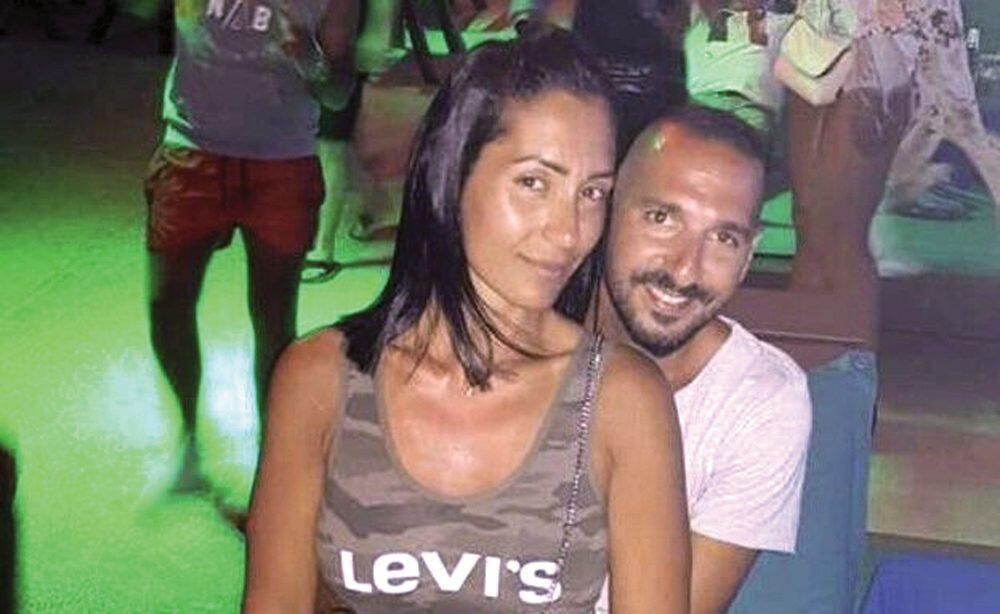
The post received around 20,000 likes and about 2,000 comments. Many were moved by the new family that rose from the ashes and dust, “through miracles of miracles,” as Nati describes it. But in Israel, as in Israel, there were also those who were less enthusiastic.
“There were people who couldn’t accept it, who said it happened too quickly, who didn’t believe there hadn’t been a connection between us beforehand. Good luck to them,” Bat El says bitterly.
Nati: “It’s better to recover quickly than not recover at all, both for me and for my children.”
Why did people think there had been something between you before?
Bat El: “Because I knew Shiran. We met about 10 years ago through two mutual friends. I was single and she was already married with children. We were even good friends for several years until the connection gradually faded. I knew her husband’s name was Nati, but I had probably seen him two or three times in my life. I have no idea why there are people who are so cruel. You wouldn’t believe the comments I received.”
Nati: “They should drink some cold water. All I can say is that this wasn’t something we planned. It simply happened and we were grateful for it. Everyone should look at themselves and ask whether they would enter something like this and take on raising three traumatized children whose mother was murdered. People should be happy for me that I managed to build myself a good life for the second time.”
Bat El: “A little before the wedding, when we were already living together in Bat Yam, I went downstairs and heard three neighbors, maybe women around 60, sitting and gossiping about me. They said I had been Shiran’s friend, so how could I do something like this?”
Exactly the opposite.
“Even Nati’s family thinks that way. He has amazing parents, they feel like I came from heaven and saved an entire family. His father calls me ‘my angel.’”
'I screamed: Run, escape'
Nati Ganon, 42, is considered one of the most seriously wounded victims of the Nova festival, where his first wife Shiran, of blessed memory, was murdered. She was 38 when she died and was the mother of his three older children: Ilai, 18, Ori, 14, and Mai, 12. He was hospitalized at Ichilov Hospital for 400 days and only after a determined battle by doctors, including no fewer than six surgeries, was his leg saved.
He was born and raised in Bat Yam, studied literature at Ort High School and worked as a barber while opening his own salon in the city. He met Shiran at age 20 through a match arranged by his cousin, who was Shiran’s close friend.
“During a family meal, I saw her picture in my cousin’s wallet and was immediately interested,” he says. “I asked who she was and asked her to introduce us. Then my aunt called Shiran and told her, ‘I have someone to introduce you to.’”
“We quickly moved in together and after three years we got married. We had a good life together. She was an amazing woman, generous, kindhearted, a woman of home and family. She worked at Israel Post and also helped me at the salon.”
How did you get to the festival?
“I’m a party person. Shiran wasn’t into it at all until she came with me once to a three-day party in Tiberias and fell in love with the concept. We bought tickets to Nova a month before, when they hadn’t even announced where it would be held. Even when they announced it would be in Re’im, I didn’t think it was dangerous. I thought that if they had given permits, everything was fine.
“We arrived at the festival with two other friends at 4 a.m. It was an incredible party, a great atmosphere, impressive production, until the rocket interceptions started. We packed up, got into the car and started driving north. There was a huge traffic jam and we realized we couldn’t continue, so we made a U-turn. Then we got stuck in the sand, with two wheels in the air. We couldn’t move the car, so we got out and started walking.
“We didn’t know where to go or where to run. We saw several police officers and stuck close to them. At some point we joined a group and started running with them, Shiran and I, hand in hand.
“After about half an hour of running, a car passed by and we got in. There were three girls and another man in the car. Everyone was stressed, pale and terrified. It was complete chaos. We moved a little farther and suddenly gunfire started coming toward us.
“Shiran was shot in the thigh. She couldn’t believe she had been shot. There was blood everywhere, so I took my hoodie and put it over her leg so she wouldn’t see the wound. I opened the door and told her, ‘Come on, let’s get out of here.’ As soon as we got out and started running, I was shot in the knee.
“Instinctively, I tried to keep running, but I couldn’t. My whole leg was destroyed. Shiran was still able to run despite her injury, so I told her, ‘Run and don’t look back.’ And that was it. That was the last time I saw her.”
How did you say goodbye?
“There was no goodbye. She stood there looking at me in shock until I shook her and screamed, ‘Run, escape.’”
How long did you lie there?
“About five hours. The terrorists who shot me came closer. I realized they were about to finish the job. The only thing left for me was to pretend to be dead and pray.
“I asked God to give me the strength to survive because I had three children waiting for me at home. I didn’t care if I lost my leg, as long as I could return to them.
“I heard the terrorists changing magazines and speaking Arabic among themselves until they reached the spot right above me. One of them cocked his weapon and I said goodbye to life in my heart. I said, ‘That’s it, it’s over.’ I waited for him to shoot me, but God blinded him and he simply continued and joined the other terrorists who were throwing grenades at the vehicles beside me.
“There were explosions and the force threw me into the air.”
What goes through your mind in those moments?
“How I survive for my children. I thought about Shiran, that if she had managed to survive, they wouldn’t be left alone, because I had already understood I wasn’t getting out of there.
“At some point two army jeeps arrived. I shouted at them but they didn’t come over. The sun was beating down on me, I was completely dehydrated, and a fire started not far away. I was afraid it would reach me.
“Suddenly I heard people speaking Hebrew. I raised my head and saw two soldiers. I shouted, ‘Please help me.’ One of them came over, put a tourniquet on my leg and left.
“I don’t know how much longer I lay there until a Mazda drove by. The driver stopped and I urgently asked him for water. He said his name was Ofek and that he would return within a few minutes. I was afraid he wouldn’t come back, but he was my angel.
“He returned, brought me a bottle of water, loaded me into his Mazda and sped with me to Soroka. Only there did I learn that I had also been shot in the back and, by a miracle, the bullet had missed my spine.”
How did you learn that Shiran had been murdered?
“Five days later, two social workers came to the hospital and told me they had found her. It took time to identify her. I didn’t go in to identify her body because I wanted to remember her as she was.
“I asked to be transferred to Ichilov to be close to the children and went to the funeral in an ambulance. I had two very difficult breakdowns in the hospital when I didn’t know how I would go on.
“I would have traded places with Shiran and let her live, but that’s fate, that’s God’s will. I looked for a way to encourage myself. I had to be strong. What, kill myself? I have three children. I have to show them how to overcome things.”
What encouraged you?
“Prayers. Thank God, I would pray and strengthen my faith. To this day I have bad days, so I go to the sea, breathe deeply, think about what a miracle it is that I’m here and overcome it.
“I wasn’t supposed to be here. I’m here through miracles of miracles. Every day I live I thank God. Death was a millimeter away from me.”
Did the tragedy strengthen your faith?
“I was always a believer. At 19 I traveled to Uman for the first time. All my friends are connected to Torah and holiness.”
Bat El: “We are together in this. Hopefully we will strengthen our faith even more.”
Are you angry at anyone?
“Of course, at everyone. Everyone turned a blind eye, everyone sold us out. To this day I cannot come to terms with what happened. How could something like this happen in our country?”
How did the injury change your life?
“I have a disability rating. My left leg is 1.5 centimeters shorter than my right. The leg was saved from amputation, thank God, but it’s not 100% function. I can’t stand or sit for a long time. I have to keep changing positions so it won’t hurt.”
Did you return to working as a barber?
“A little. I’m trying not to put too much pressure on myself. I opened a salon at home and today I only cut men and children. I observe the laws of modesty regarding physical contact.”
'Everything I wanted in a man'
Bat El, 40, is currently completing her law studies at the he College of Law and Business in Ramat Gan. She grew up in Ramat Gan, served in the personnel corps and later began working as a secretary at a law firm. After maternity leave, she will begin her internship there and continue working as a lawyer.
When Nati was in rehabilitation, she came with friends to visit him at the hospital.
“I took the tragedy that happened to him and Shiran to heart. I visited him several times with two friends, one of whom is his cousin. We talked a few times, and one day he sent me a message that I didn’t know how to interpret.
“On one hand, I recognized that he was making a move on me. On the other hand, I thought, ‘What is this? He just lost his wife.’ I didn’t know how to respond. A person in that situation evokes compassion, it’s uncomfortable to say it’s not appropriate.
“I was really stressed. I told my friend, ‘Listen, his messages are a bit much.’ She calmed me down: ‘What happened to you? He’s still injured, do you think he’s trying to hit on you? He’s just opening his heart.’
“I went along with it. How could I put someone in that situation in his place?”
“One day he said he was desperate to go to a restaurant and asked if I could take him. I called my friend again and she said, ‘No, Bat El, there’s no chance he’s hitting on you. He just wants to get out and breathe a little.’
“So I took him. We started talking and I discovered he was everything I wanted in a man. Suddenly there was a different person in front of me, funny and optimistic despite what had happened.
“I fell in love with his strength to live alongside the pain, his strong desire to recover for his children and his deep faith in God. I always wanted someone with a connection to religion.
“Pretty early on he told me, ‘I want you to know two things: First, I want you with all my heart, and second, I want to marry you and have children with you.’”
Nati: “During rehabilitation I prayed so much for myself, asking how I would overcome this disaster that had fallen on me. Then Bat El came to visit and I saw someone who was all heart in front of me. I simply fell in love.
“I’m a very relationship-oriented person. I need a framework. It is not good for man to be alone.”
Exactly six months passed from their first date in June 2024 at Regina restaurant in Neve Tzedek until Nati proposed to Bat El at the very same place. Even after six leg surgeries, he insisted on kneeling according to tradition. Immediately after she said yes, he told her he had already arranged everything, including the hall and DJ.
All she had to do was find a dress and show up to her own wedding.
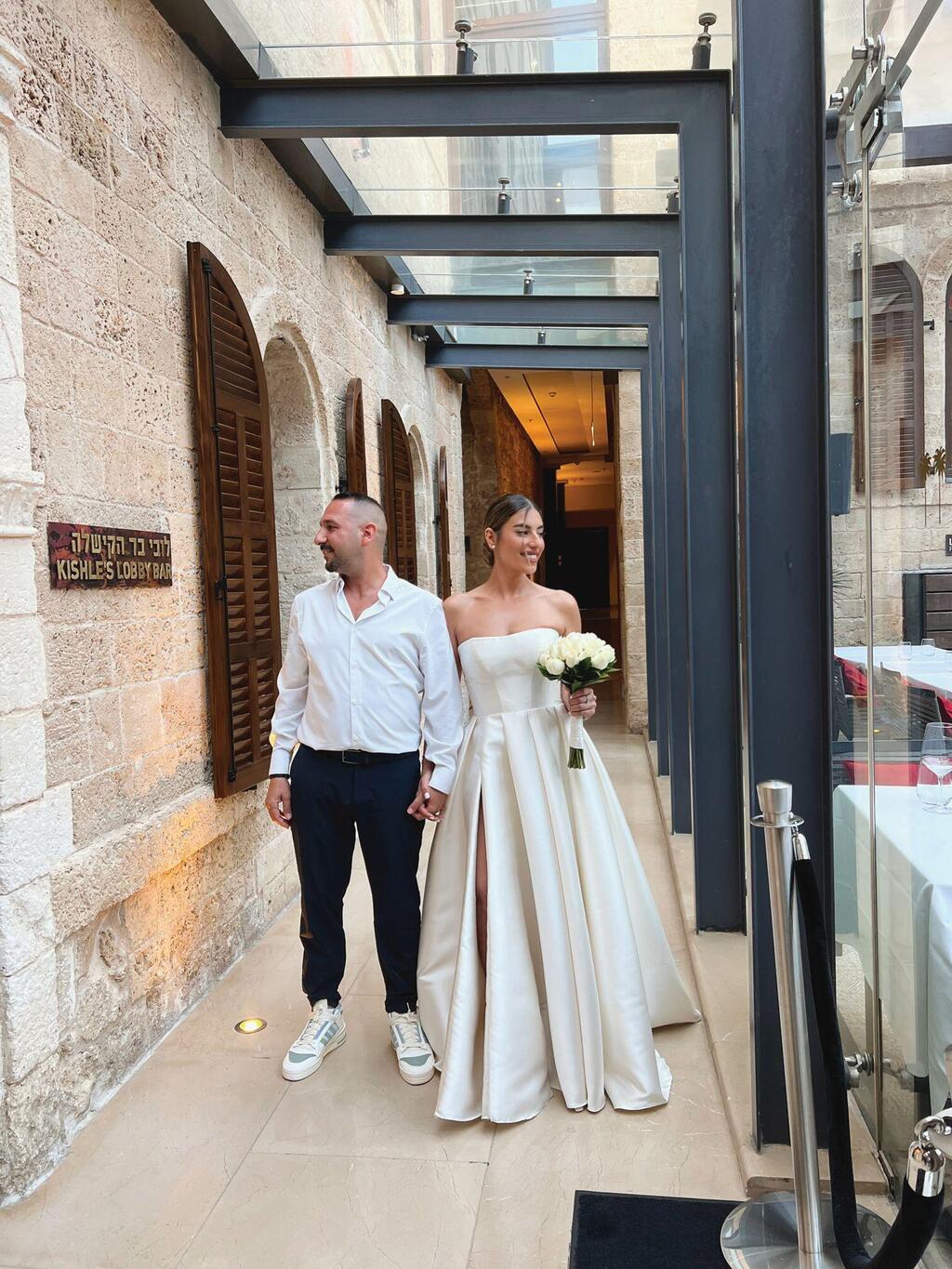
Nati and Bat El at their wedding
(Photo: Ross Photography)
“He was very confident. He set the date and everything. I arrived like a guest,” she laughs.
Nati: “The proposal wasn’t a surprise. She knew the ring was coming. Listen, she’s not a child. I wasn’t going to waste her time. In our very first conversation I told her, jokingly, ‘Can I have a child with you?’
“Bat El is one of a kind. I never understood how she was still single. I remember telling Shiran, ‘How does she not have a relationship?’ I was always looking for someone to introduce her to.”
How come?
Bat El: “I don’t have an answer. I had relationships, but I was never attached. Many times people tried to set me up with divorced men with children and I always rejected it. I wanted to start this journey when we were both at the same point.
“Today I don’t understand it. The ways of God are mysterious.”
Nati: “Everything comes from above.”
Bat El: “I was never pressured, but people around me were. They told me, ‘Freeze your eggs, what are you waiting for?’ But I had faith that I would get married, and that’s what happened.
“The truth is I started the process. I did all the tests and already had an appointment at Assuta to retrieve eggs, but then I realized I wasn’t doing it for myself, I was doing it because of pressure from others, and I decided to give it up.”
How did your parents accept Nati?
“My mother immediately said, ‘I gained three grandchildren.’ But in the less close circle there were people who told me, ‘Why do you need this?’ or ‘What are you getting yourself into?’”
How did Shiran’s family accept the relationship?
Nati: “Her father had a hard time at first, but today he is in good contact with us and comes to visit all the time. Her mother passed away several years ago.”
'The children are part of me'
At first, Nati and Bat El were afraid to tell their family, friends and especially Nati’s children about their relationship, as they were still mourning their mother.
“I didn’t know how to tell them or how they would accept it,” he says.
How did they react?
“Ilai, the oldest, was okay with it from the beginning, although it seemed a little strange to him. Mai, the youngest, also accepted it with a lot of love. But Ori, the middle child, struggled more.”
Bat El: “Ori didn’t accept me at all. She wouldn’t even speak to me. Look, it’s natural. This is a family in trauma. After their mother was murdered, they were afraid I was coming to take their father too.
“Today we are the closest. I adore her.”
How did you reach her heart?
“I volunteered for 10 years with the ‘Larger Than Life’ organization, and there was a counselor there who always told me, ‘Slowly, be yourself.’ It was golden advice.
“I was simply myself, and little by little she understood that I wasn’t coming to take her father and I wasn’t replacing her mother, because there is only one mother.”
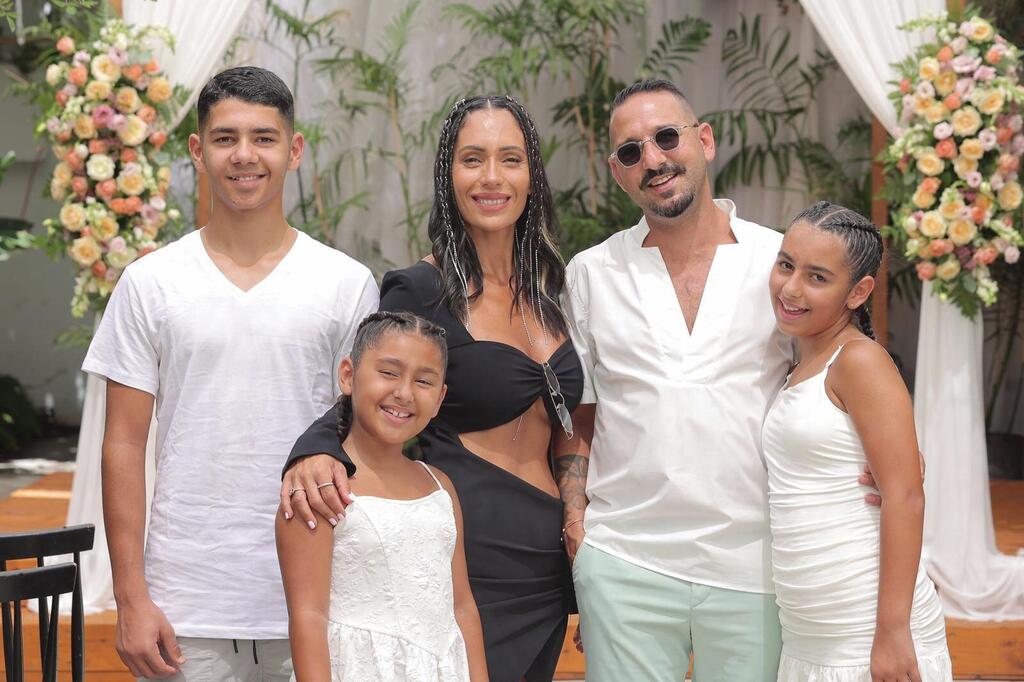
Before the disaster. Nati, the late Shiran and the three children
(Photo: Courtesy of the family)
How present is Shiran in your home?
“Shiran is part of us. She is here all the time. We talk about her, mention her, ask what Mom would have said. I understand and accept it. I even encourage them.
“I didn’t just marry Nati, I married an entire family. In one day I went from zero to 100, from a single woman who went out every night to a mother of a baby girl and three teenagers.
“You could say I accomplished a lot in two years. I stepped on the gas, as they say,” she laughs.
How involved are you in the children’s lives?
“What do you mean? I’m like a mother. I’m in the WhatsApp groups of three classes, I go to parent meetings and I have conversations with them about boys and girls. Don’t forget they’re teenagers. There are a lot of hormones here.”
Wasn’t that frightening at first?
“Never. These children are the gifts of my life. I came here out of love and I accept everything with love. I can’t be without them for a minute. They are already part of me.
“After the birth, Ilai asked me, ‘So who is your oldest?’ and I told him, ‘Obviously you.’ Biologically Naya is my first child, but he is the oldest in the family.
“Shiran raised three wonderful children. Many times I ask them what Mom would have done because I just want to learn from her.”
How did the children react to Naya?
“She is a gift. She brought a lot of life into the home. Everyone here is completely in love with her. The girls are constantly with her, taking care of her like a doll, and Nati especially.
“Think about it, he wasn’t supposed to be here, and now he is bringing life into the world. She won’t be the last. I always dreamed of a big family.”
What would Shiran say if she saw you now?
Nati: “I think she is happy up there seeing Bat El beside me and beside her children. If it had happened the other way around, I would have wanted her to choose life too.
“I believe she looks down on us from above and gives us her blessing.”