

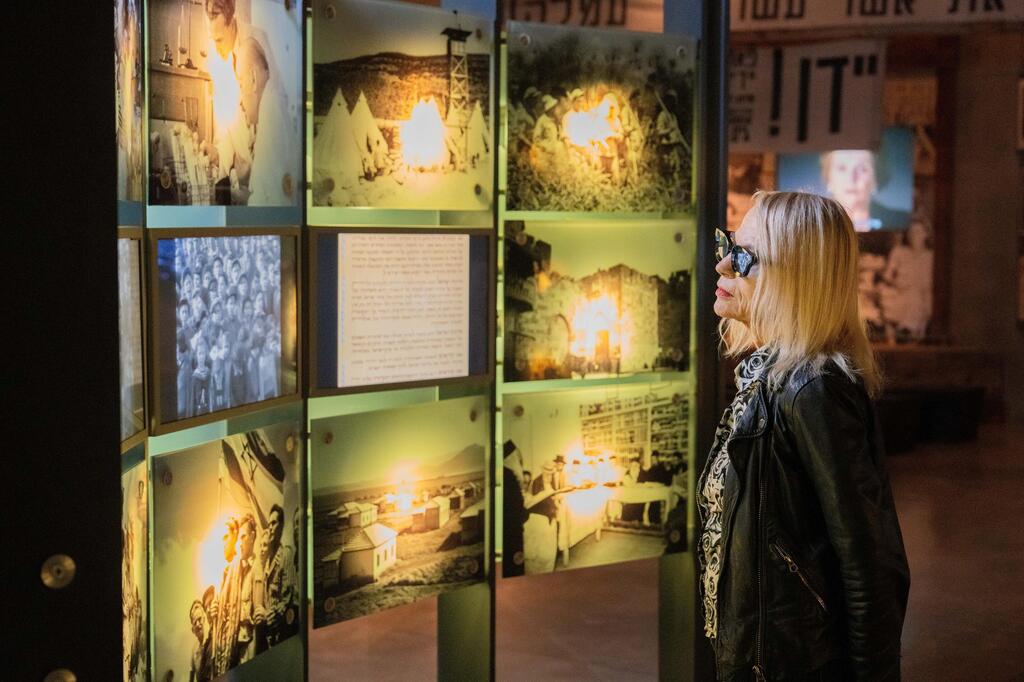
It happened about a week before the attack on Iran. Yad Vashem in Jerusalem had emptied of visitors and was preparing to close for the night. But this night would be different. For once, the museum would not be completely empty.
A guest would remain inside. Laure Adler, a writer, filmmaker and prominent French journalist, chose to spend an entire night there, completely alone, surrounded only by the exhibits documenting the Holocaust.
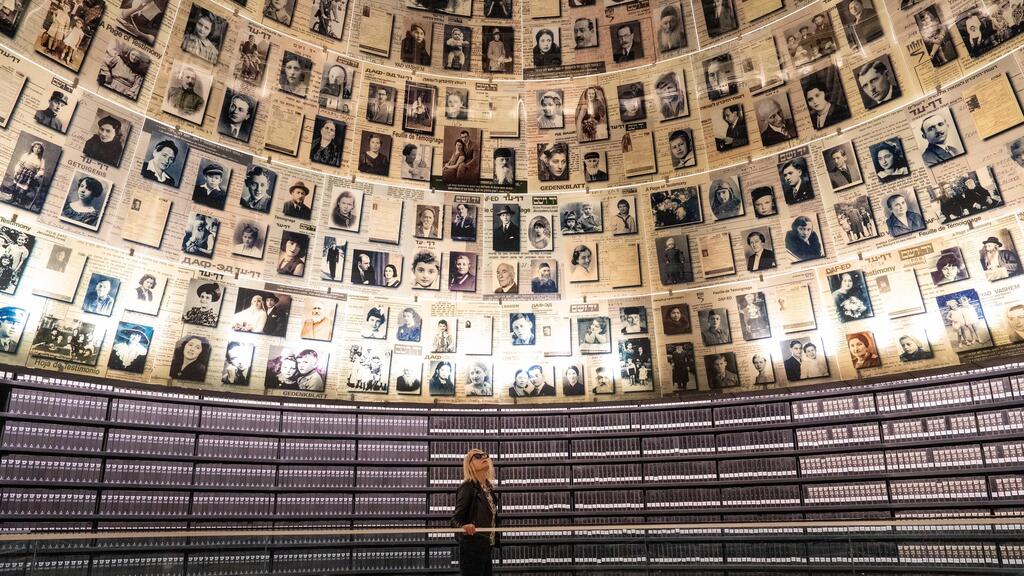
The task was not imposed on her. In fact, she herself chose which museum anywhere in the world she wanted to spend the night in.
“I have no rational explanation. When they asked me where I wanted to stay, that’s what I said, spontaneously at that moment,” Adler explains in an interview conducted partly before she entered the museum and partly afterward. “I couldn’t imagine myself anywhere else.
“I had visited before, and the visit haunted me and still haunts me. When I arrived this time, there were rooms I immediately recognized. Not only what I saw there, but what I felt during previous visits.”
Adler was invited by Alina Gurdiel, editor of a special literary project by the French publishing house Stock. The project sends writers and intellectuals to spend a night in a museum of their choosing anywhere in the world.
(Photo: Shalev Shalom)
(Photo: Shalev Shalom)
Some choose to surround themselves with artistic beauty in places like the Pompidou Center, the Louvre, the Picasso Museum, or private museums in Venice and Madrid. Others prefer political or social statements and wander through places such as the Panthéon in Paris at night.
Some focus on their cultural roots, choosing museums in Georgia or Beirut.
Only a few look for a different kind of experience, one that will test them emotionally or reopen wounds in their own lives.
Laure Adler chose to spend the night among the testimonies of survivors and the memory of the murdered, which seem to hover in the space of Yad Vashem.
“Courage or stupidity. I don’t know,” she said with a worried smile before entering.
“What if I am not worthy of the task?”
What frightened her most?
“That I won’t be worthy of the magnitude of the task. In truth, no one can be. There is something liberating in knowing that.”
“I keep thinking about whether we are worthy of what Yad Vashem teaches us — the obligation to spread the memory of the Holocaust, why October 7 happened, and why antisemitism, even in France, still exists afterward.”
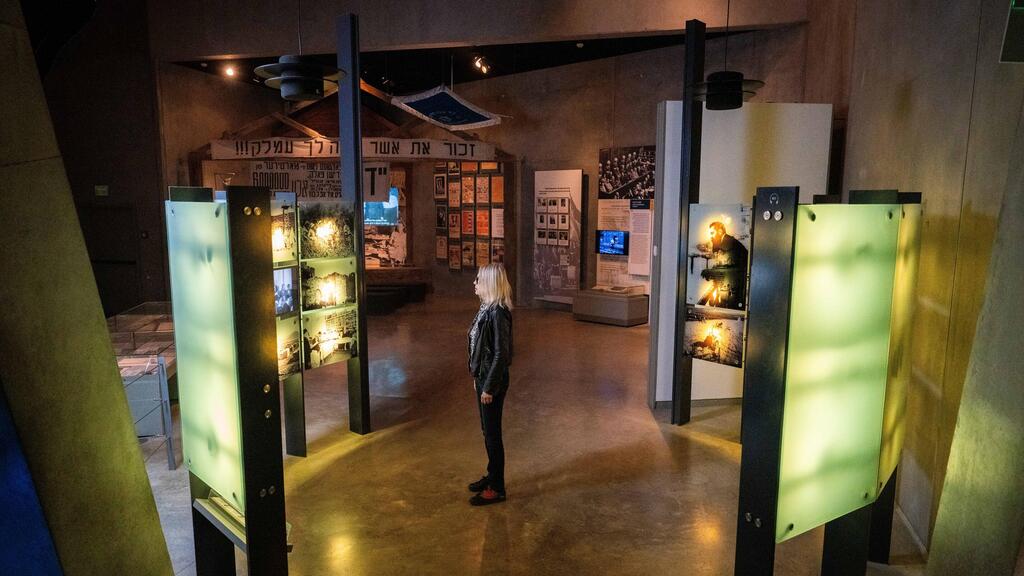
(Photo: Shalev Shalom)
Adler, 75, is considered one of the pillars of contemporary French culture.
A respected radio and television journalist and documentary filmmaker, she previously headed the radio station France Culture and served as cultural adviser to President François Mitterrand in the early 1990s.
Much of her work deals with culture, feminism and philosophy. She has published dozens of books, most of them biographies.
Among them are works on Jewish feminist politician and Holocaust survivor Simone Veil and on philosopher Hannah Arendt, who coined the term “the banality of evil” during the Eichmann trial.
Adler also wrote a documentary film about Claude Lanzmann, the director of the landmark Holocaust documentary “Shoah.”
Adler herself is not Jewish. She met her first husband, Alfred Adler, who was Jewish, while volunteering on a kibbutz in Israel. Her second husband, Alain Weinstein, is also Jewish.
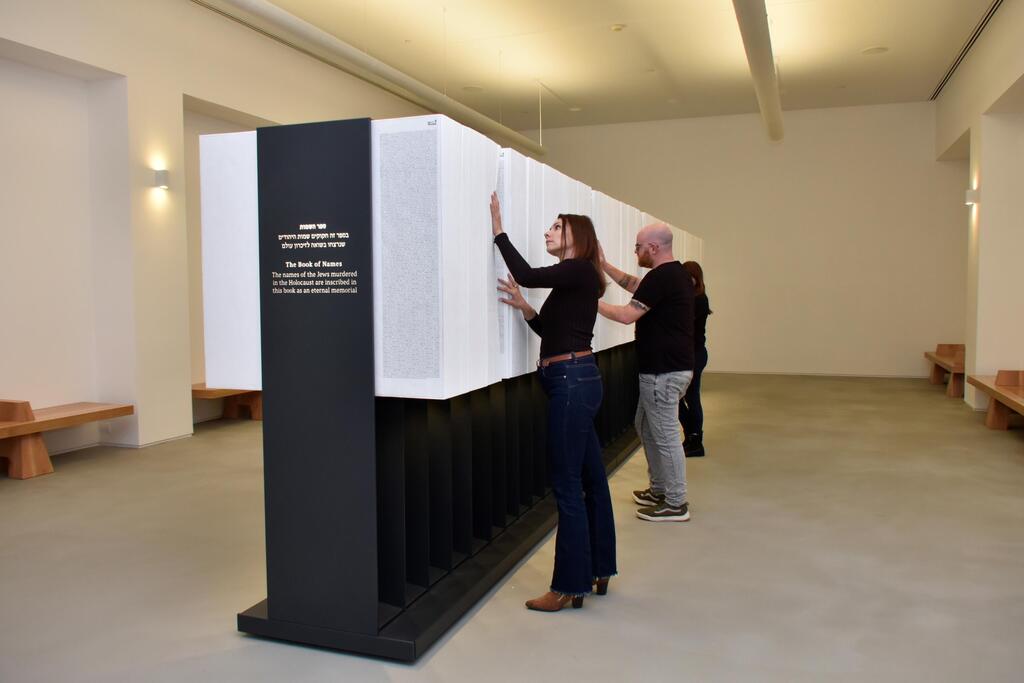
The book of names, Yad Vashem
(Photo: Yad Vashem)
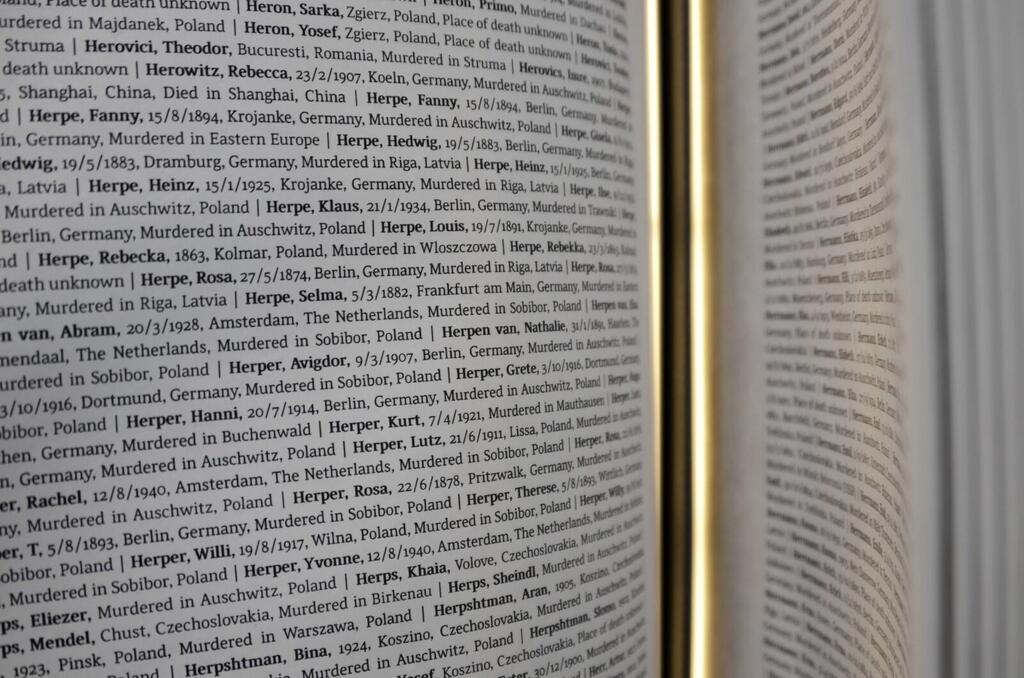
(Photo: Yad Vashem)
Entering the museum at night
Before entering the museum that evening, Adler spent time at Yad Vashem’s memorial site and its temporary exhibitions. However, she asked not to see the museum itself before the doors closed for the night.
She entered at 8:30 p.m. and left at 6 a.m.
The museum staff ensured all exhibits remained operational, and it was agreed that after midnight, the night guard would pass through every three hours “to check that I was still alive,” she jokes.
Adler also asked to be awakened for sunrise if she happened to fall asleep.
“Like being reborn?” she was asked.
“Yes.”
A camp bed, water and Kafka
The publishing house behind the project sets strict rules: museum staff may provide the writer with only a camp bed and a bottle of water.
Adler brought a thermos of tea and received a handful of almonds from Eliad Mora-Rosenberg, the museum’s art curator.
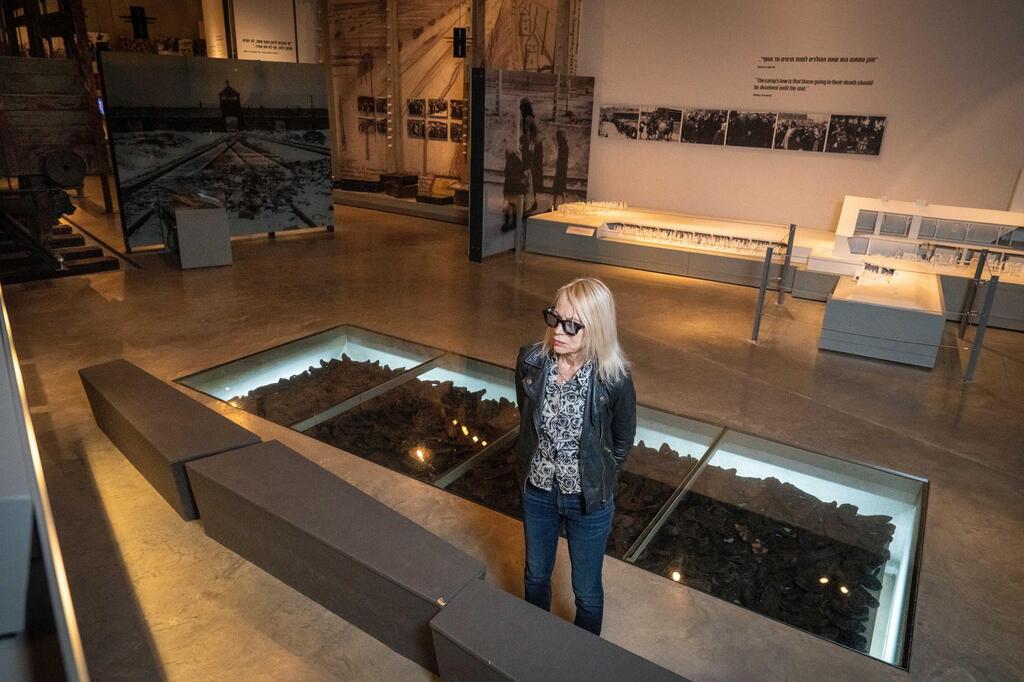
(Photo: Shalev Shlaom)
“I didn’t give myself permission to eat beforehand, and I wasn’t able to,” she says. “That morning I visited Kibbutz Be’eri. It was an emotionally heavy day, as you can imagine.”
Another object she brought with her was Franz Kafka’s “Letters to Milena,” a collection of intimate and romantic letters Kafka wrote to the translator of his works.
She also carried a notebook, which she filled with impressions during the night.
“I will live a night with the dead. I hope they will accept me,” she said just before entering alone.
Despite the obvious contemporary associations, the visit had actually been planned for 2023 after two years of preparations.
“Then the October 7 massacre happened.”
A night of signs and echoes
The unusual nighttime visit filled Adler with powerful emotions and reflections.
“In 2026, I find myself wondering whether we are worthy of what Yad Vashem teaches us: the duty to transmit the memory of the Holocaust, why October 7 happened, and why antisemitism, even in France, still exists.”
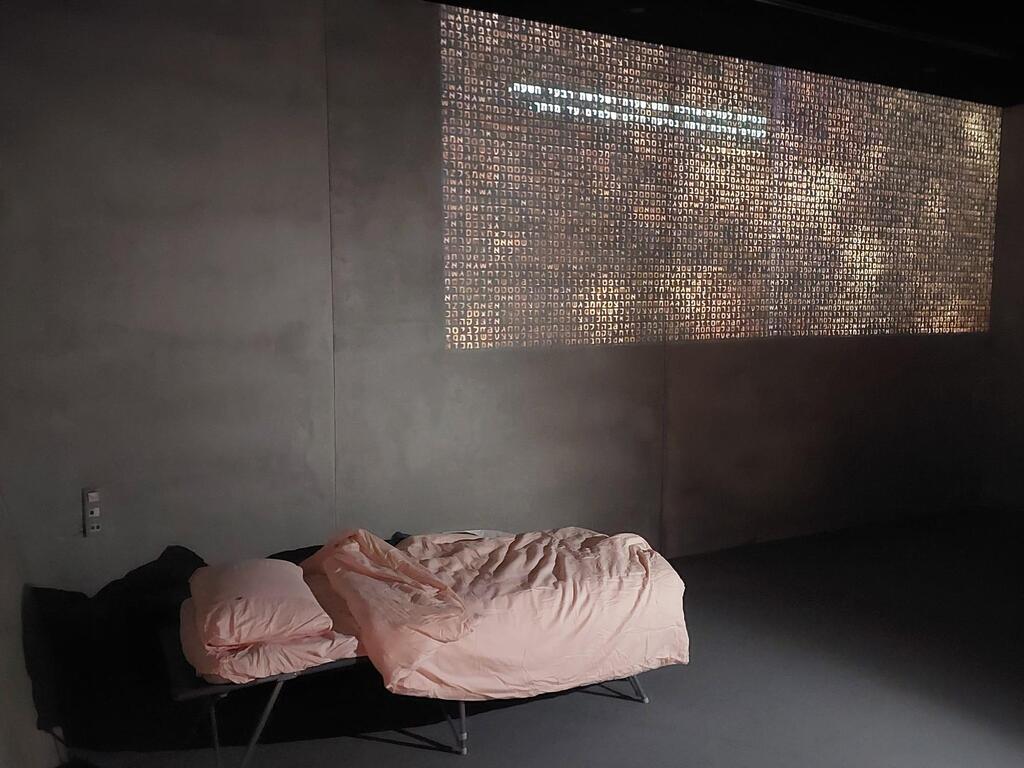
The bed provided for Adler
What moved you most?
“The photographs of people during the liberation of the concentration camps. Also, those lying in fields.”
“I read descriptions written by Americans. And François Mitterrand once told me how he met his friend Robert Antelme in Germany at the end of World War II, a few days after he survived a death march. He was in such a state that Mitterrand did not recognize him.”
“And of course, even if it sounds cliché, the eyes of the children. And also the humor some survivors display.”
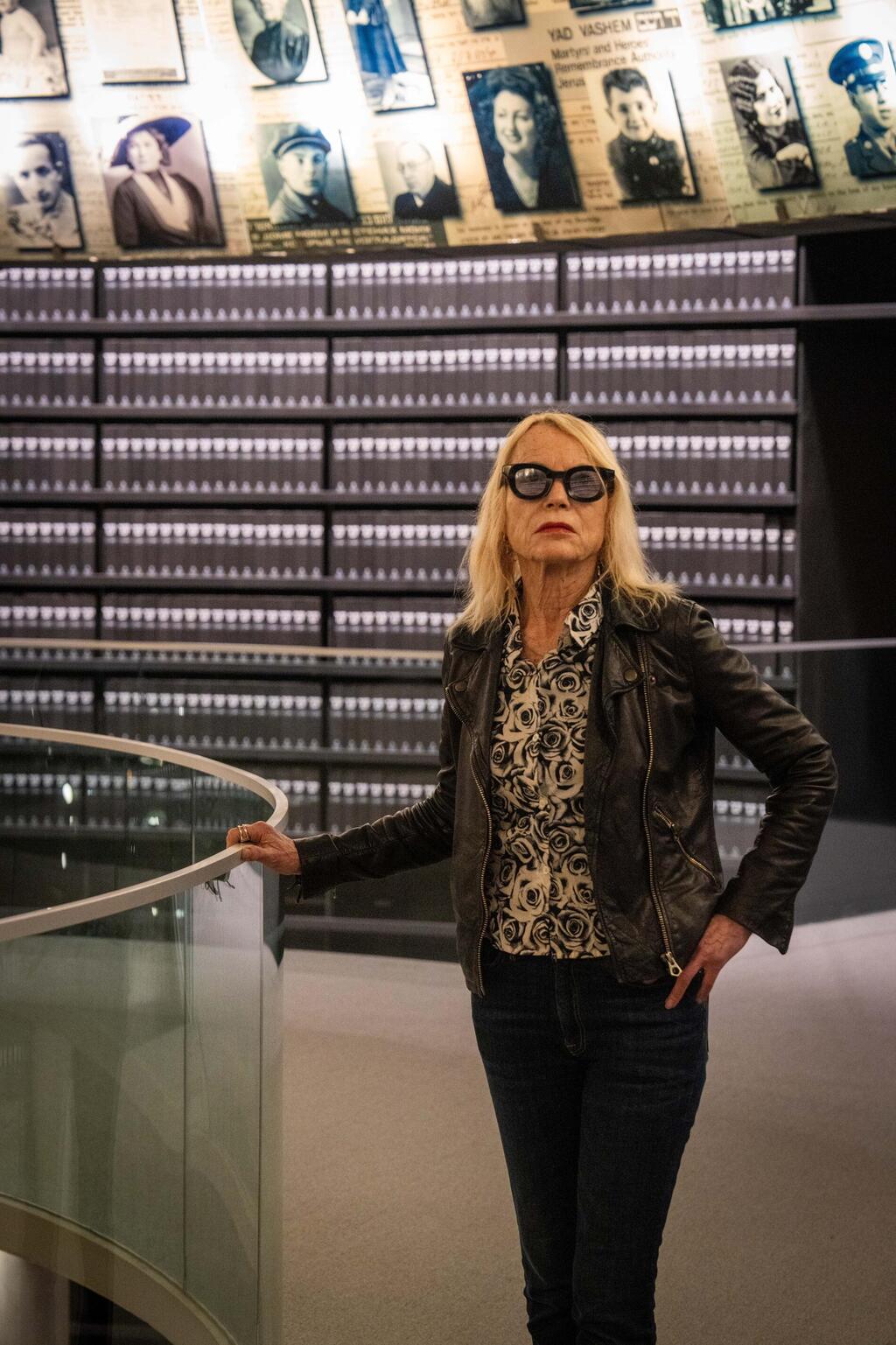
Adler, who rarely parts from her sunglasses, wandered in circles through the rooms all night, recording her impressions in the small notebook.
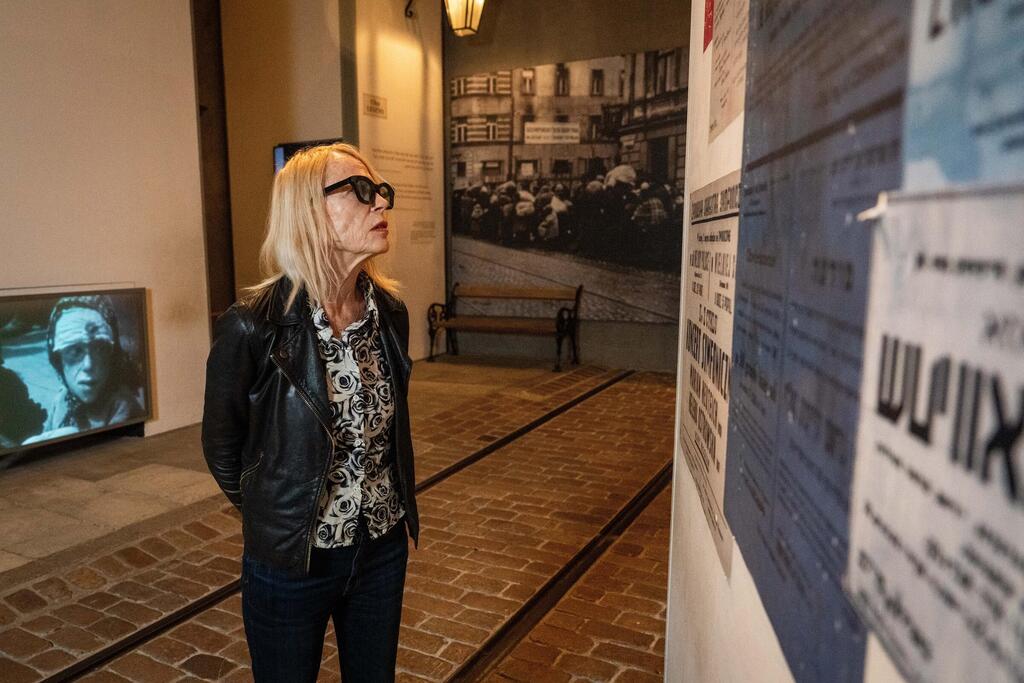
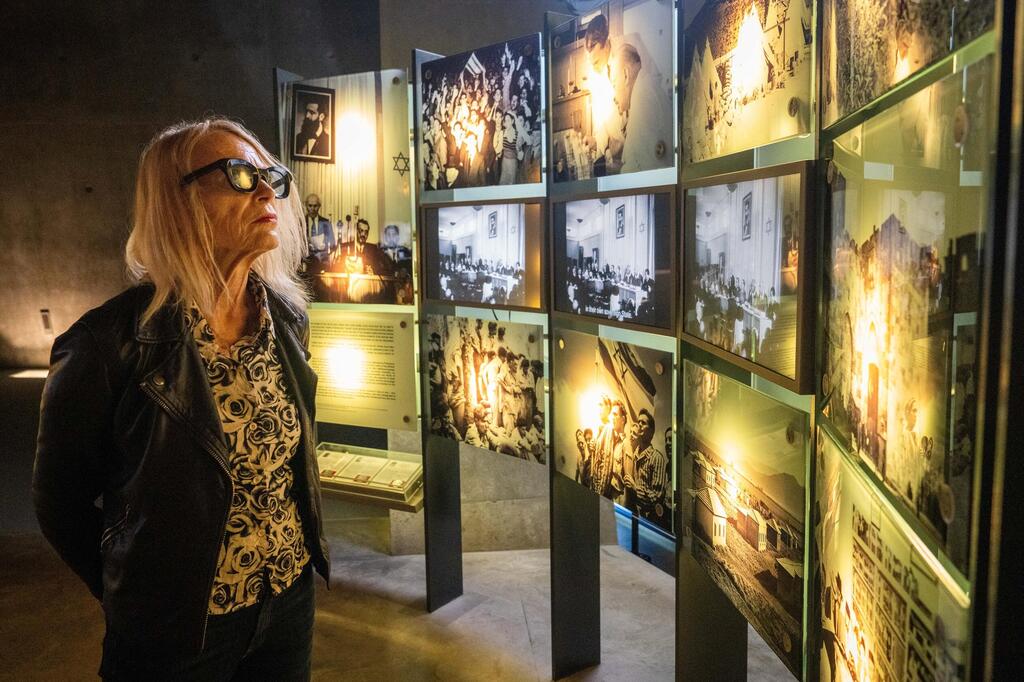
“Sometimes I stood or sat on the benches and studied the documents. All the faces reminded me of texts or documents I knew. It felt like an endless reflection of historical and philosophical echoes.”
Was there something you could lean on during the night?
“I had many ‘signs.’ I decided to place the camp bed in a room called ‘String,’ at the end of the museum, where a video installation by the artist Uri Tzaig is displayed.
“The room is dark, with meditative music playing, and quotations from Holocaust victims and survivors projected on the wall.
“The first quote that greeted me was from the writer Aharon Appelfeld, to whom I was very close: ‘Within the horror grew another morality, another love, another compassion. They grew wild. No one gave them a name.’ I saw that as a sign.”
At one point, the images became overwhelming.
“I didn’t sleep that night, but my eyes began to hurt from everything I was seeing, so I closed them for a moment.
(Photo: Shalev Shlaom)
“When I opened them again, I saw the words of the Dutch writer Etty Hillesum, murdered in Auschwitz, from her diary: ‘God, you have given me so much wealth. Please help me share it generously with others. My life has become an uninterrupted dialogue with you, God.’ Before coming to Israel, I had been working intensively on her writings.”
Earlier, in the Hall of Names — where the names of Holocaust victims collected so far are recorded — she opened the book at random.
“It happened to be the name Adler.”
Another coincidence followed.
Adler was deeply moved by a video testimony of a 90-year-old Holocaust survivor recounting his experiences in Auschwitz with energy and a smile that seemed to express the triumph of life.
“Everyone asks me why I smile,” she quotes him.
The next day, she learned the man’s name: Sinai Adler.
He is not a relative, and Laure Adler does not know him personally.
Was there anything that surprised you?
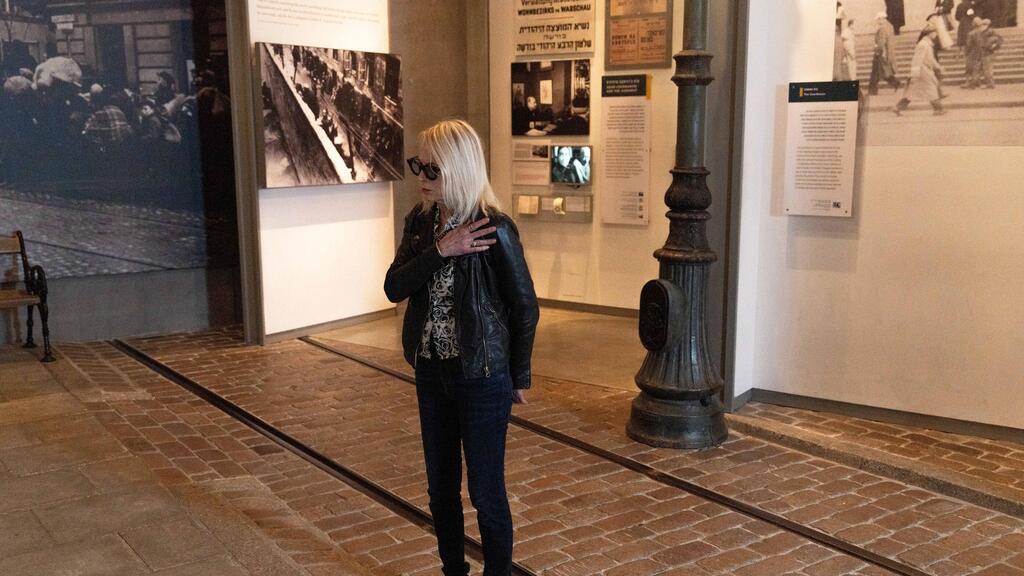
“I had completely forgotten that the Nazis themselves appear in the museum displays — Hitler, Göring, all of them. I thought I was hallucinating. I went back several times during the night to check.”
(Photo: Shalev Shalom)
Walking from shadow to light
The day after the visit, Adler said she had not yet fully processed the experience and had difficulty sleeping.
“It was difficult, very difficult. But I don’t regret it. If it were possible, I would be ready to return tonight and repeat the experience.
“The staff were extraordinary. It is not obvious to allow someone to stay all night in the museum and keep the place open and functioning.”
The experience also made her reflect on how best to commemorate the victims of October 7.
“In a museum? With a monument? By telling the personal stories of those who were murdered? Is it already possible to hear them, or is it too early?
“Yad Vashem succeeds because it weaves together a fabric of personal stories.”
Shortly before sunrise, the guard came to wake her, as she had requested, so she could climb to the roof.
“It was very cold there. When dawn broke, I returned to the museum and looked back.
“I saw the halls illuminated by sunlight coming through the glass roof in the center of the building. I felt as though I was leaving a cave.”
The museum’s architecture, designed by architect Moshe Safdie, impressed her deeply.
“They truly thought about day and night.”
The last quote she saw projected on the wall was by Władysław Szlengel, who was murdered in the Warsaw Ghetto:
“Sometimes the journey lasts five hours and forty-five minutes. Sometimes it lasts a lifetime until your death.”
The day before entering the museum, she had been asked what question she hoped to answer afterward.
She had replied: “Is there still hope?”
Now, after the night, she answered differently.
“I visited here ten years ago. There are things you cannot forget, like the Hall of Names.
“But there is one thing I had forgotten: the transition from shadow to light.
“That is the sanctity of life — and it is the light that wins.”