

Israeli fashion photographers are rethinking what male bodies look like on camera — moving away from familiar images of toughness and control toward softer, more vulnerable representations of masculinity.
At the Fresh Paint art and design fair in Tel Aviv, photographers Shay Cohen Arbel and Angel Hai Arviv present series that sit between commercial fashion and artistic practice, both using male subjects to explore identity, desire and social norms.
Gallery
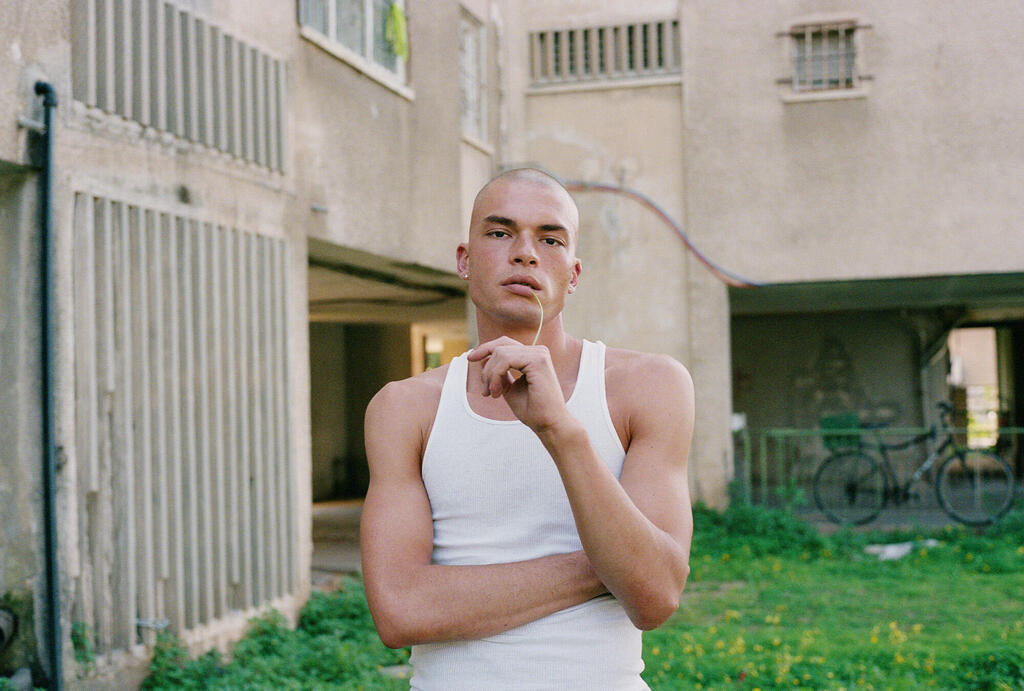
'In my work I deal with masculinity and identity,' model Nikita Sklaruk in a photo from the series 'Below'
(Photo: Shay Cohen Arbel)
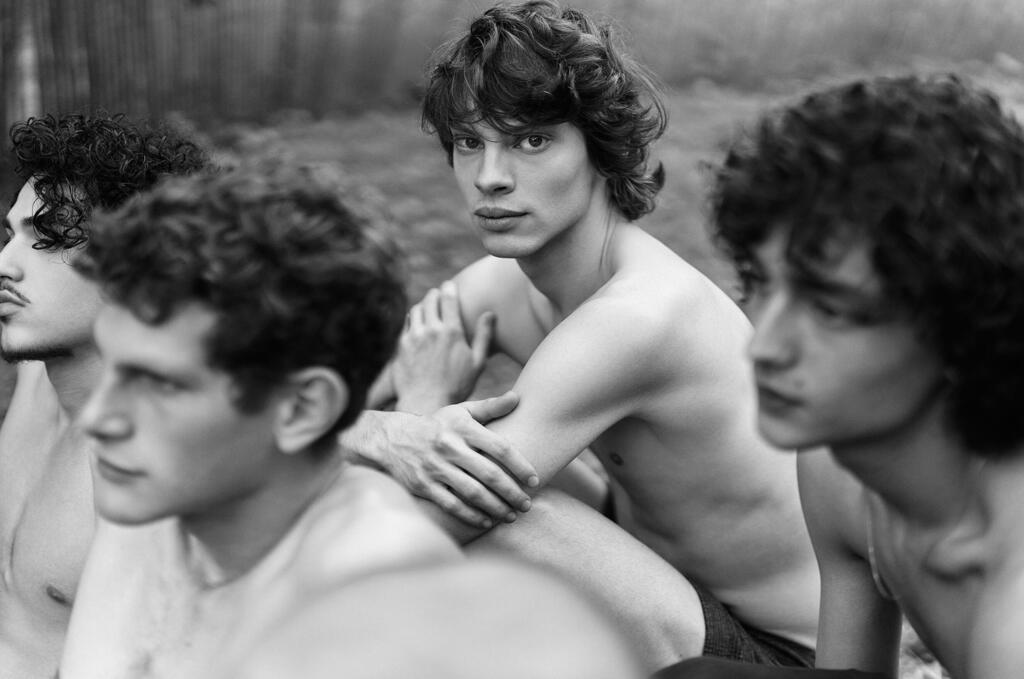
(Photo: Shay Cohen Arbel)
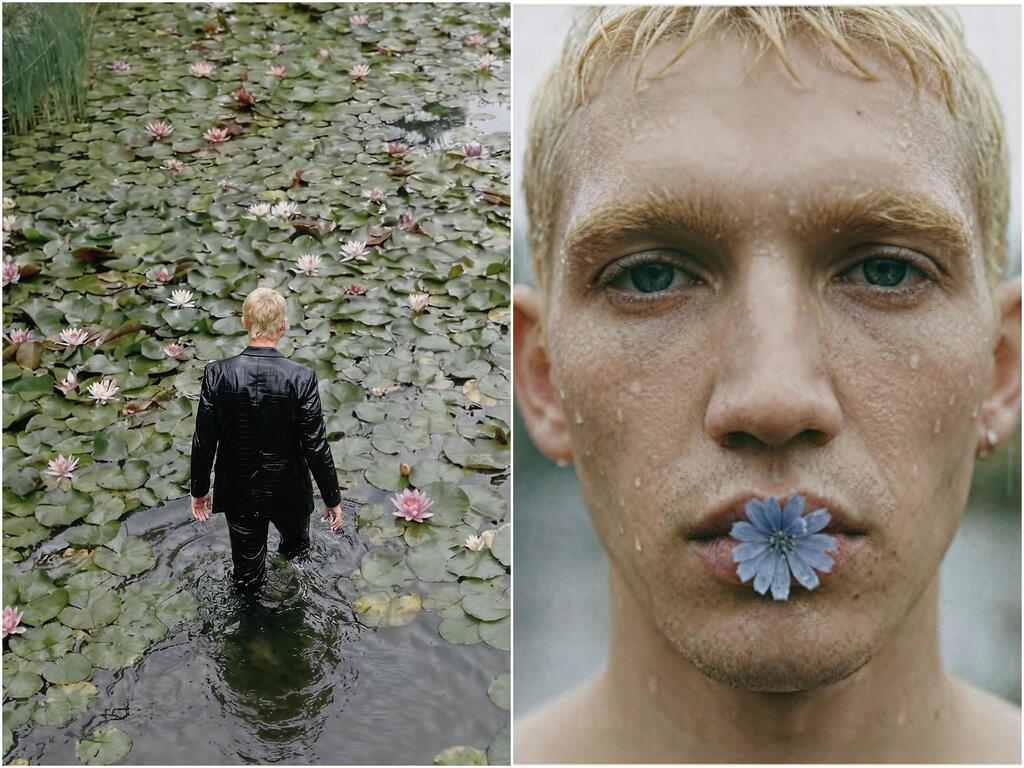
'I feel that softness and fragility are precisely what need to be said and made present here'
(Photo: Angel Chai Arviv)
Cohen Arbel’s series “Below” features young male models, some active in fashion campaigns, placed in worn, liminal urban environments such as aging residential building entrances. The men often face the camera directly, dressed in simple tank tops or partially exposed, their physical perfection contrasted with decaying surroundings.
Arbel says the work stems from an interest in how the male body exists in everyday public space, particularly in overlooked, transitional locations.
“I work with masculinity and identity,” he says. “I choose people I meet through everyday life and commercial work, but I try to bring out something more sensitive in them, something beyond their usual modeling persona.”
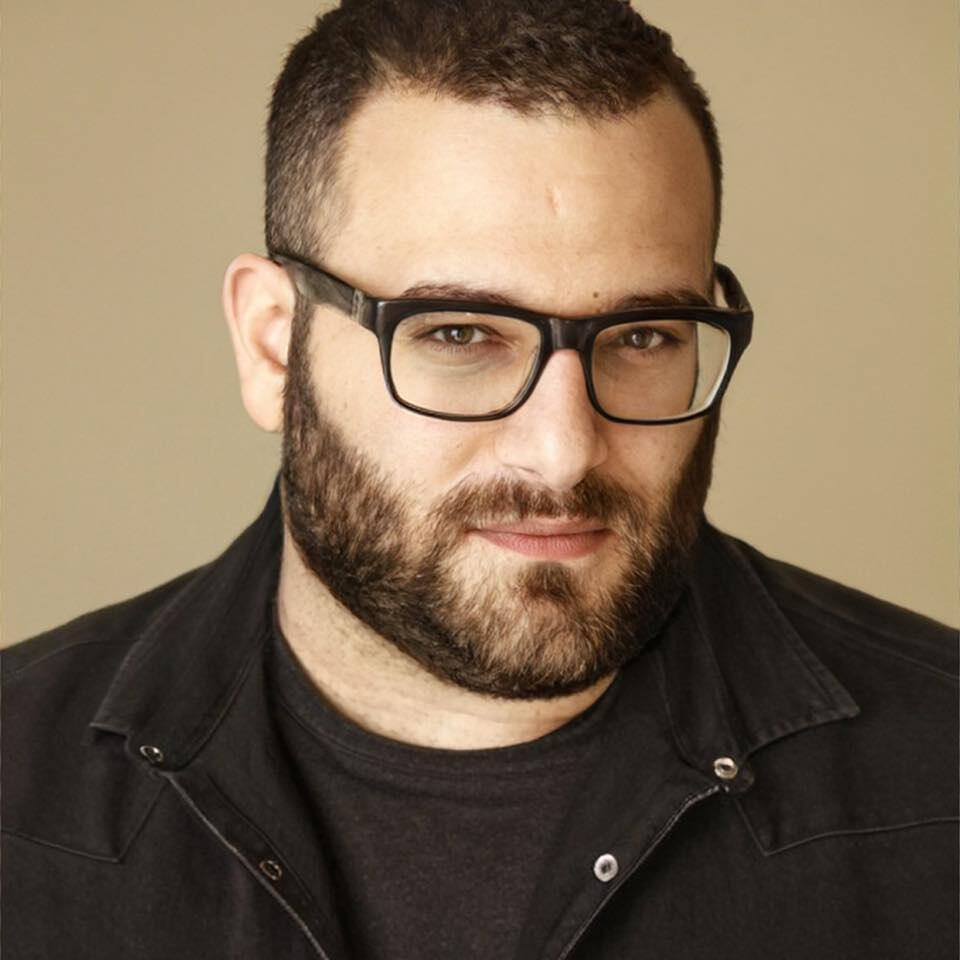
Shay Cohen Arbel
(Photo: Shay Cohen Arbel )
The images create tension between polished fashion aesthetics and the rawness of their surroundings, raising quiet questions about class, beauty and visibility. Arbel, however, resists framing the work as political. For him, the focus remains visual and emotional rather than ideological.
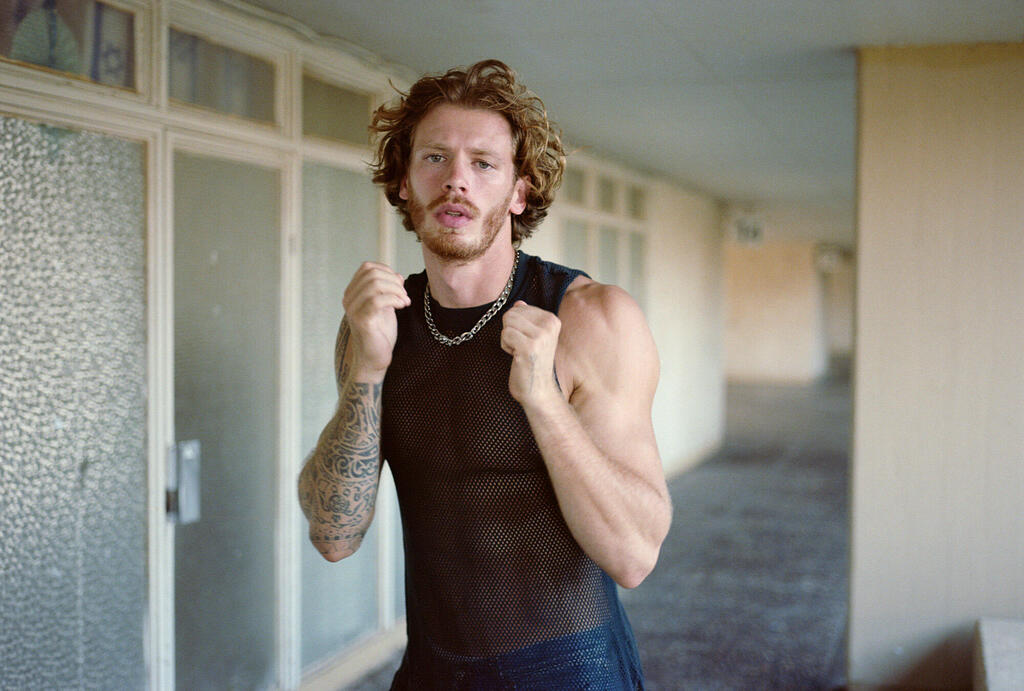
(Photo: Shay Cohen Arbel)
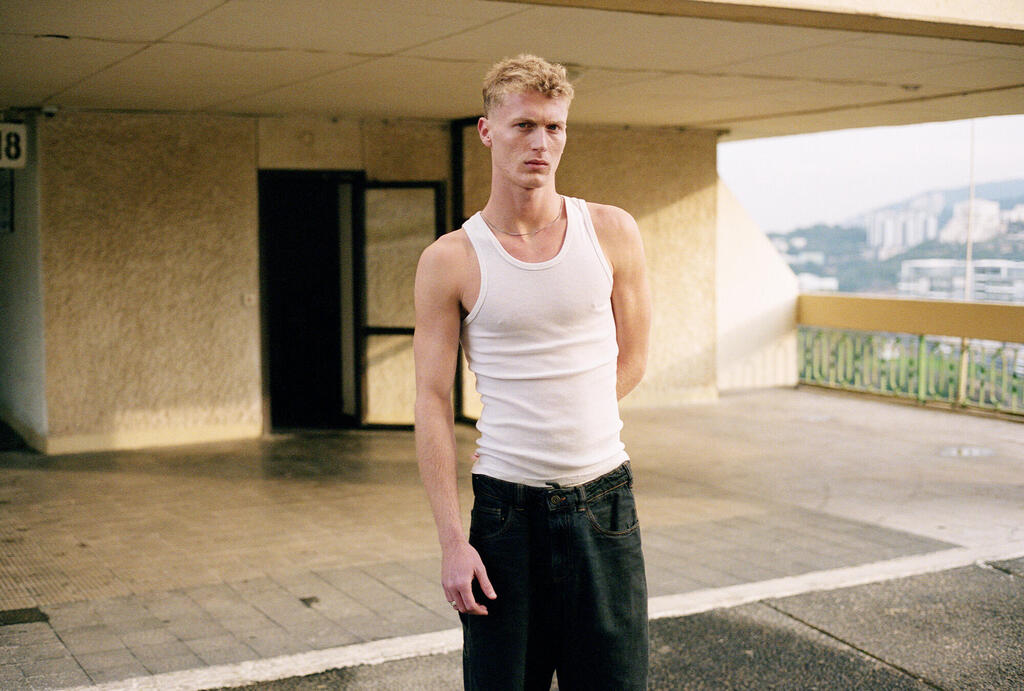
(Photo: Shay Cohen Arbel)
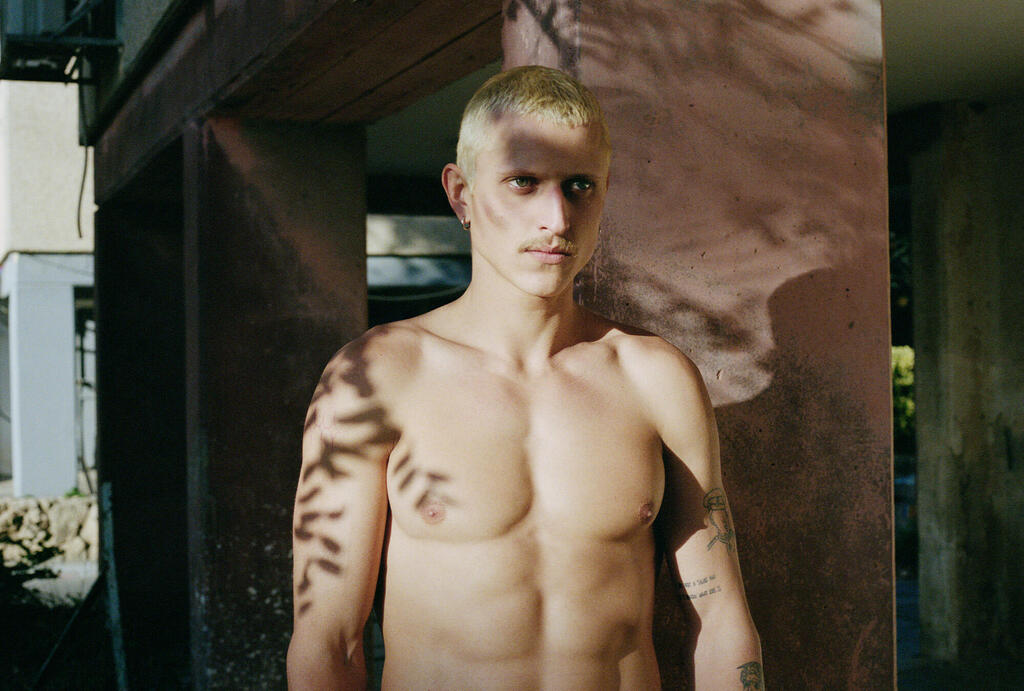
(Photo: Shay Cohen Arbel)
“A lot of my work begins with beauty, but also with a search for presence and gaze,” he says. “These places are nostalgic for me. They remind me of where I grew up.”
Alongside him, photographer and art director Angel Chai Arviv takes a more direct approach to masculinity and social identity. His work spans early student projects, commercial campaigns and recent pieces created after the outbreak of the war following October 7, shaped in part by personal loss.
Arviv, who describes growing up as a shy queer child in a provincial Israeli town, says his experience of outsiderhood continues to shape his artistic vision. His work frequently highlights fragility and emotional openness in male subjects, challenging dominant Israeli ideals of strength and restraint.
“Right now, during the war, I am looking for the exposed, fragile Israeli man,” he says. “The opposite of the macho Israeli image we all know.”
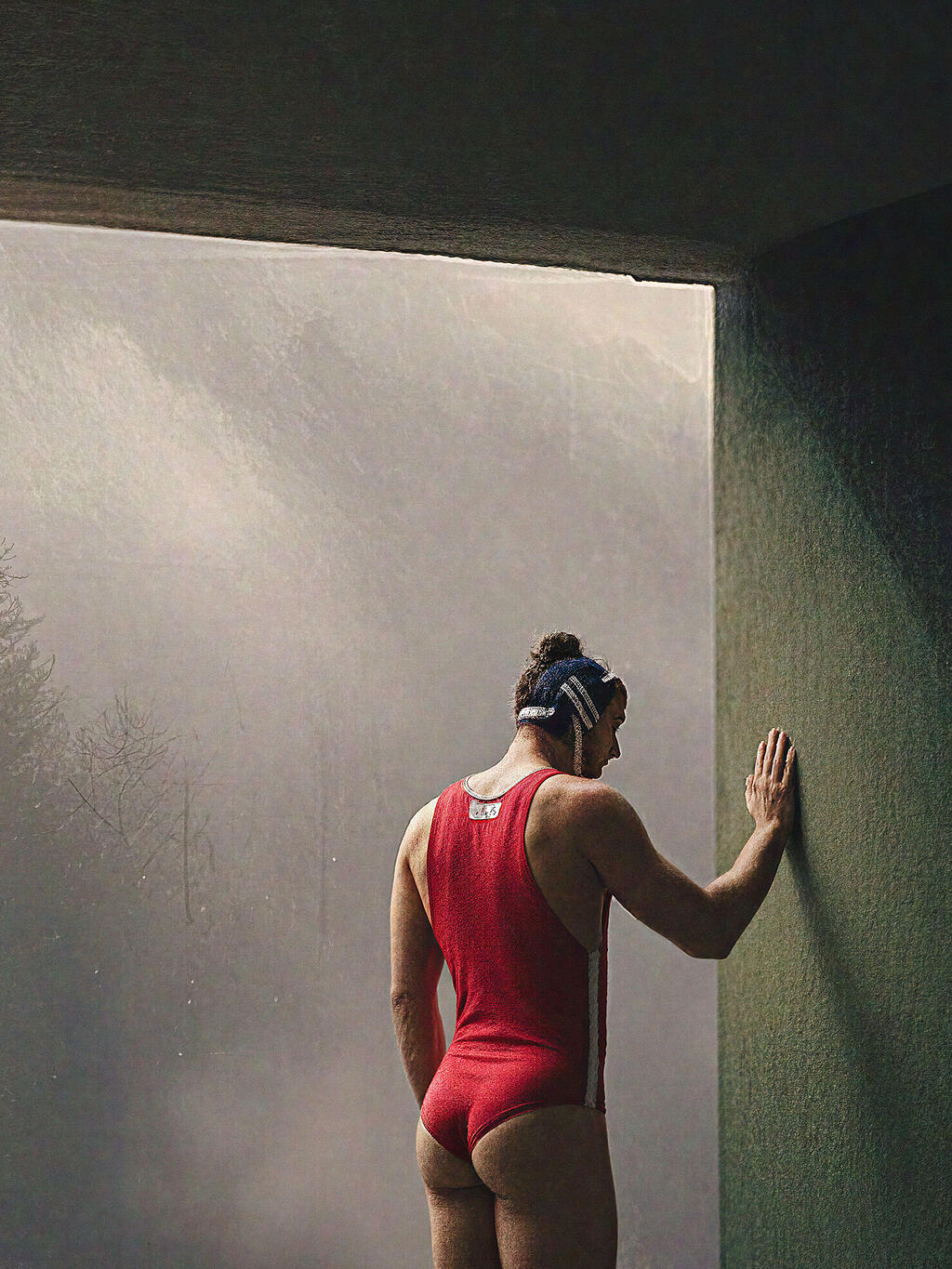
'A new perspective on what it means to be a man, how it is okay to be a man, how to look at a man correctly'
(Photo: Angel Chai Arviv)
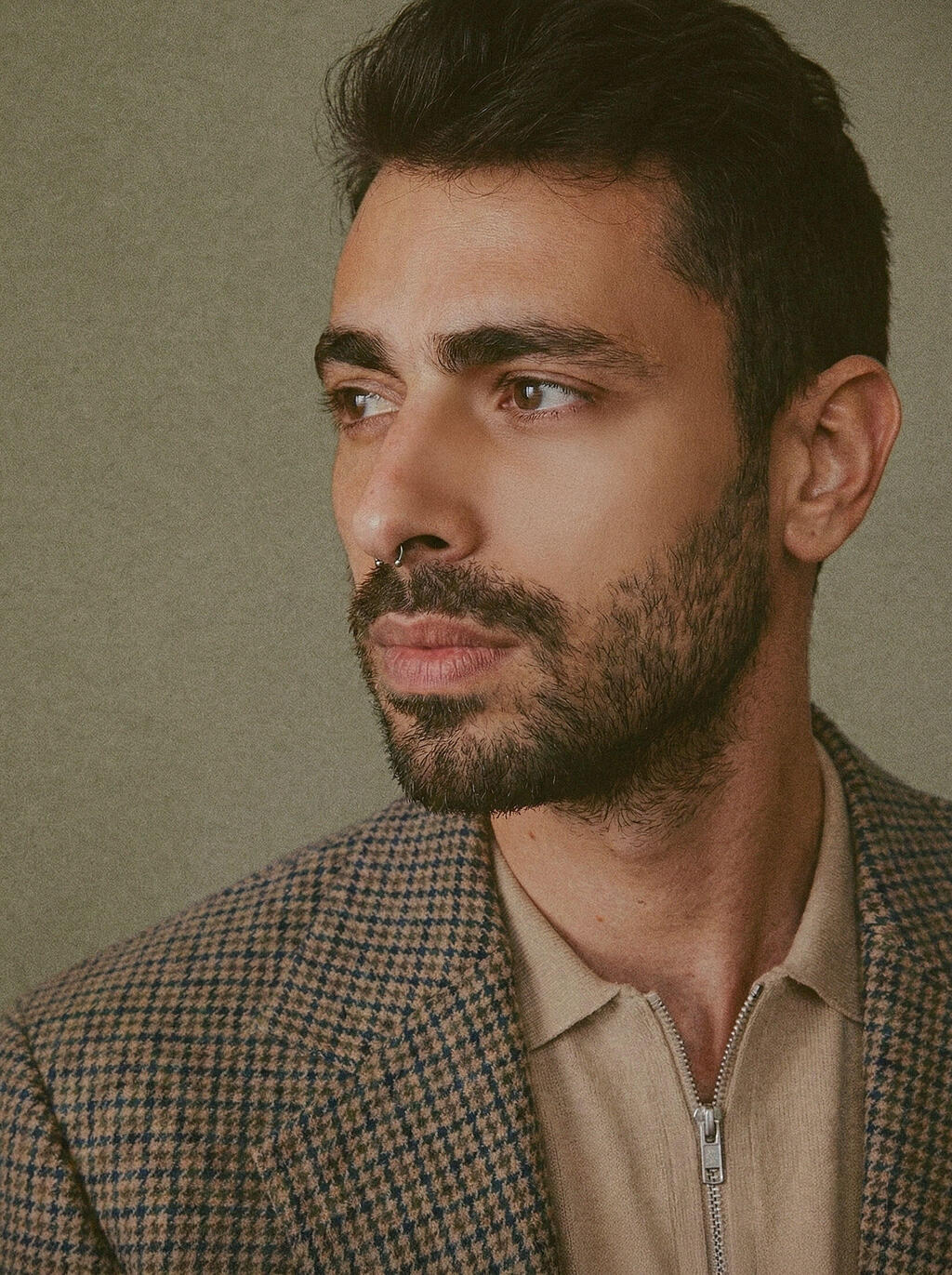
Angel Chai Arviv
(Photo: Angel Chai Arviv)
Having worked in Europe and the United States, Arviv argues that masculinity is understood there as a broader spectrum that includes softness and femininity, while in Israel those expressions remain more limited.
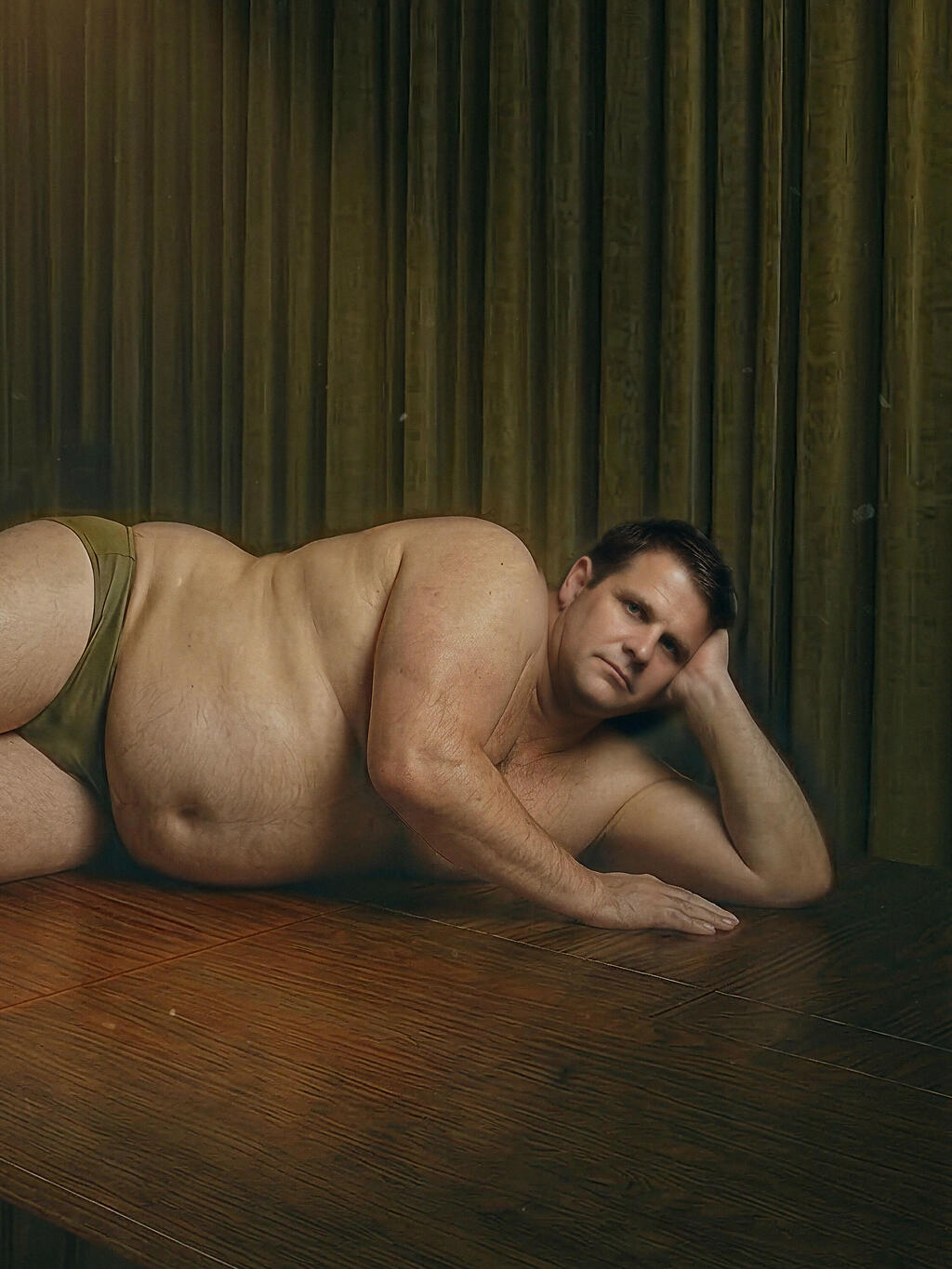
'In my work, I dismantle the old myths of Israeli masculinity'
(Photo: Angel Chai Arviv)
One of his best-known works shows a model holding a plastic bag filled with water containing a goldfish, covering one eye. The image combines aesthetic precision with symbolic tension, turning fashion photography into a commentary on identity and vulnerability.

Model Vova in a photograph by Angel Chai Arviv at the 'Fresh Paint' fair
(Photo: Angel Chai Arviv)
Another recurring figure across both photographers’ work is model Vova, who appears in multiple projects by Arviv and Cohen Arbel. In Arbel’s images, he is often presented in more intimate framing that emphasizes bodily detail and emotional presence, reinforcing the evolving relationship between photographer and subject.
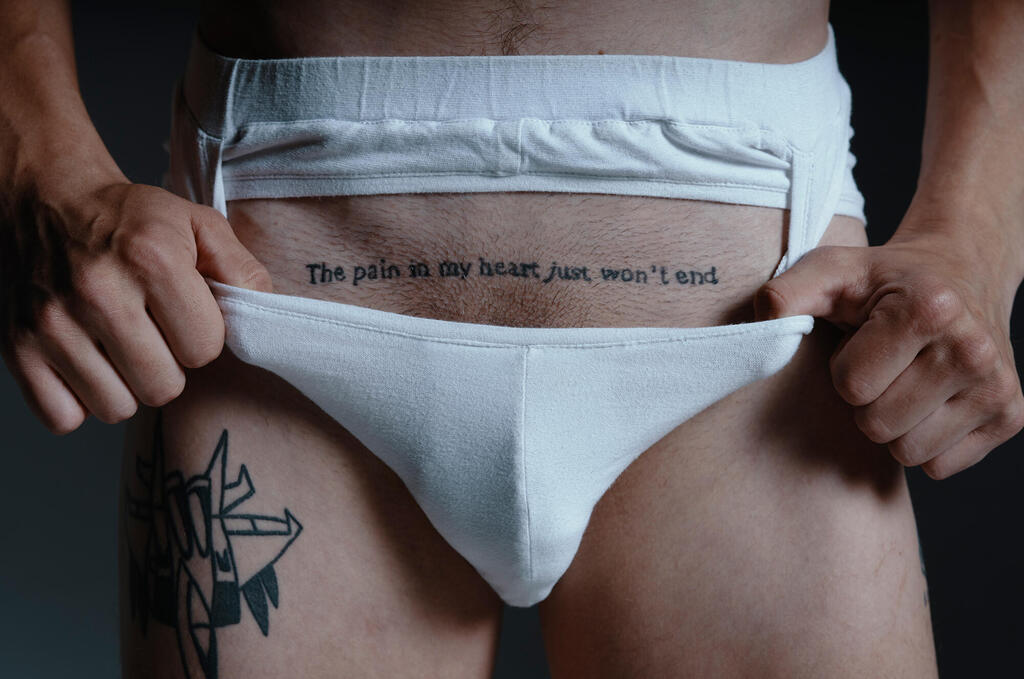
(Photo: Angel Chai Arviv)
Both artists operate at the intersection of commercial fashion and art photography, continuing to work on advertising campaigns while developing personal projects that push aesthetic boundaries. Arbel has worked with brands such as Padani, while Arviv has collaborated with major fashion houses including Factory 54.
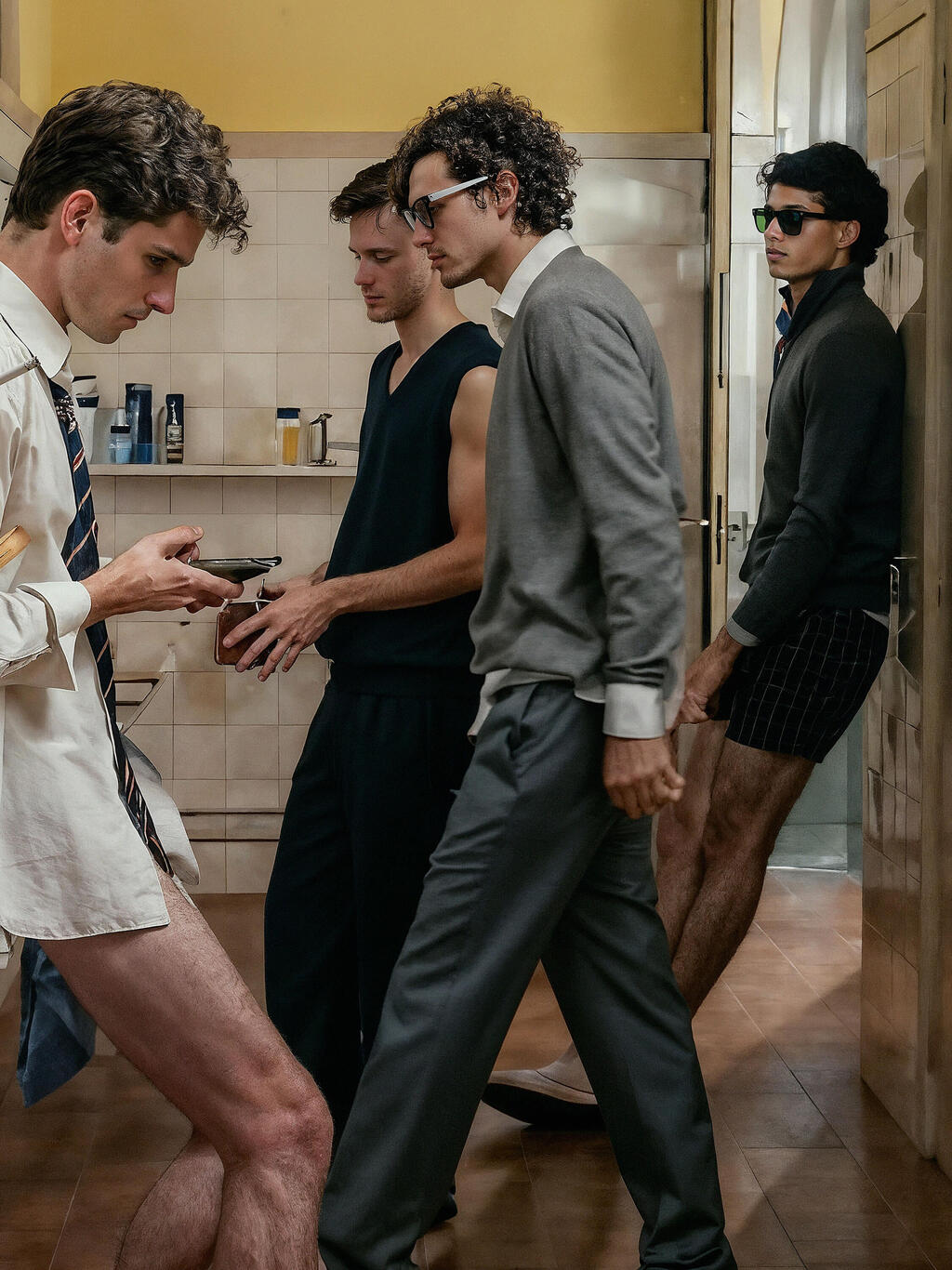
'Abroad, there is room for femininity, for softness, while here in Israel, less so'
(Photo: Angel Chai Arviv)
Their visual choices are precise and controlled, yet the underlying subject matter reflects broader cultural tensions around masculinity in Israel — shaped by politics, militarism and social expectation. Arbel insists his approach is not critical but observational.
“The body interests me because it carries life, marks, memory and identity,” he says. “Many of the works begin with beauty, but also with a search for presence.”
Arviv, by contrast, sees his work as a deliberate attempt to shift cultural perception.
“In my work I try to break old ideas of Israeli masculinity and offer a new way of seeing what it means to be a man,” he says. “I don’t impose anything, but I believe softness and fragility need to be visible here.”
Together, their work sketches an evolving image of Israeli masculinity — less rigid, more emotional, and increasingly open to contradiction, vulnerability and desire.