

The mountains of Kurdistan, the 1970s. In the heart of hostile territory and far from public view, a secret war was underway. Mossad agents and IDF officers were operating in the shadows, helping Kurdish rebels in their fight against Iraq.
Then, on one cold night in a remote operations tent, an unexpected figure appeared. It was not an enemy, a spy or an assassin, but a very different kind of security secret: a 7-month-old brown Syrian bear cub, destined to become one of the strangest and best-kept stories in Israel’s defense establishment.
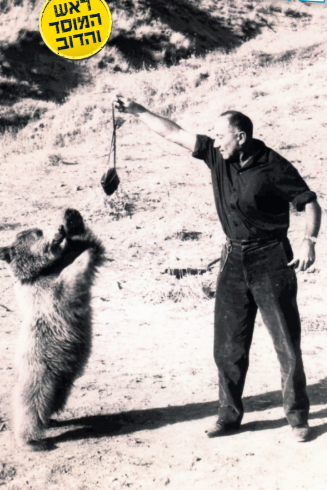
The bear was a gift from Kurdish leader Mullah Mustafa Barzani, who summoned Brig. Gen. (res.) Tzuri Sagi, the military adviser sent on behalf of the Mossad, and asked to thank him personally for the help he had provided Barzani’s fighters.
As a gesture of appreciation for the long friendship that had developed between the sides since 1966, Barzani presented Sagi with an extraordinary gift: a bear cub tied to a chain, which until then had been raised in a private home in the mountains of Kurdistan.
A bear that thought he was a dog
Sagi feared that refusing a personal gift from the rebel leader would be seen as an insult and could damage the delicate relationship with the Kurdish rebels. He consulted the Mossad officer who was with him in the field, and the two decided to wait for the arrival of then-Mossad chief Meir Amit before making any final decision about the bear’s future.
In the meantime, the cub was given a name: Shamo.
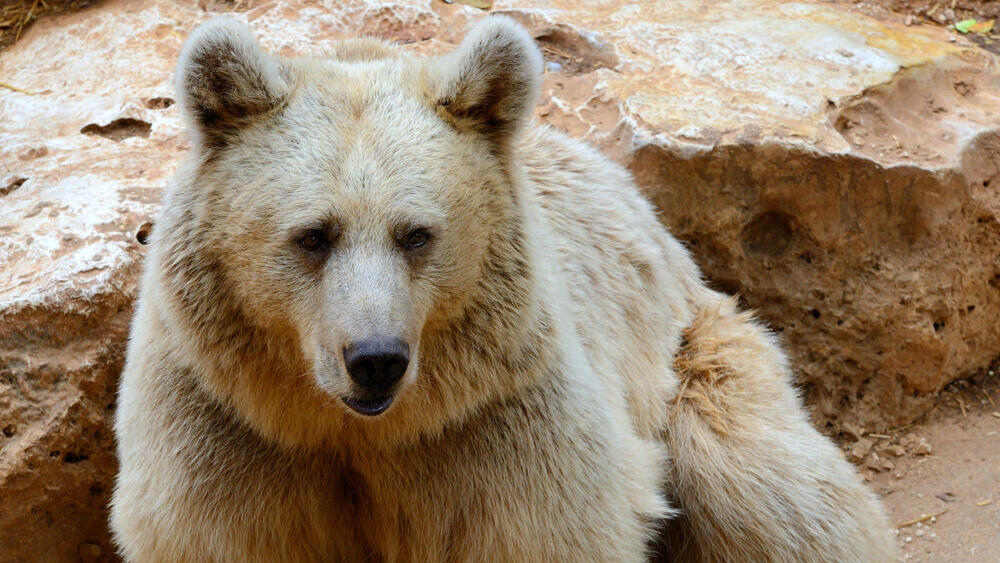
Syrian bear
(Photo: Shutterstock)
But by the time Amit arrived, Shamo had become part of the unit. For two full months, he slept in the tent with the three Israeli agents advising the Kurds, accompanied them to secret meetings and even shared their food rations. The agents described him as “a bear that thinks he is a dog.”
When Amit finally landed for a visit, he was stunned to find the hardened members of the Israeli delegation playing with the furry mascot. He understood there was no way to guarantee the bear a safe life in Kurdistan, and no realistic way to release him into the wild.
“We’ll find him a solution,” Amit promised.
‘We don’t leave the bear behind’
After three months of living together, it was time for Sagi to leave Kurdistan. During the handover to his replacement, the operational instruction was clear: “We don’t leave the bear behind.”
The agents consulted a reconnaissance fighter from Kibbutz Ma’abarot, a man who understood both explosives and animals. His suggestion was to bring the bear to Israel and place him in the kibbutz petting zoo.
Luckily for the children of Ma’abarot, the idea of putting a bear in a small animal corner meant for peacocks and guinea pigs was dropped. Instead, it was decided that Shamo’s final destination would be the Tel Aviv zoo, located where Gan Ha’ir mall stands today.
(Photo: Shutterstock)
The operation began. Using Mossad chief Meir Amit’s connections, Shamo was placed on an Israeli Air Force transport plane and flown to Israel.
About two years after Shamo arrived in Israel, his Mossad “big brothers” returned to visit him at the zoo, accompanied by legendary paratrooper Aharon Davidi. A guard recognized Davidi and took the group on a special VIP tour all the way to the cage.
But the long-awaited reunion was cold. Shamo, who had by then grown into a huge bear, did not recognize the soldiers who had raised him in a tent, not even by smell.
Did Shamo become Akiva?
That is where the mystery begins.
An article published 15 years ago in Yedioth Ahronoth reported that when the old Tel Aviv zoo closed, Shamo was transferred to the Ramat Gan Safari. According to that report, he made history as the first male Syrian bear to arrive there and became the father of many bears at the safari.
His legacy was even marked when a group of retired generals, known as “Einda,” including Ran Peker, Uri Yrom and Uri Simhoni, came to the safari and raised a toast in front of the cages of Shamo’s “grandchildren,” in memory of the Kurdish bear cub.
But was that really how the story ended?
Later testimony casts doubt on the Hollywood-style ending. It turns out that only one Syrian bear was transferred from the old Tel Aviv zoo to the safari, and his name was not Shamo. It was Akiva.
Was Akiva actually Shamo, whose name was Hebraized over the years? Or was he a different bear altogether? What really happened to the original Mossad bear flown from Kurdistan?
To this day, no one knows for certain. The last secret of Operation Shamo may still be buried somewhere in the archives, waiting for someone to clear away the fog.