

Kobi Richter doesn't look for ideas. He looks for frustrations.
Long before he founded Orbotech, whose technology became a cornerstone of global semiconductor manufacturing, or Medinol, whose coronary stents transformed cardiac care, Richter developed a habit that would define every stage of his career: listening carefully to what wasn't working.

When he began exploring medicine after leaving Orbotech, he didn't start in a laboratory or sketch ideas on a whiteboard. Instead, he asked surgeons to let him quietly observe. "I told them, 'Let me be a fly on the wall,'" Richter recalled. "I spent hundreds of hours in catheterization labs, operating rooms and neurosurgery departments. Every doctor complained about something. I wrote it all down."
By the time he finished, he had identified roughly 100 problems physicians faced every day."I wasn't looking for inventions," he said. "I was looking for unmet needs."
That philosophy, observe first, invent later, has guided one of Israel's most extraordinary careers, one that spans military aviation, neuroscience, artificial intelligence, medical technology and entrepreneurship. It also explains why Richter has repeatedly succeeded in industries where he had never worked before.
The journey began on a kibbutz, where Richter quickly developed a fascination with science. "My biology and chemistry teacher told me not to bother coming to the exams," he said with a laugh. "He said, 'You'll get an A anyway. Other students will probably copy off of you. Instead, do a research project.'" The assignment proved transformative. Instead of memorizing facts, Richter learned how to ask questions, a mindset that would shape the rest of his life.
After high school, he joined the Israeli Air Force, beginning what would become a 25-year military career. He flew combat missions in four wars, eventually becoming Israel's highest-scoring living fighter ace. At the same time, he found himself drawn not only to flying but also to understanding the technology behind it, eventually leading major research and development projects that helped shape capabilities still used by the Israeli Air Force today.
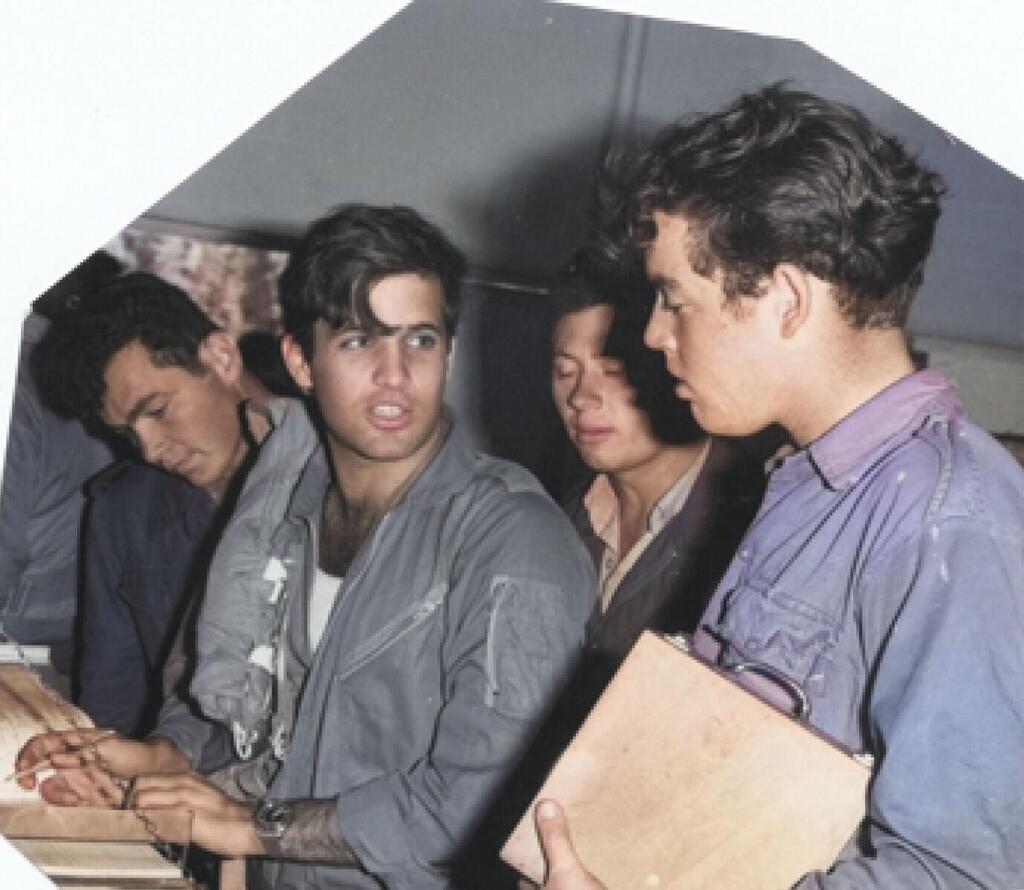
Richter in 1968 in the Israeli Air Force
(Photo: Courtesy )

Richter in a Mirage aircraft
(Photo: Courtesy )
Most people would have considered that enough for one career. Richter was only getting started.
During his military service, he pursued academic degrees at night, eventually earning a doctorate in neuroscience at Tel Aviv University's medical school. His research led him to the Massachusetts Institute of Technology (MIT), where he spent several years as a visiting researcher at one of the world's pioneering artificial intelligence laboratories.
Ironically, Richter says, AI meant something very different in the early 1980s. "Today we use models inspired by the brain to make computers smarter," he said. "Back then, we did exactly the opposite. Computers had finally become powerful enough that we hoped they could help us understand how the brain works."
His work focused on visual perception, how the brain recognizes movement, distinguishes objects and interprets three-dimensional space. At the time, the research was purely scientific. He had no idea it would eventually reshape an industry.
At MIT, Richter regularly met with fellow researchers, including computer vision pioneer Shimon Ullman and engineers who had helped build Israel's earliest computers. Their conversations gradually evolved into something larger. "We realized that each of us knew something different," Richter said. "Instead of staying inside our own disciplines, we asked ourselves where this knowledge could actually solve real-world problems."
They identified several industries where computer vision might have commercial value and divided the work among themselves. Richter investigated two. One involved improving baggage sorting systems in airports. The other examined one of the biggest manufacturing challenges in the electronics industry.
Multilayer printed circuit boards often contained microscopic defects hidden deep within their internal layers. Those flaws typically remained invisible until the finished product failed, forcing manufacturers to discard expensive components after production was complete.
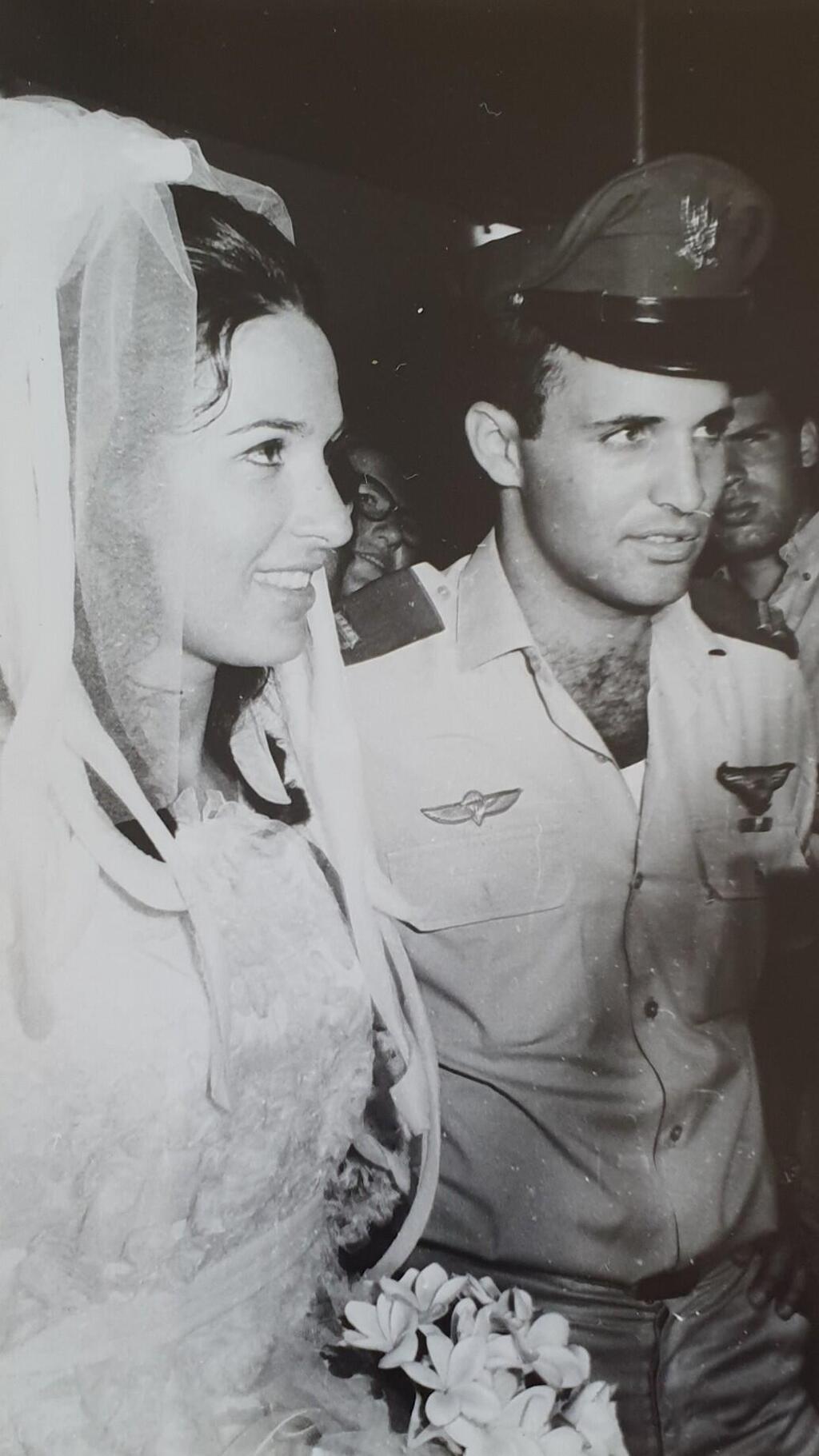
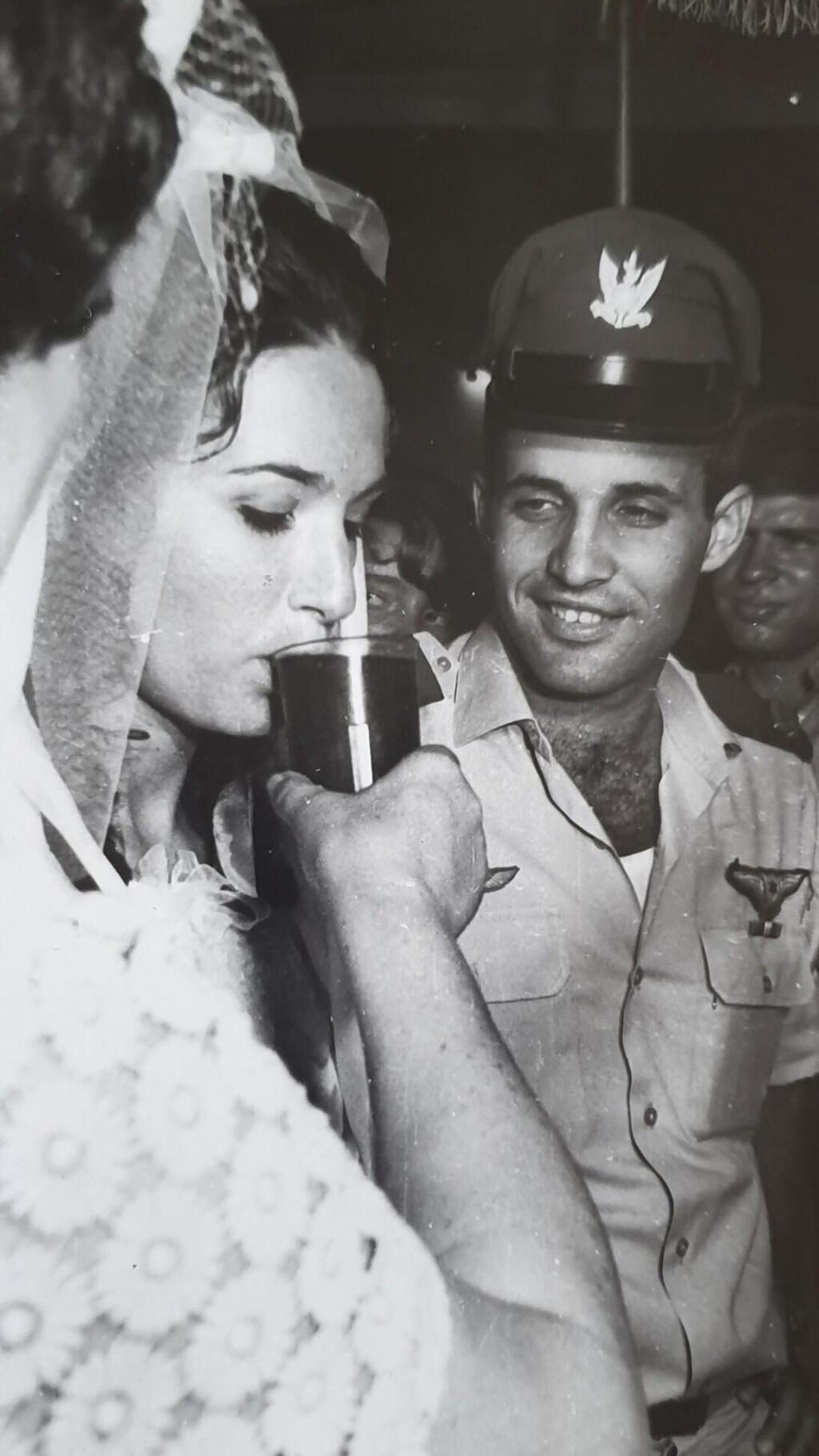
At his wedding to Judith at Ramat David Airbase
(Photo: Courtesy )
(Photo: Courtesy )
Richter wondered whether computers could recognize structural defects while the boards were still being built. "We realized we didn't have to wait until something stopped working," he said. "If we understood the image itself, we could detect the defect long before the product was finished."
That insight became the foundation of Orbot, later Orbotech, whose automated optical inspection systems revolutionized quality control in electronics manufacturing. Today, technologies descended from those early systems are used throughout the global semiconductor industry, helping manufacture products that power everything from smartphones to advanced computing systems.
For Richter, however, Orbotech was never the destination. It was proof that his way of thinking worked. And once the company was established, his curiosity pulled him back toward the field that had fascinated him since high school. Medicine.
Building industries by connecting worlds
When Richter left Orbotech, many assumed he would simply build another technology company. Instead, he went back to school, figuratively. Rather than searching for the next big technological breakthrough, he immersed himself in hospitals, convinced that the best innovations begin with understanding problems before proposing solutions. "I wanted to be where medicine actually happens," he said. "Not in conferences. Not reading papers. Standing next to physicians while they worked."
For months, Richter followed surgeons and cardiologists through operating rooms and catheterization labs, filling notebooks with observations. Every complaint, every workaround and every moment of frustration became a clue. "I ended up with about 100 problems," he said. "Then I asked myself which ones were technically solvable and, equally important, which ones could become sustainable businesses."
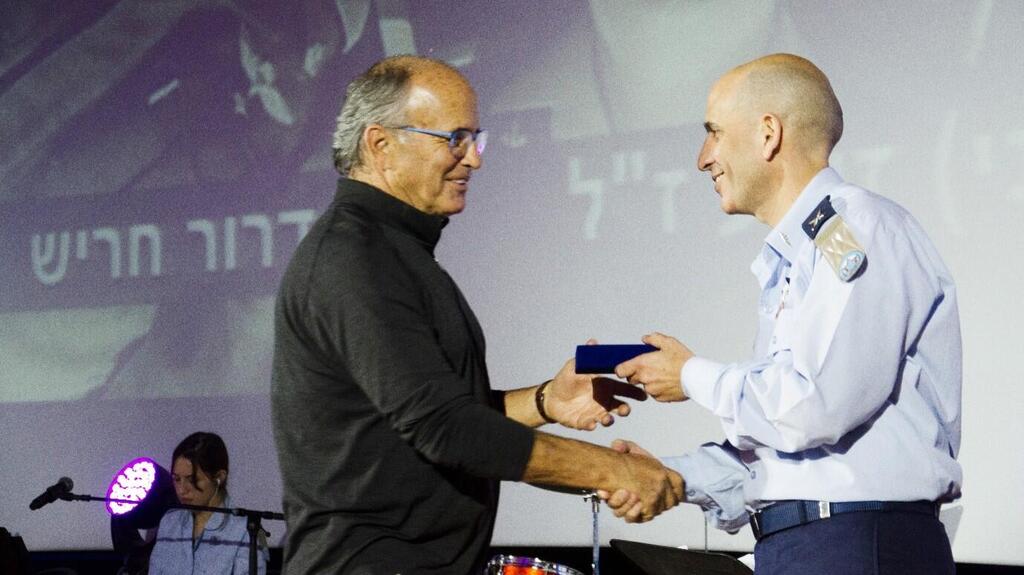
Richter receives the Golden Wings, an honorary pin awarded to veteran aircrew members marking their 50th anniversary in service
(Photo: Courtesy )
Only three survived that process. One changed the course of his career, and modern cardiology. The coronary stent.
In the early 1990s, coronary stents were still in their infancy. Existing devices could only be used in a relatively small percentage of patients because of their mechanical limitations, while their manufacturing process made them prohibitively expensive.
Richter believed neither limitation was inevitable. "I wasn't looking at it only as a medical device," he said. "I was looking at how it was being manufactured." That perspective came from an unlikely place.
Years before becoming an entrepreneur, Richter the teen had worked as a welder. Later, at Orbotech, he had spent years solving manufacturing challenges in the electronics industry. Looking at coronary stents, he saw production methods that struck him as unnecessarily slow, expensive and restrictive.
"The manufacturing process determines what kind of product you can build," he said. "If you change the manufacturing technology, you can redesign the product itself." Instead of machining individual stents from tiny metal tubes using lasers—a process that produced one device at a time, Richter adapted concepts from large-scale industrial manufacturing.
The result dramatically reduced production costs while allowing engineers to create a stronger, more flexible design that physicians could use in far more patients. "It wasn't just about making the stent cheaper," he said. "It was about making a better stent."
To Richter, innovation has never been about inventing something from nothing. "It's about connecting knowledge that usually lives in different places." His understanding of biology came from neuroscience. His understanding of manufacturing came from electronics. His understanding of engineering came from years of solving industrial problems. "When different disciplines collide," he said, "that's where real innovation happens."
That philosophy became the foundation of Medinol, the company he co-founded in 1992 with his wife, Dr. Judith Richter. While Kobi focused on technology, engineering and product development, Judith brought a complementary set of strengths, leading much of the company's strategic, legal and business decision-making.
"We're very different people," Richter said. "I'm driven by technology and invention. Judith understands the business, the legal side and the strategy. Together we became much stronger than either of us could have been separately." Their partnership extended well beyond the boardroom.
They challenged each other's assumptions, balanced each other's personalities and built a company that would eventually compete against some of the world's largest medical device manufacturers. "It was never one person building Medinol," Richter said. "It was always the combination."
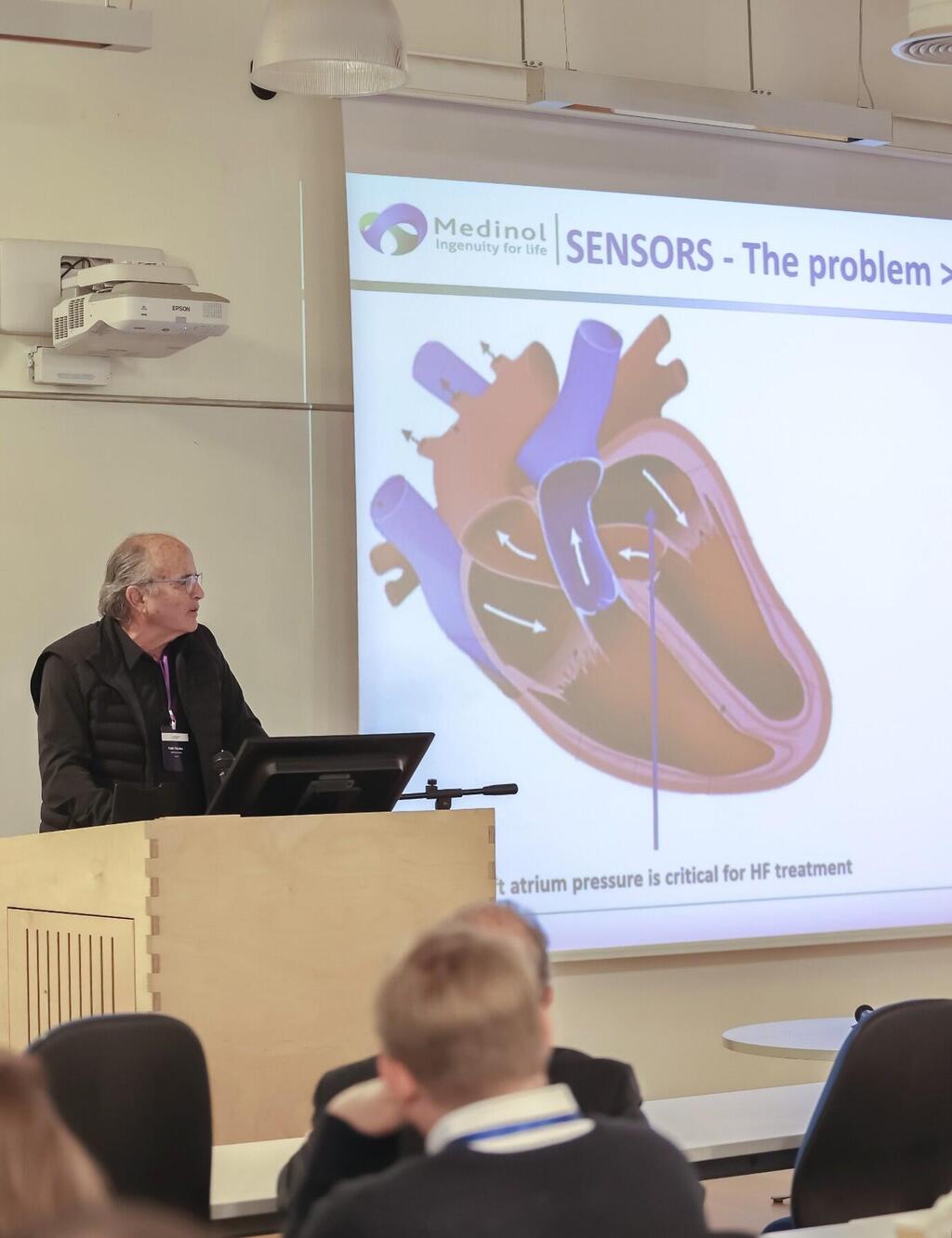
Richter at Reichman University, 2022
(Photo: Courtesy )
Within a remarkably short time, Medinol's coronary stents began reshaping the global market. Richter remembers predicting that coronary interventions would become a multibillion-dollar industry, despite skepticism from bankers and industry analysts. "They told me the market would be around $300 million," he recalled. "I said it would be at least $2 billion."
A few years later, the market had surpassed those projections. Even more striking was Medinol's impact on the competitive landscape. As physicians increasingly adopted the company's stents, long-established competitors rapidly lost market share. "We believed that if the product was better, physicians would choose it," Richter said. "That's exactly what happened."
Success, however, brought new challenges. To accelerate commercialization, Medinol entered into a partnership with Boston Scientific, which manufactured and distributed the company's products worldwide. Initially, the relationship appeared to be a perfect match. "We knew we were very good at developing products," Richter said. "Sales is a different profession."
He laughs when describing his own shortcomings. "A salesperson has to make the customer feel they're right. I usually end up explaining why they're wrong." Boston Scientific excelled at global sales, while Medinol focused on innovation.
For several years, the partnership flourished. Then everything changed.
Medinol accused Boston Scientific of secretly copying its proprietary stent technology and developing competing products behind the scenes. Rather than quietly preserving a commercially successful relationship, the Richters made a decision that would consume years of their lives. They went to court.
The legal battle became one of the most closely watched intellectual property disputes in the medical device industry, eventually ending in a landmark settlement worth $750 million. Looking back, Richter speaks about the victory with surprising honesty. "If I had been able to overlook what happened," he said, "we probably would have earned much more money in the long run."
Instead, principle prevailed over pragmatism. "I simply couldn't continue working with people I believed had stolen our technology," he said. "That's part of who I am." Today, he describes the episode not as one of his greatest victories but as one of his greatest lessons.
"My inability to overlook injustice probably cost me financially," he admitted. "From a business perspective, perhaps there was a smarter path. But from a personal perspective, I couldn't have done anything differently."
It is a rare admission from one of Israel's most successful entrepreneurs—an acknowledgment that success is not always measured by courtroom victories or financial returns, but by remaining faithful to one's own values. That same philosophy, Richter believes, has guided every major decision of his life.
The challenge has never been deciding what can be built. It has always been deciding what is worth building.
Reinventing Israel
These days, Richter spends less time thinking about the next breakthrough in medical technology than about what he believes is Israel's most pressing challenge. It isn't artificial intelligence. It isn't biotechnology. And it isn't the next startup. "It's people," he said.
After decades of building companies, Richter has become convinced that Israel's future as a global innovation leader depends less on the technologies it develops than on the number of people capable of creating them. "We still have extraordinary innovative talent," he said. "Innovation is part of the Israeli character. But innovation alone isn't enough."
Richter traces that character back generations.
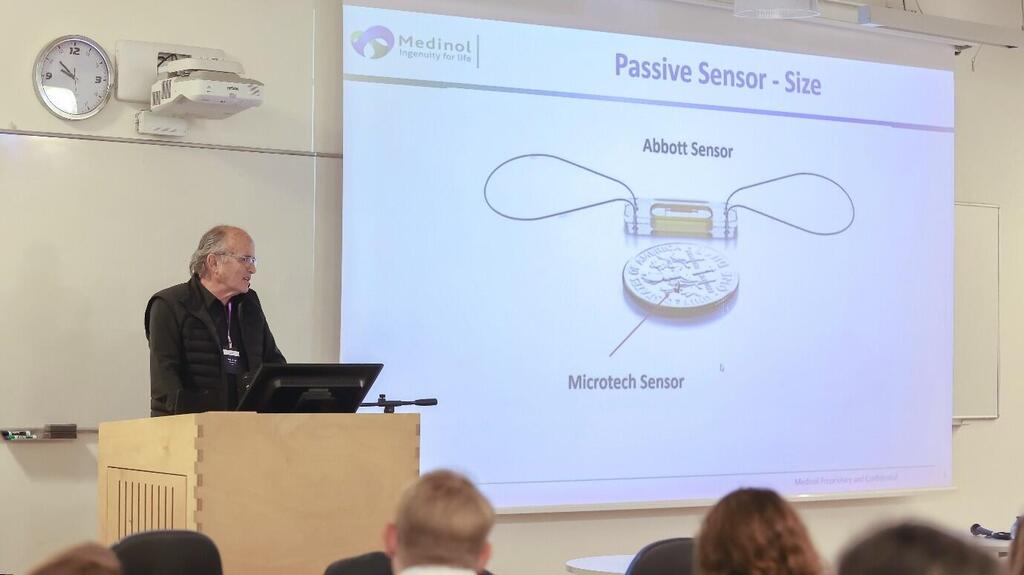
Kobi Richter
(Photo: Courtesy )
For centuries, he argues, Jews were largely excluded from owning land or building wealth through agriculture and natural resources. Instead, they survived by developing intellectual capital, in finance, science, engineering and commerce. "It forced us to innovate," he said. "Knowledge became our natural resource."
When that tradition merged with what he describes as Israel's uniquely direct, informal and questioning culture, the result was one of the world's most successful innovation ecosystems.
But Richter believes that ecosystem is approaching a crossroads. "The wave of immigration from the former Soviet Union gave Israeli high-tech an enormous boost," he said. "Those scientists and engineers transformed the country." That demographic advantage, however, has largely run its course. "The next leap has to come from within Israeli society."
For Richter, that means integrating communities that have remained largely outside Israel's innovation economy, particularly the ultra-Orthodox and Arab sectors. He speaks about the issue not as a political debate but as an economic necessity. "If we want to remain a global technology leader, we simply need more talented people," he said. "And many of those people are sitting in communities that aren't yet participating."
Rather than focusing on confrontation, sanctions or political slogans, Richter believes education offers the only sustainable solution. "There is no contradiction between preserving religious identity and learning mathematics, physics and English," he said. "Those subjects are what allow young people to become creators instead of consumers of technology."
His commitment goes far beyond public advocacy. Richter now dedicates a significant portion of his time to educational initiatives designed to help outstanding ultra-Orthodox students enter Israel's technology sector without abandoning their way of life.
One program he supports recruits exceptional yeshiva students, combines advanced academic studies with national service and prepares graduates for careers in engineering and technology. Richter doesn't simply advise the program. He teaches there himself.
"I explain how an invention becomes a product," he said. "How a product becomes a company. What intellectual property means. How global competition works. How you build something that survives." He believes one of the biggest misconceptions about innovation is that it depends on a handful of extraordinary inventors.
"I have around 300 patents," he said. "Only five became the foundation of successful companies." The real challenge, he argues, begins after the invention. "A patent doesn't build a company. You need hundreds of brilliant engineers, developers, production specialists and managers to turn an invention into something that changes the world."
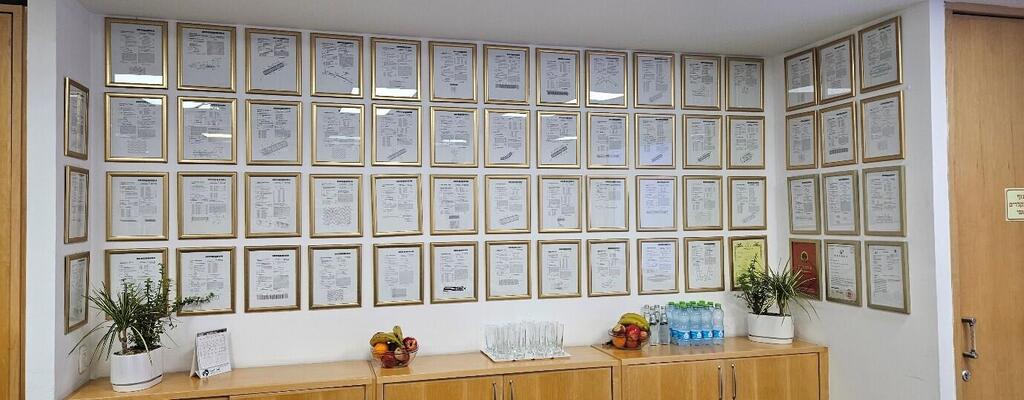
Medinol patents
(Photo: Courtesy )
He points to talented ultra-Orthodox engineers he worked with during his years at Orbotech and Medinol as proof that exceptional scientific ability already exists within communities often overlooked by the technology sector. "The potential is there," he said. "Our job is to create the opportunity."
Richter's interest in the ultra-Orthodox world is itself unusual. After completing his doctorate, he unexpectedly found himself with several free months before returning to military service. Curious about Jewish learning, a subject he knew little about growing up on a secular kibbutz, he enrolled at the Ohr Sameach yeshiva in Jerusalem.
Within days, one of the rabbis suggested he continue studying in Bnei Brak instead. The experience became one of the most formative periods of his life. Richter eventually studied privately with Rabbi Shlomo Zalman Auerbach, one of the leading rabbinic authorities of his generation, an experience he still describes with deep admiration. "It opened an entirely different way of thinking," he said.
Today, he often draws connections between rigorous scientific inquiry and traditional Jewish scholarship, arguing that both demand intellectual curiosity, disciplined thinking and a willingness to challenge assumptions.
The partner who completed the equation
That same willingness to cross boundaries has also shaped his personal life. Nearly six decades after they first met, Richter still speaks about his wife and business partner, Dr. Judith Richter, with unmistakable admiration.
The two met during their military service in the Israeli Air Force. Judith was serving as an officer on the same base where Richter was stationed as a fighter pilot. Their first conversations were memorable. "She told me I already had a girlfriend," Richter recalled, laughing. "I said, 'That's true. But you're going to be the mother of my children.'"
The prediction eventually came true. Today, after nearly 60 years together and 57 years of marriage, the couple remain partners in life as well as in innovation. Richter credits Judith with providing the balance that allowed both Medinol and their family to flourish. "She's different from me in almost every way," he said. "And that's exactly why we've worked so well together."

Golden wedding anniversary, 2019
(Photo: Courtesy )
He also speaks proudly of her own remarkable journey. The daughter of Hungarian Holocaust survivors, including a father who survived Josef Mengele's notorious twin experiments at Auschwitz, Judith went on to earn a doctorate and become a pioneering entrepreneur in her own right. "She's the victory over the Nazis," Richter said quietly. "Her life represents everything they tried to destroy, and everything they failed to destroy."
Today, leadership of Medinol has largely passed to the next generation, with their son Yoram taking over day-to-day management while continuing the company's focus on implantable medical technologies and advanced biosensors. Richter no longer feels the need to prove that he can build another successful company. Instead, he measures success differently.

Some of Richter’s paintings
(Photo: Courtesy )
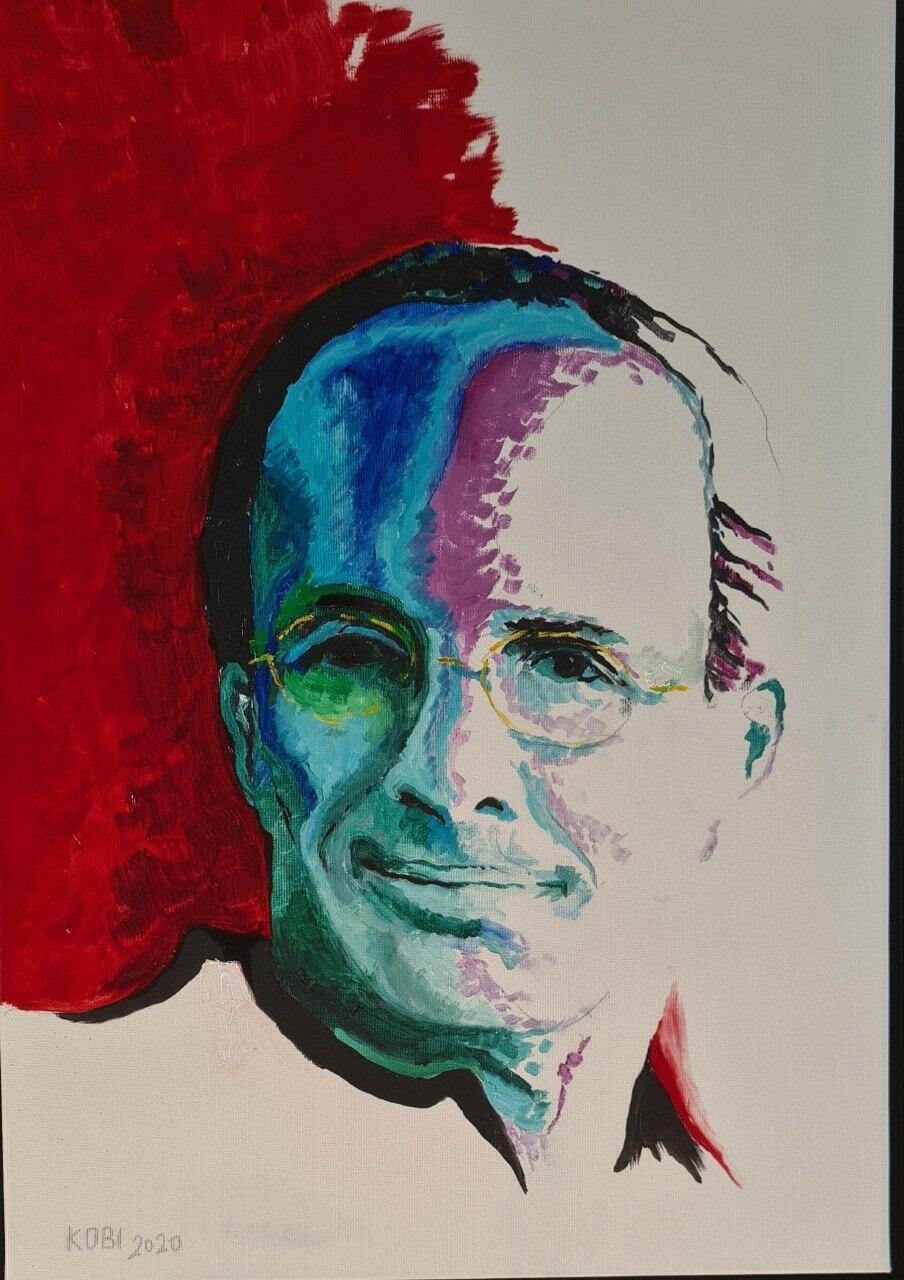
(Photo: Courtesy )
He hopes the next generation of Israelis will build companies that today's entrepreneurs cannot yet imagine, and that those innovators will come from every corner of Israeli society.
Looking back across six decades, Richter sees a pattern. As a neuroscientist, he connected biology and computing. At Orbotech, he connected artificial intelligence with manufacturing. At Medinol, he connected engineering with medicine. Now, he believes Israel faces a different kind of engineering challenge.
Not building better technologies. Building a stronger society.
After a lifetime spent connecting disciplines that rarely intersect, Kobi Richter believes the next great breakthrough won't be a patent, a medical device or an artificial intelligence platform.
It will be Israel's ability to connect its own people.
First published: 10:06, 07.02.26