

Gali and Erez, not their real names, are sitting on a therapist’s couch. Like many people, they have discovered that a long-term relationship is no walk in the park, especially once children, a mortgage, wars and holidays join the mix, sprinkling romance with weariness and resentment. They already know the lines that fill the therapy room.
“You don’t see me.” “Nothing is ever enough for you.” “You don’t take responsibility.” But unlike their previous attempts at couples therapy, this time they are doing things differently. There is no more “Where does that meet you?” Instead, they are taking a deeper dive with some chemical assistance. There is a clinic, a therapist and tissues. But there is also a capsule of MDMA, a psychoactive substance commonly known as ecstasy or molly and classified as an illegal drug under Israeli law.
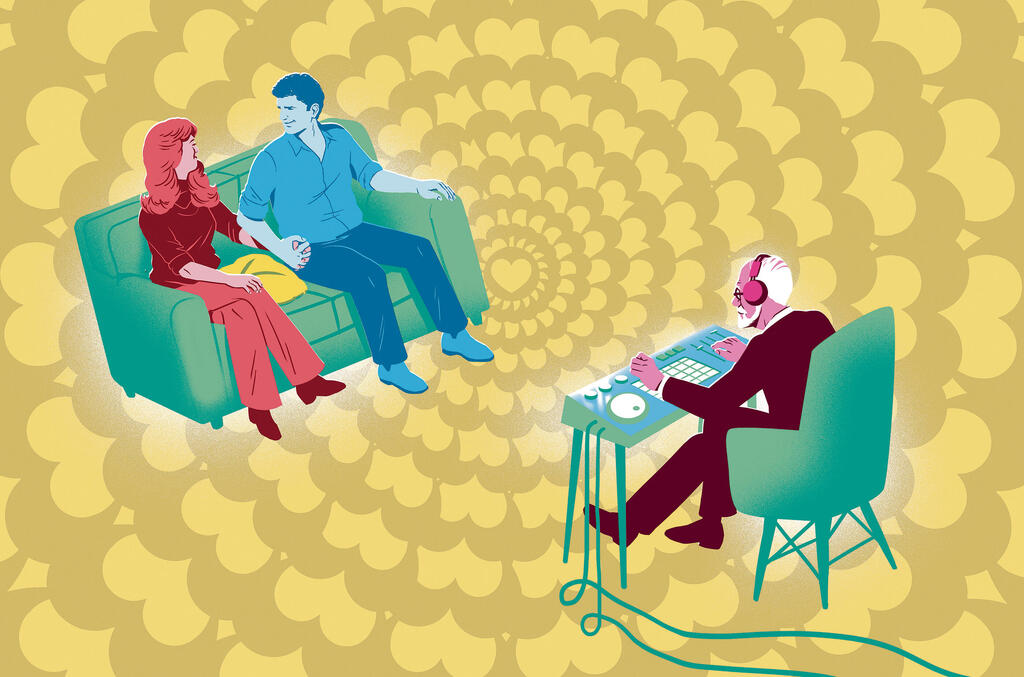
Gali and Erez have not come to party on a dance floor. They have come for a couples trip, hoping to deepen communication under the influence of a drug associated with increased release of oxytocin, serotonin and dopamine, lowering inhibitions and making emotional openness feel easier.
Six hours later, they leave the clinic feeling there may be hope. They are not alone. More couples are turning to MDMA-assisted couples therapy in an attempt to save their relationships. For some, it even appears to help.
There is just one problem: it is illegal. “The only legal avenue is treatment carried out within supervised research,” says Dr. Itamar Cohen, a researcher of psychedelic and consciousness-altering substances. “It is illegal in Israel and in most of the world. In the Netherlands there is a certain legal loophole that allows truffles, a type of psychedelic fungus, to be incorporated into treatment. But in most of the world, certainly in the Western world, this is illegal.”
So why is it happening anyway?
“Because there is research on the subject, not everyone can get into those studies, and people say, ‘Wait, I’m already taking these drugs at parties, so why not bring them into therapy if I see that in controlled studies they work?’ So they go looking for it underground, where therapists are of course doing it illegally. When there is demand, there is supply. And demand is very high.”
A broad study conducted by Robert Colbert and Shannon Hughes about four years ago added to the existing knowledge about the effects of psychedelic and consciousness-altering substances on couples.
“That layer of inhibition that is usually there, or the worry about what will happen if I bring up a certain issue, just decreases,” said Victoria, who participated in the study. “It feels easier to approach things that in other circumstances might be much harder or more challenging to talk about.”
Christine, another participant, described feeling less afraid of judgment or rejection from her partner. “My fear of his reaction just diminishes, and so does my insecurity ... thoughts like, maybe he’ll really hate this, or think I’m disgusting or stupid or something like that, are simply less present.”
She added: “I feel like MDMA added so much depth to our relationship. There is this incredibly strong energetic connection between us, and I don’t know whether it would have existed in the same way without MDMA.”
Ben and Allison, another couple who participated in the study, described a significant sense of partnership. For them, MDMA created “real intimacy within a relationship. Being open to new possibilities within our relationship as a couple. It gets both of us talking about who each of us wants to be, and then thinking together about how we can help each other get there, as a team.”
As a postdoctoral researcher, Cohen immersed himself in the effects of consciousness-altering substances on brain function and studied their role in psychotherapy. He is a member of Britain’s Institute of Psychedelic Therapy and has completed training in psychodynamic therapy supported by consciousness-altering substances.
Because he speaks publicly about the subject, including on podcasts and in lectures, he has discovered that the underground practice may be more common than many realize.
“A great many people approach me and ask where they can do it,” he says. “They feel a need to tell me about things they have done, and I see a very strong parallel between what the research literature describes and what is happening in Israel and around the world.”

'When there is demand, there is supply' Dr. Itamar Cohen
(Photo: Tal Shachar)
So what is happening in Israel?
“Everything that happens underground in Israel is a ‘black box,’ because there isn’t enough research looking at what happens outside formal studies. It may be that most people who are drawn to this type of treatment are suffering significantly, and we have no system studying it. But a great many people do approach me and say they participated in underground treatment and that it helped them enormously.”
Do you feel there has been an increase in these experiences since the outbreak of the war?
“Yes. And if we look at psychedelic drugs more generally, the Israel Center on Addiction, led by Prof. Shaul Lev-Ran, conducts empirical analyses of what is happening on the ground, and it found that there was a significant jump after October 7. Before COVID, roughly one in 10 Israeli adults had tried or was using illegal drugs. During COVID it rose to one in seven, and after the war it reached one in four.”
Let that sink in. Israel is a country dealing simultaneously with trauma and post-trauma, and Israelis are, well, using drugs.
But back to the couples therapy couch, where MDMA, short for methylenedioxymethamphetamine, first took a seat back in the 1970s.
Much of the credit goes to Alexander Shulgin, sometimes called the “godfather of psychedelics” and one of the most influential scientists in the history of consciousness-altering substances.
After rediscovering MDMA in the late 1970s, following its earlier discovery and abandonment, Shulgin introduced it to psychotherapist Leo Zeff, who, together with other therapists, began incorporating it into treatment. At the time, the substance was legal, or at least not yet illegal.
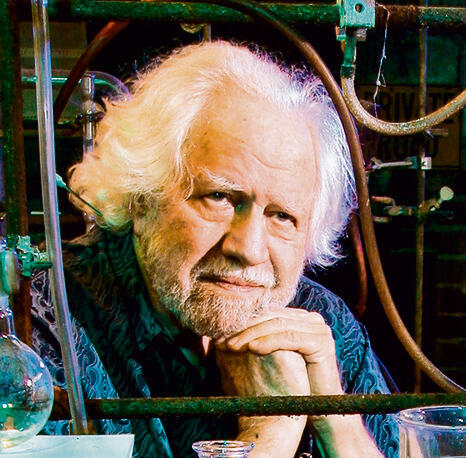
(Photo: Anthony Pidgeon, Redferns)
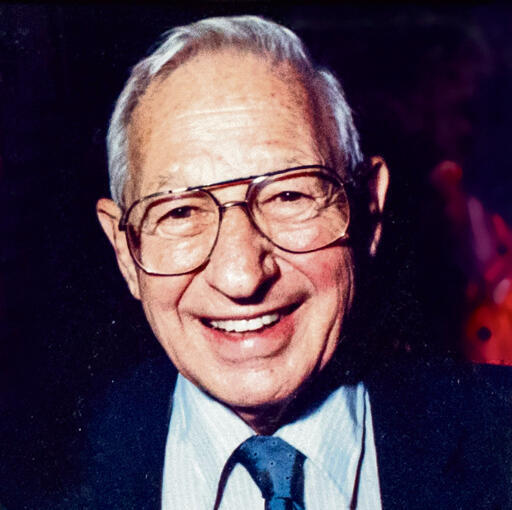
Alexander Shulgin and Leo Zeff. Helped introduce MDMA into couples therapy
(Photo: The Washington Post, The Washington Post via Getty Images)
The world of MDMA-assisted couples therapy began to flourish. But around 1985, authorities increasingly realized that the substance was spreading from therapeutic settings into parties and festivals. Officials became alarmed, particularly as deaths associated with its use were reported, and MDMA was classified as an illegal substance.
“There is a substance here that essentially creates a unique combination of effects,” Cohen says, explaining how MDMA found its way into couples therapy. “Most drugs generally manipulate one brain system, whether serotonin or dopamine. This particular substance increases both significantly.
“Serotonin is a molecule naturally involved in regulating mood and how we deal with stressful situations. Dopamine is associated with motivation, causing us to take action and feel good afterward.
“At the same time, MDMA also increases oxytocin, which is often called the love hormone. It is released during positive interpersonal interaction, for example during orgasm. It is associated with empathy and emotional bonding.
“So we have a substance that not only makes us feel emotionally stable and resilient, but also makes it feel very good to share things we now have an opportunity to touch, because until now they were blocked by fear.”
“Very often, couples reach a point where they can’t talk unless there is MDMA. Then the relationship itself becomes dependent on the substance. The best metaphor is that MDMA therapy is like jumper cables on a dead car battery. Once the engine starts again, if you don’t keep driving, meaning if you don’t integrate it into ordinary therapy, it will fade”
In other words, it enables complete honesty without the usual barriers.
“A great many relationship difficulties come from people having a kind of parallel life. Each person has an inner world: what they dislike about their partner, what they are angry about, disappointed by or hurt by.
“Most of the time, because people are afraid of what will happen to them and to their relationship if they reveal it, they simply keep it inside.
“The goal of couples therapy is to bring hidden material to the surface and create a sense of harmony within the shared experience. And then along comes a substance that can artificially create an emotional and psychological window in which it becomes easier to talk about what is difficult in the relationship.
“I feel that things will be okay, and I can listen to the other person’s side in a much more empathetic, accepting and considerate way. For couples living with a great deal of accumulated resentment, the substance can create an opportunity to talk about and work through what has been building up.”
So the ledger opens, as it does in any therapy.
“Right. Up to that point, it is very similar to any therapy. Then, at a certain stage, and this really varies from therapist to therapist, the couple takes MDMA together.
“The effects can last for several hours, and during that time they are encouraged to talk in much the same way as in ordinary therapy, only for much longer. Because of the drug’s effects, the content and the atmosphere, the potential to reach deep emotional pain increases significantly.”
But it is illegal and unregulated.
“Correct. And this is where there is a very big problem and a very serious risk.
“First of all, we generally don’t know who the therapist is. There is no official body saying, ‘This person has been trained in MDMA-assisted couples therapy.’
“Second, the substance being used underground is not the material used in a legitimate laboratory. In treatment research for post-traumatic stress, for example, the substance is tested, controlled and pure.
“On the street, where underground practitioners usually obtain their supply, we don’t know what it contains. Random testing shows that the material in Israel, as elsewhere, is often ‘dirty,’ meaning it contains other substances that can feel like MDMA and carry much harsher and more dangerous effects.
“Even pure MDMA carries risks, but in clinical medical research there are systems designed to screen for and manage those dangers.”
What does the research literature, and the stories reaching you, suggest?
“A great many participants and patients report a very high level of attentiveness to the other person. We feel less defensive because the substance softens psychological defenses, and once I am really listening, empathy for my partner’s suffering can emerge.
“People also report being better able to avoid the impulse to defend their own side. They talk about a stronger ability to experience the other person’s perspective.
“There is compassion toward the partner, but also compassion toward ourselves.
“Those are the main findings. There is another, somewhat weaker finding that is still worth mentioning: after the experience, couples allow themselves to try different situations together. They manage to shake off some of the rigid patterns that usually come with long-term relationships. Their shared life takes on additional colors. They are more open to experiences.”
What do the couples willing to talk about it tell you?
“As part of my work on the book, I interviewed couples. I heard about couples for whom it did a great deal of good, and couples for whom it did a great deal of harm.
“They usually arrive at an unofficial clinic because this is underground. Contact tends to happen through encrypted digital channels, and they generally meet for several preparation sessions without the substance.
“They begin identifying the difficult subjects, whether it is infidelity, boredom or disgust. During the preparation, those issues are mentioned in broad terms.
“Afterward, couples described an experience that allowed them to go deeply into those issues and fill those general headings with a much richer range of emotions and thoughts.
“They said they rediscovered their partner, that it removed the rust from a relationship that had grown too rigid over the years. Some said it made them fall in love again.
“The negative side was couples who said the experience was terribly confusing, that they were not properly prepared, that they opened subjects they later regretted opening.
“And because there is no regulation and there are no officially certified MDMA therapists, since anyone can call themselves one when it happens underground, the damage can be significant.
“I have heard cases of people breaking up families after this kind of treatment, involving overly aggressive interventions and highly unprofessional conduct. You have no way of knowing whether you are in good hands or bad hands because, again, there is no regulation.”
And couples also take MDMA without a therapist. They rent a cabin or send the kids to grandma and go for it.
“There are several issues there. Nobody can guarantee that the substance they have is pure. It can contain terrible things. You don’t necessarily know whether what you have is actually MDMA; it may contain other stimulants.
“People who approach it without knowing what the substance is can make serious mistakes and experience side effects such as a racing heart and intense overstimulation, which can trigger panic.
“They also need to understand that additional medications may create risks.
“If you are unfamiliar with the experience, you can fall into the same trap of feeling artificially confident and sharing things you may not actually want to share. Then, after the effects wear off, people can be left confused.
“In research settings, people talk about ‘set and setting,’ the internal psychological environment and the external surroundings.”
The substance can also create a sexual connection.
“Right. Sexuality is another element here.”
Where does that go when there is a third person sitting in the room?
“Once there is another person in the room, that generally doesn’t happen. That is one of the differences between MDMA-assisted couples therapy and a couple taking it without therapy.
“But there is also a downside to doing it without a therapist, and that is the feeling of ‘I revealed too much.’
“We all have secrets. And here is a substance that makes me feel as though my self-confidence is soaring, gives me motivation to talk about what hurts and makes me feel enormous empathy.
“In the research literature, you see that couples using it underground sometimes reveal too much. They disclose an affair. They expose extremely painful thoughts, such as, ‘Your body has changed and I’m no longer attracted to you.’
“There may be a therapeutic route for dealing with that. But sometimes, if it is said too quickly, too bluntly or without experience in therapeutic conversation under MDMA, it creates enormous confusion.
“That is why the literature often suggests this kind of treatment may not be particularly successful without some kind of sober conductor managing the situation.
“For example, if underground therapists hold individual conversations before the session, they may already know there is extremely painful material, an affair or another difficult truth.
“They can sometimes manage that conversation more carefully and wait until there has been enough therapeutic groundwork before exposing a couple to one truth or another.
“It may be that the most painful things are actually worth discussing while sober.”
Critics of this kind of therapy would say that absolute honesty can wound, that not everything needs to come out.
“That is a very legitimate criticism, and I think it is a subject worthy of discussion.
“But I think the heart of the problem is that people are tempted to do this themselves underground, and in my view that is a recipe for trouble.
“It is important for me to say that this can end very badly, and that is before we even discuss the physiological dangers of the substance itself.
“Very often, couples reach a point where they can’t talk unless there is MDMA. Then the relationship itself becomes dependent on the substance. I have heard about cases like that too.
“The best metaphor is that MDMA therapy is like jumper cables on a dead car battery. Once you restart it, if you don’t keep driving, meaning if you don’t integrate it into ordinary therapy, it will fade.
“There was one relatively young couple who told me they had taken MDMA together with a therapist and experienced an enormous sense of falling in love. But when the effects wore off, the therapist could not resolve the question of whether that feeling was actually about each other or about the drug, because they had not yet known each other deeply enough.
“It led to a breakup, because they were no longer convinced their love was really for the other person and not some manipulation created by the substance.
“And that is one of the milder cases. There are more difficult cases in which people revealed extremely painful truths. One woman, for example, told her partner that she had settled for him because she didn’t think she deserved anyone better.”
Okay, so it isn’t necessarily good for relationships.
“You cannot look at this substance as either good for relationships or bad for relationships.
“The entire field of psychedelics and consciousness-altering substances is always a very complex equation. It includes the substance itself, the amount involved, the psychological background of the people, the social environment and the physical environment.
“There are a great many variables in that equation. It can be heaven, but it can also be hell.”
Cohen is something of a radical voice in Israel’s psychedelic field. Originally from the community of Sal’it, he spent much of his time in England, where he studied and worked as a clinical psychologist.
After completing his doctorate, he joined a delegation of British psychologists and psychiatrists to Uganda, where he had what he describes as a formative experience.
“I worked in a psychiatric hospital there, in the children’s ward. You accompany a child back to the tribe, to the village, and I saw how, as part of a community celebration, they gave a 15-year-old boy a stimulant substance.
“They had him inhale it, put him into the circle, and the entire village danced around him.
“That was the first time I saw the children in a different light, and saw the impact of community and substances, and more broadly began looking at mental health treatment as something beyond talk therapy alone. Suddenly I understood that this was a much wider umbrella.”
There has already been discussion about MDMA for post-traumatic stress. Could Israel eventually approve treatment using psychedelic substances?
“I think that right now it should exist only in research.
“It is very tempting, and the studies generally show potential, but there are questions we still have not answered. We don’t know who it could harm and who it could help.
“A great many private companies are currently investing in psychedelic substances. They want to patent them, and they can make money from them.
“But that also tells us that we are exposed to hype around psychedelics. There is tremendous excitement about these substances, and where there is excitement, people see economic potential.
“And when there is economic potential, people have an incentive to market something as completely safe, or as carrying minimal risk. That is simply not where we are yet.”
“Couples usually arrive at an unofficial clinic because it is underground. They generally have several preparation meetings without the substance and begin identifying the difficult issues, whether infidelity, boredom or disgust”
So in a few decades, when someone asks their grandparents, ‘How did you survive together for more than 50 years?’ will they answer, ‘Thanks to MDMA’?
“There are already couples today who went through a marital crisis in the early 1980s and say it saved them.
“But again, the hype is tempting us. We are not there yet, and the picture is far more complicated than just positive potential.
“There is also significant potential for harm, and people need to know that.
“In the book, I wanted to offer a scientific perspective on all of this while still looking at it with a very critical eye.”
In June, Cohen published Drug Guide: Everything You Wanted to Know but Were Afraid to Ask through Radical Publishing, which he describes as “the first scientific and practical guide in Hebrew to humanity’s complicated and complex relationship with consciousness-altering substances.”
It is not an ordinary publishing event in a relatively conservative Israel, where, according to the research Cohen cites, many citizens are clearly familiar with the names of the illegal substances discussed in the book but still do not necessarily want to talk about them.
Cohen says the time has come.
“The book represents a different kind of harm-reduction approach. Because drugs have become mainstream in Israel, certainly since October 7, there is a great deal of misinformation, and the risks of different substances are real. You cannot hide that.
“The problem, in my view, is that there is a generation here that does not particularly trust medical or research authorities. We question everything. There are so many conspiracy theories.
“So many people say, ‘They lied to me about cannabis. They said it would be the end of the world.’ Today we do know that it carries risks, but put that aside for a moment.
“We need to look people in the eye and understand that people will use drugs whether you tell them they are the most dangerous thing in the world or tell them they are fine. Neither extreme helps reduce harm.
“What is needed is a combination of the two: transparent scientific knowledge. Where we know there is danger, say there is danger. Where we don’t know, say that we don’t know and that there is uncertainty. And we also need to give people a framework for protecting themselves.”
Explain.
“A great many people unfortunately mix substances, for example drugs with alcohol, stimulants with other stimulants or depressants with depressants.
“They need to know that the dangers increase, but they will not listen to something that is not transparent and does not speak to them at eye level.
“So the purpose of this book is for people to understand what they may be exposing themselves to.”
Doesn’t that normalize drugs and their use?
“There are entire pages in the book devoted to the dangers. There is no desire here to encourage use, but to provide information.
“Too many people are taking drugs and too few are asking questions, and that signaled to me that people need information.
“They are going to do it one way or another, but they don’t know what they are doing.
“Let’s talk about how the brain responds, how the mind responds, how the body responds. Let’s have an adult conversation.”