

As Israel marked its national Memorial Day for the fallen of the Swords of Iron War, the fighting is far from over. While the freed hostages have returned home, thousands of IDF soldiers — regulars, career officers and reservists — are still risking their lives on the front lines. Behind them stand families bearing the heavy burden of absence, fear, and endless waiting.
Among them is Noga Hila Mutne, the wife of a combat reservist who has been serving for nearly two years. A mother of three (ages 11, 9 and 4), Mutne says she has not “gotten used to it.” Instead, she’s learned how much words can hurt — and how deeply families of reservists long to be seen and understood.
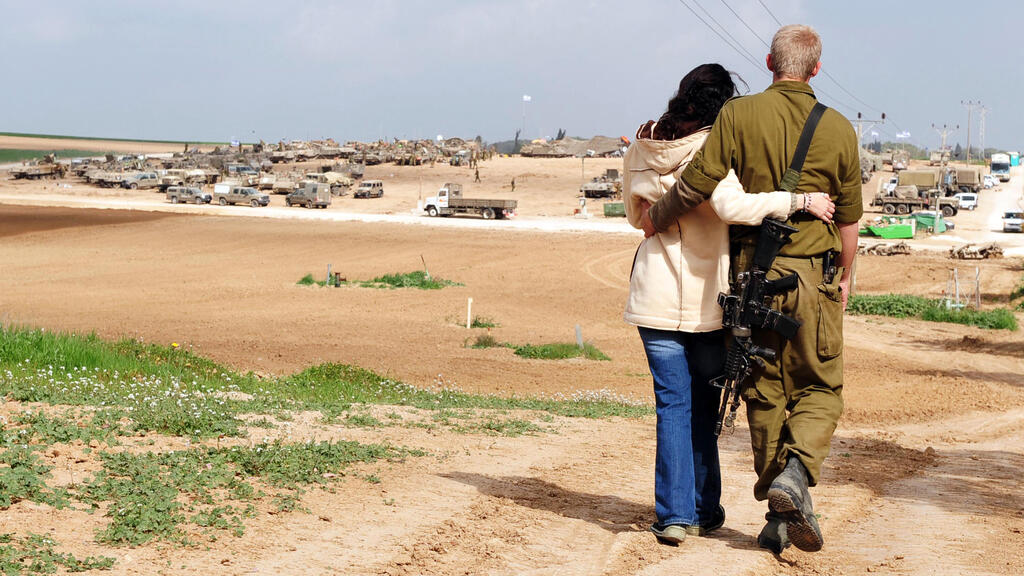
(Photo: Shutterstock)
Mutne, a parenting coach and author of the children’s book “Ima, ad matai?” (“Mommy, how long?”), also developed an educational program for building children’s emotional resilience. She says that after two years, “it’s hard for everyone — both the reservist families and those around them — to cope or to know what to say.”
“When people want to help or show concern, they often say things that hit right where it hurts,” she says. “I know most mean well, but when you live with constant fear for hundreds of days — the anxiety, the dread of a knock on the door — some phrases become unbearable.”
Her husband serves as a squad commander in the Alexandroni Brigade. At Ynet’s request, she shared a list of trigger phrases that families of reservists wish people would stop saying — and what to say instead.
“If you need anything, just ask.”
“It sounds nice, but in reality, we almost never ask,” Mutne says. “Instead, offer something concrete: call from the supermarket and ask if we need anything. Offer a ride for the kids to a birthday party. Invite us for a Shabbat meal or holiday dinner. Say, ‘We’re making lunch for you — do you like meatballs?’ Don’t wait for us to ask.”
“I totally get it — my husband works late and travels a lot.”
“No,” she replies firmly. “Gaza, Lebanon or Syria is not a business trip abroad, and coming home late is not the same as sleeping alone for weeks on end. Instead, say: ‘I can’t imagine what you’re going through.’ Don’t compare — join our experience instead of mirroring it. And bring a hug.”
“You’re so strong / brave / amazing / inspiring.”
“We’re tired of hearing that,” Mutne says. “Try saying, ‘You must be tired of being so strong.’ We don’t want to be heroes — we just want our partners home. Words like ‘lioness’ or ‘inspiration’ feel hollow when you’re exhausted.”
“Was he called up again?”
“People ask with good intentions, but when that’s our biggest fear, it hits hard,” she says. “Instead, say, ‘I know things are heating up — if your husband gets called up, remember I’m here for you.’”
“At least…”
“Any sentence that begins with ‘at least’ minimizes what we’re going through,” she explains. “‘At least he’s not in Gaza,’ ‘At least you don’t have kids,’ or ‘At least you have kids to distract you.’ Those words erase our pain. Instead, say, ‘I can’t imagine what you’re dealing with.’”
“Why did you let him go? You should’ve told him no!”
“When you’re with people in life-threatening situations, you don’t abandon them,” Mutne says. “Among the wives, there’s a bond — a sisterhood. We’re all in this together. Instead, say, ‘It’s amazing that you supported him — not everyone could.’ We all wish there was someone else who could take their place, but there isn’t.”
“You must be used to it by now.”
“No, we haven’t gotten used to it — we’ve just worn out,” she admits. “Every time he’s home, we’re anxious about the next call-up. Instead, say, ‘How do you keep going this long? It must be exhausting.’ That’s what we need — not clichés, but understanding.”