

Even today, at 54, married, the mother of five grown children and an anesthesiology resident in one of the most demanding tracks in the health care system, Dr. Shelley Gat carries a wound that has never fully healed.
It happened 26 years ago, when she was 28 and gave birth to her eldest son, Yiftach. At the time, she was a fourth-year mechanical engineering student at Tel Aviv University and had to return quickly to her st.udies and work.
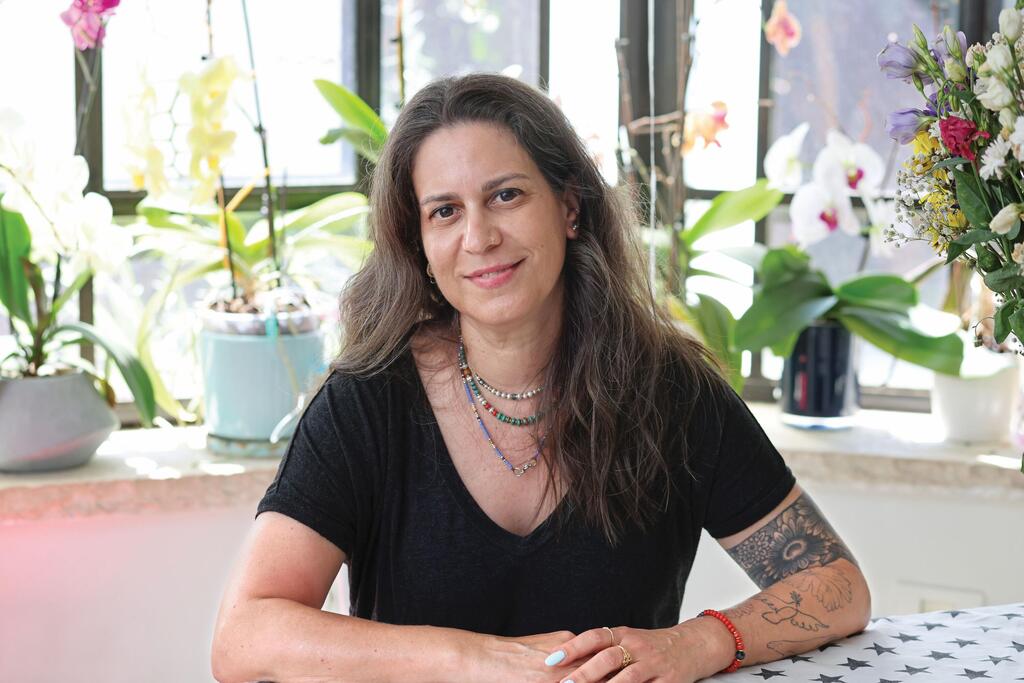
“I knew there was no chance I would finish such a demanding degree unless I stayed with my study group,” she recalls. “I did what everyone does and left my son with a caregiver, and it was the hardest thing I have ever done in my life. I could not resolve the frustration of having a child while someone else was raising him. I asked myself: Why did I have a child if I only see him at 4:30, when neither of us has any patience, I am not enjoying it and we are not having any fun? I was deeply frustrated. Despite everything I have done since, I feel that I am still grieving over it. Truly.”
Two years later, after the birth of her second son, Eitan, Gat made a decision: She would not return to her job as an engineer specializing in simulator design. That choice opened the door to an unconventional life.
“I discovered homeschooling and people who did not participate in the rat race most of us live in,” she says. “I saw families who stayed home with their children and realized it was an option. During maternity leave, when I was supposed to look for a preschool for my eldest, I said: I am already home with the younger child, so why should I send the older one to preschool? I will stay with both of them. Gradually, I realized that homeschooling was an accepted option in Israeli society.”
Before that, after struggling to breastfeed her eldest son as she had hoped, Gat turned to La Leche League, an organization that supports breastfeeding mothers. Later, while staying home with her two children, she fell in love with the field. “I trained as a breastfeeding counselor and began working in it,” she says.
Her career developed as she gave birth to three more children. “My advanced age was not an obstacle to securing a residency position. Perhaps some people even saw it as an advantage: I do not have young children, I will not take maternity leave and I barely need to take days off because a child is sick.”
For 13 years, Gat homeschooled all five of her children, now 26, 24, 21, 19 and 16, at the family home in the central Israeli community of Beit Herut. At the same time, she balanced intensive motherhood with a flourishing career as a breastfeeding counselor and founder of breastfeeding clinics.
“I would ask my parents to babysit and go out for an hour or two to provide a consultation,” she says. “From there, it developed into a clinic that I opened in the community. Later, I opened additional clinics and taught nursing courses. I always worked during hours that suited me. That allowed me to stay home with the children while also developing professionally.”
What did homeschooling look like in practice?
“There are two opposing approaches to homeschooling. One involves a clear daily schedule and lessons. At the other extreme is the ‘unschooling’ approach, in which you do not initiate anything or formally teach, based on the assumption that children are naturally curious and that, as parents, we simply need to avoid getting in their way. If a child is interested in something, we do everything we can to make the information accessible. I was somewhere in the middle.
“The children surfed, so our day depended on the waves and the wind. It was impossible to plan. If wind or waves were expected, I was not going to make them sit down and complete a mathematics workbook. But they knew they had to meet their obligations. I would say: I will take you to the beach at five in the morning, but when you come back, you will finish the workbook. They had to take responsibility and honor our agreements.”
It sounds as though they had a wonderful time. What about you?
“When you have only two hours a day with your children, and during that time you have to make sure they do their homework, eat dinner and take a shower, it is not fun. Where is the enjoyment? When people asked me, ‘Don’t you get bored being with them all day?’ I would say, how could it possibly be boring?
“The difficult part is that children are ultimately our mirrors, and it is hard to spend every day, all day, facing five mirrors. So I made a career out of breastfeeding, and it was interesting for me to experience parenthood in my own way.”
Psychologists might draw a connection between Gat’s childhood and her strong belief in homeschooling. She grew up at Kibbutz Sha’ar HaAmakim under the communal sleeping system once common in Israeli kibbutzim. She says she did not know that children normally slept in the same house as their parents until her family left the kibbutz because of her father’s work as a career military officer.
“We moved around a lot,” Gat says. “Eventually, my parents settled in Kfar Saba, and I attended high school there. That is where I met my husband, the great love of my life, my first boyfriend, who later became my husband.”
After completing their military service, the couple embarked on the traditional post-army trip abroad. They later worked together in security for El Al overseas before returning to Israel to study. He studied industrial engineering and management, while she studied mechanical engineering. “We broke up once before settling down,” she says. “I came back with my tail between my legs.”
“There are two opposing approaches to homeschooling. One involves a clear daily schedule and lessons. At the other extreme is the ‘unschooling’ approach, in which you do not initiate anything or formally teach, based on the assumption that children are naturally curious. I was somewhere in the middle.”
The family’s next major turning point came when they relocated to Argentina for her husband’s work. The children, who had never previously set foot inside a classroom, entered formal education for the first time. The eldest joined 10th grade, while the youngest entered first grade.
“There was no alternative,” Gat says. “Otherwise, I would have condemned them to terrible loneliness in a language they did not know.”
But the relocation was not solely about her husband’s career. It also created an opportunity for the most dramatic change of Gat’s life: At 43, she began studying medicine.
“I became increasingly interested in the clinical side of breastfeeding,” she says. “Why isn’t the baby nursing? Why isn’t the mother producing milk? I considered studying nursing, but ultimately decided to pursue medicine through Tel Aviv University’s four-year program. I completed two years of supplementary biology courses, and when the opportunity arose to relocate, I told my husband: ‘Let’s go. I will study wherever we are and in whatever language.’”
What language did you ultimately study in?
“Spanish. I did not know the language, but I thought it would be fine. I quickly realized I was wrong. It was very, very difficult to study in a language I did not know. Spanish may be easy to learn if you want to go to the supermarket, but not if you need to study medical terminology.”
How did you manage?
“I recorded the lessons on my phone and photographed the lecture slides. After class, I would sit at home for hours transcribing a language I did not know. There were days when I studied for 20 hours.”
You went through an extreme transformation, from a mother who was with her children around the clock to a student studying for long hours, while the children entered school for the first time and in a foreign language.
“Perhaps if I had thought about it in advance the way you are describing it now, I would not have started. But I trusted my children to cope, and I trusted the education system there. It was a private school, with 13 children in each class and two teachers.”
How did the family function while you were immersed in your studies?
“I was fortunate that the academic calendar in Argentina was not synchronized with the rest of the world. The children attended an American school that began in July, while I started university only in February. I had six months to be with them while they adjusted and began speaking both English and Spanish.
“Another thing that made life easier was the household help available there, as is common in what might be called a second-world country. It is unpleasant to say, but I did not wash a single glass during all our years there. I was freed from all household chores, and that gave me an enormous amount of time. It is impossible to understand how significant that was.”
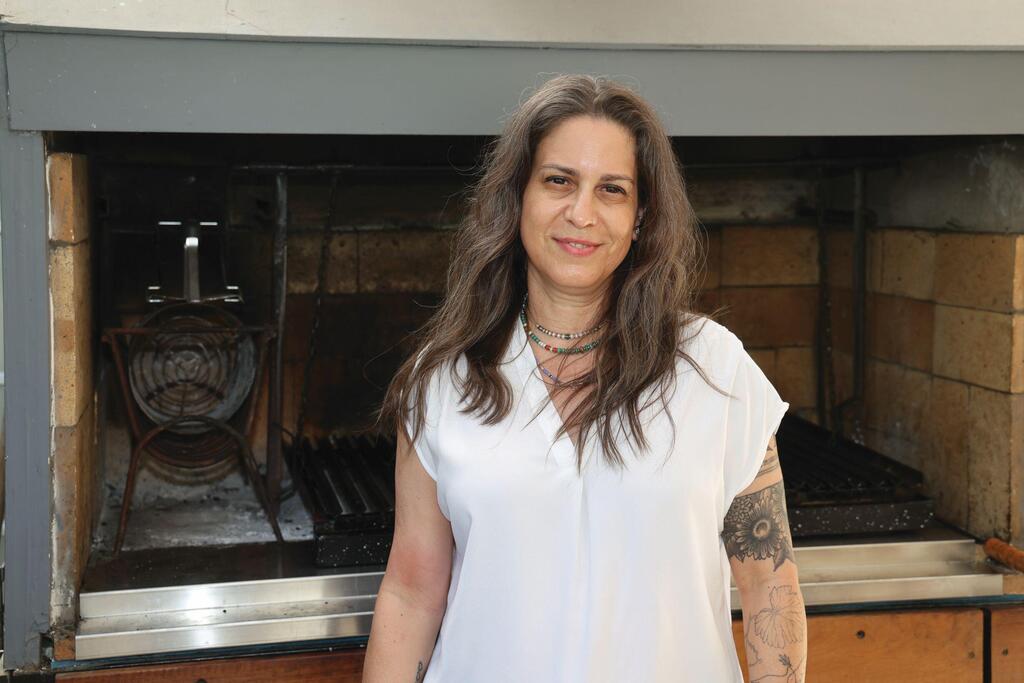
'Breastfeeding physician'
(Photo: Yariv Katz)
After six years, the family returned to Israel. Gat passed the Israeli medical licensing examination, completed a yearlong internship and was accepted into an anesthesiology residency at Meir Medical Center in Kfar Saba.
She says her age did not prevent her from securing a residency position. “Perhaps some people even saw it as an advantage,” she says. “I do not have young children, I will not take maternity leave and I barely need to take days off because a child is sick. There is a certain convenience in that for the system.”
Gat is now in the third year of a five-year residency. Anyone who expected a breastfeeding specialist to choose pediatrics or gynecology was mistaken. Gat chose anesthesiology. She recently passed the grueling first-stage board examination, though she still has a long road ahead.
“My mother once said to me, ‘You studied mechanical engineering, why would you leave it?’ And now it has all come back to me,” she says. “There is a great deal of engineering in anesthesiology: ventilators, monitoring, and the physics of fluids and gases.
“On the other hand, some people raised an eyebrow and said, ‘You are such a caring person by nature, so why anesthesiology?’ It is true that the interpersonal connection in anesthesiology is brief, but it is extremely meaningful. I am with people during some of the most difficult moments of their lives. The ability to be there for them and help them understand the situation should not be taken for granted.”
“There is no field in medicine that is harder than anesthesiology,” she adds. “People say anesthesiologists understand more about everything than anyone else. It is a profession that requires an exceptionally broad understanding, and it is one of the most diverse medical roles. We work in operating rooms, delivery rooms and intensive care. We also administer sedation during invasive procedures.”
“It is moving to see how someone who was awake and communicating just a second earlier is suddenly anesthetized and becomes entirely my responsibility.”
How did you feel the first time you anesthetized a patient?
“It is moving to see how someone who was awake and communicating just a second earlier is suddenly anesthetized and becomes entirely my responsibility. The ability to be there for people at the moment when they are deeply afraid, because being anesthetized means surrendering control in the most absolute way possible, is incredible.”
The work includes grueling 26-hour shifts.
“Yes, and it is difficult and unfair, both to us and to the patients. There is no other profession in which people work shifts that long.”
Despite moving into the operating room, Gat has not abandoned the life’s work she built around breastfeeding. Together with Einat Talmon and Vered Lev, she published a comprehensive professional book in 2016, “The Israeli Guide to Breastfeeding.” A decade later, the three are preparing to update it.
What has changed in breastfeeding over the past decade?
“Today, every mother has a breast pump at home, and before giving birth she is already asking which pump she should buy. In the past, women listened to professionals. Today, expectant mothers buy pumps because of social media influencers who have discount codes and receive compensation for every purchase. That means there is less and less physiological breastfeeding, meaning direct nursing from the breast. We are seeing it around the world.
“The international Academy of Breastfeeding Medicine recently issued a new protocol for treating mastitis that challenged long-held assumptions. They say that one of the central causes of mastitis today is the lack of sufficient physiological breastfeeding and the excessive use of accessories. The amount of milk being produced is not synchronized with what the baby needs or with the timing of nursing. Mothers say, ‘I will pump so that I have some stored,’ or, ‘It is difficult for me to have the baby so dependent on me.’
“All health organizations recommend breastfeeding until at least age 2. But according to the Israeli Health Ministry’s Mabat Larach survey, only 15% of mothers are exclusively breastfeeding when their babies are six months old. Exclusive breastfeeding is not normalized, either by society or by pediatricians. A doctor may tell the mother of a nine-month-old baby, ‘Enough. Your milk is like water now. It has no value.’”
Gat describes herself as a “breastfeeding physician,” although Israel does not formally recognize it as a medical specialty. “For several years, the Society for Breastfeeding Medicine has operated under the Israel Medical Association, and its members are trying to standardize the field,” she explains. “Doctors who complete specialized training are now considered breastfeeding physicians.”
“It is unpleasant to say, but in Argentina I did not wash a single glass. I was freed from all household chores, and that gave me an enormous amount of time. It is impossible to understand how significant that was.”
Israel has been living through an extended period of war. Does that affect breastfeeding?
“Of course. Western culture is generally a terrible culture for mothers and babies. There is so much isolation. A new mother finds herself alone at home and says, ‘I am barely surviving. I have not eaten anything. I have not changed out of my sweatpants.’ Everything has an effect.”
Does the quality of breast milk suffer in such a situation?
“It takes extreme and exceptional stress to affect the amount or quality of the milk. But raising children demands emotional strength, and when we are alone, it is many times harder. I remember coming home from work when my first son was a baby and saying, ‘What am I supposed to do with him now?’
“What I later learned is that I simply do what I need to do, and the children are with me, whether I am making schnitzel or hanging laundry.”
Her ability to combine her different worlds is still evident today. “As an anesthesiologist, I am with mothers who are transferred from the delivery room for an emergency cesarean section,” she says. “When possible, immediately after the baby is delivered, while the mother’s abdomen is still open, I approach her and ask: ‘Would you like me to help you breastfeed now?’ Where else in the world could there be such an extraordinary combination of everything I love?”