

The identical twins Kevin and Keith Hodge are an excellent example of an industry that took shape on the American right in the Donald Trump era. They began as fitness YouTubers, but after Trump’s 2016 victory realized they could reinvent themselves as political influencers and make serious money in the MAGA world.
The brothers, who call themselves the Hodgetwins, now perform stand-up comedy and give lectures built around familiar hits: anti-liberalism, anti-feminism, transphobia and everything bundled under the label of ‘woke’ culture. Their X banner shows Trump raising his fist after the 2024 assassination attempt. They have 3.4 million followers.
On Sunday, the Hodgetwins posted a clip of Trump alongside Prime Minister Benjamin Netanyahu, writing: ‘Why is this criminal in our country every other week?’ Within 36 hours, the post drew 63,000 likes and more than 1 million views. Until mid-2025, such a post from the Trumpist right would have been unthinkable.
It is a small anecdote that reflects a much larger story. The movement founded by Trump, which sent him twice to the White House, is in the midst of an internal crisis over a range of issues, from immigration and tariffs to Jeffrey Epstein. High on that list sits Israel.
While Israel, over the past two years focused largely on antisemitism and anti-Zionism emerging from the left, mostly among students with little real political power, it is the antisemitic and anti-Israel voices on the right that have gained genuine political traction.
More than Trump reshaped the Republican base, he unleashed it. After racism, antisemitism fused with hostility toward Israel was a predictable next step, now led by some of the most influential figures on the American right.
Holocaust denial or ‘just asking questions’?
A survey conducted early last month by the Manhattan Institute among Republicans found that older voters remain strongly pro-Israel. Younger voters, however, are not only turning anti-Israel but are openly embracing antisemitic views.
In a focus group of 20 Gen Z conservatives, one participant said Adolf Hitler was a ‘great leader’. Another said America needs ‘a nationalist leader like Hitler’. A third argued that while Hitler did terrible things, ‘I understand where he was coming from’. One participant said Jews are ‘the force of evil’. Another claimed Israel is connected to sex trafficking.
Republican support for Israel over the past 40 years has been so strong that it is easy to forget it was not always that way. Democratic President Harry Truman recognized Israel in 1948. In the country’s early decades, American conservatives often viewed Israel skeptically because of its socialist foundations. In 1956, the conservative magazine National Review called Israel ‘the first racist state in modern history’. Richard Nixon was a known antisemite, even as he supported Israel.
The Six-Day War marked a turning point. Militarily, Americans were stunned by Israel’s swift defeat of armies that were backed by the Soviet Union, which many believers saw as a divine miracle. Evangelicals, meanwhile, were excited by the reunification of Jerusalem, which they viewed as more than a military victory.
By the Ronald Reagan era, the Republican Party had become fully pro-Israel, even though Reagan never visited Israel. The alliance between evangelists and pro-Israel Republicans became one of the most powerful forces in American politics. After the September 11 attacks, those ties deepened further, aided by George W. Bush’s own evangelical faith.
At the time, anti-Israel sentiment within the Republican Party was marginal, largely confined to white Christian supremacist groups that party leaders managed to keep on the fringes. Trump’s rise changed that. The extremist ideologies revived by the MAGA movement provided political cover for raw antisemitism.
When Trump said after the 2017 violence in Charlottesville that there were ‘very fine people on both sides’, the message landed. Now figures such as Nick Fuentes, a Holocaust denier who praises Hitler and was invited to dinner with Trump at Mar-a-Lago, are edging closer to the Republican mainstream, their views no longer automatically rejected.
This week, Joe Rogan, whose podcast reaches tens of millions, hosted James Talarico, a rising Democratic star from Texas. When Talarico said, accurately, that ‘Fuentes is a Holocaust denier’, Rogan replied: ‘Is he denier? or does he debate the numbers?’ Thousands of commenters on X not only agreed but urged Rogan to invite Fuentes onto his show.
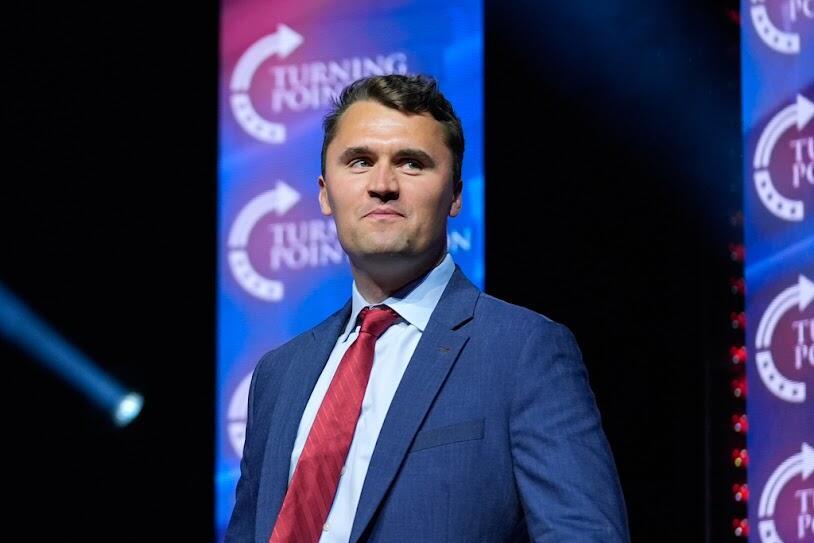
Charlie Kirk
(Photo: Alex Brandon/AP)
The person who has already invited Fuentes onto his podcast is Tucker Carlson, one of the most influential figures on the right, has become one of America’s most vocal anti-Israel voices in 2025. Carlson denies being antisemitic, but over the past two years the line between antisemitism and legitimate criticism of Israel has blurred among extremists on both ends of the political spectrum.
It was not the first time Carlson ignited controversy over Israel. His viral summer interview with evangelical Sen. Ted Cruz, in which he pressed Cruz to justify his religious support for Israel, did not come out of nowhere. Young Christians on the right no longer see support for Israel as a moral or biblical imperative. Like their liberal peers, they face severe economic pressures and grew up at an increasing distance from the Holocaust.
The war in Gaza gave these forces the final push they needed to emerge openly. According to a Pew survey, one-fifth of Americans get their news from social media, rising to 43% among those under 30. While mainstream outlets largely reported on the war in restrained terms, social media was flooded with harsh graphic footage from Gaza. The emotional impact of starving babies, it now appears, resonated not only on the left.
Rep. Marjorie Taylor Greene was the first major MAGA figure to break publicly with Trump over Israel. Over the summer, she used the term ‘genocide’ to describe Israel’s actions in Gaza. “It’s the most truthful and easiest thing to say that Oct 7th in Israel was horrific and all hostages must be returned but so is the genocide, humanitarian crisis, and starvation happening in Gaza", she tweeted.
That marked the beginning of Greene’s public break with Trump. She went on to criticize him on multiple issues. Trump’s political machine quickly turned on her, and Greene eventually folded. When Congress returns to work next Monday, it will be her final day in the House.
Murder and a Pandora’s box
Charlie Kirk, whose organization TPUSA - Turning Point USA is widely credited with Trump’s success among young voters, also noticed the conservative next generation turning away from Israel. Not by coincidence, Kirk sent Netanyahu a letter warning that Israel was ‘losing the information war’ among young Americans.
In the letter, Kirk echoed questions he hears from young conservatives: ‘Why is America subsidizing Israel’s genocide against the Palestinian people?’ and ‘Why does Israel conduct ethnic cleansing?’
Last summer, Kirk convened TPUSA chapter leaders for a focus group on Israel. He tried to explain why continued U.S. economic and military support matters, while also expressing empathy. ‘I am trying to find a new middle ground,’ he said. ‘I love Israel. My wife and I had our best experiences there. I saw where Jesus rose from the dead and walked on water. But I am also an American, and I represent a generation that cannot afford anything. We are flooded with illegal immigrants, and no one speaks English.’
Pandora’s box fully opened after Kirk’s death in September. His murder unleashed a wave of conspiracy theories, with Israel somehow at their center. The trend has been led by Candace Owens, a major influencer with 5.7 million YouTube subscribers and a long record of antisemitic remarks. She has said "Hitler just wanted to make Germany great, the problem is that he wanted, he had dreams outside of Germany. He wanted to globalize."
Owens, who was close to Kirk, claimed he was the victim of a conspiracy involving Israeli, French and Egyptian intelligence services, aimed at stopping him from publicly reversing his support for Israel. Pro-Israel conservatives were stunned. By the time TPUSA held its annual conference last month in Arizona, tensions were boiling and an explosion seemed inevitable.

U.S. Vice President JD Vance and Charlie Kirk’s widow, Erika, at the TPUSA conference
(Photo: Jon Cherry/AP)
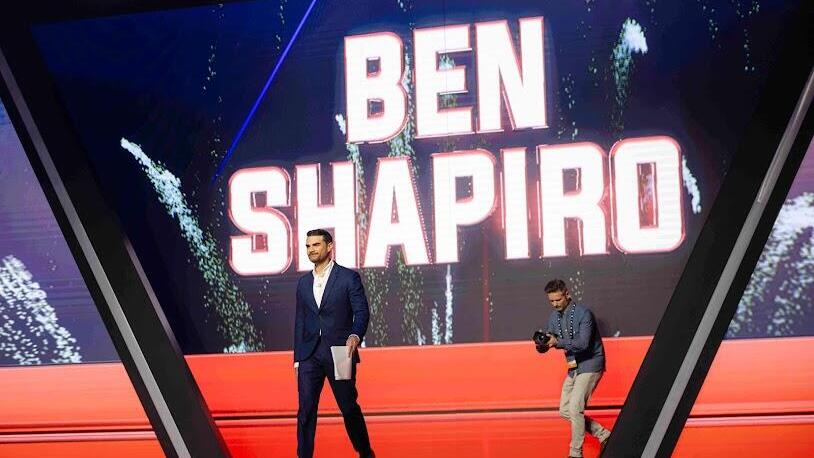
The conference drew 30,000 people and featured what felt like an overly cheerful torch-passing from the late Kirk to his widow, Erika. The real confrontation came when Ben Shapiro, the Orthodox Jewish founder of The Daily Wire and historically one of the most influential conservative voices, took the stage.
Shapiro immediately criticized Carlson, calling his interview with Fuentes ‘moral imbecility’. He blasted Trump adviser Steve Bannon as ‘Jeffrey Epstein’s PR advisor’. He also attacked Megyn Kelly, once seen as a relatively moderate Fox News host, now running a podcast so extreme, Shapiro argued, that it effectively launders Epstein’s crimes and his ties to Trump.
Shapiro warned that ‘the conservative movement is in serious danger’ from conspiracy theorists, without addressing that Trump’s own rise was built on conspiracy thinking. Carlson mocked Shapiro as ‘pompous’. Bannon called him a ‘cancer’ in the MAGA movement. Kelly said she was furious at his remarks.
The person expected to draw a moral red line was Vice President JD Vance, but he refused, saying he would not impose ‘purity tests’. He declined even to condemn Carlson’s interview with Fuentes, a close friend. More than that, Vance is pushing nationalism, nativism, anti-immigrant sentiment and hints of white supremacy even further. He was supposed to serve as an intellectual counterweight to Trump’s impulsiveness. As White House Chief of Staff Susie Wiles put it, ‘He is deep into conspiracy theories.’
Vance increasingly endorses the nativist idea that Americans, mostly white, whose families have lived in the United States for generations, have greater rights than others. He has said "mass migration is theft of the American Dream". He understands where the party is heading. The more he entrenches himself in these positions, the stronger his standing becomes within MAGA. At this point, it is doubtful anyone will even challenge him in the 2028 Republican primaries.
And Trump himself? None of this touches him. Trump has never had ideals, principles or moral boundaries. He cares only about himself and knows his supporters will forgive anything. He assembled a coalition of populist nationalists, institutional conservatives, devout Christians, tech oligarchs, billionaires of every stripe and white supremacists. Loyalty to Trump bound them together. What happens to that coalition without him does not particularly matter to him.
As a result, grassroots criticism of Israel does not reach Trump. Anti-Israel anger within the Republican base is instead directed at pro-Israel figures in the party and in Congress, not at Trump.
Despite talk of an illegal third presidential run in 2028, Trump is unlikely to attempt it, if only because of his age and physical condition. His second term may therefore be remembered both as the peak of the Republican Party’s decades-long support for Israel and also as the moment that support began to unravel.