

Lt. Col. Bar Vackert, commander of Golani’s reconnaissance battalion and the officer who led the IDF’s return to the Beaufort fortress, did not expect to get this far, or this high.
“A year ago, when I entered the role, Gaza was still the main arena, and we were sure we would bring back the hostages and that would be the end of the saga,” he says.
Gallery
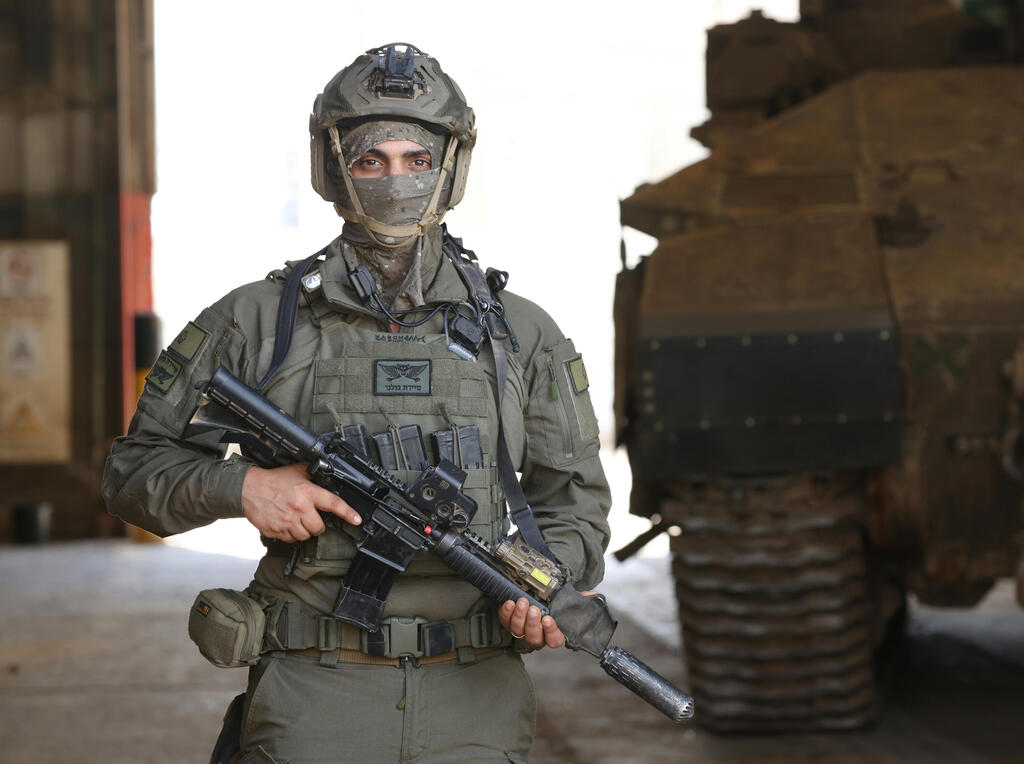
Lt. Col. Bar Vackert, commander of Golani’s reconnaissance battalion
(Photo: Elad Gershgoren)
A year later, he was climbing Beaufort as if finally reaching the hornet’s nest, or rather the nest of explosive drones, that had been buzzing around his forces until that moment.
“As long as we were fighting in the villages of southern Lebanon, they fired anti-tank missiles and indirect fire at us from the direction of Beaufort,” he says. “We knew for certain there were terrorists there watching us and firing at us. Every minute you get an alert that someone has identified you. They are constantly shooting from there. So you want to get there, because once you are there, you manage to isolate southern Lebanon. They can no longer see you directly.”
Are you familiar with the claim that retaking Beaufort was mainly symbolic?
“I am aware of it, but there is no connection between the two things. Going up there had operational value. We found an underground system there, a very large tunnel network, hundreds of meters long, with levels, ladders and rooms. From there, they fired and launched attacks on Israel, and that underground system alone justified getting there.”
But do you see the symbolism of returning there?
“No. I look at things practically. In the end, the Beaufort ridge is an insane key terrain area with very great operational importance. It looks 360 degrees over the entire Nabatieh plateau on one side, and toward Metula and Israel on the other. You sit there and you control.”
The question of what Israel is doing back on Beaufort became especially urgent this week. It seems we have climbed a mountain from which someone will have to offer us a ladder to get down. Meanwhile, Iran and the United States have reached whatever understandings they reached, and Israel, for its part, is still on the mountain. And in Lebanon. And in the northern war.
Forty-four years have passed since the steep, brutal Crusader fortress was first captured in the First Lebanon War, in a battle in which commander Major Goni Hernik and five other soldiers were killed.

Goni Hernik, late commander of Golani’s reconnaissance battalion, who was killed in the battle for Beaufort during the First Lebanon War
(Photo: Izkor website)
Twenty-one years have passed since Ron Leshem’s novel If There Is a Heaven, later adapted into the film Beaufort, branded the site “the cursed mountain,” captured the complexity and danger of sitting on the mountain and in Lebanon in general, and left behind the defining line: “Welcome. If there is a heaven, this is what it looks like. If there is a hell, this is what it feels like. Beaufort outpost.”
Twenty-six years have passed since Israel decided to withdraw from the mountain and from Lebanon altogether, not before destroying the infrastructure it had built there.
If you ask online commenters, and some analysts, why Israel returned to Beaufort, they will say the site was retaken mainly to provide a victory image in a war that, so far, has been marked by loss against Hezbollah, which kept firing, kept threatening northern communities and kept refusing to stop.
But if you ask Lt. Col. Bar Vackert, the 33-year-old commander of Golani’s reconnaissance battalion, the kind of officer you would want to see there, thorough, practical, measured, looking neither right nor left but only at the next mission, Beaufort is simply a vital point. Temporary, perhaps, in a war Israel must win, or at least not lose, or at the very least not stop until northern Israel can again live with the quiet it needs.
And yet Beaufort, and in fact everything beyond the Litani River, was not really part of the plan when the current northern campaign began.
“At first it seemed like a distant objective,” Vackert says. “We focused on about 10 villages in southern Lebanon.”
Then you get the order to go up to Beaufort. When the famous book was published, you were in sixth grade. Most of your regular-service soldiers had not even been born. Do the things that happened there then mean anything to you?
“Of course. Every soldier in the Golani Brigade, and certainly in the reconnaissance battalion, knows the book and the story of Goni Hernik. These are the things on which we educate our people.”
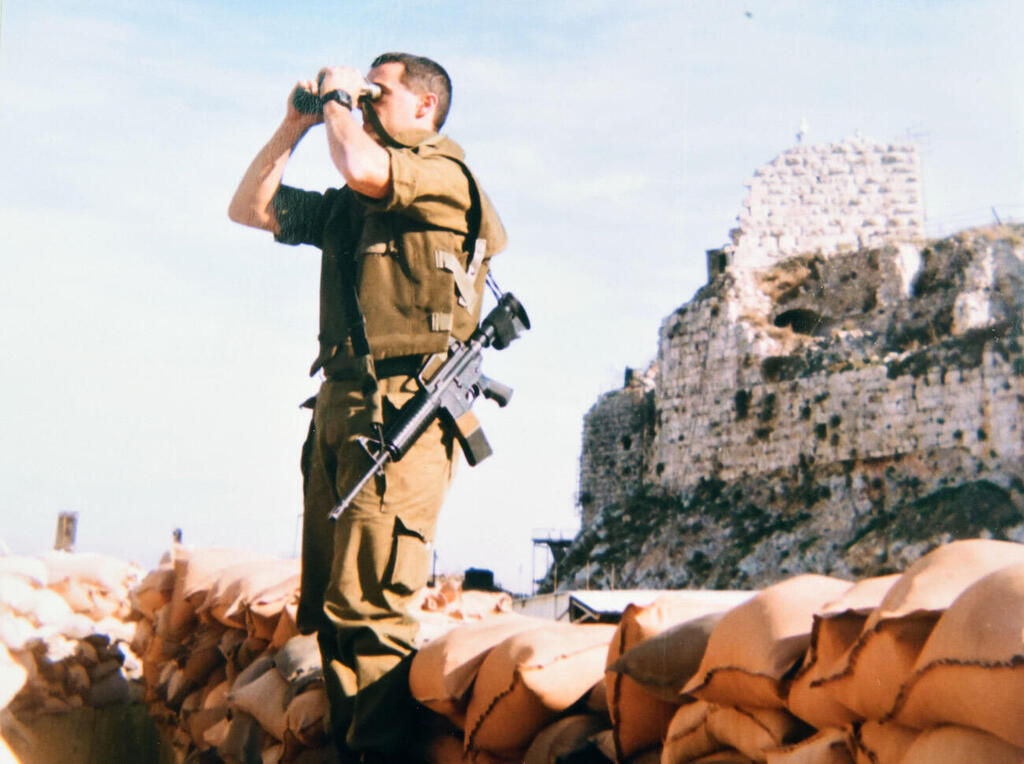
A soldier at the foot of Beaufort, shortly before the IDF withdrawal, May 2000
How much did it frighten you personally?
“When you go out to something like that, there are concerns. Thoughts went through my mind that I could end up like Goni Hernik, or something close to that. I thought about it, but I always disconnect the thoughts and do the operational actions: fire activation, intelligence gathering, choosing the route of advance, all of it.”
Did you share those fears with anyone?
“Nothing. I get the phone call, I don’t talk to anyone. Only orders on the radio.”
Were soldiers afraid?
“No. Every time I am surprised again that before these attacks, I have thoughts, concerns, and then I see the team commanders and the soldiers, and they have no concerns at all. They go out to attack, run, leap forward, shoot without fear. It is amazing to see. They have such a passion to complete the mission that they are completely locked in. Nothing else interests them.”
It took them three days to advance. On the final night, they climbed the fortress itself, a steep ascent of about five kilometers, and at dawn raised the Israeli flag and the brigade flag above it.
Vackert did not deliver a grand speech.
“I just told the brigade commander on the radio that we had finished clearing the area,” he says. “It was without clichés, but the emotion was there even without me saying anything. This is a different objective, not just another building.”
Did you prepare for the takeover?
“Yes. We had to do significant learning to understand how the fortress is built, because in a regular structure you first send in a drone, understand where the openings are and everything. Beaufort is built in levels, and the drone loses signal within a second. We literally cross-referenced intelligence materials with YouTube videos by tourists who had visited there. We analyzed every video, where the person turns right and left, where there is a passage, and we reached a very intimate level of familiarity with the structure.”
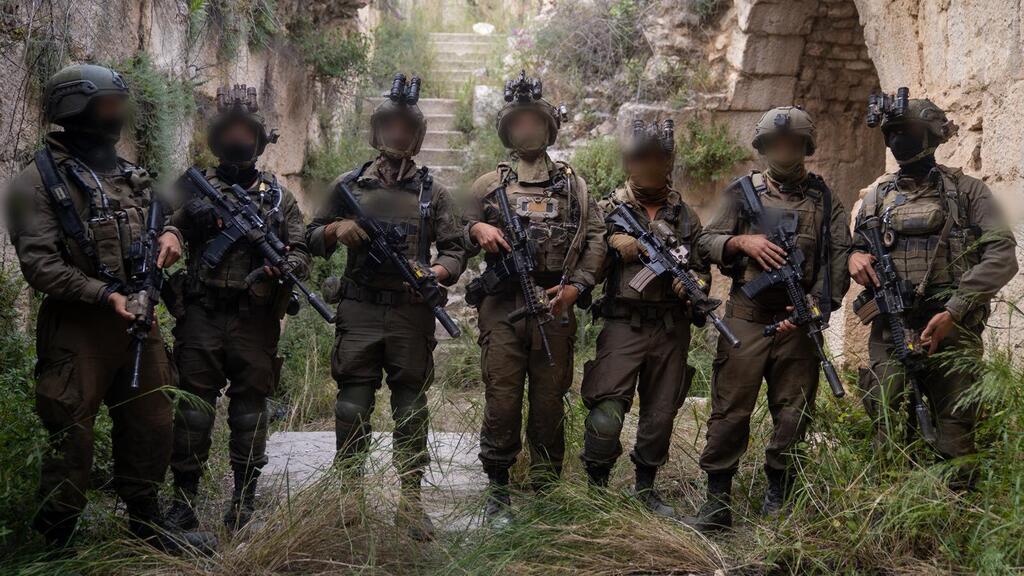
Golani’s reconnaissance battalion
(Photo: IDF)
Was anything or anyone waiting for you there?
“Truthfully, no. Before we reached the mountain, we encountered two terrorists. In Beaufort itself, we found beds, sleeping bags and fighting positions, but the terrorists apparently understood it was not worth staying, because the place is a death sentence. Once you enter from the southern part of the fortress, you have no way out. And if our force enters, the only options are to jump off the cliff or die. They did not wait to try.”
Did you expect to find other things?
“I no longer expect anything and I’m not surprised by anything. In every village in southern Lebanon we reached, small or large, we always found weapons and explosives inside homes, inside children’s rooms. It is unbelievable in an extreme way. There was not a single village where we did not find terror infrastructure and positions. It is simply built in, living inside them. So the innocence of ‘what will I find’ is already behind me. Maybe one of the things that became sharper for me is that everything we assess in intelligence exists is actually true.
“In Beaufort, there were simply prepared, fortified fighting positions, food stockpiles and mattresses. There is no doubt they lived there. In that sense, I was not surprised. The underground system was relatively surprising, because you say: how is it possible that on a ridge like this they built such a system? Well, they built it, and built it well.”
Is the fortress large from the inside?
“Relatively, yes. Four levels and a tower.”
Is it a good tourist site?
“If they clean it up a little, yes, because the terrorists left it quite dirty. But the view from there is spectacular.”
There is always something striking, almost enviable, about the way combat soldiers in the field live inside a reality that is clean and focused compared with life on the Israeli home front.
You arrive at a military base in or near a combat zone and suddenly understand how different everything looks from ground level, and how the endless noise back home, the media, social networks, commentary, spins, incitement, posts and general sense of apocalypse, is only white noise for the people here, who are simply doing the job. And the job is critical.
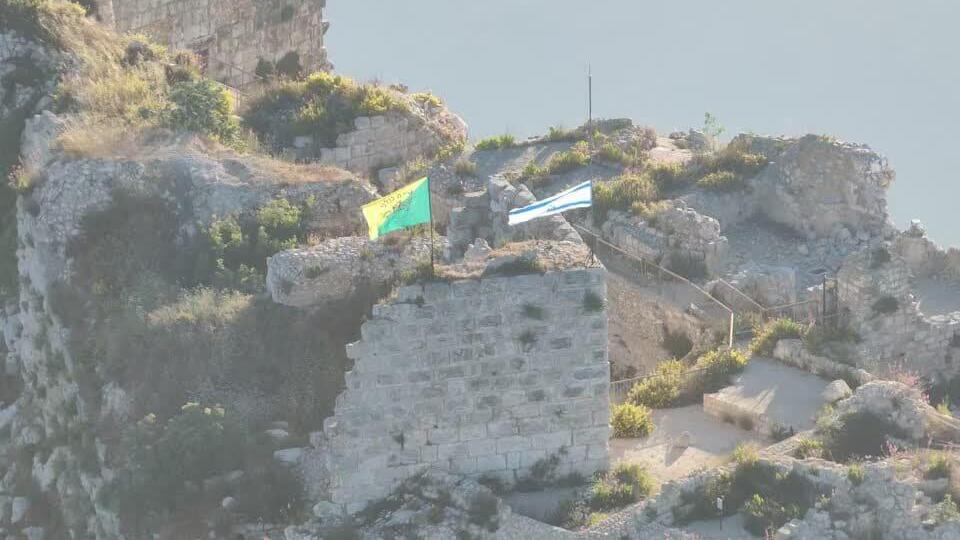
The Golani reconnaissance battalion flag and Israeli flag fly over Beaufort
(Photo: IDF)
There is in it an almost addictive clarity, a mission-focused way of seeing. One could argue the opposite, of course: that it is the blinders of workhorses, seeing only what stands in front of them. Perhaps there is no need to decide. An encounter with the fighting IDF returns you, forgive the phrase, to basics. To the thing itself, not the noise around it. To primary values: security, defense, repulsion, victory, protection and a snack from the military canteen.
Vackert is an excellent example of that. He comes from a family in Kiryat Malachi, three sons and three daughters. A brother who served in Golani made him decide he wanted the same. He discovered, perhaps contrary to everything he had expected of himself as a teenager, when he remembers being far less serious, that this was meant for him.
At some point in his adolescence, he moved to the Hakfar Hayarok boarding school.
“It did me good,” he says. “I matured a lot, I was independent, I met people, I encountered something different from Kiryat Malachi and saw great value in that.”
He even went to a pre-academic preparatory program. But at some point, he says, “I saw my brother come home with a weapon and knew this had to be it.”
Since October 7, he has fought with the brigade in Gaza, including in Khan Younis, Gaza City and Rafah, and in Lebanon, destroying combat infrastructure in villages and taking part in an operation to clear and control the Litani area. He went to Command and Staff College, served as a brigade operations officer, was appointed battalion commander and nearly died at least once.
“A month after I entered the role, I was on a mission in Khan Younis, and suddenly a terrorist came out of some shaft very close to the Namer, threw an explosive charge at the Namer next to me and killed two soldiers there. Then he threw another explosive charge into my Namer. The charge fell into the Namer and simply did not explode. Min Allah. I was supposed to die, but I stayed alive. And after an event like that, after an officer and a soldier have been killed and you almost got killed too, you have to continue the mission, then lift the unit up and move forward. That was very complicated for me.”
Did you see a mental health officer?
Vackert pauses for a moment and smiles. “No, I don’t see a mental health officer. How do they say it? At the end of the role, I’ll see one.”
He is very stable, mainly for the soldiers, and mainly because it is unclear how long this will continue. From his perspective, that is not even a question. It may continue until further notice, and further notice may never come.
“The measure is whether we know how to promise the residents of the north that everything is okay,” he says. “If we do not know how to promise that, we had better shut our mouths and stay where we need to stay. That is our obligation as an army and as a state. I hope it will not be years. I don’t want to spend all this time securing inside Lebanese territory. On the other hand, if that is what is required of us so the residents can have quiet, we will do it for years.”
Do you have expectations from the political echelon on this matter?
“In the end, every military action needs a diplomatic action that comes with it,” he says, restraining himself as much as possible.
We must not slide into politics, but it seems we are talking about the same thing. The army is moving, farther and farther north, by the way, “We are already facing forward, toward Nabatieh,” while the political echelon less so.
Do you see a sustainable long-term solution in the north?
“I want to believe there is one. But they need to be pressed very hard militarily first, because in the end this is a Shiite culture of not surrendering no matter what, no matter how much they lose or what happens to their residents. They don’t care about anything. Only major military pressure combined with a diplomatic effort can succeed.”
Does it seem logical to you that our soldiers are wounded and killed in the north every week inside what was declared a ceasefire?
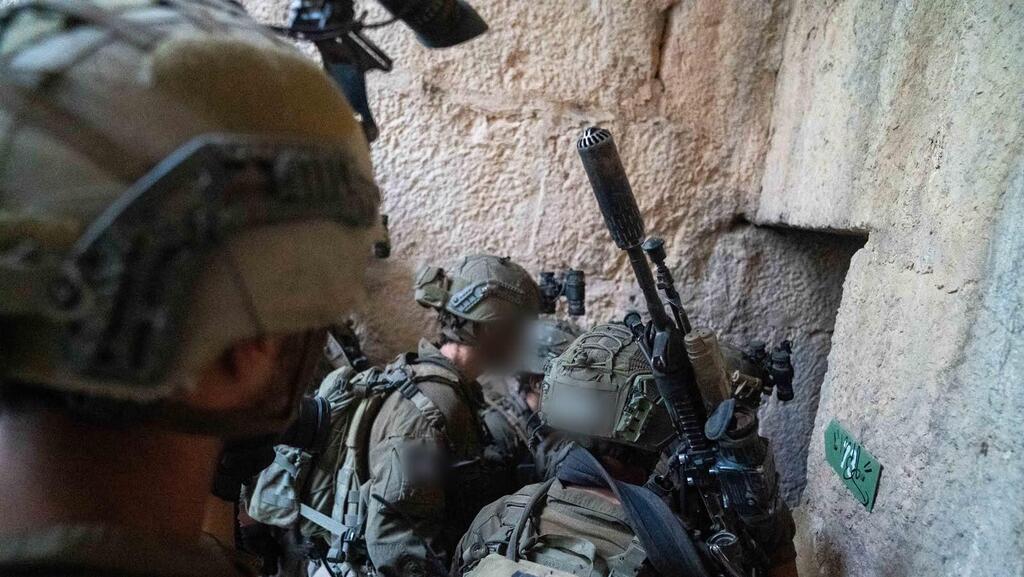
“Listen, this ceasefire never met us along the way. From our perspective, no one told us: you are in a ceasefire with Hezbollah, you are not allowed to fire or advance. We operate quite freely in our sector. We were in the Litani, they said ceasefire, we went out to Beaufort. So that is a discussion in the media. For the maneuvering forces, there is no ceasefire.”
(Photo: IDF)
Don’t soldiers sometimes come to you and say, “But we heard there is a ceasefire”?
“We have a smart generation of soldiers today. They understand things and know that the ceasefire is less relevant to us as a force in the field. But every time my mother and father come and say, ‘What, isn’t there a ceasefire?’ because if you don’t live the field, it is hard to understand. It is a ceasefire that may be right for the news broadcasts. You said ‘ceasefire’, from my perspective you said nothing. I hear that discourse and understand that it is not relevant to me. We, in our operations and missions, continue as usual and see no difference.”
The question is how long Israel can continue, and whether it is not sinking again into the Lebanese mud.
“The other side needs to understand that the price of firing at residents is very heavy, and that it will only keep losing more and more. The moment there is no operational need to remain there, we will not remain.”
Meanwhile, regular-service soldiers are worn down, reservists are grinding through hundreds of days. Do you feel that difficulty among your people?
“We manage this as a long war, and I bring reservists only at major peaks and when there are complex missions. In calmer periods, I release them. And they are amazing, truly. Every time I just pick up the phone, they come without questions. On the other hand, I know when to call and when not to. When I can live on the regular-service force, I release them.”
Still, some have done 100 reserve days a year or more.
“They have complexities at work and with family, but they care about coming. When you go out to attack, for example at Beaufort, they want to be with you. It matters to them. Also, not everyone comes, and we don’t always need everyone. I don’t bring all the hundreds of reservists I have, only the relevant functions. And among them too, we know how to arrange it and decide who comes now and who later. They come for three days, then go home. We manage it differently, understanding the sensitivities.”
It almost sounds as if the issue of ultra-Orthodox conscription is unnecessary from your perspective.
“Not at all. On the military level, it is clear to me that we need more brigades. The IDF is not a large army, and given the challenges in Gaza, Lebanon and Syria, it needs sufficient force. Separately, in my view every Israeli citizen who has the required health should enlist, Haredi or not. It makes no difference.”
While we speak, Iran and Trump are reaching understandings over both our heads, and by “heads” I also mean the prime minister’s. The phrase “ceasefire” is again in the headlines, the reconnaissance battalion is still on the mountain and inside Lebanese territory, and the question is what now, and where does it meet him?
“It doesn’t meet me too much,” he says. “My view is that Israel should have the right to attack whatever it wants in Lebanon that threatens it, without thinking about how this or that person will respond and without making overly complex calculations about who will attack us back. Wherever we feel a need to remove a threat, we remove it.”
That sounds good on the declarative level, certainly from a battalion commander. It could fit into any press conference for Israeli citizens. But Vackert, in practice, is waiting to see what the agreement produces.
“I assume we will meet this week with the brigade commander and the battalion commanders and understand for a moment the implications and what it means for us. I believe that as long as Hezbollah does not stop firing or trying to create terror, we will remain forward in order to be a buffer between it and the residents.”
That is good news and bad news at the same time, because Vackert is prepared to continue on and on. In other words, even under what is beginning to look like an eternal war, he finds ways to manage it and persist.
“People here go through very complex things,” he is willing to say. “Take a battlefield from any war movie, and sometimes it does not look far from that. But we deal with it a lot, including refreshing people, processing, team processing, and a mental health officer for anyone who needs it. In the end, the strongest thing, more than any mental health officer, is the friends next to them, because the connection and friendship they build defeat any challenge there is. That fabric, of a team in the reconnaissance battalion or a platoon elsewhere, is hard to tear apart. If someone is struggling, first of all he has friends who know how to lift him up and look after him.”
Do you see an increase in requests to see a mental health officer?
“There is an increase. People are still going through insane things. But there is no extreme change I can point to, no collapse, and that is amazing to me, even if I am not surprised because I know the people and their resilience and how much they care. I have guys who were wounded at the Litani. I spoke to them an hour ago, and they are upset they were not at Beaufort. A person wounded in the hand, upset he did not come with his friends to Beaufort. It is crazy.”
Still, you were in Gaza and Lebanon, and the war, which you told me you estimated on October 7 would last a few months, is not ending. How long do you think you can continue?
“Soldiers are discharged and new soldiers arrive, so the ranks are refreshed. As long as we continue managing it correctly, it is possible to continue this for a long time. But I don’t think the army can live all the time in war. It needs time to train, draw lessons and learn. So for now, this thing needs to be managed, processes need to be created alongside the war, replacing commanders, bringing in and releasing cohorts, training, and then we will be okay. Our soldiers need an occasional breath of air and know how to keep going.”
This month it was reported that Sayeret Matkal integrated its first female combat soldier. What about you?
“That is a hard question. It is amazing to me that there is a female combat soldier in Sayeret Matkal. I was moved when I heard it, and we also have excellent female officers, and God forbid anyone prevent women from reaching any place. But regarding female combat soldiers, I am not sure that in the character of this place and the missions we carry out, it can happen on the technical level.”
Why, actually?
“Because we are not Sayeret Matkal. In the end, we are a force that walks together in the field all the time, a team that lives for whole days in some house, and I don’t know if we can provide, under already complex operational conditions, the required privacy. I am not sure that within the team dynamic this thing can work. In some way, we may create harm out of the desire to turn everything into...” He gets stuck slightly at the end of that sentence, then recovers and takes the correct turn into the politically correct alley: “If they create the necessary conditions for us, as far as I am concerned, every person can meet any mission they approach.”
He may be the IDF middle-ranking commander most suited to this moment: someone capable of asking hard questions, while also separating the questioning lobe from the executing lobe with determination.
Has he seen operational decisions throughout the war that, in his view, were made for reasons that were not entirely military or professional, not to say political? Vackert does not deflect the question.
“As a commander in the army, and I am no longer a child, we ask questions. We want to know, we want to understand why. The starting assumption is that if you give me a certain mission to carry out, it is important and you understand its implications. And if it is not clear to me, I have the right to ask why I am returning to a place again, why I am going there, and what I am meant to achieve.”
You returned to Shejaiya twice, for example. Was that justified?
“Yes. I am telling you honestly: we did not complete the mission the first time. We left before that. There were still terrorists and infrastructure there, and we needed to return. It is not black and white, and sometimes there is a need to complete the mission more hermetically.”
Do you sometimes think about what Israel has done in Gaza? About the tens of thousands killed or the humanitarian situation there? Or do you not deal with that?
“I don’t deal with it. I tell you that the IDF is one of the most moral armies there is, and there was never any intention to harm civilians. Purity of arms is one of the most important things to this army, there is no question at all. We are not like that in character, we do not operate that way. Civilians were killed when terrorists used them. And if terrorists attack you from a certain house and there are civilians inside, there is a limit to how much you can endanger your soldiers and also be the protector of their civilians. Many other countries would not have absorbed a quarter of what we absorbed in this context.”
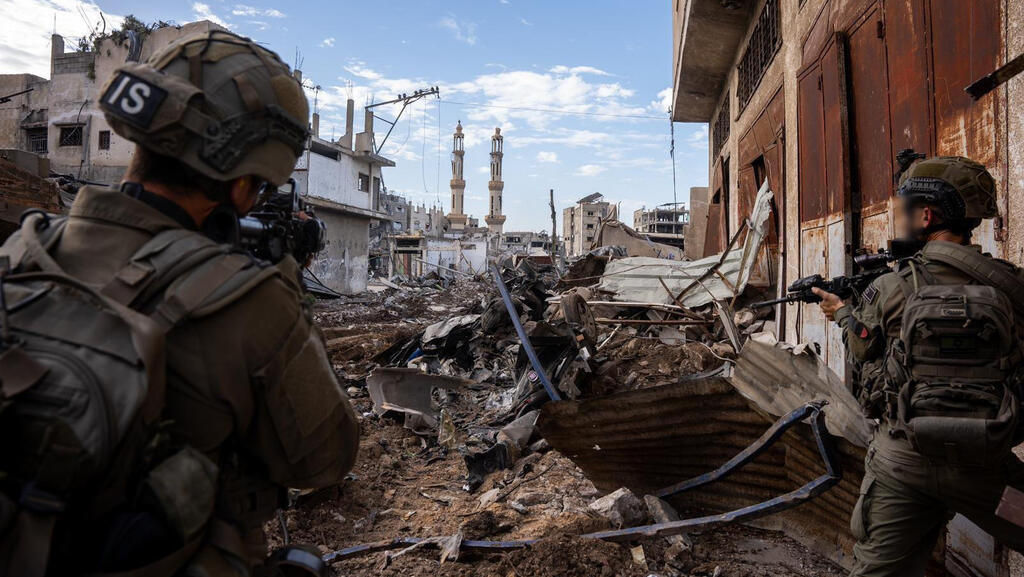
IDF troops in Gaza
(Photo: IDF)
So you don’t have thoughts that maybe we did something wrong and that maybe one day they won’t let you enter, say, France.
“No thoughts, and let them not.”
Later he will say that he was actually in France with his wife. They married only a year ago, live in her community, Glil Yam, and meet and speak too little.
“I am not a good example of managing family life,” he says, not joking. “I am not there and not available. Usually I turn off the phone when I am in the field.”
And she leaves you messages?
“Lots. When I turn it back on, I can’t read fast enough because there are so many. But it is a period, and she knows.”
How often are you home?
“Once a month. It is terrible.”
And if the war ends tomorrow, do you stay in the army?
“The IDF needs its commanders in routine security times too, and most of my military service was like that, without wars. I think it is enjoyable to train people, to prepare people. Command is an amazing thing. There is no other job like it.”
In civilian life, you could simply be a CEO of something.
“My wife’s father is a CEO. It is not the same thing. He is home every day at eight, he has a good life. But in the sense of responsibility that comes with leading fighters, there is no equivalent.”
So when will you leave the army?
“I am not unequivocal. I always think only about this role, and how to finish it with excellence and with minimum casualties along the way. But if you ask my wife, tomorrow.”