


It was 5 a.m. on February 24, 2022. Michael Brodsky, Israel’s ambassador to Ukraine, was sleeping in a hotel in Lviv, nearly 2,000 kilometers from what had until then been considered Europe’s vulnerable eastern frontier. He woke, looked at his phone and could hardly believe what he was seeing.
Kyiv was being bombed. Russia was attacking on several fronts at once. Then, suddenly, an air raid siren sounded in Lviv too, at what had seemed an impossible distance from the front. “You hear explosions and you don’t know what to do,” Brodsky recalls. “In Israel, we’re trained for this. In Ukraine, it was a completely different reality.”
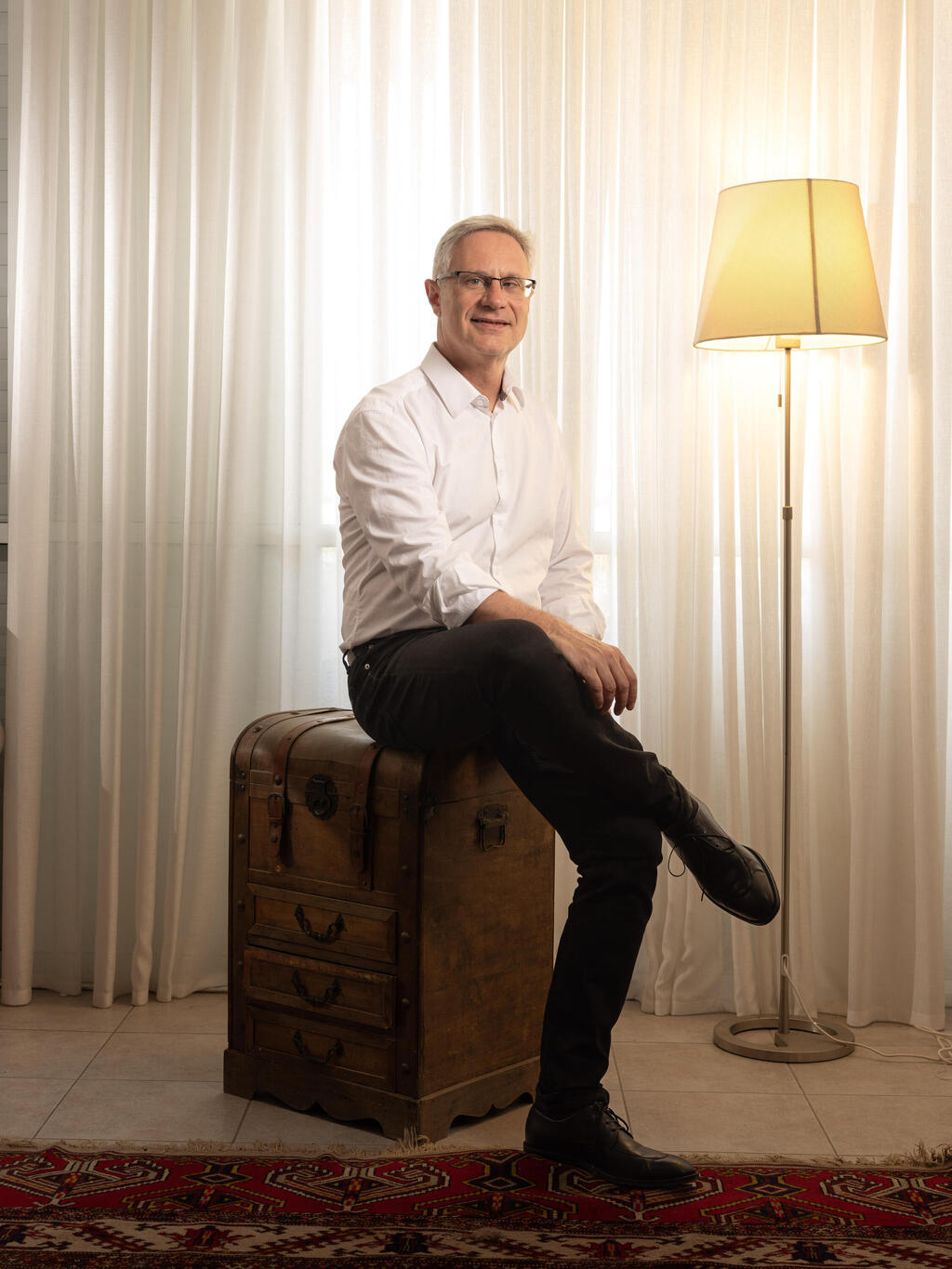
That was, in effect, when Brodsky’s real term as ambassador began. Not the one he had expected when he arrived in Kyiv in August 2021, six months before a full-scale war still seemed to many like a theoretical possibility, but an entirely different posting: five years as ambassador to a country that spent most of them at war.
“Nothing in your diplomatic career prepares you for that,” he says. “It is a permanent state of emergency.”
Now, as he finishes his posting and returns home, Brodsky is opening up about the moments when he was afraid; his relationship with Ukrainian President Volodymyr Zelenskyy and his circle; the anger he faced from Ukrainians who felt abandoned by Israel; and the most personal and difficult moment of all, when Israel’s ambassador in Kyiv learned that his son had been seriously wounded, not in Ukraine but in Khan Younis.
The phone call that came twice
There is an almost unbearable symmetry to Brodsky’s story. Brodsky, 54, was born in St. Petersburg and immigrated to Israel at 18. He joined the Foreign Ministry at 30. He and his wife have three sons, now 27, 24 and 22.
His youngest still serves in the military, in an Israeli Air Force filming unit. His middle son, Eyal, served in the elite Maglan unit and was seriously wounded in fighting in Khan Younis in February 2024. The injury was reported at the time after Eyal Brodsky was hit by shrapnel and underwent surgery. “We received the news and immediately flew to Israel,” Brodsky says.
But the way he learned what had happened illustrated the strange gap between his official role and private life.
“The Defense Ministry first informs the embassy security officer, who is supposed to inform the ambassador. The security officer came to our hotel in Lviv, but a minute before he arrived, our eldest son had already called and told us about Eyal, that he had been wounded and that we could relax a little. They were bringing him to Shaare Zedek, and he was going into surgery to remove the shrapnel.”
The next day Brodsky and his wife, artist Regina Shafir, flew to Israel and reached the hospital after the operation had already ended. He stayed beside his son for two weeks before returning to his post in Kyiv. His wife remained in Israel and, apart from visits, did not return.
It was the moment when Brodsky’s two wars, one in which he served as a diplomat and another that struck his own family, merged into one almost impossible reality.
“I didn’t feel a difference,” he says of the period after October 7, when air raid sirens were sounding in both Ukraine and Israel. “I came from a country where there were sirens every few hours, and here there were sirens too. I didn’t feel torn. I felt like an ambassador living between two wars.”
Back to that morning of February 24. The embassy had evacuated Kyiv for Lviv three days before the invasion, even though almost no one believed a full-scale war was actually about to begin.
“Almost nobody believed there would be an all-out attack,” Brodsky says. “Everyone thought that even if there was an attack, it would be limited to the east of the country. And when the Russians attacked across the entire country at full force, I remember thinking: This will be over in a few days, and Ukraine will surrender.
“I wasn’t the only one. Ninety-nine percent of the foreigners in Ukraine thought the same. So did Israeli security officials.”
In the parking lot of the Lviv hotel, between sirens and explosions, Brodsky’s phone did not stop ringing. “I didn’t have a single call without another call waiting. It went on for weeks.”
There were worried families, officials in Jerusalem and Israelis who had somehow obtained the ambassador’s personal number.
“People were calling and screaming, ‘Save us.’ People were trapped not only in Kyiv but in the east of the country, including Israeli students studying in Kharkiv. ‘They’re shooting at us and we don’t know how to get out. You’re the official representatives of the state.’”
In the first hours, Brodsky admits, his team was almost completely helpless. Within days, however, working with the local Jewish community, they established a transportation network that brought thousands of people to the Polish border, not only Israelis and not only Jews.
“We didn’t select people,” he stresses. “We evacuated Ukrainians, non-Israeli Arabs, citizens of Arab and Muslim countries who were stranded at the border. They didn’t care that we were Israelis. They asked us to save them, and we didn’t say no. We even evacuated Egyptian students.”
For the following three years, his life was divided between Kyiv and Poland, a week or two here and a week or two there, working in rotations so that somebody from the team would always be present. Only at the beginning of 2025 did he decide, in coordination with the Foreign Ministry, to return the entire team permanently to Kyiv.
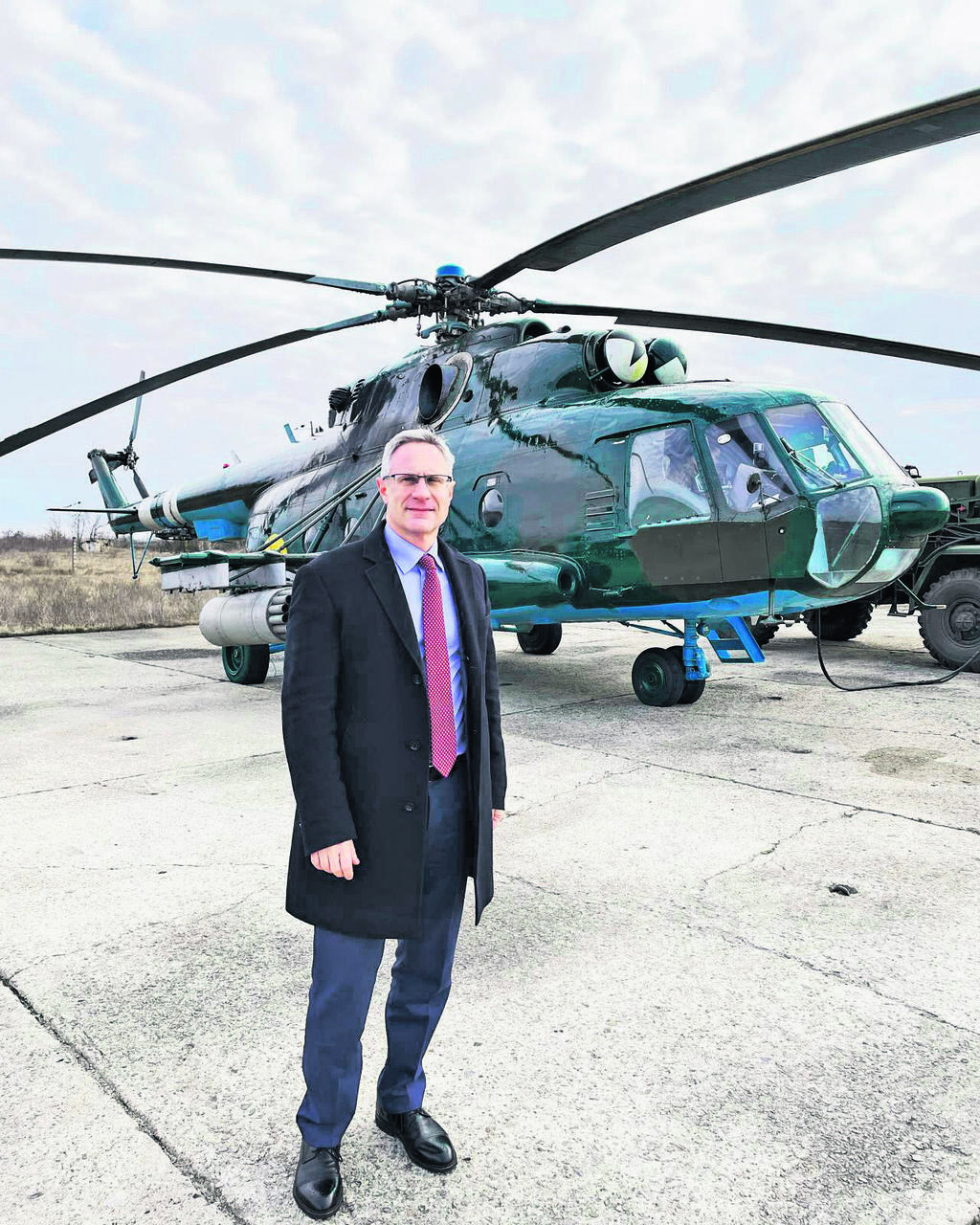
Michael Brodsky during a visit to eastern Ukraine
(Photo: Courtesy)
Asked whether he feared for his life, Brodsky hesitates before answering. “Not more than everyone else around me. There was never a specific threat against us, but we were in very dangerous situations.”
In recent months, he says, Russian attacks on Kyiv have intensified. “There are nights when the capital is attacked by dozens of ballistic missiles and hundreds of drones. You hear explosions, and you don’t always have time to get to a shelter, and in many cases there isn’t even a shelter.”
His apartment building had an underground parking garage. “But it wouldn’t withstand a direct hit from a ballistic missile, and I didn’t see much point in going down because, simply, I wouldn’t have enough time. Usually the boom comes a minute after the siren. But sometimes it’s the other way around: You hear the boom, and only then does the siren start.”
One meeting with Zelensky
In his five years in office, Brodsky says he met Zelenskyy face to face only once, when he presented his diplomatic credentials before the war.
“He was very relaxed, very friendly. A warm person, an emotional person who entered politics without any previous experience,” Brodsky recalls.
“Today, if you can make the comparison, he is more of a Ukrainian patriot than a Jew, and that is also how the public sees him. On the other hand, he never hides his Jewish background. He always talks about it. But for us it doesn’t really matter. We see him first and foremost as the president of Ukraine.”
What does Zelenskyy really want from Israel?
Brodsky’s answer is direct. “There is no difference between what he says publicly and what he says behind closed doors. He wants defense cooperation, air-defense systems and weapons of every kind. He doesn’t see the war ending soon, and therefore he needs to strengthen Ukrainian security in every possible way.”
Beyond weapons, Brodsky says, Zelenskyy also wants Israel to advocate for Ukraine in Washington, recognizing what he sees as Jerusalem’s unusual access to the American political system.
When Brodsky is reminded of the tense Oval Office confrontation involving Zelenskyy, President Donald Trump and Vice President JD Vance, he does not hide his reaction.
“It hurt me too. But things have changed since then. Ukraine has managed to prove its military capabilities. It developed advanced technologies in drones and counter-drone defense, technologies it is already exporting around the world, including to Gulf countries.”
So why doesn’t Israel make greater use of that knowledge?
“We have knowledge and experience of our own, in some cases even more advanced. But that doesn’t mean we shouldn’t learn from the Ukrainian experience.
“A situation in which the enemy attacks you with hundreds of drones can happen to us too. We are not there yet, but that doesn’t mean it won’t happen soon.”
He describes the Ukraine war as an unsettling mixture of eras. “It is World War I and World War III at the same time. On one hand, it is trench warfare in which the front barely moves for years. On the other, it is a war based on innovative technology, especially drones. It is a real game changer.”
Not every conversation Brodsky had with Ukrainian officials was warm. “I had some very difficult conversations,” he admits. “I felt that they not only didn’t understand, they didn’t want to understand.”
He says he does not resent them for it. “When your house is burning, you don’t think about the neighbors. You think about yourself first.”

Michael Brodsky with his wife Regina and their son Eyal, who was wounded in Khan Younis
(Photo: Courtesy)
Brodsky attributes much of the tension to Zelenskyy’s own disappointment with Israel. “Being an emotional person, I think for him it was personal too. As a Jew, he expected Israel to immediately stand by them. He ignored the constraints we faced.”
Those constraints, Brodsky says, were very concrete: Russia’s military presence near Israel’s border with Syria and Israel’s perceived need to preserve a channel of communication with Moscow to reduce the risk of a direct clash in Syrian airspace.
“We knew for certain that if we crossed a red line there would be a Russian response. The potential to harm Israel was enormous, and Russia knew how to exploit it, for example by supplying weapons and intelligence to our enemies.”
The conclusion Brodsky returns to repeatedly is that, in his view, Israel ultimately chose the right policy. “We found the right balance between our existential interest, maintaining a channel of dialogue with Russia, and our moral commitment to a democratic country under attack.”
He is particularly proud of Israel’s humanitarian assistance: an Israeli field hospital established in Ukraine, wounded Ukrainians treated in Israel, children with cancer brought for treatment and training provided to Ukrainian specialists in psychological care for post-traumatic stress.
“That is what ultimately managed to preserve the relationship as a close one, despite the disappointment.”
“I am proud of what we did on the humanitarian side, of the assistance we provided. It was important, value-based assistance that helped restore our image, which was undoubtedly damaged at the start of the war because we did not provide Ukraine with what it demanded from us”
Despite the diplomatic tensions, Brodsky says his encounters with ordinary Ukrainians on the streets of Kyiv told a different story. “A lot of people recognized me on the street, and I felt a lot of warmth and sympathy. ‘Thank you for treating our wounded. Thank you for taking in sick children. Thank you for the doctors you sent.’
“Nobody mentioned that we hadn’t supplied weapons. That was always the first question in media interviews, but on the street I never felt any hostility. On the contrary, only sympathy.”
Brodsky’s personal history, as someone born in what was then the Soviet Union, might have complicated his role as Israel’s ambassador to a country fighting Russia. “For some Ukrainians, it was a problem,” he says candidly, “even though I was never a Russian citizen, not for one day of my life.”
His way of dispelling that suspicion was both symbolic and personal: he learned Ukrainian and even gave interviews to local media in the language. “They appreciated it very much.”
No anti-Israel demonstrations
There is one moment in the conversation when Brodsky is asked how a country already fighting its own war reacted when Israel was struck by the October 7 attack.
“Something amazed me,” he recalls. “On October 7, every Ukrainian television channel switched to live reporting from Israel. For several days, it became the main subject in the Ukrainian media and pushed their own war aside. They felt that this was a war that directly touched them and was close to them.”
According to Brodsky, sympathy for Israel increased sharply after October 7, particularly because Iran is widely viewed in Ukraine as an adversary because of its military cooperation with Russia.
One of the striking features of Israel-Ukraine relations during his term, he says, was the relative lack of sustained personal contact between the countries’ leaders.
Zelensky and Netanyahu were both in Washington in July for the funeral of the late U.S. senator Lindsey Graham, where the two leaders were seen speaking briefly.
Beyond that, Brodsky says, there were several phone calls but little recent direct contact. The more active diplomatic channel, he says, has been at foreign-minister level.
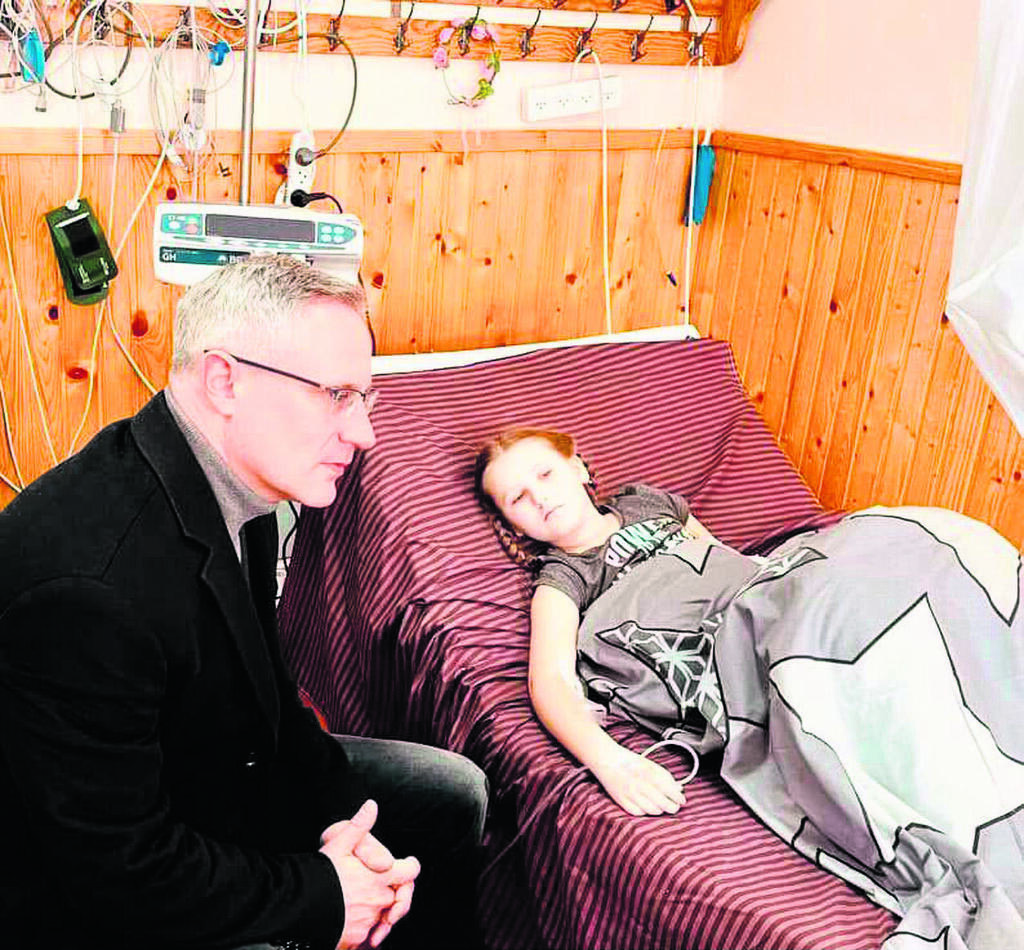
Michael Brodsky at the Israeli field hospital established in Ukraine
(Photo: Courtesy)
Zelenskyy himself has visited Israel only once since becoming president, in January 2020, during the Fifth World Holocaust Forum. Ukraine’s presidential office confirms that he traveled to Israel at the time and held meetings with Israeli leaders, while also visiting the Western Wall.
“Zelenskyy travels a lot around the world, unlike our prime minister, who hardly travels, and when he does it is mainly to the United States,” Brodsky says. “He has also visited the Middle East, but he has not seen fit to come to Israel.”
Was there ever a real crisis between the two leaders?
“I don’t think there was ever a crisis,” Brodsky says, offering a more pragmatic explanation. “The two countries are immersed in their own wars, and in some ways we are even competing with each other for resources and international attention, especially American attention. For weapons, for air-defense systems. There aren’t many points of contact between us right now.”
“The two countries are immersed in their own wars, and in some ways we are even competing with each other for resources and international attention, especially American attention. For weapons, for air-defense systems”
Looking back, what was Israel’s biggest mistake toward Ukraine during the war, and what did it get right?
“I don’t think Israel made any major mistakes. The line and policy that were set were correct. Looking back, I think we found the right balance between our existential interest, which included maintaining a channel of dialogue with the Russians, and our moral commitment to a democratic country under attack and facing aggression from its neighbor.“I’m aware that not everyone in Ukraine, including the leadership, likes that. I had difficult conversations with senior Ukrainian officials.
“I’m aware there was disappointment at the beginning of the war because of the high expectations they had of Israel, but I fully share the constraints we imposed on ourselves because there was a very serious reason for them.
“On the other hand, I’m proud of what we did on the humanitarian side, of the assistance we provided. It was important, value-based assistance that helped restore our image, which was undoubtedly damaged at the beginning of the war because we didn’t provide Ukraine with what it demanded from us.”
And what did they demand?
“Weapons. Air defense. In the end, we provided them with an early-warning system, and the Patriot systems that we gave up and returned to the United States ultimately reached Ukraine.”
The path of former Israeli Patriot equipment to Ukraine was publicly reported beginning in 2025; at the time, Israeli officials described the systems as having been returned to the United States, while Brodsky later said former Israeli systems had reached Ukraine.
“The Ukrainians are facing another problem today,” Brodsky continues. “They can’t intercept ballistic missiles because they have completely run out of interceptors. But that is mainly because of the Iran issue, because the Americans supplied interceptors to Gulf countries and are also keeping them for themselves. That is one of the consequences of the war with Iran.”
Current reporting has documented acute pressure on Patriot interceptor supplies as Ukraine continues seeking additional systems.
Could that happen to us too, that we run out of interceptors and missiles hit without our being able to stop them?
“Certainly. Absolutely. We have to prepare for that in advance, because the Ukrainian example shows that any country under missile attack can reach a situation where it runs out of interceptors, and the number of casualties rises accordingly.”
First, do no harm
Asked what he is taking home from those five years, Brodsky does not answer with policy. He answers with people. “A lot of new friends, and a unique experience that, I think, nobody else in Israel’s Foreign Service has: serving as ambassador during the biggest war in Europe since World War II.”
He describes himself as “an ambassador who was between two wars,” Ukraine’s war and the war that reached him personally after October 7 through his son’s injury.
Perhaps surprisingly, what he is proudest of is not a great diplomatic achievement, but restraint. “I once wanted to study medicine, and I even studied for a year in the Soviet Union. In the physicians’ oath they say: Do no harm.
“In the situation created at the beginning of the war, it would have been very easy to damage relations between the two countries. I believe I did everything I could not to cause damage but, on the contrary, to preserve what existed and improve it as much as possible. “And I think I succeeded.”
He has one regret, small in formulation but painful in meaning. “I would have forced Israelis to leave the country before the war began, even against their will, if that had been possible.
“Despite all the warnings, around 10,000 Israelis were stranded in Ukraine when the war began because they simply didn’t believe it would happen.”
When Brodsky tries to sum up what surprised him most about Ukrainians themselves, he does not talk about battlefield tactics or diplomacy. He talks about character. “I discovered how much resilience there is in Ukrainian society,” he says.
“When I was asked what went through my mind in the first moments after the invasion, the truth is that I thought it would all be over within a few days. But then I saw how the Ukrainians managed to push the Russians back and even liberate some of the territory that had been captured. And there were moments during these years when I thought the war was about to end within days. Unfortunately, that didn’t happen.”
That repeated expectation, followed again and again by disappointment, he says, taught him something about the limits of anyone’s ability to predict wars, including his own.
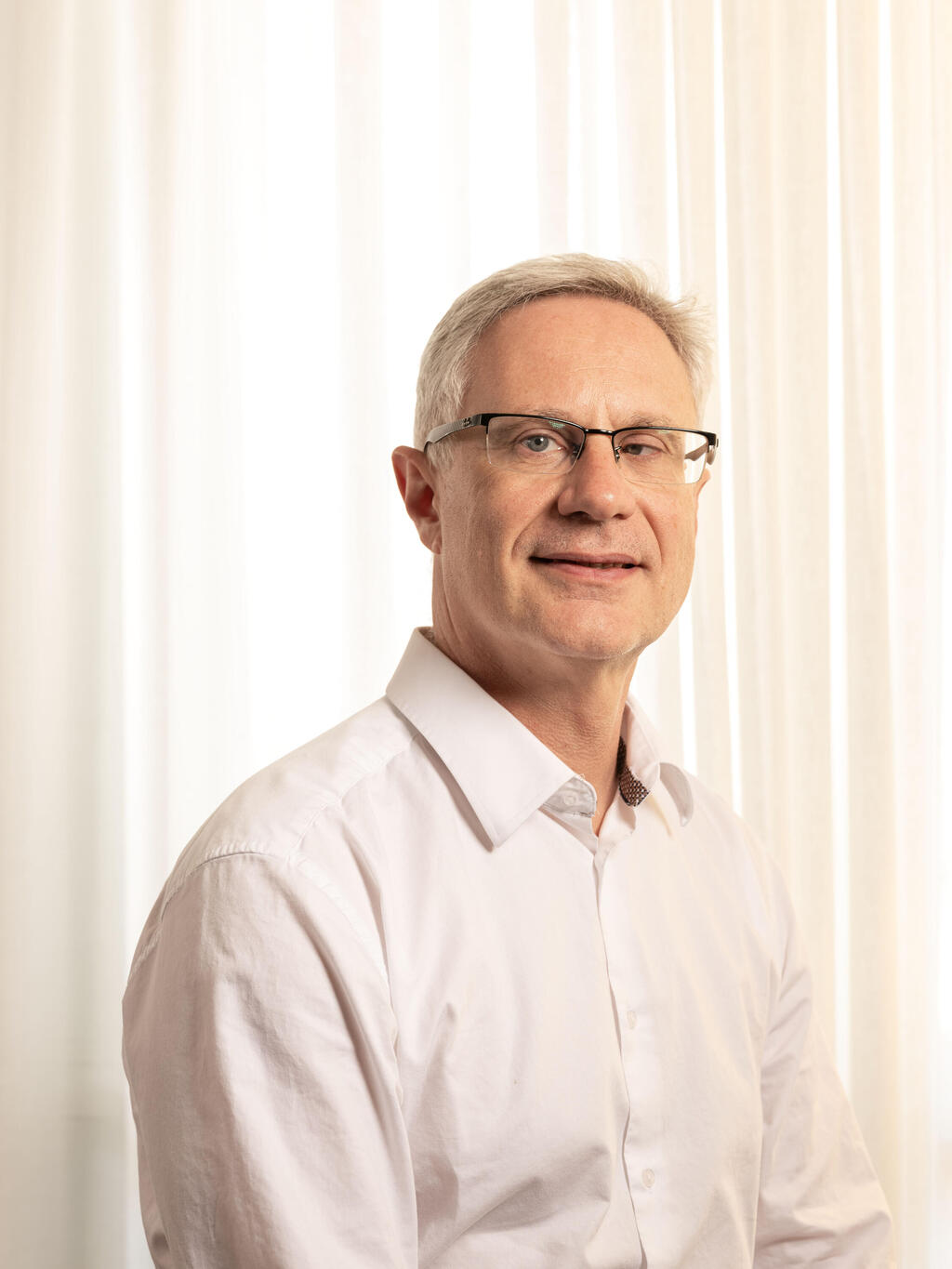
Michael Brodsky
(Photo: Yuval Chen)
What Brodsky finds most fascinating is an unexpected similarity between Israeli and Ukrainian society. “What the Ukrainians are doing today in military technology reminds me very much of the process we ourselves went through,” he says. “I think that in 10 to 15 years, the ‘Made in Ukraine’ brand will be no less desirable and prestigious than ‘Made in Israel’ is today.”
But he says the similarities are not limited to technology. He sees them in political life as well. “I came back to Israel straight into an election campaign, and it only illustrates how similar the political struggle in Ukraine is to what happens here: many forces, many arguments, a lot of internal tension.
“But that is exactly what distinguishes Ukraine from its Russian neighbor to the north: the ability to argue internally and still remain united toward the outside.”
Toward the end of the interview, Brodsky allows himself to look ahead and imagine what Ukraine might look like five years from now. “I very much hope, and I’m not just betting, that the war will be behind it,” he says. “I hope the country’s reconstruction will be well underway, and I believe it will be close to joining the European Union and will also become a military-technological power, because it has no other choice.”
He recalls a formulation Zelenskyy has used in the past: that Ukraine would have no choice but to become a kind of “big Israel in Europe,” a state relying heavily on itself, developing its own resilience and technology and learning to live under constant threat without ceasing to develop.
“When I was asked what went through my mind in the first moments after the invasion, the truth is that I thought it would all be over within a few days. But then I saw how the Ukrainians managed to push the Russians back and even liberate some of the territory that had been captured”
The question left hanging more than any other is what the two countries still fail to understand about one another.
“We are both occupied with our wars, each with its own war,” Brodsky says, with a trace of sadness. “Unfortunately, we don’t have the time and resources to devote to a deeper understanding of what is happening in the other country.”
But he refuses to end pessimistically. “I believe the future ahead of us is better, and that the potential for cooperation between us is enormous, even if today nobody, neither in Ukraine nor in Israel, knows how to fully assess it.”
Finally, asked to choose one quotation he would like to leave Ukrainians with, Brodsky returns, as he did repeatedly during his term, to words attributed to Golda Meir, who was born in Kyiv:
“If the Arabs put down their weapons, there will be no more war. If Israel puts down its weapons, there will be no more Israel. It is equally relevant to Ukraine.” He adds another line he says speaks especially to a people that has been fighting for years: “Pessimism is a luxury that a Jew can never allow himself.”
Michael Brodsky, who watched one war more closely than almost any other Israeli diplomat and experienced another through his son’s injury, does not claim to know how Ukraine’s war will end. “It is difficult for me to see it happening in the near future,” he says.
He does not describe himself as saying goodbye to a country or even to a role, only to a posting. And he leaves with a quiet promise, perhaps more to himself than to anyone else: that one day, whether as a tourist or a former diplomat, he will return to Kyiv.