

There are moments when life catches you completely off guard, even if you are the man who writes the fears of an entire country. Lior Raz is used to building scenarios on “Fauda,” breaking them down piece by piece, distilling the drama and then carrying out the mission the way Doron Kabilio likes to. But then comes the twist where reality takes the script, crumples it up and remakes it without asking for the copyright.
During the first phase of the war with Iran, actress Mélanie Laurent arrived at Raz’s home. She had joined the cast of “Fauda” as a high-profile addition, a Hollywood star with the pedigree of her iconic role as Shoshanna in Quentin Tarantino’s “Inglourious Basterds.” Back then, Laurent played the hunted, but proud, Jewish woman hiding in Nazi-occupied Paris. At Raz’s house, she became a friend seeking shelter from Iranian missiles, arriving as a temporary guest before becoming part of the household and family in Ramat Hasharon. She went down to the safe room, learned to count the seconds between sirens and even experienced her first Shabbat kiddush. No production, no director, once again she found herself inside a Jewish story of fear and shelters. Only this time it was not a movie. It was Israel.
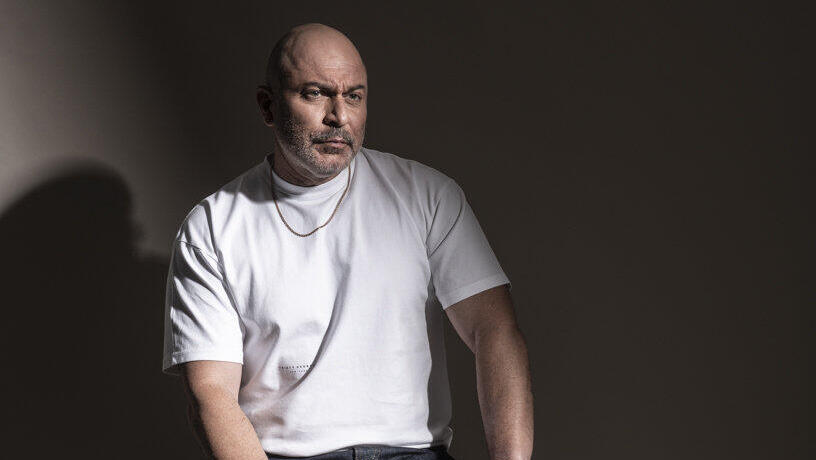
Raz, who has already written nearly every imaginable horror scenario for “Fauda,” found himself living through one he could never have imagined.
“When we were filming the new season of ‘Fauda,’ the first war with Iran started,” he recalls. “Mélanie Laurent was stuck in Tel Aviv. We acted together in the Netflix films ‘6 Underground’ and ‘Operation Finale.’ We became close friends and she joined the new season of ‘Fauda.’ I told her, ‘Come stay with us.’ I thought there’d be one or two explosions and that would be the end of it, but Mélanie ended up living with us for about a month.”
"Shoshanna" fleeing for her life again.
“She had a room here. Every day we went down to the safe room, and I make kiddush every Friday night, so I think it was the first time in her life she experienced kiddush. She had very powerful experiences in Israel. A Muslim actor named Hakim Jemili also found himself here during the war. He spent time in shelters and made Jewish friends. They both had crazy experiences.”
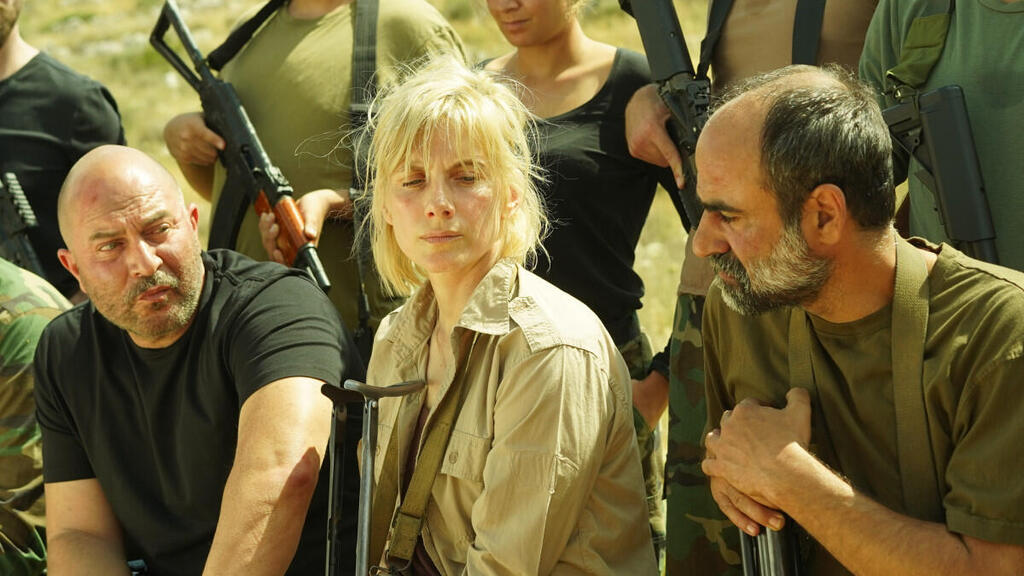
Mélanie Laurent in 'Fauda'
(Photo: Elia Spinopolus)
In Israel of 2026, “Fauda” is already part of the country’s cultural DNA, one of the most important and successful series ever created here. When Raz and Avi Issacharoff first set out in 2009, almost no one in the industry believed a series about undercover Israeli operatives and Palestinians was a good idea. “Fauda” nearly died before development even began, but eventually yes picked it up and launched the first season in 2015.
After a highly successful debut season in Israel came the explosion: streaming giant Netflix stunned the industry by acquiring the series for worldwide release in its original languages, not as a remake. From there, “Fauda” moved onto the biggest international stage imaginable. Lior Raz, Doron Ben-David, Itzik Cohen, Rona-Lee Shimon, Idan Amedi, Neta Garty, Yaakov Zada Daniel and the rest became recognizable faces at border crossings, with fans chasing them for selfies in some especially exotic locations. Even in Dubai, crowds pursued Raz and Amedi, while some people in India remain convinced to this day that Itzik Cohen, the legendary Captain Ayub, is actually a mysterious Israeli security official.
Before every season, expectations rise higher. Raz and Issacharoff cracked the code of combining the Israeli story with international appeal, touching bleeding wounds while repeatedly delivering stories with depth beyond the Hollywood-style action.
The new season was a far greater challenge.
When the two began outlining the script, the Middle East looked completely different. Then Oct. 7 arrived and brutal reality once again surpassed any possible plotline.
“We started writing the new season a few months before Oct. 7,” Raz says. “We can’t say exactly what happened to the characters after the previous season ended. Avi and I sat down and started thinking about the script. Before writing, we always ask ourselves: What is the thing Israelis fear most?”
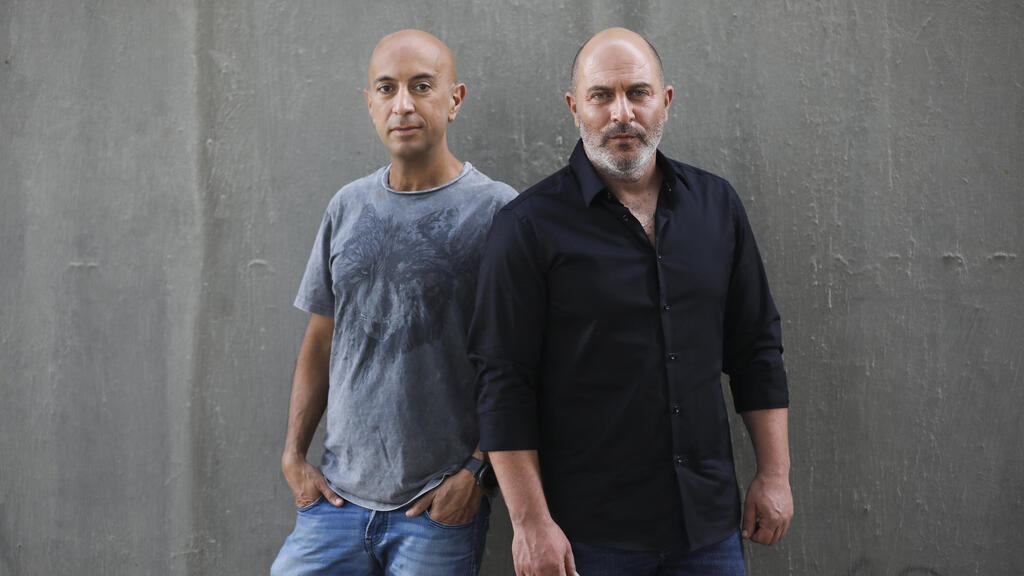
Lior Raz and Avi Issacharoff
(Photo: Oded Balilty/AP)
Apparently not Iran.
“Right. I grew up in Maale Adumim, and one of the scariest drills they did with us as children involved soldiers taking over our school bus. We were coming home from school, they took us and held us hostage.”
Quite the core curriculum.
He laughs. “Not exactly healthy education. Terrifying. Who decided on that? I don’t know. That’s just how it was. I remember sitting inside the house waiting for soldiers to rescue us.”
To this day I’m scarred by those suspicious-object public service announcements from the 1970s.
“My scars are probably deeper because I remember the fear I carried from then on. When Avi and I started writing, I suggested: Let’s do an event where Hamas takes over a settlement in the territories and conducts negotiations from there, and it turns into something huge.”
You said one settlement. Even you didn’t imagine multiple communities under attack for hours.
“Never crossed my mind. But Avi said, even about one settlement being taken over: ‘It’s not realistic, we can’t do that.’ So we abandoned the idea. Then Oct. 7 happened, and we had to rewrite the season because what happened was far bigger and more horrifying than our darkest script.”
You have a WhatsApp group for the series. What was happening there on Oct. 7?
“Everyone was completely confused. The messages were all: Where are you? What’s happening? Does anyone need anything? It was about our personal lives, our families, the country. The trauma was overwhelming. I was filming abroad, and the next day Avi and I went down south.”
They began rewriting the season more than two months after the war began.
“Things were changing at an insane pace. We started writing a few months after Oct. 7, imagining the season taking place two years after the war. We had to imagine what we would look like by then while hostages were still in Gaza.”
How do you avoid making absurd predictions?
“We assumed there would be a deal, that many Hamas members would flee Gaza abroad, and we wanted to deal with revenge. This season is a blood-revenge season inspired by real stories that happened after Oct. 7. Much of it takes place abroad because we’re following a pursuit and the revenge becomes complicated. It’s a very difficult season. Oct. 7 is very present, and there are two episodes where you actually see what happened through the characters’ perspectives. We won’t use archive footage, but we’ll show what Doron, Eli and Steve went through that day.”
People also said it was too soon to dramatize Oct. 7 in projects like “One Day in October” and “Red Dawn,” which were based on real events. Bereaved families objected to them airing.
“I understand the families. It was very hard for me to watch ‘One Day in October’ because it was so close to reality. The actors and director did an amazing job, and it was very important that it was sold abroad to Paramount from the standpoint of explaining Israel’s story. It’s easier for people overseas to watch it.”
But maybe the next season of “Fauda” will also be difficult to watch because the events are still too recent?
“In ‘Fauda,’ these are characters you’ve followed for 10 years. You’ve seen Doron in his hardest, softest, loneliest and most loving moments. You know him in 360 degrees. When you see him in an Oct. 7 situation, the perception is different because of the identification people already have with him. Yes, it’s going to be very difficult. There will be trigger warnings. But I believe this season will create empathy for viewers, including internationally.”
Did you think about hasbara — explaining Israel’s case to the world — or is that not supposed to be part of the script’s foundations?
“‘Fauda’ is one of the best explainers for Israel in the world. At first it wasn’t intentional. Gradually, yes. We wrote a series for Israelis. We never thought it would succeed globally, certainly not like this.”
How do you address Hamas’ sexual crimes after the testimonies from hostages and survivors?
“The issue is much deeper. It’s about narrative — whether Oct. 7 was a Palestinian victory operation or an act of desperation. Now they’re trying to deny everything: murdering babies and children, raping women and men. We addressed all of it. I don’t want to elaborate too much, but the series contains answers to your question.”
× × ×
Today, questions about future seasons of “Fauda” seem obvious, but nobody would have been surprised had the show ended after one or two seasons under the pressure of competing with a giant like Netflix. From the very beginning it was clear the series was being embraced abroad as well, drawing particular attention from Arab media outlets that followed “Fauda,” even if not sympathetically.
“Usually series peak in season one and decline after that,” Raz says. “With ‘Fauda’ it’s the opposite. The audience around the world has grown with every season.”
Which means there’s also responsibility as a writer, especially toward Israeli viewers, to convey to the world which side was attacked.
“A huge responsibility, because ‘Fauda’ represents Israel for foreign audiences. But at the same time, I’m making art. There’s a reason this season revolves around revenge, and one of the central themes is post-trauma. We tried to draw a dramatic story about people who went through something terrible.”
Was there a particularly difficult scene to film?
“Actually, a scene where I visit a psychologist and deal with the post-trauma of Oct. 7 and let everything out. All the Oct. 7 scenes were extremely difficult physically and emotionally. You’re in a situation you know actually happened and know the consequences of. It’s not imagination. There were very difficult moments for all the actors.”
Tears on set?
“Yes. There was a moment I broke down. Yaakov Zada Daniel had one too.”
The new season was filmed in southern and northern Israel, as well as Budapest, Hungary.
“We were supposed to film in Marseille, but security couldn’t be guaranteed. In Budapest we got an amazing reception. People there really love us, and it’s the second time we’ve filmed in the city.”
When you’re making a season during such a politically sensitive time, do you feel Netflix executives hovering more closely?
“Netflix and our team are very good partners. Senior executives there have become our friends. We really love them. There’s a very productive dialogue with them, with other series in development and projects like ‘Off Road’ with Rotem Sela.”
There was also “Hit & Run,” which didn’t continue.
“In the United States, when there’s no second season they say it was canceled. In Israel people hear that and think: ‘Oh, they canceled a planned second season.’ That wasn’t the case. But in Israel people love celebrating your success, and they love celebrating even more when you fail. That’s part of the game.”
Does that bother you? The more successful you become, the more people wait for you to fail.
“No. Some people have a hard time seeing someone else succeed, but that’s natural. Even we look at someone abroad who created something and are curious whether they failed with their next project. If you actually rejoice in their failure, then you have a problem. I feel 99% of people are supportive, but as artists we give the small minority much more weight than it deserves.”
Do people abroad identify with you?
“When we filmed ‘Gladiator 2,’ the war chaos was happening. People on set expressed concern and asked what was going on. We got many messages asking if we were safe. But a small loud minority can make more noise. Nobody abroad has ever come up to me and said: ‘What did you do in Gaza?’ or ‘You’re committing genocide.’”
The Israeli artists’ petition calling to stop the war echoed exactly those accusations.
“The role of art is to raise red flags. If something bothers you, express it through your art. Even if an artist holds extreme views, they must be heard. But a petition like that is completely unnecessary during wartime. I wouldn’t sign it, but of course artists have the right to express that opinion too. And this is also the time to clarify something.”
Please do.
“You once asked me whether we would continue creating in Israel if our artistic freedom were restricted. I said that in that case we would create abroad — and since then some people think I said I’m leaving the country. I’m a million times more patriotic than all those people screaming on Instagram and elsewhere asking why we don’t leave Israel. Any professional whose work was restricted in a certain environment wouldn’t want to work there. There are plenty of Israelis living abroad who talk. We’re here. We’re staying and fighting.”
Like Yair Netanyahu?
“That’s your comment, not mine.”
× × ×
"Fauda” has generally received glowing reviews, and throughout its previous seasons critics praised the creators’ ability to portray even the vilest murderers in human, everyday moments disconnected from their evil acts. Some even argued the series occasionally generated sympathy for killers who were portrayed as romantics.
“What do you mean sympathy? That’s not true,” Raz replies. “You can’t create a good story with flat characters. When Avi and I were in the army, there was a wanted terrorist who was very difficult to catch. How was he caught? He bought perfume for his wife. You can skip that in the series and just tell viewers: He was hiding, we caught him. But no — they discovered he bought perfume, his wife came to meet him to receive it, and that’s how they caught him. Should we leave out that story? No. We wanted to show them in all kinds of defining moments in their lives.”
(Photo: Ohad Romano)
Fair enough. But in the process you created sympathy unintentionally.
“In the end these people are shown for what they are: terrible murderers who do horrifying things. But each one may also have a child, a wife he loves, a family he would do anything for. That’s the human paradox. Even the worst person in the world feels compassion toward specific people. I don’t think we let them off the hook. We simply show them in their human weaknesses as well. Evil is complicated, and in a good story you have to present and understand that complexity. I could make Chuck Norris and just shoot all the bad guys, but that doesn’t interest me.”
Did Oct. 7 change your attitude toward Palestinians, making you focus more on the evil revealed that day? Ivri Lider said it became difficult to sing that “a friend is sometimes also an enemy.” That’s a creator’s dilemma.
“Yes. When we wrote ‘Fauda,’ we never thought the enemy was a friend. I know the enemy very well. We wrote a series that creates story and empathy for its characters, and this season is much more complex in that respect.”
You’re not exactly kings of happy endings.
“There are no happy endings in life.”
No total victory.
“There are almost no victories. In war we lose friends, we lose morality, we lose ourselves, we suffer trauma. It doesn’t matter whether you won. My children, who ran to shelters here every day, lost. Even if we defeated Iran right now, those children, for the rest of their lives, will tense up at loud noises or sirens or anything nearby.”
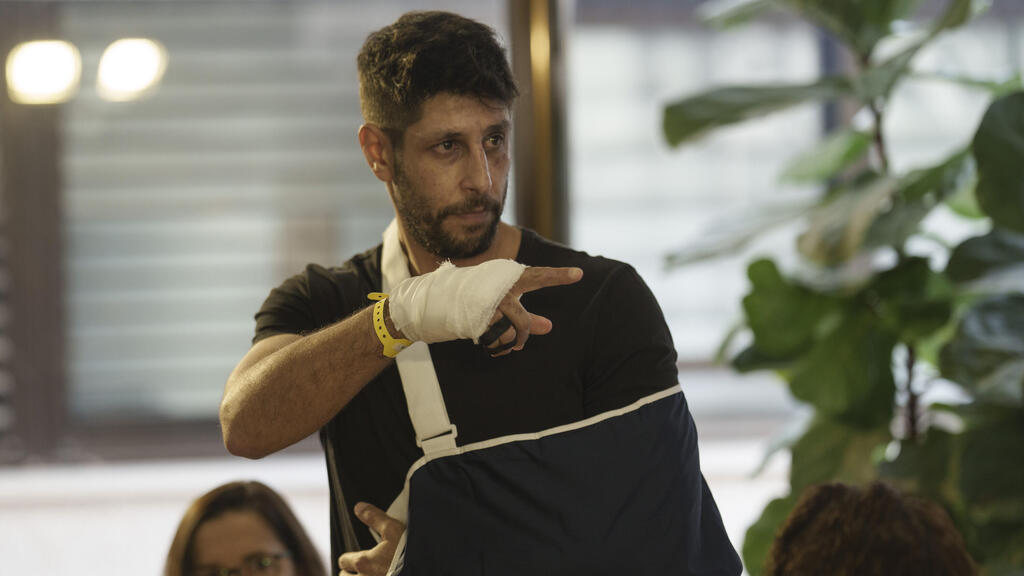
The biggest drama surrounding “Fauda” happened even before filming the new season. Idan Amedi, one of the series’ stars, decided to step away from the show at this stage of his life. In a chilling overlap between fiction and reality, Amedi was seriously wounded in January 2024 during a mission in Gaza that was reportedly part of an operation to rescue hostages. The incident made headlines worldwide as reality collided with fiction in disturbing fashion. Amedi lost his close friends Gabriel Bloom and Akiva Yasinsky in the battle. Raz flew to the hospital after Amedi was admitted and accompanied him during his recovery.
“I knew from the first days he’d come through this like a champion,” Raz says. “Before anything else, Idan is a good friend, and you have to respect his wishes. It was very hard for me when he told me he wasn’t continuing with us. I love him. I asked why and understood his needs. I obviously don’t want to speak for him, but everything made sense to me and I couldn’t say anything against it. He does have a connection to season five, you’ll have to see where. My respect for Idan is enormous. I was sorry, but Idan will continue with us in future seasons of ‘Fauda.’ That’s clear.”
Idan Amedi
(Photo: Leo Correa/AP)
× × ×
On Oct. 7, Raz was in Romania.
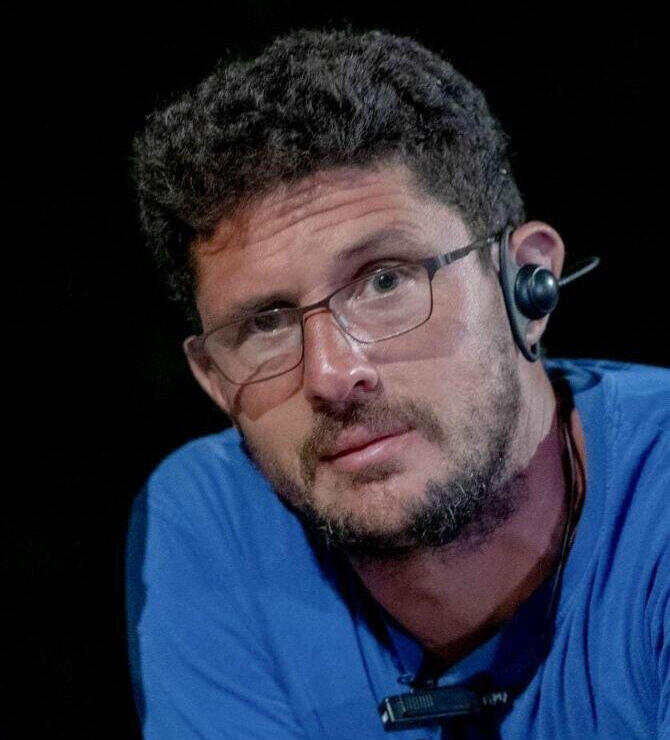
“I found a last-minute seat on El Al, and by Oct. 8 I was already in Israel,” he says. “I drove south. At the Beit Kama junction there was a command post run by Brothers in Arms. They asked who had a jeep, who had a handgun. I said I did. They said: ‘We need to rescue people from Sderot. There are terrorists, rockets, no electricity, our people are terrified and trapped.’ There was a line of people receiving missions. Avi Issacharoff, Yohanan Plesner and I drove to rescue families from burning, bombarded Sderot. It was very frightening, but also nothing compared to what soldiers went through in Gaza. We deeply mourned the loss of ‘Fauda’ producer Matan Meir, who was killed in Gaza. A rare man with a huge heart who helped me through many moments.”
Matan Meir
(Photo: Nati Levy, IDF)
What shocked you most that day?
“The fact that civilians had to rescue civilians. The chaos, the disorder, that nobody knew how to provide answers. Nobody was there. Not the army, not the police. Civilian organizations had to take care of civilians.”
Were people surprised to see Lior Raz opening the door?
“Very. They thought they were in ‘Fauda.’ Sometimes it was funny, people said Doron had come to rescue them and were in shock. Someone even asked for a selfie while we were driving. After that I traveled abroad to raise money for southern Israel, lots of lectures, lots of events.”
In October 1990, Raz, then 19, lost his girlfriend Iris Azulai in a stabbing attack in Jerusalem’s Baka neighborhood that also killed artist Eli Elteretz and police officer Charlie Shalosh.
“Iris is always with me in my memories. When someone close to you dies, they never really disappear. We were together for three years, and at that age emotion outweighs all logic. It was a huge love. She shaped much of my self-confidence. She was very special — and beautiful.”
How did her death shape you and your worldview?
“Her death shaped my emotional world, the idea that you can lose everything in a moment. I was at Hadassah Ein Kerem hospital for a checkup when I heard there had been an attack in Baka and that a female soldier had been killed. I immediately called her house, and her brother told me she was badly wounded. I started walking because I didn’t know what was happening until my mother came to pick me up. It was an extremely traumatic event that later creates abandonment anxieties in life. Someone close to you is suddenly gone. It’s not simple.”
Do your four children know the story?
“More now that they’re older. My psychologist once told me a person needs a board of directors in their head, people whose opinions you trust and consult. So in my imagination I ask Iris questions too, consult with her often, and I’m not especially spiritual. We referenced her in the first season of ‘Fauda.’ Tomer Capone’s girlfriend is killed in an attack, and they have a dialogue in a bar made almost entirely from conversations Iris and I actually had.”
Raz is married to actress Meital Barda, and they have four children.
“Let’s just say that yesterday our youngest, who’s 5, still wanted to sleep in the safe room. We’re trying to normalize the abnormal, but how much can you? We’re all traumatized. I saw how many people jumped during the last siren.”
Raz’s career has soared in recent years, including working with legendary director Ridley Scott on “Gladiator 2” and starring in “Tuner,” alongside Dustin Hoffman and British actor Leo Woodall of “The White Lotus.” The film is set for release this month in the United States. He also serves as a spokesperson for real estate company Britain Israel and Direct Insurance.
“There are sets abroad where every actor is on their own,” Raz says. “You go to set, you go home, that’s it. Here we formed a group with two Israelis, Nisan Shor and Gil Cohen, who play members of my gang, plus Leo, Havana Rose and director Daniel Roher, who won an Oscar. Dustin Hoffman and his family joined us. We became a group that had dinners together at restaurants and even at Daniel’s parents’ house in Toronto.”
Has Dustin Hoffman mastered “Fauda” yet?
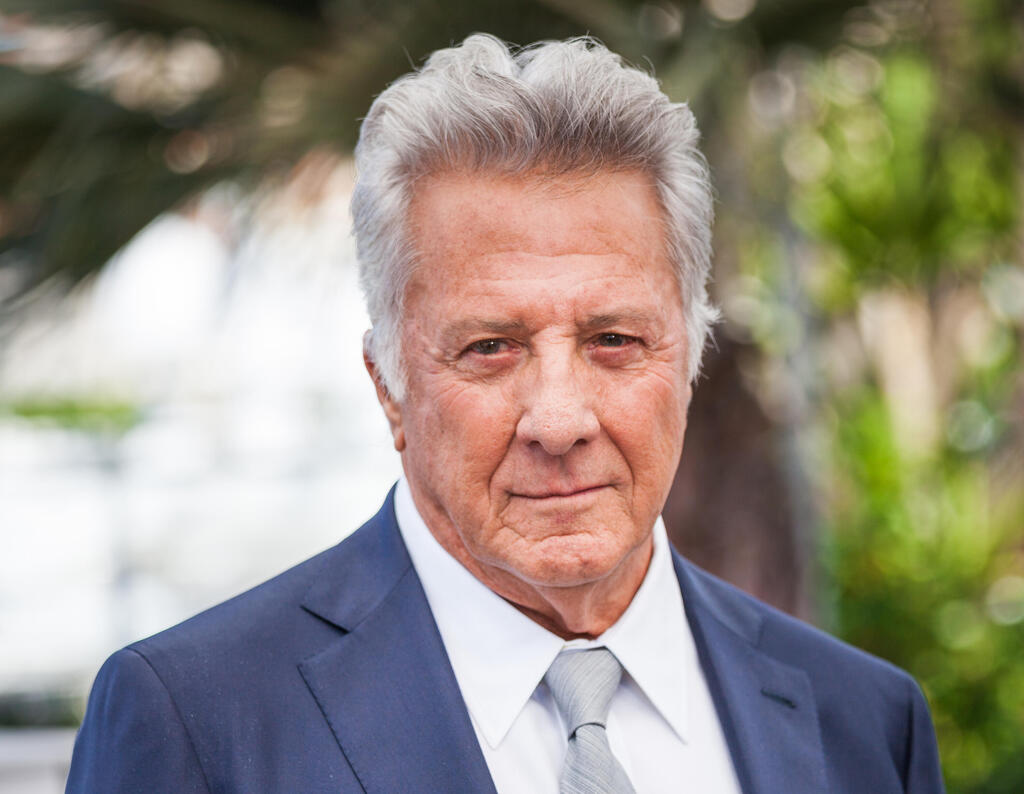
“He’s watched every season. He knows the characters well. His son is married to an Israeli woman, so he’s genuinely interested in what’s happening in Israel, and he has a unique sense of humor. We had many conversations about Israel and about art. There are actors you watch and learn from. He’s one of them, and so is Denzel Washington. We talked a lot about how not to force things while acting.”
Dustin Hoffman
(Photo: taniavolobueva/Shutterstock)
You’re about to turn 55. Does age change your approach in Hollywood, maybe toward different roles or scripts?
“I only started succeeding after age 40. I’m a late bloomer, so I don’t feel much different from 10 or 15 years ago, and I’m in the best physical shape of my life. Knock on wood. I’m in a kind of bloom. I’m happy with my family, my kids and Meital. I don’t feel my age.”
In recent years, Raz has also grown close to actress Rotem Sela, his co-star in the Netflix docu-reality series “Off Road,” which followed them through Kyrgyzstan and Kazakhstan as they unpacked life issues during a road trip.
“We became very close friends after filming ‘Body of Lies.’ It doesn’t happen often in life, but sometimes you arrive somewhere, meet someone and that’s it — suddenly you’ve found a true friend.”
Where does Doron Kabilio end and Lior Raz begin, or vice versa?
“In every character I play, I try to bring some of Lior into it. Doron has been a post-traumatic character from the moment he came into the world. There are things about him that are very similar to me. Deep down Doron is very sensitive, and I also go all the way with what I believe in. I don’t like being ordered around, just like Doron. The difference between us is that Doron is willing to sacrifice the people he loves for what he believes is true. I’m not. For him, it doesn’t matter who pays the price.”
(Photo: Ilya Melnikov)
Doron also chooses career over family.
“For me, family comes above everything. If there’s one value most important in the world, it’s my family. Everything else will work itself out around that. I’m a million times better father than Doron, not even close. Yesterday I spent an hour playing piano with my daughter, then another hour training with my son.”
And still you missed important moments in their lives.
“So many times. Yes, there’s a lot of guilt. Look, one day they’ll probably go to therapy and blame me no matter what, but I hope they’ll also appreciate and accept the good. I believe they understand.”
Who smokes more, Doron Kabilio or Lior Raz?
“I don’t smoke at all anymore. Doron smokes much less too — fewer cigarettes in the new season.”
Doctor’s orders?
“It was very hard for me to smoke on the series. When we wrote the first season I had just quit smoking, and during the writing process I was craving cigarettes. We wrote in the script that Doron lights a cigarette, walks here, walks there, smokes again and again — and what happened was I actually started smoking again because of ‘Fauda.’ Since then I only smoke from season to season, only during filming.”