

What do they do about their overdraft, how much do they pay for their home and what dream did they fulfill amid the war? People from across Israel speak candidly about everyday life before and during the war. This time: the Wolf-Hasbani family of Rishon LeZion.
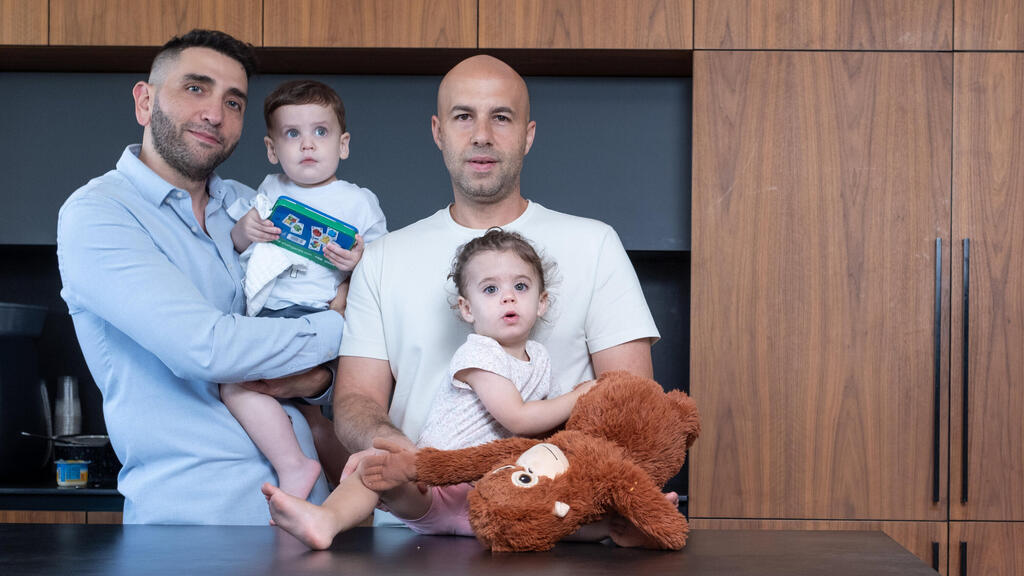
Pictured: Yossi, 44, Eli, 41, and their twins, Niver and Yonatan, 20 months old.
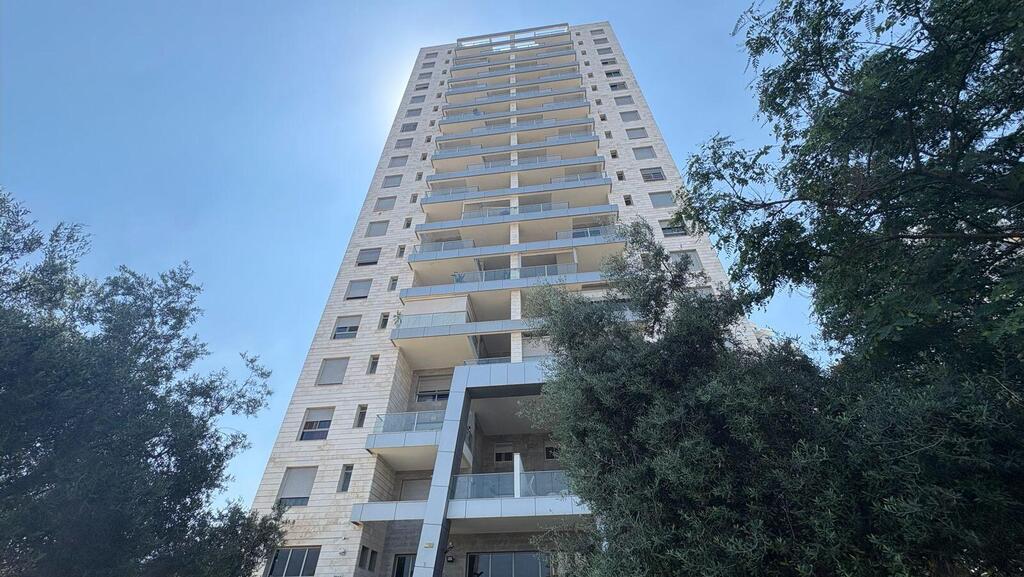
The apartment: A five-room apartment on the 19th floor of a residential tower in Rishon LeZion. It was purchased for NIS 3.5 million.
Eli: “Today, it’s worth twice as much.”
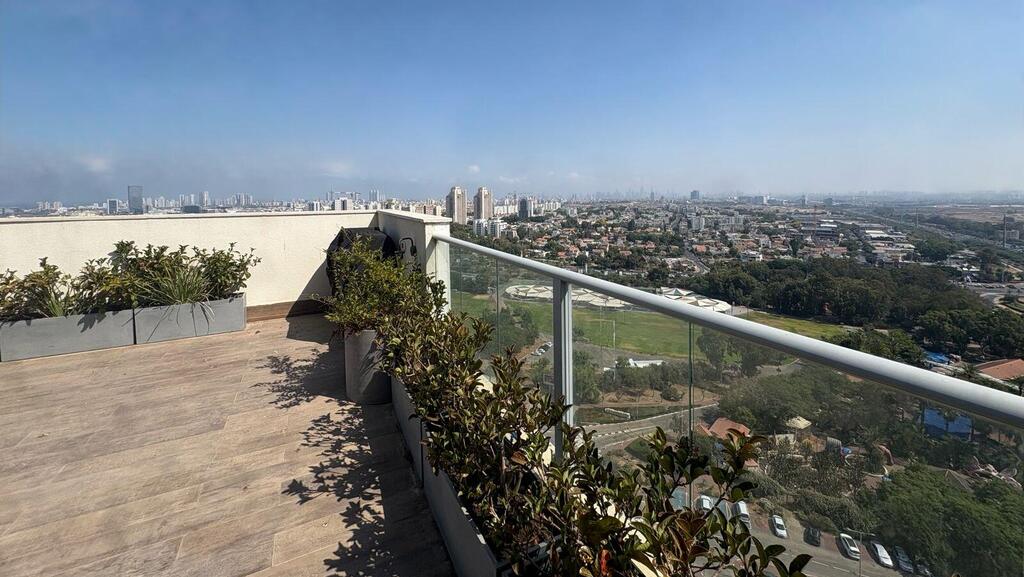
Yossi: “We could afford it because each of us owned an apartment and we sold them. I bought mine in Holon when I was 27, and Eli has never rented in his life. He bought an apartment at 25. We didn’t want to use a real estate agent, and we knew someone in the building was selling, so we knocked on doors. The owner’s mother answered. Even though the apartment had not been listed, she wanted to sell it. The balcony is 100 square meters, and from here you can see all of Tel Aviv, the sea and as far as the Jerusalem hills.”
How did you meet?
Yossi: “How do gay men meet? On an app. I came out at 28, and it was complicated and difficult. There was a period when I suffered from terrible migraines. You live a lie, and it affects you. You lead a double life, making up cover stories so no one will suspect or know anything, and it takes a psychological toll. I was exhausted. Then I went to my parents, and they were amazing. They said, ‘Are you crazy? Who cares? We’re happy for you.’”
Eli: “I came out at 30. I come from a traditional family, and my father is religious, so it was harder. I told my mother first on a Friday evening while my father was at synagogue. She cried, and it hurt her to think she would not have grandchildren. She told my father. It took time for them to process and understand it.”
Yossi: “Today, his father is my best friend. I took two things from coming out. First, there are no more lies in my life. The truth is the only thing that interests me. I don’t lie, and I tell people the truth to their faces, even when it hurts. Second, I told my parents, ‘Don’t be ashamed of me.’ Anyone who doesn’t want a relationship with me, that’s fine. Today, my main concern is what it will be like for the children. At the end of the day, this is Rishon LeZion, not Tel Aviv.”
(Photo: Assi Haim)
Rishon LeZion?
Eli: “In Tel Aviv, there are more people like us, and it is talked about and accepted more openly.”
Yossi: “My dream is actually to leave here and move to a moshav, to a private home with a yard where the children can run wild. A balcony is less suitable for children.”
The children?
Yossi: “They were born through surrogacy in the United States. The entire process cost about NIS 1 million. It’s insane, but it changed our lives. Anyone who hasn’t raised twins has no idea how hard it is. You go from zero to 1,000. In the gay world, you live your life and do whatever you want, and then suddenly life hits you in the face.
“Today, I’m more neglected than I have ever been. The children come first, and I don’t eat properly, I don’t sleep and every part of my body hurts. I’m exhausted at levels I couldn’t have imagined, but it is the most amazing thing there is.”
(Photo: Assi Haim)
What do you do for a living?
Eli: “I was self-employed for most of my life. After the army, I joined the family textile business, which served the religious community. I was involved in manufacturing, importing fabrics from Turkey and China and marketing. At one point, I also opened a store in Bnei Brak.
“The industry went through a crisis and the business closed. Through a friend, I became the franchisee of a gas station for three years. Wow, it was tough. The employees in that field are very difficult to manage. At 5 a.m., you get a message saying, ‘I’m not coming in for my 6 a.m. shift,’ and you find yourself going to work in their place on Saturday. If you’re not there, it doesn’t work, so you’re there on weekends too.
“I love design, so I studied it at the same time and began working as an interior designer. I had several projects, but it wasn’t enough, so I also worked at Tollman’s. But after parental leave, I was fired.”
(Photo: Assi Haim)
Parental leave?
Yossi: “In Israel, there is no understanding of a man who needs a parent-friendly job. Eli has to leave at 3:30 p.m. to pick up the children, and he can’t find work. Even when he starts a job, the business owner quickly realizes the arrangement doesn’t suit them and fires him. We have been living on one salary for two years, and it is very difficult.”
Eli: “For now, I’m giving Yossi the opportunity to develop his career while I invest my time at home.”
Yossi?
“For the past five years, I have built and managed ‘Friends.’ It is a subsidiary of the Histadrut labor federation that resumed offering cultural events to its members. We make culture accessible at subsidized prices throughout the country, from the north to the south.
“We operate in 33 venues across Israel. We purchase the content and sell tickets at subsidized prices to Histadrut members and the general public. To me, that is true Zionism. We don’t make a profit from it. The Histadrut is effectively investing money to bring culture to the people.
“Today, we are the leading organization in Israel’s cultural sector. We sell 40,000 tickets a month, whether for concerts, plays or movies. Mayors now beg us to come because if we are not there, they have no cultural offerings.”

(Photo: Assi Haim)
Culture?
Yossi: “Culture is not a luxury. Everyone should have access to culture, but in many places in Israel, it is simply not accessible. Performances cost a fortune today, and ticket prices are very high. I made it my mission to bring this content to the periphery, and I fight for it every day.”
Daily routine?
Eli: “We get up at 5 a.m. with the children. I take them to daycare, and then twice a week we go to the gym. We’ve started doing that again.”
Yossi: “I get home at around 5 p.m. Before the children, we went somewhere different every night. I kept up with everything happening in the cultural world and saw every play and performance. Now, it is more difficult.”
Financial situation?
Yossi: “We buy 40 packages of diapers a month and try to buy them in Eilat. Living on one salary is difficult, and we aren’t saving any money. Every Tuesday and Saturday, we pray to win the lottery.”