

They hunt elk in snow-covered mountains, raise children who know how to use a lasso by age 7 and sell horses to finance trips to Israel. Documentary photographer Dan Lior and his friend, adventurer Noam “Nofi” Genet, encountered a rugged Montana cowboy family and got a firsthand look at a life defined by hard work, faith and an extraordinary love for the Jewish people.
Their journey included firing revolvers in the wilderness, an exhausting hunting expedition through the snow and a visit to a remote log cabin with a giant Star of David at its entrance. Along the way, they met people of few words who nevertheless know how to extend a heartfelt welcome.
(Report: Assaf Kamer | Photography: Dan Lior | Editing: Omri Tamir)


In the vast expanses of Montana, far from major highways and tourist attractions, even a routine drive through the state known as Big Sky Country can turn into an adventure.
"We set out in two vehicles toward the grazing area to put out salt for their cattle," Dan recalls. "Suddenly, there's no reception, no phone service. We lost our way, lost track of them and got completely lost," he says with a laugh. "We're driving off-road, trying to find our bearings and getting nowhere, and there are grizzly bears and dangerous wildlife out there."
The solution seemed to come straight out of a Western.
"While we're trying to figure out how to get ourselves out of this mess, suddenly we hear gunshots in the air," Dan says excitedly. "So we drive toward the sound and see them standing on the roof of their vehicle, firing their revolvers into the air."
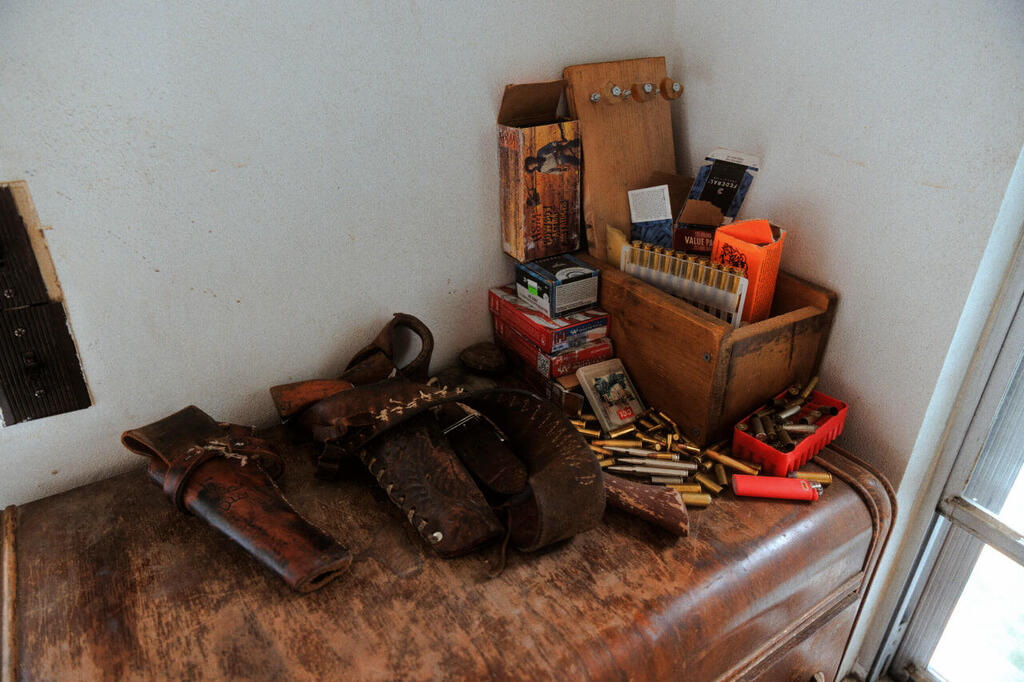
As it turns out, the revolvers familiar from classic Westerns remain an essential part of life in the Montana wilderness.
"You walk into their house and there's a shelf with revolvers and hunting rifles, just like in the Wild West," Dan says. "And they carry them on their belts. It's really a matter of safety because they live in what's known as Bear Country."
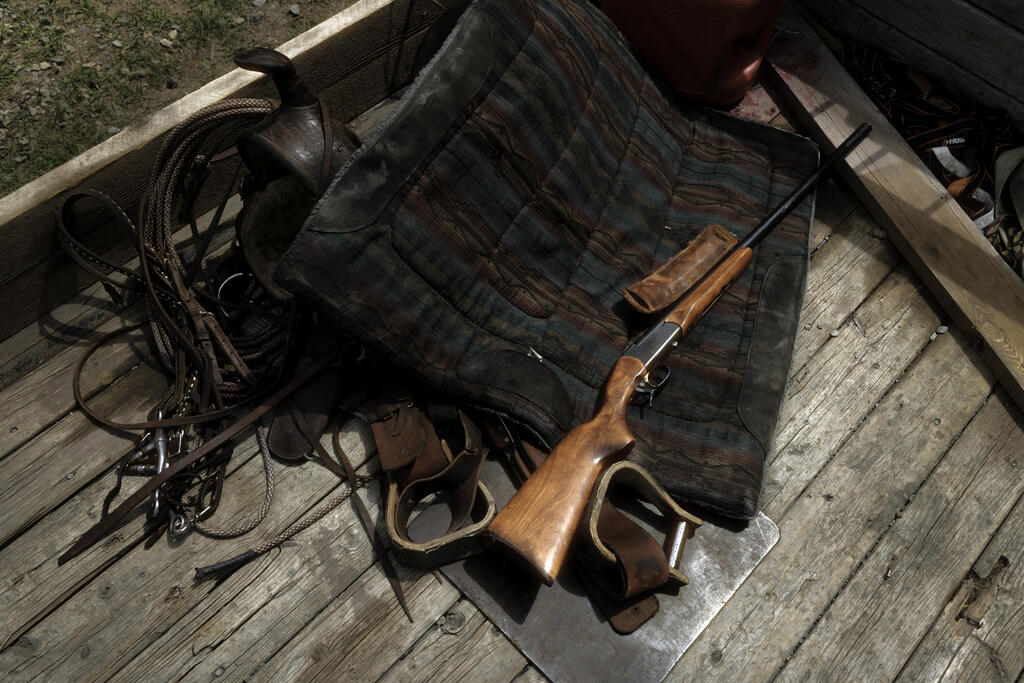
A rifle lying in the back of a pickup truck
(Photo: Dan Lior)
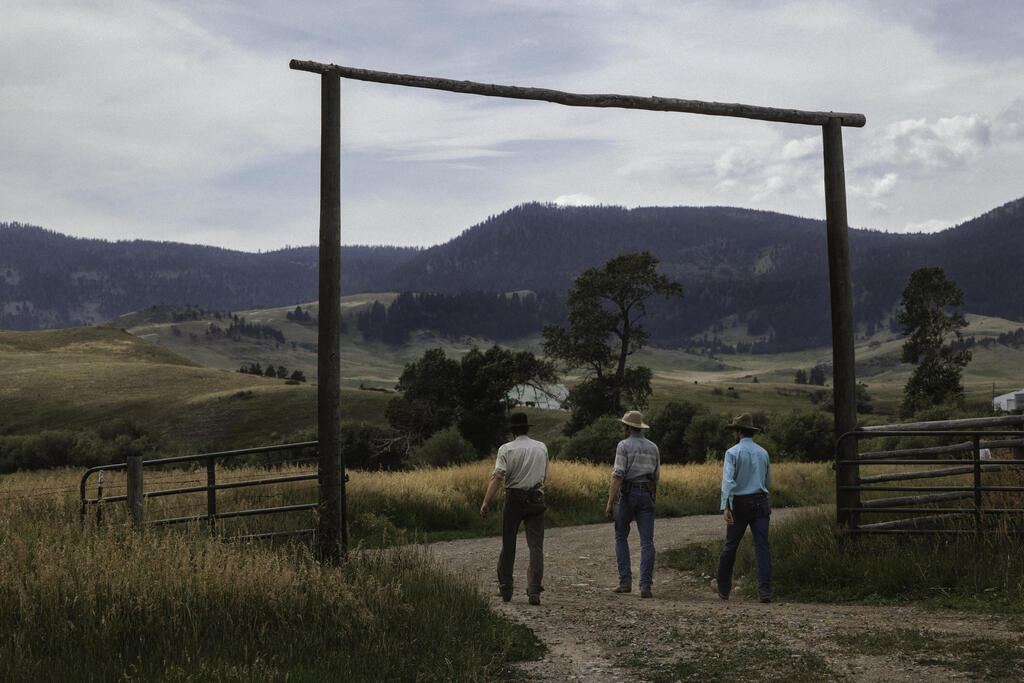
The entrance to the Montana ranch
(Photo: Dan Lior)
After the two groups reunited, the gunfire incident turned into an amusing encounter between the Israelis and the cowboys.
"There are these big cowboy revolvers out there, so we say, 'Come on, let's shoot,'" Dan recalls. "We take the revolvers and start shooting at trees. Then one of them, Ephraim, brings out a shotgun, and someone throws a bottle into the air. We shoot and miss, shoot and miss."
Then it was Ezekiel's turn to show the visitors how things are done in Montana.
"They throw the bottle into the air for him — and boom, he hits it."
Noam “Nofi” Genet, an American Jew who grew up in Florida and now lives near the Sea of Galilee, met the pro-Israel cowboy family through a rehabilitation initiative he launched. As part of the program, he brings small groups of Israeli military reservists, some of whom are coping with post-traumatic stress, on wilderness expeditions in Montana.
He learned about the family after some of its sons traveled to Israel during the war to show their support. The family later invited him to visit their ranch in Montana's Bear Country.
Nofi in Montana
(Photo: Dan Lior)
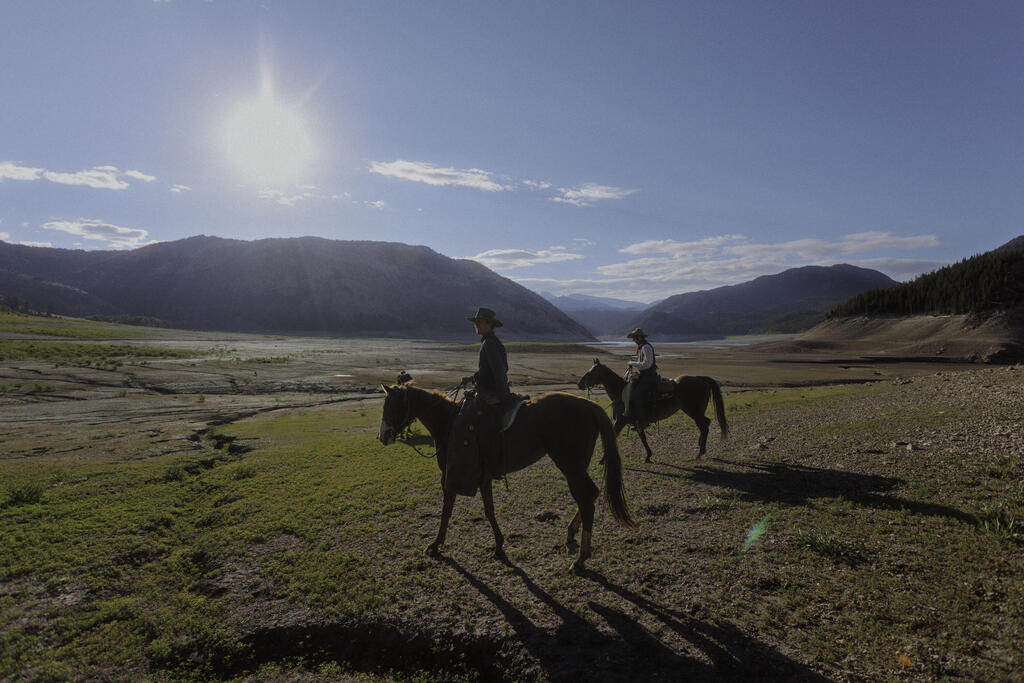
At the entrance to the Bob Marshall Wilderness
(Photo: Dan Lior)
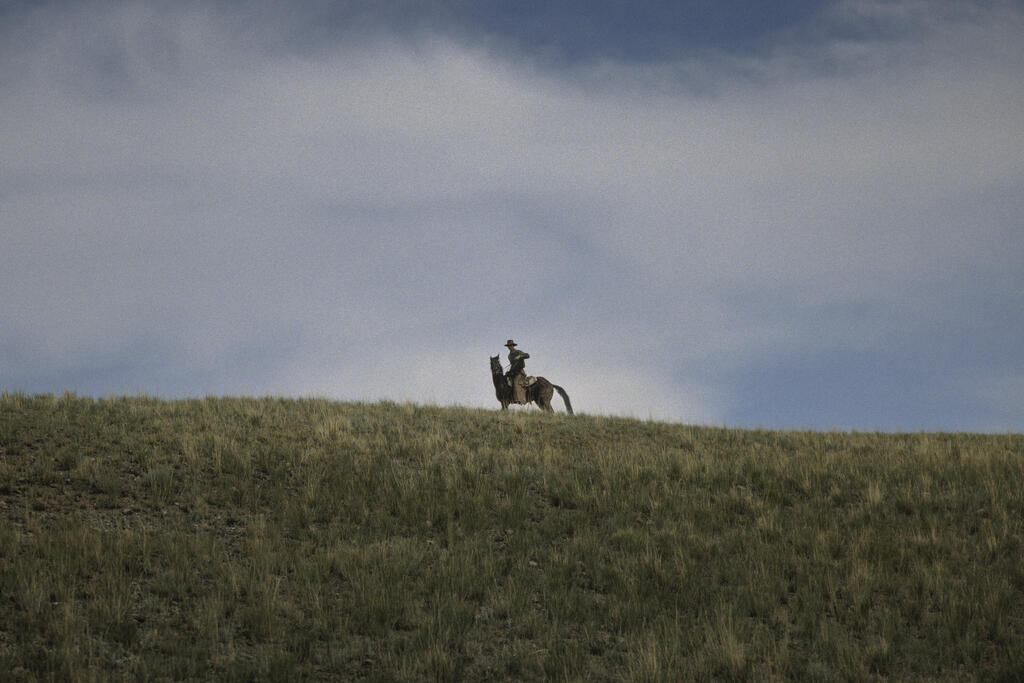
They prefer horses to cars
(Photo: Dan Lior)
Six hours on horseback: A hunting expedition in Montana's snowy mountains
Noam, an expert fisherman with wilderness survival skills, joined the pro-Israel cowboys on a challenging four-day hunting expedition in the Montana mountains.
For the locals, this was no tourist adventure. It was part of the family's efforts to stock up on meat for the winter.
"We rode for six hours to their hunting camp, and there was a lot of snow along the way," he recalls. "For the first hour, riding through the snow is fun. These guys were practically born in the saddle. But after that, my whole body was in serious pain."
“Some people hunt for sport, but these people hunt to survive. A deer like that can feed a family for several months.”
And what does a typical day on such a hunting trip look like?
"They work incredibly hard. They get up very early in the morning and look for signs of elk, one of the largest species in the deer family, because it's their mating season."
But the hunt did not unfold quite as they had hoped.
"We didn't see any elk, but we found another very large deer that they shot from 300 meters (about 330 yards) away. It was a very special and very sad moment for me, but also deeply meaningful and educational."
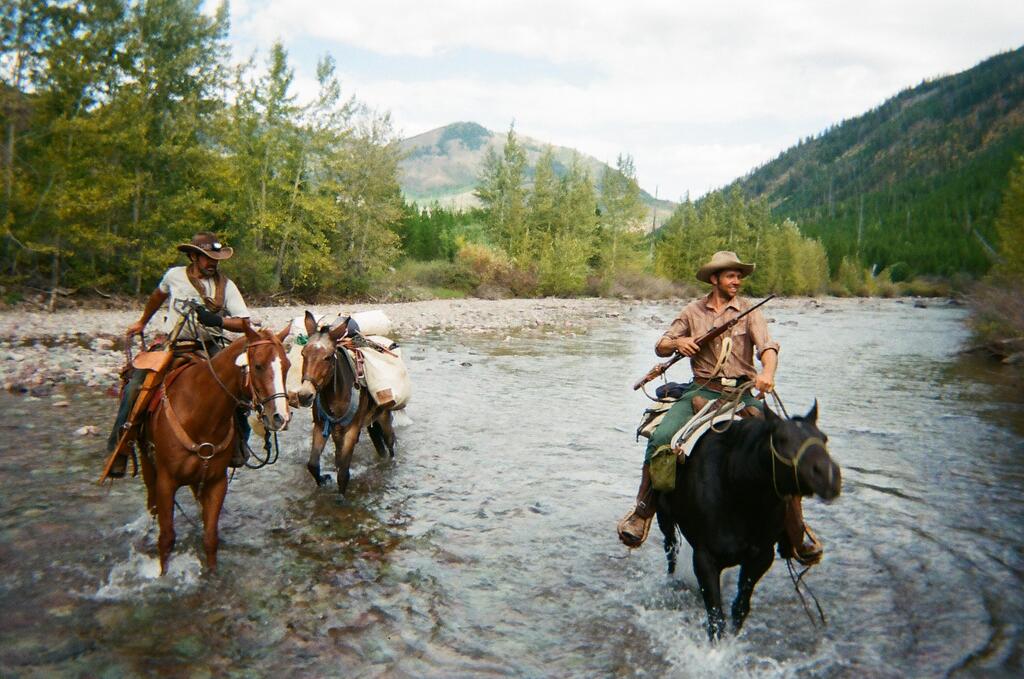
Crossing the river on the way to the hunt
(Photo: Noam 'Nofi' Genet)
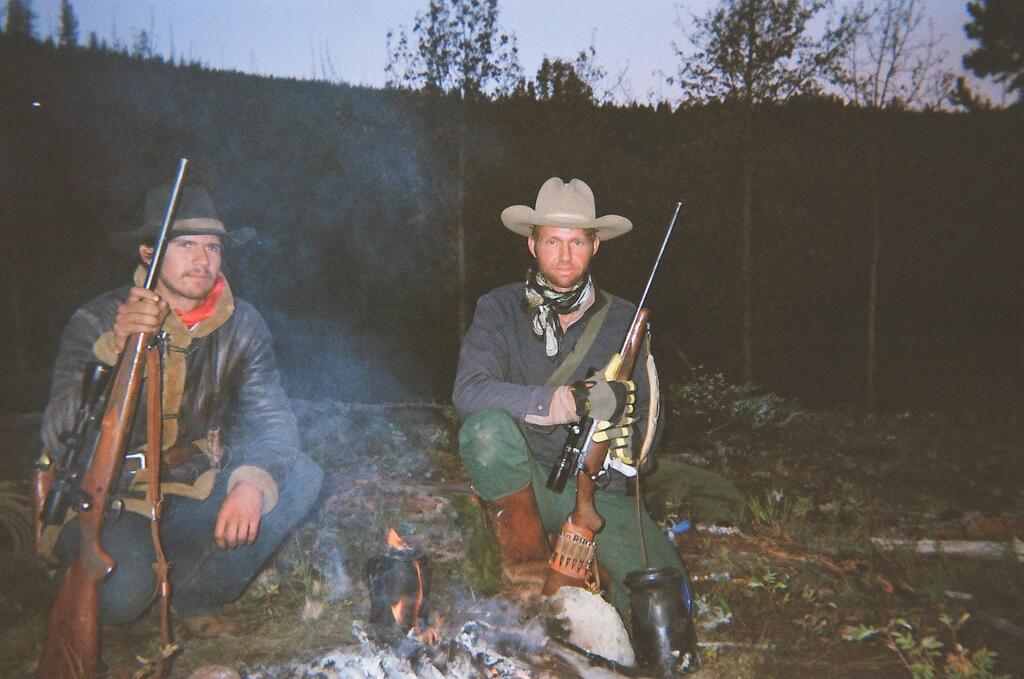
On the hunting expedition
(Photo: Noam 'Nofi' Genet)
After the animal was shot, another demanding stage of the hunt began.
"I watched Ezekiel, the cowboy, cut open the deer's belly with a large knife and then work incredibly hard to carry it on his back, antlers and all, down from the mountaintop toward their camp," Noam says.
"I carried his enormous rifle and heavy coat so he could carry the deer meat, weighing about 150 kilograms (330 pounds), back to camp. And that was after he'd removed all its internal organs."
Noam emphasizes the distinction between hunting for recreation and hunting for food.
"Some people hunt for sport, but these people hunt to survive," he says. "An animal like that can feed your family for several months. You butcher it and put everything in the freezer."
A Star of David in the heart of bear country
The Montana cowboy family's home looks as though it came straight out of the nostalgic television series Little House on the Prairie.
But a large, illuminated Star of David hangs on the front of the log cabin, while inside, pictures of Israel and biblical symbols adorn the walls. The family members are not Jewish but devout Christians.
"They have a love for God, a love for Israel, a love for their land and a love for hard work," Dan says. "They don't have time for small talk. They get up in the morning and go straight to work."
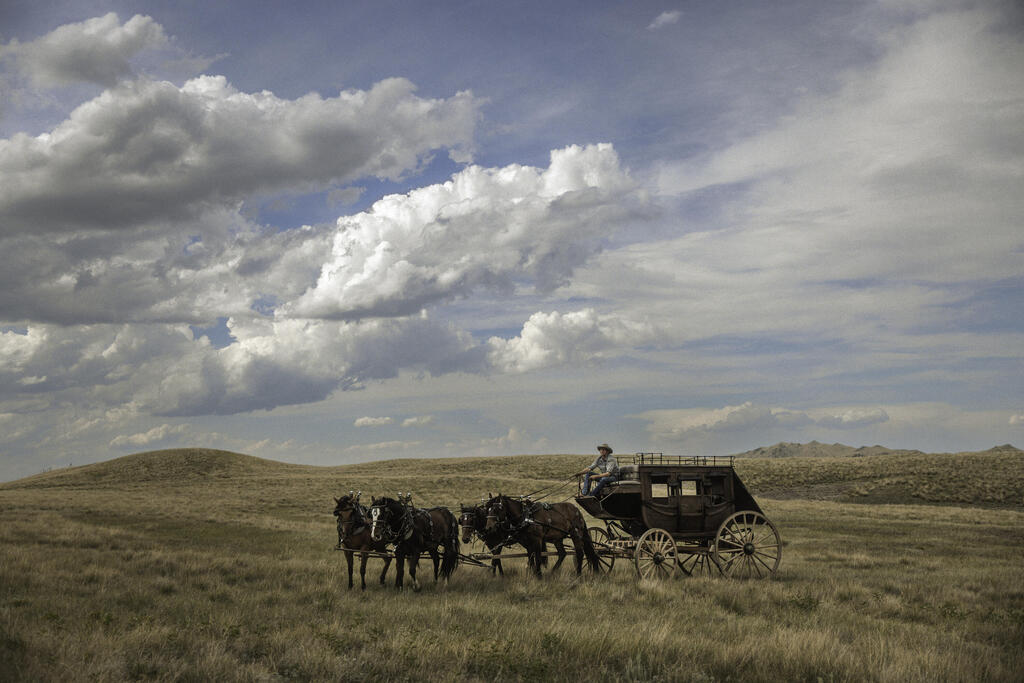
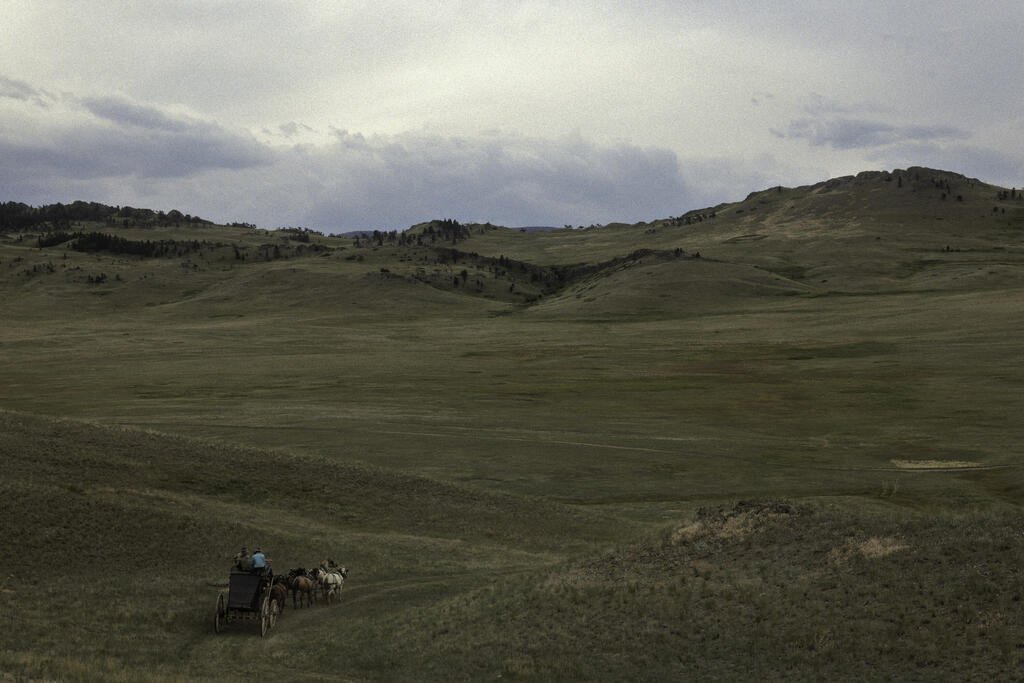
The family wagon, just like 100 years ago
(Photo: Dan Lior)
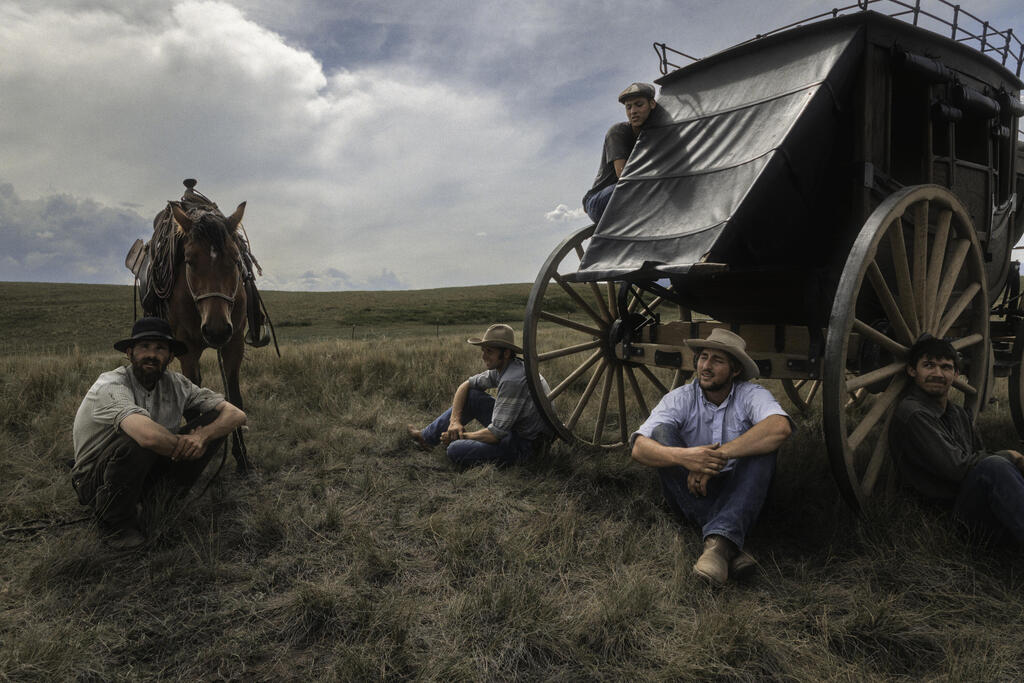
A break during the workday
(Photo: Dan Lior)
So what inspired their love for Israel?
"It was their father, may he rest in peace," says Noam, who tried to trace the roots of the family's special connection. "He taught them the Torah and instilled in them a love for the Jewish people."
They hunt for their own food, wear tzitzit and Stars of David, and support the Jewish people and Israel.
According to Noam, the extended family includes more than 10 children, along with another generation of grandchildren bearing biblical names.
"They're strong, extraordinary people. They hunt for their food, wear tzitzit [ritual fringes traditionally worn by observant Jewish men] and Stars of David, and support the Jewish people and our country."
To illustrate the depth of their connection to Israel, Noam imitates the family's thick cowboy accent as he repeats something he heard them say:
"I love God. God loves Israel. I want to love what God loves."
And their love for Israel goes far beyond the Star of David on the wall.
"The sons work outdoors all day, training wild horses and selling them," Noam explains. "If they want to fly to Israel to help, like they did after October 7, they sell a horse and use the money to come to Israel."
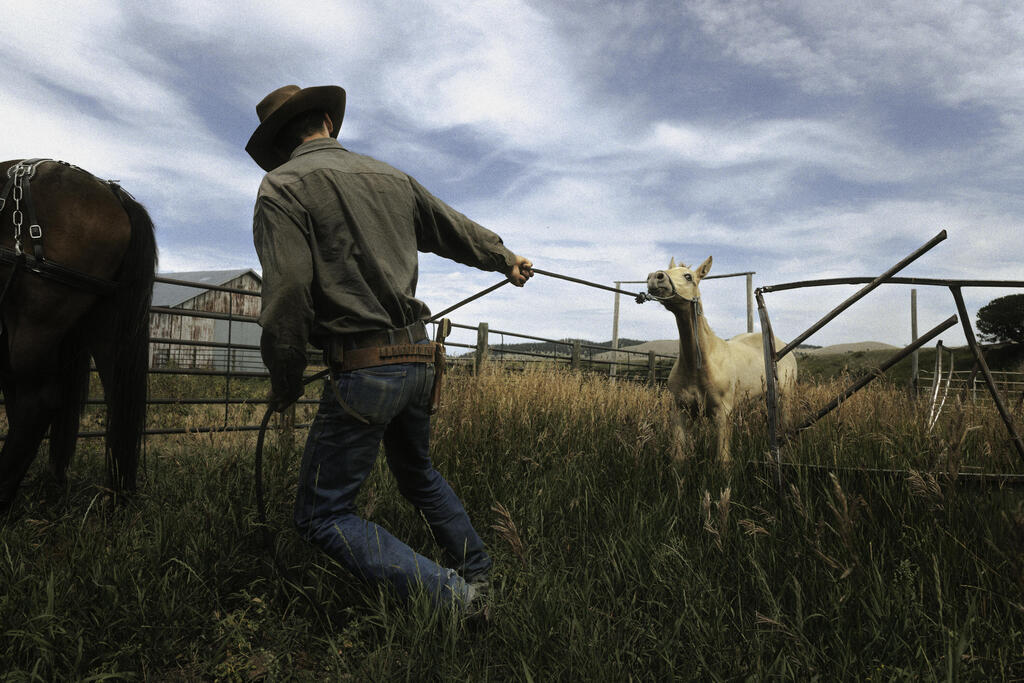
To finance a trip to Israel, they train a horse and sell it
(Photo: Dan Lior)
Lunch with the Israel-loving cowboy family in the heart of Montana looks like a scene from the hit television series Yellowstone, starring Kevin Costner.
The family raises horses and cattle, goes on hunting expeditions, makes a living through manual labor and teaches its children to take part in ranch work from a very young age.
"They have a plastic steer for roping practice in the field next to their house," Dan says. "I watched Elisheva, a 7-year-old girl, walk up to it, pick up a rope from the grass and start swinging her lasso."
"Every time she throws it, from a distance of 10 or 15 meters [about 33 to 49 feet], she lands it right on the horns. She also goes out to do chores around the ranch on her pony, and her little sister, who's 2, is already collecting eggs from the chicken coop."
Arriving in such a remote place and watching the children, Dan says, offers a striking perspective on modern life.
“If you dropped me out there in the middle of nowhere, my chances of survival would be much lower than theirs.”
"You get to this remote place, look at the kids and realize two things," he says admiringly. "You realize this is how we lived 150 years ago. You don't buy your food. You grow it, harvest it and store it."
"On the one hand, you realize how privileged your own children are. On the other hand, if you dropped me out there in the middle of nowhere, my chances of survival would be much lower than theirs."
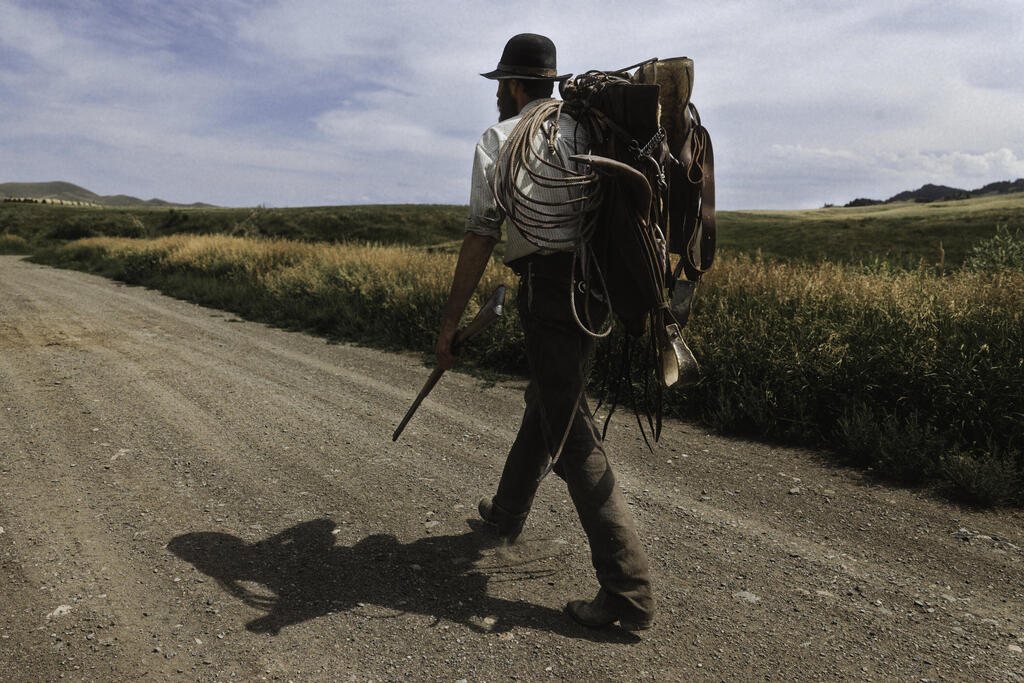
Heading out to saddle a horse, rifle in hand
(Photo: Dan Lior)
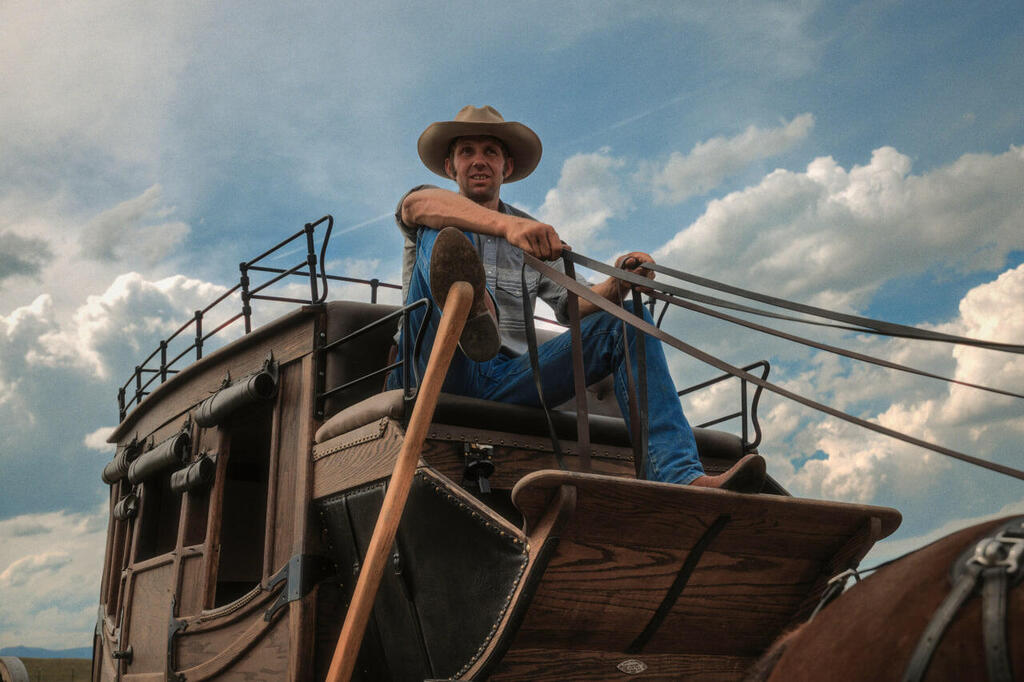
A cowboy waits for us to climb into the wagon
(Photo: Dan Lior)
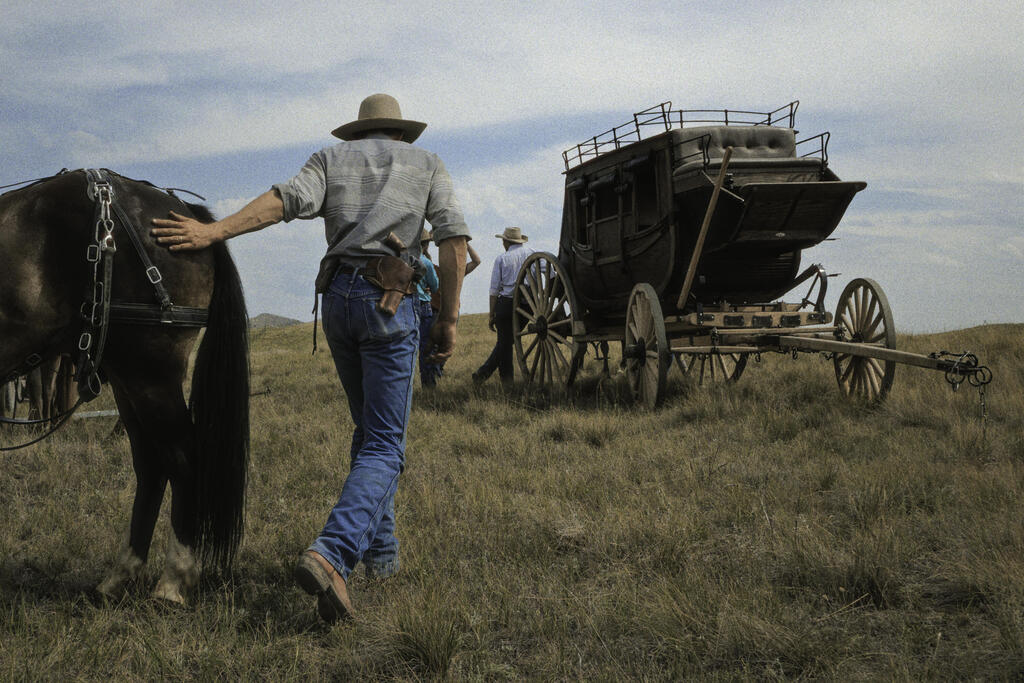
Harnessing the horses to the wagon
(Photo: Dan Lior)
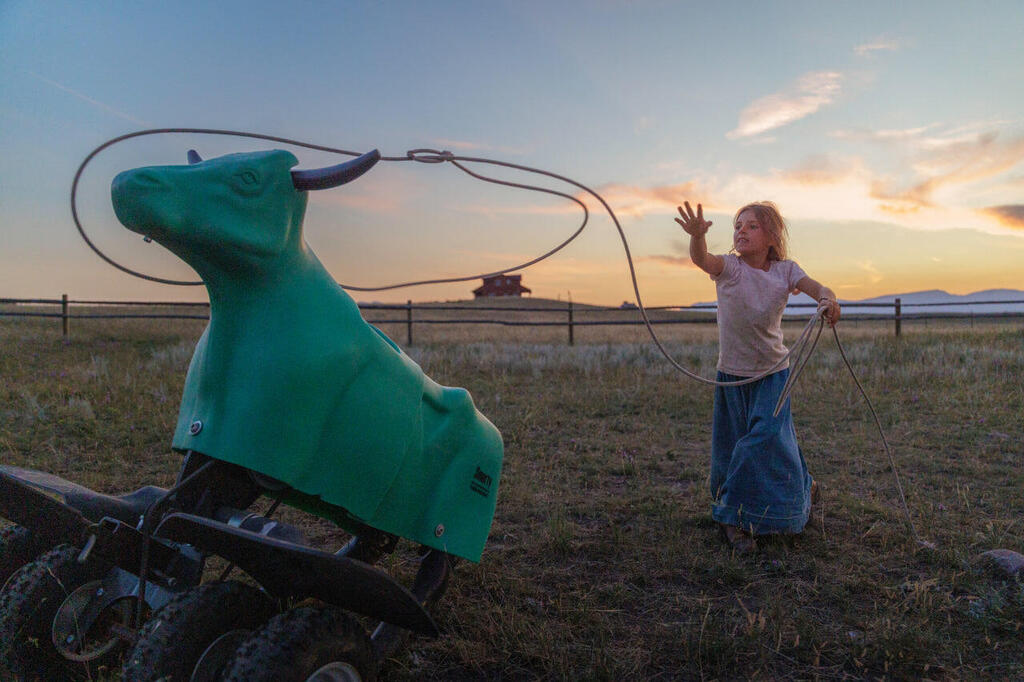
Elisheva practicing her lasso skills
(Photo: Dan Lior)
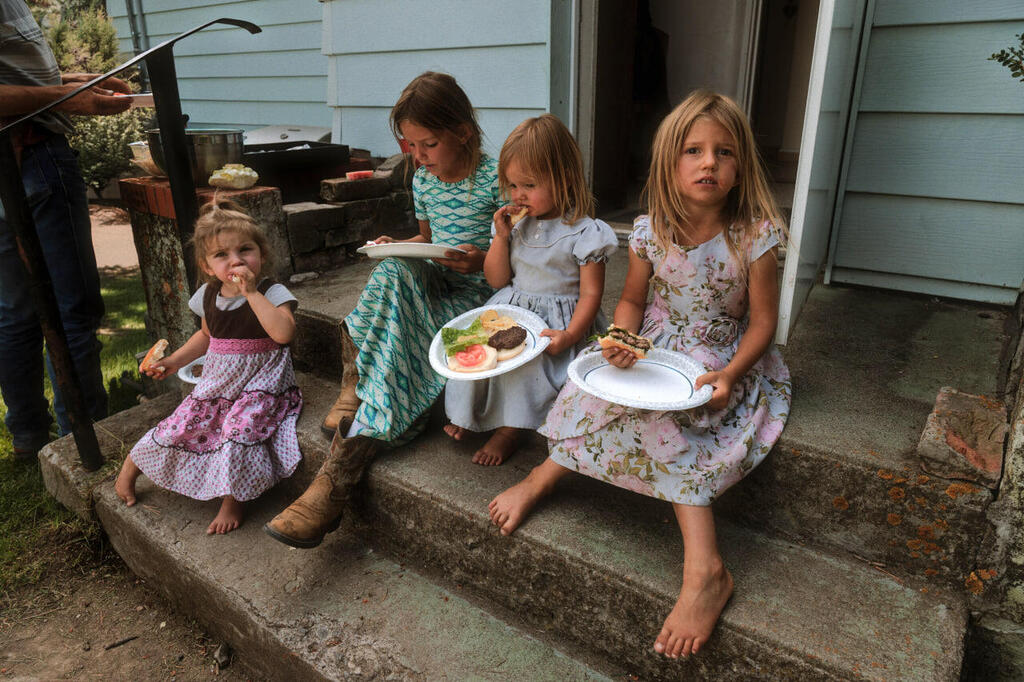
The family's young girls, either in boots or barefoot
(Photo: Dan Lior)
Few words, plenty of hospitality
In Montana's Wild West, people are not particularly inclined to talk about their feelings.
Even when posing for a photograph with a visitor from Israel, members of the cowboy family will not necessarily put an arm around his shoulder or display affection in the way Israelis are accustomed to.
But that does not mean they are any less warm.
"It's not that they're cold," Dan explains. "They served us tons of food, steaks and dessert fresh out of the oven. And they're constantly asking what you need, asking about Israel, asking about your experiences and who you are."
According to Dan, these are people who express their feelings primarily through actions.
Noam was equally struck by the family's reserve and dry sense of humor.
"They're simple, down-to-earth people who don't talk much, but they're funny," he says.
"The women are very strong, and from what I experienced, they talk more than the men. They work incredibly hard in the kitchen and with the children. They're wonderful mothers, and they support the men 100% in everything they do. It's like living with a strong, hardworking wife and stepping back in time."
Despite the family's heartfelt hospitality and deep love for Israel, however, the isolated ranch is not a tourist destination, and Dan believes it should stay that way.
Behind the rugged landscapes, the horses and the lifestyle that seems lifted from a Western movie lies a demanding reality of relentless physical labor.
Every visit from guests means a day of work the family must sacrifice, even as the cattle, horses and rest of the ranch continue to require constant attention.
"When we come to visit, that's an entire day when they're not doing what they need to do to actually survive the next day, or two days down the road," Dan explains.