

Herberts Cukurs was a Latvian pilot who joined Nazi forces during World War II and became one of the most notorious Holocaust perpetrators in Eastern Europe. Responsible for the murder of tens of thousands of Jews, he earned the nickname “the Butcher of Riga” because of his extreme brutality.
Nearly two decades after the war ended, Mossad agents tracked him down in South America. In March 1965, his body was discovered in a suburb of Montevideo, Uruguay, the result of a covert Israeli operation designed to bring the Nazi war criminal to justice.
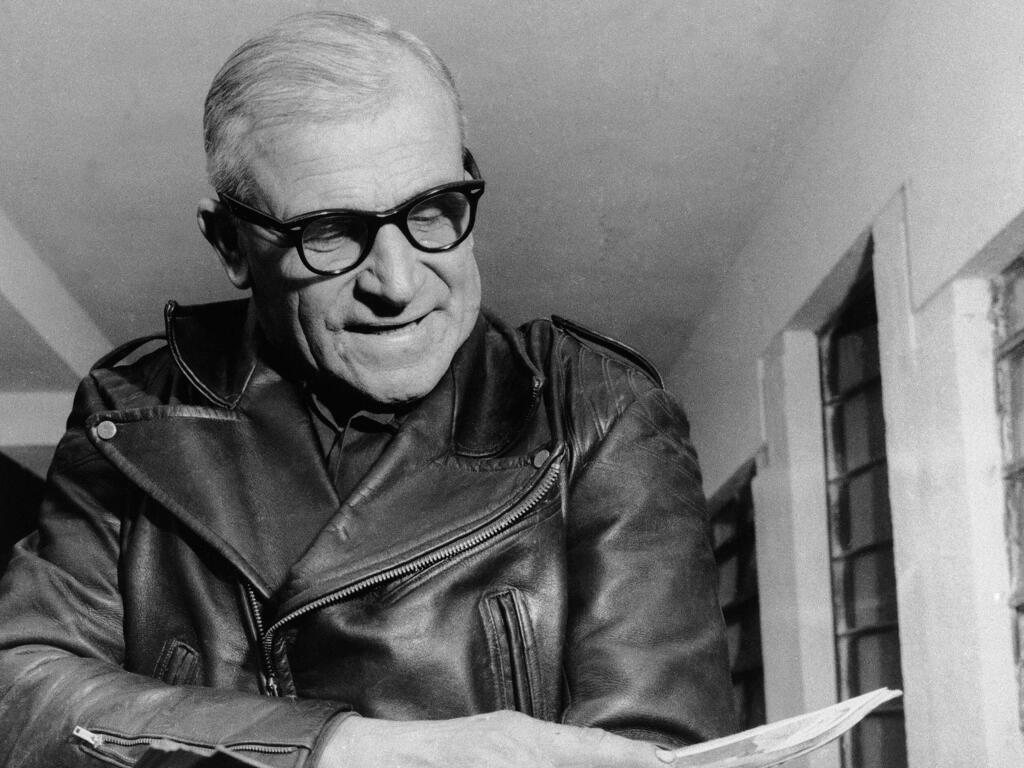
From celebrated aviator to Nazi murderer
Before the war, Cukurs was known in Latvia as a pioneering aviator. After being dismissed from the Latvian Air Force because of disciplinary issues, he built aircraft and became famous for long-distance flights, sometimes using planes he constructed himself from scrap materials.
He flew from Latvia to destinations around the world, including China, Japan, Russia, India and even Mandatory Palestine, from which he returned praising the Zionist enterprise.
But in 1940, Latvia lost its independence when it was annexed by the Soviet Union. A year later, Nazi Germany invaded the country.
Cukurs joined the Arajs Commando, a Latvian unit operating under Nazi SS command. He quickly gained a reputation as one of the most sadistic killers in Nazi-occupied Latvia.
According to survivor testimony and Latvian witnesses, Cukurs played a central role in mass killings in the Riga Ghetto and in the Rumbula forest massacre, where about 25,000 Jews were murdered.
He was known for riding through the streets of Riga on horseback, randomly shooting Jews. Witnesses said he took pleasure in burning synagogues with worshippers inside and throwing Jewish children from rooftops before shooting them.
Investigations conducted years later concluded that he was directly responsible for the murder of about 13,000 Jews and oversaw the killing of roughly 30,000 more.
Escape to South America
When Soviet forces recaptured Latvia toward the end of the war, Cukurs fled to Berlin. From there, reportedly after paying a bribe, he obtained a visa and escaped to Brazil.
His name surfaced several times during the Nuremberg trials, but because he could not be located he was never formally charged.
In Brazil, he initially lived in Rio de Janeiro, presenting himself as a Latvian refugee who had fled communism. But the cover did not last long.
Latvian Holocaust survivors recognized him and began pursuing him both legally and physically. Under pressure from the Jewish community, West Germany requested his extradition, but because he had never been a German citizen, the request was rejected.
Jewish activists in Rio followed him and even attacked him in the streets. Although he survived the assault, Cukurs decided to leave the city and moved with his family to a fortified neighborhood in Sao Paulo.
There, he opened a small tourism business offering sightseeing flights and boat tours.
The Mossad plan
In the autumn of 1964, nearly 20 years after the end of World War II, Europe debated a proposal to impose a statute of limitations on Nazi crimes.
In Israel, the idea caused outrage. Only three years earlier, the Eichmann trial had exposed the horrors of the Holocaust to the Israeli public.
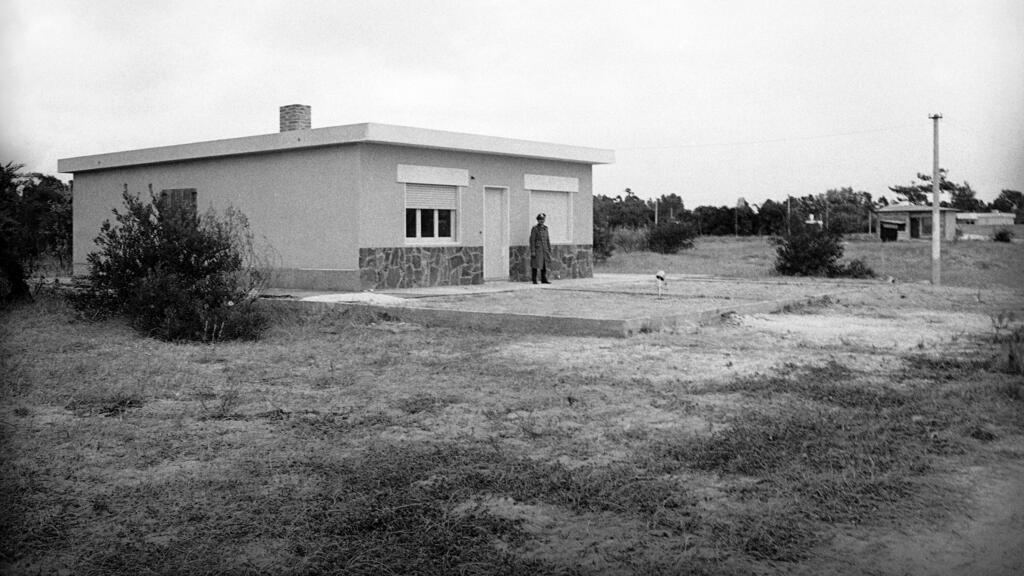
The building in Montevideo where Cukurs’ body was found
(Photo: AP Photo/Robert Berrellez)
Israeli leaders feared that such legislation would effectively grant amnesty to thousands of Nazi criminals who had never been punished.
To influence global public opinion, Israel decided to eliminate a prominent Nazi figure and remind the world of the magnitude of the crimes committed during the Holocaust.
Cukurs, who had been on Mossad’s wanted list since the 1950s, was chosen as the target.
The bait
Mossad agent Yaakov Meidad, who had taken part in the operation to capture Adolf Eichmann, was assigned to lure Cukurs.
Using the alias Anton Kunzle, an Austrian businessman looking for investment opportunities in South America, Meidad traveled to Brazil and spent weeks building credibility.
He visited tourism businesses in Sao Paulo, explored investment prospects and handed out business cards everywhere he went.
By the time he approached Cukurs, the supposed Austrian investor was already well known in the area.
Meidad understood that gaining Cukurs’ trust would require money. He booked a sightseeing flight with him, and afterward, Cukurs invited him for drinks on his boat.
During their conversation, Cukurs asked where the Austrian had served during the war.
Meidad replied that he had fought on the Russian front and lifted his shirt to reveal a large scar across his abdomen. In reality, the scar was from a surgery performed years earlier in an Israeli hospital.
By the end of the evening, Cukurs invited his new acquaintance to dinner at his home. Meidad realized he had passed the first test.
The tests continued. During another meeting, Cukurs suddenly suggested they drive to a remote farm he owned.
Meidad agreed immediately, knowing the risk. At one point Cukurs pulled out a pistol. Meidad feared he had been exposed, but the Nazi only wanted to test whether the Austrian businessman knew how to shoot.
After seeing Meidad’s marksmanship, Cukurs relaxed.
Luring him to Uruguay
From the beginning, Mossad decided the assassination could not take place in Brazil. Israeli officials feared backlash against the local Jewish community and the possibility that captured agents could face the death penalty.
Meidad’s mission was to persuade Cukurs to travel to another country.
That country became Uruguay.
Maintaining contact through letters after returning to Europe, Meidad convinced Cukurs to meet in Montevideo to discuss new investment opportunities.
Despite warnings from the Sao Paulo police chief not to travel, Cukurs agreed.
Still suspicious, he left a photograph of himself with “Anton Kunzle” with his wife and instructed her to give it to the police if anything happened to him.
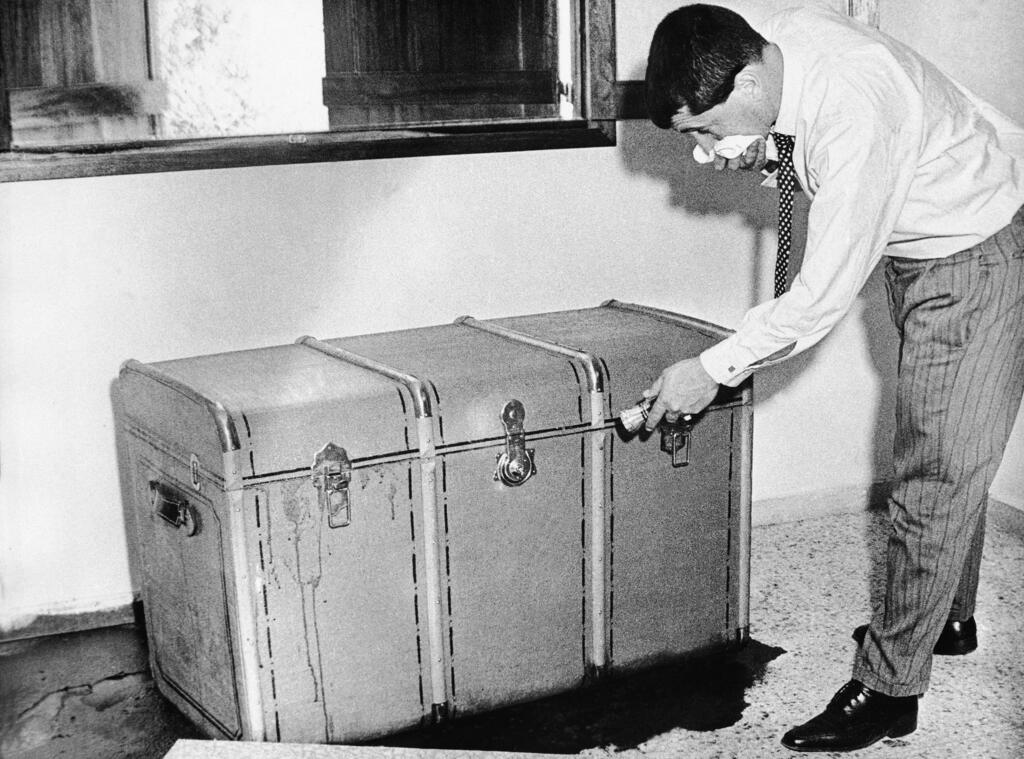
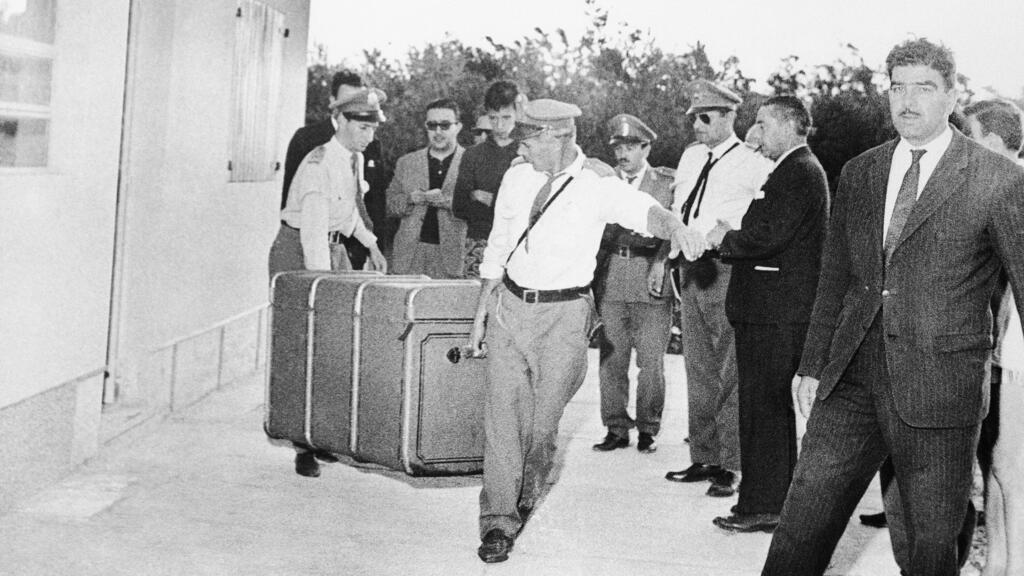
The crate containing the body of Herberts Cukurs
(Photo: AP)
The assassination
Cukurs and Meidad spent an entire day driving through Montevideo in a black Volkswagen Beetle, visiting potential investment sites.
In the evening, Meidad brought him to their supposed new office, a villa in a quiet suburb.
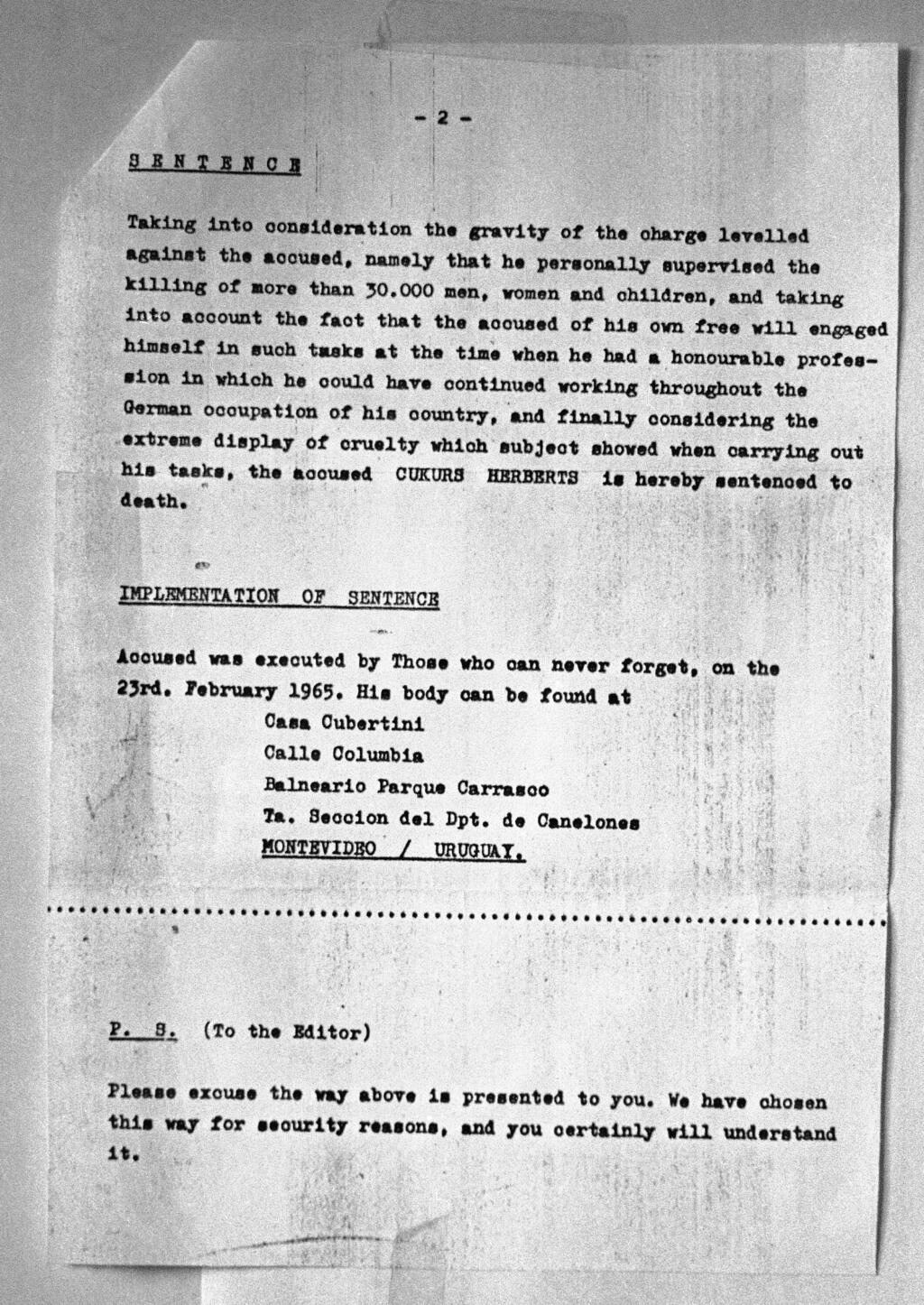
The letter left by Mossad agents after the assassination
(Photo: AP)
As soon as Cukurs entered, a Mossad assassination team waiting inside attacked him.
The agents had planned to subdue him, conduct a brief “trial,” and then execute him.
But the 65-year-old Nazi fought back fiercely. He tried to draw his weapon and even bit off part of one agent’s finger.
During the struggle, one of the operatives struck him in the head with a heavy object. Another agent then shot and killed him.
The team placed Cukurs’ body inside a prepared crate. Attached to it was a document listing the crimes he had committed.
They signed the message in the name of a previously unknown organization: “Those Who Will Never Forget.”
The agents then cleaned the scene and left Uruguay.
(Photo: AP)
Discovery and global impact
Ten days later, a newspaper office in Montevideo received a phone call from an anonymous person claiming that a body was found in a villa in one of the city’s suburbs.
Editors initially dismissed the call as a prank.
Two days later, the same caller contacted the newspaper again, insisting the body was still there. This time, the editors alerted the police.
Officers arrived at the address and discovered a crate inside the house. When they opened it, they found the decomposing body of Herberts Cukurs.
Attached to the crate was a document listing the crimes he had committed against the Jews of Riga, signed in the name of a previously unknown group.