

The word “groupie” is generally associated with the 1960s: counterculture, rock ’n’ roll, globe-spanning tours and young fans eager to get close to fame. Some pursued one-night encounters with musicians; others followed bands from city to city and became part of their entourage.
But a darker form of celebrity worship had emerged decades earlier. The history of Nazi Germany is largely told through the notorious men who led and operated the regime. Women such as Eva Braun and filmmaker Leni Riefenstahl remained largely in the background, while figures including Irma Grese and Maria Mandl became infamous for their brutality and roles in the Nazi machinery of murder.
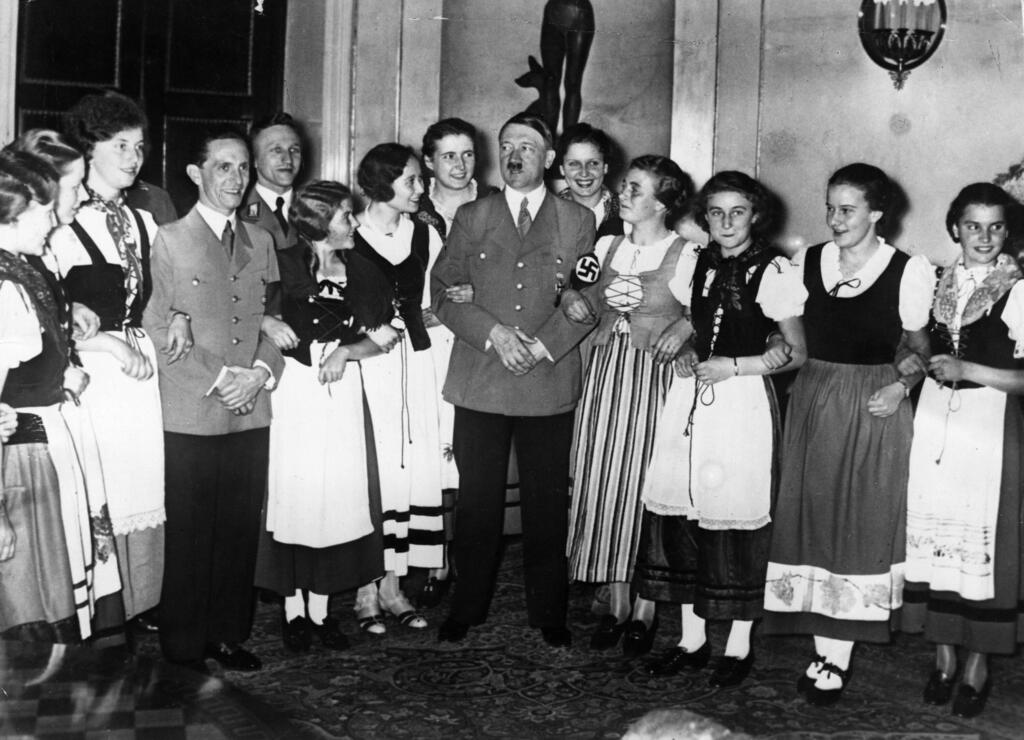
Yet women also played an important part in Adolf Hitler’s rise and in the cult of personality that surrounded him.
Many German women who enthusiastically supported the Nazi Party continued to idolize Hitler even as his regime embarked on mass killing across Europe and the systematic murder of Jews.
For some, the devotion went far beyond political support. They adored Hitler, dreamed of bearing his children and greeted his public appearances with the kind of frenzy later associated with teenage fans at rock concerts.
The depth of that devotion became painfully clear at the end of the Nazi regime. Magda Goebbels, wife of Nazi propaganda minister Joseph Goebbels, murdered her six children before she and her husband killed themselves at the end of World War II. She had concluded that a world without Hitler and National Socialism was not worth living in.
Hitler as a sexual object
Hitler was far from a feminist. He believed women’s role was to be attractive and bear children. Yet the Nazi movement offered some women a sense of belonging and participation. They joined organizations involved in welfare programs or volunteered in support of the wartime economy. For some young women, party activities also provided an unusual opportunity for independence and involvement outside the family home.
Many German women also viewed Hitler as a sexual object. After the war, American soldiers reportedly discovered thousands of letters among the ruins of Germany expressing admiration, love and sexual desire for the Nazi leader.
Some women sent letters so explicit, persistent and obsessive that the regime ultimately moved against them, sending them to concentration or labor camps on the grounds that they were “distracting the Führer from his important work.”
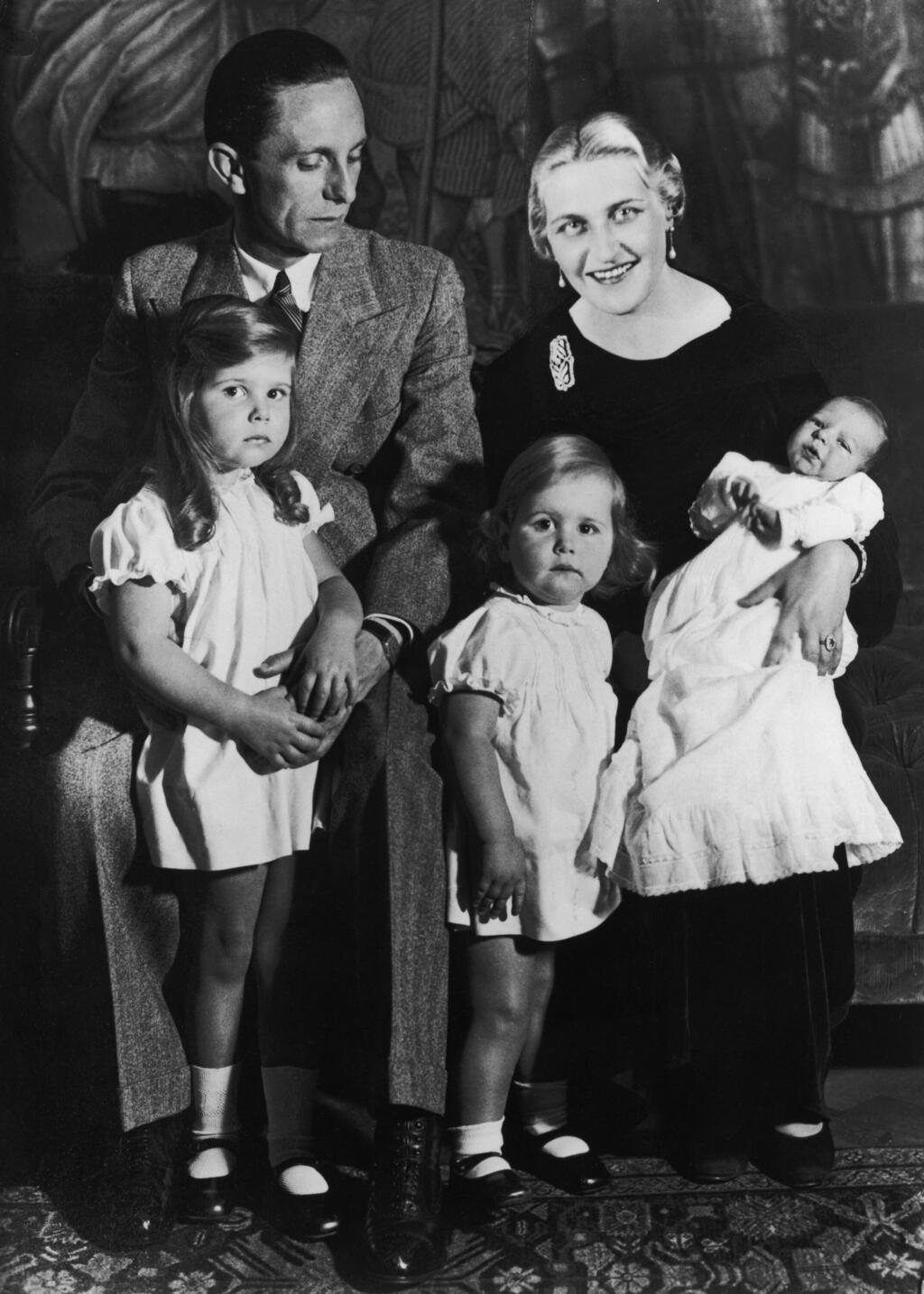
Magda Goebbels with three of her children and her husband, Joseph Goebbels
(Photo: Keystone / Hulton Archive / Getty Images)
“When you come, I’ll open the door for you and cover you in kisses, so you’ll know how much I love you,” a German woman named Eva wrote to Hitler. Hitler never replied to such letters, as he apparently had no desire to have children, despite the wishes of thousands of German women who dreamed of giving birth to his offspring. Some accounts have even raised the possibility that Hitler was asexual.
The attraction was unlikely to have rested primarily on his physical appearance. Books examining Hitler and his relationships with women have frequently interpreted the fascination as a response to the image he projected: power and control, courage and leadership, and an apparent ability to mobilize an entire nation behind himself, his ideology and his wars of conquest.
For these admirers, Hitler did not necessarily represent an aesthetic sexual fantasy. Instead, they were attracted to the confidence and strength he projected and to the sense that he could protect them from danger.
Similar forms of female adulation surrounding authoritarian leaders have appeared in other dictatorships, including North Korea and Libya.
‘Self-fulfillment’ through the Führer
From a modern perspective, particularly in societies where women enjoy greater independence and legal equality, the phenomenon can be difficult to comprehend.
Despite women’s participation in Nazi organizations, the regime imposed a deeply restrictive vision of womanhood: stay at home, have children, remain attractive and help preserve supposed racial purity.
Feminine traits were often disparaged by men; women had little presence in senior offices, universities or the public sector. They were forbidden from smoking publicly, and those who did work were concentrated largely in nursing, secretarial positions and factory production.
For some of Hitler’s most devoted female admirers, however, obeying and serving the leader itself became a form of personal fulfillment.
Letters collected after the war and later examined by researchers show how Hitler’s mythology allowed women to construct fantasies about their own lives almost immediately after his ascent to power.
“My life is gray, and I am only something small in a great life and a great world,” one woman wrote in 1935. “With the revered leader Adolf Hitler, I will still be something small, but I will be something small that participates and genuinely contributes to a great national undertaking.”
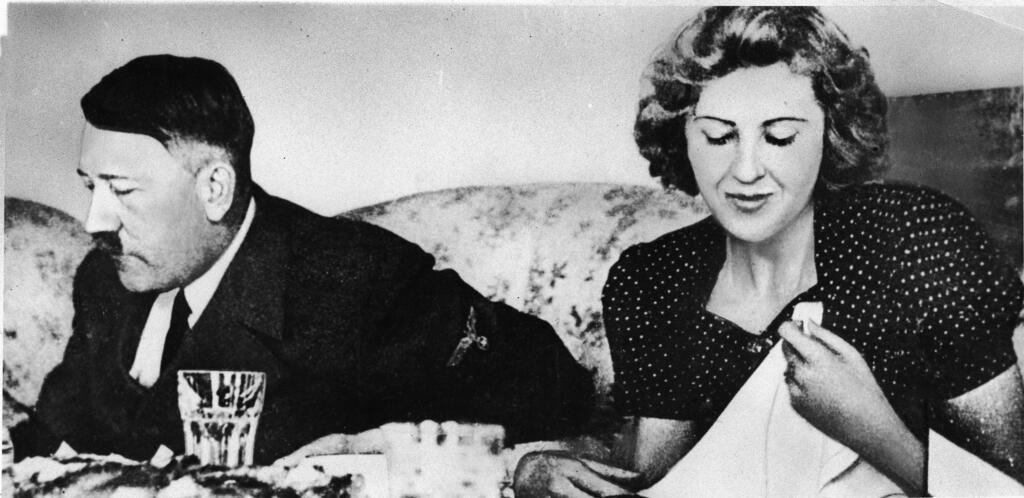
Married shortly before suicide. Eva Braun and Adolf Hitler in the 1940s
(Photo: Express Newspapers / Getty Images)
“My sweetheart,” wrote another woman. “I have to write to you exactly how my heart feels,” she continued. “My love for you is pure as gold.” The letters were later collected in the mid-1990s for an off-Broadway play performed by a Jewish theater ensemble.
Hitler himself appeared to favor two types of women: those considerably older than him who lavished him with affection and maternal attention, and younger women who were submissive toward him.
Eva Braun married Hitler roughly 40 hours before she died by suicide, swallowing a cyanide capsule in the Berlin bunker. But Braun had attempted suicide at least twice before, reportedly amid distress over their relationship. At least three other women are also known to have attempted suicide after relationships with Hitler ended.
Magda Goebbels repeatedly suggested that marrying Nazi propaganda minister Joseph Goebbels was a consolation prize. The man she truly wanted to marry was Adolf Hitler. “The point is that no one can marry Hitler,” she said. “He is married to Germany.” Not long after Hitler’s suicide, she entered the room where her six children were sleeping, had them given cyanide and then took it herself.