

At 35, Yoni Hantis became one of the youngest CEOs among the 125 largest companies on the Tel Aviv Stock Exchange. Professionally, it has been an exceptional year for him. Shares of Doral Energy have surged by about 420%, the company’s market value crossed 17 billion shekels, and it overtook long-established Israeli names such as Strauss, Partner and El Al.
But Hantis has plenty to worry about, not because of the capital market, but because of the state’s priorities. While investors are moving quickly, he says, Israel is still falling behind in green energy, far behind the United States and Europe, because of bureaucracy, regulation and a lack of leadership.
In an interview with Yedioth Ahronoth, Hantis argues that green energy is no longer just an environmental vision, but a first-order security and economic interest. Israel, he warns, cannot wait for the first missile to hit a power station before it wakes up.
“If we do not address this now and, God forbid, a missile hits a major power station, leaving entire cities and hospitals in total darkness, we will pay a terrible price,” Hantis says. “As development companies, all we need is to be allowed to work on the ground. But these are long, complex processes, and the state has to act today. It cannot wait.”
The blackout scenario: ‘People do not understand how critical this is’
Recent rounds of fighting with Hezbollah and Iran exposed the vulnerability of Israel’s energy system. During the war, Israel’s gas rigs were shut down intermittently over fears of precision missile fire. The economy found itself relying on a very thin supply line, in which a direct hit on an active gas rig or pipeline could have caused an economic and operational catastrophe, such as an immediate shortage of fuel for power stations, dramatic voltage drops and a real risk of prolonged blackouts in entire cities and essential facilities.
That risk, one hopes, made clear to decision-makers that relying on a small number of mega power stations and gas facilities is a security gamble. The solution, Hantis says, is decentralizing electricity production, including through regional solar fields and battery storage systems, to ensure continuity of supply and national resilience in an emergency.
How much more urgent the need for energy security become since October 7?
“Very much,” he says. “It is hard to overstate how real the risk of a blackout was for Israel during the rounds with Hezbollah and Iran, whether from direct hits on power stations, gas fields, control stations, electricity distribution sites or major energy facilities,” he says. “When 100 missiles are fired, we know the interception rates. Statistically, some will get through. And if one missile hits a power station generating 500 or 1,000 megawatts, it could take the entire facility offline.
“When such a station is disabled, it means entire cities and hospitals do not receive electricity. On the other hand, when you have a green power station of 1,000 or 1,500 megawatts with storage, spread across a thousand different systems in the area, it cannot be hit in the same way. This decentralized model creates redundancy and energy security for the state that is simply priceless.”
Gallery
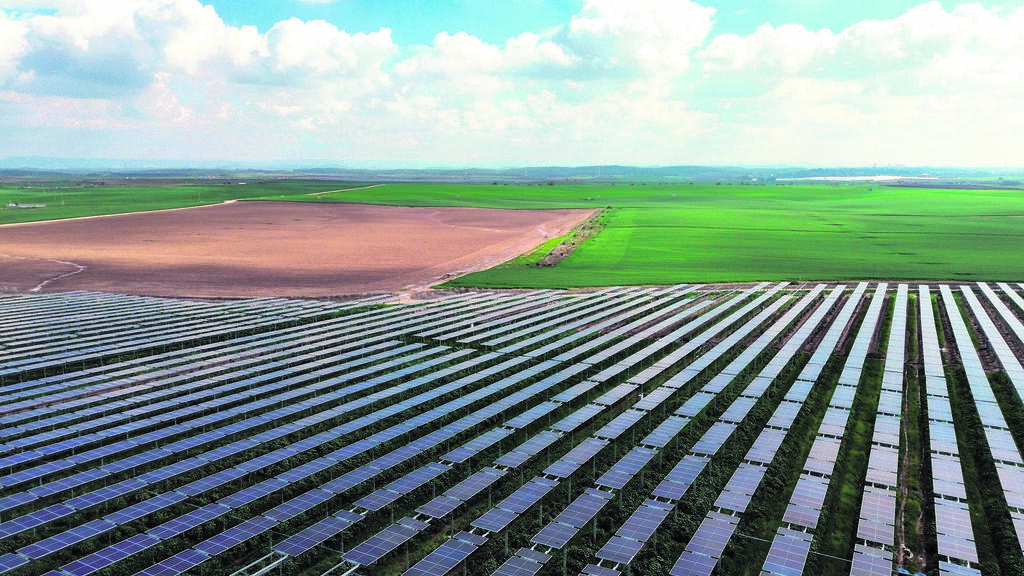
Solar panels in the fields of Kibbutz Revadim in the Shfela region
(Photo: Courtesy of Doral)
In the past, green energy was framed mainly as an environmental and ecological goal. Is it now clear that it is also an existential and economic necessity for the country?
“It is a genuine national necessity,” he says. “The public does not always understand how critical this is, but the survivability of Israel’s electricity system is a national priority that demands a dedicated strategic plan.”
“Beyond that, the ability to generate cheap electricity today comes exclusively through renewable energy. The cheapest marginal production cost among all the alternatives in the market is solar facilities combined with storage, and that saving is passed directly on to all of our electricity bills. The more renewable energy facilities there are here, the less money we will pay in our monthly electricity bill.
“It is the perfect alignment of interests: environmental, economic and crucial to energy security. Israel has abundant sunlight, and there is no logical reason not to push this sector forward with full force.”
The rapid rise: ‘I passed the test of results’
Hantis’ path to the CEO’s office of a company worth billions was not the classic one. He was born and raised in Tel Aviv and began on the safe track of commercial law and complex litigation at the S. Horowitz law firm. But his desire, as he describes it, to create tangible value on the ground pushed him toward a surprising career turn.
Today, married and a father of two, Hantis runs Doral’s operations far from Rothschild Boulevard’s financial district. He did not grow up in the energy world, but he now speaks like veteran executives in the sector, using phrases such as “we work for the environment, humanity and the planet,” also as a way of drawing a line between their work and the exit-driven culture of high-tech entrepreneurs.
How did you become interested in energy? It was not your original field.
“I began my career at the law firm in 2015,” he says. “It came after a long path in which I had worked very hard to be the best I could be. I joined an excellent firm with outstanding people, and on paper, it seemed like a perfect fit. But emotionally, it simply did not work for me. It did not interest me.
“At the same time, I am not someone who gives up easily, so I kept going until I reached a point where I stopped and told myself something was wrong. When you do not enjoy what you do, and you wake up in the morning with no sense of purpose or excitement, you have to make a change. I decided to leave, and my arrival at Doral was entirely by chance. A friend who worked there told me about an open position, sent in my CV, and the rest is history.”
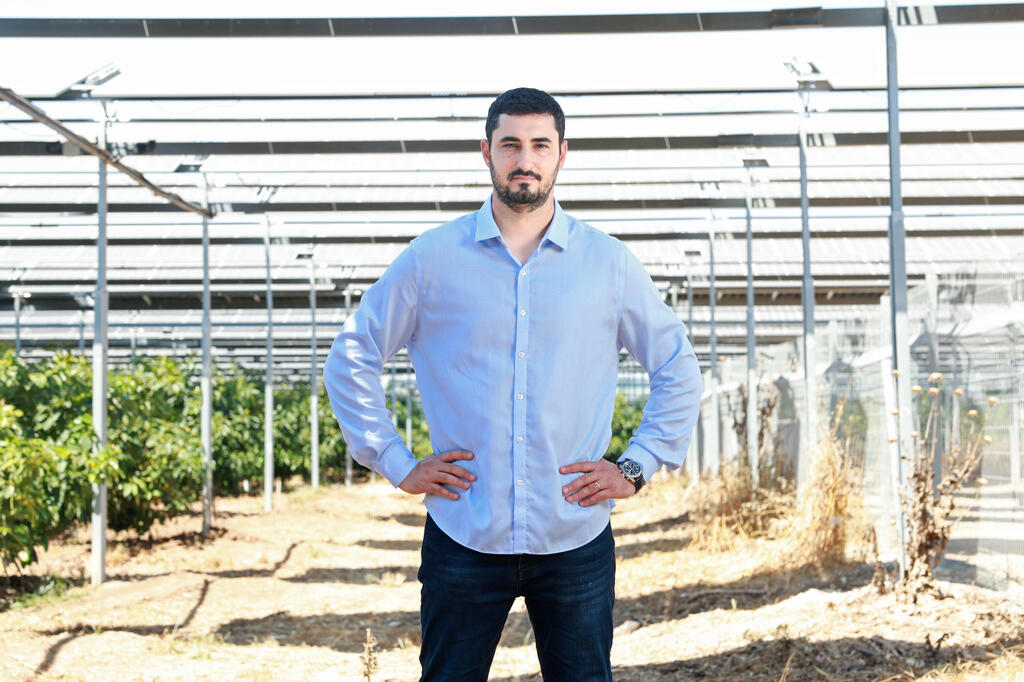
Yoni Hantis
(Photo: Dana Kopel)
What was your first role there?
“I joined in 2020 as business development manager,” he says. “Doral was then a small company with 25 to 30 people, only about two months after its initial public offering. It was already a public company, but was still taking its first steps. It took me only a few months to understand that Doral confirmed everything I had been looking for: a place that gives you all the tools and freedom to run forward.”
From there, his climb up the management ladder was especially fast. In less than six years, Hantis was appointed CEO. “Six months after I arrived at the company, I was already given management of the company’s business development department,” he says. “I recruited about 15 people to the department, and we built a unit that functioned like the company’s elite commando team,” he says. “That department signed agreements worth billions with kibbutzim to build solar facilities, projects that are now being constructed and connected to the grid.
"After two years in that role, I was appointed deputy CEO in 2023,” he says. “That position gave me a full view of the company’s operations, from our international activity and work with the capital market to financing and the organization’s complex financial structures. I served as deputy CEO for two years, and I am now completing my first year as CEO.”
How has that year been for you?
“Exceptionally challenging and fascinating,” he says. “The ability to influence both the people doing the work on the ground and broad strategic processes is enormous,” he says. “I take this role with great humility, but I feel very comfortable in it. I believe we are working the right way, that Doral is moving in exactly the right direction and that I have a strong team around me. It is demanding, all-consuming work, but there is tremendous satisfaction in doing something that has a positive impact on humanity and the environment.”
You were only 35 when you were appointed CEO. Did people in the industry or the market raise an eyebrow at such a fast promotion at a relatively young age?
“Not to my face,” he says. “I am sure there were people who thought such things, but the move itself was completely natural. As the deputy CEO who had been running alongside the previous CEO for a long time, it was only natural that I step into the shoes of Yaki Noyman, who after 12 years in the role moved to serve as vice chairman.
“The company is delivering exceptional results, and in the end, that is the only test I am judged by,” he says. “I am not someone who can settle for 95. I am always looking for the next level of excellence, and that hunger pushes the entire company forward. As long as the results speak for themselves, age becomes irrelevant.”
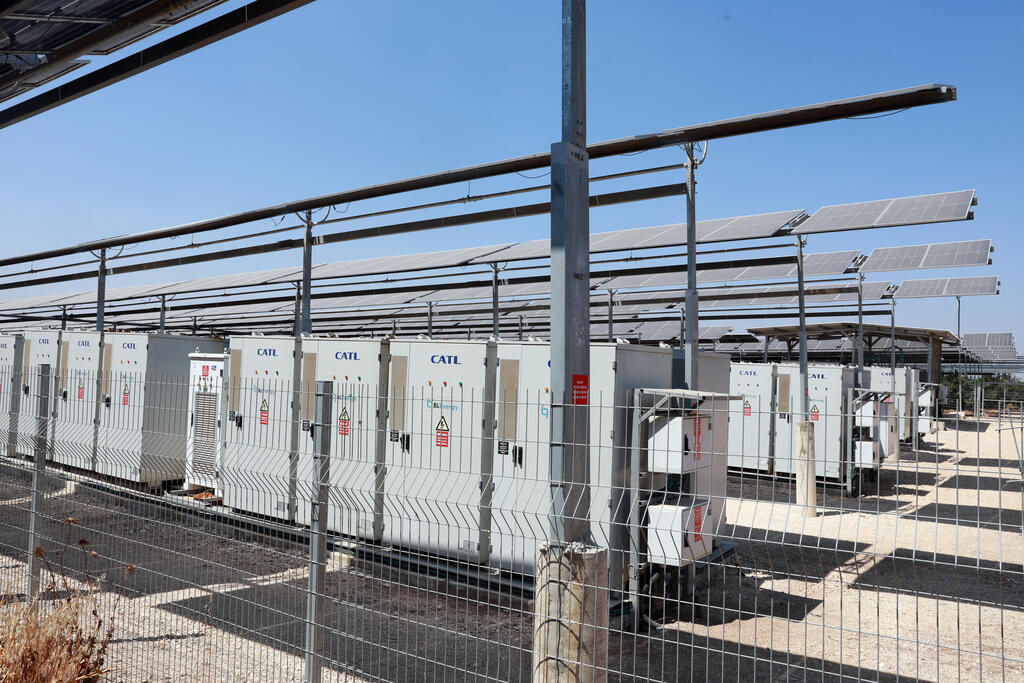
Advanced agriculture and solar energy production on the same land
(Photo: Dana Kopel)
His managers understood early on that he would go far in the company, but Hantis says he did not set the top job as a goal from the beginning. “I did not mark becoming CEO or anything like that from the start,” he says. “I did not imagine that within six years I would be appointed CEO. “But I am the kind of person who always aims as high as possible. So the way I naturally work and push forward became the foundation for that appointment. It is a cycle that feeds itself.”
When you arrive at conferences or conduct negotiations with people in the field, do you feel they look at you differently because of your age?
“No, I do not think so. I have already been in the role for a year,” he says. “The market already knows me, and ultimately, once the discussion moves beyond the first 10 seconds and people start talking about the substance, that is what is tested in the room. So no, for me it is not an issue at all.”
The stock surge: ‘We did what we promised’
Doral Energy Group was founded in 2007. Today it is considered one of Israel’s largest and fastest-growing renewable energy companies, with significant activity in three core markets: Israel, the United States and Europe, where it has a presence in countries including Italy, Poland, Romania and Denmark. Doral operates more than 500 commercial energy sites worldwide, alongside dozens of additional projects in advanced stages of construction.
Green energy has become one of the hottest sectors for investors on the Tel Aviv Stock Exchange. Alongside Doral, companies such as Enlight and Ofer Yannay’s Nofar Energy also posted sharp gains over the past year.
So what drove Doral’s stock to deliver huge returns for investors, soaring by hundreds of percent in a relatively short time and in the middle of a war? For Hantis, the secret is simple. “We did exactly what we said we would do,” he says. “The market saw that we were meeting our grand work plans. Doral built and is building projects of enormous scale. Today in Israel, we hold nearly 50% of the solar projects combined with storage that are connected to the country’s electricity system.
“Once the capital market sees that we are keeping our promises, and that in the United States we are building three of the five largest energy facilities on the continent, including one facility whose area is equal in size to the entire city of Tel Aviv, it creates deep confidence in our future growth potential.”
What sets you apart? After all, there are many companies in the field offering similar solutions.
“Doral’s story is built on constant creativity and innovation,” he says. “We were the first to connect a storage facility in Israel, the first to establish an agrivoltaic facility and the first to lead storage projects in urban areas and in the municipal sector, working with local authorities, where we have won most of the tenders.
"Now we are also accelerating our activity in Europe with storage systems entering the market. The combination of an orderly work plan, meeting targets, transparency, trust and innovation is what creates high value for shareholders.”
Still, Israel’s electricity sector in 2026 remains overwhelmingly dependent on fossil fuels, above all natural gas. About 70% of the country’s electricity is produced by gas-fired power stations supplied by the Tamar, Leviathan and Karish fields, while polluting coal still accounts for a small but persistent share.
Renewable energy, mainly solar, barely reaches 15% to 18% of national production, compared with Western Europe, where the average is more than 50%. The figure is significantly lower than the government’s original targets and places Israel in deep structural lag compared with OECD countries. In practice, Israel ranks last among Western countries in the use of renewable energy.
What is your long-term vision for the company? Where is the global market heading?
“We are only at the beginning of the road,” Hantis says. “The world is undergoing a historic process of dramatic change in electricity consumption. Energy companies that know how to act correctly will reach values and places no one imagined in the past. We are investing billions of shekels in projects that generate stable cash flow for decades.
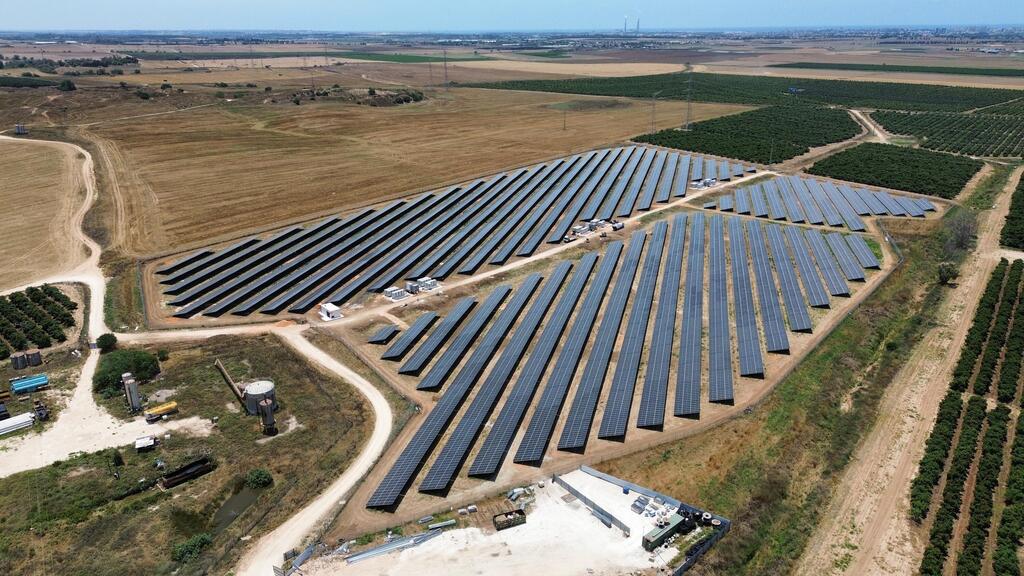
Doral Group solar panels in Kibbutz Gvar'am
(Photo: Courtesy of Doral)
“To meet the enormous future demand for electricity, driven in part by AI, the world will have to double, triple and even quadruple current energy production,” he says. “Doral has built a highly efficient machine that knows how to develop this kind of infrastructure, and it can go very far. In the United States, there are energy companies that have been operating for a century, trade at enormous valuations and supply power to entire cities and states. That is the kind of scale we are aiming for.”
How much does Israeli regulation really understand the immediate need for green energy?
“There is broad recognition that solar energy is the cheapest option and strengthens energy security, but it has one built-in limitation: the sun sets in the evening, just as household electricity demand peaks between 5 p.m. and 9 p.m. To bridge that gap, storage batteries are essential, allowing electricity generated during the day to be shifted into the evening hours.”
“The Electricity Authority recognized that need early and created regulatory frameworks that encourage and enable storage,” he says. “Doral leads the field in Israel, with about 1,700 megawatt-hours of storage connected or under construction. That is the equivalent of two conventional power stations distributed across the country, and we will continue accelerating construction.”
Partnership with Gaza border kibbutzim: ‘A lifeline for agriculture’
Doral works with many communities near the Gaza border. The events of October 7 put that work at risk, but it quickly became clear that even facilities in areas that were hit continued operating. “October 7 was a shattering human event that hurt us in the most painful places,” Hantis says. “Kerem Shalom, Holit, Nahal Oz, Kfar Aza, Alumim, Sa’ad. We lost partners and people we knew personally.
“At the same time, from the professional perspective, we saw that our solar facilities in all those kibbutzim continued working and showed phenomenal survivability. Even facilities that were hit continued operating because the facility is built in independent rows, so in the worst case one row is damaged and the rest continue producing energy without interruption.”
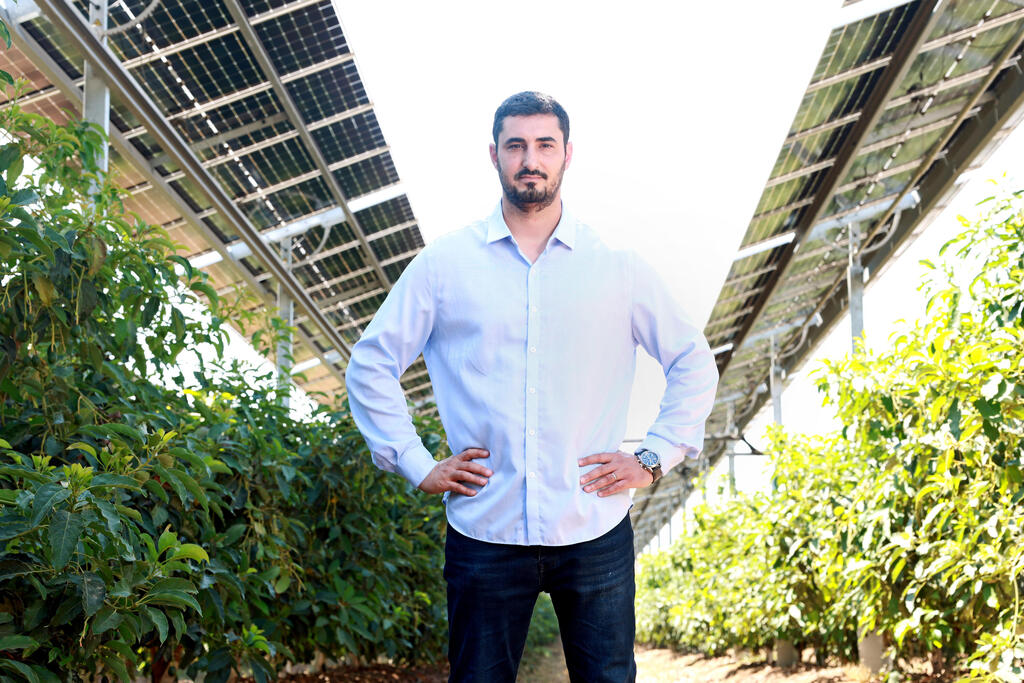
Yoni Hantis
(Photo: Dana Kopel)
You talk about agriculture and energy as real Zionism. Is that not a cynical use of the word Zionism?
“Today, it is completely clear to us that the economic revival of the Gaza border communities and the north will depend in large part on renewable energy,” he says. “It gives them fixed, stable and high income over time, making it a critical engine of growth and economic rehabilitation.
“Now, as we build the largest agrivoltaic facility in the Gaza border area at Kibbutz Alumim, that is true Zionism in the fullest sense of the word, without a hint of cynicism,” he says. “It is a massive facility that produces green electricity while also allowing avocado orchards to grow on the same plot of land.
“When I stood there two months ago, just 100 meters from the building where people were burned and murdered, and saw the panels producing cheap electricity alongside renewed agriculture, it was deeply moving. It filled me with enormous pride in our hold on the land.
“We feel today that the regulator also understands these projects must be supported and advanced much faster,” he says. “It takes time, but in the Gaza border area alone, Doral is currently advancing no fewer than three mega-projects considered national strategic assets. Instead of each kibbutz trying to operate on its own and on a limited scale, we created a broad regional partnership among several kibbutzim in a shared project that combines advanced agriculture with solar production. This model creates a major advantage of scale, supports local agriculture and effectively establishes regional green power stations that will supply clean electricity across the country.”
How much do you see those communities as real business partners, rather than suppliers of available land?
“They are our partners in every sense,” he says. “We establish joint companies with the communities under 50-50 ownership. This model allows them to fully enjoy the economic benefit of our entrepreneurship and knowledge, while we benefit from access to their land resources. Doral is now a partner of almost 90% of the kibbutzim in Israel and hundreds of moshavim.”
What exactly do the communities and kibbutzim gain from this model?
“First and foremost, they hold half the ownership of a corporation that generates high and fixed income from selling electricity for decades,” he says. “Second, the combination of an agrivoltaic project dramatically upgrades the community’s existing agricultural activity. Once the solar project is integrated into it, the stable cash flow from electricity allows the kibbutz to invest in the most advanced agricultural technologies, industrial shading systems, cooling technologies for orchards and data-based irrigation systems that simply would not exist without this financing. It is a complete win-win model.”
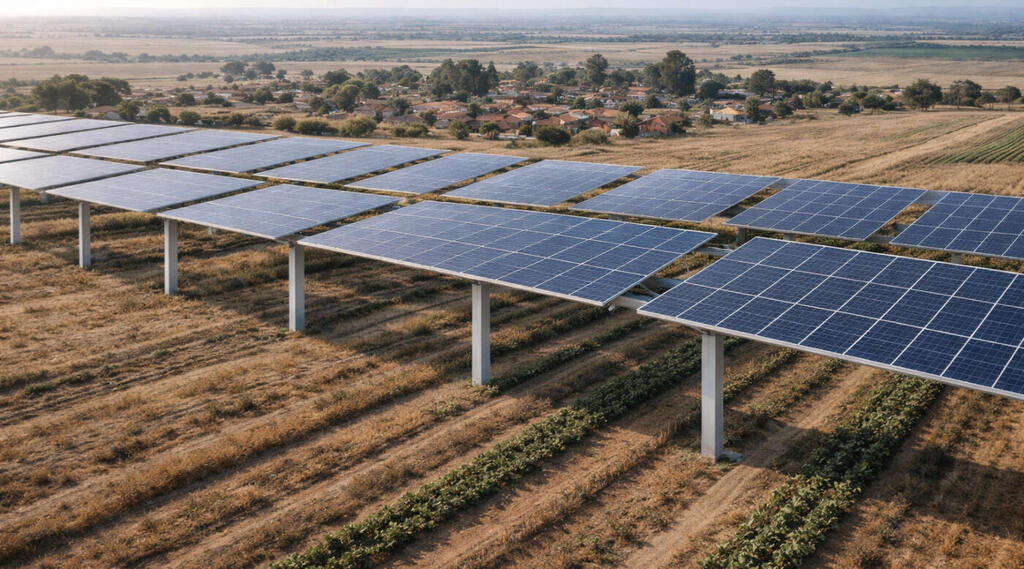
Solar panels to be installed above agricultural land in Israel
(Illustration, ChatGPT)
Could this model become the economic lifeline of these farms?
“It is the central lifeline of Israeli agriculture,” Hantis says. “Today we are already eating avocados grown in agrivoltaic orchards, pineapples grown alongside panels in Bar-Ilan University research fields, as well as table grapes and passion fruit. These are crops the local farmer would have abandoned entirely without this economic and technological support system.
“Credit is due to the Agriculture Ministry, which understood the importance of the moment,” he says. “At first, officials were highly skeptical of this combination, but the unequivocal results we showed in the field changed their view. Today, the ministry understands that projects like these strengthen the country’s food security.”
The bureaucracy blow: ‘Israel is lagging’
In recent years, the Energy Ministry and Electricity Authority have promoted what they call the “built-space revolution,” an aggressive expansion of solar facilities on rooftops of industrial buildings, public buildings, cowsheds and private homes, as a solution to Israel’s land shortage. The state recently set ambitious targets meant to ensure that a significant share of the renewable energy increase would come directly from such rooftops, without the need to approve complex land plans.
But the reality on the ground remains far from implementation. Insufficient economic incentives for companies and local authorities, bureaucratic obstacles in receiving grid approvals from the Israel Electric Corporation and strict requirements by fire services and planning committee engineers have left the strategic plan largely on paper.
As a company operating in Israel as well as Europe and the U.S., you surely encounter far more bureaucracy here, delaying projects, while the world is moving forward in the field. What is the source of the problem?
“At the level of strategy and declarations, everything sounds excellent,” Chanzis says. “The government set official targets of producing 30% of Israel’s electricity from renewable energy by 2030, with an interim target of 20% by 2025. Of course, we missed the 2025 target, and in my view, at the current pace, we will also miss the 2030 target, even though a new target of 35% by 2035 has already been set.
“The state’s heart and mind may be in the right place, but there is a vast gap between strategy and tactics on the ground, and between planning and execution.”
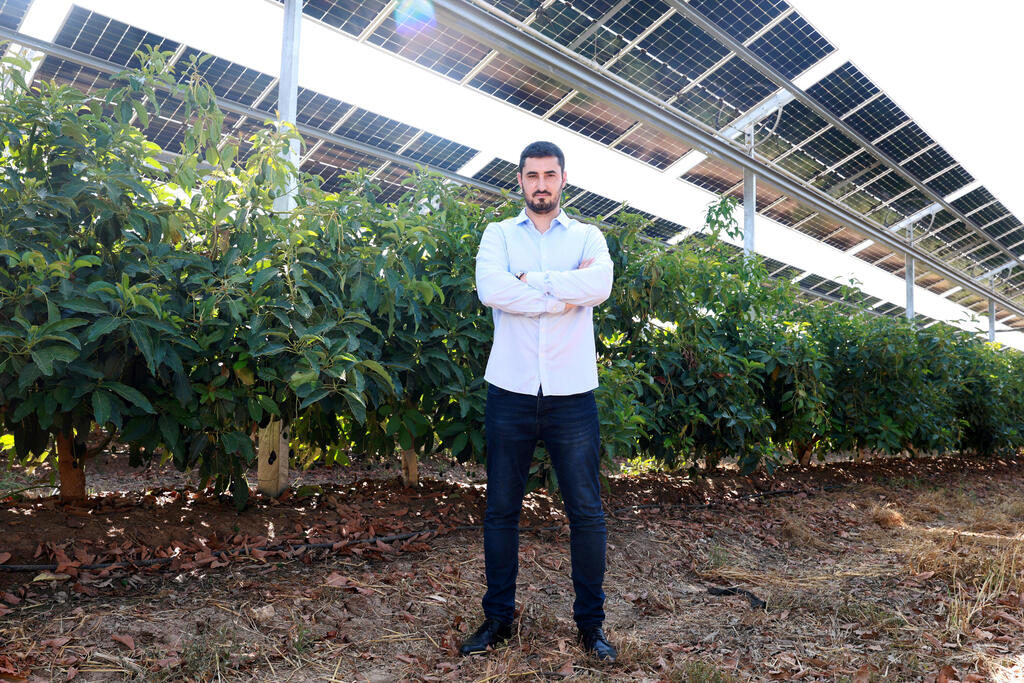
Yoni Hantis
(Photo: Dana Kopel)
“There is no logical reason for Israel, a sun-drenched country under constant missile threats to its power stations, to lag behind cold European countries that receive half the solar radiation we do,” he says. “Our security and economic needs are far greater, and it is deeply disappointing to see the government falling behind in meeting its targets.
“We are not asking the state for anything. We have excellent human capital, solid financial backing, advanced technological know-how and a signed pipeline of deals. We do not need subsidies or government grants. All we are asking is to be allowed to work and build. But here we run into a fortified wall of bureaucracy.
“A major solar-plus-storage project can cost 500 million shekels to build. It is an extraordinarily long, exhausting and Sisyphean process involving planning and construction committees, the Israel Land Authority, then the Israel Electric Corporation for grid connection approvals, and the financial institutions providing the financing. As long as there is no project manager or authorized body capable of removing obstacles and creating fast-track planning routes, we will continue to suffer from deadly bureaucratic foot-dragging that is choking the economy.”
While Israel argues over planning officials, renewable energy has become a powerful economic engine across the West. In the United States, the historic Inflation Reduction Act injected hundreds of billions of dollars into the market, turning solar farms and storage facilities into one of the continent’s most profitable businesses, with entire regions now powered by 100% clean energy.
In Europe, under the REPowerEU plan announced after the energy crisis with Russia, countries such as Germany, Spain and Denmark already generate 40% to 60% of their electricity from renewable sources, mainly solar and wind.
Israel, by contrast, has been lagging largely because of its local “barrier disease”: an acute shortage of land, an outdated transmission grid that cannot absorb new facilities in the periphery and statutory delays in planning committees that take, on average, three times longer than in Europe.
How does it work for you abroad?
“In the United States, Doral initiated, planned and built a huge 1,600-megawatt project in just six years,” he says. “In Israel, a small 16-megawatt project can spend nearly seven years in planning committees. The state has to let us move. Otherwise, the system will remain stuck, and the entire economy will pay the price.”