

Fifty years have passed since Operation Entebbe, one of the most daring and celebrated hostage rescue missions in modern history. But while the commandos who stormed the airport terminal in Uganda became national icons, part of the mission’s success depended on a man operating in the shadows, hundreds of miles away in Nairobi: Eli Engel, the Mossad station chief in Kenya.
Engel was born in 1933 and raised in Haifa. His first steps in the intelligence world came while he was studying at the Hebrew University, when he was recruited into the Shin Bet. From there, he moved into the Mossad. Before arriving in Nairobi, he took part in a range of covert missions overseas, building operational expertise in Africa and serving in another African country.
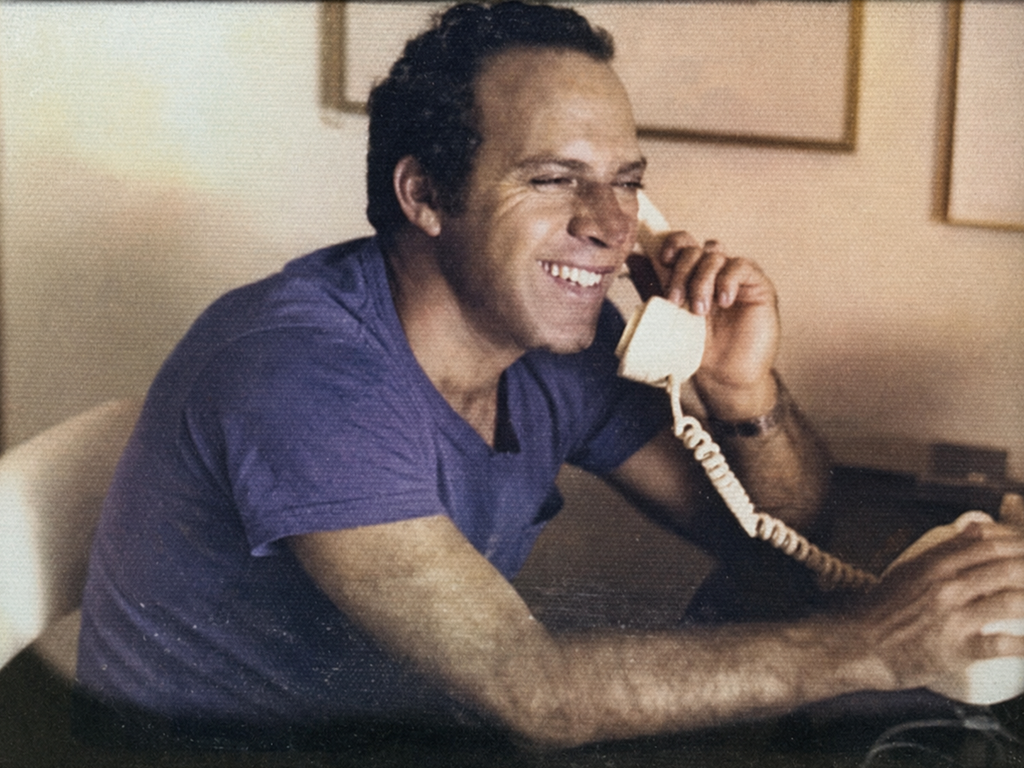
Those who knew him described him as sharp, focused and exceptionally intelligent, “like a missile aimed at a target,” with a reputation for integrity and first-rate professionalism.
In 1972, Engel arrived in Nairobi and was appointed head of the Mossad station in Kenya. Though his official title was far more modest, he built a deep, reliable and personal network of ties with senior figures in Kenya’s intelligence services, security forces and government.
When African countries, including Kenya, severed diplomatic relations with Israel after the Yom Kippur War, Engel and his family remained in Nairobi. When his young son asked why they were not packing like the other diplomats leaving the country, Engel answered simply: “Someone has to take care of the mail.”
The dress rehearsal: Operation Heartburn
Just six months before Entebbe, in January 1976, Engel’s network was tested in a secret mission known as Operation Heartburn. A Palestinian and German terrorist cell had arrived in Nairobi with plans to shoot down an El Al passenger plane using Strela shoulder-fired missiles.
Engel managed the crisis with remarkable composure. Contrary to senior officials in Israel who wanted to send Sayeret Matkal to Kenya to arrest the cell, Engel insisted that the Kenyan police’s special unit, the GSU, carry out the operation. He trusted its commanders and knew their capabilities from close personal contact.
At one dramatic point in the operation, there was a need to send messages to the approaching Israeli plane without arousing the suspicion of local air traffic controllers. To solve the problem, the wife of an El Al employee, who spoke Hebrew, was placed in the Nairobi control tower so she could contact the aircraft if needed, should the terrorists not be captured in time.
The terrorists were arrested, and the missiles were sent back to Israel on an El Al plane that had flown specially to Nairobi. To smuggle the missiles into the airport, Engel turned to an El Al employee, who drove them to the aircraft in the trunk of his private car. The missiles were hidden under a blanket, with two bottles of whiskey placed on top.
The Kenyan guards, who knew the employee well, did exactly what he had hoped: They took the whiskey and allowed the car to continue.
A week of terror, and one piano
In June 1976, when an Air France plane was hijacked and flown to Entebbe in Uganda, Engel immediately went into action. Part of his family was evacuated, and his private home in Nairobi was transformed into the forward secret command post for the operation.
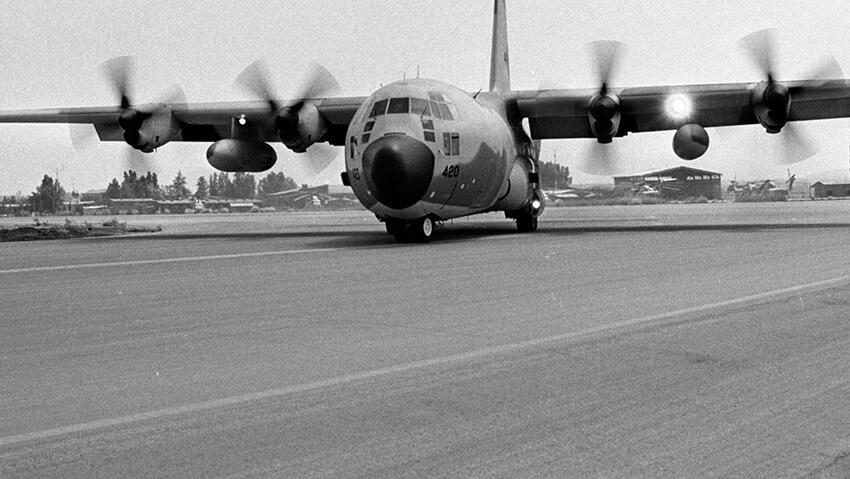
The Israeli aircraft that took part in Operation Entebbe
(Photo: Defense Ministry archive)
Despite the lack of formal diplomatic relations between Kenya and Israel, Mossad and IDF personnel began landing in Nairobi without passports or entry visas. They were allowed into Kenya with nothing more than a note bearing Engel’s name. Thanks to the ties he had built, that was enough to secure their quiet passage through the airport.
The tension inside the house was extraordinary. The command post was set up in the living room, where communications lines and operational planning with Israel converged. Among those present was Ehud Barak, who took part in the planning and was sent to Kenya.
To ease some of the fear and pressure surrounding the officers and fighters, Engel’s wife would sit at the family piano and play Scott Joplin’s “The Entertainer,” an unusual musical moment inside the operational pressure cooker.
The logistics of the impossible
At the same time, Engel had to prepare the infrastructure that would receive the Israeli Hercules aircraft on their return from Entebbe. He activated an El Al employee and assigned him tasks that seemed nearly impossible: obtain, in the middle of the night, a massive quantity of about 200 tons of fuel for the Israeli planes, and clear an Air France hangar so it could be used as a field hospital flown in from Israel and ready to receive wounded personnel.
Everything was done under a heavy veil of secrecy. Engel also gathered dozens of Israeli men from the Nairobi community and instructed them to wait at the airport with their private cars, which could serve as improvised ambulances to evacuate casualties to hospitals in the city if needed.
‘The most astonishing element of the operation’
The Entebbe operation was hailed as an extraordinary success, but for Engel and his family, the price was immediate. Days after the Israeli Air Force planes returned home, his identity was exposed and the situation became dangerous. The family was forced to flee Kenya under false names and without properly arranged tickets.
The depth of the relationship Engel had built with the Kenyan authorities was reflected in one final exchange. The head of Kenyan intelligence, still committed to him until the last moment, turned to Engel on that fateful night and said: “Eli, I looked for you all night but could not find you.”
In 1986, on the 10th anniversary of the operation, Yitzhak Rabin was asked in an interview what he considered the most astonishing element of Operation Entebbe. His answer did not refer to the firefight in Uganda, but to what happened in Kenya: “Receiving real-time cooperation from Kenya without any prior notification, approval or coordination.”
That almost unimaginable achievement belonged to Eli Engel, Israel’s secret anchor in a country with which it had no formal diplomatic relations.