

Final preparations were underway on the Home Front Command parade ground in Ramla for the 2025 outstanding soldiers ceremony.
Capt. Ido, a company commander completing the officers’ course, was excited. According to the schedule, at 6 p.m. he was to receive the rank of major from the commander of the Rescue and Training Brigade. An hour later, the Home Front Command chief was due to present him with an award of excellence.
Gallery
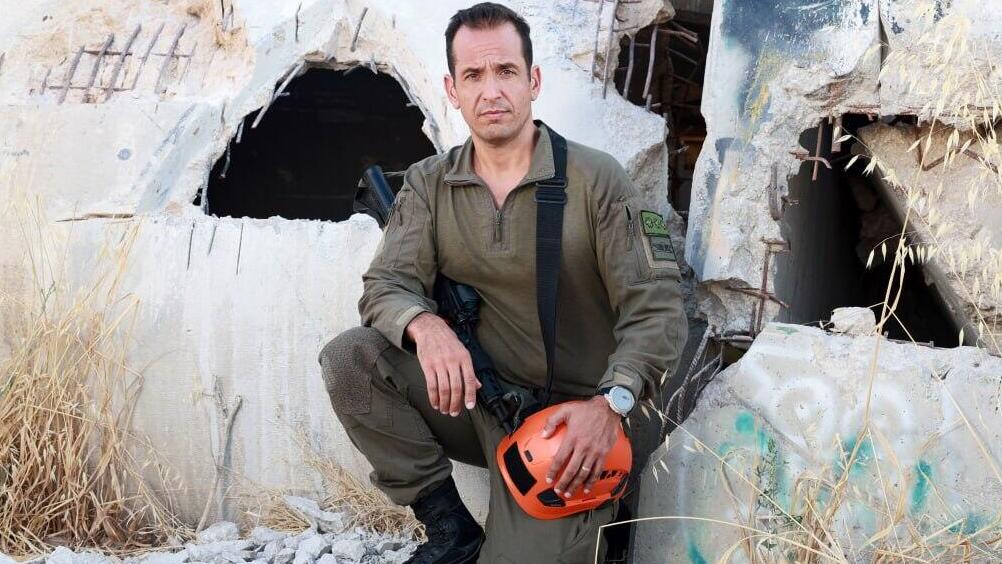
Col. Shlomi Ben Yair, commander of the Home Front Command’s Rescue Brigade
(Photo: Dana Kopel)
His father, who lives in the United States, had come especially for the event.
“Then, at around 5 p.m., a senior officer from Southern Command called me,” said Col. Shlomi Ben Yair, who completed his term as commander of the Rescue Brigade last week.
“He told me, ‘Listen, we have an extremely complicated incident in Khan Younis. A building collapsed because of an explosive device and one of the soldiers cannot be found. He is probably buried under the rubble.
“‘I’m sending helicopters, and I need you to come with reinforcements. Bring one of your battalion commanders as well because this is the leading edge of the maneuver and there are no forces farther forward. We need strong command and control.’”
Ben Yair immediately mobilized the brigade’s reconnaissance unit and a squad commanders’ course, informed the Home Front Command chief’s aide that he would not attend the awards ceremony and left his office for the helicopter landing pad.
During Operation Rising Lion: Rescue Brigade soldiers at the missile impact site in Bat Yam
(Video: IDF)


“On the way, I met one of the lieutenant colonels and told him, ‘I’m flying to a rescue operation in Khan Younis. You give Ido his rank,’” he recalled.
When Ben Yair reached the landing pad, Lt. Col. Yarden Shukron, then commander of the Home Front Command school, was already waiting. She had also volunteered to join the mission.
“I told her, ‘Attach someone to me. I arrived without a command post,’” Ben Yair said.
“An officer came over wearing a vest and helmet and said, ‘Hello, I’m Ido, and I’m attached to you.’
“I looked at him and saw that it was the officer whose rank I was supposed to award that evening.
“I said, ‘What are you doing here? You’re receiving a promotion and an award tonight. Your father came from the United States.’
“He told me, ‘Give me the rank in Khan Younis,’ and boarded the helicopter with me.”
They landed near the Gaza border and continued with forces from the IDF’s 98th Division to the disaster site in central Khan Younis.
A force from one of the Rescue Brigade’s battalions, operating under the division as part of the ground maneuver, was already working at the scene.
Ben Yair assumed command and led the complex recovery effort.
Home Front Command forces operating during Operation Roaring Lion
(Video: IDF)
“We were in a combat zone. This was not the site of a missile strike in central Israel,” he said.
“We could not turn on floodlights because we would have been identified. We worked with night-vision equipment, used flashlights with red filters and covered openings in the remaining walls with blankets.
“This was not a simple rescue where you say, ‘Someone is here, lift the metal and pull him out.’ It was genuine surgical work.
“And I looked at our male and female soldiers inside enemy territory and felt incredibly proud of them.”
After hours of work, the body of a Golani Brigade soldier killed in the explosion was found beneath the rubble and brought back to Israel for burial.
‘They held his hand for almost two hours’
Several weeks later, on June 15, 2025, during Operation Rising Lion, an Iranian missile struck Rehovot, the city where Ben Yair lives.
“In one of the apartments that was hit, there was a Holocaust survivor in his 80s trapped beneath the rubble,” he said.
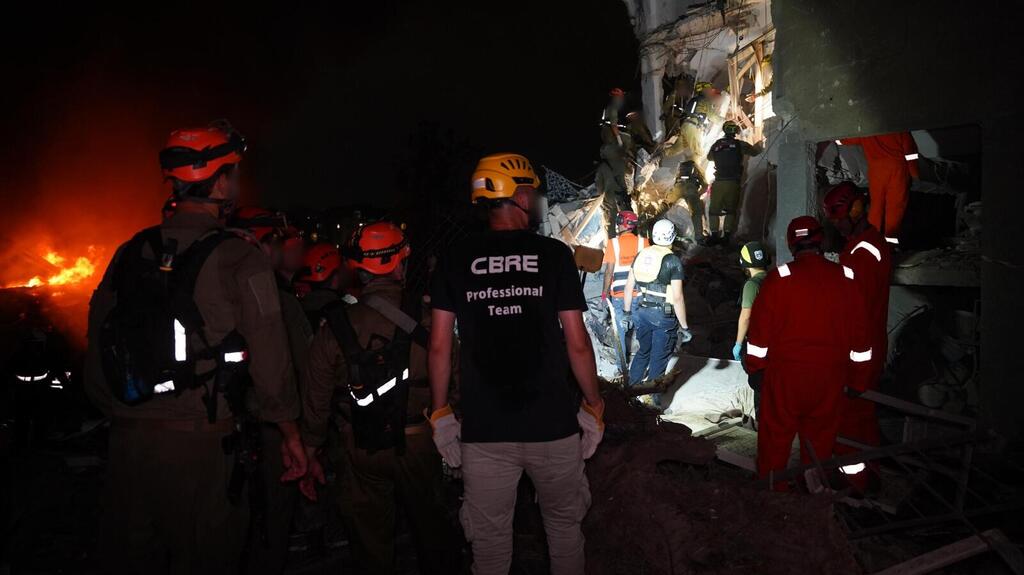
Home Front Command forces operate at the missile impact site in Rehovot
(Photo: IDF)
“I was there as brigade commander, but the actual rescue was led by the deputy commander of one of my battalions together with a company commander, two reservists from the Home Front Command’s national search-and-rescue unit and a doctor.
“They worked for almost two hours to rescue him, and throughout the operation they held his hand.
“They got him out alive.”
Some time later, Ben Yair received a message from the man’s son.
“He wrote, ‘Tell everyone that you have heroic soldiers. My father said that while he was trapped under the rubble, he thought he would have preferred to die immediately in the strike rather than suffer.
“‘Only when he heard the voices of your angels arriving did he understand that he wanted to live. That gave him hope.’”
Ben Yair read the message aloud at the Rescue Brigade’s change-of-command ceremony last Tuesday.
Shortly afterward, he flew abroad with his wife, Mor, and their three children, a 13-year-old and 6-year-old twins, for 18 months of study at a foreign military national defense college.
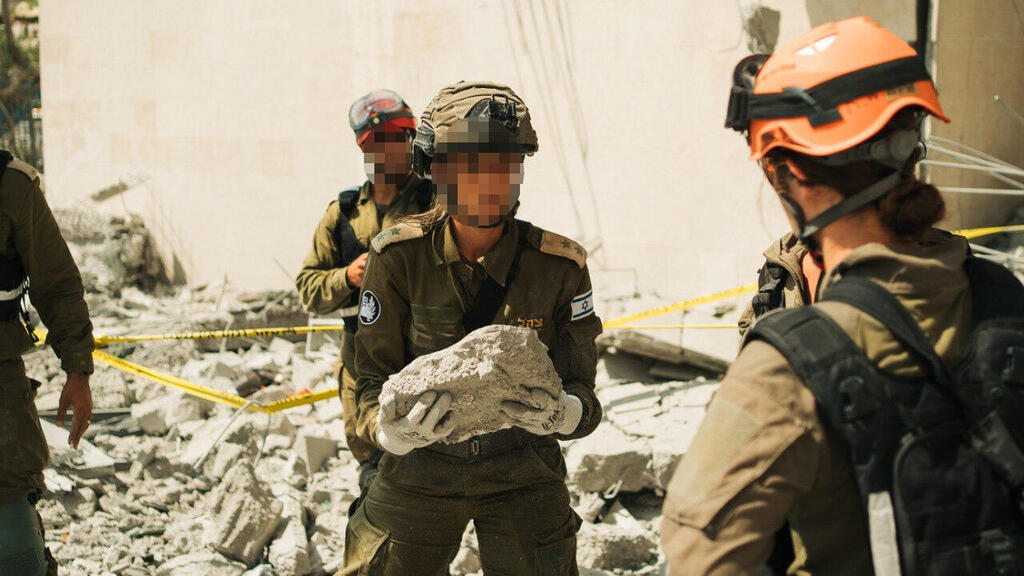
Rescue Brigade soldiers at the site of a direct hit by an Iranian missile in Beersheba
(Photo: IDF)
Two helmets
The stories from Khan Younis and Rehovot represent the Rescue Brigade’s two roles, or more accurately, the two helmets worn by its personnel: the orange rescue helmet and the olive-colored infantry helmet.
The infantry helmet is worn by the brigade’s soldiers, around 60% of whom are women, during operations in Gaza and Lebanon and during deployments in the West Bank.
“Only yesterday, my reconnaissance unit was in Lebanon as part of an operation by the 36th Division that I cannot discuss,” Ben Yair said.
“I will never forget the first time one of our teams crossed the international border during the first round of fighting with Hezbollah. I joined them as brigade commander.”
The rescue helmet was worn at missile impact sites during both rounds of fighting with Iran, Operation Rising Lion and Operation Roaring Lion.
Ben Yair remembers the first night of Iranian missile fire during Rising Lion in precise detail.
“The first incident was on Tirtza Street in Ramat Gan,” he said.
“I had a Rescue Brigade battalion there operating under the Tel Aviv District.
“It was unlike anything we had seen before.
“During Operation Shield and Arrow, six months before October 7, a Hamas rocket struck a building in Rehovot. At the time, I commanded the Home Front Command’s Jerusalem and Central District.
“It was a serious incident, with one person killed and quite a few wounded. But the damage was localized.
“You are given an address, you arrive and see the building that was hit, while the surrounding buildings are almost intact.”
The scene in Ramat Gan was entirely different.
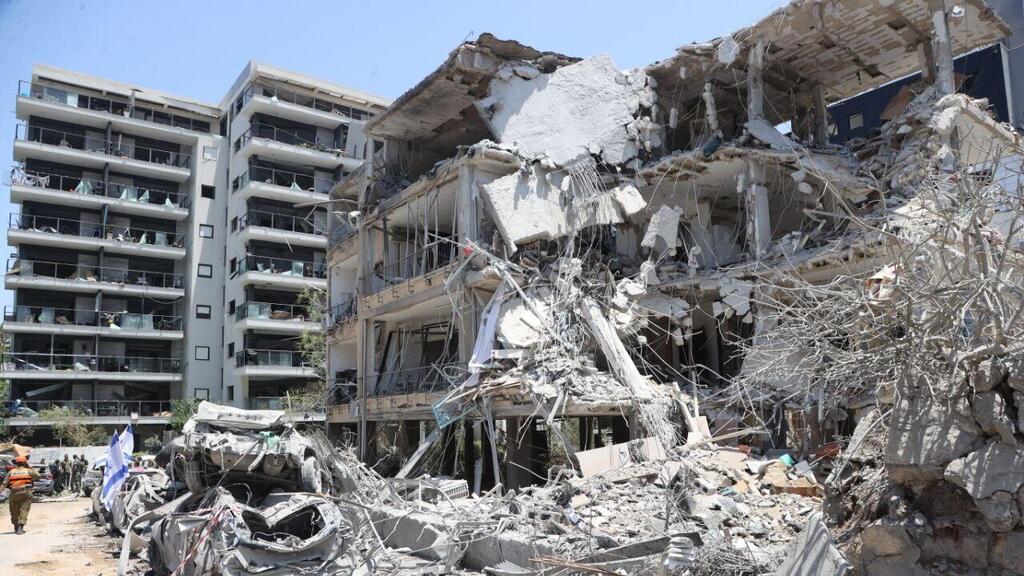
The morning after the Ramat Gan strike at the start of Operation Rising Lion. 'We evacuated residents from homes within a 300-meter radius'
(צילום: מוטי קמחי)
“As I began approaching the site, I saw many broken shutters and walls with holes,” Ben Yair said.
“I told my driver, ‘Stop. This is the incident.’
“The battalion commander told me on the phone, ‘No, keep driving. You are still far from the impact site.’
“We drove another few hundred meters and saw half-destroyed buildings. I said, ‘All right, the missile hit here.’
“It turned out that it had not. We still had not arrived.
“That is when you understand the surrounding damage. It was like an earthquake.
“We evacuated residents from homes within a 300-meter radius of the impact point.
“A missile like that hits and tears apart everything around it.”
While dealing with the Ramat Gan strike, Ben Yair received a report that another missile had hit a residential high-rise on Leonardo da Vinci Street in Tel Aviv.
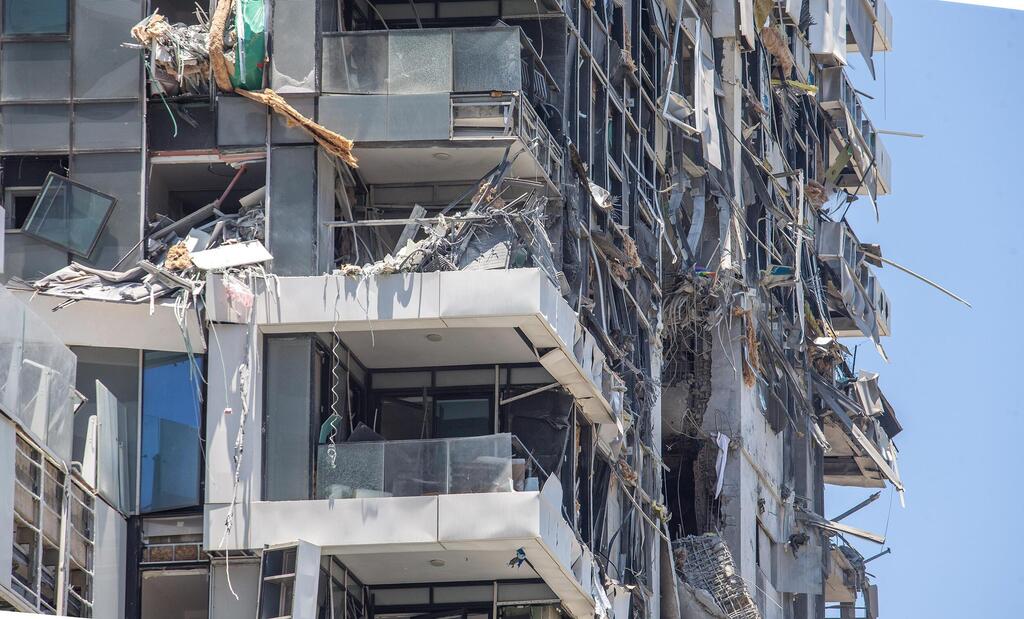
The Iranian missile strike on the Da Vinci Towers in Tel Aviv
(Photo: Ido Erez)
“At neither that site nor Ramat Gan was I the commander of the overall incident,” he explained.
“Each scene had a district commander from the Tel Aviv District responsible for that sector.
“But one of my battalions was present at each location.
“So I assisted the district commander and battalion commander in any way I could, participated in their situation assessments, went inside with them and also personally rescued people.
“At the da Vinci site, we climbed on foot to the 44th floor, broke through doors and rescued people from protected rooms.”
Building the ‘669 of the ground’
Ben Yair, 43, held every command position in the Home Front Command’s regular rescue companies, even before the brigade was created and before the first battalion was established.
“I enlisted in 2001 in the Combat Engineering Corps, Battalion 605,” he said.
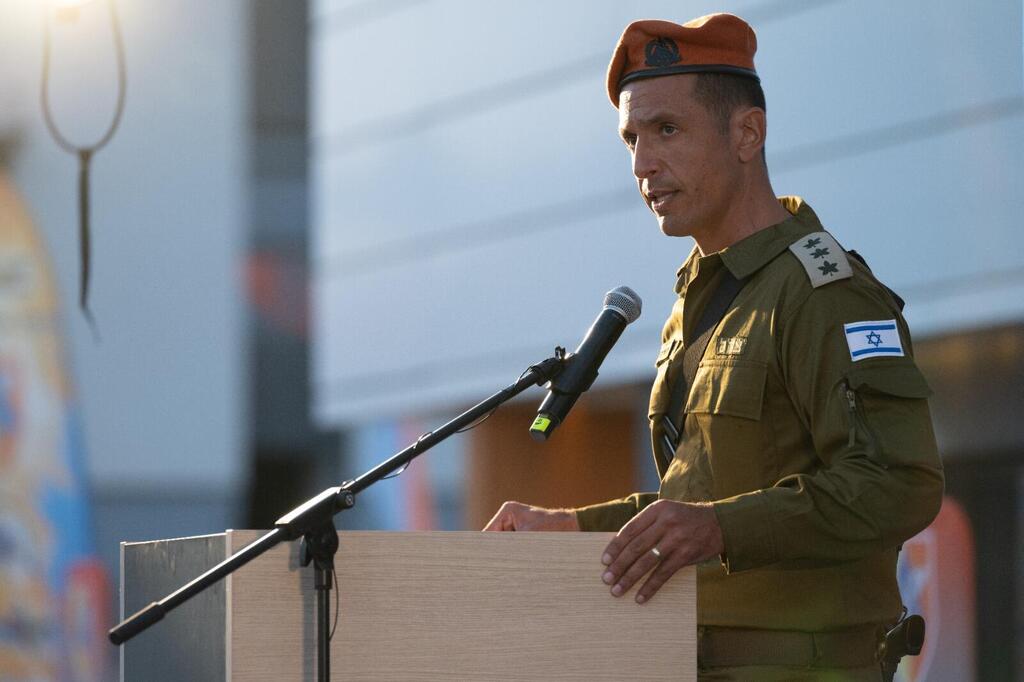
Col. Ben Yair: 'I’m the brigade’s longest-serving member. Even the senior NCOs were once my recruits'
(Photo: IDF)
“I completed my first position as a platoon commander, and then they called many of us, commanders from combat units, and told us, ‘We are establishing the 669 of the ground. A rescue commando unit. We want you in the new unit.’
“Everyone was excited.
“But two hours later, when they realized it belonged to the Home Front Command, almost everyone ran away.
“Only a handful remained who were genuinely interested, and I was one of them.”
Ben Yair became a platoon commander in the Home Front Command’s first regular rescue company.
“I was the only one who came from Combat Engineering,” he said.
“I had two squad commanders who came from Golani. They were troublemakers.
“On the train home, they would take off the orange beret and put on Golani’s brown beret.”
Two additional regular rescue companies were later established.
Only in 2008 did then-Home Front Command chief Yair Golan decide to turn them into a battalion.

Home Front Command forces during Operation Rising Lion. 'Before this, we had no local incidents to draw on. That changed'
(Photo: IDF)
Ben Yair, who had already completed a term as company commander, was appointed operations officer of the first regular battalion, Shahar.
“After that, three more battalions were established: Kedem, Tavor and Ram,” he said.
“About a year ago, we began forming the fifth regular battalion, Ari.”
In his next role, as head of the rescue section at the Home Front Command training base, Ben Yair joined the IDF aid delegation sent to Haiti following the devastating earthquake that killed nearly a quarter of a million people.
“It was an event unlike anything before it, and I hope there will never be anything like it again,” he said.
A major earthquake could also happen in Israel. How are you preparing?
“I grew up in Safed, the epicenter of the major 1927 earthquake, and they say an event like that can occur once every 100 years,” Ben Yair said.
“After the earthquake in Turkey in February 2023, a delegation of senior officers traveled there for a study tour.
“I was already a district commander at the time.
“The Home Front Command chief, who was with us, said, ‘Friends, this is not missiles. This is something completely different.’
“Anyone who has participated in Home Front Command aid delegations abroad, and I have taken part in several, understands the meaning.
“I do not think any country is genuinely prepared for an earthquake on the scale of Haiti or Turkey.
“But the Home Front Command and the local authorities deal with it extensively. We train and prepare as much as possible.”
Ben Yair continued advancing through the ranks and positions: deputy commander of the brigade training base, commander of the advanced training program, deputy commander and later commander of Ram Battalion, and commander of the training base at Zikim.
“As battalion commander, we spent almost two consecutive years on operational deployment in the West Bank,” he said.
Between assignments, he completed a bachelor’s degree and attended the IDF Command and Staff College.
In 2021, during the COVID-19 pandemic, he was appointed commander of the Home Front Command’s Jerusalem and Central District.
As district commander, he was also responsible for the Independence Day torch-lighting ceremony at Mount Herzl and other official military ceremonies held in the capital.
“That was the first position that took me completely outside the Rescue Brigade,” he said.
“My entire service had been in the brigade’s battalions, even before the brigade itself was established in 2013.
“I am the most veteran person here. Even the senior noncommissioned officers were once my recruits.”
‘Dude, there are terrorists at Zikim’
In September 2023, Ben Yair was appointed operations officer of the Home Front Command.
One month later came the earthquake no one had anticipated: the October 7 attack.
“As operations officer, you are responsible for all force activation in the command, as well as the warning operations room,” he said.
“So at 6:29 a.m., I began receiving alerts from across the country.
“I left home, arrived at the operations room and began mobilizing the command.
“Maj. Gen. Rafi Milo also arrived, and we tried to build a situational picture.
“From the home-front perspective, our central concern during those hours was rocket fire from Gaza.”
Videos of terrorists in the Gaza border communities began appearing.
“But there was Southern Command and the Gaza Division, which were supposed to deal with that,” he said.
“Then we began receiving phone calls from the training base at Zikim and the Southern District headquarters at Urim, both of which are our bases, and we understood that terrorists were attacking them.”
Although both belonged to the Home Front Command, they were located in the Gaza Division’s area of responsibility.
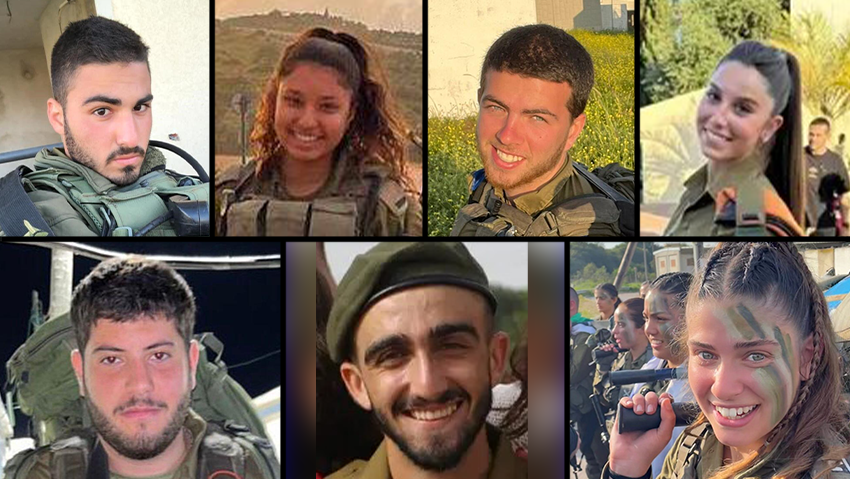
Top row: Adir Meir Abudi, Or Moses, Yannai Kaminka and Adar Ben Simon; bottom row, left to right: Omri Niv Firshtein, Neria Aharon Nagari and Eden Alon Levy
(Photo: IDF)
“I called Southern Command operations officer Efraim Avni and said, ‘Brother, there are terrorists at Zikim. Can you send reinforcements?’
“He told me, ‘Listen, right now we are dealing only with the communities. Do not talk to me about military bases.’”
Heroic battles were fought at both bases.
Seven Home Front Command soldiers were killed at each site, 14 in total.
“A year later, when I became Rescue and Training Brigade commander, I was responsible for investigating the battle at Zikim Camp,” Ben Yair said.
“Reinforcements eventually arrived, but only at a later stage.
“The people who managed to stop the two Nukhba platoons that raided the base were members of the Rescue and Training Brigade, male and female commanders who fought until their final bullet.”
Six of the seven people killed in the battle were commanders.
They were company commander Maj. Adir Meir Abudi; deputy company commander Capt. Or Moses; platoon commanders Lt. Yannai Kaminka and Lt. Adar Ben Simon; recruit squad commander Staff Sgt. Eden Alon Levy; command-post soldier Staff Sgt. Omri Niv Firshtein; and recruit Neria Aharon Nagari, who also fought courageously.
“Each one of them has a story you could discuss for hours,” Ben Yair said.
“It begins with Adir, the company commander, sending an order on WhatsApp: ‘All recruits back, commanders forward.’
“That is what decided the battle.
“You hear Or Moses giving orders over the radio after he was killed. It was like Avigdor Kahalani’s radio commands during the Yom Kippur War.
“The two platoon commanders ran between the positions, pushed the soldiers back and took their places.
“Adar fought there for hours until she was killed.
“Omri Niv, a 20-year-old kid, saw his friend Noa Ze’evi get shot in the eye, ran toward her to save her and was killed.”
Despite the heavy price, Ben Yair said, they completed their mission.
“Only one terrorist out of dozens managed to enter the base, and he was also killed. All the others fled or were killed.
“As a senior IDF officer, I am ashamed of the October 7 failure.
“But as commander of the Rescue and Training Brigade, I am proud of these heroes, even though I had not yet entered the position.
“They are an inseparable part of the brigade’s heritage.
“Each march in the training track is dedicated to one of those killed in the battle at Zikim.”
A poster bearing their photographs hangs on the wall at the entrance to Ben Yair’s office in Ramla.
Beneath it is an empty bag of Tapuchips bearing an image of a female officer in a combat vest, holding a weapon and wearing an orange beret.
“In memory of Capt. Or Moses, who fought heroically while defending her soldiers at the Zikim base on October 7, 2023,” reads the white lettering on the special-edition potato-chip bag.
Yanai Kaminka’s family and friends commemorated him with individual packages of Elite black coffee bearing his photograph and a summary of his heroism.
“Yanai would walk around the guard posts and make coffee for his soldiers,” Ben Yair said.
“I had perhaps 300 such packages here in the office.
“Every time someone came for an interview or work meeting, I would take out a packet, make coffee and say a few words about Yanai.
“It is a shame. I would have made you one, but they are all gone.”
A turning point for the brigade
In August 2024, Ben Yair completed his term as Home Front Command operations officer and became commander of the Rescue and Training Brigade.
With his departure, the unit is being divided into two: the Rescue Brigade, commanded by Col. Asher Benishti, and the Training Brigade, commanded by Col. Yarden Shukron.
(Photo: IDF)
“During my two years as brigade commander, I had nine units under my command, more than any regular brigade,” Ben Yair said.
They included five operational battalions, Shahar, Kedem, Ram, Tavor and Ari; the training base at Zikim, which conducts basic, initial and advanced training and also serves as an operational battalion; the Home Front Command school in Ramla, responsible for squad commanders’ courses, officers’ course completion programs and rescue instructor courses; the command training base at Zikim, which trains all Home Front Command reserve battalions; the Matakhim Unit, responsible for securing the Nuclear Research Center in Dimona; and another classified unit.
“I had 10 lieutenant colonels under me, including the deputy brigade commander,” he said.
“It is tremendous fun commanding so many people.
“But in a position paper I submitted to the commanding general, I proposed creating a separate training organization.
“Now I am transferring the Home Front Command school and command training base to Yarden. They will no longer be part of the Rescue Brigade.”
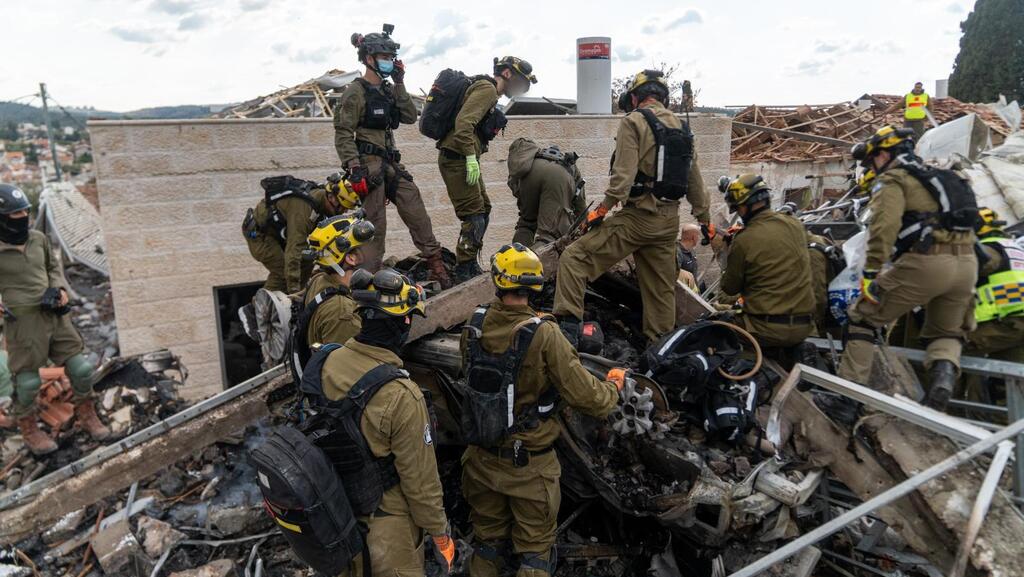
The Swords of Iron War, Ben Yair said, was the first in which Rescue Brigade battalions participated fully in ground maneuvers in Gaza and Lebanon.
“Every maneuvering division had one of our battalions entering with it, going out on missions and participating in operations,” he said.
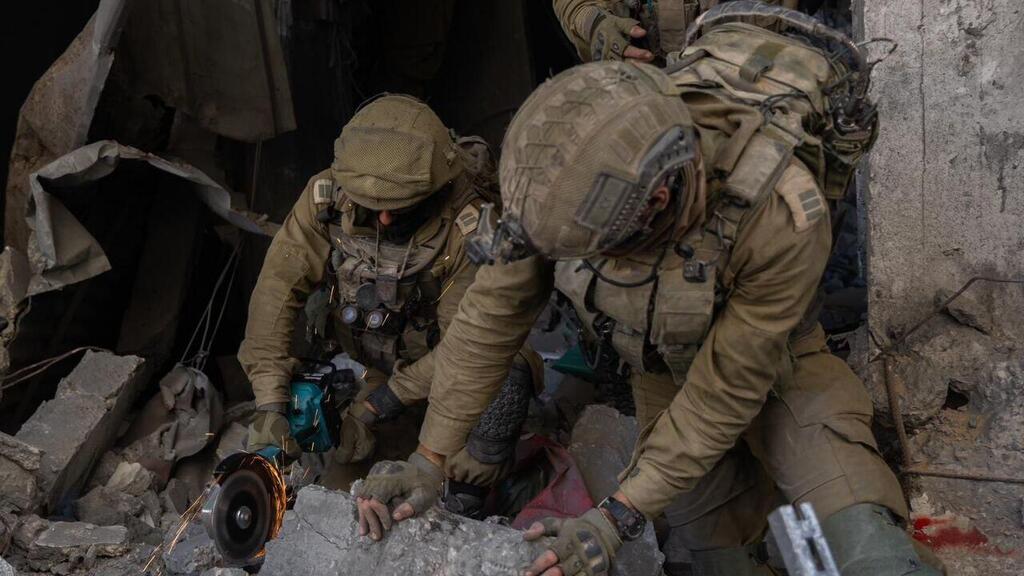
“Kedem Battalion was sent to dismantle Shifa Hospital in Gaza because they knew we would have to break through concrete walls and locked doors and expose tunnels while trying to locate hostages.
“Shahar Battalion, commanded by Yarden, entered as an infantry force under the 162nd Division.
“It fought on the way to the objective, killed terrorists and then carried out its specialized mission.
“And I remind you that these are mixed battalions of men and women.”
(Photo: IDF)
The brigade once maintained an “extreme team” in every rescue battalion for extraction incidents during a maneuver.
“Today, the rescue battalions are an inseparable part of the maneuvering divisions,” Ben Yair said.
“I was at a difficult incident in Lebanon involving a dead soldier trapped beneath 60 tons of concrete.
“The battalion engineer and I tried to understand how to extract him.
“It was the most surgical rescue possible, with gunfire and shelling all around us.
“We got him out intact.
“One day, several couples who are friends met, and a woman asked whether I knew soldiers from Golani.
“I asked whom she meant. She gave me the name of a relative who had been killed in a building collapse.
“I got chills. I had been part of his recovery.”
Whether in Gaza, Lebanon, Bat Yam or Ramat Gan, the Rescue Brigade’s central mission is saving lives.
“As we sit here talking, I have two active-duty female officers and four reserve officers with the aid delegation responding to the earthquake in Venezuela,” Ben Yair said.
“When Operation Rising Lion began, all my battalions were replaced in their combat sectors within a minute and a half and returned to the home front.
“By Operation Roaring Lion we arrived with enormous experience and five battalions, each assigned to one of the Home Front Command districts.
“Until recently, when teaching a rescue soldier in training, you would say, ‘During the Haiti earthquake, we did this. In Turkey, we saw that. This commander was in Mexico, that commander was in Nepal.’
“We had no local incidents on which to base the training.
“That changed during Roaring Lion.
“The Home Front Command underwent an extraordinary learning process that was reflected during Roaring Lion.”
At the missile impact site in Beit Shemesh during Rising Lion, where eight civilians were killed, Ben Yair sent the officers’ course, around 60 soldiers.
“I told them, ‘Help with whatever is needed, do not interfere and afterward each of you will tell your soldiers the story of Beit Shemesh,’” he said.
“At one stage, the district commander responsible for the site asked them to help locate body parts, and they did extraordinary work.”
On Saturday night, March 21, 2026, two Iranian missiles struck Dimona and Arad, causing enormous damage.
Fortunately, no one was killed.
“Ram Battalion handled both incidents,” Ben Yair said.
“Two days earlier, on Thursday, I visited their companies in Arad and Dimona.
“The soldiers were frustrated because nothing had happened there since the operation began.
“In the end, they want to be in the action.
“I told them, ‘Listen carefully. You are in an area under a lethal threat. It is simply well protected, but sooner or later something will happen here.’
“On Saturday night, when the missiles hit Arad and Dimona, I flew there by helicopter with reinforcements.
“One of the soldiers in the field, who had been with me during the conversation two days earlier, told me, ‘Brigade commander, you gave us the evil eye. You said something would happen here, and it did.’”
In all the cases you described, your battalions operated under the Home Front Command districts, even when you were present in the field. Were there incidents you commanded directly as brigade commander?
“There is a scenario in which I, as brigade commander, assume command of an area struck by a missile with a regular battalion and a reserve battalion, similar to a brigade combat team during a ground maneuver,” Ben Yair said.
“We practiced it several times.
“At the missile impact site on Leonardo da Vinci Street in Tel Aviv, they almost activated us as a brigade headquarters, but ultimately there was no need.
“I prepare the battalions, train them, send them wherever they are needed and remain with them at the incident site, even when I am not its commander.”
Alongside their life-saving missions on the front and home front, Ben Yair is proud of the brigade’s work in the West Bank.
“We are now operating in places we did not enter before,” he said.
“We go inside refugee camps and participate in special operations alongside Yamam or Duvdevan.
“There is no brigade-level operation in the West Bank today in which my battalions do not participate as full infantry forces.
“The West Bank Division fights to get us.
“It is like the old Kfir Brigade.
“Today, when Kfir is maneuvering, we do their work.”
The next stop
We met one day before Ben Yair completed his command.
Until the last moment, however, he did not know whether the change-of-command ceremony would take place as scheduled or be delayed because of tensions with Iran and fears that fighting might resume.
Ultimately, it was not postponed.
“Before you arrived, I was sitting here for a briefing with my battalion commanders,” he said.
“Last night, at a farewell event, they laughed that every Trump post activates my brigade.
“They told me, ‘At the moment, the change-of-command ceremony is taking place as planned.’
“The emphasis was on ‘at the moment.’”
The ceremony did take place.
Several days later, the Ben Yair family boarded the plane.
I asked what he would do if fighting with Iran resumed while he was studying abroad.
Ben Yair did not hesitate.
“I will take the first flight back to Israel.”