

In the winter of 1949, deep inside a frozen Norwegian forest, an 11-year-old Jewish boy found himself alone in the world. Around him lay the wreckage of a shattered airplane. Nearby were bodies, debris and silence. This is the story of Yitzhak Elal, the sole survivor of what became known as the Oslo children’s air disaster, a child who endured the crash, refused an offer of adoption from the king of Norway and ultimately reached Israel to fulfill his Zionist dream.
The journey that became a nightmare began months earlier. In 1949, shortly after the end of Israel’s War of Independence, the young state was struggling to absorb waves of new immigrants. As part of a partnership between the Joint Distribution Committee and Norway’s welfare ministry, it was agreed that 200 Jewish children from low-income families in North Africa would be sent to a recovery camp in Norway.
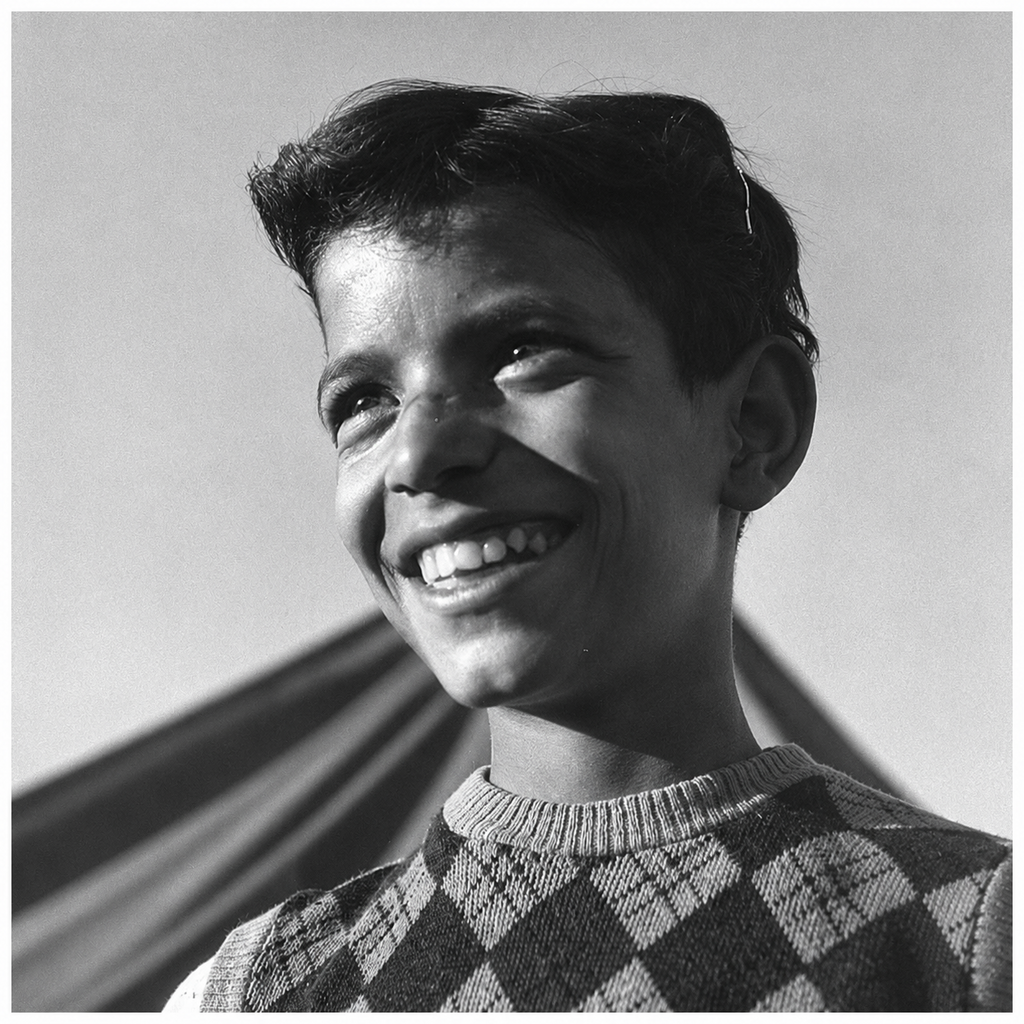
The aim was to help the children recover and regain their strength in better conditions, while preparing them for Zionist life before their eventual immigration to Israel.
After a first group of children from Morocco completed the program and successfully immigrated to Israel with their families, a second group, made up of children from Tunisia, set out in November 1949.
On November 20, two Dakota aircraft operated by Aero Holland took off from Tunisia. The first plane landed safely in Oslo. The second suffered a radio malfunction and was forced to land in Brussels for repairs.
The plane took off again at 12:56 p.m., but as it approached Oslo it encountered heavy fog. Because of inaccurate maps and mistaken instructions from the control tower, the pilot descended over mountainous terrain. One of the plane’s wings struck the treetops near Hurum, south of Oslo.
The aircraft crashed into the mountainside, flipped over and its fuel tanks burst into flames. Twenty-seven children, three escorts and four crew members were killed. Among the dead were Elal’s sister and two of his brothers, including his 8-year-old brother Daniel.
A flame of life amid death
The force of the crash tore the tail section away from the body of the aircraft, and it too caught fire. Elal remained in that rear section, strapped tightly to his seat by his seat belt. Miraculously, the flames that engulfed the tail did not reach him.
Outside, the weather was freezing and stormy. But inside the wreckage, another miracle unfolded: the fire burning in the plane’s tail did not go out. It continued to warm Elal for days, saving him from certain death in the Norwegian snow.
He survived alone in the forest for three days and three nights. He lived mainly on apples, some given to him by his mother before takeoff and others found in the food bags of children who had been killed in the crash.
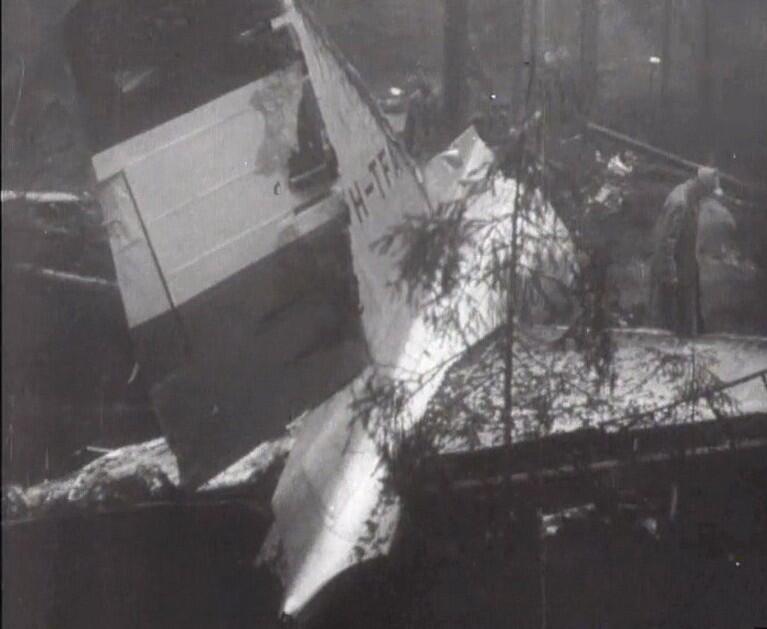
The tail section of the plane after the crash
(Photo: Polygoon Hollands Nieuws)
Only on the third day did two Norwegian foresters searching the woods hear faint cries coming from the wreckage. They pulled Elal out alive, wounded and trembling. That was the moment he learned he was the only survivor.
The king of Norway and the boy who wanted to become a pilot
News of the plane disaster, and of the one child who had survived it, shook Norway and plunged the country into mourning. Norway’s king was moved to tears by Elal’s story, sent him gifts and even asked to adopt him.
But the young Elal showed extraordinary resolve. He politely declined the king’s offer and sent him a moving letter. “My dear king,” he wrote, “I must tell you that I have reached my country, Israel. Norway was very kind and the people were friendly to me... I want to be a pilot, and when I grow up I will come to Norway in my airplane.”
The bodies of the children killed in the crash were flown back for burial in Tunisia, where mass funerals were held with thousands of Jews and Muslims in attendance.
In April 1950, after a period of preparation in Norway, Elal immigrated to Israel aboard the ship Kedma and reunited with his parents.
As a gesture of solidarity and support for the families affected by the disaster, the chairman of Norway’s Labor Party launched a fundraising campaign that collected donations for dozens of Norwegian wooden cabins. Those cabins were used to establish Moshav Yanuv in the Sharon region. Elal and his family settled there, and the family’s original cabin still serves today as the moshav’s Beit Rishonim museum.
In tribute to his dream of taking to the skies, and to the letter he wrote to Norway’s king, Elal later changed his surname from Elal to El-Al.
Although his dream of becoming a pilot was never fulfilled, Elal built a full and meaningful life in Israel. He worked as a farmer and served for many years as a prison guard in the Israel Prison Service. He married Liliane, and the couple had six children.
On February 14, 1987, Yitzhak El-Al died of cancer. He was 48.