

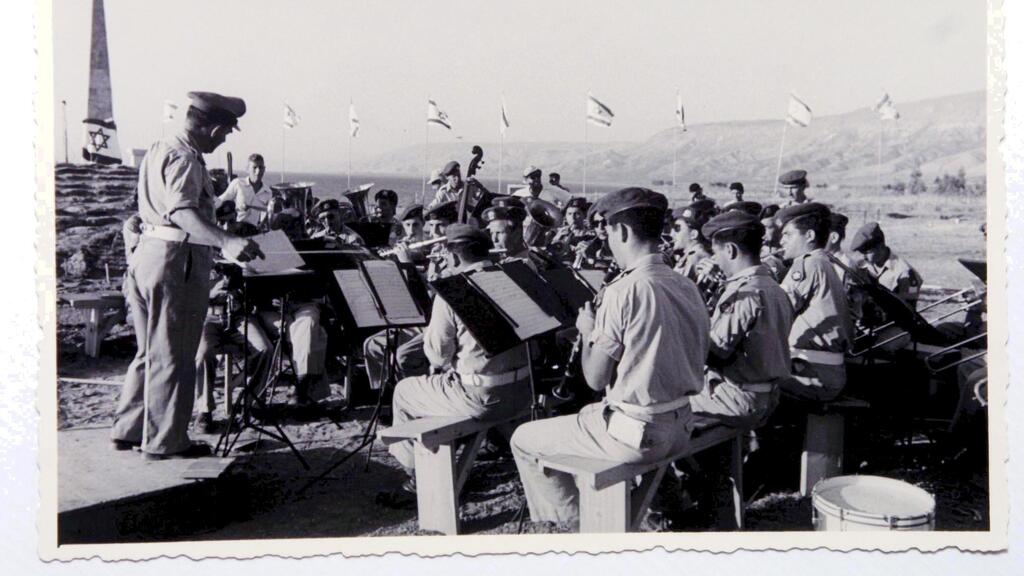
On July 29, 1954, thousands gathered at Kibbutz Ma’agan on the shore of the Sea of Galilee for a ceremony honoring Peretz Goldstein and the Jewish paratroopers who had volunteered for missions in Nazi-occupied Europe during World War II.
Within moments, the memorial became one of the deadliest aviation disasters in Israel’s history.
A light aircraft lost control above the crowd, skimmed over the first rows of dignitaries and crashed into the spectators behind them. Seventeen people were killed and 25 were wounded.
Among the dead were four of the very paratroopers whose courage the ceremony was meant to commemorate. They had survived dangerous missions in wartime Europe, only to be killed at a memorial for their fallen comrades.
The state ceremony was organized to honor the Jewish paratroopers from Mandatory Palestine who had volunteered to enter occupied Europe and assist Jews living under Nazi rule.
It was held on the same day as the cornerstone-laying ceremony for Yad Vashem in Jerusalem. Israel’s president canceled his participation at Ma’agan at the last moment and attended the Jerusalem event instead. A congratulatory letter was sent in his place and was to be presented during the ceremony.
Organizers initially asked the IDF to conduct a flyover, but the request was denied. They then accepted an offer from the Aero Club of Israel to stage a civilian aerial display during which the president’s letter would be dropped to the crowd.
One of the participating aircraft was flown by Uri Galin.
Galin, a native of Moshav Ein Ganim and a former Palmach fighter, had volunteered for the IDF’s first pilot course but was reassigned as an aerial gunner. After leaving the military, he learned to fly in a civilian framework and was later called up as a reserve flight instructor, although he had never completed a military pilot course.
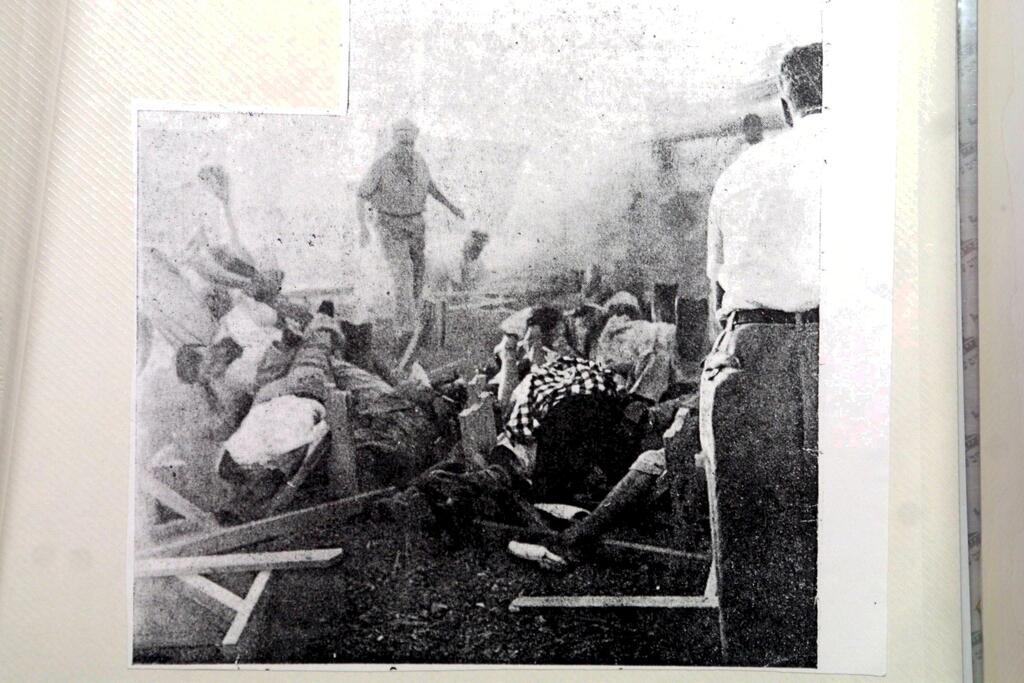
The Ma'agan disaster
(Reproduction photo: Yariv Katz)
Outside aviation, Galin was also a prominent athlete and Israel’s discus-throwing champion. In 1952, he represented the country at the Helsinki Olympics, Israel’s first appearance at the Games.
For years, it was also claimed that Galin inspired the protagonist of Esther Streit-Wurzel’s novel Uri, though the author denied it.
On the day of the disaster, Galin was flying a Piper Cub.
As he passed above the ceremony, he attempted to drop the letter, but it became caught on the aircraft’s left wheel. In an effort to free it, Galin handed the controls to Avshalom Strud, a photographer and secretary of the Aero Club who was sitting behind him and had no flying experience.
Galin leaned his upper body out of the cockpit and succeeded in releasing the letter.
But while he was doing so, the aircraft lost altitude and control.
It flew dangerously low over the participants and struck the commander of the honor guard, Lt. Simcha Levy, killing him. The plane then crashed into the crowd, with its engine and propeller still running and striking people in its path.
The aircraft passed over the first three rows, where Prime Minister Moshe Sharett, his wife, government ministers and senior military officers were seated. They escaped unharmed.
The plane then struck the rows behind them.
Among the 17 killed were four Jewish paratroopers: Dov Harari, Aryeh Orni-Fichman, Yehuda Achishar and Shalom Finzi.
All four had survived their wartime missions in Europe.
Also killed were Ofra and Daniel Sereni, the daughter-in-law and son of paratrooper Enzo Sereni, who had been captured by the Germans after parachuting into Italy and was murdered at Dachau concentration camp.
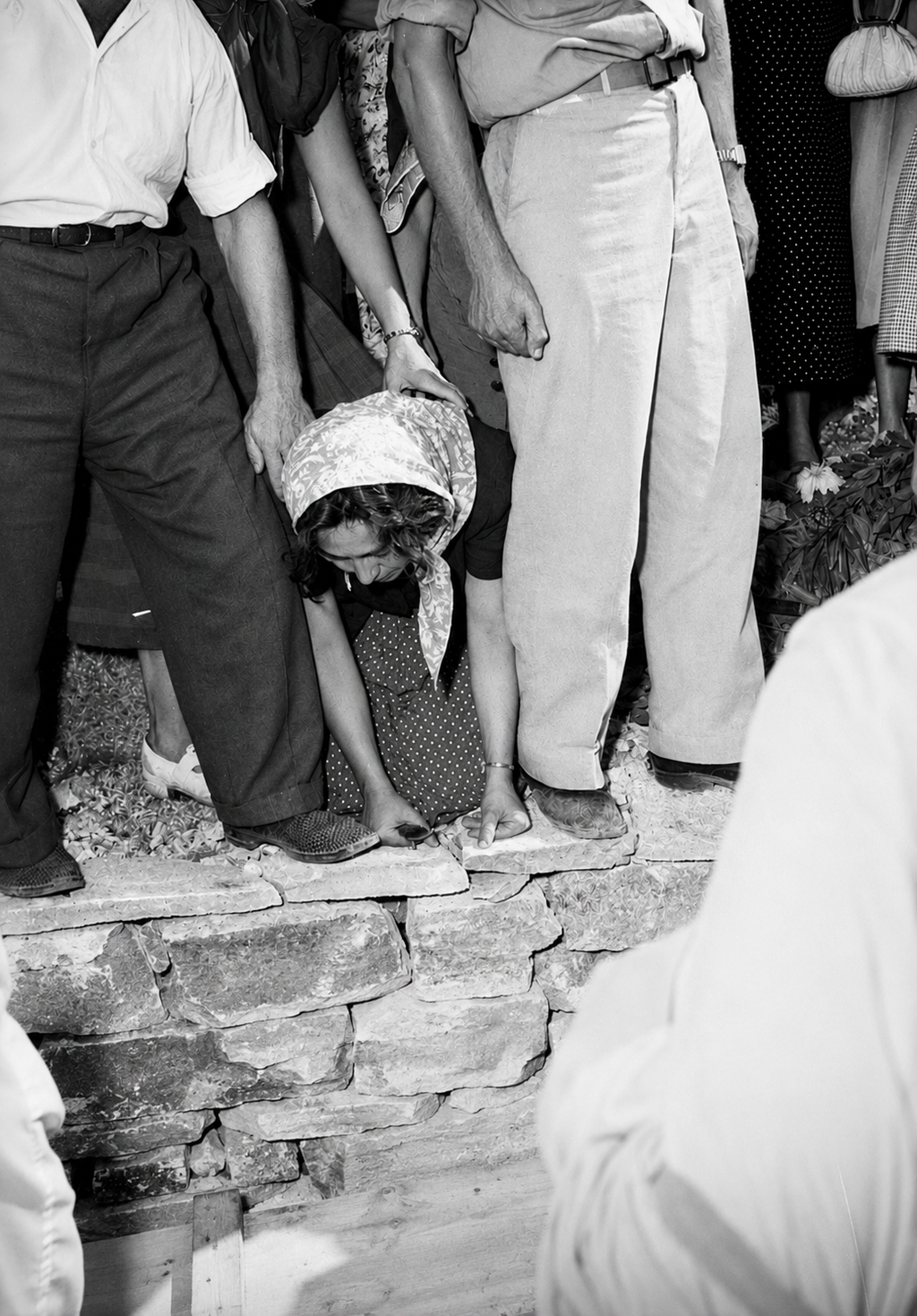
The funeral of one of the Ma’agan disaster victims
(Photo: David Rubinger)
A commission of inquiry later found that Galin had acted recklessly, and he was charged with causing death by negligence.
But because of the lack of evidence and on the judge’s recommendation, the attorney general ordered the trial canceled.
Years later, journalistic investigations published allegations that Aero Club officials had threatened witnesses in an effort to prevent Galin’s conviction.
After the disaster, Galin moved to the United States, completed a doctorate and became a professor of anatomy at the University of California, Berkeley.
When he returned to Israel, he helped establish the Technion’s medical school in Haifa and later headed the anatomy department at the Wingate Institute for 17 years.
In his later years, he volunteered as an environmental enforcement officer for the Environmental Protection Ministry. He issued more than 16,000 citations for pollution offenses, generating more than 2 million shekels for the Cleanliness Fund.
He died in 2021.
But the story of the Ma’agan disaster cannot be reduced to the life of the pilot.
A ceremony intended to honor people who had risked their lives in Europe became, in an instant, a catastrophe that killed four of them and 13 other participants.
Alongside the memory of those killed remain the questions about the decisions that allowed the flyover to take place, responsibility for the crash and the way the legal proceedings ended without a clear judicial conclusion.