

Exactly 44 years after I first climbed Beaufort during the First Lebanon War, I returned to the fortress, its imposing cliffs and the breathtaking view over the Litani, the Saluki and Nabatieh. This time, I walked across that combustible ground during a fragile ceasefire, alert to every sound.
Beaufort is part of my biography. Sometimes it recedes into the background; sometimes it returns with a sharp reminder. During the First Lebanon War, I was called up for reserve duty as an officer in the Military Police investigations unit. In June 1982, after 60 days of service, I set out with several of my soldiers for a trip through Lebanon.
Gallery
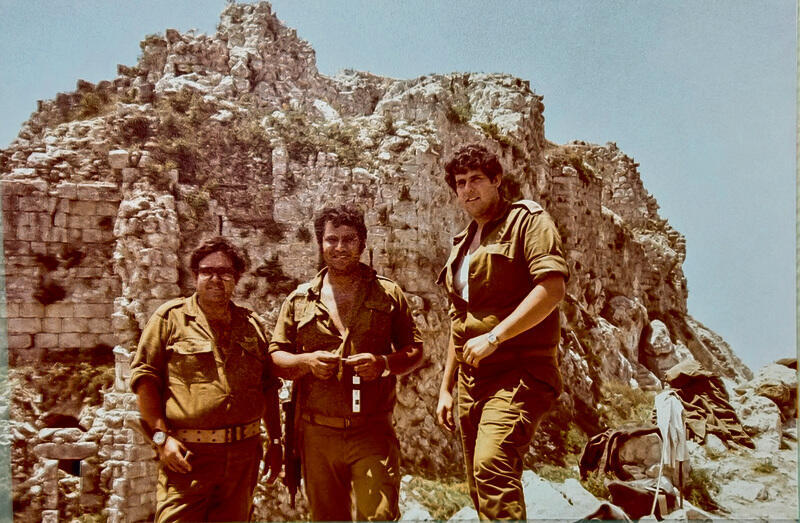
Eichenwald (right) with his friends, Sgt. First Class Yehoshua Zada and Sgt. First Class Yitzhak Gos at the Beaufort fortress, in 1982
“We have to get to Beaufort and see Lebanon and Israel from there,” I urged them as we climbed toward the Crusader fortress, 717 meters above sea level.
After marveling at a landscape that reminded us of Switzerland, I posed for a photograph with two fellow reservists, Sgt. First Class Yehoshua Zada and Sgt. First Class Yitzhak Gos.
About four months later, on the morning of November 11, 1982, they were killed along with 74 other soldiers beneath the ruins of the government building in Tyre where we served. A suicide bomber detonated a car bomb at the entrance and the entire building collapsed. I was among the few who survived. Who could have imagined that 44 years after that trip, I would find myself again in the Beaufort sector.
The threat outside the window in Metula
A week before the journey, I met Ephraim Sneh, who commanded the IDF’s South Lebanon Region in the early 1980s and knew southern Lebanon and Israel’s relationship with the Christian militias there intimately.
He had written a new book on the subject, From Sidon to Hermon, and asked me to read it. “We were wrong to rely on the Christians and Bashir Gemayel. We did not understand the map, and in practice we failed in Lebanon,” he concluded in the book.
After our meeting, he sent me a photograph of himself at Beaufort holding a Lebanese flag bearing his signature and that of Gen. Antoine Lahad, commander of the South Lebanon Army. “One day, when you capture Beaufort,” Sneh had told Lahad in 1980, when the fortress was still held by the PLO, “this is the flag I would like to see flying there.”
Sneh belongs to the generation before mine. When I left regular service in 1978, he was commander of Unit 669 and lived with his family in Metula. “Every morning, when I opened the window in my daughters’ room, I saw Beaufort,” he told me. “For years it was a symbol of the constant threat to our safety and our existence.”
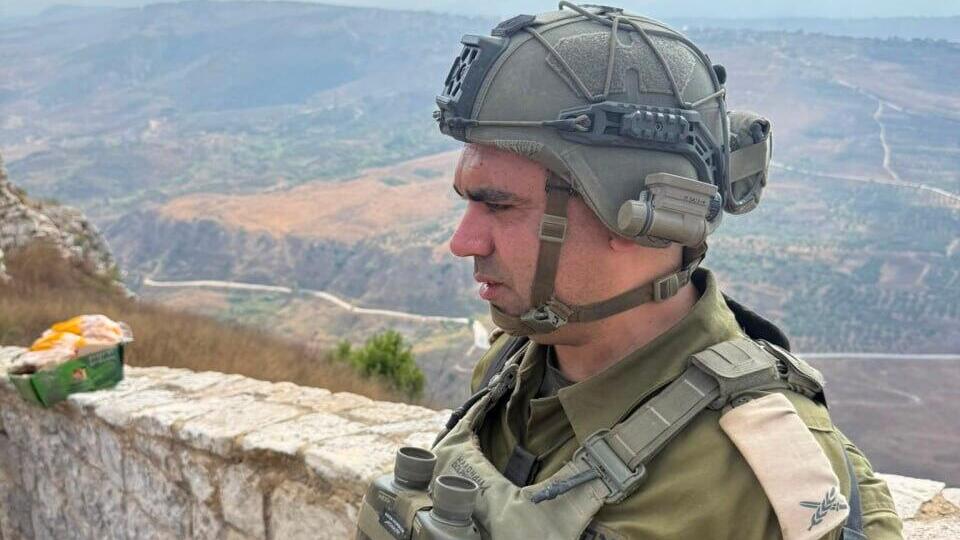
Brig. Gen. Yiftach Norkin
(Photo: Dov Eichenwald)
The fortress contains layer upon layer of Israeli history: Guni Harnik, commander of the Golani reconnaissance unit, who was killed with five of his men during its capture in the First Lebanon War after replacing the wounded Moshe Kaplinsky; Menachem Begin asking whether the enemy had machine guns; Ariel Sharon saying there had been no casualties in the battle; the Israeli flag raised over Beaufort after its capture.
It is also the story of soldiers spending their service in a fortified outpost buried deep underground, of troops fighting in the security zone to remove the threat from Metula and the Galilee Panhandle, many paying with their lives.
And it is the story of the helicopter disaster, in which 73 soldiers were killed on their way to outposts in southern Lebanon, including Beaufort, a tragedy that helped give rise to the Four Mothers movement demanding Israel’s withdrawal.
A commanding strategic position
When Beaufort returned to our lives once again, I knew I wanted to go back. People around me tried to convince me not to. You are 70. Calm down. It is dangerous. The area is full of Hezbollah terrorists and explosive drones. Why tempt fate? I insisted, and asked my friend Ron Ben-Yishai to join me.
At 4:30 in the morning, with the roads empty and the surrounding silence almost pastoral despite commentators warning of another confrontational weekend with Iran, I asked Ron what Beaufort meant to him.
“Beaufort has no emotional significance for me, even though I accompanied Ariel Sharon throughout the Lebanon War,” he said. “I did not fight there and I did not witness the battles at Beaufort. For me, it is a commanding strategic position.
“Even the PLO did not fortify Beaufort itself, but rather positions around it. The outpost and tunnels were built below it. Beaufort itself was always guarded. As its name suggests, ‘beautiful fortress,’ it really is a beautiful fortress overlooking a spectacular landscape.
“I am very curious about this visit, and above all I want to hear how they captured Beaufort, because Hezbollah is not the PLO and the battle was extremely challenging and difficult.”
But Beaufort is more than a point on a map. The experiences, trauma, psychological scars and families who lost loved ones all traveled with me.
When I told Maj. Gen. (res.) Moshe Kaplinsky about my planned visit, he replied immediately: “I envy you. I would very much like to reach the fortress, but unfortunately I am not permitted to go up there as a civilian. Beaufort is a piece of my life.”
Like so many others, Kaplinsky has his own Beaufort. Unlike Ron, who approached the place rationally, I was flooded with emotion.
Throughout the drive, I kept seeing the last photograph of myself with my two reserve comrades in 1982. Three young men, full of life and plans, unable to imagine the terrible event fate would bring only months later.
I asked myself why I felt such a need to return. It was clearly not about closure. For me, the circle is missing two of my friends, and therefore cannot close. If I ever reach Tyre and place flowers where they were killed in the bombing of the government building, perhaps that will be closure.
‘I want a battle with no casualties’
I never imagined I would return to Beaufort, certainly not accompanied by Brig. Gen. Yiftach Norkin, commander of the 36th Division, who led its capture in May 2026. I had learned that Norkin would join us while visiting Ramon Air Base and an F-16I squadron, together with former Air Force commander Maj. Gen. (res.) Amikam Norkin.
Surprised, I asked Amikam whether he was related to Yiftach. “Indeed. We are cousins,” he replied casually. Their fathers are brothers. Yiftach Norkin was born in Beit She’arim in January 1981, about a year and a half before the Lebanon War.
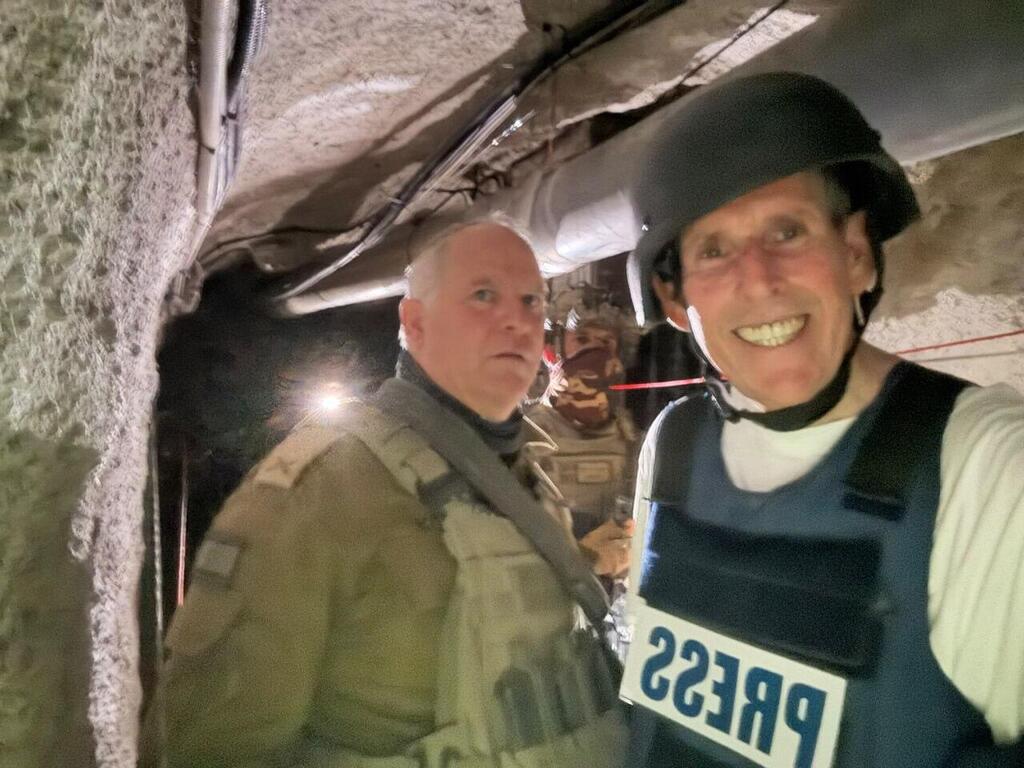
Eichenwald with Brig. Gen. (res.) Mordechai Kahana in Hezbollah’s strategic tunnels at Beaufort
(Photo: Dov Eichenwald)
We met at Mitzpe Bania near the Lebanese border and set out. Rather than breathing dust in open Humvees, we traveled in enclosed Hilux vehicles.
It took an hour and a half to cover roughly five kilometers through dense vegetation and winding tracks. As we climbed, the view became increasingly spectacular. The smell of war still hung in the air.
My memory of the road to Beaufort was a paved route that had taken me and my two soldiers through Tyre and Nabatieh. Back then, the Beaufort outpost included a large fortified compound defended by a battalion. Today, there is no outpost. Hezbollah terrorists hide in tunnels beneath the ground. Yet somehow I did not feel afraid.
Norkin radiated confidence. He picked up every flicker of movement around us, knew every contour of the terrain, and still the silence felt tense. He drove while constantly scanning the surroundings and announcing the next turn.
I absorbed the cliffs burned into my memory. The Litani below, flowing quietly, reminded me of the Jordan River. Nature may not have changed, but I am no longer the man I was four decades ago. Neither is history frozen in time. It moves with us along the bends in the road.
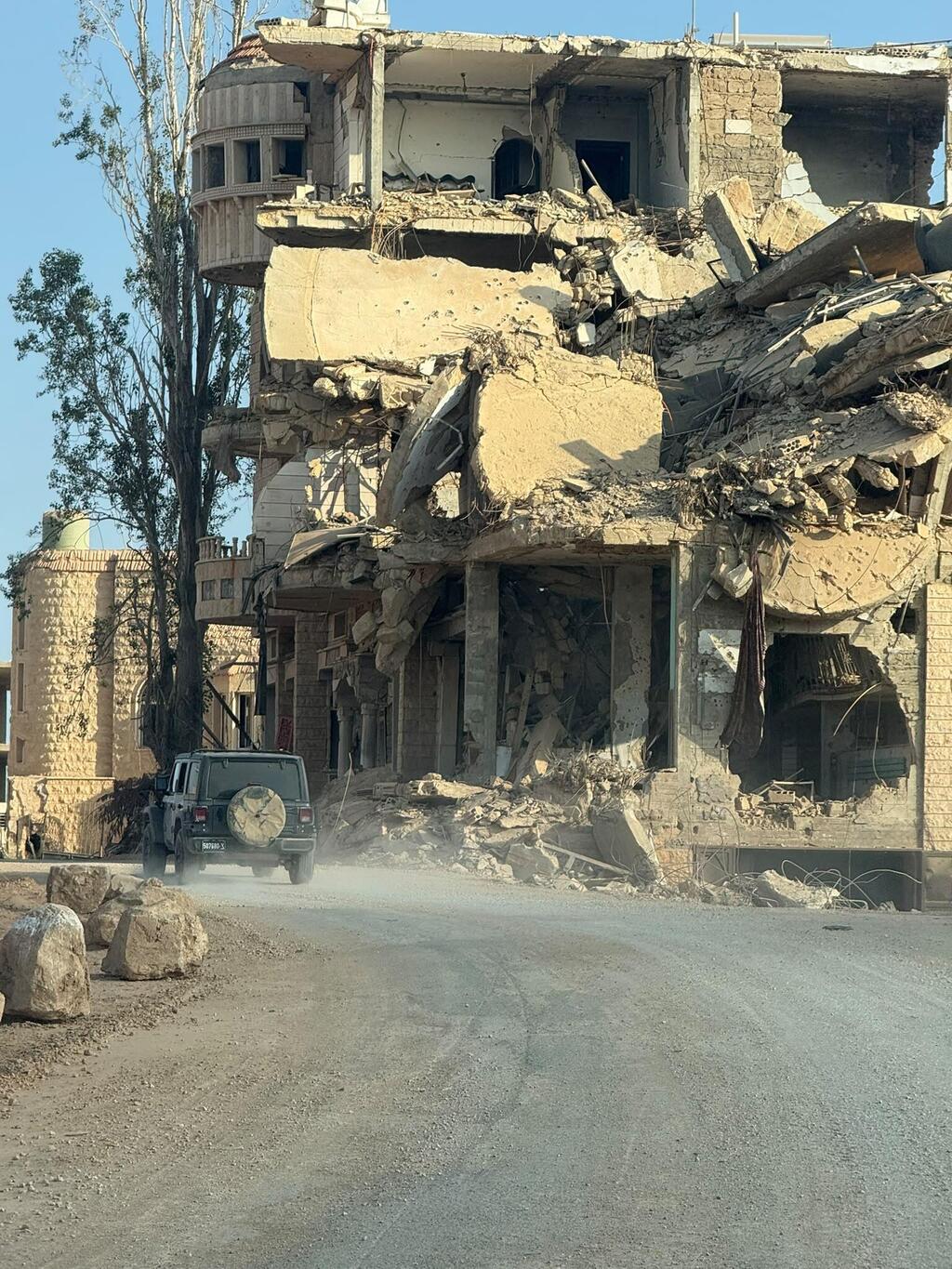
Destruction along the road to the fortress. All the villages were cleared of terrorists
(Photo: Dov Eichenwald)
Norkin is an impressive officer, matter-of-fact and measured. He described the careful planning behind Operation Marom Harim, carried out by his division in May.
The operation’s name comes from Isaiah: “By the multitude of my chariots am I come up to the height of the mountains, to the sides of Lebanon.”
Despite his request that his name be mentioned as little as possible, it was impossible to ignore the military skill, courage, creativity, deception and diversionary maneuvers that opened unexpected routes toward the fortress.
Norkin sent the Golani reconnaissance unit to Nimrod Fortress, where troops built models and rehearsed the battle for Beaufort. “I want a battle with no casualties,” he repeatedly told soldiers and commanders.
The reference to the First Lebanon War and the price paid by Golani reconnaissance troops then was unmistakable. Now, as we drove along the same paths used by the soldiers, routes Hezbollah commanders had not believed could be traversed, he reconstructed the battle for us.
I tried to imagine what the IDF troops who walked through the mud here experienced, not knowing where the next terrorist might appear and open fire. I kept thinking the same thing: this is a generation of heroes.
The deception that opened the road to Beaufort
We stood on the summit. Ron Ben-Yishai was on my right, Norkin on my left, alongside division chief of staff Brig. Gen. Mordechai Kahana.
Only when standing there physically can one understand the complexity of what the troops accomplished, from bridge-building and elaborate deception to coping with Hezbollah in extremely difficult terrain and facing the threat of drones.
When I shared my thoughts with Norkin, he dismissed the praise. “I don’t deal with honor,” he said. “We are people who get things done.”
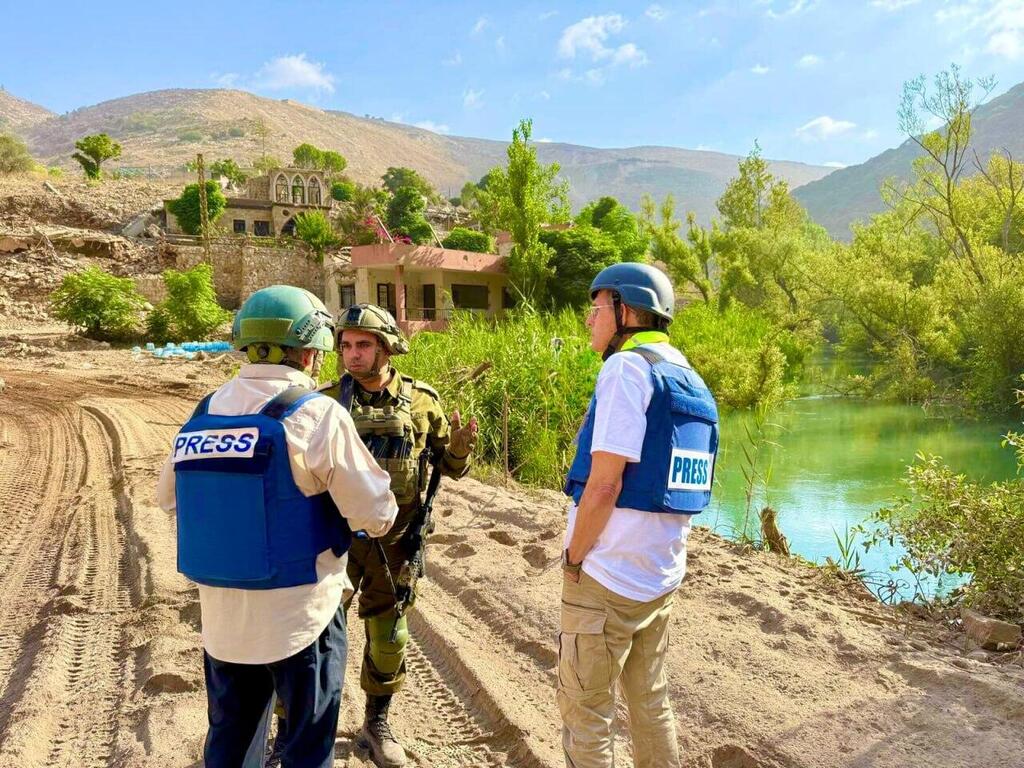
With Brig. Gen. Yiftach Norkin at the Litani, where the forces linked up for the deception maneuver before climbing unexpectedly toward Beaufort
(Photo: Dov Eichenwald)
After Israel’s 2000 withdrawal and particularly after the Second Lebanon War, Hezbollah organized its defenses around preventing the IDF from crossing north of the Litani again.
Norkin explained how his forces did exactly that. The first stage, he said, was the battle for Taybeh, an important test because it was fully controlled by Hezbollah’s Badr force. The fighting was extremely difficult. The terrain between the northern bank of the Litani and the Saluki ridge formed what Norkin described as a kind of basin where the division fought for months. A winter nighttime battle by Golani, fought without air support, was intended to allow the 98th Division to descend toward the Litani and raid Beaufort.
Following that difficult battle, Northern Command chief Maj. Gen. Rafi Milo made what Norkin described as a brilliant decision: halt the operation, bring in the 36th Division as well and replan. It was clear that Beaufort, which threatened Metula, had to be captured. The forces then began shaping the battlefield.
Hezbollah operates as a guerrilla organization in small intelligence and fire cells. “If you work incorrectly, even a small cell can stop a brigade,” Norkin explained. The troops therefore began clearing terrorists from the dense vegetation along the Litani, especially on its southern bank. “For two weeks we worked to open an entirely new route through Wadi al-Man,” he said. “Hezbollah did not believe the IDF could get through the vegetation at that point, so they were not properly prepared.”
When troops came under fire from the direction of Froun, the Golani brigade commander proposed a deception suggesting that the IDF intended to move toward the Saluki. “I took Golani’s 12th Battalion and the 7th Brigade, and for a week we broke through a hidden route,” Norkin said. “We crossed tank after tank, D9 after D9, without a road and without them seeing us. By morning, the tanks were on the Litani.”
It took another week to sweep the Litani area and clear it of terrorists. But Norkin realized that as he built the route from above, Hezbollah forces could threaten his troops from the flanks. “That’s when Golani reconnaissance and Egoz carried out an extraordinary operation in which 20 terrorists were killed,” he said.
He concluded that sending an entire division along only two axes was too dangerous. He wanted Golani to take Beaufort, and again stressed that he wanted it done without casualties. It was a complex operation whose courage, creativity and commitment are difficult to convey. Norkin described the fighting to us as though it had happened minutes earlier.
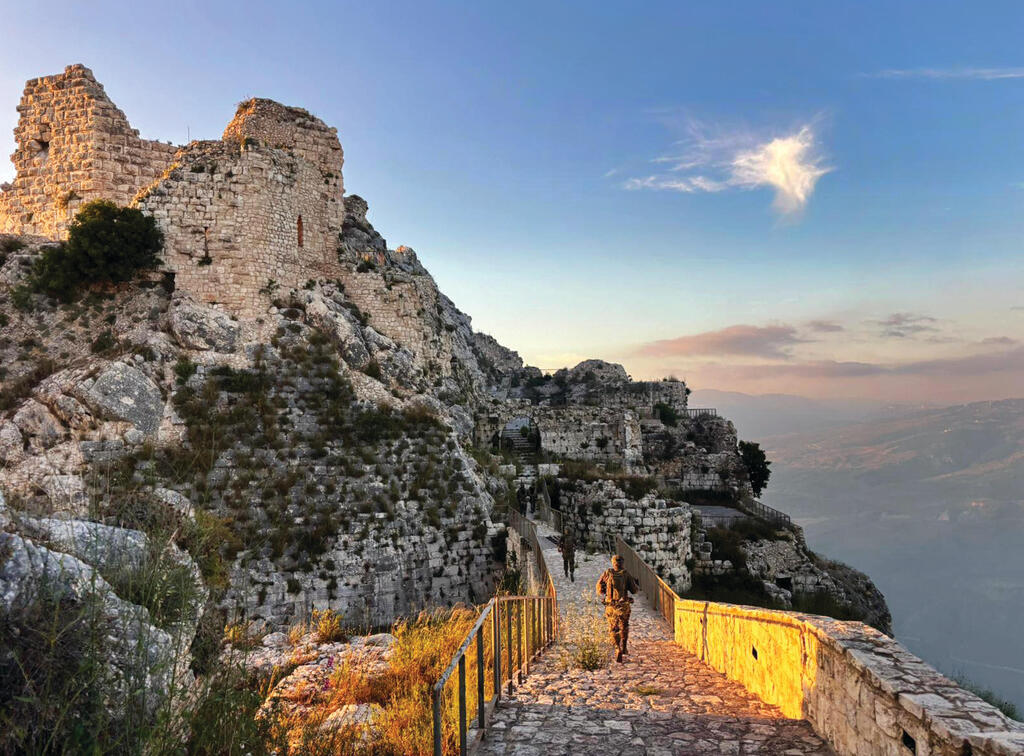
The Beaufort
(Photo: IDF)
He lingered over the nine wounded soldiers and their evacuations, down to the smallest details of a vehicle hit in Hezbollah’s Shaqif sector. Ron, who knows every wadi, pressed him with questions. Norkin answered patiently. Again and again, what emerged was the audacity and military deception behind a maneuver through terrain the enemy had considered impossible.
I found myself thinking that this battle, largely swallowed by the public consciousness because Israel was preoccupied with Iran at the time, may one day be studied as one of the great operations in military academies around the world.
Learning to confront the drone threat
On the way to Beaufort, we saw how Hezbollah had prepared to fight Israel, including underground infrastructure whose scale had previously been unknown. We passed tunnel entrances that had been bombed by the Air Force and were still visible. That network of tunnels is frustrating. But I remind myself that this, too, is history and Zionism.
Norkin’s grandparents came here to build a country. His cousin Amikam helped build an Air Force that now strikes in Isfahan. Yiftach Norkin captures Beaufort. Who knows what will fall on his children’s shoulders.
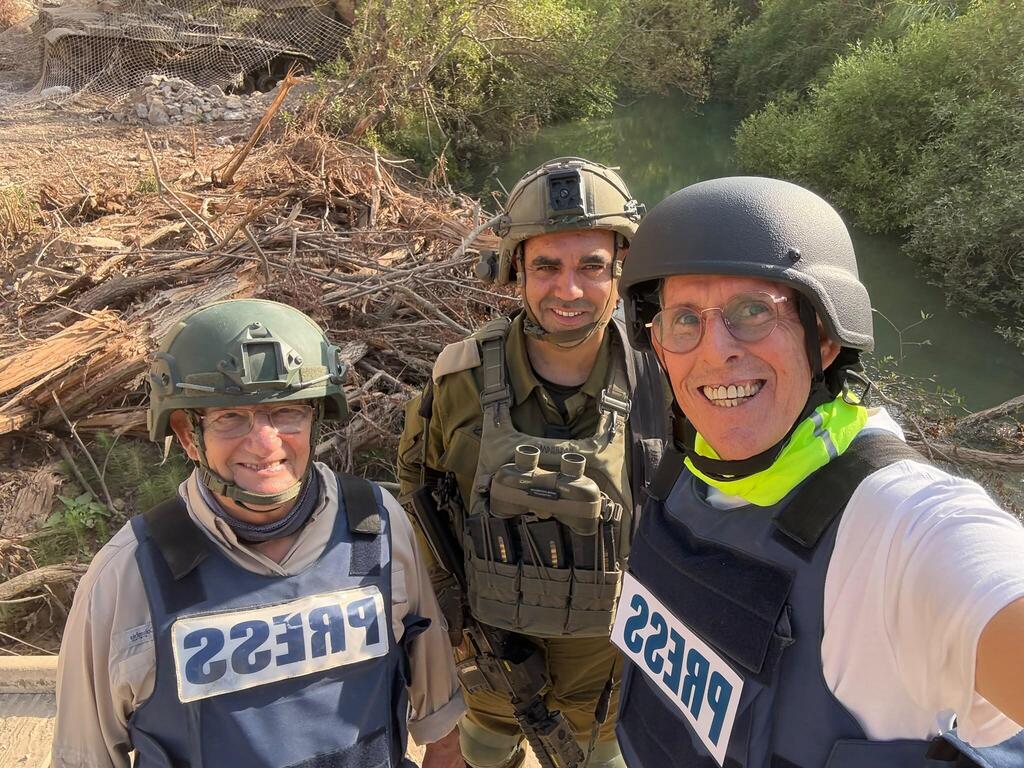
Ben-Yishai, Norkin and Eichenwald at the Litani, near the Saluki Stream
(Photo: Dov Eichenwald)
Norkin then explained how drones have changed both the battlefield and his own approach to fighting. “We have to operate in a way that prevents them from knowing where we are, while at the same time organizing operationally to dismantle the threat,” he said.
From Norkin, I understood that the IDF has learned to defend itself more effectively against drones and that Israeli casualty numbers have fallen significantly as a result. What I heard felt like a rare glimpse at the map of future warfare. Once, roadside bombs were the primary threat. Now there are explosive drones. On one end of the spectrum, Israel is dealing with an atomic bomb. On the other, drones flying on metal wire.
When I think about my grandchildren and great-grandchildren facing those same dangers, I have no single sweeping conclusion. I return instead to one fact: my father’s family was taken to Auschwitz because there was no one to defend them and no one to fight Nazi evil.
Shlomo Artzi on repeat
We said goodbye to Norkin and Kahana, who has served almost three consecutive years of reserve duty, and continued with our driver, himself a reservist, back toward the border. He told us that on October 7 he had just completed the Golani reconnaissance training course. He and his comrades were rushed to Ein Hashlosha without understanding what was happening around them.
Only four days later, when they turned on their phones, did they grasp the scale of the attack. From then until the end of his regular service, he fought in Gaza, Lebanon, Syria and then Gaza again. After his discharge, he took the traditional post-army trip, four months in South America.
At 22, he returned directly to Lebanon under an emergency reserve order. He does not complain. He speaks proudly about his service but waits impatiently for his first academic year studying economics and philosophy. I listened with pride and concern. His generation has gone through things over the past three years that are hard to fully comprehend.
I asked him what he does when the memories of war rise up, disturb him and refuse to disappear. “I listen to Shlomo Artzi on repeat,” he said.
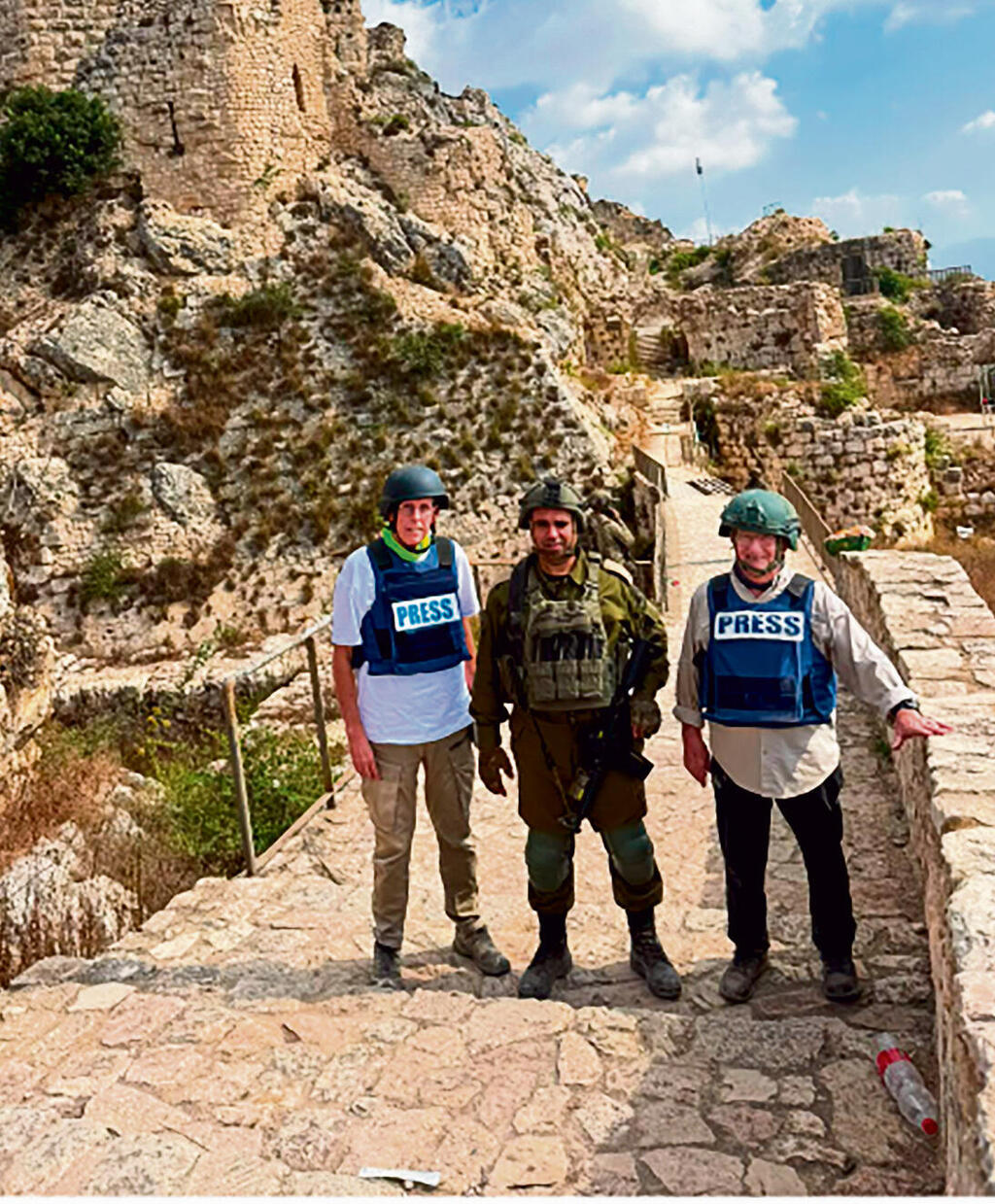
Blood-soaked ground. Dov Eichenwald, Brig. Gen. Yiftach Norkin and Ron Ben-Yishai
A Golani officer serving in Lebanon wrote after Tisha B’Av that he and his platoon had already been inside Lebanon for 22 days, with no immediate end in sight. “We are sitting on the foremost line, 15 kilometers from the border, and continuing to destroy enemy infrastructure in the area,” he wrote. “It is very difficult. The battalion has been maneuvering continuously for more than four months and the soldiers are exhausted.”
He wrote of harsh physical conditions and psychological strain. “But yes, I think the public has forgotten a little,” he added. “Forgotten that the war is not over, that there are still thousands of heroic soldiers continuing to fight deep in enemy territory in Gaza and Lebanon.
“We care about returning home safely. We care about protecting this gift called the State of Israel, which from inside can feel so obvious, but when you look back at it from deep inside Lebanon you understand how much of a miracle it is, and how easily it could disappear.
“So especially now, remember us, the soldiers at the front. Because from here, from Lebanon, it is completely clear that we have no other country.”
His words reminded me of a passage from Ron Leshem’s Beaufort, which I had reread the night before our visit. The Beaufort Leshem described, later adapted into the acclaimed film, was the Beaufort of 1999 and 2000, a place of daily fear and dread.
So what has really changed? Not much. I am the one who changed. I am no longer the 27-year-old reservist I once was. Each generation inherits the responsibility and obligation to defend home. The fortress itself is not the story. The story is us, a people sending its sons again and again to the same places so that its children can live here safely.
‘The eyes of southern Lebanon’
Standing on Beaufort, overwhelmed by the reconstruction of the battles we had heard, I looked at the stone fortress that, in a touch of historical irony, had been declared a UNESCO World Heritage Site only weeks earlier. We age. The fortress remains almost exactly as I remember it, dominating the terrain, its soil saturated with blood.
From there, looking toward Metula, Israeli homes appear almost close enough to hold in your hand. The realization of how easily they could be targeted is unsettling.
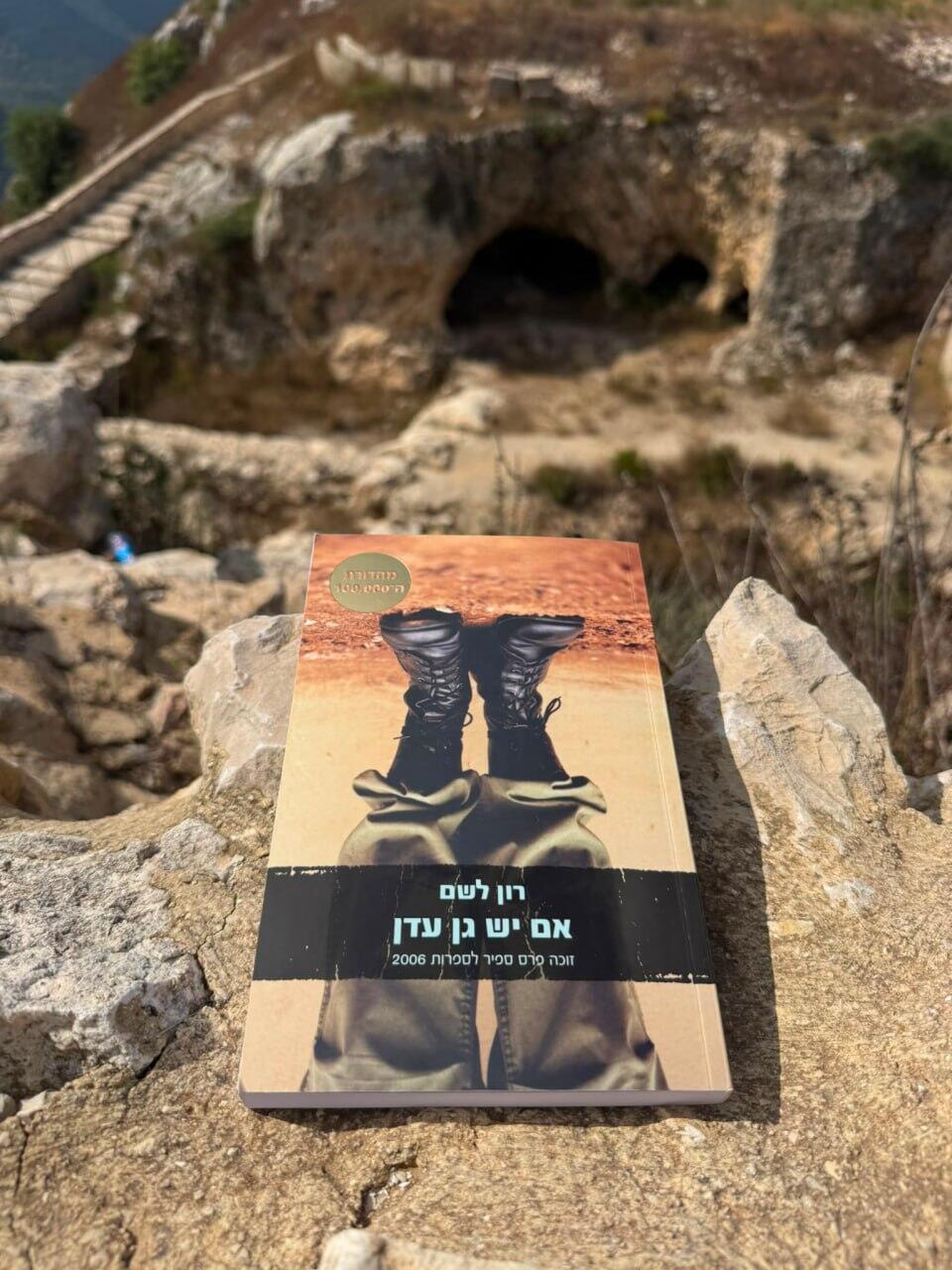
The Hebrew cover of Ron Leshem’s Beaufort
(Photo: Dov Eichenwald)
Today there is no military outpost at Beaufort. The old position was demolished before Israel’s withdrawal from Lebanon and was never rebuilt.
Ron Leshem described the fortification effort at the old outpost, giant concrete walls, protective nets and secret electronic systems. I tried to imagine all that concrete and fortification once buried below Beaufort, and then the blast that destroyed it all. Today, without an outpost, the question is what happens next.
If Israel remains here, will barriers go up again? Will tons of concrete again be poured into the earth? And if Israel is forced to withdraw, will Hezbollah again sit overlooking Metula, leaving our great-grandchildren to fight for Beaufort one more time?
From where I stand in life, I want to believe the Lebanese army will eventually bring some order to a bleeding country and to the Hezbollah labyrinth, and that the battle for Beaufort will not return. On our way back, Norkin’s words echoed in my mind: We have to be strong.
Alongside them was the image of a convoy of Lebanese army vehicles and UN vehicles that I had seen from the summit. I stared at it longingly. Perhaps some kind of arrangement with Lebanon is taking shape after all. When we crossed the Litani, I imagined peace. I could see Israelis walking along the river and through the surrounding countryside, coffee carts on every corner, families picnicking, children climbing the mountains and discovering the extraordinary landscape.
Switzerland is right here, next door. It all looked so normal and sane. Maybe there is, after all, an option for paradise. “What a missed opportunity of history,” I said to Ron Ben-Yishai. We both nodded.