


As the IDF fights the longest war in its history and struggles with a severe manpower shortage, a group of young people born and raised in Israel has spent months fighting a very different battle: getting permission to enlist.
John Ray Delisai, Moliv Vicente and Mariel Aya, all born in Israel to parents who legally immigrated from the Philippines, are among dozens of young adults behind a petition to the High Court of Justice seeking the right to serve in the military.

Mariel, 19, was born in Be'er Sheva and raised in Tel Aviv. Since finishing high school, she has been waiting for movement in the legal battle. John Ray, 20, also from Tel Aviv, hopes to serve in a combat role in a special unit. Moliv, 20, was born in Jerusalem, lives in Tel Aviv and has already completed a year of national service.
“The sentence that best describes our situation is, ‘A person is nothing but the landscape of their homeland,’” Mariel said. “We were born here and raised here, just like any other Israeli, with Zionist values.”
“We feel we have something meaningful to give,” she added. “When we see our friends coming home from the army, it gives us a knot in the stomach. We also want to give something back to the country.”
John Ray described military service as an expectation that surrounded him throughout childhood. “I was born and raised in a society that loves the country and wants to protect it,” he said. “All my friends, everyone around me, knows that after school you give three years or more of yourself. Not because you have to, but because you want to. That’s what I was raised on, and that’s what I want too.”
Oct. 7 made the desire stronger
The Oct. 7 massacre and the war that followed only intensified their determination to enlist.
“I was educated at school and in the Scouts on Zionism,” said Moliv, who joined the Re’im service-year program after high school. “After Oct. 7, I volunteered at Kibbutz Nirim. I saw what happened there, and I also saw what was happening in Kiryat Shmona. I told myself, ‘This is my country. There’s no way I’m not going to protect it.’”
Mariel said she felt the same pull while still in 12th grade. “I think that was the effect Oct. 7 had on most young people in Israel. Everyone saw what happened and wanted to be the ones standing on the front line and protecting the country.”
Their frustration has grown as the IDF publicly warns of a shortage of personnel.

(Photo: Moti Kimchi)
“The head of the IDF Personnel Directorate and the chief of staff say they are short of people,” Mariel said. “It’s crazy that there is a group here ready to stand on the front line, to take part, even at the risk of our lives.”
“Are we foreign workers? We physically grew up here, with the values of this country. We even speak Hebrew better than many others. It’s absurd. The country is still at war, and we are here, ready.”
John Ray said the contradiction is difficult to accept. “There are people trying every possible way to get out of serving. When do you see a group of people saying they want to enlist even though they don’t have to?”
“I know they need me, but they don’t want to accept me. I’m disappointed. It hurts. I’m only asking them to stop for a minute and look at us for who we are, not under the label ‘children of migrant parents.’”
‘A certificate that says I’m Israeli’
Their situation stems in part from temporary government decisions adopted between 2005 and 2010. Those measures allowed some children of foreign workers who grew up in Israel and attended Israeli schools to receive permanent residency, on condition that they serve in the IDF at age 18.
But the measures were temporary and were never enshrined in permanent legislation. After a limited application period, the pathway closed.
For the current group, the distinction can feel arbitrary. Moliv described a friend from the same age group whose older sister qualified under the earlier arrangement, allowing him to regularize his own status and later enlist in the Golani Brigade.
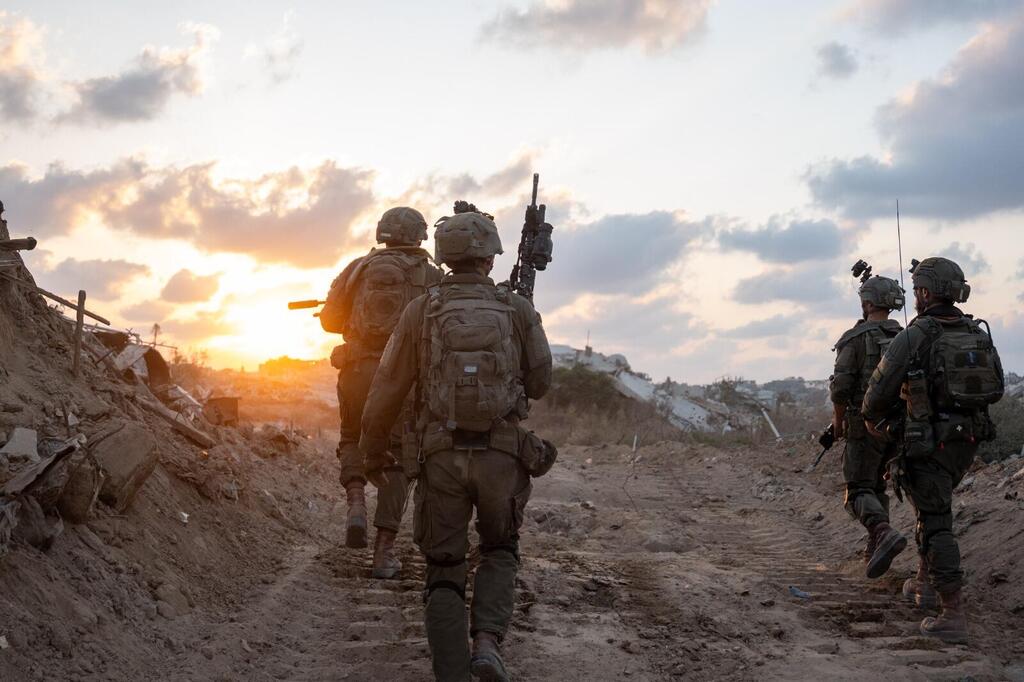
(Photo: IDF)
“We’re the same age, with the same circumstances, with parents from the Philippines,” he said. “What is different between us and them?”
For John Ray and Moliv, military service is also about belonging.
“The army would give me the feeling that I’m part of something,” John Ray said. “It would give me that stamp that I’m really part of society, that people see me as an equal and not as some strange outsider.”
Moliv put it more simply: “It’s like getting a certificate that defines me as Israeli.”
‘We’re being left behind’
The three are part of a group of dozens of young men and women who have petitioned the High Court seeking permission to enlist. The petition was filed in December 2025, but the state’s response has been postponed repeatedly. It is now required to respond by Oct. 4.
“This has been a fight for years,” Moliv said. “I remember being seven years old and seeing my parents meet with lawyers and go to court hearings. Now they’ve postponed us for the sixth time.”
John Ray said the delays carry a personal cost. “We’re losing momentum, and we’re being hurt by being left behind. My vision was that six months ago I would already be at the induction center, but I didn’t understand how difficult and cumbersome the legal system could be.”
Despite the delays, all three say giving up is not an option.
“We accept the postponement, but we don’t lose hope,” Mariel said. “Because if we had lost hope, we probably wouldn’t still be in this process. We hope it happens soon.”
Attorney Zari Hazan, chairman of the Israel Bar Association’s Immigration Committee and one of the lawyers representing the petitioners, said there was no dispute that the IDF needs thousands of additional soldiers.
He accused the defense establishment of failing to respond to the petition despite an earlier court order, saying the delay was prolonging harm to the petitioners and, in his view, to national security.
The IDF said: “The petition has been received. The state’s response will be submitted as part of the legal proceedings, as customary.”
Defense Minister Israel Katz’s office said the issue had not been presented to the minister. “When it is brought before him, we will respond accordingly.”