

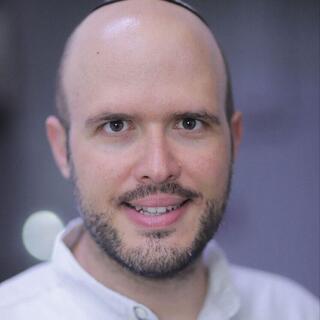
“Grief, suffering and pain are not a malfunction in life. They are part of life. But surrendering to them will not get you out and will not help you or your family,” says Prof. Mooli Lahad.
The words are spoken in a small office in Kiryat Shmona, as alerts warning of Hezbollah drone infiltrations cut through the silence. From Lahad, they do not sound like a therapeutic cliché, but rather like a conclusion reached through decades of treating trauma, and through a life repeatedly struck by it.
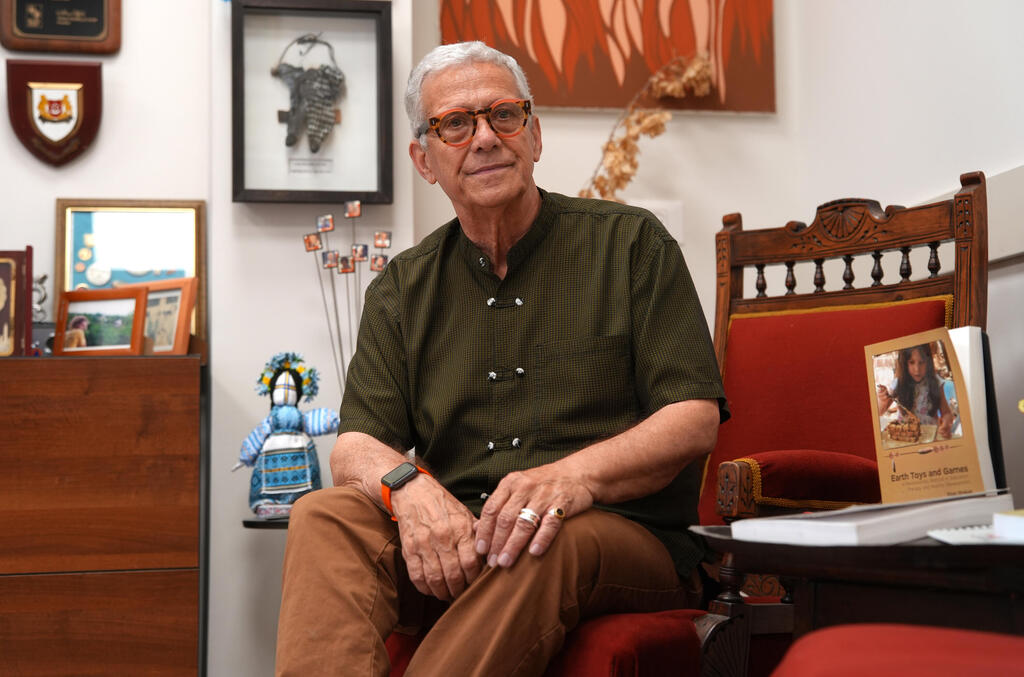
Prof. Lahad, who recently turned 73, is one of Israel’s most prominent experts on trauma and resilience, a senior medical psychologist and educational psychologist whose work is known far beyond Israel. He has advised the United Nations, led aid delegations to disaster zones in Japan and Sri Lanka, worked with populations affected by the Russia-Ukraine war and helped develop models for coping after the September 11 attacks.
For decades, he kept a firm wall between his professional work and his own story. He treated others, trained professionals and built community models for crisis response, but rarely spoke about the personal losses that shaped him: the road accident that led to the amputation of his foot, the death of his wife Vered from cancer and the death of his son Omri during a trip through the jungles of South America, when he was just 23.
Then came October 7, and even Lahad’s wall began to crack. “For many years I did not speak in lectures or meetings with patients about my losses,” he says in an interview with Yedioth Ahronoth. “In recent years, I’ve felt able to bring my losses into the room, not to tell others to follow my example, but because my own experience has taught me that it is possible to rise from the lowest place you have ever been.”
Between missions around the world, Lahad has always returned to his professional home base in Kiryat Shmona. Since 1979, he has worked there through the “Mashabim” or CSPC, the Community Stress Prevention Center, which he founded 45 years ago to provide support to residents in routine and emergencies.
But the current reality along the northern border is unlike anything he remembers. And even the alarms do not shake him as much as one question he hears in public discourse: “Where did the resilience of northern residents go?”
“That question is a moral injustice,” he says. “The residents have become victims of their own resilience, of the expectation of them, and of their expectation of themselves, to ‘be strong.’ But that cannot work over time without support and recognition.”
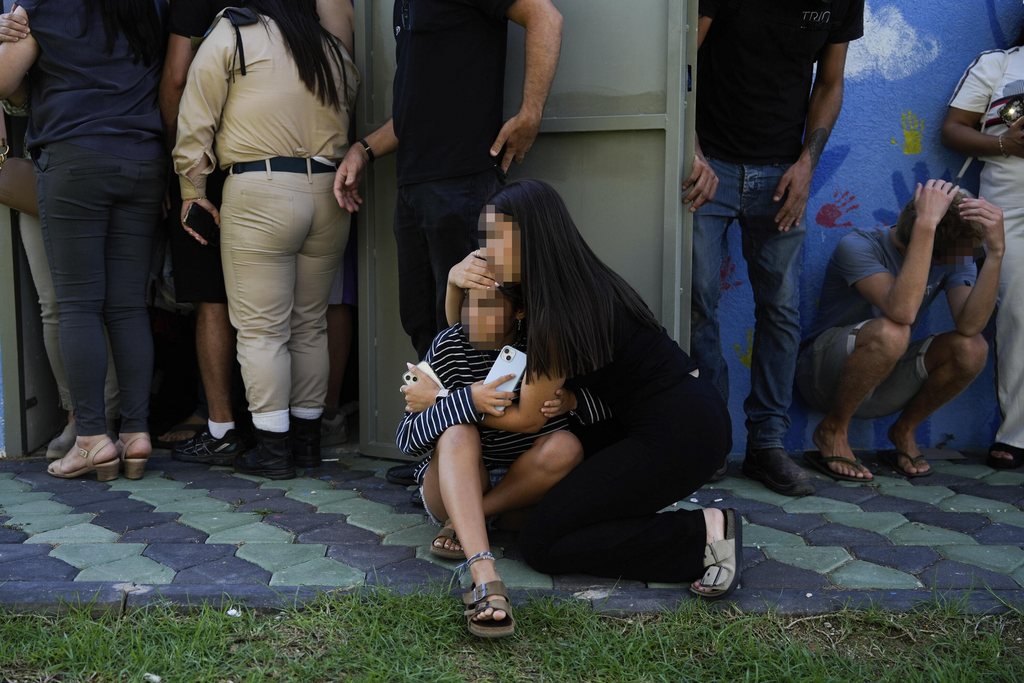
'The residents became victims of their own resilience'; residents take shelter in Nahariya during a rocket alert
(Photo: AP Photo / Baz Ratner)
Since October 2023, he says, the word resilience has been mixed up with trauma. “After October 7, the people of Israel showed real resilience. We took a clear blow, as a community and as individuals. We rose from the ashes and stood up to it. “Today, this is no longer a question of resilience but of burnout. How many times can people be expected to pull themselves together, get back up and keep going, while feeling they have been left to do it alone?”
From October 7 until last April, more than 104,000 hours of individual therapy were provided at Mashabim resilience centers in the Upper Galilee and Western Galilee. “We see a clear increase in people turning to us,” he says. “But we also know some people are no longer even trying to seek help, because they have stopped believing it can make a difference. You cannot keep offering people the same treatment and expect it to work.”
As someone who has seen extreme situations and war zones around the world, Lahad rejects the idea that therapy can serve as a magic powder while the war continues outside the clinic. “Treatments with a psychologist, social worker or art therapist are inherently limited,” he says. “We are talking, conservatively, about 5% to 10% who will suffer severe post-trauma that is hard to recover from.
“Where am I supposed to find enough therapists for all of that? You cannot demand resilience from people without providing them with the conditions to sustain it. Resilience is not built on slogans but on security, economic stability, community and education. Criticism and indifference weaken people; belonging strengthens them. Resilience grows from the feeling that you have not been abandoned.”
And that is the challenge when the trauma, or the war, has ended before treatment begins. But what happens when the patient comes in while the war is still raging outside?
“In that situation, what is a professional supposed to do after residents have already heard the same breathing and grounding exercises three or four times, only to walk out of the room and find the threat waiting for them again?” he says. “The basic idea in treating post-trauma is that the traumatic event has ended. Only then can you begin helping people rebuild their strength. Here, the event keeps returning again and again.”
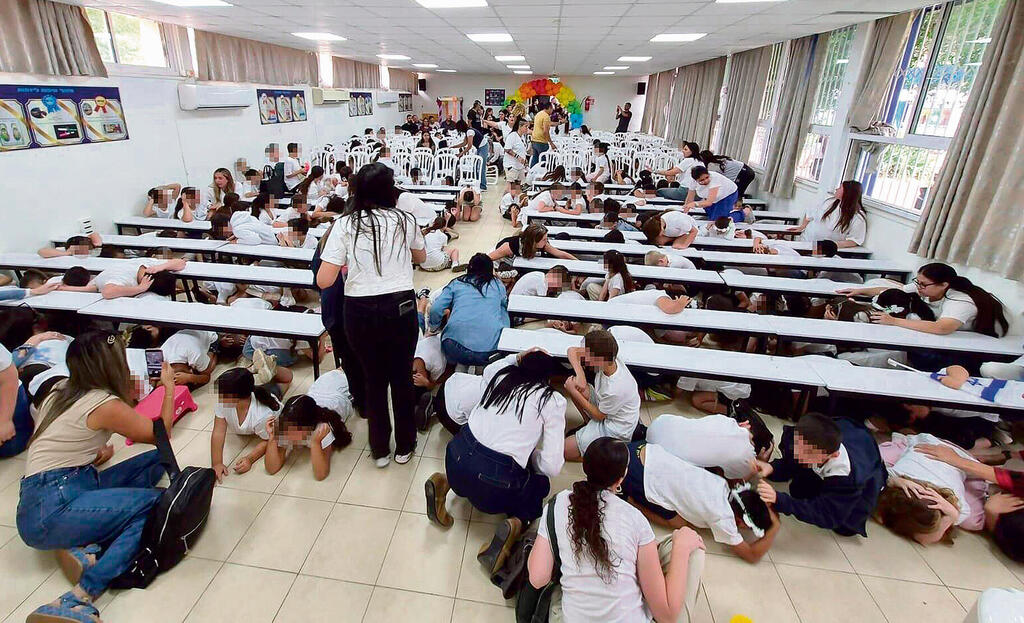
'The basic idea in treating post-trauma is that the trauma has ended, not that it keeps returning again and again'; taking cover from another strike in the north
After almost a thousand days of a war of attrition in the region so dear to him, Lahad looks at the accumulated data and criticizes those who aim their frustration at the residents themselves. “People tend to think that when someone breaks down, becomes exhausted or angry, it means they lack resilience. That is a mistake,” he says. “In prolonged extreme situations, a decline in functioning is a natural part of the human response. Resilience is not being a granite rock, but the ability to be hurt, to be shaken and gradually recover. Falling is part of survival. So the great mistake today is to ask whether northern residents have resilience. The right question is whether they have been given the basic conditions to hold on over time.”
'Troubles come on their own'
Lahad’s decision to speak openly about his own wounds now is not coincidental. It grew out of his understanding of what choice means when everything falls apart. In the summer of 1992, after his left foot was amputated following a severe road accident, he lay in a hospital bed and formulated what would later become a professional cornerstone.
“I decided that I have a disability, but I am not disabled,” he says. ““I argued about it with my best friend, who was also my lawyer. He kept urging me not to return to functioning so I could receive more compensation, but I refused. During the seven months I spent in the hospital, I wrote two books while supervising students.”
His ordeals did not end there. In August 2001, his wife Vered died after battling cancer. She left behind a sentence that became a guiding principle for Lahad and many of his patients: “You have to create the joyful moments, because troubles come on their own.”
“When my wife died, the first thing I said was that I have responsibility,” he says. “Responsibility for the children, to balance their lives with this loss. And I had circles of family and friends who were there, gave a hand and supported me. But losing a son is a completely different story. It is a fracture you can live with, but the pain keeps coming back.”
His gaze hardens when he speaks of his son Omri, who died in October 2009. “I do not hide the grief and pain, but I want to remember the life itself,” he says. “He lived for 23 and a half years. His death, as painful and terrible as it is, was the awful moment when everything ended. But we have to remember the life that came before it, that there was a person here who was full of life.”
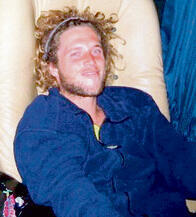
The son who died while traveling in South America; Omri Lahad
That direct encounter with private catastrophe now feeds his work with soldiers, bereaved families and entire communities under fire.“ I talk to soldiers with PTSD and tell them, ‘Look, you can choose to go down the path of disability,’” he says. “There are many benefits that come with it, and you deserve them. But do not give yourself over to the role of ‘the disabled person.’”
As someone who accompanied Holocaust survivors, I saw exactly the difference between those who said, ‘I went through a hard life, but I will fight to return to being a person with a career, friends and joys,’ and those who said, ‘After everything I went through, I am worth nothing.’ The latter deteriorated. It is unpleasant to say, but people connect to suffering much more than to functioning. When the people around you support you when you fall, you have a better chance of moving forward. Pity pulls people down."
The breakdown is visible in Kiryat Shmona’s empty streets. During the Operation Roaring Lion war in the north, exhausted families were seen at the closed iron gates of the municipal building, begging for a ticket on an evacuation bus that might give them a few nights of relief in a distant hotel. In public shelters deep underground, women slept for weeks beside dozens of strangers, admitting through tears that they allowed themselves to cry only at night, after their children had fallen asleep, so as not to show weakness.
The result is a quiet and alarming migration. Estimates in Kiryat Shmona suggest that when the school year ends, many families who tried to return after the official evacuation period ended in July 2025 will pack up and leave for good.
Lahad is especially worried about the disappearance of what he calls “the middle class population,” the city’s economic and social backbone. They are not necessarily the people who shout the loudest, but those who eventually act.
“This is exactly when the middle class leaves,” he says. “That group should be the majority. About a quarter of the population is strong, around 40% belongs to the weaker group that cannot simply get up and go, and the rest are in the middle. In a healthy community, that middle group is the backbone, but today it is shrinking. They are no longer willing to wait for someone to evacuate them. They are leaving on their own. And they are the engine of the economy, culture and community life.
"Everyone in government ministries says they greatly value the residents of Kiryat Shmona, but when it comes down to it, they create so many obstacles compared with so few visits. What residents are left with is a profound sense of abandonment and a double message: ‘We stand with you, but we are not really helping you.’”
Business figures on the ground support his diagnosis. In communities near the border, he says, more than 70% of small and medium-sized businesses have seen turnover decline. In Kiryat Shmona, more than 40% of the businesses that operated in the city before the war have not returned.
“For me, the economic crisis is at the heart of the mental one,” he says. “What we are missing now is the middle layer: small businesses and independent professionals, the people who form the core of these communities. It takes courage to keep a business open when tomorrow you could be left with unsold stock and no way forward. People in that middle layer often do have options. They can find work elsewhere, and they are not afraid to move south.”
The state is currently trying to solve this with grants. Is that the right solution?
“It is widely understood that compensation cannot replace rehabilitation. But it is convenient, because it quiets people down,” Lahad says. “It becomes a substitute for the harder work of asking what must be done immediately to keep people from drowning in this chaotic reality, and then what must be done to rehabilitate, strengthen and develop these communities.
“Compensation or a grant can be a helpful tool, but it can also become a rope around your neck. The question is how you turn it into a lifeline, and that happens when you tell people: the more you manage to function and find creative solutions, the more support you will continue to receive, not less.”
He is similarly skeptical about presenting scholarships and the expansion of Tel-Hai Academic College into a university as a magic solution for bringing students north.
“They are going to give scholarships to anyone who comes to study at Tel-Hai,” he says. “But in a few shifts at a pizzeria or café in Tel Aviv, a student can cover those sums. Students will not come just for that, but for social life and atmosphere. You cannot bring people here with compensation for what they do not need. The scholarship is wonderful, and maybe it is a necessary condition, but it is not the game-changer.”
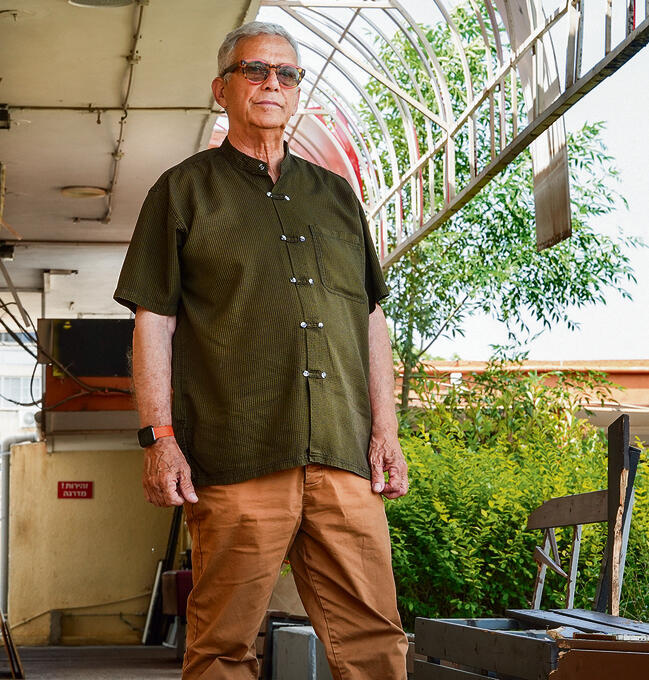
'Students will not come because of the scholarships. A few shifts at a pizzeria in central Israel would cover that'; Prof. Lahad
(Photo: Efi Sharir)
'Not emergency routine, but emergency burnout'
Prof. Lahad’s most urgent concern is for the future: the teenagers and families in the north buckling under the weight of a prolonged war. He says an entire generation is growing up inside an unprecedented rupture, developing severe psychological symptoms while also realizing that the state systems meant to support them are not functioning.
“Teenagers have their own world. They are on TikTok, maybe Instagram at most,” he says. “So they are inside a bubble that protects them. What they are experiencing here is the absence of a functioning education system, and they understand that much of it is just for show. Over time, the problems multiply because they are suffering more and more psychological symptoms.
"They do not come to therapy because they do not exactly connect with the idea of meeting an adult and talking to them. They have barely seen their peer group since COVID, and the war has made that much worse. School, which in normal times gave them balance and taught them skills beyond academics, like sitting in a chair and holding a conversation, has been severely and persistently damaged in the north, more than anywhere else in the country.”
So, easing matriculation exams for children in the north is at best a 'bandage'?
“They are given many concessions on matriculation exams, and that is fine. But when they reach the point where they have to compete with peers from Givat Shmuel, Rehovot or Tel Aviv (in central Israel), no one will be able to make allowances for them, because it will be clear they lack basic skills. When Kiryat Shmona Mayor Avichai Stern says 40% of students in grades 1 through 8 cannot read and write, it means that when they eventually have to compete with others, they will once again be marked as the weaker group.
And what will happen to them in the best-case and worst-case scenarios?
"Some may find an inner anchor and channel anger and frustration into meaningful military service or achievement. Others, he warns, will be lost."
This systemic damage is seeping deep into family life. Exhausted parents, themselves suffering from sleep disorders and existential anxiety, are expected to serve as an anchor for their children while the sounds of artillery and helicopters shake the windows of their homes. Lahad defines this as a state of prolonged “emergency burnout,” and is not especially concerned by the criticism his blunt words are likely to draw.
What does parental burnout look like in the north?
“When exhausted parents are expected to raise children whose anxiety, sleep problems and rage attacks are all increasing, that is not an emergency routine,” he says. “The reality here today is emergency burnout. An emergency routine is what you have in Tel Aviv or in the south, where there is an occasional siren. Here, the emergency is constant, and that kind of burnout has many symptoms. The most serious is sleep disruption, which makes people irritable, pushes them toward depression, makes them less patient with their children and causes them to lash out for no reason.
“You cannot sleep with this noise, surrounded by missile batteries firing for hours, day and night. There is also the phenomenon of reservist fathers who do not truly come home, even when they are physically there. It is a serious blow to their identity, work, relationships and parenting, and the children pay the price later.”
He is certain his comments will draw criticism. “I am sure that after this is published, there will be a thousand posts attacking me and you for even talking about it, saying we ‘weakened the north,’” he says. “Instead, they should understand that what is being done now is what weakens it. But some people prefer to remain indifferent. They are afraid to be seen as weak.”
The trauma no one recognizes
One concept central to the northern trauma, Lahad says, is the “near miss”: the feeling that “it could have been me.” Residents who for years lived with fears of Hezbollah tunnels and surveillance experienced the massacre in the south as acute indirect trauma, with the understanding that such scenes were also planned for their own communities and were avoided only by chance. The state’s evacuation decision only reinforced the sense that the threat was immediate and real.
“When people fled from here, what they had in mind was that what they had seen in the south was about to happen to them too,” he says. “In post-trauma literature, a 'near miss' can cause no less suffering than direct exposure to the event. But there is no recognition of that suffering, because in the end it did not happen. A person can remain trapped in scenarios of what could have happened, without the closure of knowing what actually did happen, because he was never inside the event itself. He is left forever with the question of ‘What if?’”
How do you apply what you have learned from disaster zones around the world to the Israeli reality?
“What we have learned from other places in the world, especially from prolonged wars of attrition, like Ukraine, is that rehabilitation does not begin the day after. It has to begin while the crisis is still unfolding. That is why local authorities, community leadership and the systems that sustain civilian life must be strengthened now.
“Even if some local leadership looks imperfect from the outside, this is not the time to grade it. These are the people currently keeping their heads above water. They need to be allowed to act quickly, with fewer barriers, and more responsibility and resources. People do not live in the future of plans and billions. They live in the present, with fear, trying to hold life here together by their teeth.”
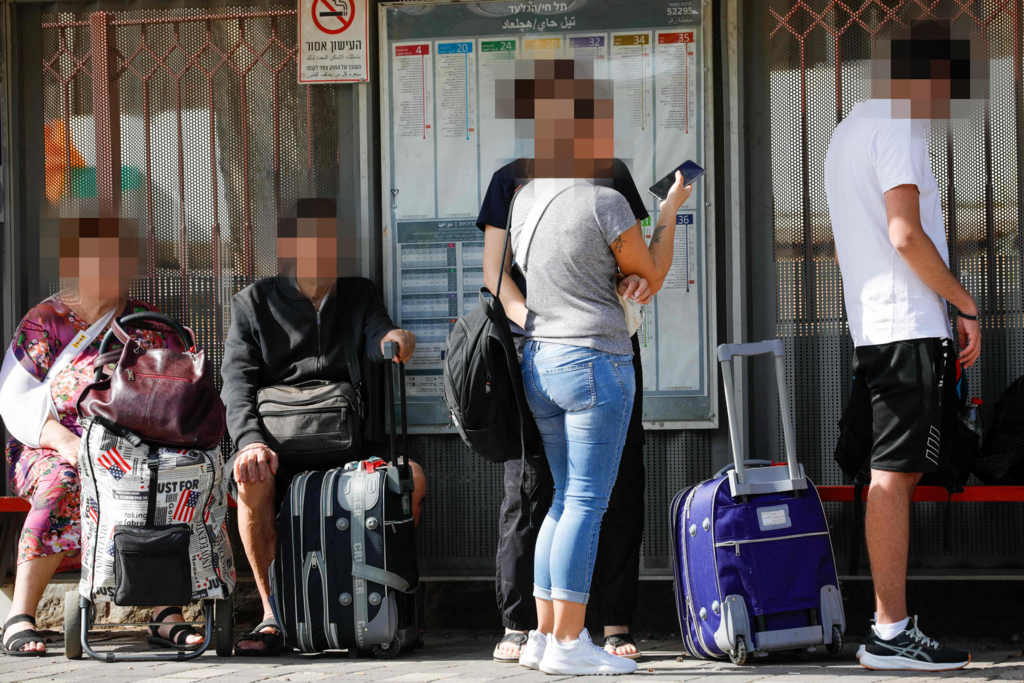
'Processes must be shortened and support made more accessible'; residents evacuated from Kiryat Shmona at the start of the war
(Photo: Jalaa MAREY / AFP)
In practice, he says, the state must stabilize reality the way paramedics stabilize a patient in an ambulance. “Give people the feeling that you are listening to their needs,” he says. “Why should a person whose business is closed pay municipal tax? For what, and from where? When you limit and make it hard to receive compensation and assistance that comes so late, you cannot then say, ‘I am with you.’
"Processes must be shortened and responses made accessible. Take schools and kindergartens and cover them with protective netting. That will show people that you understand we have a problem and that you are on it, while in the meantime, you are giving them small solutions. That is much more strengthening than telling people, ‘You are strong.’”
Prof. Lahad is sharply critical of one-off, publicity-driven visits by politicians and even senior military officials, especially when they show up with cameras, praise residents for their bravery and then leave. “When they make videos and praise the resilience and heroism, people ask themselves, what does that mean for me?” he says. “Every morning, I do not know whether an explosive drone is chasing my child on the bus from Kibbutz Manara to school. So talk of heroism belongs to another time. “Through this rhetoric, they try to rally people by telling them they are seen as heroic and resilient.”
But hearing how heroic they are is not what will actually help residents.
What residents need, he says, is not more praise but presence. “What will help them, beyond the economic aspect, is to come here and visit the residents, hear their complaints, and you do not necessarily have to promise them anything,” he says. “You need to be with people and give them the feeling that their anger, sadness and distress do not mean you are not with them.
"If you tell them they are strong, and at night they hear missiles, and in the morning they see the city’s old commercial center destroyed, how can they be heroes? What do you really expect of them? They are only civilians, not soldiers. They are doing their best. They came here with their families and are trying to sustain them, and their children are crying and have symptoms.”
So what would you say to them if you were a politician visiting here?
“I mainly would not tell them that ‘if you feel sorry for yourselves, you are weak.’ Absolutely not,” he says. “You need to tell them, we will help you continue to cope and we are working all the time to find solutions. But saying ‘you are strong’ is, in other words, ‘get out of my sight.’ People in distress need recognition that it is hard for them, recognition that the solutions are limited, and recognition that even small steps must be taken so they feel that whoever is responsible understands the difficulty and that they have not fallen off the agenda.”
At the end of the month, Prof. Lahad will receive the 2026 Tel-Hai honorary award for his professional contribution to the north and to academia. In recent years, he has divided his time between Tel Aviv, where he moved with his wife Noga Goldring, and the Mashabim centers in the Galilee.
He understands the sense of abandonment described by northern residents, who see that while they live in shelters, much of the rest of the country continues almost normally, apart from occasional red-alert banners on television and brief mentions in news broadcasts.
“I am in favor of normal things continuing in the center,” he says. “If they do not continue, we will be in a very bad situation. But there is the personal matter. In the Second Lebanon War, people from the center opened their homes and told residents from the north, ‘Come stay with us.’ Why is that not happening today?
“And if you cannot host them, come to them. Shop there. Visit. Pick up the phone, show interest, write something encouraging on social media. Give people the feeling that they have not been abandoned, because that sense of abandonment and indifference is even more damaging than the security situation itself. Telling them they are strong and heroic is simply not enough.”