

In the summer of 2025, Metula looks more like a ghost town than a scenic northern getaway. Streets are closed, businesses boarded up, and homes damaged or abandoned. The town, once a symbol of lush tourism and quiet optimism on Israel’s northern border, now stands empty and broken, waiting for a miracle.
“There are about 500 people left in Metula,” says Yossi Glazer, the town’s security coordinator. “Out of 2,100 residents before October 7, only a quarter have stayed or returned—and that includes those who never left.”
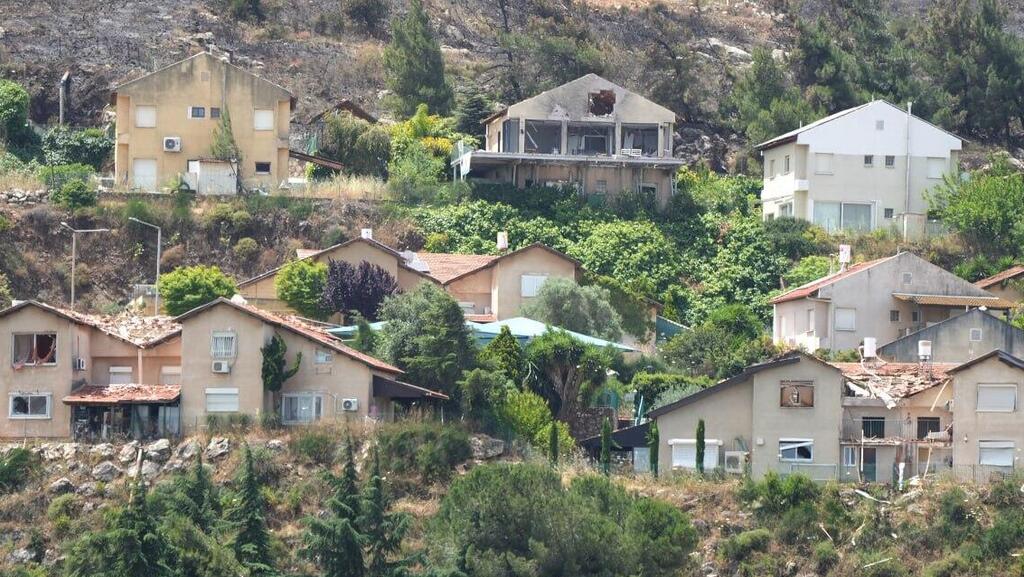
Driving down Rehov HaRishonim, Metula’s main street, Glazer points out restaurants, hotels and homes—most are locked or deserted. “If you came here on a weekend—Friday or Saturday—it used to be packed. Take the Tachana restaurant, one of the best in Israel—not just because the owner is my friend—it was always full. Now? Nothing. Everything’s shut.”
One landmark, the Alaska Inn, was hit by three anti-tank missiles due to security cameras on its roof. It’s been under renovation for four months, but tourists are still scarce. Other major hotels—Beit Shalom, Metaylim, and Selina—remain closed, either awaiting compensation or stuck in limbo. Even Canada Center, once a bustling entertainment hub for the entire region, is fenced off and untouched since being hit by a missile.
Glazer, 53, was born and raised in Metula. “We had about 450 students living here and studying in Tel Hai. Now there’s no one. Everything’s for rent. The hotels are in limbo, the medical center too, and the council building—it all feels like a transition that’s lasting way too long.”

(Photo: Tal-Zohara Lavi)
No students, no school, no return
Residents say part of the stagnation is due to Tel Hai College still being closed. The students were both customers and workers for local food businesses. The campus is expected to reopen in October, but its absence is still felt. Metula’s elementary school won’t reopen this year either; the few remaining students will study in nearby Kibbutz Kfar Giladi—another deterrent for families considering returning.
Glazer says homes near IDF positions were heavily damaged—some from enemy fire, but much of it from Israeli tanks and troop movement. “About 40% of the damage here was caused by our own forces. Tank fire between the houses, the movement of units. The tanks caused enormous damage, but you can’t really blame anyone. There weren’t many options. That’s the reality we lived.”
Rebuilding homes is one thing; reviving the economy is another. “Take HaSemta—the best burger place we had. They opened branches in Tel Aviv and Ramat Aviv. I told the owner, ‘Come back.’ He asked, ‘Are there any people?’ I said, ‘I’ll bring them. We’ve got 300 reservists here—they’ll eat.’ But he’s still unsure.”
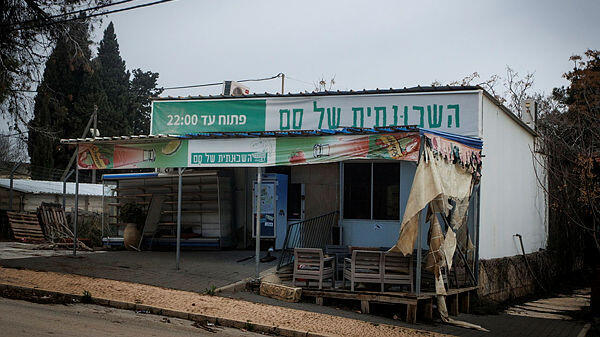
A closed business
(Photo: Gil Nechustan)
Another symbol of collapse is Nusha’s café. “She opened in July—a boutique café that was doing well. Then boom—the war. Everything gone. She invested so much and now she’s too scared to come back. I tell her, ‘Open up, I’ll make sure people come.’ She says, ‘I just can’t go through it again.’”
There used to be a lively café with music that drew young crowds—it’s gone too. “There was a nice momentum here before the war. Every Friday. Then it all ended. Bankrupt. Even Sam’s neighborhood mini-market is still shut. He says there’s no point—no customers.”
Glimpses of revival
A small sign of optimism appears at Koach Junction, the town’s southern entry. On the door of the once-bustling Aroma café hangs a note: “Limited menu until 14:00.”
A bigger breakthrough came when Glazer persuaded Yoni, the owner of the once-thriving Aiyoni pizzeria, to reopen. “This is the first swallow,” Glazer says. “When one business opens, others may follow. But without real incentives and security, it won’t happen.”
There’s also one pub still standing and Super Yonatan, a small supermarket that reopened only thanks to reservists. “I make sure they come every morning to buy bourekas so the place has some traffic,” Glazer says.
Others are trying too. Lior Baz, owner of the Nachalat Ikarim guest cabins, resumed operations this month. Prices were cut to attract visitors—850 shekel per couple, including breakfast and pool—but occupancy remains low. “It’s the image,” he says. “TV coverage showed constant damage and missiles. Just this week, someone called to ask if it’s even legal to enter Metula. If the army allows it.”
Taxed the same, neglected the most
Glazer is also angry about the lack of tax breaks. “I pay 14% income tax in Metula—the same as in Kibbutz Dan or Snir. So why would anyone come here? Why build here? The state doesn’t see us.”
The office of Minister Ze’ev Elkin, who oversees the Recovery Directorate and the Northern Rehabilitation Authority, referred inquiries to the Tnufa headquarters for the north. In a statement, the office said Metula has received targeted investment: 6 million shekels for public buildings and schools, with an additional 18 million shekels to be approved soon. The Interior Ministry also transferred 11.5 million shekels due to the emergency situation.
Get the Ynetnews app on your smartphone: Google Play: https://bit.ly/4eJ37pE | Apple App Store: https://bit.ly/3ZL7iNv
Recently, a broader government plan allotted 1 billion shekels to conflict-zone towns, including 20 million shekels for Metula for public infrastructure and community resilience programs. An economic stimulus package worth 610 million shekels includes support for Metula as a “national priority area.” Residents are eligible for direct return grants.
As for businesses awaiting property tax compensation, some claims are still in legal review. The elementary school could have reopened, the statement said, but the local council requested closure due to low registration. Students from Metula are receiving full educational support elsewhere.
“I’ll fight for this place, even alone”
Meanwhile, Metula’s remaining residents watch nearby communities recover with envy. some 80% of residents have returned to Malkia, similar rates in Misgav Am and Yiftach, and about 60% in Kiryat Shmona.
“People got used to the good life in Eilat and Tel Aviv—they’re in no rush to come back,” says Glazer. “We need to bring back the people who were here. Restore a sense of security. Bring life back. Give people a reason to return. I love this place. I’ll keep fighting for it—even if I’m alone on the street.”