


The war in Gaza has demonstrated clearly how wrong it was to believe that technology can replace human beings when dealing with language.
In the coming years, the IDF intends to enlist more people who deal with language, said Lt. Col. H, who commands the military's signal intelligence field and heads the Intelligence Corps' school of languages.
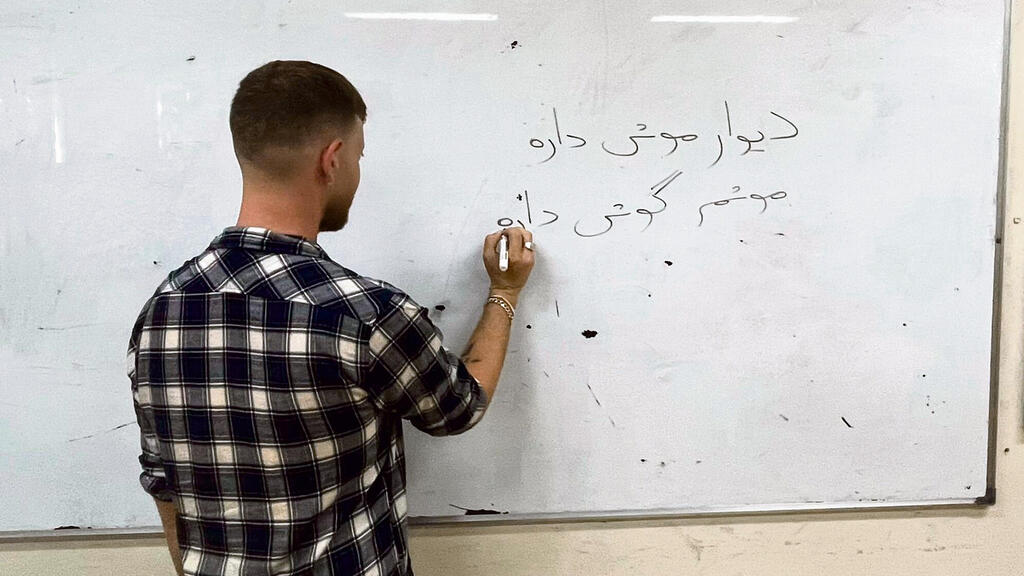
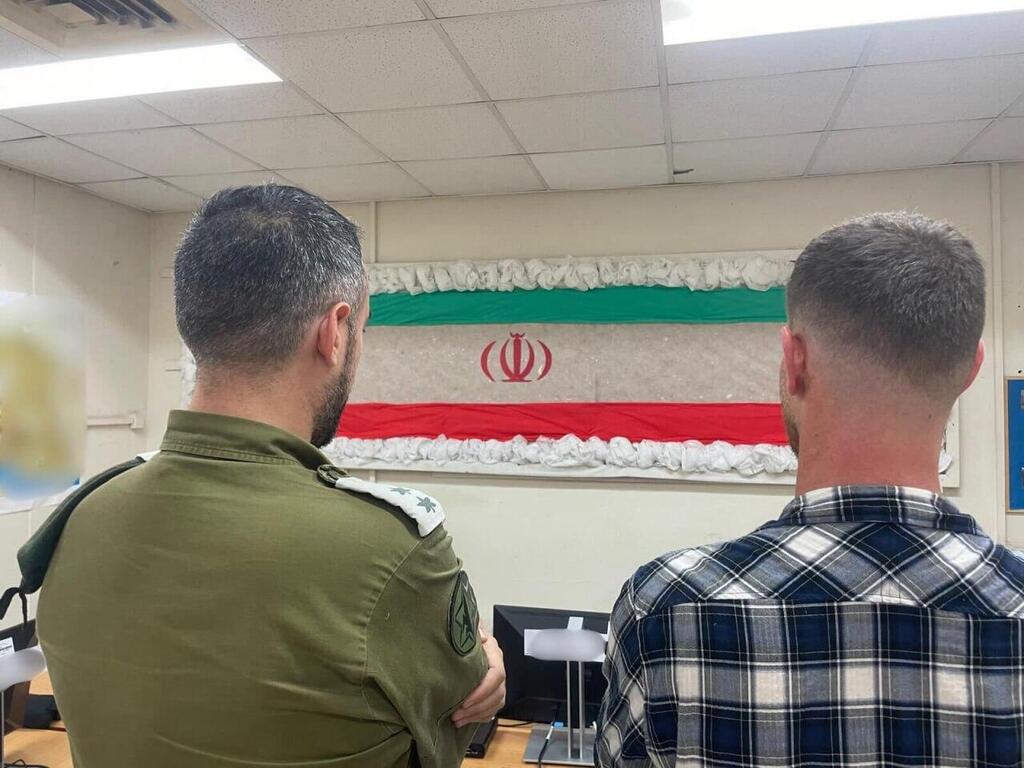
Military intelligence school of languages
(Photo: IDF)
Hundreds of people have gone through the military intelligence language schools since its establishment, being taught foreign languages, often from scratch, including different dialects of Arabic spoken in Syria, Lebanon, Iraq, the Palestinian communities and among the Bedouins. A recent addition is the Yemeni Arabic, used by the Iran-backed Houthis.
Farsi has also been taught to soldiers serving in the IDF and it is among the longest-lasting language courses since it was added 25 years ago. "We understood back then that we would need soldiers who could speak Farsi," H. says. "We understand that we must grow our numbers and have added people who had no background in the language and taught them to speak it perfectly.
Israelis study 25-week-long courses before they are inducted into the service and come out specializing in reading and the spoken language.
Get the Ynetnews app on your smartphone: Google Play: https://bit.ly/4eJ37pE | Apple App Store: https://bit.ly/3ZL7iNv
The courses also include the history of the region where the language is spoken, but are mostly based on intelligence gathered in military operations. "We want the course to be as relevant and up-to-date as possible, even if it means we would use a conversation that was just intercepted or intelligence that was just received. This keeps both students and teachers in operational preparedness," he says.
One teacher, a civilian who has been teaching in the school since 2008, adds that the students are also exposed to slang, songs and even social media posts. He is among the civilians working for the military and is part of a teaching staff made up of 80 active duty soldiers, civilians, officers and language experts.
"Farsi, unlike Arabic, is difficult to teach because it is not related in any way to Hebrew, A. another teacher says. He studied the language when he joined the military and is now teaching it to the 100 or so young recruits.
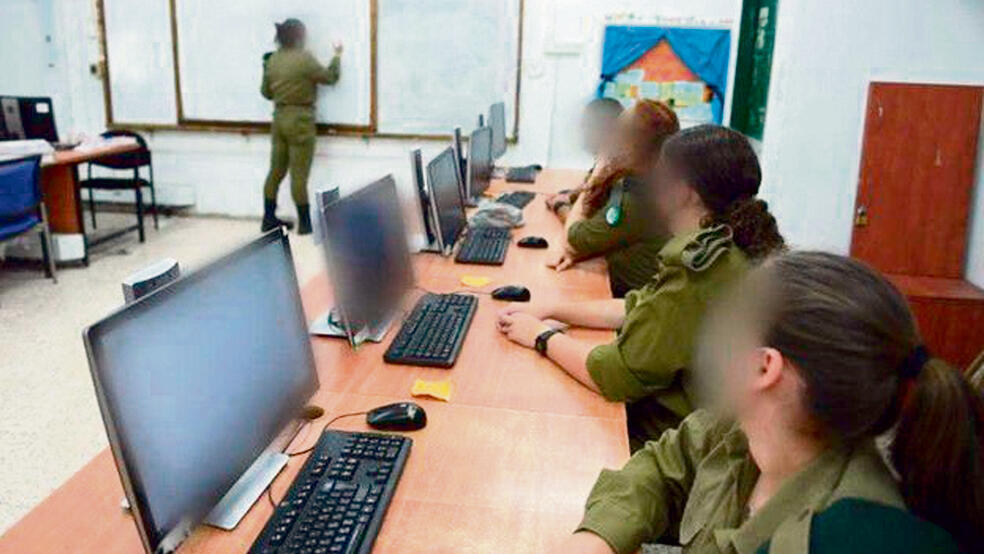
Military intelligence school of languages
(Photo: IDF)
Farsi is a rich, ancient language that has changed and developed over the years," says A. "Language is culture," he adds and explains that it is important to know what the Iranian speaker thinks and why because his use of the language impacts his thoughts and expressions and that is reflected in the studies.
Gramatically, Farsi is very different from Hebrew. There are no past, present, and future tenses, only different uses of verbs," he says. "It is a very picturesque language with beautiful expressions and tones. IF you don't learn the expressions in the course, a dictionary alone won't help you." A. adds that contrary to Hebrew, which is often sharp and short, Farsi is packed with expressions of honor.
"A good intelligence operative must know not only the language but also a lot of theory, culture, Middle Eastern studies, about the military, government, holidays and the basic values and world views," he says.
"It's important to keep humble. There is much that we know, but much we don't. It is important to ask questions, to doubt and to double-check things we are unsure about. As teachers, we encourage our students to continue studying. There is much more to learn, not only for the work in intelligence."