

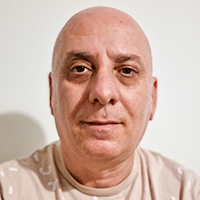
Eighty-three years have passed since Salim Safia first put on a police uniform. He joined the British Mandate police in 1943 at the age of 20 and, shortly after Israel’s establishment, enlisted in the Israel Police. He died at 49, after instilling in his son Ahmad the values of love of country and loyalty to the state.
“I was born into a police family. My late father served as a police officer in Haifa,” said his son Ahmad Safia, 78, a retired command sergeant major from the Coastal District.
Ahmad grew up in Kafr Yasif in the Western Galilee. “I loved the police from a young age,” he said. “I grew up hearing my father’s stories about the British police, about the Mandate period, about serving the public and helping people.”
At 25, Ahmad joined the Israel Police. “At the time, I was almost the only Muslim Arab police officer,” he recalled. “It wasn’t common then. My father encouraged me to enlist, and I felt that I was following in his footsteps and fulfilling his goals.”
After completing police training, Ahmad was assigned to the city of Kfar Saba. Several years later, after serving as a patrol officer, he was transferred north.
“I served for almost a year in Kiryat Shmona and then continued to Acre as a patrol officer,” he said. “Later I took the sergeants’ course and was appointed commander of the Acre marina police post.”
He retired in 2004 after 30 years of service. “In my final years of service, I worked in investigations at the Acre station. That was the most interesting work,” he said. “I would recommend to my grandchildren and great-grandchildren that they serve in the police and contribute to the country.”
‘For me, there is no life without the police’
Ahmad’s son, Sergeant Major Adham Safia, 51, represents the third generation. According to Ahmad, there was never much doubt about what his son wanted to do.
“From the moment I can remember him, he wanted to be a police officer,” Ahmad said. “When he was a child, he would come with me to work. I took him to the police station in Acre, and once he told me, ‘If I don’t join the police, I’ll die.’”
Adham says policing was part of his life from birth. “I absorbed the police almost like mother’s milk,” he said. “I was born three years after my grandfather died. My parents told me that my father was on duty when my mother went into labor.”
The family called the police station to say she was on her way to give birth. “My father got into a patrol car and took my mother to the hospital in Nahariya, and that’s how I was born,” Adham said. “When a baby is born in a patrol car, what else can he do in life besides become a police officer?”
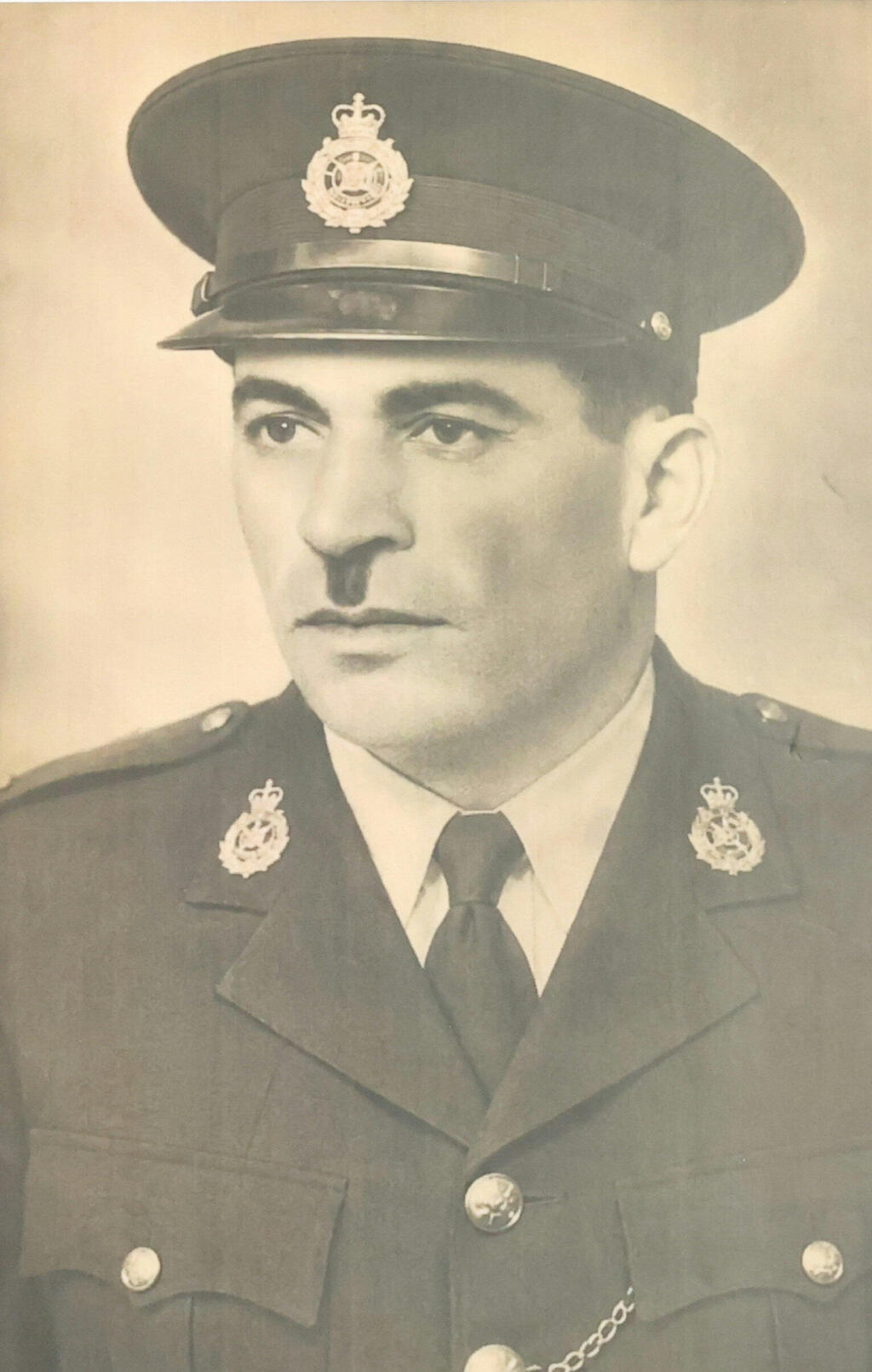
Salim Safia, whose family followed in his footsteps and joined the police
(Photo: Elad Gershgoren)
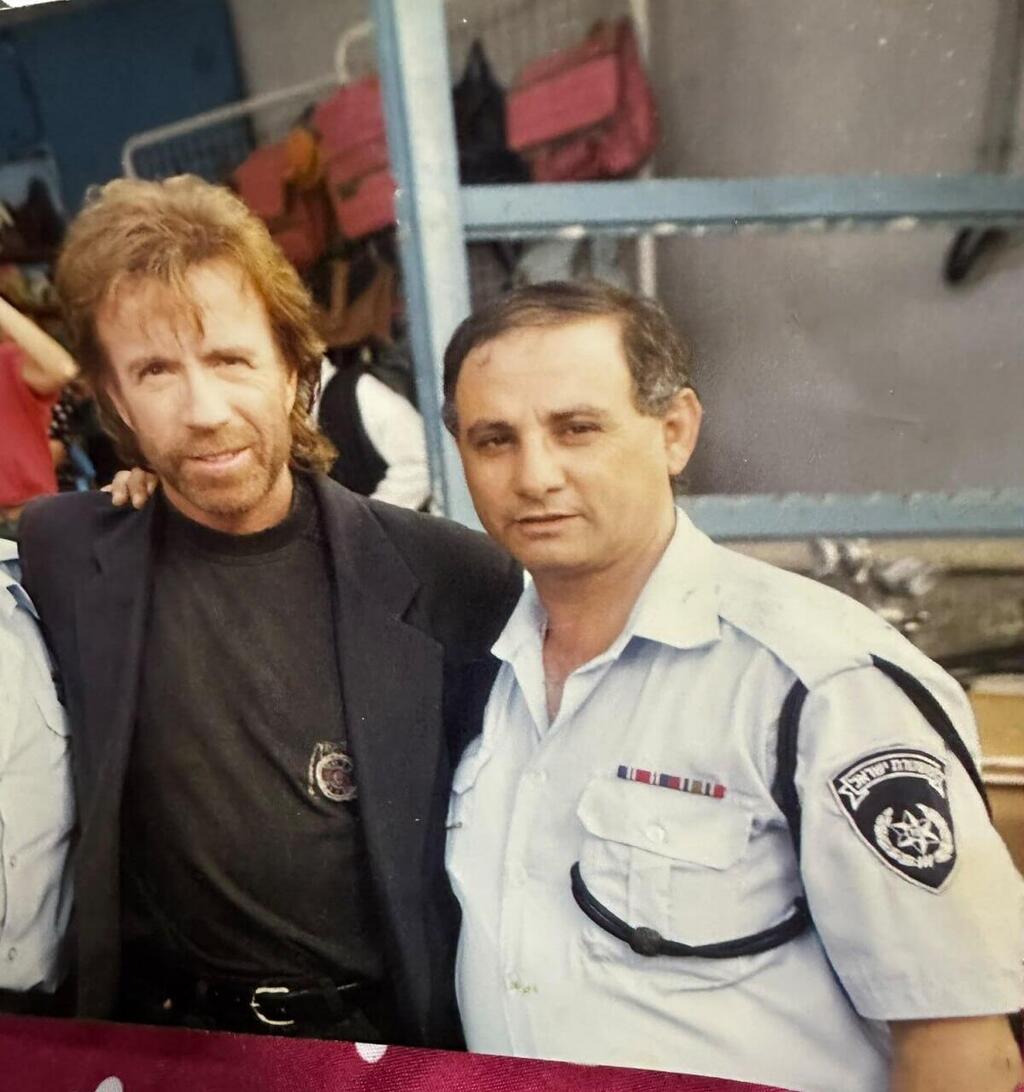
'All the most important guests met my father'. Ahmad Safia with Chuck Norris
As a child, Adham frequently accompanied his father to work. “I saw the respect people gave him and the respect he gave the public, and I understood that this was exactly what I wanted to be when I grew up,” he said. “I became addicted to my father’s way of life.”
His father, he recalled, would come home each day smiling and talking about the people he had helped. “He was a public servant in the fullest sense of the word.”
Adham also remembers some of the famous visitors his father met while commanding the Acre harbor police post, including Chuck Norris and the Von Erich wrestling family.
“Acre was a huge tourist center, and all the most important guests who came there met my father,” he said. “When I saw him treating everyone with respect and making each person feel like the most important citizen, I wanted to be exactly like him. For me, putting on the uniform every morning is fulfilling a childhood dream.”
Adham began his career as a patrol officer at the Acre police station, serving there for three years. He then spent two years as a police officer at the hospital in Nahariya before transferring to Haifa.
“In 2004, I was assigned to the police post at Rambam Hospital in Haifa, and I’ve been here for 22 years,” he said. Today, he serves as the community policing officer at Rambam Health Care Campus. “This place is more than my home,” he said. “Every hospital director knows me. All the doctors and nurses know me.”
VIP visits to the hospital also pass through his hands. “I escort them and am responsible for their security within the hospital,” he said.
He has also been there through Israel’s recent wars. “Every wounded soldier who arrives here is accompanied by me, and I feel as though they are my own children,” he said. “I pray for the recovery of every wounded person who comes here from Lebanon, soldiers and civilians alike.
“As far as I’m concerned, I’ll be with the police for the rest of my life. I can’t imagine life without it.”
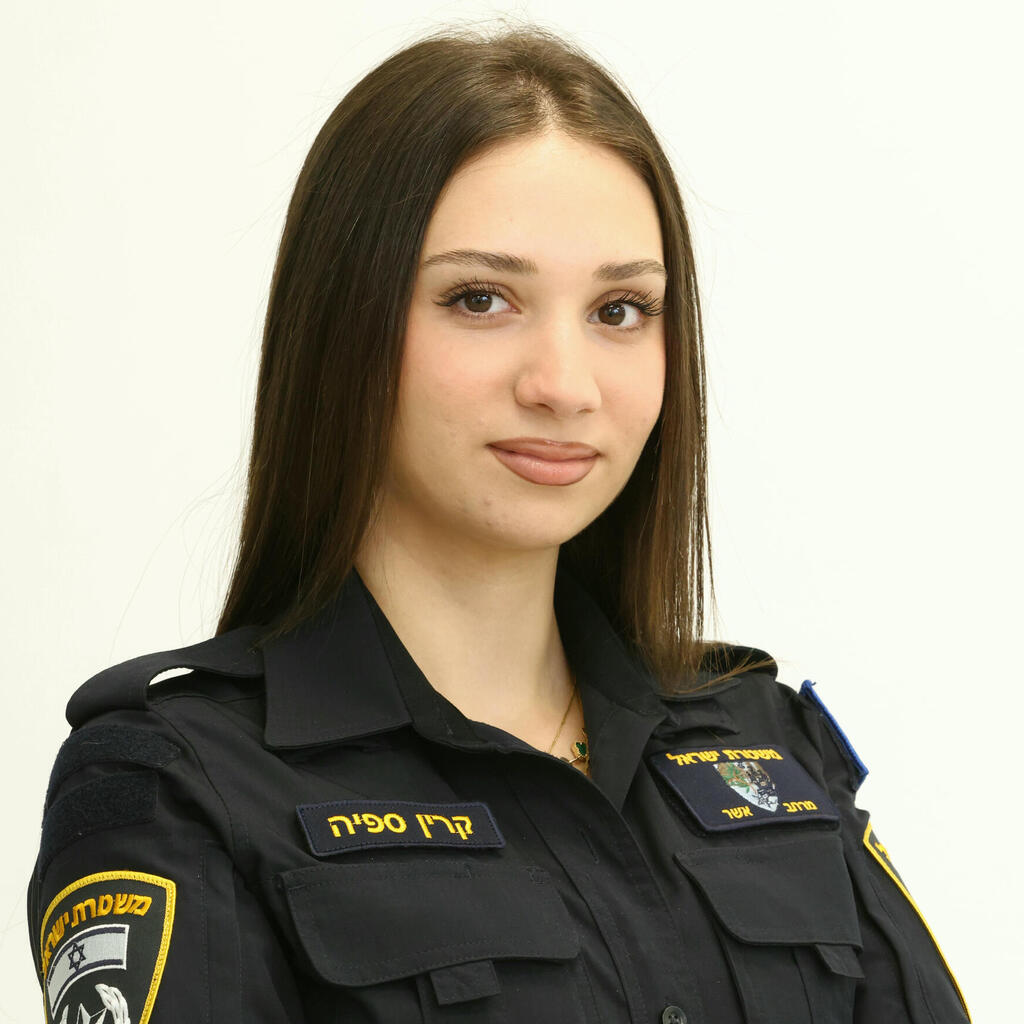
‘I was the only Arab woman in the course’: Karin Safia
(Photo: Elad Gershgoren)
Adham also spoke candidly about crime in the Arab community and what he believes needs to change. “The police are present, but you can’t station a patrol car outside every home,” he said. “If things go wrong with education at home, the police can’t make up for everyone who failed along the way.”
Part of Arab society, he believes, still does not cooperate sufficiently with law enforcement. “If the community changes its approach and its way of thinking, the results will come,” he said. “We will only succeed in eliminating crime in Arab society when people internalize that we police officers are here to serve and protect them, and that there is someone they can rely on.”
He also believes more Arab citizens should join the police. “The presence of Arab police officers in uniform sends an important message to our community and our public, both about integration into Israeli society and about fighting crime,” he said.
“My dream is to see a uniformed officer in every neighborhood in our communities, someone who can strengthen the connection between our community, Israeli society and the police.”
‘The police is my home’
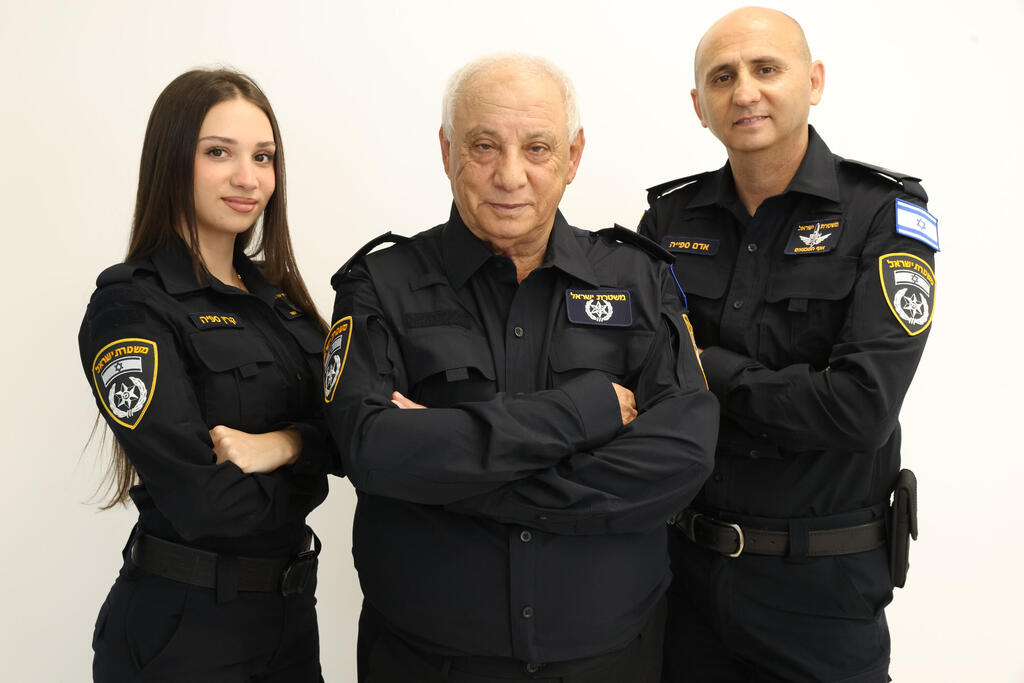
The family tradition has now reached a fourth generation. Adham’s eldest daughter, Staff Sgt. Karin Safia, 21, serves as an officer at the Western Galilee police station in the Coastal District. His younger daughter also intends to join the police.
“From a young age, I wanted to be a police officer,” Karin said. “I saw my father coming home in uniform and helping people, and I knew I wanted to be like him. The police were always part of the family. I’m the fourth generation in the police. Everyone in the village and at school knew that this was my dream.”
Even in kindergarten, she said, the answer was obvious. “The teacher asked us what we wanted to be when we grew up, and I said a police officer.”
Immediately after high school, Karin applied to perform national service with the police and later joined as a career officer. “I went through the police training course, and it was a good period,” she said. “I was the only Arab woman in the course, and I felt special.”
She said she quickly connected with the other trainees and made new friends from across the country. At the same time, Karin began studying law and says she intends to remain in the police afterward.
“I have no intention of leaving,” she said. “This is my home. I come to work every morning with a big smile on my face. I feel that I’m carrying out a mission for the entire public.”
Coastal District Deputy Commissioner Yehiel Bohadana described the Safia family as “a symbol of values, dedication and service to the country.”
“Four generations of one family have chosen to serve and contribute, and another family member will soon begin national service,” he said. “It is an inspiring family with strong values, and a tradition of service that continues from one generation to the next.”