

New York state authorities have repatriated 657 stolen antiquities to India, a collection valued at approximately $14 million, Manhattan District Attorney Alvin Bragg announced on Tuesday during a ceremony at the Consulate General of India in New York.
The repatriation brings a close to several ongoing investigations into international art smuggling rings, notably those involving the indicted art dealer Subhash Kapoor, and underscores a growing effort by federal and local authorities to return looted cultural heritage to its countries of origin.
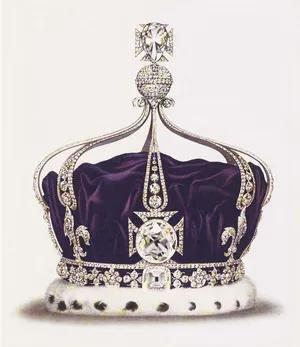
The diplomatic exchange occurred against the backdrop of a high-profile visit to the city by Britain’s King Charles III, a convergence of events that briefly reignited international debates regarding the ownership of colonial-era artifacts. Hours before he was scheduled to attend a wreath-laying ceremony alongside the British monarch at the National September 11 Memorial, New York City Mayor Zohran Mamdani publicly addressed the historical tensions surrounding the 105.6-carat Koh-i-Noor diamond.
Mamdani, a democratic socialist born in Uganda to parents of Indian descent, remarked to reporters on the cultural implications of the royal visit. Addressing the prospect of a private audience with the King, Mamdani stated that if he met with Charles privately, he "would probably encourage him to return the Koh-i-noor diamond" to India. His comments highlighted the contrast between the cooperative repatriation of the smuggled antiquities in Manhattan and the enduring international standoff over one of the world's most famous gems.
The artifacts returning to India span centuries of cultural and religious history. During the handover ceremony, Bragg emphasized the extensive nature of the illicit trade that had removed these items from their countries of origin. "The scale of the trafficking networks that targeted cultural heritage in India is massive, as demonstrated by the return of more than 600 pieces today," Bragg said. He added that the authorities remain committed to dismantling these global networks, which often rely on falsified provenance documents to filter stolen artifacts into legitimate art markets.
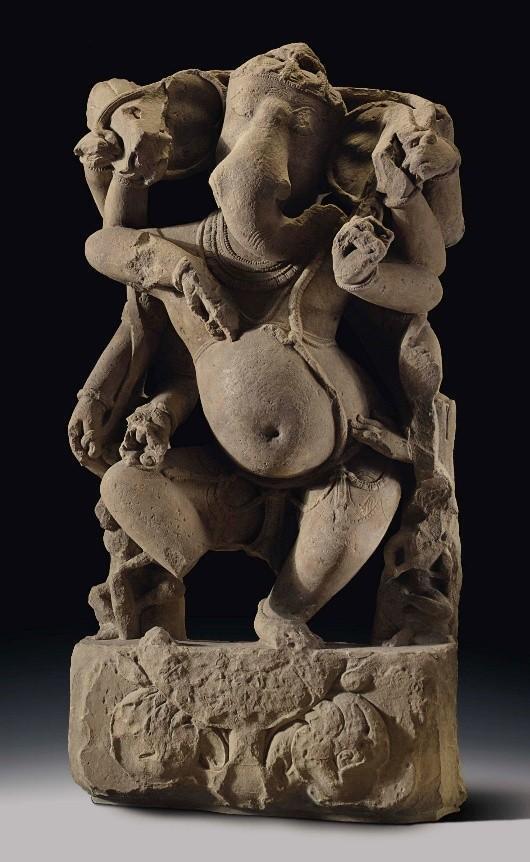
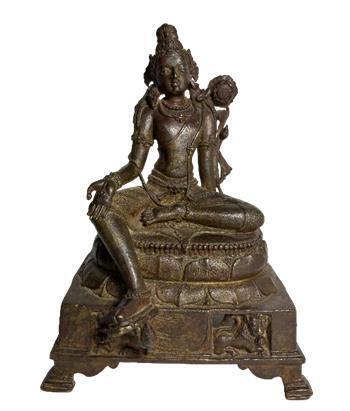
Among the recovered items is a red sandstone figure of a Buddha, valued at an estimated $7.5 million, which depicts the religious figure standing with his right hand raised in a protective gesture. The statue sustained damage during its extraction, with its feet broken off below the knees, before it was smuggled into the United States. Another notable artifact is a bronze Avalokiteshvara dating back to the 11th century, valued at approximately $2 million. The piece was reported stolen from a museum in Raipur several decades ago and remained hidden in a private New York collection until its seizure by the District Attorney's antiquities trafficking unit.
(Photo: Manhattan District Attorney)
(Photo: Manhattan District Attorney)
While the antiquities recovered by Bragg’s office were illicitly smuggled by modern trafficking networks, the Koh-i-Noor diamond represents a different category of disputed heritage, rooted in 19th-century colonial acquisitions. The diamond, currently set in the crown of Queen Elizabeth The Queen Mother and secured within the Jewel House at the Tower of London, possesses a complex history marked by conquest and regime change. Translated from Persian as "Mountain of Light," the Koh-i-Noor is believed to have originated in the Kollur Mine in southern India.
Its early recorded history places it in the possession of the Mughal Empire, where it was prominently set into Shah Jahan’s fabled Peacock Throne. In 1739, the Persian ruler Nader Shah invaded Delhi, sacking the city and seizing the throne along with its precious stones. Following Nader Shah’s assassination, the diamond passed through the hands of various rulers across Central Asia and the Afghan Durrani Empire before coming into the possession of Ranjit Singh, the founder of the Sikh Empire in the Punjab, in 1813. Singh recognized the political and symbolic value of the stone, utilizing it to project authority and consolidate power across his territories.
Upon Singh's death, the empire entered a period of instability, and the diamond eventually fell to his youngest son, Duleep Singh, who assumed the throne as a child. The transfer of the Koh-i-Noor to British hands occurred in 1849, following the Second Anglo-Sikh War. The British East India Company annexed the Punjab region and compelled the 11-year-old Duleep Singh to sign the Last Treaty of Lahore. A specific clause within the treaty dictated that the gem "shall be surrendered by the Maharajah of Lahore to the Queen of England." This legal mechanism has since formed the basis of the British government’s argument that the diamond was acquired lawfully, a stance continuously contested by critics who argue the treaty was signed under colonial duress by a minor.
The diamond arrived in England in 1850 and was displayed to the British public during the Great Exhibition of 1851 in London. However, the original stone, which weighed approximately 186 carats and possessed a traditional Mughal cut, failed to impress the Victorian public, who expected a more brilliant facet arrangement. In response to the muted reception, Prince Albert commissioned the reshaping of the stone. The recutting process, which took over a month, reduced the diamond's weight by nearly half to its current 105.6 carats, transforming it into an oval brilliant cut that enhanced its light refraction.
Concurrently, a legend emerged - purportedly originating from historical folklore—suggesting that the diamond carried a curse affecting any male who wore it. Whether adhering to this superstition or by mere tradition, the British Royal Family has since mandated that the Koh-i-Noor only be worn by female members. It has consecutively adorned the crowns of Queen Alexandra, Queen Mary, and the Queen Mother, whose crown was placed atop her coffin during her televised funeral in 2002.
The stone's cultural footprint extends well beyond royal ceremonies, frequently appearing in literature, television, and popular media as a symbol of ultimate wealth and historical intrigue. From its inclusion in historical novels to its role in modern thriller films, the diamond remains a fixture of public fascination. Yet, its physical custody remains a subject of unwavering international dispute.
Since India gained independence in 1947, the government in New Delhi has repeatedly issued formal requests for the diamond's repatriation. Similar claims have occasionally been raised by the governments of Pakistan, Iran, and Afghanistan, reflecting the stone's transient history across the region.
Successive British administrations have firmly rejected these requests, maintaining that the gem is an integral part of the Crown Jewels and that its restitution is non-negotiable. While the 657 antiquities recovered by the Manhattan District Attorney are now beginning their journey back to Indian museums and temples, the Koh-i-Noor remains firmly in London. The contrast between local efforts to repatriate smuggled art and the immovability of colonial-era acquisitions ensures us that the diamond will continue to serve as a symbol of imperial history and the ongoing debates surrounding cultural restitution.