

Arash now lives in a safe house in Europe. Three times a day, he is brought meals, along with books and newspapers, though he cannot read them because he does not speak the local language. So he mostly watches television obsessively. “Anyway, all the news is focused on what’s happening in Iran, and it fascinates me to see how they cover us from the outside. In Iran, I only rarely watched BBC or CNN, long before the war,” he says. On those broadcasts, one name keeps coming up: the Revolutionary Guards. The Guards attacked. The Guards suppressed. The Guards arrested. The Guards tortured. The Guards killed. Arash reacts with a brief silence. He knows exactly what that means. He, too, once served in the Islamic Revolutionary Guard Corps, until he decided to flee his country.
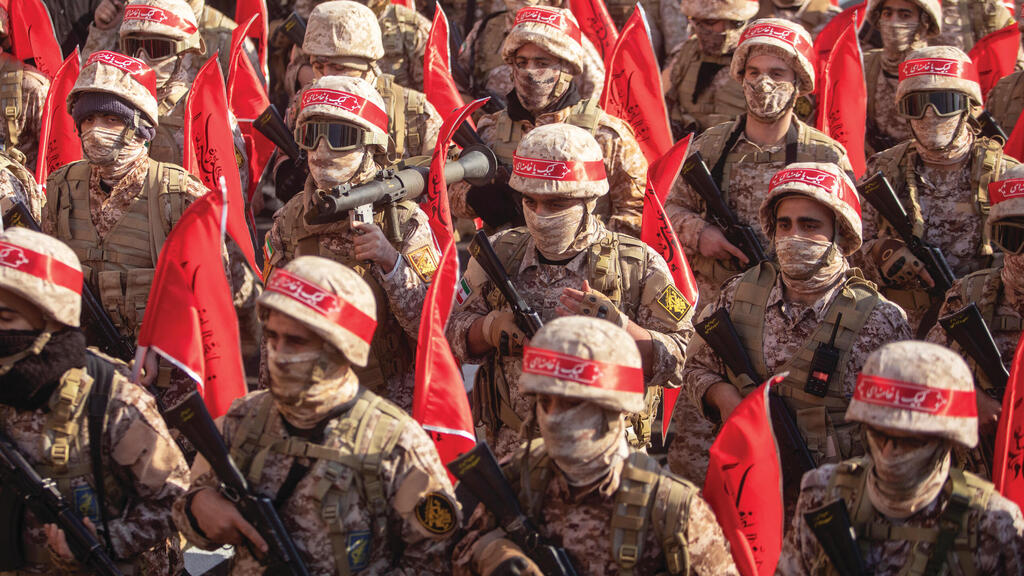
It happened after several years of service. Arash, not his real name, managed to establish contact with what he calls “foreign elements,” but refuses to name them. His escape plan was simple. He would leave Iran, for the first time in his life, to a Gulf emirate, supposedly for medical treatment. None of his commanders in the Revolutionary Guards had any reason to suspect the trip was premeditated. When he arrived, those same “foreign elements” were waiting for him. They put him on a plane, and he vanished into one of Europe’s countries. There, he was isolated with two American officers. “I poured out everything they asked for,” he explains. “I told them there was cooperation between Iran and Hezbollah, and that the moment would come when they would act together, exactly as they are doing now. I told them about the unit I served in.”
What were those interrogations like?
“The days of questioning were intense, and they took notes. It was clear to me I wasn’t going back to Iran. For now, they haven’t decided if I’ll stay in this country or move, which is what I want, to one of the U.S. states. They told me I would remain for further questioning. But I can’t complain. I wanted to escape Iran, and I knew it would be a long process.”
He began his path in the Basij, the paramilitary volunteer militia affiliated with the Revolutionary Guards. “It’s not what people in the West think, a small volunteer unit that just follows orders,” Arash says. “It’s a huge organization, close to a million young people, spread across every corner of Iran, cities, villages, universities, hospitals, government offices.”
What do they do?
“The idea is to maintain internal calm and report any unusual activity. Sometimes a simple soldier identifies a university lecturer speaking against the regime, or a doctor treating regime opponents.” From the Basij, Arash was accepted into the Revolutionary Guards. “It’s definitely a promotion in status, conditions and salary. I trained for six weeks, after which they assigned me to an infantry unit. I was very satisfied. The salary improved, the conditions were better, and they hinted that if I was disciplined, I’d advance. You have to understand, the Guards are considered the flagship force of the regime. They control the Basij and the Quds Force, which operates outside Iran.”
What kind of training did you undergo?
“Physical fitness, live fire, light and heavy weapons, field operations.”
Where did you train?
“Some of the training took place on the islands of Lesser Tunb and Abu Musa in the Strait of Hormuz. Other parts, including live-fire field exercises, were in the desert.”
How much does a Guards soldier earn?
“Between $100 and $150 a month. Sometimes there’s an additional ‘operational’ bonus of about $60, paid in Iranian currency. It’s lower than government clerks, but still. The money comes in an envelope toward the end of the month. Salaries come from the state budget, oil revenues or charitable funds. Some fighters are punished with salary cuts or confiscation for disciplinary violations, theft or suspected disloyalty.”
Are such punishments common?
“Every soldier must leave his home address with command in case there are ‘problems,’ meaning if a soldier defects, the family will pay the price. Punishments escalate, salary cuts, confiscation of property and travel bans on family members. Although most couldn’t afford to travel anyway.” Arash says loyalty is demanded above all else. “I remember once arresting my neighbor. He was talking with his family and criticizing the regime. I brought him to the arrest vehicle, and they took him for interrogation.”
What happened to him?
“I don’t know. I never saw him again.”
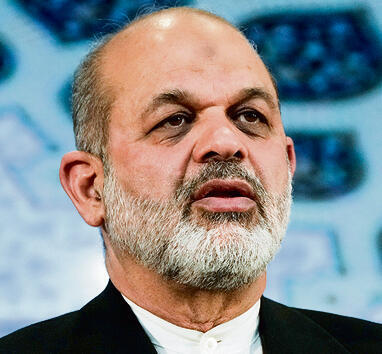
Ahmad Vahidi, commander of the Revolutionary Guards
(Photo: Vahid Salemi, AP)
Arash was one of about 200,000 fighters, excluding the Basij, in the Revolutionary Guards, Iran’s main military force. It is a professional organization, especially in its elite units, well-funded, and in parts well-equipped and trained. It is also highly bureaucratic and steeped in internal politics. But for now, the Pasdaran, as it is known in Iran, is the most powerful organization, and some say the only one standing between the masses in the streets and the ayatollahs.
The Guards’ beginnings were not particularly impressive. When Ayatollah Ruhollah Khomeini returned from exile in February 1979, Iran was fragmented. His supporters, religious Shiites, were a majority, but other forces existed, secular and liberal, that did not share his vision of an Islamic autocracy. Iran had an army and a notorious secret police, SAVAK, which had close cooperation with the Mossad. But Khomeini did not trust them due to their loyalty to the shah. SAVAK was dismantled, the army purged and weakened, and Khomeini established the Revolutionary Guards to replace them.
According to assessments, Mojtaba Khamenei secured his father’s position thanks to the Revolutionary Guards. Now the balance of power has reversed: while the Guards owed their status and funding to his father, Ali, Mojtaba now owes his rule to them, bad news for anyone hoping for a popular uprising to topple the regime
Since then, the Guards have evolved significantly. During the Iran-Iraq war, they gained extensive combat experience and turned missiles into a strategic asset, enabling deep strikes inside Iraq. Ironically, some of their missile expertise reportedly came from Israel, during a period when defense industries from both countries attempted to develop a joint missile, according to foreign reports. After Khomeini’s death in 1989, Supreme Leader Ali Khamenei reorganized the Guards. The organization strengthened, professionalized and expanded abroad, mainly through the Quds Force.
Today, the Guards consist of five branches, ground forces, aerospace force, navy, Quds Force and the Basij. Their commander is appointed directly by the supreme leader. Estimates put their strength at about 200,000 fighters, excluding the Basij, which itself includes between one million and 1.5 million people, many of them volunteers. All are intended first to preserve the regime, and only afterward to defend Iran’s borders and interests abroad. The Guards also maintain a civilian-economic arm, with representatives embedded throughout government and major companies. Until recently, they also operated in Gulf emirates, managing imports and exports.
While Iran’s nuclear development is primarily handled by the SPND organization under the Defense Ministry, the Guards are directly involved. They are responsible for securing nuclear facilities and scientists, tasks in which they have, at times, failed, and are also involved in testing and acquiring nuclear technology. They also operate a powerful intelligence organization, which rivals the government’s Intelligence Ministry. It monitors citizens and suppresses dissent. “Niloufar” can attest to this firsthand. A young Iranian woman who spoke through relatives, she uses a pseudonym for safety. “I was detained recently after being near a protest,” she says. “At the police station, they demanded I leave my phone at home, and the officer threatened my older brother. If they catch me again, it will be very bad.”
What did your brother say?
“He was terrified. When I got home, he told me I was not going to protests. I said there are no protests now. He responded harshly, do you want them to rape you? That broke me.” She says she now obeys, for the time being. “But what will I do when the shah’s son, Reza Pahlavi, calls us to the streets? I trust him. None of Iran’s youth will stay home.” She despises the regime and the Guards. “What do I have to do with clerics? We hold secret parties. Under my chador, I wear jeans and a tight shirt. I even got high heels. But it’s dangerous now. Two of my university friends have already been arrested.”
What happened to them?
“Their parents returned from prison visits pale and shaken. No one knows when they’ll be released, what they’ll be charged with, or if they received ‘treatment,’ meaning rape. They’re innocent girls. I pray they return unharmed. If not, their chances of marriage will collapse.”
Iran effectively has two military forces, the regular army and the Revolutionary Guards, but they differ sharply. Although the army is larger, it has lower status and receives less than half the budget. The command hierarchy is also clear, the army answers to the president, while the Guards report directly to the supreme leader. Under Ali Khamenei, the Guards became the crown jewel of the regime. He funded and empowered them, and they ensured that any uprising, including the one that began in late December, was crushed.
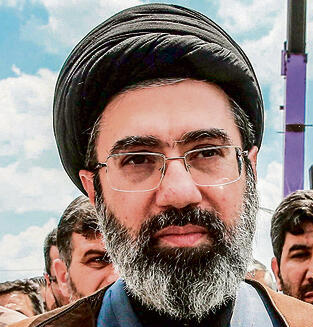
Mojtaba Khamenei, the newly appointed supreme leader
(Photo: Hamid Foroutan, AFP)
With his successor, his son Mojtaba Khamenei, the dynamic has shifted. Mojtaba lacks his father’s religious authority and was chosen largely as a symbol of continuity. The Guards, according to assessments, ensured his rise. Where once the Guards depended on Khamenei, now he depends on them.
According to foreign reports, Mojtaba was injured in recent strikes, possibly around his left eye, and suffered a broken leg, though he remains functional. Some intelligence sources suggest his condition may be worse, raising questions about whether he is alive. An Israeli source argues otherwise. “If he were in worse condition, he wouldn’t have been chosen. You can’t run a country like Iran with an invisible leader.” Arash agrees. “He must provide a convincing sign of life. It’s just unclear how and when.” Iranian exile Emtiyaz Mahmoud says Mojtaba’s appointment signals that the Guards effectively run Iran. “If President Trump believed eliminating Khamenei would break the regime, he will discover the keys are in the Guards’ hands,” Mahmoud says. “That’s why Iran is already adopting more extreme positions.” Arash concurs. “I see the Guards’ influence growing in the past month, because of the war and because they are taking control.”
The recent killing of Ali Larijani further strengthened the Guards, leaving commander Ahmad Vahidi as the central security figure in Tehran. For those hoping for an uprising, this is bad news. The Guards are deeply embedded throughout Iranian society, with bases in all 31 provinces. They have also developed a parallel justice system. Alongside public courts, Iran operates Islamic Revolutionary Courts, which handle crimes against the regime, from protests and graffiti to espionage. These courts work closely with the Guards. Those convicted, if not sentenced to death, may be sent to prison wings controlled by the Guards’ intelligence branch, such as the notorious Ward A2 in Evin Prison. Recently, Nobel Peace Prize laureate Narges Mohammadi was sentenced by a judge affiliated with the Guards to seven years in prison and a two-year travel ban after release.
Israel is in direct confrontation with several branches of the Guards. The aerospace force is responsible for launching missiles and drones at Israel. Its former commander, Amir Ali Hajizadeh, was killed in a strike, and his deputy, Hossein Mousavi, took over. Israel had hoped Mousavi would be killed in the opening strike of the current war, but he survived. The Guards’ intelligence and cyber units have long conducted a shadow war against Israel. They attempt to counter Israeli intelligence operations, while their cyber arm conducts both defensive and offensive actions.
“Niloufar” was detained by the Revolutionary Guards for taking part in a protest and released with a warning. Two of her friends remain in custody.“Their parents came back from visiting them in prison frightened and pale,” she says. “No one knows when they’ll be released, what they’ll be charged with, or whether they received ‘treatment’ from the guards,” a reference to rape. “I pray they return soon.”
Groups such as “Handala,” which claimed to hack Israeli officials’ phones, are believed to be linked to the Guards. However, Israel’s primary conflict is with the Quds Force, responsible for operations abroad. Since its establishment in 1990, it has expanded significantly, building alliances with proxy groups such as Hezbollah, the Houthis, Hamas and Islamic Jihad. It also operates in Iraq, Asia and Europe. Recently, a Pakistani national was convicted in New York for plotting to assassinate President Donald Trump and other U.S. officials on behalf of the Guards. Quds Force commander Ismail Qaani is now one of Israel’s and the United States’ most wanted figures. “He has the luck of a cat,” Arash says. “He survived several assassination attempts. There’s even a rumor in Iran that he’s a Mossad agent, and that’s what protects him.” Arash believes Qaani will soon be replaced.
Since the current war began, the Revolutionary Guards have faced their greatest test. In defending Iran, they have clearly failed. But inside the country, they have succeeded in one crucial aspect, fear. Young people like Niloufar remain at home, afraid of the Guards. Their rule of intimidation still holds, for now.
Will they eventually rise up? Arash believes it will take time. “I hope President Trump intends to continue,” he says. “If he withdraws next week, as he says, there will be no victory, and things in Iran will return to how they were.” He adds: “The West must understand that Iran has patience. They think long-term. I told my interrogators that Iran and Hezbollah would eventually act together.” “You in Israel believed Hezbollah was weakened, and you were surprised by the volume of missiles. You thought you struck Iran, and yet things aren’t going according to your scenario.”
“What does that mean? That Iran takes hits and does not give up.”
And what about the morale of your former comrades?
“You have to understand, morale doesn’t matter there,” Arash says. “People join mainly to make a living. We are good people, hardworking, who love life, each in our own way. But when someone threatens us, we in the Guards become tough. Only the good of the homeland is in front of our eyes.”