

Masanobu Tsuji’s life sounds like a spy thriller too strange to be believable: a fanatical Japanese colonel accused of massacres and cannibalism, a fugitive who escaped war-crimes prosecution, a best-selling author, a member of parliament, a Cold War intelligence contact and, finally, a man who vanished without a trace in Laos.
He was never one of Japan’s most famous battlefield commanders, but he became one of the Imperial Japanese Army’s most notorious staff officers. Tsuji helped plan some of Japan’s most audacious victories in World War II, pushed reckless battlefield decisions from behind the scenes and became linked to some of the Pacific War’s darkest atrocities.
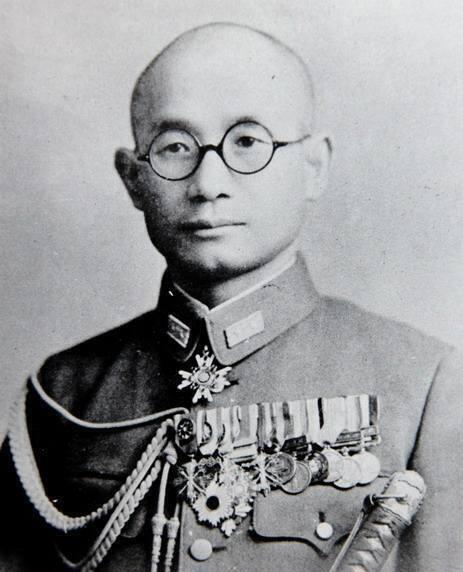
Then, when Japan lost the war and Allied prosecutors began hunting war criminals, Tsuji did what he had done throughout his life: he slipped away.
Tsuji was born in 1902 in Ishikawa Prefecture, Japan, and followed the classic path of the imperial officer class. He studied at a military academy, graduated from the War College and entered an army increasingly shaped by factionalism, nationalism and officers who believed Japan’s destiny had to be forced into existence.
By the 1930s, he was already active in the army’s internal power struggles. He aligned himself with the Toseiha, or Control Faction, and helped block an attempted coup by the rival Kodoha, the Imperial Way Faction. That helped bring him under the protection of powerful military figures, including Hideki Tojo, the future wartime prime minister, and Seishiro Itagaki, a future war minister.
Tsuji quickly gained a reputation for aggression, political intrigue and contempt for restraint. He became associated with gekokujō, a Japanese term meaning “the bottom overthrowing the top,” used to describe junior officers acting without authorization or even against orders from above. For Tsuji, initiative often meant insubordination, and insubordination often became policy.
From 1938 to 1939, he served as a staff officer in the Kwantung Army in Japanese-occupied Mongolia. After Japanese forces were checked by the Soviets at Changkufeng, Tsuji pushed a more aggressive border policy that helped trigger the Nomonhan Incident, a disastrous clash with the Soviet Union.
That defeat left a mark. When Nazi Germany invaded the Soviet Union in 1941, many Japanese officers wanted to strike north and avenge the humiliation. Tsuji opposed it. He had seen Soviet firepower up close and instead became one of the most determined advocates of war against the United States and Britain.
When that war came, Tsuji was assigned to the staff of Gen. Tomoyuki Yamashita, commander of Japan’s 25th Army. His job was operations and planning, and his role in the invasion of Malaya would make his name inside the Japanese war machine.
The campaign began in December 1941 and unfolded with stunning speed. British defenses in Malaya collapsed under Japanese pressure, and by February 1942, Singapore, the great British fortress in Asia, had fallen. For Britain, Singapore was a symbol of imperial power, a naval base guarding routes to India and Australia. For Japan, its capture was proof that European domination in Asia could be broken.
Tsuji later wrote his own account of the campaign, Singapore: The Japanese Version, partly in response to Winston Churchill’s history of World War II. In his telling, Japan’s victory was the result of speed, fighting spirit and improvisation. One of the campaign’s most famous images was the so-called bicycle blitzkrieg: Japanese soldiers moving rapidly down Malaya’s roads on bicycles, bypassing traffic jams, damaged bridges and the limits of heavier transport.
It was effective, bold and perfectly suited to Tsuji’s worldview. Move fast. Accept risk. Trust willpower. Force the enemy to collapse before he understands what is happening.
But the same qualities that helped produce military success also fed catastrophe.
After Singapore fell, Tsuji was tied to the planning of Sook Ching, the systematic massacre of ethnic Chinese suspected of anti-Japanese sentiment. Thousands were killed in Singapore and nearby areas. He was also linked to the Pantingan River massacre and to atrocities in the Philippines after American and Filipino forces surrendered.
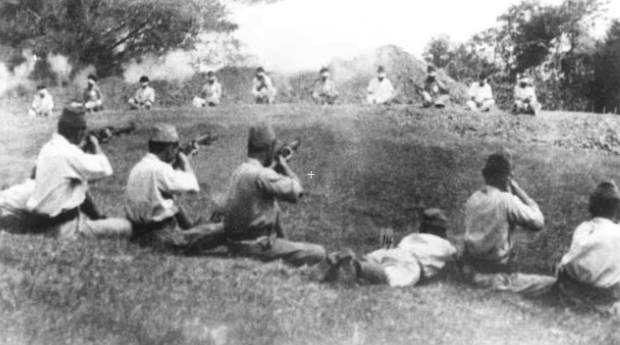
Japanese troops using Sikh POWs as practice targets
(Photo: The Sun)
During the Bataan Death March, prisoners were subjected to starvation, beatings, executions and brutal mistreatment. Tsuji was accused of encouraging the killing of prisoners and pushing execution orders against captured Philippine officials, including Chief Justice Jose Abad Santos. He was also linked to an attempted execution order against Manuel Roxas, then a former speaker of the House of Representatives and later president of the Philippines.
Some commanders resisted or countermanded orders associated with Tsuji’s circle. Gen. Masaharu Homma, the Japanese commander in the Philippines, later stood trial and was executed for crimes committed by forces under his command. Tsuji, whose name hovered over several atrocities, was not in the dock. He was already gone.
The allegations did not stop at massacre. Tsuji was also accused of cannibalizing a downed Allied airman, one of the most grotesque claims attached to his name. The accusation helped turn him from a brutal imperial officer into something even darker in postwar memory: the cannibal colonel who escaped justice.
During the war, Tsuji kept appearing in campaigns where Japan gambled heavily and often disastrously. He helped plan the overland attack in New Guinea through the Kokoda Trail. In late 1942, he went to Guadalcanal and helped plan the final major Japanese offensive there. When the attack failed, he traveled to Tokyo to argue for reinforcements, then accepted the navy’s conclusion that the island could not be held and supported evacuation.
The Guadalcanal failure damaged his standing, but it did not remove him from the war. He was sent to Japanese headquarters in Nanking, where he built contacts with Chinese collaborators and agents of Chiang Kai-shek’s government. Later, he was transferred to Burma, where Japanese forces were under pressure after Imphal. There too he gained a reputation as energetic, arrogant and fearless, the kind of officer who could inspire men and endanger them at the same time.
By 1945, Japan was collapsing. Tsuji escaped first to Thailand and then to China. In China, he was at different times described as both a prisoner and an employee of Chinese intelligence. In 1948, he was allowed to leave Chinese service. In 1949, he returned to Japan.
For most accused war criminals, that would have been the end of any public life. For Tsuji, it became the beginning of another act.
He began publishing books and articles about his wartime experiences, including an account of his years in hiding that became a best seller. He cultivated the image of a man who had survived defeat through nerve, cunning and underground contacts across Asia.
In 1952, he was elected to Japan’s House of Councillors, the upper house of the Diet. He was re-elected twice. The man accused of helping produce massacres, death marches and prisoner killings had become an elected lawmaker.
Then the Cold War gave Tsuji yet another role.
As the United States shifted its focus from defeating Japan to containing the Soviet Union and Communist China, former enemies with anti-communist credentials and old intelligence networks became useful. Tsuji moved in those circles alongside Takushiro Hattori, another former Japanese officer. Declassified CIA files described the two men as “extremely irresponsible” and portrayed Tsuji as dangerous, unreliable and of limited value as an intelligence asset.
One CIA description was especially striking: Tsuji was the type of man who, given the chance, could start World War III without hesitation.
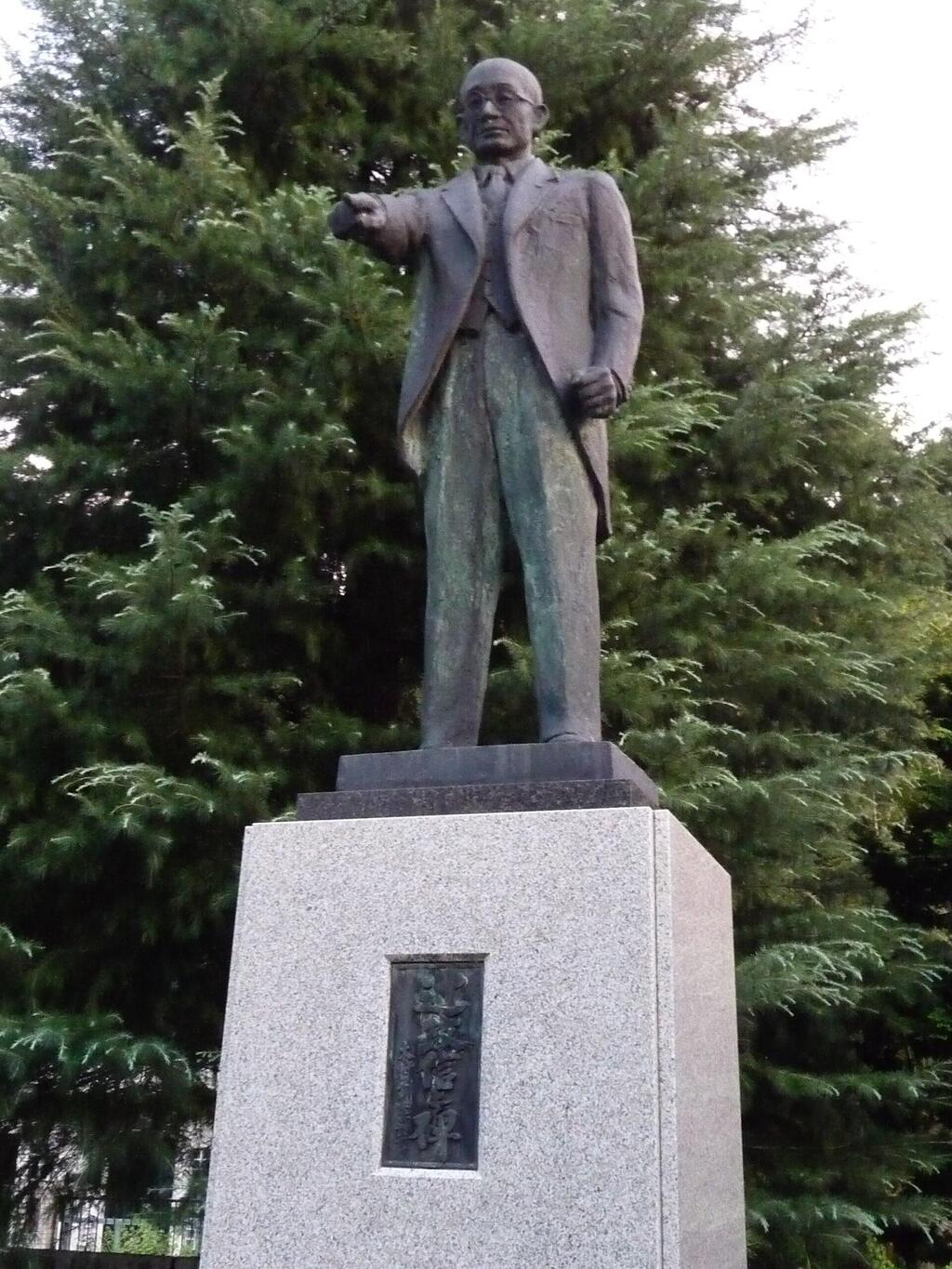
Memorial statue of Masanobu Tsuji in Kaga, Ishikawa
The files also included an extraordinary claim that Hattori had allegedly planned a coup in 1952 to overthrow Prime Minister Shigeru Yoshida and replace him with Ichiro Hatoyama, and that Tsuji talked the group out of it by arguing that the real enemy was not Yoshida’s conservatives but the Socialist Party. The same files noted that the information came from an unreliable source.
With Tsuji, that was always the problem. The stories were often unbelievable, but his life made unbelievable stories plausible.
His final known journey began on April 4, 1961, when he left Haneda Airport on an Air France plane for what was described as an inspection tour of Southeast Asia. He had requested a 40-day leave from the Diet. His planned route included Singapore, Burma, Thailand, South Vietnam, Laos and Cambodia.
According to a CIA investigation summary from 1962, Tsuji arrived in Bangkok, later appeared in Vientiane with Col. Chikashi Ito, a Japanese Self-Defense Force officer attached to the embassy, visited the Tokyo Bank branch in Laos and converted American dollars into local currency. Before parting from Ito, he asked him to send a suitcase back to Japan. That suitcase later arrived at Haneda, with a note saying Tsuji expected to return around May 10 and asking that it be held at the Japan Air Lines office in Tokyo. A postcard mailed from Bangkok also told his family he expected to come home around that time.
He never did.
By late May, his wife was asking Japan’s Foreign Ministry and the Diet secretariat where he was. Japanese officials, journalists, former army officers, right-wing activists, foreign contacts and intelligence agencies all began chasing reports.
The rumors came fast.
One report said he had gone into Laos under a false name. Another said he had entered Communist China through Hanoi. Some claimed he was alive in Vientiane on June 7. Others said he was advising North Vietnam, teaching guerrilla warfare to the Viet Cong or working with Ho Chi Minh’s army. There were claims he was in Yunnan, Nepal, Indonesia or a rebel-held area in Laos. There were reports that he had been shot by Chinese police, killed by American forces, kidnapped by Chinese communists, killed by an assassin from Japan, died of illness or even been devoured by wild animals.
The CIA’s 1962 summary of the investigation into his disappearance reads like a catalog of Cold War rumors. It states plainly that investigators had “no clear idea” of Tsuji’s whereabouts, while later reports suggested that if he was alive, he might be in Communist China, North Vietnam, Laos or somewhere else entirely.
Japan never got a body. The rumors never settled into a final answer. Tsuji was officially declared dead on July 20, 1968.
Maybe he was killed in Laos. Maybe he crossed into China and was detained. Maybe he became useful to someone, then inconvenient. Maybe he died in a prison, a jungle, a firefight or a borderland no government wanted to discuss.
The only certainty is the sequence he left behind: a Japanese officer who helped plan stunning victories, was tied to massacres and cannibalism, escaped the war-crimes trials, returned home as a best-selling author, entered parliament, drifted through Cold War intelligence networks and disappeared into the same world of secrecy and violence that had defined his life.