

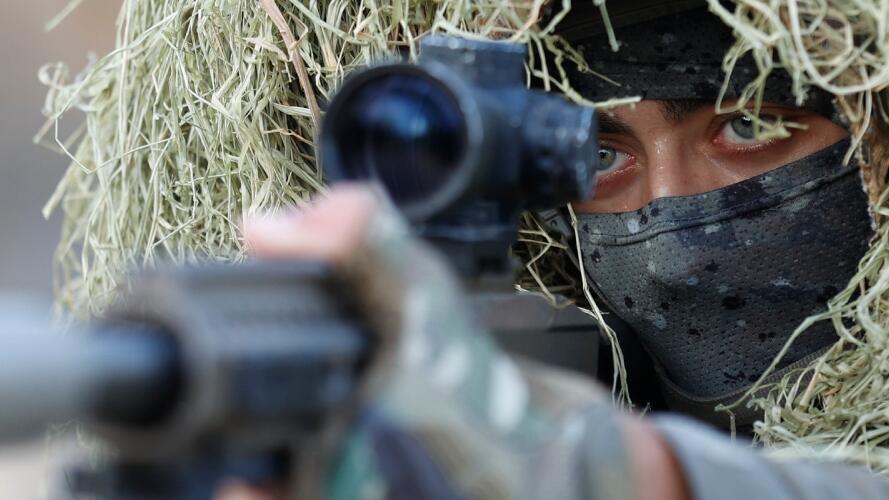
The stones on the shelf in the briefing room at Julis look completely ordinary. Not the kind you would take home as a souvenir from a trip. But each one tells a story. “These are stones we collected during our service,” explains Lt. Wasserman, commander of Maglan’s sniper team. “You arrive somewhere, pick up a stone, and place it in the corner of the memorabilia shelf.”
From where, for example?
“Gaza, Lebanon, Syria, Judea and Samaria. All the arenas we operated in during the war. There are also shell casings here,” he says, pointing to several bullet casings on the shelf. “A stone for the terrain and a casing for a person.”
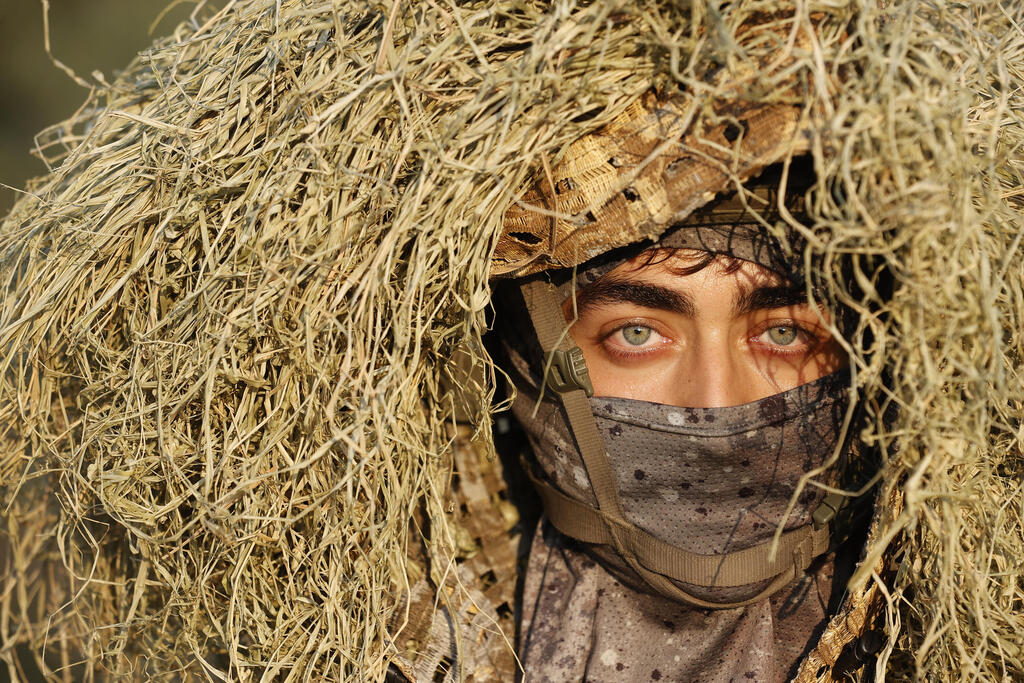
Meaning these are casings from sniper bullets that hit human targets.
“Terrorists. Wait, give me a more accurate quote: ‘A stone for the terrain, a casing for a terrorist.’”
Not every terrorist killed by Maglan’s sniper team is represented here. After all, we are talking about more than 100 terrorists since the war began. But the fighters do not like talking in numbers.
“Each of us knows how many he has killed,” Wasserman says. “But there is no conversation about how many I took down versus how many he did.”
No carving tally marks on the weapon?
“You do not carve, you do not write, you do not declare it out loud,” says Sgt. Maj. Matan. “You know how many shots you fired and how many hit.”
Still, if I asked who the best sniper on the team is, could you answer?
“Yes,” Wasserman says, pointing to Sgt. Telem, one of the team’s veterans.
Staff Sgt. Avishai, a veteran fighter responsible for training and drills, explains: “We have a concept called a senior sniper. The one considered the best. If there is a mission where a lone sniper joins an operation with one of the unit’s companies and has to function independently, he is the guy for those missions.”
Telem, how many terrorists did you kill in the war?
“Not enough. There is always room for more.”
The officer and five soldiers sitting around the table are at peace with their mission, but that does not mean they take its consequences lightly.
“There are two sides here, professional and moral,” Wasserman explains. “On the professional level, the terrorist is a target. Something I need to shoot from a certain distance, at a certain timing, and hit. Just like at the range. Very technical, without emotions. On the moral level, I do not forget that the person in my scope is a living human being. It is hard to disconnect from that. These are people who need to die, but it is not simple to kill a human being. It is enormous responsibility, and you cannot treat it like a video game or tally marks.”
I assume that as a sniper you see the terrorist’s face through the scope, which does not always happen in the chaos of battle.
“Yes. You can see his expressions. You see him walking, looking for a way to hurt Israeli soldiers, with no idea what is about to happen. And you know that in three seconds that person will no longer exist.”
And after you hit him, what goes through your head? “I just killed a human being,” or “Great, direct hit”?
“Again, there is the professional side. I hit the target, fire another round to make sure of neutralization, then give a precise and calm report over the radio. And then there is what you feel inside.”
Which is?
“That he is a bad person who needs to disappear, otherwise he will harm our soldiers and civilians. But it is not simple or easy to make a human being disappear.”
Make no mistake. This is not a story of “shooting and crying.” As someone who was among the first forces to reach Kfar Aza on the morning of October 7, who saw the worst atrocities humans can commit, and who lost his team commander, Capt. Ilay Adany, when they stormed a house in the kibbutz together, Wasserman knows exactly what those terrorists are capable of. Still, he feels the weight of responsibility on his shoulders and on those of his men. Sgt. Chen, a sniper on the team, describes it best: “The same way senior command trusts me to shoot when needed and hit, they also trust me not to shoot when it is not needed.”
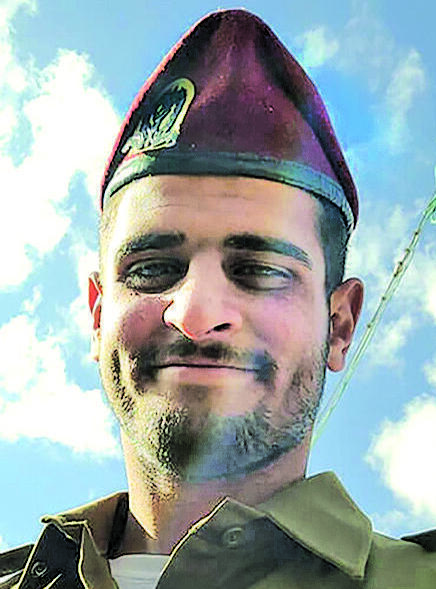
The late Capt. Elay Adany
(Photo: Courtesy of the family)
Chen illustrates this with two personal experiences from operations in Judea and Samaria. The first is documented in a large photograph hanging on the briefing room wall, showing two snipers in position inside a building, seconds before pulling the trigger.
“That was my first shot in the war,” he explains. “I am the sniper on the left, Telem is on the right. We were in Tulkarm. There was identification of a terrorist, and all the senior command came up to the sniper position because it is the most forward. It was one of my first operations, I was excited, and the shot itself was relatively difficult. All the senior officers were standing behind me, which is pretty stressful. And I managed to disconnect from everything around me. I breathe. And I shoot. I hit the terrorist, and then an explosive device that was apparently on him detonated.”
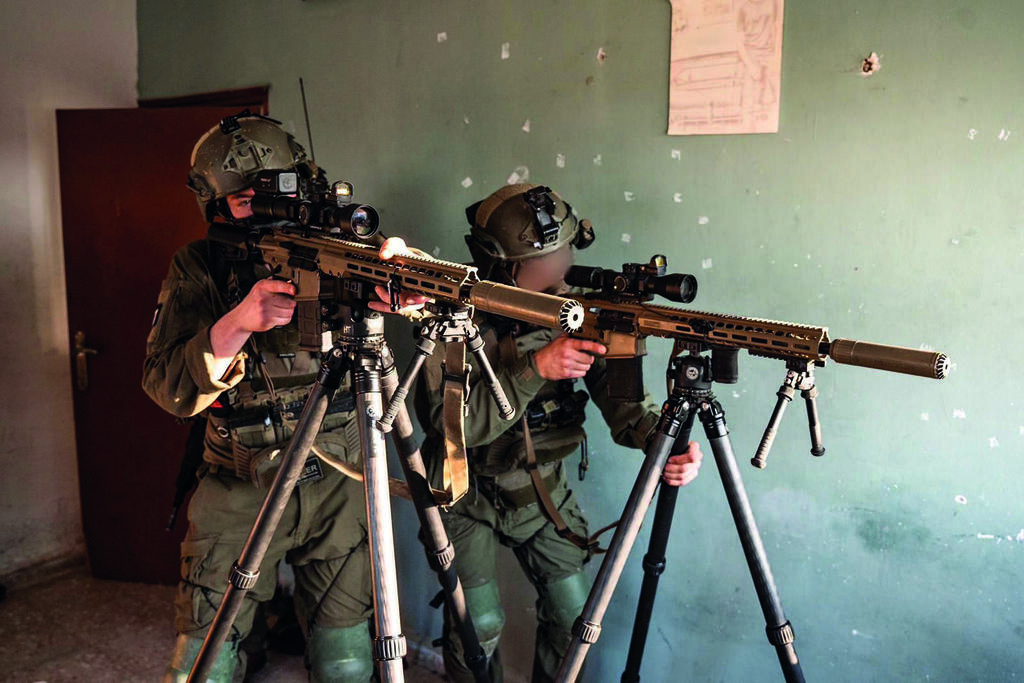
Chen and Telem during an operation in Tulkarm
(Photo: IDF)
The second incident occurred during an operation in Jenin. “It was the opposite situation,” Chen continues. “I was in position and a report came in about a suspicious figure. I see the person through the scope, I release the safety, I am ready. On the radio they say, ‘It is probably a terrorist, but not confirmed.’ And they put the responsibility on the sniper, because that is how it works in the field. In the end, the sniper is the one who executes. I look through the scope, examine the target, and realize it is not a terrorist. I report that I am not shooting. I basically closed the incident.”
How did you know it was not a terrorist?
“He had something suspicious in his hand. They thought it was a knife or another weapon. I watched him for a few seconds and realized he was just playing with something. I have insane responsibility and I have to know how to make that distinction. A person who does not need to die is not killed.”
In today’s public atmosphere, some would say that when it comes to Palestinians, it is not terrible to make mistakes sometimes. “For us, it is absolutely not like that. Our team has a very high value for human life. Of course it depends on the situation. If you are in Gaza and forces are in danger, you will shoot without thinking twice.”
We meet at Maglan’s home base on the outskirts of Camp Emanuel at Julis, between Kiryat Malachi and Ashkelon. Like its sister units in the Commando Brigade, Egoz and Duvdevan, Maglan has fought continuously since October 7. Even now, after the ceasefire, it continues to carry out special operations.
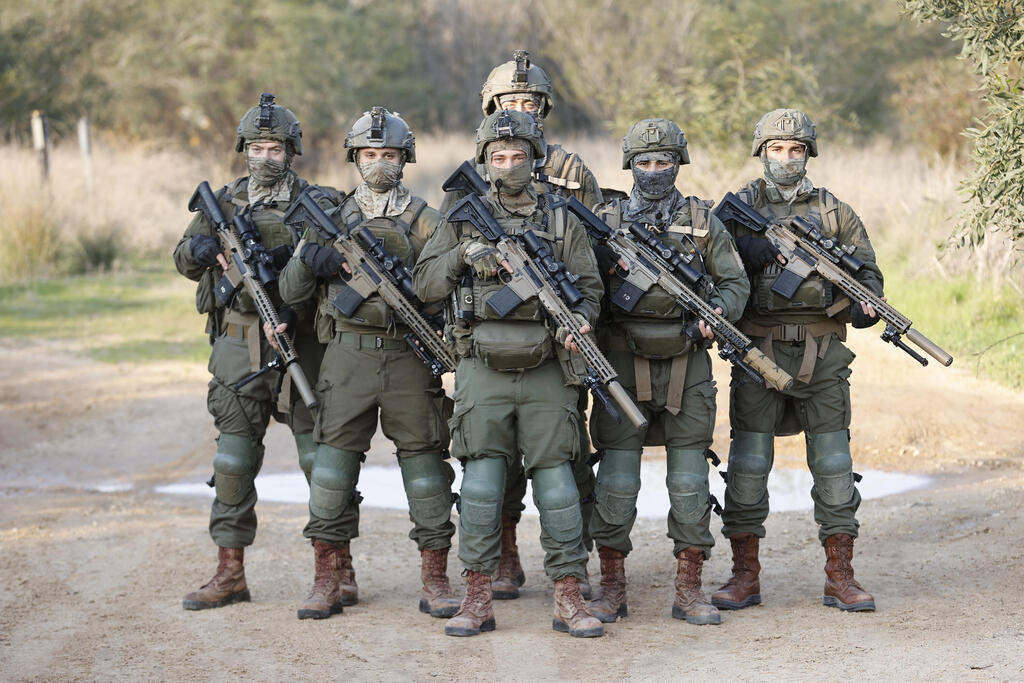
Six fighters from Maglan’s sniper team
(Photo: Gadi Kabalo)
“I have a very organized timeline in my head,” says Telem, who joined the sniper team in early 2024, straight into fighting in Rafah. “We took part in the maneuver in Gaza, then several operations in Judea and Samaria, then ‘raising the curtain,’ which was a sequence of operations in Lebanon even before the northern campaign, and from there into a long maneuver in Lebanon. We came back to the unit for a moment to breathe, and one Friday they told us: You are going into Syria. Several weeks in Syria, right at the beginning of the chaos, and from there we were rushed back to Judea and Samaria. Back to Gaza for Operation Gideon’s Chariots A, then again to the north to replace reservists on the line.”
“That is a sensitive point,” Wasserman notes.
Why?
“Because holding positions and doing fence patrols is not what a commando unit is supposed to do,” one of the fighters explains.
Wasserman adds: “But as a sniper team, we did not do what the others did on the line.”
So you do not really have a reason to complain.
“True, but it was not fun,” Wasserman concludes.
Telem adds: “After that we returned to Gaza, for Operation Gideon’s Chariots B, just before the hostage deal, and then again to Judea and Samaria. Most of the time the team is split among Maglan’s different companies, so we have forces everywhere. There were moments when two were in the north, two in the south, four in the center. We meet after a month for a quick high five and split up again.”
As a commando unit, Maglan operated during the war in two frameworks. In the maneuver itself, in Gaza, Lebanon and Syria, it functioned as an elite infantry battalion with its own combat sector, as part of a brigade combat team.
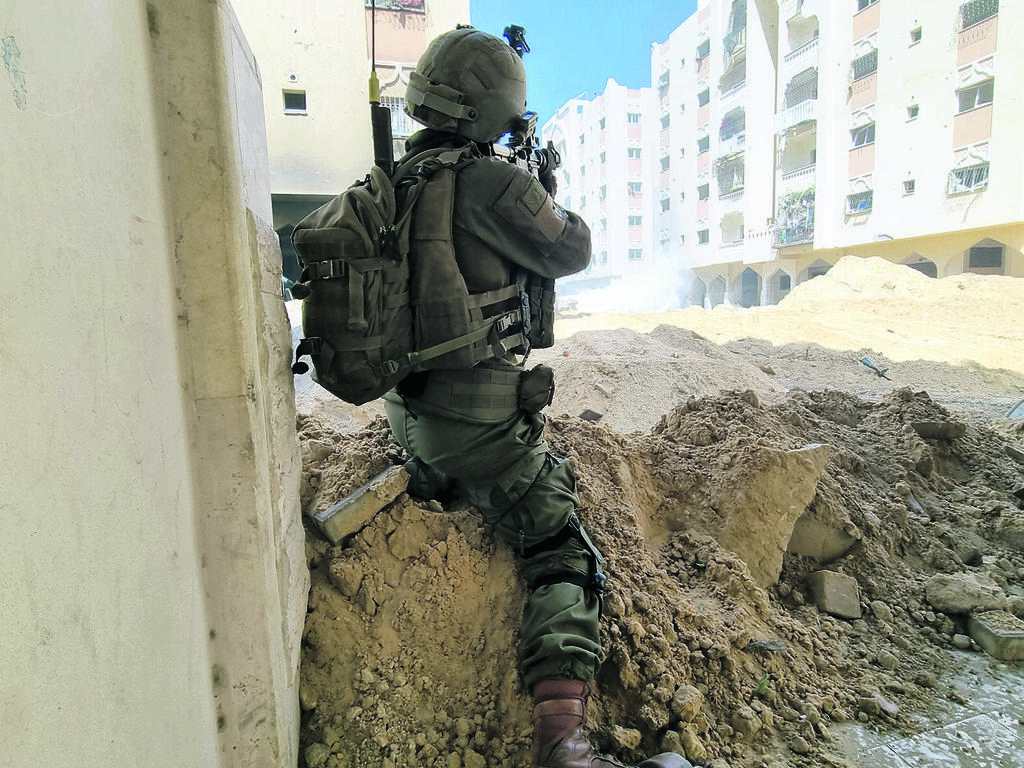
Maglan forces operating in the Hamad neighborhood of Khan Younis, 2024
(Photo: Yoav Keren)
“The missions during the maneuver are battalion and brigade missions. You are given territory and you have to clear it,” Wasserman explains. “The Commando Brigade, and Maglan within it, gets the more complex, more sensitive, deeper missions. But in the end, it is not a classic commando mission.”
I saw this firsthand when I joined the Commando Brigade as a journalist in the Hamad neighborhood of Khan Younis during the early months of the maneuver. Maglan, under the leadership of the unit commander at the time, Col. Aviel Blachsan, cleared a street of high-rise buildings as fighters, together with Yahalom and Oketz teams and with tank support, fought from house to house.
The second operational framework for Maglan is special operations deep in enemy territory. Most are designed to fulfill the unit’s specific mission, which cannot be elaborated on, and showcase its unique and highly classified capabilities.
“Maglan can reach anywhere, at any time needed, and do anything,” Wasserman is willing to say.
One special operation in which Maglan participated, and whose existence was only recently cleared for publication, was Operation White Sparrow in Rafah in May 2024. Two sniper team fighters, Avishai and Telem, were attached to the force.
“There was very strong intelligence on where Hadar Goldin was being held,” Avishai says. “Shayetet 13 and Yahalom were supposed to enter underground, and Maglan was responsible for everything above ground. Why Maglan? Because it was a very complex, heavily booby-trapped environment that no one had dealt with until that point. We, the snipers, took up a position in one of the houses and eliminated the only terrorist who came out of the tunnels.”
Goldin’s body, as is known, was not located during that operation. He was brought to burial in Israel a year and a half later as part of a deal. But the experience is something they will carry with them.
During the maneuver, the sniper team almost never operates as an organic force. “We are split into cells of three to four fighters, with each cell joining one of the unit’s companies,” Wasserman explains. Each cell includes a spotter, a veteran and experienced sniper who also serves as the cell commander, and several snipers. “The company commander’s goal is to place the snipers as far forward as possible, because our purpose is to kill terrorists. And even when we are already the most forward, we try to be even further forward and set ambushes as deep as possible.”
Where are you physically, as the team commander?
“I usually join one of the cells.”
Is that not a bit frustrating, a team commander functioning in practice as a cell commander or a regular sniper?
“As team commander, I decide who goes in and who comes out, which cell joins which company. I stay in daily contact with all the fighters. But yes, when you are split into cells during a maneuver, it is not as enjoyable as commanding the entire team together.”
Wasserman: 'On a professional level, the terrorist is a target, something I need to shoot from a certain distance, at a certain timing, and hit. Like on a firing range, it is very technical, without involving emotions. On a moral level, it is not simple to kill a human being. It is enormous responsibility, and it must never be treated like a video game or tally marks.'
In Maglan’s special operations, the sniper team may function as an organic force, but that is also quite rare. In some operations only one sniper joins the force, and in others a sniper cell. “The battle procedure ahead of a special operation can last from several weeks to several months of planning, preparation and training,” Wasserman explains. “During that time, the sniper or snipers participating join the operational force’s schedule. In the end it can be one person, without a spotter and without a cell, bringing the entire world of sniping into the operation. There is no one there who understands it better than him. That is enormous responsibility.”
Sometimes the rest of the sniper team is not even exposed to what he is doing. “They are not cleared for that specific operation and he is not allowed to talk to them about it.”
I assume you are cleared.
“Yes. Because I also advise the commander or the planner on how many snipers to take and how to integrate them, and because I choose the fighters according to the nature of the mission.”
At times, he himself participates as a sniper. “In the end, I need to send the most experienced guys, the veterans who have been through things and will not get overly excited when they have to shoot. It means being deep in enemy territory for long periods, sometimes several days, in the cold, in the dark, far from the border, with a lot of weight on your back. When you are the only sniper in the force, you have to be razor sharp. If you mess up, there is no one to cover for you.”
A sniper who has to keep his eye in the scope for seven straight hours, covering an alley or a road to make sure no one approaches, is not a simple task, especially when you are alone.
Several days before the interview, Sgt. Chen participated in such an operation, which he cannot discuss.
“All we can say is that he was cold,” Wasserman says.
“But my heart was warm,” Chen replies.
In some operations, the entire team participates together. That was the case in October of this year.
“We were together in a very deep and dangerous ambush in the Gaza Strip. Truly a frightening place,” Wasserman says. “In the middle of the second night of the ambush, we were informed that a deal had been signed and that it was happening, that all the hostages were coming home. That was the most emotional moment I had in the war. An enormous sense of fulfillment. Fighting for so long is not simple, and there is wear and tear. When you are in the middle of such an operation and hear that the hostages are coming back, you understand that it was not for nothing. That is what we fought for over two years.”
The first to receive the news was Chen, who was on shift at the sniper position inside a building deep in the area. “We have a transistor radio in the position, on low volume,” he says. “Then I heard on the news that a deal had been reached. I woke up the whole team and told them.”
Wasserman adds: “It was the middle of the night, dark, no noise allowed, so you cannot celebrate. Everyone just smiles to himself. Because of the cease-fire that was about to go into effect, we were told to break down the ambush and return before daylight.”
The team currently includes 13 fighters, including Wasserman as commander, as well as a sniper instructor. Four of them, incidentally, share the same first name.
Wasserman: 'It means being deep in enemy territory for long periods, sometimes several days, in the cold, in the dark, carrying heavy weight on your back. When you are the only sniper in the force, you have to be as sharp as possible. If you make a mistake, there is no one to cover for you. Keeping your eye in the scope for seven straight hours is not a simple task.'
Selection for the team takes place after completing Maglan’s combat training track, which lasts one year and four months. It includes basic training at the Paratroopers Brigade training base, unit-level training, and advanced instruction at the Commando School at the Adam facility, followed by four additional months of specialized training within the unit itself. At the end of the track, the fighters are also certified as commanders.
One of the areas emphasized during training is physical fitness and the ability to carry heavy loads. “During training, we reach 50 percent of body weight,” Wasserman says. “That means a soldier who weighs 80 kilograms can carry equipment weighing up to 40 kilograms. After training, no one limits us by weight anymore. You need a strong back.”
Telem adds: “I reached 100 percent of my body weight.”
Aside from Telem, who dreamed of reaching Sayeret Matkal, all of the interviewees wanted from the outset to get to Maglan. “Even though my father served in the Paratroopers, I knew almost nothing about the army,” says Sgt. David. “Before enlistment I met someone who had served in Maglan and he told me, ‘Listen, you have to get to Maglan. It is a really good unit and there are special teams like the sniper team.’ So I knew about this team even before enlistment and told myself that if I got the chance, I would reach it.”
Identification of candidates for the team begins already during the training track.
“Tomorrow, actually, we have a selection day for new candidates,” Avishai says. “Now it is the practical stage. We started with 150 people and only five will be accepted.” Those selected will go on to a month-and-a-half sniper course at the Adam facility with fighters from all infantry brigades. They then undergo an additional two months of specialized sniper training within the unit.
Wasserman himself did not serve as a sniper. Only after completing officers training and being selected to command the team, in the midst of the war, did he attend the sniper commanders course. He enlisted in Maglan and served in the training team, Team Adany , together with Avishai. “On October 26 we were supposed to finish training,” Avishai says. “Then October 7 arrived.”
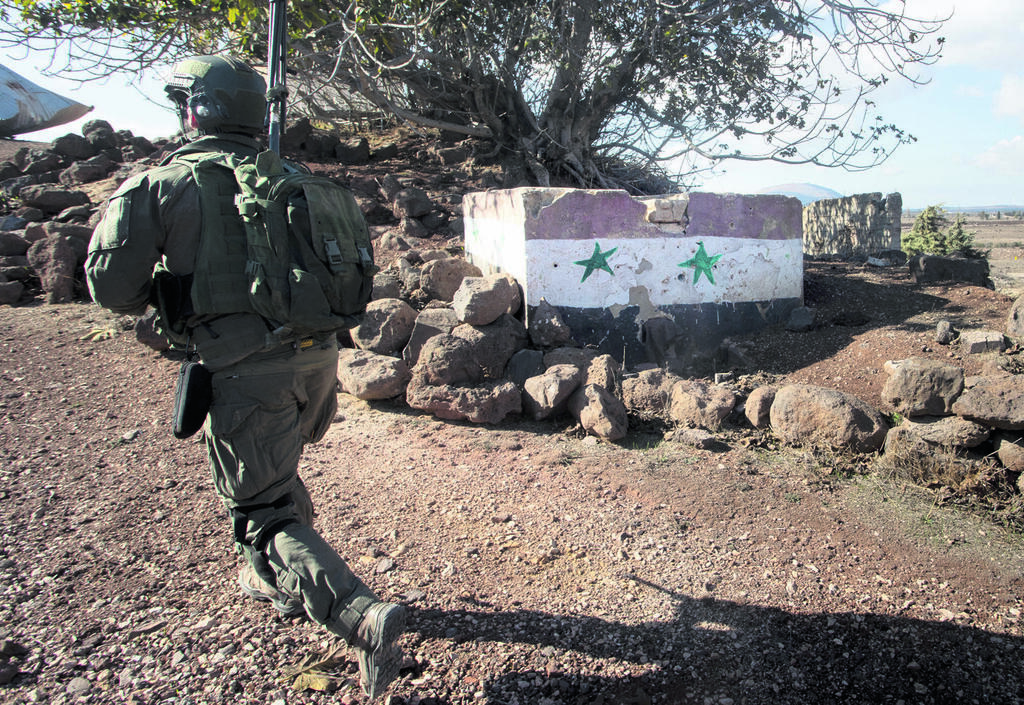
The IDF in Syria
(Photo: Gil Nechushtan)
“That morning we were the only team here, at Julis,” Wasserman recalls. “We were on weekend guard duty. At 6:29 AM we woke up to sirens. We went into concrete shelters and protected spaces. I did not fully understand what was happening. But Ilay Adany, the team commander, already understood. Even before anyone thought to mobilize us, he decided we were going to the border area and started giving orders: ‘Organize the equipment, the weapons, the gear.’ And we went.”
The training team was split into two forces. “I was in the first force, under Adany’s command,” Wasserman says. “The second force left about 15 minutes later, because they had to organize another vehicle.”
Their first stop was Sderot. “We searched for terrorists, cleared buildings, saw many bodies, a lot of blood,” he says. “Then we were told to continue to Kfar Aza. We reached Saad by an indirect route, dismounted quickly and continued on foot toward Kfar Aza. Already on the way we came under fire. You run, hit the ground, bullets whizzing over your head.”
Near Kfar Aza they encountered the unit commander at the time, Aviel Blachsan, and several other officers, and entered the kibbutz with them.
According to the IDF’s published battle investigation, the time was 10:46 AM Ten minutes earlier, fighters from Duvdevan and Sayeret Matkal had entered Kfar Aza.
Wasserman says the fighting inside Kfar Aza continued house to house. “We started moving between the homes and evacuating residents, some of them wounded. One civilian pointed to a house and told us there were terrorists inside. Five of us entered the house to clear it, including Adany and his radio operator. A terrorist who was hiding inside ambushed us at close range. Adany was critically wounded and evacuated to the rear. Blachsan joined, a firefight erupted inside the house, and we killed the terrorist. Only afterward did it become clear that the homeowners were not inside.”
Chen: 'In the end, all the senior command trusts the sniper. There was an incident during an operation in Jenin where I was looking through the scope, assessing the target, and realized he was not a terrorist. They thought he had a knife or another weapon, but I saw he was just playing with something. I reported that I was not firing. I closed the incident.'
Meanwhile, Adany was taken to another house where wounded civilians had been gathered. “One of the commanders managed to get hold of a Savannah vehicle. They loaded Adany and several wounded civilians onto it and began driving out to evacuate them. On the way, they came under fire. Sgt. Amichai Yaakov Vanino, my friend from the team, was killed while trying to stop Adany's bleeding.”
Another fighter from Team Adany was killed that morning. “Sgt. Amit Guetta, who was already married, had been on leave and was staying with his wife’s family in Netivot,” Wasserman says. “When everything started, he left the house to join the unit and encountered terrorists on the way. He managed to run over several of them before he was killed.”
Six months later, Guetta’s first son, Oz, was born.
Telem: 'We went out to seize a position at night, ‘Syrian Pita,’ deep inside the territory. At five in the morning, at sunrise, you suddenly see dozens of kilometers into Syria. Like my grandfather, who fought there as an officer in Sayeret Matkal. And there we were, with our eye in the scope, in a place we never thought we would ever reach.'
Wasserman learned of the deaths of his two friends and that his commander had not survived his wounds three days later, when he left Kfar Aza. “It is a slap in the face. Shock. You cannot process it.”
Wasserman never wanted to be an officer. For a long time, Adany tried to convince him, without success. “We had many conversations about it,” he says.
After Adany's death, Wasserman decided to fulfill what he describes as his commander’s unofficial will. After several weeks of fighting in Gaza and several months serving as a squad commander in Maglan’s training framework, he went to officers training.
Avishai was in the second force that left the unit that morning. “I remember Adany saying, ‘I cannot believe they caught us with our pants down,’” Avishai says. “I did not understand what he meant. I thought it was another round. The penny dropped when we reached Sderot and saw the elderly people murdered near the shelter.”
The force, which consisted of six soldiers and an officer, continued toward Kfar Aza to link up with the rest of the team.
“We drove straight down Route 232, and when we reached the curve near Mefalsim, we saw what was happening,” Avishai recalls. “Bodies, burned-out vehicles. And right at the curve, like in the movies, you start hearing tak-tak-tak. And you realize they are shooting at you. We dismounted in the middle of the road, identified the direction of fire and began returning fire. The officer and another fighter were wounded. We pulled them back and treated them.”
A Nahal unit joined them. Its company commander, Maj. Tal Grushka, was killed right next to Avishai. “We kept firing until the shooting stopped, but then we identified four Hamas pickup trucks with machine guns racing toward us from a distance. We directed a combat helicopter toward them and continued on to Kfar Aza.”
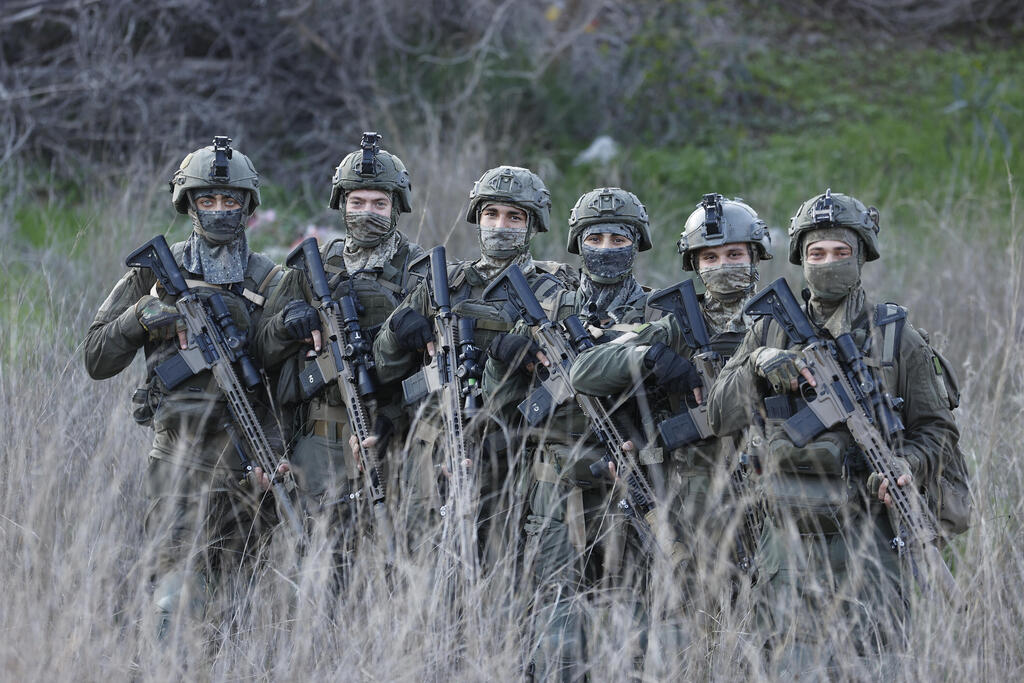
Six fighters from Maglan’s sniper team
(Photo: Gadi Kabalo)
Sgt. Telem, who enlisted after them, was part of a younger training team, three months from completing the course. “We were rushed by bus to Kibbutz Kissufim,” he says. “The next day we were supposed to have our final commando evaluation, and I was sure we would finish within a few hours and return to the unit to prepare for it. I still did not understand the scale of the event. In the end, we had our evaluation in Kissufim, just a little different. We arrived around noon and mainly dealt with evacuating civilians and searching for terrorists.”
Chen, David and Matan were at the beginning of their training at the time and did not fight in the border communities. They experienced their baptism of fire during the maneuver. “We finished sniper training and went straight into Lebanon, to the Saluki,” David says. “We found a lot of Hezbollah weapons, missiles ready for launch, firing positions. Suddenly you realize that everything we did during training was worth it, that we are really fighting the bad guys. And toward the end of the Saluki operation, a mortar round landed about 100 meters from us.”
“There were a lot of mortars,” Chen adds.
“Yes, but one landed very close,” David says. “It was very scary.”
“You are sitting in the sniper position, you hear the mortar fired, and you know that in about 10 seconds it will land near you,” Chen says. “I asked a veteran fighter on the team how you deal with that, and he told me, ‘Always remember that if we are taking the mortars, it means the guys behind us, the civilians in the communities, are not taking them.’ That really changed something for me.”
David adds: “Before entering Lebanon, we were in Kiryat Shmona and everything was empty and deserted. There were no people at all. Not long ago, when we were holding the line in the north and reached Metula, suddenly we saw people. There was life in the community. That showed us that what we are doing has results.”
Avishai: 'We drove straight down Route 232, and at the curve near Mefalsim, like in the movies, we started hearing tak tak tak. You realize you are being fired on. We returned fire until it stopped, but then we spotted four Hamas pickup trucks with machine guns racing toward us. We directed a combat helicopter at them and continued on to Kfar Aza.'
The fighting in Syria stood out for them as a particularly unique experience. “It is mainly that fast switch,” Wasserman says. “We are sitting here on a Friday night at the unit, no one had ever talked to us about Syria, and suddenly they tell us, ‘All right, guys, you are going in.’ We did not even have updated aerial imagery. Within 24 hours, you find yourself inside Syria.”
Telem recalls: “We went out on a nighttime seizure of a position, ‘Syrian Pita,’ deep inside the territory. I was with another guy from the team who has since been discharged. Five in the morning, sunrise, and suddenly you can see dozens of kilometers into Syria. Like my grandfather, who fought there as an officer in Sayeret Matkal. And we are there with our eye in the scope, in a place we never thought we would reach.”
The Maglan sniper team did not lose any fighters during the war, but several of them were attached as a cell to a company commanded by Sgt. Tal Lahat, who was killed by Hamas sniper fire on July 9, 2024. “We passed there 20 minutes before he was killed,” Telem says.
For Matan, one of the most meaningful moments of the fighting came on the most recent Memorial Day.
“I was in final preparations for some kind of surgical, quiet, covert activity, and then there was the siren,” he says. “In all the operational pressure and moving between arenas, you do not always have time to think about the meaning of what you are doing. That moment sharpened it for me more than anything. You think about the friends who were killed and everyone who fell for the country, and you understand that you are here to continue what they started.”