

Tucker Max became an American celebrity in the mid-2000s after launching a blog in which he gleefully chronicled his life as a heavy drinker, aggressive womanizer, and unapologetic misogynist. His first book, "I Hope They Serve Beer in Hell," was a massive bestseller, as was its follow-up, Assholes Finish First. In the early days of the internet, Max was arguably among the first to prove that crude, male-centric—and especially misogynistic—content could be extremely lucrative. He built a huge audience of young men who finally felt someone was speaking for them without apology.
In the middle of the last decade, just as the internet was becoming a paradise for influencers of all kinds, Max made a sudden 180-degree turn. He underwent therapy, got married, became a father, and began writing books about men’s mental health. Today, his old content is gone from his website, which now promotes speaking engagements about “the transition from legendary party animal to husband, father of four, and Texas farmer.”
"לואי ת'רו: בעומק המנוספרה" -טריילר
(באדיבות נטפליקס)


If Max had stayed the course, he would likely have been one of the figures featured in Louis Theroux’s "Inside the Manosphere," the new Netflix documentary in which Theroux attempts—much as he has for 30 years—to penetrate subcultures that appear bizarre from the outside and show that they are not entirely absurd, but often detached from reality, and ultimately more ridiculous than dangerous.
To Theroux’s surprise, that is not what he finds. He enters—somewhat late, admittedly—the manosphere world that has existed at least since Donald Trump’s rise and especially since the COVID-19 pandemic, which left tens of millions of isolated men in its wake. Unlike previous cases, Theroux discovers this is no longer a fringe subculture: it has become a significant force shaping sharp and often violent political shifts in the Western world over the past decade.
Some of the people featured in the film are indeed absurd. When one claims to have slept with 2,000 women, it is fairly clear he is exaggerating. But the phenomenon itself—and especially its leading figures—is genuinely dangerous. In interviews promoting the film, Theroux said: “It’s important not to take it too seriously, but also to take it seriously enough. I think these people are lost in their own performance, but enough of it is real to warrant concern.” The fact that many of its stars are clichés of men from broken homes, monetizing their persona and ultimately evoking pity, does not change the reality: this is the age of the manosphere, and there is no end in sight.

“Show me one thing a woman has invented or contributed to the world”
The “manosphere” is a network of communities, influencers, forums, and online content centered on masculinity. It spans everything from male self-help to extreme and dangerous ideologies, but above all it is a massive business generating millions, built primarily on misogyny. There is virtually no form of woman-hatred that cannot be found within it, and Theroux encounters all of them.
From pornography to Scientology, Theroux has made a career out of exploring subcultures few want to examine. The film’s subjects are not naïve—they know him and understand they will likely come off badly. They hesitate before granting access, but ultimately cannot resist. What matters is not how they appear in the film, but that they appear at all—and that there are shots of teenage boys running up to them, asking for selfies and saying: “We follow you, we admire you.”
The manosphere consists of men who have built massive testosterone-driven online communities, presenting themselves as success stories who attract women and money. They claim to free modern men from the chains of “woke society,” but in practice they are freeing themselves from the need to treat women as equals. They insist they do not hate women—in fact, they love them, and simply know what is best for them. Running through the entire ecosystem is a culture of sexual violence. “I decide when I put my dick in you, only I decide for you,” one says on camera. The phrase “fuck women” recurs constantly— out of love, they insist.

From 'Louis Theroux: Deep in the Manosphere'
(Photo: Courtesy of Netflix)
In Spain, Theroux meets 23-year-old Harrison, known to his followers as hstikkytokky, who urges millions of followers to “reject the system” and follow him into a life of Ibiza villas, Porsche cars, and chaotic escapades. He has a bodyguard, similarly styled friends, and random women on the couch. He promises his followers they too can achieve this—if only they stop allowing the system to suppress their masculinity.
Another figure, Justin Wheeler, an American influencer polished to perfection, drives a Tesla Cybertruck and delivers misogyny with a smooth, charismatic tone. He believes in one-sided monogamy—exactly as it sounds. “Look around and show me one thing a woman has invented or contributed to the world,” he tells Theroux. “This isn’t toxic masculinity, it’s reality. Men built and sustain society. Women have invented nothing. I’m not saying it to insult them—that’s just how they are.”
Discriminated men and privileged women
At the core of the manosphere is a business model that exploits a real crisis among young men. Many have grown up in a changing society where they are no longer dominant, struggling socially and filled with anger toward women who do not respond to them. The central message of influencers is that men are the true victims of existence itself: they are “born without value” and must earn everything by themselves. Women, meanwhile, are portrayed as privileged—“born with breasts and a vagina” and able to advance through beauty. Men, poor souls, lack that advantage and are not considered attractive. It is a powerful emotional narrative for many young men.
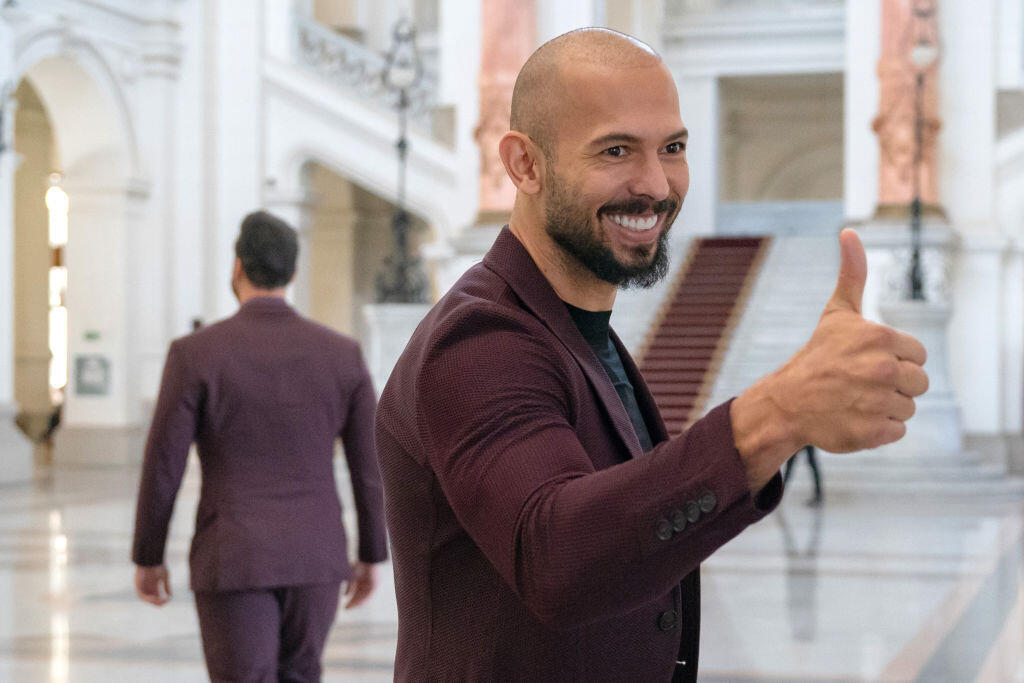
Andrew Tate
(Photo: Andrei Pungovschi/Getty Images)
The figurehead of this culture is 36-year-old Andrew Tate, who turned misogyny into a thriving business and brought it into the mainstream. A former professional kickboxer, Tate rose to prominence in 2022 through online courses on “real masculinity.” Despite facing dozens of criminal charges in Europe for rape and sex trafficking, his popularity has only grown. His followers view him as a man punished for simply exercising male privilege and targeted by “woke” systems that restrict men’s freedom.
Tate and his imitators repeatedly invoke the “red pill” from The Matrix, claiming it reveals the “truth” hidden by mainstream media that seeks to destroy masculinity. That truth, however, consistently boils down to misogyny—and often racism, white supremacy, and neo-Nazism as well.
Pedophilia is another recurring theme in the manosphere. Its adherents present themselves as fiercely opposed to it, even as some of their own heroes face allegations. They publicly shame alleged offenders, sometimes violently, and upload it online. Conspiracy theories about the Illuminati, aliens, and the pyramids also circulate freely—and where conspiracies thrive, antisemitism is never far behind.
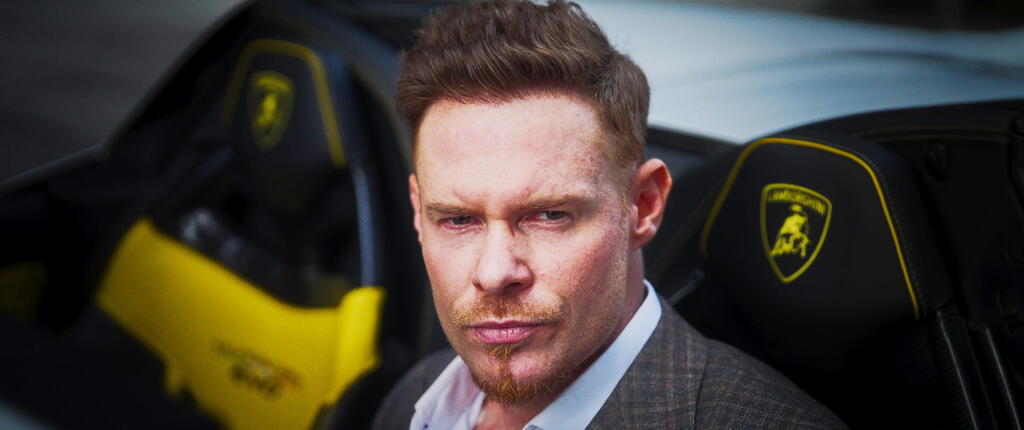
From 'Louis Theroux: Deep in the Manosphere'
(Photo: Courtesy of Netflix)
All of this reaches millions of people. The manosphere is not just a message but a technological ecosystem powered by algorithms. Misogynistic content is not new, but its viral distribution is, and no one quite knows how to contain it. Many young men—teenagers included—have lost contact with reality, facts, and the physical world.
The impact extends beyond impressionable youth. Rachel, a woman in her 30s from London, met her former partner on the dating app Hinge and initially saw him as generous and kind. He insisted on buying her gifts and giving her money. Four months into the relationship, she discovered he was homophobic and misogynistic. Two months later, he raped her.
Debbie, in her 50s, said her ex-husband’s mask began to slip after they moved in together. As she became more independent—earning more money, passing her driving test—he began consuming extreme online content. She only discovered what he was watching when he began speaking about it proudly in front of their children.
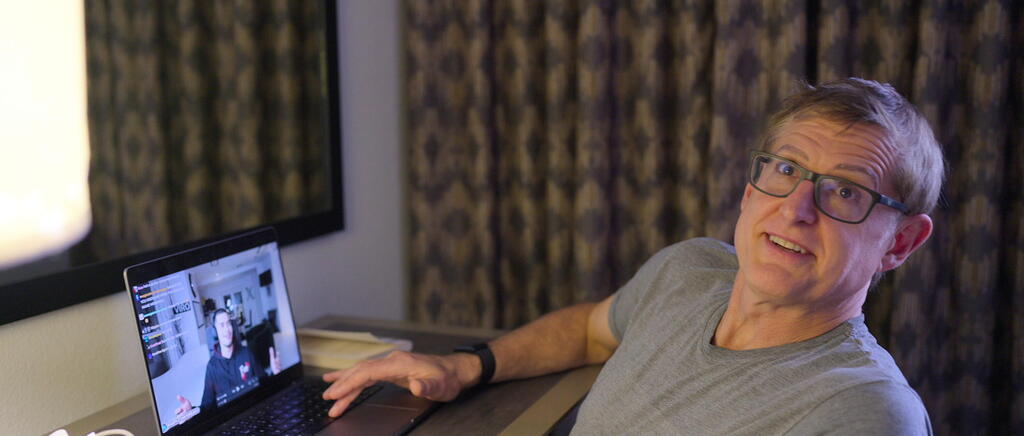
From 'Louis Theroux: Deep in the Manosphere'
(Photo: Courtesy of Netflix)
Dr. Lisa Sugiura, a cybercrime and gender studies expert at the University of Portsmouth, told The Guardian that while concern about men being drawn into the manosphere is widespread, there is insufficient focus on the “truly alarming” threat they may pose to partners. A study by anti-fascist organization "Hope Not Hate" found that 41% of young men in the UK aged 16–24 support Andrew Tate. “Over recent years, manosphere rhetoric has increasingly moved from isolated forums into mainstream platforms,” said Anki Deo, representative of the organization. “It is now promoted by influencers with far larger audiences and is no longer just a ‘dark corner of the internet.’”
There are also women who help sustain the culture, a dimension the film largely overlooks. It shows disturbing scenes of women sitting in front of manosphere figures while being verbally humiliated for minutes on end, but does little to explore why they agree to participate beyond financial incentives. Theroux, however, focuses more on understanding the men, ultimately finding they are clichés.

From 'Louis Theroux: Deep in the Manosphere'
(Photo: Courtesy of Netflix)
“I’ve been making documentaries like this for nearly 30 years,” Theroux told Vanity Fair. “Often, displays of power conceal deep insecurity. I’ve done films on wrestling, pimp culture in Houston, pornography. Much of this hyper-masculinity hides vulnerability. The central figure remains Andrew Tate. He clearly comes from a traumatic childhood, and that explains a lot. These philosophies of hyper-masculinity—‘life is a zero-sum game,’ ‘dominate or be destroyed’—it’s clear where they come from.”
The spiritual capital of the manosphere, Theroux finds, is Miami. Many figures from the global far right are based there. The culture revolves around women, fitness, and wealth. Theroux attempts to separate its elements: fitness influencers promising six-pack abs in weeks may seem harmless, but he repeatedly finds they quickly slide into misogyny.
“If someone says men and women are different, I don’t have a major issue with that,” Theroux says. “But the leap from that to women being inferior is enormous—and that’s what these people do. They routinely humiliate women.”

US Secretary of Defence Pete Hegseth
(Photo: Konstantin Toropin/AP)
The manosphere also has political power. In the 2024 US election, 56% of young men aged 18–29 voted for Donald Trump, up from 41% in 2020. Among young white men, the figure was 63%. The alignment between Trump and manosphere culture is no coincidence. Figures such as Defense Secretary Pete Hegseth have removed women from senior military roles and promoted images of hyper-masculine strength.
Manosphere influencers view their connections to Trump’s world as status symbols. In Louisiana, Theroux visits influencer Justin Wheeler’s villa, where he shows photos from Mar-a-Lago and a dinner with Donald and Barron Trump. Andrew Tate, released from detention in Romania after Trump’s return to office, suggested he had inside knowledge of political involvement in his release—despite official denials. Elon Musk is also an admirer.
“With Tate, the front door is misogynistic content,” Theroux says, “but then it quickly becomes ‘sign up for my online course for $50 a month.’ It’s a cynical system selling products to vulnerable young men.”
Ultimately, Inside the Manosphere does not reveal anything entirely new, and better indie documentaries have explored similar territory. But Theroux’s reputation brings the film to Netflix and ensures massive visibility. Sometimes, that is enough for a concerned parent in Kansas to go down to the basement and disconnect their child from the Interne.