

The story of the samurai is one of the most fascinating and influential chapters in Japanese history. They were not only warriors, but an entire social and cultural class that shaped the face of the “Land of the Rising Sun” for nearly 700 years.
Gallery
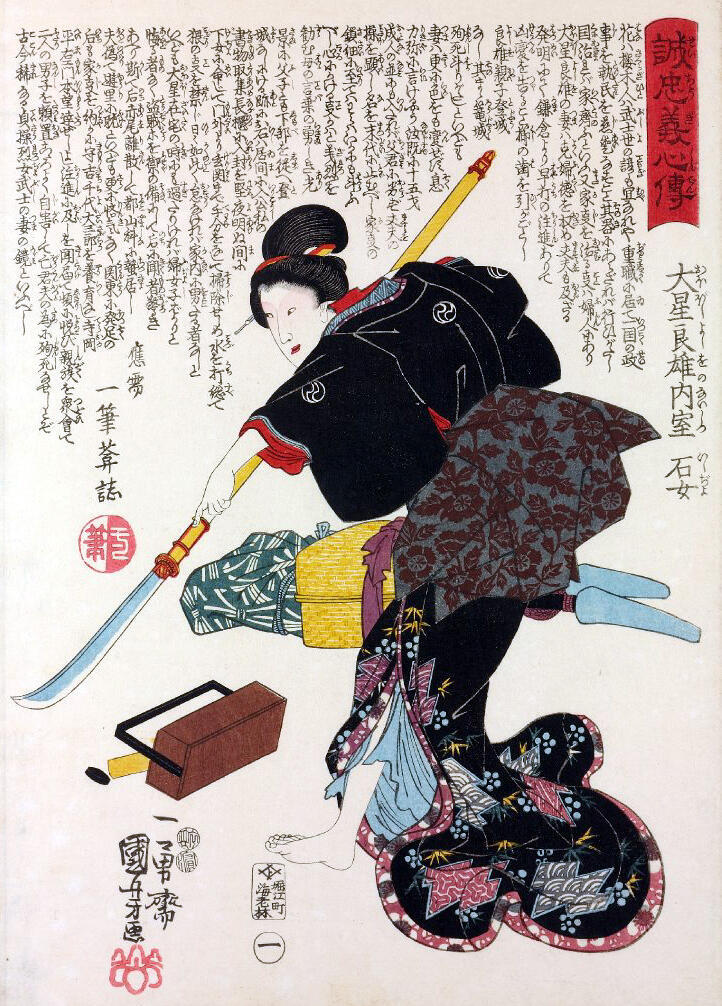
A Japanese female warrior holds a traditional naginata weapon
(Painting: Utagawa Kuniyoshi/Wikipedia)
Samurai began to emerge around the eighth century A.D. At first, they were mounted warriors hired by wealthy landowners to protect their estates. Over time, however, power shifted from the imperial court in monasteries and cities to the provinces. They became known for a strict ethical code called bushido (the way of warrior), whose principles emphasized absolute loyalty, honor, self-discipline and courage.
While the samurai class was primarily male, women also belonged to the warrior class and played significant roles on the battlefield and in defending the home. They were known as onna-musha (warrior women).
In fact, to be a samurai, one had to be born into a samurai family. Girls born into such families were considered part of the class and received a similar education in the values of honor and discipline. Any woman born in the samurai status group was a 'female samurai' even if she never picked up a weapon, just as any man born into that status group was a samurai, no matter how wimpy, untrained he may have been,” Dr. Sean O’Reilly, a specialist in Japanese studies at Akita International University, told Live Science.
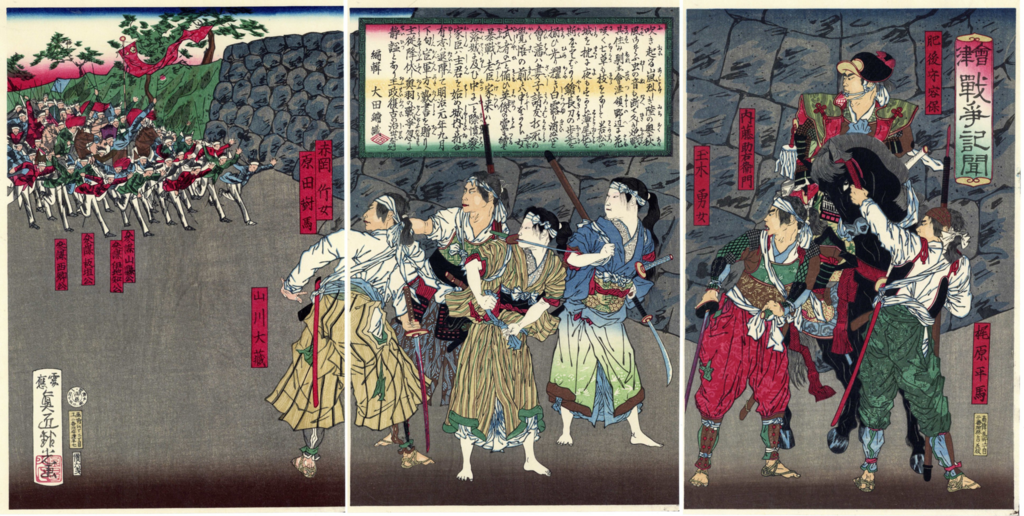
Japanese women take part in the Boshin War
(Illustration: Adachi Ginkō/Wikipedia)
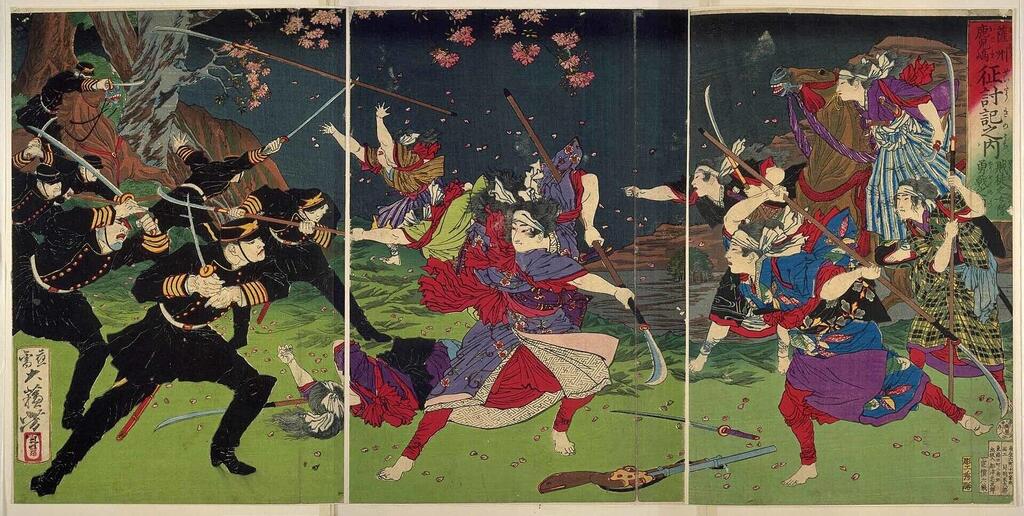
Japanese women on the battlefield
(Illustration: Yoshitoshi/Wikipedia)
Still, it is unclear how often female samurai fought on the battlefield. Some of the strongest evidence of female samurai taking part in combat comes from the late 19th century, near the time when the samurai class was abolished, according to research by historian Dr. Diana Wright of Western Washington University published in the journal “War in History.”
At the time, Japan was in the midst of a civil war, as supporters of the Tokugawa shogunate, which ruled Japan from about 1603 to 1868, fought against those seeking to overthrow it and return some of the military ruler’s powers to the emperor. The Boshin War, or War of the Year of Earth Dragon, lasted from January 1868 to June 1869.
During the war, several cases were recorded in which female samurai fighting alongside the shogunate took part in battle. One of them, 22-year-old Nakano Takeko, led a unit of female warriors armed with swords and the traditional Japanese weapon known as the naginata, a long pole with a curved blade at the tip. Takeko killed five or six men with her naginata before she was shot dead.
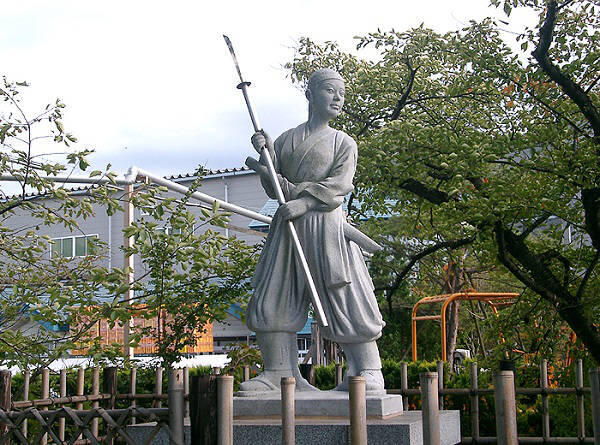
A statue of Nakano Takeko in Japan
(Photo: Torstein Barnhardt/Wikipedia)
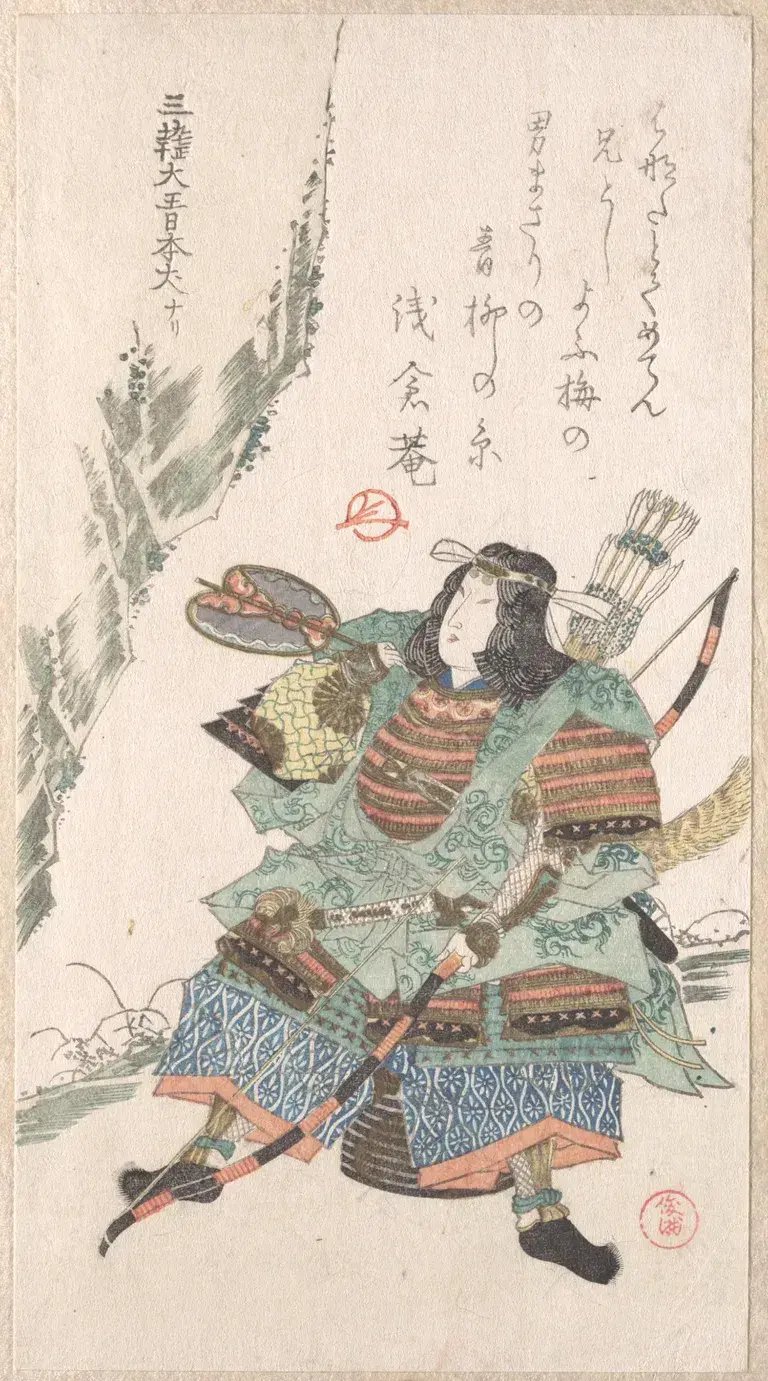
A Japanese female warrior in armor
(Illustration: H. O. Havemeyer Collection, Bequest of Mrs. H. O. Havemeyer, 1929, the Met Museum; Public Domain)
Researchers believe a burial mound in Numazu, a city in central Japan, may contain the remains of female samurai who fought in battle. The mound contains human skulls along with other skeletal remains, and an analysis of the remains was published in Japanese in 1989 in the “Journal of Anthropology.” About 105 skulls of young people were identified, roughly one-third of them female. They were apparently killed in the Battle of Senbon Matsubara, fought between the Takeda and Hōjō clans.
“This mound is indicative that women of fighting age fought and died in sixteenth century battles," Dr. Thomas Conlan, a specialist in medieval Japanese history at Princeton University, told Live Science.
However, Karl Friday, a professor emeritus of history at the University of Georgia, said the findings from the mound should be treated with caution, since it is not at all certain that everyone buried there fought in the battle. "It's possible that some of the people buried in the mound were noncombatants who were killed anyway, Friday told Live Science.
"There's absolutely no good evidence to support the conclusion that women warriors were any more common in Japan than they were in medieval France or ancient Sparta," Friday added.
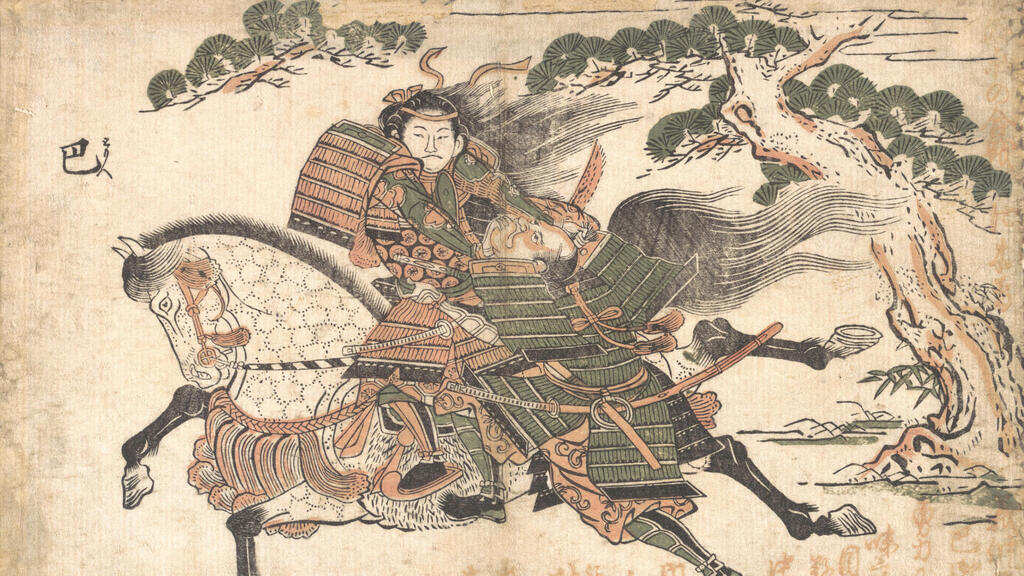
A 1750 illustration shows Tomoe Gozen, a 12th-century female samurai, killing an enemy
(Photo: Heritage Images/Getty Images)
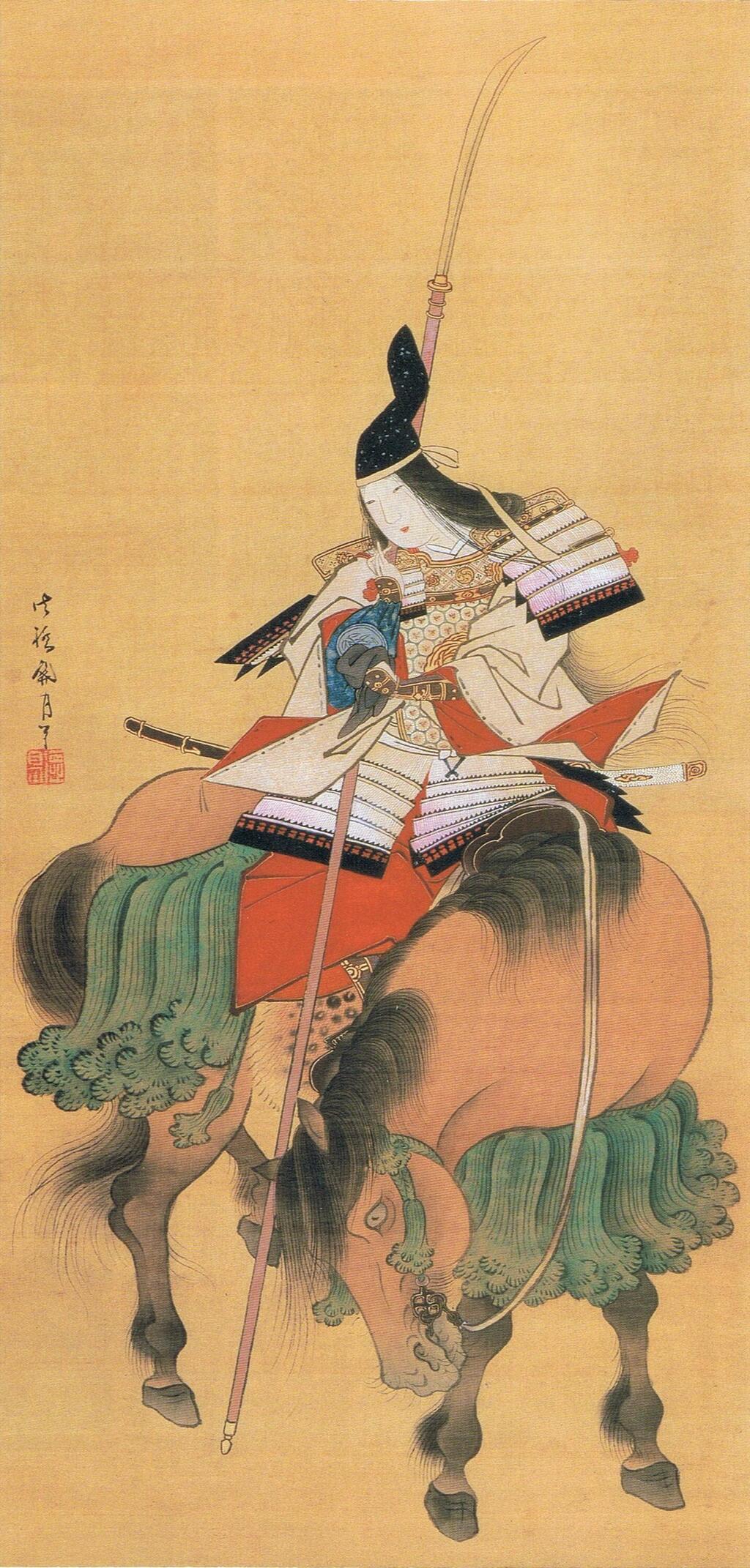
Tomoe Gozen, one of the most prominent and skilled female warriors in Japanese history
(Illustration: Kangetsu Shitomi/Collection of Tokyo National Museum/Wikipedia)
Tomoe Gozen was a famous Japanese female samurai from the late 12th century, known as one of the most prominent and skilled female warriors in Japanese history. She took part in the Genpei War, fought between the Taira and Minamoto clans from about 1180 to 1185, according to research by Dr. Thomas Lockley of Nihon University, who has extensively studied and written about the samurai. The research was published in the journal “Medieval World: Culture & Conflict.”
Another famous woman was Ōhōri Tsuruhime, who lived from about 1526 to 1543. She led Ōyamazumi Shrine on the island of Ōmishima after her father and brother were killed while defending the island. Though she was only 16, she commanded the island’s defensive force and protected it from invaders. To this day, visitors to the shrine can view remnants of Tsuruhime’s armor.
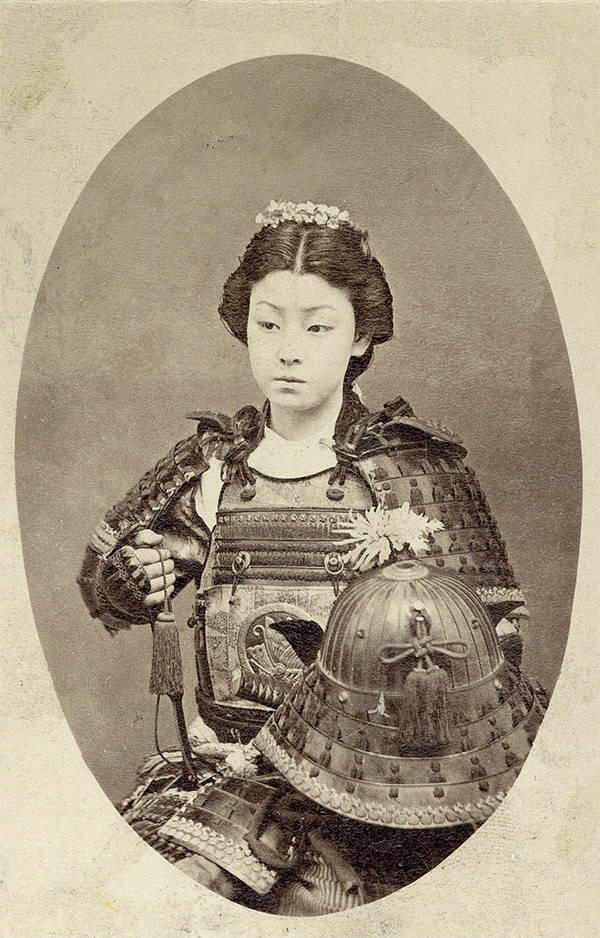
An 1870 photo of an actress dressed as a female samurai in armor
(Photo: Pictures from History/Getty Images)
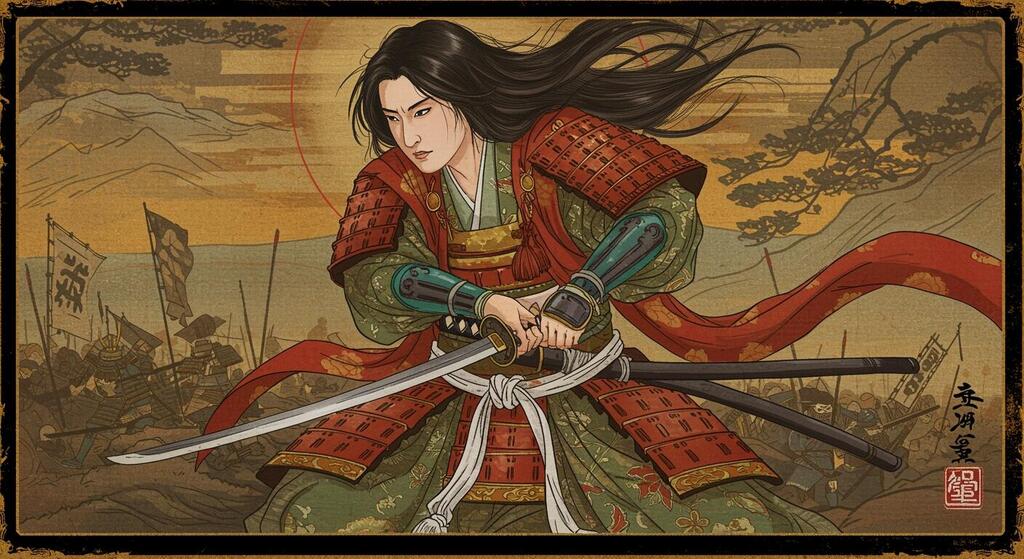
AI-generated image of a female samurai on the battlefield
(Illustration: Shutterstock AI)
The samurai class declined and disappeared during the 1870s. The ideal image of women shifted from “warrior” to “devoted homemaker,” and women were pushed aside from the military sphere. Still, the martial art of naginata remained popular in Japan, and to this day it is considered a field with a particularly strong female presence, including in traditional kimono-style dress, as a direct continuation of the legacy of past female warriors.