

Long before “leave no one behind” became one of the most enduring ideas associated with the IDF, a wounded paratrooper lying alone beyond the armistice line helped create one of the stories behind that ethos.
His name was Yitzhak Gibli, better known to his comrades as “Little Gibli.” After he was wounded during a 1954 reprisal raid and captured by Jordan, some of the best-known figures of Israel’s early military history began planning a remarkable series of operations with one objective: seize enough Jordanian soldiers and police officers to help bring their comrade home.
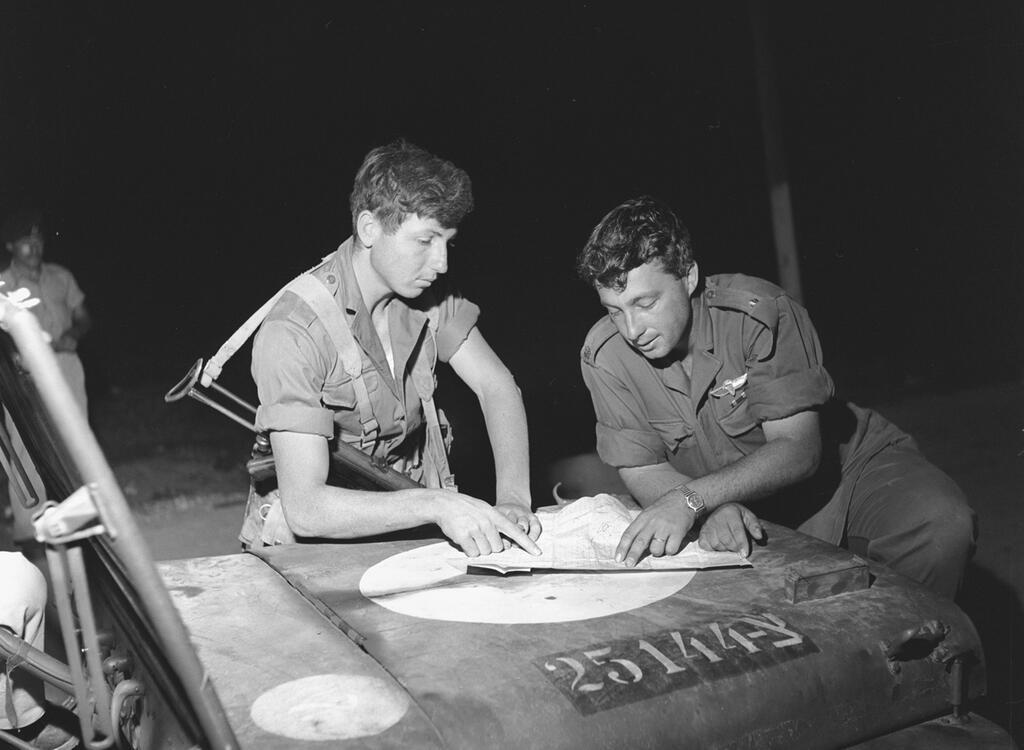
The episode became part of the Paratroopers Brigade’s mythology, a story involving a dangerous raid, a soldier who demanded that his friends abandon him to save themselves, covert abduction plans and, ultimately, a prisoner exchange.
‘Little’ only in name
Gibli was born in Egypt in 1930. His mother died when he was young, his father became ill and he grew up in difficult circumstances. At 16, he falsified his age and joined the Palmach. After the War of Independence, he served in Unit 101 and later the IDF’s 890th Paratroopers Battalion.
The nickname “Little Gibli” was used to distinguish him from Binyamin Gibli, who headed Military Intelligence at the time. His fellow soldiers, however, described a fighter who was anything but slight in character. He volunteered readily and regarded figures including Ariel Sharon, Meir Har-Zion and Aharon Davidi as his military family.
On June 27, 1954, infiltrators from Jordan killed Meir Reiner near Ra’anana. The following day, seven soldiers from the 890th Battalion set out on a reprisal operation against an Arab Legion camp near the village of Azzun, east of Qalqilya.
The mission was codenamed Baruch 1. According to operational documents, its goal was to kill three to five Legion soldiers.
Gibli left the bedside of his sick father to take part. In an interview published in the IDF magazine Bamahane in 1963, he recalled that his father asked him to return quickly and bring him fruit. It was the last request his father made of him.
‘Leave me here’
The force crossed the armistice line and came under fire. The paratroopers charged the position, entered the camp and killed two guards. During the firefight, Gibli was struck in the head and leg.
His comrades treated his wounds and carried him for about 1.5 kilometers. But as Jordanian forces drew closer, it became clear that continuing to carry him could put the entire group at risk.
Gibli told them to leave him beside the road.
According to his later account, he even kicked at his comrades with his healthy leg until they agreed.
They removed his rifle and grenades, reasoning that a wounded, unarmed soldier had a better chance of surviving capture. The men embraced him and continued their withdrawal.
Ariel Sharon’s subsequent debrief recorded the decision in stark terms: the wounded soldier had been carried until it was no longer possible to take him farther.
Gibli would later receive a military commendation for continuing to fight after he was wounded and for insisting that his comrades leave him rather than endanger themselves. In 1973, the citation was converted into the Medal of Courage, one of the IDF’s highest decorations.
Singing to be captured
Left alone, Gibli smoked a cigarette, listened to jackals and thought about his father.
Fearing he might bleed to death before anyone found him, he began singing a Palmach song in an attempt to attract attention.
Soon he heard voices approaching.
Gibli later said roughly a dozen Jordanian Legionnaires rushed toward him. He shouted in Arabic that he was unarmed, but one soldier shot him again. A Jordanian officer stopped the incident, and Gibli was taken to a hospital before being transferred to prison in Zarqa.
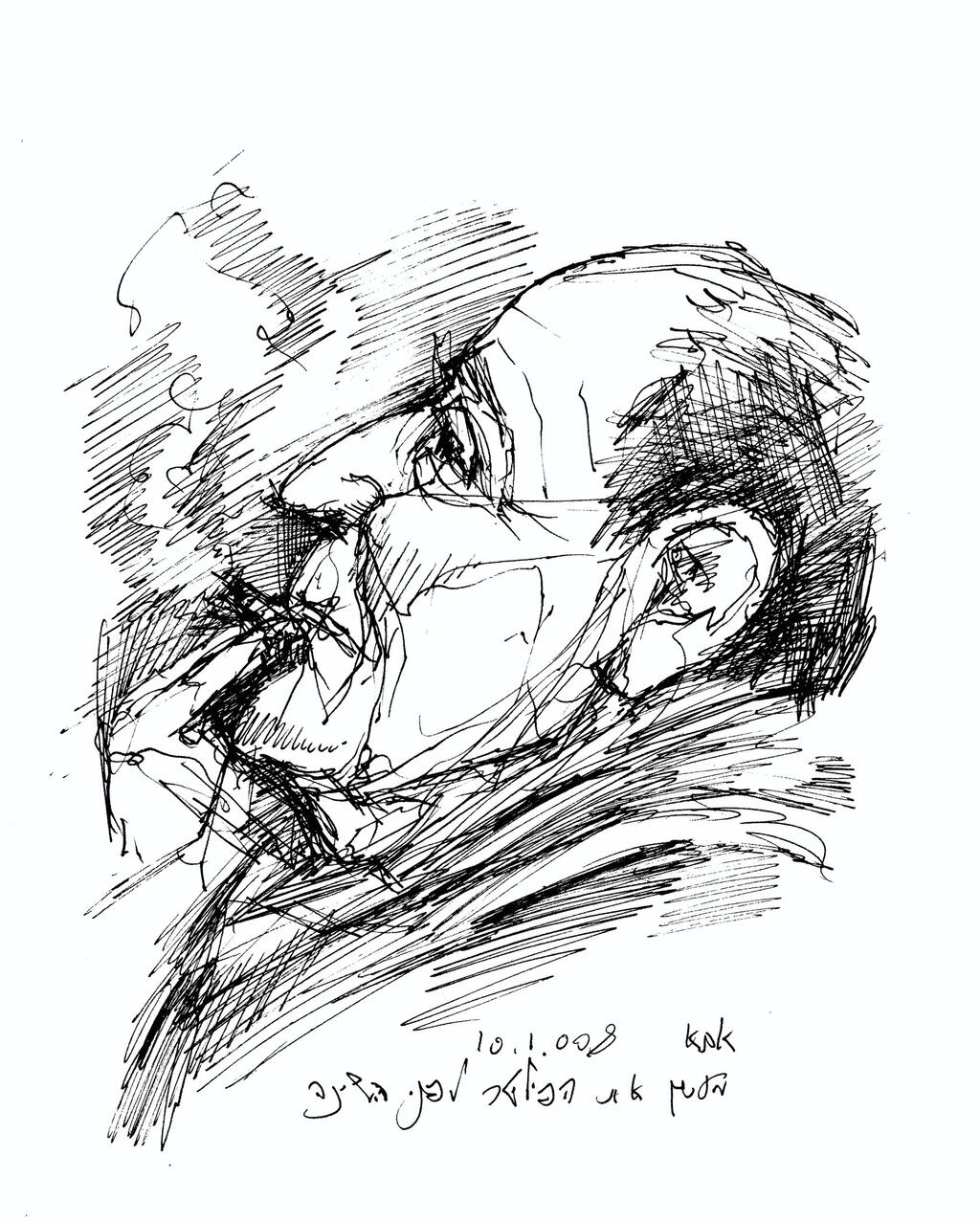
An illustration of Yitzhak Gibli drawn by his son, Gil
(Illustration: Gil Gibli)
The version initially presented to the Israeli public was that an IDF force had crossed the border by mistake.
Behind closed doors, Prime Minister Moshe Sharett and Defense Minister Pinhas Lavon knew what had happened. Four days after the raid, Lavon praised the fighters at a Cabinet meeting, including the decision to leave the wounded Gibli behind.
At the same time, the military began searching for a way to get him back.
‘Gibli Yitzhak to freedom’
The effort was given a name: GIL, a Hebrew acronym for “Gibli Yitzhak to freedom.”
Around that mission gathered men who would become some of the best-known names in Israeli military history, among them Sharon, Har-Zion, Davidi, Rehavam Ze’evi, Motta Gur and Saadia Elkayam.
The idea was straightforward: if Jordan held one Israeli paratrooper, Israel would acquire enough Jordanian Legionnaires and police officers to create bargaining power for his release.
An order for GIL 1, issued by Ze’evi on July 6, called for Jordanian officers and soldiers to be lured into Israeli territory and captured without gunfire.
One plan involved announcing that two Arab infiltrators had been caught and would be returned through UN officers and Israeli police. Sharon was to disguise himself as a UN officer, while other soldiers would pose as police. An IDF jeep was even painted white.
Accounts later differed over whether the attempted deception succeeded or merely aroused the suspicions of a Jordanian officer. What is clear from the surviving documentation is that the plan was drawn up.
GIL 2 followed on July 29. This time, the written objective was explicit: force the Arab Legion to return the captive Israeli soldier by abducting a Legionnaire or policeman from the Rumana area and bringing him back alive.
The order warned of the possibility of a diplomatic complication and described the operation as “semi-military.”
At the end of August came GIL 3, near Khirbet Sikha. Again, the soldiers were instructed not to open fire and not to cross the armistice line.
According to documentation published years later, Israel eventually held as many as 10 Jordanians who were intended to strengthen its hand in negotiations.
Bringing Gibli home
Eventually, the strategy produced the desired result.
Gibli was released in a prisoner exchange following efforts led by then-IDF chief of staff Moshe Dayan. In return, the Jordanians held by Israel were sent back to the kingdom.
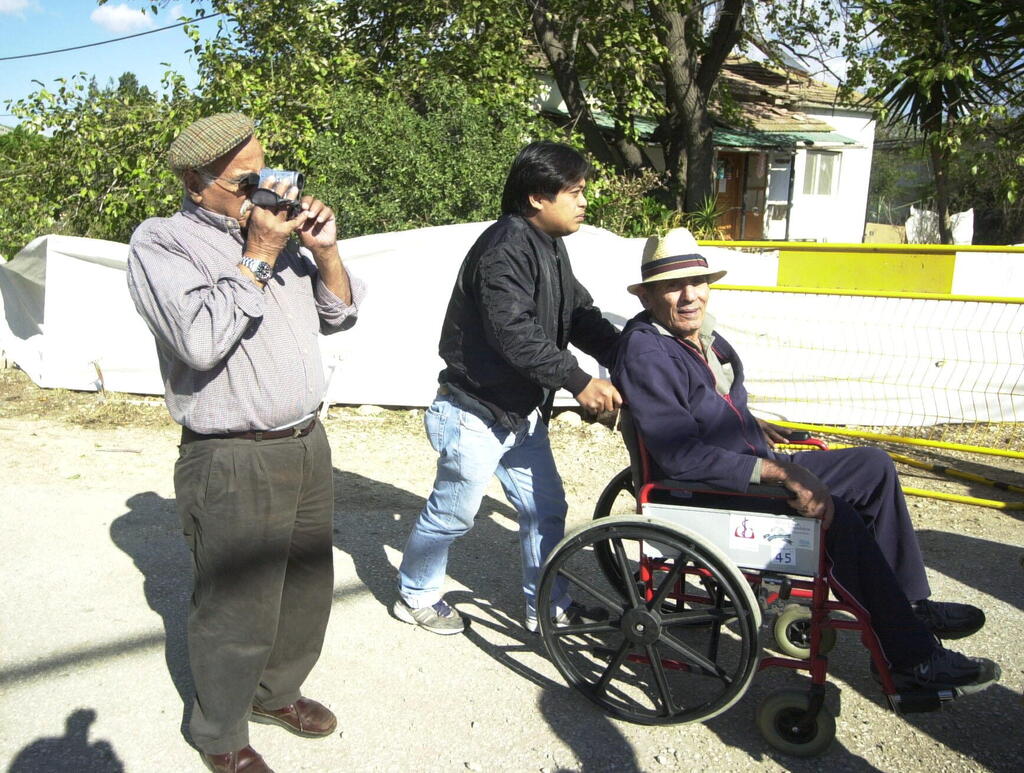
Yitzhak Gibli arrives at the funeral of Rafael ‘Raful’ Eitan
(Photo: Roni Shitzer)
Gibli crossed into Israel through Jerusalem’s Mandelbaum Gate and was welcomed with a celebration in an orchard near Bnei Brak.
Dayan awarded him a commendation, which was later converted into the Medal of Courage.
Gibli died in November 2008 at age 78.