

I have 45 mutual Facebook friends with Rebecca Elia, among them journalists, spokespeople, activists and academics. Some are familiar names, both online and off. Rebecca Elia, 34, attended Ironi Hey High School in Tel Aviv, loves soccer and hates Bibi and the government. And I mean really hates them. Her posts receive hundreds of likes and shares and huge numbers of comments, most of them enthusiastic. I wish I had that kind of success online.
But Rebecca Elia is not real. She is part of a foreign influence network whose purpose is to sow chaos and deepen polarization and hatred in Israel. There are many more like her, from every side and on every platform. Some hate the right and others the left; some hate the ultra-Orthodox and others the Arabs; some attack the police, the Central Elections Committee or the entire country.
There is enough anger for everyone. No one needs to push, but they push anyway. In which direction? Beyond the edge of the cliff.
One could certainly argue that sowing chaos, hatred, rage and distrust among Israelis toward anyone who does not think exactly like them is not the hardest job in the world. Still, someone has to do it.
There are indeed many foreign workers flooding the market, meaning social media and, by extension, the streets and people’s hearts, with enormous quantities of precisely this kind of merchandise. Iranians, Russians, Chinese, Qataris and who knows who else. It is a true Tower of Babel, except everyone speaks Hebrew and still cannot communicate.
We all remember how the original story ended. Unless we pay attention, this one could end the same way.
× × ×
The election is less than three months away. However ugly we expected it to be, it will probably be uglier still because of outside involvement by those who wish us harm.
In less than three weeks, foreign election interference made headlines three times.
The state comptroller published a report concluding that “foreign influence in the digital sphere could threaten the election,” even to the point of “distorting the election results and undermining public confidence in those results.”
The comptroller found that Israel’s national preparations for attempts by Iran and other hostile states and actors to influence public opinion were “fundamentally deficient.”
According to the comptroller, the Israeli government and prime minister neglected foreign online influence operations for years, ignored warnings from professionals and left citizens exposed to campaigns by enemy states seeking to tear Israel apart, destabilize its democratic institutions and even threaten its very existence by continuously undermining people’s perception of reality.
For example, according to the report, Iran and Hezbollah sent around 5 million text messages to Israeli citizens in September 2024 containing an emergency warning ordering them to enter a protected space immediately, in an attempt to cause panic.
According to the study, most of the networks spread messages against the right-wing government, as well as messages intended to undermine trust in institutions such as the Central Elections Committee and allegations of police violence. They also spread messages of demoralization and despair and encouraged emigration from Israel.
The comptroller lists a long series of challenges that were met by an equally long list of failures, deficiencies, neglect and disregard. As usual.
“The deficiencies,” the comptroller concluded, “leave the Israeli public exposed to foreign influence in the digital sphere without an adequate response.”
Foreign influence, according to the comptroller, is “the full range of illegitimate activities by a foreign actor intended to covertly harm the state’s interests, potentially causing fundamental damage to its sovereignty.”
At the end of the report, the comptroller explains what must be done, meaning what probably will not be done: establish an orderly national policy, appoint a leading government body to centralize the response and coordinate among the various organizations, and prepare comprehensively and systematically to combat disinformation, bots and the use of artificial intelligence on social networks.
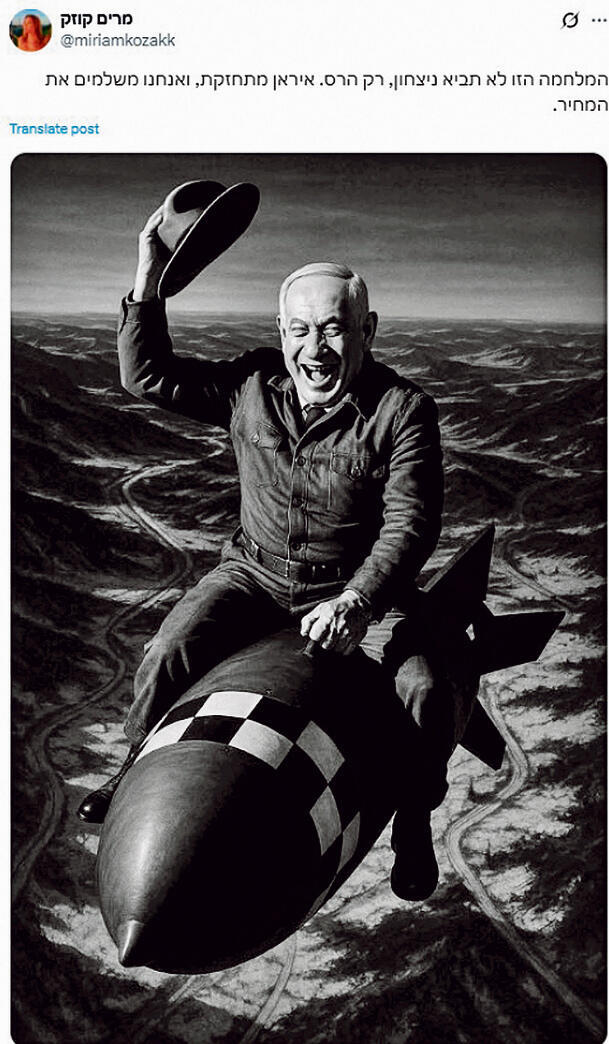
'The scattershot method.' Posts published by foreign influence networks, from the FakeReporter and Brandeis Institute report
Second, it was reported this week that Shin Bet Director David Zini had warned that Iran, Russia and China were trying to interfere in Israel’s election and disrupt it.
Zini reportedly regards foreign interference as the second-most serious issue troubling the Shin Bet, after the threat of “mega-terror attacks,” and said the agency was allocating significant resources to dealing with attempts to sabotage the election.
Channel 13’s Michael Shemesh reported that the Shin Bet had sent delegations abroad to study how to confront Russian and Iranian election interference.
Better late than never, although this is very, very late.
Foreign election interference has occupied the entire world for roughly a decade, from the infamous Cambridge Analytica cases involving its rather dirty intervention in the 2016 U.S. presidential election between Hillary Clinton and Donald Trump and in the Brexit campaign to remove Britain from the European Union, to Russian interference in Romania’s 2024 election, which was annulled.
China is also known to have interfered in the 2025 election in Hong Kong and Taiwan’s 2024 election. There are piles of examples from around the world.
Is it logical to believe that here, in Israel, a country surrounded by enemies and facing a daily existential threat, everything is somehow pure?
In September 2025, Haaretz journalist Omer Benjakob revealed that a foreign influence operation was underway ahead of Israel’s election and appeared almost identical to the Romanian campaign.
“In Iran, sophisticated cognitive scientists are sitting and thinking about how to exploit every one of our weaknesses,” said Maya Ilany. “Telling people, ‘It is your responsibility,’ amounts to abandonment by the state. We also do not merely tell children, ‘Drugs are bad,’ while ignoring an ice cream truck selling heroin outside a school.”
Bodies including the National Security Council, Israel National Cyber Directorate, Institute for National Security Studies, Justice Ministry, security agencies and intelligence services have been warning about and dealing with foreign election interference for years. It is all detailed in the comptroller’s report, not to mention countless news articles.
Many people also warned of foreign interference before the previous election in 2022, but responsibility was passed among the various agencies like a rotten potato full of worms.
There were plenty of discussions. There was less action.
“The sequence of events shows a recurring pattern of placing the threat on the agenda and launching initiatives to address it, only for those initiatives to be abandoned and never placed on a genuine path toward implementation,” the comptroller wrote.
“Approximately nine years after the threat of foreign influence in the digital sphere was identified, there is no national policy on the matter and no government body leading the response to the threat.”
The comptroller’s report is available online, but I would not recommend reading it before going to sleep. Or afterward. Or at all.
Consider the following passage:
“An action plan formulated by the National Cyber Directorate after the outbreak of the Swords of Iron War was not examined by the prime minister for approximately a year, and no decision was made regarding it. The plan presented to Netanyahu was not approved or funded. The National Security Council stopped dealing with the matter, and the Intelligence Ministry, to which responsibility had been transferred, was closed.”
As if all that were not enough, this week FakeReporter, a public-participation research initiative combating malicious online activity, and the Louis Brandeis Institute for Society, Economy and Democracy, which conducts research aimed at strengthening the foundations of liberal democracy in Israel, published a rather terrifying 114-page report titled “Perfect Strangers: Foreign Interference Networks in Israel From a Comparative Perspective.”
The report, revealed here for the first time, describes and tracks 46 foreign interference networks operating in Israel.
Incidentally, FakeReporter reported Rebecca Elia, remember her, to Meta, but her account is still active.
While the state comptroller and Shin Bet director addressed the issue from a bird’s-eye view, the FakeReporter-Brandeis report rolls up its sleeves, plunges its hands deep into the digital swamp and wallows in it up to the shoulders.
After reading the report, I wanted to shower in Lysol, immediately close every account I have on every social network and switch to a kosher phone, perhaps even a strictly kosher one connected to the wall by a cable.
I am not a child. I knew social networks were a petri dish for every form of human filth. Still, the collection. Oh, the collection. I thought I had seen everything. Perhaps I had, but never all at once.
It is a dizzying report.
True, 46 influence networks are not even the tip of a drop in the ocean of foreign interference in Israel. But they are enough to provide a fairly clear picture, as clear as darkness can be, of what we are facing.
“Foreign influence networks” is a definition covering coordinated arrays of profiles, pages, groups and content channels that appear authentic but are operated by actors whose goal is to shape a target audience’s perception of reality, undermine public trust in democratic institutions, deepen social and political divisions, influence elections or advance the interests of other states.
× × ×
“That is the strategy,” said Dr. Gitit Bar-On, deputy director of FakeReporter. “Bombard as much as possible and flood the discourse with enormous quantities of disinformation. Whatever catches on, catches on. It is a scattershot method.
“There is no deliberate intention to support either the government or the opposition. They are simply agents of chaos.”
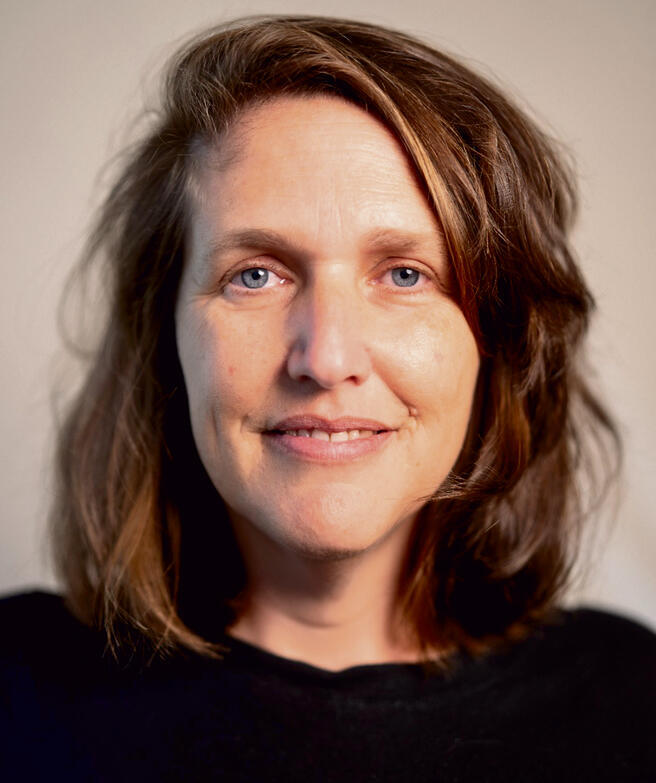
Dr. Gitit Bar-On
The foreign networks pose as protest organizations such as Ein Matzav, government supporters and opponents, political party activists, social movements, media organizations, news channels such as Mako, politicians including Ehud Olmert and Mossi Raz, philanthropists, ultra-Orthodox Jews, Arabs, volunteers and artists.
One of them even impersonated singer Rona Kenan, perhaps the woman in Israel furthest removed from the concept of fake.
They also pose as cooking groups for mothers, dating sites, Torah study pages, job offers and even a “Ron Arad drawing competition” for children, as incredible as that may sound, as well as ordinary people like you and me.
The activity takes place simultaneously across every arena: X, formerly Twitter, Facebook, Instagram, Telegram and WhatsApp, and sometimes through fake content sites and fraudulent online forms.
The networks have operated along every social fault line affecting Israeli society: right, left, ultra-Orthodox military enlistment, judicial reform, the return of the hostages, the cost of living, fallen IDF soldiers, migrant workers, settlers, LGBTQ people, Mizrahim, Ashkenazim, education and emigration.
Think of any Israeli issue, and they have addressed it from every direction, sometimes from opposing directions simultaneously.
There are no red lines. In fact, there are no lines at all.
The basic equation is simple: information plus targeting equals manipulation. In this case, political manipulation on a mass scale.
The sad part is discovering how well they know us. Every button that can be pressed is pressed, in exactly the right place and at exactly the right time.
Some of these accounts reached hundreds of thousands of Israelis, including you and me, and many people from every camp fell into the trap. Perhaps you did. Perhaps I did too.
Netanyahu adviser Topaz Luk amplified an account on X suspected of being fictitious, belonging to a user named “Daniel Omer,” who wrote, “Their end will be like Ceausescu’s,” beneath a fake image of the prime minister and his wife being led away by armed soldiers.
In 2023, opposition leader Yair Lapid and Netanyahu both rushed to condemn a fake Iranian account that portrayed then-Central Command chief Maj. Gen. Yehuda Fuchs as Adolf Hitler.
The list ranges from Yinon Magal and Yair Netanyahu to candidates in Democratic Party primaries who corresponded with a fake account.
“When the rain falls,” Bob Marley said, “it does not fall on one roof.”
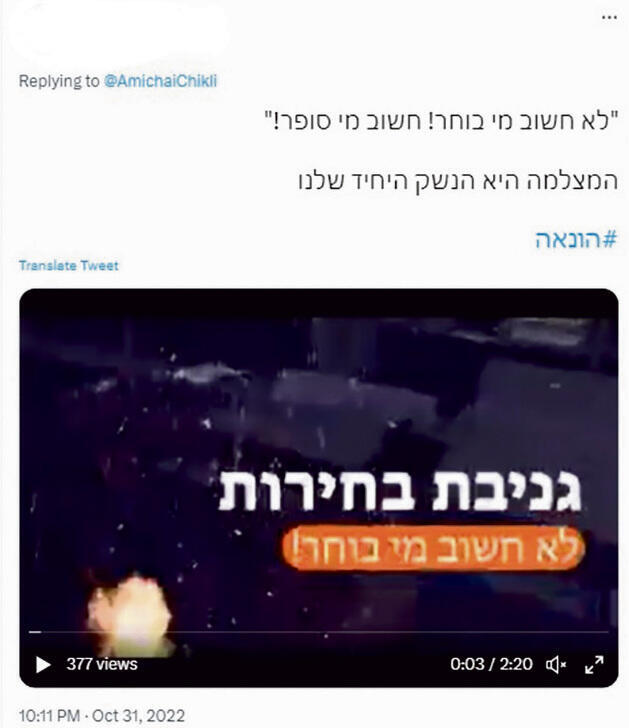
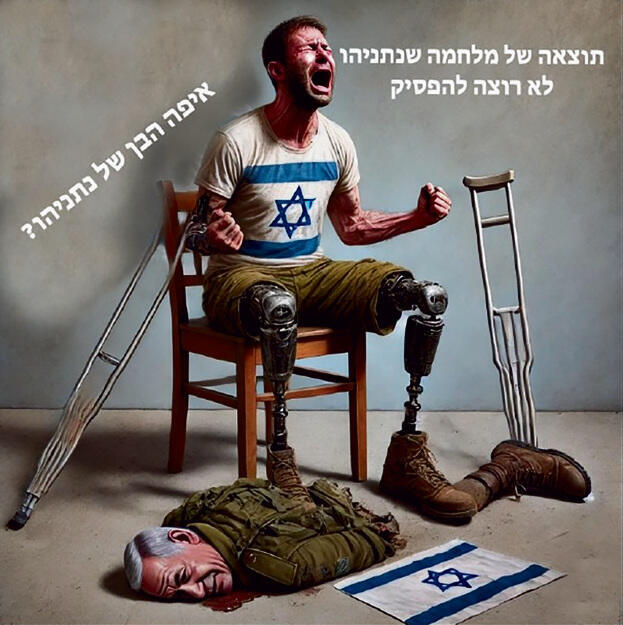
Posts published by foreign influence networks, from the FakeReporter and Brandeis Institute report
× × ×
According to the report, 44% of the foreign networks achieved extremely broad reach on social media, reflected in exposure, likes, comments and shares.
Fifty-eight percent of us consume news first through social media.
The report argues that foreign influence is not confined to the digital arena but acts as a catalyst for real-world harm.
The networks’ activities include direct calls for violence, systematic attempts to recruit citizens for intelligence and subversive activity, and efforts to encourage actions that undermine national security and increase polarization in Israeli society.
Around 10% of the networks, which is an enormous figure, managed to spill over into the physical world, through the hanging of posters, for example. Around 2% of the cases reached television.
Does that sound small? To me, it is 2% too much.
In other words, we are all exposed.
Lies and fakery are everywhere. Anyone can fall for them, and many people have. No one is smarter than anyone else.
Channel 14 published a fabricated AI video of former defense minister Yoav Gallant. Channel 12 broadcast footage taken from a computer game.
“They are very good at it,” Bar-On said, “and they are constantly improving.
“They know how to generate authentic-looking discourse and amplify the most extreme possible content on every side to create the sense that we cannot live here as one people.
“In a society like ours, which moves from one dramatic event to another, it is fairly easy to do.”
One of the most disturbing cases described in the FakeReporter-Brandeis report is “Tears of War,” an Iranian influence network consisting of more than 10 profiles that began operating on most platforms immediately after October 7.
The network posed as a civilian initiative whose goal was to “save Israel” and amplify the voices of war victims.
During the first days of the war, the channel published photographs of those murdered, abducted and missing while attempting to collect information from Israeli users.
The Shin Bet revealed as early as December 2023 that it was an Iranian network, but nothing happened.
In April 2024, the family of abducted lookout soldier Liri Albag received a funeral wreath of the kind placed on a fresh grave. A poster was also circulated calling on people to attend a solidarity demonstration outside the Albag family home.
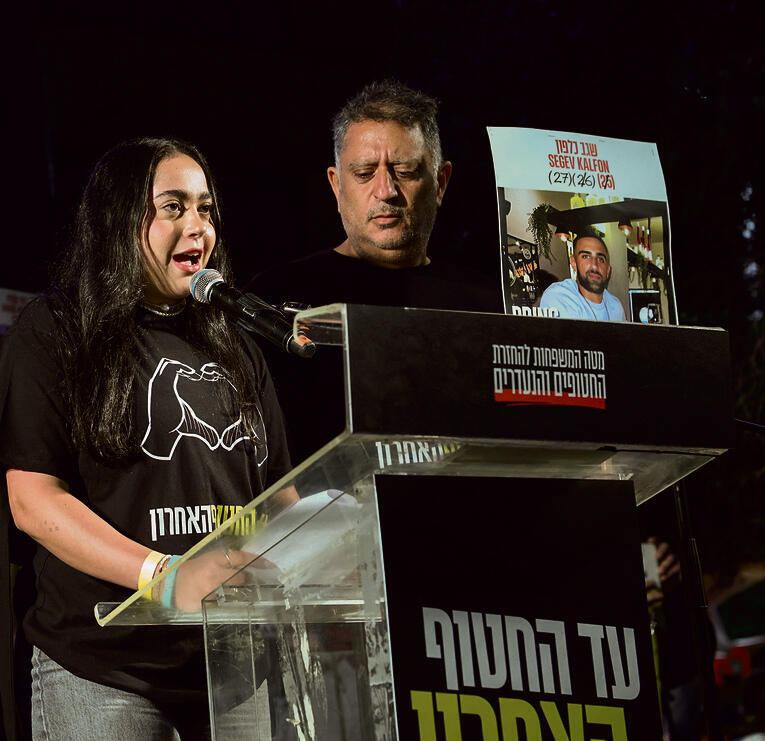
Ex-hostage Liri Albag
(Photo: Dana Kopel)

An attempt to collect information: The funeral wreath sent by the Iranians to Liri Albag’s home while she was being held hostage in Gaza
“Tears of War” also purchased a promotional advertisement in May 2024 on Daniel Amram’s popular Telegram channel. Amram later apologized.
The network published job offers and tried to recruit Israelis for various strange assignments.
Some of its recruitment attempts succeeded. “Tears of War” signs and posters were documented in Tel Aviv and Jerusalem.
On the other side, a group called “The Hunters” operated with the aim of enticing supporters of judicial reform into harming protest activists.
“And these are only the networks we caught and investigated through reports from the public,” Bar-On explained.
“The goal is to expose the phenomenon and make it visible, but it is important to understand our limitations.
“Another important caveat is that nothing involving private correspondence appears in the report because we have no access to it.
“There are many spaces we cannot access and many things we do not know.”
Who is more vulnerable?
“The golden rule is that groups with lower levels of digital literacy are more vulnerable: older people and social groups such as the ultra-Orthodox. Perhaps young people who are less critical as well.
“The greater your digital literacy, the stronger your defenses. But ultimately, the answer is everyone.
“On one hand, I do not think what happened in Romania could happen here. I still believe in our social resilience and in state institutions.
“On the other hand, millions of people consume their news through social media and Telegram and are present in this arena. In that sense, we are more vulnerable.”
What do you expect to happen now, after the report’s publication?
“I would like the study to serve as a call to begin orderly work on the issue and for political parties to place it on the agenda alongside security and welfare.
“An expert committee should be established to drive policy. The balance of power between the platforms and the state is currently wrong. The platforms must be held accountable.”
× × ×
Another interesting case in the study is the user “Miriam Kozak,” a foreign profile that began operating on Facebook, Instagram and X in 2020 and worked both for and against both sides.
During the 2022 election, Kozak spread allegations of fraud and election theft by Arab citizens and messages against the left. Later, the account turned against Netanyahu and the right-wing government.
The purpose of all of it was to sow chaos.
“The foreign networks focus on three prominent goals: undermining citizens’ sense of security, frightening them, portraying Israel as weak and creating a false appearance of collapse,” the report said.
Their most common weapon is posing as a “concerned Israeli citizen” or as an anti-government protest activist.
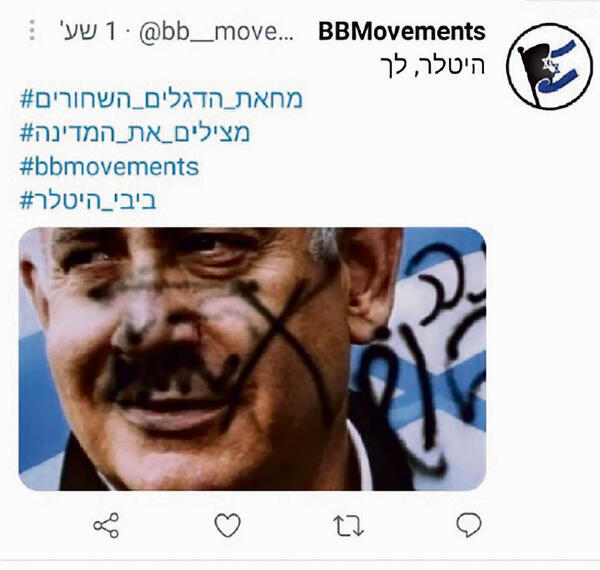
'Hitler, leave'
In January 2024, Kozak published an AI-generated image with text calling for the prime minister to be harmed.
Likud activist Miri Barbi, comedian Manny Assayag and others quickly shared the post to accuse the left of violence.
Kozak also published a false claim that 23 people had been killed by an Iranian missile in Nahariya, campaigned against judicial reform and then in favor of it, impersonated lawmaker Naama Lazimi and opened a Facebook group that attracted 8,000 members.
After repeated complaints, Facebook eventually deleted the account.
Of all the networks studied, around one-quarter were identified or suspected as originating in Iran.
Around 10% were identified with Russia, and another 10% came from Arab countries including Lebanon and Yemen.
The origins of 56% of the networks examined remain unknown.
They could be connected to Qatar, which is known for other influence operations, but China is hardly sitting on the sidelines either.
Of course, influence operations by countries that are not necessarily Israel’s enemies cannot be ruled out. Just as Israel operates in the U.S., reciprocal activity cannot be dismissed.
Among the networks studied, X was identified as the social platform with the greatest volume of activity. Eighty-one percent of the foreign networks examined operated there.
It was followed by Facebook at 44%, Telegram at 33%, Instagram at 26%, WhatsApp and TikTok at 16%, and YouTube at 9%.
That is not because X is necessarily safer or less safe than the others. It is simply the easiest to research.
TikTok’s algorithm is known to be particularly aggressive, and Meta is no amateur either. Those platforms are simply less transparent to researchers.
According to the study, 72% of the networks spread messages against the right-wing government.
Sixty-seven percent spread messages undermining trust in institutions, including the Central Elections Committee, or allegations of police violence.
Around 60% circulated messages of demoralization and despair, portrayed Israel as losing the war, encouraged people to emigrate and depicted the Israeli economy as more unstable than it actually was.
Thirty-seven percent of the networks operated against minority groups, mainly the ultra-Orthodox and Arabs.
Similar percentages attacked the left and encouraged violence and anarchy.
Some simply published terribly depressing material involving lonely elderly people, poverty and hunger.
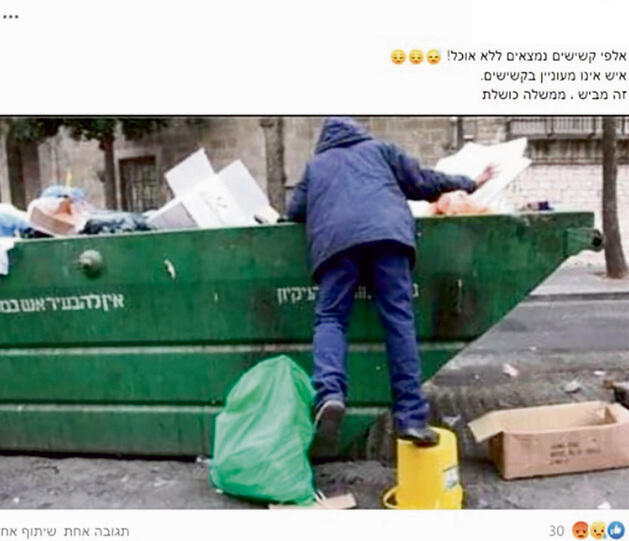
“They are very good at it, and they keep improving.” Posts published by foreign influence networks, from the FakeReporter and Brandeis Institute report
× × ×
What do the networks want?
The answer is fairly simple.
“It can be seen clearly,” the report said, “that the foreign networks focus on three prominent goals: undermining citizens’ sense of security, frightening them, portraying Israel as weak and creating a false appearance of collapse.”
The foreign influence networks spread claims that Netanyahu had fled the country with his family and that ministers and members of the government had arranged protection for their relatives in secure locations while abandoning Israeli citizens.
Their most common weapon is posing as a “concerned Israeli citizen.” Around 50% used that disguise.
The next-most-common identity, used by 46%, was that of an anti-government protest activist.
The names were completely ordinary Israeli names: Yakir Levi, Tami Shamir, Eitan Miller, Lily Levi, David Cohen and others.
The networks examined in the study were the easiest ones to catch.
They made spelling mistakes or wrote broken Hebrew, used inverted question marks, produced low-quality AI work, distorted names by writing “Ben Gafir” instead of “Ben Gvir,” or revealed a lack of cultural understanding.
They wished people a happy Purim in June and a happy Jewish New Year in April, or used unnatural terms such as “hostages” instead of the Hebrew expression normally used for abductees and “general” instead of “officer.”
If those caught represent the blunt, unsharpened edge of the iceberg, one can only imagine its true size.
There are probably thousands of influence networks.
While Iranian networks deal with internal Israeli issues and work to damage Israel’s social fabric, deepen existing divisions and, if possible, bring down the government, Russian interference networks are characterized more by the dissemination of international content, including pro-Russian and anti-Ukrainian or anti-U.S. messages.
For the study, FakeReporter supplied the reports while the Brandeis Institute focused on policy.
How does Israel compare with the rest of the world?
“We are far behind,” said Maya Ilany, CEO of the Brandeis Institute.
“In Israel, unlike in the European Union, technology companies have no obligation to approve freedom-of-information requests submitted by journalists or independent researchers.
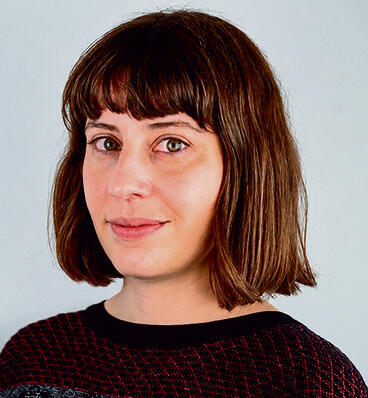
Maya Ilany, CEO of the Brandeis Institute
“In Europe, there is a relatively new understanding that these networks are not merely commercial products, but have public importance and an obligation to be transparent.
“We have no way of knowing what happens inside. We can only rely on publicly available information and reports from the public.”
And compared with the US?
“At the federal level, the Trump White House is trying to protect these organizations’ economic, commercial and political interests.
“But at the state level, and not only in Democratic states such as New York and California but also in more MAGA-oriented or Republican states, there is pushback against their enormous power.
“It is being fought in the courts, and regulation exists.
“Even compared with the U.S., we are behind. Israel is the Wild West.
“We are completely open. There are no protections. These companies are not based in Israel, and even if they have offices here, they are not obligated or subject to Israeli law. There is no one to talk to.”
What explains Israeli lawmakers’ disregard for the issue? Laziness? Neglect? Cowardice?
“All of the above, and in recent years there have also been more important matters on the agenda.
“I think that today, every ordinary citizen can understand that this space creates an opening for political influence and strategic security threats bordering on the existential.
“Right now, those benefiting most from the fact that the Israeli public has been abandoned are our enemies.”
What can be done?
“There are clear, transparent laws that can be imported.
“The European Union, for example, passed a law called the Digital Services Act, or DSA, which regulates platforms and social networks, just as you would expect cars to be regulated.

“No one tells you how to design the car, but it must have brakes and pass safety inspections.
“It may seem a little strange to think of social networks as products, but human beings created them, human beings use them and human beings make money from them. They are businesses and products in every sense.”
Israel, Ilany said, must follow other liberal democracies and regulate this space as well.
“We cannot afford to do otherwise.
“Too many enemies of Israel know how to use these tools extremely well, while we are at the mercy of commercial companies that could not care less about Israeli democracy or security.
“That is problematic both in principle and strategically.”
It is, she stressed, an issue of governance.
“In my view, it should be among the five most important issues politicians address.
“This is one of Israel’s main fronts today. It is genuinely an existential matter.”
Let us break that down. What is the existential threat? The permanent chaos? The lack of trust? The migration into the real world?
“All of those things, as well as the security danger.
“People who work or serve in intelligence and the security services can be recruited. These operations have become much more sophisticated.
“Let us think about the day after the election. If the results are close and the public consciousness is divided, then what happened, and who won?“
Could that not lead to civil war?
“These are not imaginary scenarios from my personal cabinet of nightmares. We saw what happened in the U.S.
“For all the many problems in the U.S., there is still a strong infrastructure there capable of holding back the pressure.
“The U.S. will not collapse tomorrow. We might not be able to withstand the same test.
“The fact that we operate in a language spoken by only a tiny fraction of people in the world does not help either.”
Why?
“An English-speaking researcher is exposed to what is happening across almost the entire world.
“We are much more isolated. International research bodies and institutes do not study what happens in Israel. We are completely below the radar.
“It is simply insane that the grocery store on your street faces more oversight, regulation and rules than the most influential bodies in Israel.
“The plans exist. What is needed is political will and public pressure.”
Public education?
“It is important for the public to learn and exercise caution, but I want to warn against that approach.
“In Iran, as at Facebook, sophisticated cognitive scientists are sitting and thinking about how to exploit every weakness you have.
“I can try to be careful, but ultimately, telling people, ‘It is your responsibility as an individual,’ amounts to abandonment by the state.
“In other fields, such as road safety, there are regulations.
“We do not merely tell children, ‘Do not take drugs, drugs are bad,’ while ignoring an ice cream truck selling heroin outside the school.
“Incidentally, I did not choose the drug analogy by accident. Drugs and technology companies are the only two industries that call their customers ‘users.’
“They have access to our fears, anxieties and most private desires, and they do whatever they want.
“I will give you an optimistic take.”
Please do.
“With the technology giants, we are approaching what is known as the ‘tobacco moment,’ the realization that this is a product containing danger, just as happened with cigarette companies in the 1990s.
“A conceptual shift is taking place around the world.
“There is a growing understanding that this is a product with an enormous effect on our lives and on democracy.
“If you spend your entire day inside an endless stream of constant distrust, debunking conspiracies and trusting or believing no one, what does freedom of speech even mean in such a chaotic situation?
“Democracy cannot cope with that. It requires some basic level of trust in other people and in the system.”