

'They feared I would be drafted into war'
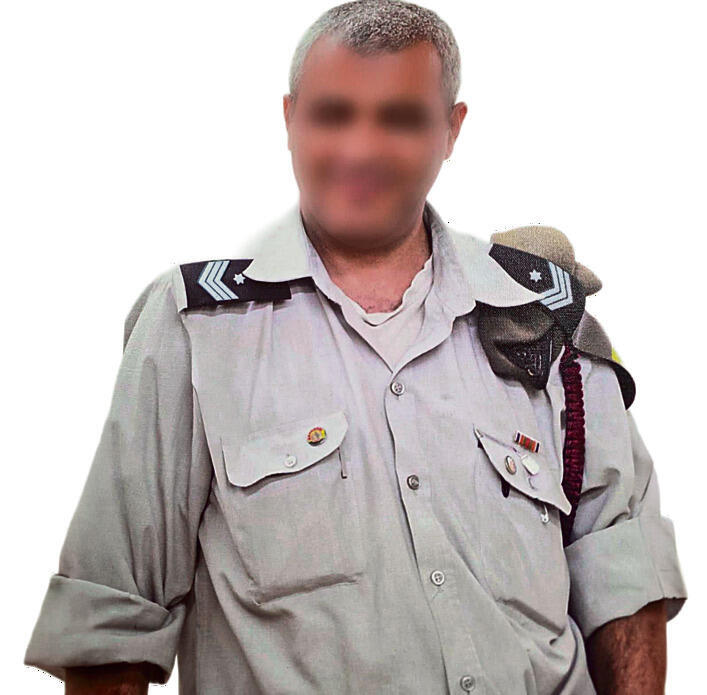
B. (60), a civilian employee in charge of training systems at IDF Training Base 20
B., a civilian employee of the IDF from Rishon Lezion, is married and a father of three. He immigrated to Israel from Iran in 1980 at age 15.
“We arrived after the regime fell, when the winds of war were already blowing in Iran. The revolution created a situation where it was less safe for Jews to live there, and my family feared I would be drafted into the war.”
He describes his childhood and teenage years in Iran: “I grew up in Kermanshah Province, which is now in the headlines because of drone production. Until the revolution, life was normal: home, family, school, and a small Jewish community. Then the revolution began, there were pogroms, protests. I saw my friends demonstrating, and the situation became unstable. Our personal security was shaken.”
“At some point, the regime fell, something no one imagined would happen, and then the family faced a dilemma about whether to move to Israel.”
With the help of the Jewish Agency, the family managed to reach Israel, smuggled on a flight from Tehran to Greece.
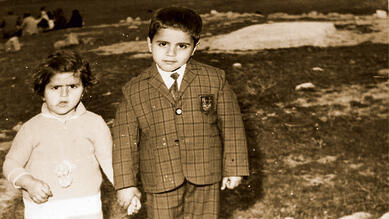
'The revolution created a situation where it was less safe for Jews to live in Iran,' B. as a child with his sister in Iran
“The moment the plane crossed Iran’s territorial airspace, it became clear that most of the passengers were Jews. The State of Israel is the safest place for Jews, for the Jewish people,” he said.
“Iran is a powerful country. I miss the days when it was a normal place. I miss a Middle East without unnecessary wars, where people can live in peace and visit one another. I would love to take a roots trip there.”
In 1984, he enlisted in the IDF’s Ordnance Corps and served for 14 years as an ammunition instructor.
“It was very clear to me there was no other path, that I would enlist and do meaningful service. In the Ordnance Corps, I found that, a unit that supports combat in the most professional way.”
Today, as a civilian employee, he says he is “actively taking part in defending my homeland, Israel, the state of the Jewish people,” and hopes one day to visit the country where he was born.
'My father had already packed a suitcase'
Master Sgt. D. (42), logistics NCO in Battalion 972, Jerusalem and Central District
D., a father of four, was born in Iran to a Zionist family. A decade before they fled, his father had already visited Israel. He vividly remembers the journey, from Iran to Pakistan, then to Paris and finally Israel, even though he was only six.
“We lived in Shiraz, where we said goodbye to my father’s close family,” he said. “Then we went to Isfahan, where we parted from my mother’s parents. I remember my grandfather’s house; it was huge. I remember small details, though some things have faded.”
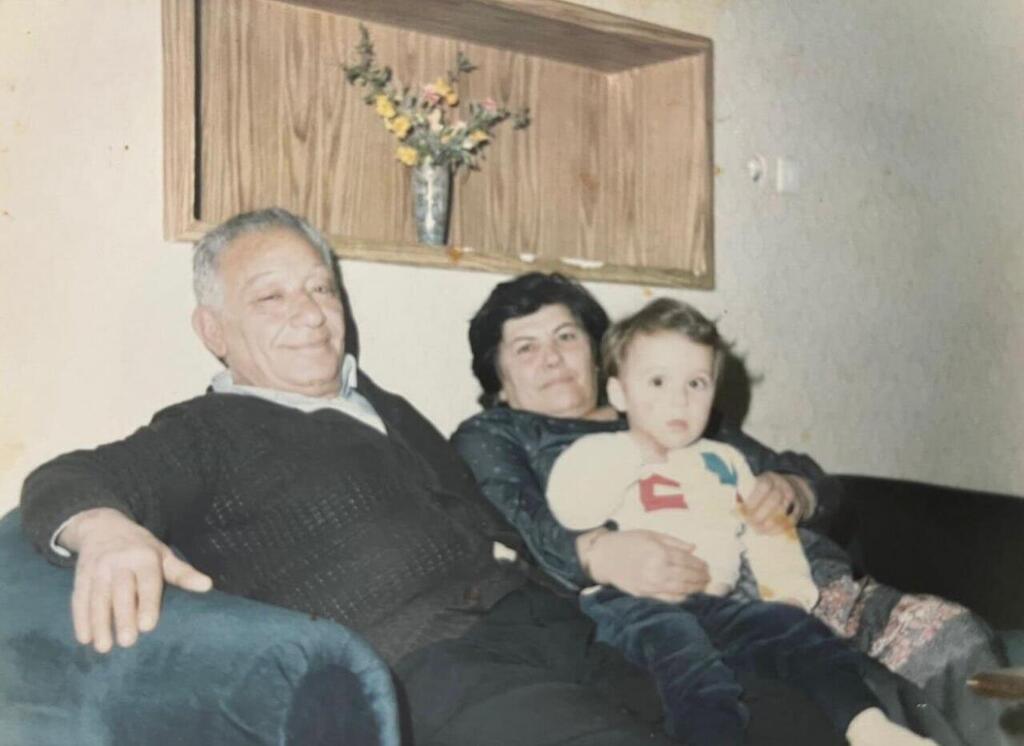
'My dream is to return and visit,' D. as a child with his family in Iran
“No one in the extended family knew. We got into a jeep that drove from Isfahan to Pakistan, to the border crossing. The Muslim smugglers took everything we had, money, gold, and luggage. The journey took three or four days. We had almost nothing to eat, just bananas and dates. We drank muddy water.”
“I remember the fear. During the drive, they realized we were fleeing through the mountains. They chased us and fired into the air, but the driver accelerated to break through the checkpoint and cross the border.”
“In Pakistan, it was better. There was a Jewish Agency presence that took care of us. For 16 days, my parents just cried. It was a kind of trauma. I don’t know how they did it with two small children. My uncle was murdered years earlier while trying to reach Israel. Thank God, we managed to escape.”
After arriving in Israel, the family stayed at an absorption center in Mevasseret Zion. At 18, D. enlisted in the IDF and was assigned to the Home Front Command.
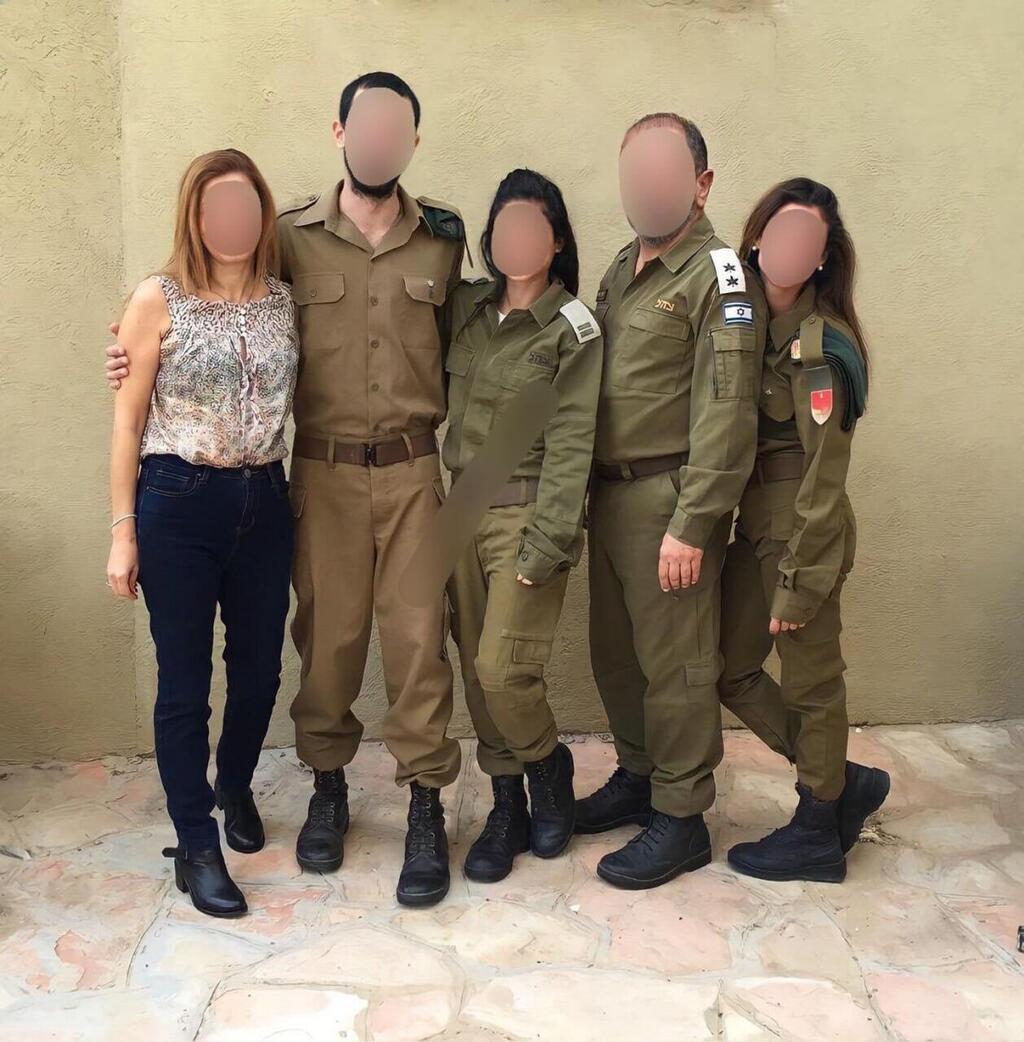
'I am very proud of the uniform I wear,' D. (second from right) with his family in Israel
“I did everything to become a combat soldier. I spent a week at the induction base trying to raise my medical profile, but it didn’t work. In the end, I served in search and rescue, and it was a challenging and meaningful service. I learned a lot.”
He remains in reserve duty today and says he has little information about relatives still in Iran.
“I only know my uncle was injured in the unrest there. I hope, first of all, for the Jewish people, that we remove the threat hanging over us from so many Arab states. And for the Iranian people, my family there, that we return to the period before the revolution, so that we can visit again. It’s such a beautiful country. My father has already packed a suitcase. He wants to go back so badly.”
'Even then, the regime was cruel, but it was a free country'
Lt. Col. (res.) S. (65), logistics officer in the Jerusalem and Central District
S., from Netanya, married with three children, immigrated to Israel in 1973, a month before the Yom Kippur War, at age 13.
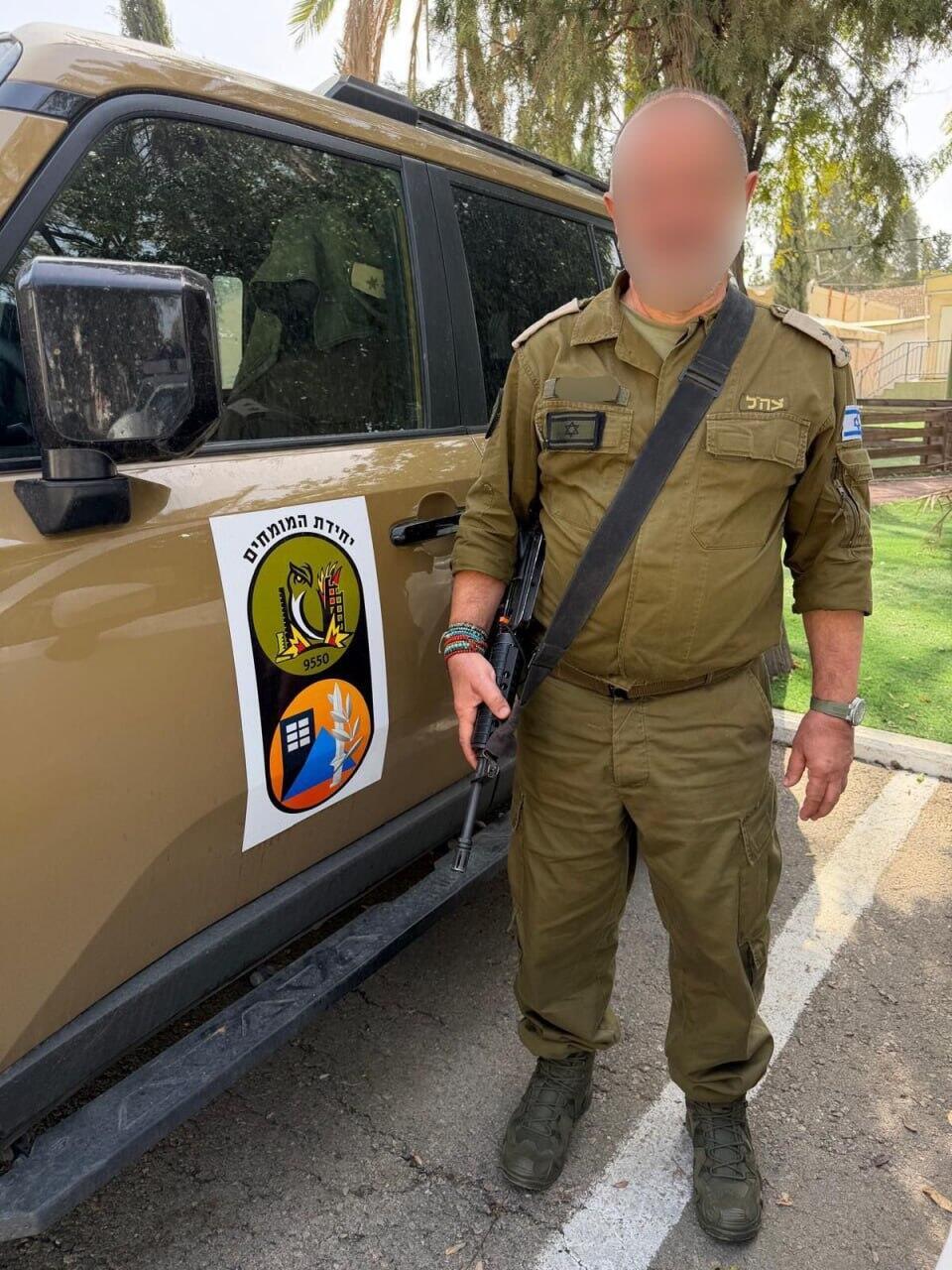
'I am very proud of the uniform I wear,' Lt. Col. (res.) S.
“My father was a senior community figure and ran the largest high school in Tehran,” he recalled. “I was always with him, traveling to many cities. I have incredible childhood memories.”
“Iran is a stunning country. One of my most vivid memories is a trip to Mashhad, one of its major cities, where one of the great imams is buried. We spent a week there. I have rich childhood memories.”
After arriving in Israel, his family stayed in an absorption center, and he later attended an agricultural boarding school through the Youth Aliyah program. He enlisted in the IDF as a Golani Brigade combat soldier and later became an officer.
Watching the revolution unfold from afar, he says: “This is not the Iran I knew as a child. The Shah’s regime was also harsh toward its opponents, but it was a free country. You could travel where you wanted, wear what you wanted.”
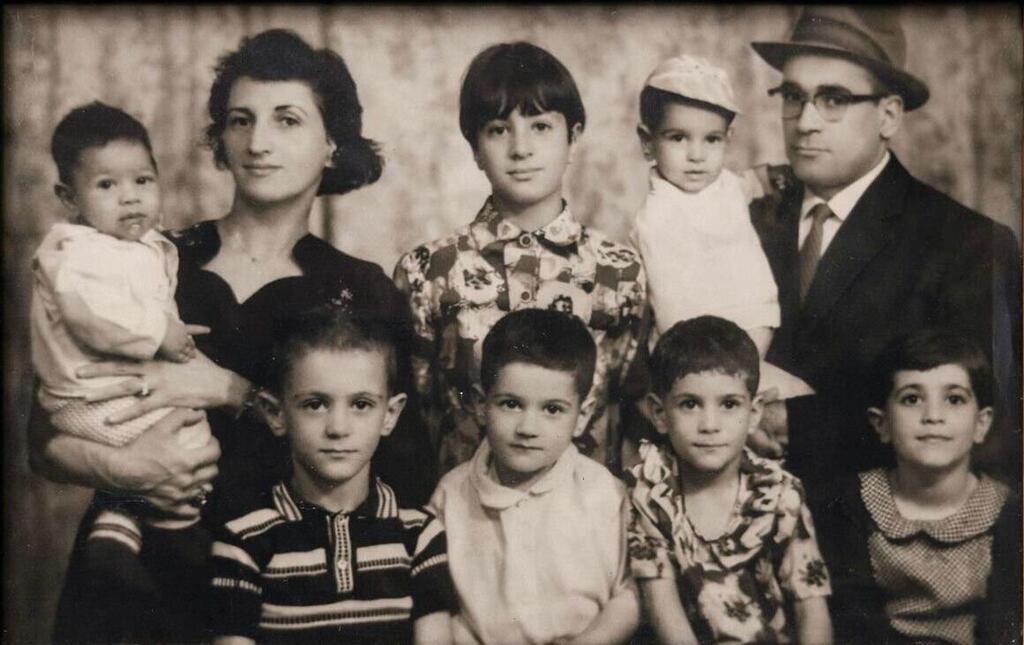
'Throughout the entire journey, my parents just cried,' S. as a child with his family in Iran
“Today, there is a very harsh regime. Many people suffer. From the family that remained there, I’ve heard very difficult stories. I feel deep pain over what is happening in Iran. It’s the country where I was born.”
Contact with his relatives has been cut off. “We haven’t spoken for almost six months. It’s a complete disconnect. I worry about them. We only know what we see in the media.”
On his long military service, he says: “I am very proud of the uniform I wear. For me, it is a great privilege and honor to serve in the IDF.”
He adds that his sister holds a senior position in Israel’s defense establishment and shares his hope for Iran’s future: “I hope this evil regime will fall, and that the Iranian people will finally have freedom. It is an incredible people. That is my prayer.”