

The house is quiet, the lights are off, and Dafna (whose name and all others in this article have been changed), lies in bed with her eyes open, unable to fall asleep despite the late hour. In the next room, her 17-year-old daughter, Roni, is asleep. Roni was adopted in Israel when she was 6 months old. In less than a year, she will celebrate her 18th birthday and will be able to open her adoption file and search for her biological parents.
Yossi, Dafna’s husband and Roni’s adoptive father, admits he, too, fears the moment his daughter asks to meet the people who brought her into the world. “My biggest fear is that my daughter will suddenly start seeing me as someone outside her story,” he says. “I’m also afraid she will discover terrible things about the circumstances of her birth.”
Gallery

Just before sleep, the nightmare scenario returns: The biological parents “win,” and the adopted child chooses them
(Photo: Shutterstock)
“We’ve been preparing for this moment for many years,” Dafna says. “Every adoptive parent understands such a day may come. And still, the feeling is very tense, almost like before a competition.”
What are you most afraid of, I ask her gently. “What scares me most is that she’ll find a physical resemblance to one of them,” she says. “I’m also afraid there will be an immediate ‘click’ between them that will cancel out years of education, devotion and love we have given her since we adopted her as a tiny baby.”
Dafna says Roni speaks very openly about being adopted, and it is precisely that openness that fuels her adoptive parents’ fears. In front of her, they express full support for her right to explore her roots. But behind closed doors, when the house grows quiet, they quietly carry the same fear.
Those thoughts, which surface under the cover of darkness when the house is quiet, are familiar to many adoptive parents: Just before sleep, the nightmare scenario returns, the biological parents “win,” and the child they raised chooses them.
“At night, the imagination tends to cast the biological parents as ideal figures,” Dafna says. “And the thought that keeps coming back to me just before I fall asleep is that Roni might one day say, ‘Now I understand whom I inherited this or that trait from.’ That would break me.”
The child sleeping in the next room
As an adopted child who did not know his biological parents until adulthood, I can promise Dafna and Yossi, and other adoptive parents, one thing: We, the children you raised with so much love, hear your thoughts even when not a word is spoken.
For nearly 30 years, from age 18 to 47, I refrained from opening my adoption file. Not because I was not curious, quite the opposite. For years, I would sit in cafes, look at the people around me and imagine that perhaps one of them was my biological mother or father. I would silently ask myself: Maybe I look like one of them? Maybe those young people who look a little like me are my brother or sister?
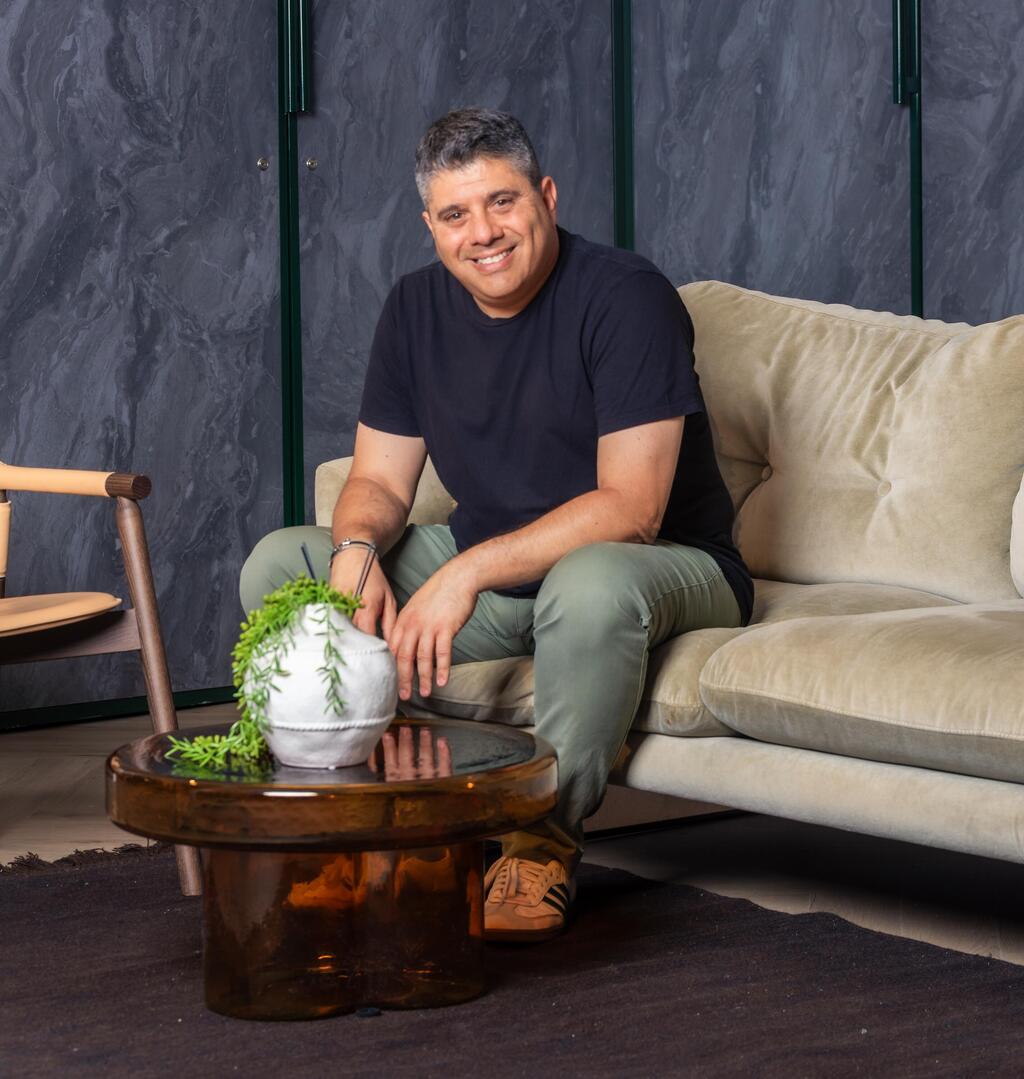
Tsachi Bardugo. Alongside the moving discoveries, many secrets and lies also came to light
(Photo: from "ECHO ID" project)
I did not open the file because I worried about my parents’ sleep. I was completely devoted to them, and I decided that as long as they were alive, I would not open it. Whenever curiosity burned inside me, I immediately thought about what they would whisper to each other just before falling asleep: “Here it is. It’s happening. He’s going to look for another mother and father.”
While people my age were preoccupied with self-image and social dynamics, and later with studies and careers, my thoughts were elsewhere. The fear of betraying my adoptive parents, of creating a competition for them or putting them through comparisons, was stronger than my need to know where I came from.
Then, in December 2018, Israel’s Child Welfare Service called me and offered to open my adoption file. The reason for the sudden call was the death of my biological mother, whom I had never known or met.
At the time, my adoptive mother, the woman who raised me, and was the only mother I had ever known, had been dead for many years. My adoptive father was then in a nursing ward with advanced dementia. I knew there was no danger of hurting them, and I agreed to embark on the journey that changed my life.
Had my parents been alive and lucid, there is no chance I would have opened the file. To me, it would have been nothing less than a betrayal of them, or at least that is what I believed until I set out in search of my unknown roots.
The truth can be ugly, but lies are toxic
The discoveries I made on that journey completely changed the story I had constructed for myself about the people who brought me into the world. My biological mother became pregnant in 1971 during a relationship with my biological father, but before marriage, which was unacceptable at the time.
Just one month after giving birth to me, she married another man and started a family with him. My biological father also married. The two families did not know each other until I opened the file. As it turned out, I was the only child they had together, and I have nine half-siblings: five on my father’s side and four on my mother’s.
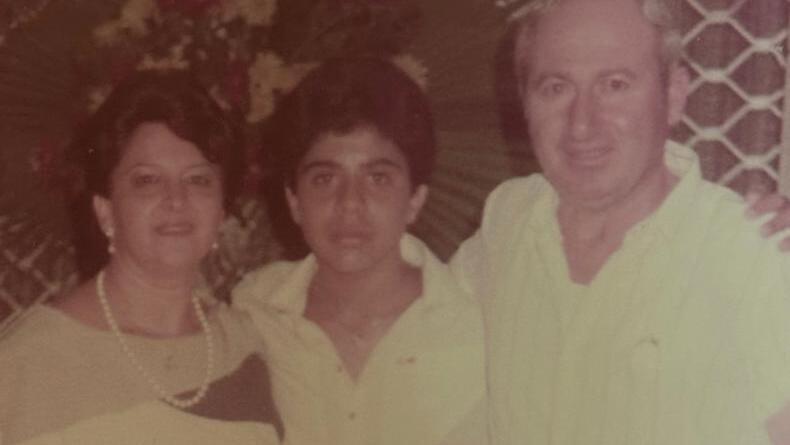
Bardugo with his adoptive parents. Had my parents been alive and lucid, there is no chance I would have opened the file
(Photo: Private album)
Then another especially staggering detail emerged: I had known my maternal half-brother well for years. We both live in Ramat Hasharon, and my eldest daughter was in the same class as his son. All those years, we shared a city, school events and even some friends, without either of us knowing we were half-brothers.
Alongside the moving discoveries, many secrets and lies surrounding the circumstances of my adoption were also exposed. Some people told me falsehoods and contradictory versions. They tried to dissuade me from uncovering the truth. “The truth is ugly,” they told me.
Indeed, the truth can be ugly. But a lie is always toxic. An ugly truth can be processed. It can be mourned. A lie, by contrast, is a living, active substance that continues to control you and poison your sense of reality.
That is why now, after exposing the truth and looking the ugliness in the eye, I feel whole enough to recommend that adopted children set out on the journey to discover the story of their lives. Closing the circle is not merely a technical discovery of facts, but is also reclaiming ownership of that story.
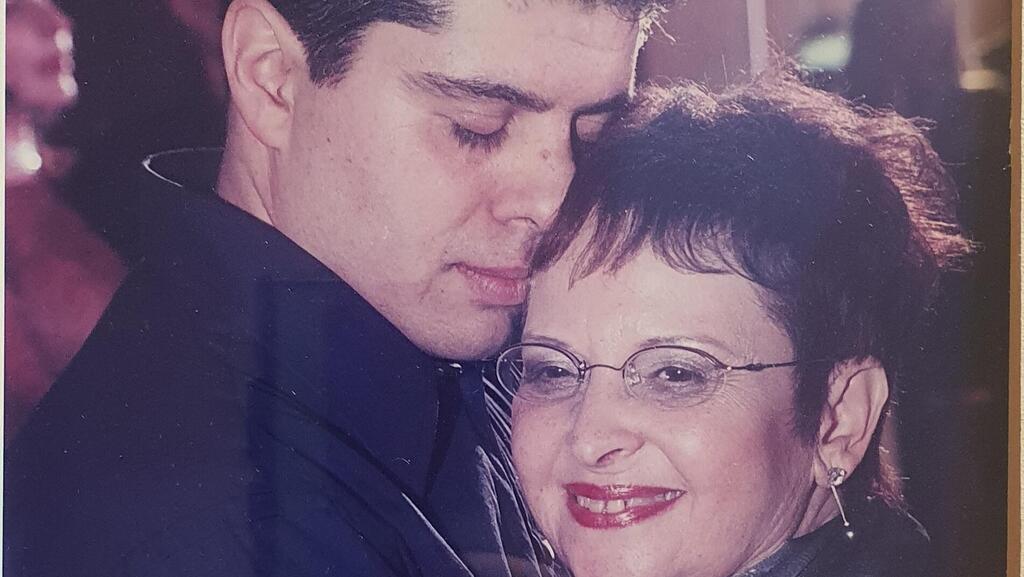
Bardugo with his adoptive mother. "Every time curiosity burned inside me, I immediately thought about how deeply they might be hurt"
(Photo: Private album)
And here is something important for adoptive parents to know and remember: Most adoptees who open their files do so in their 30s and 40s, at a stage of life usually marked by an established identity: marriage, parenthood, caring for an aging parent.
So when the child you raised is finally ready to search for their biological roots, they already know exactly who raised them, loved them and helped shape the person they became.
We are not searching for a replacement, because there never was and never will be one. We are simply searching for answers, so we can finally close the circle.
The writer is a mentor who accompanies adult adoptees and their families through the process of opening adoption files, a lecturer on inspirational life stories and the author of the autobiographical book “My Third Childhood,” published by Yedioth Books.