

The results of the Education Ministry’s “Tnufa” English exams, administered to ninth-grade students to assess their command of the language and published about a month ago, pointed to an especially low level of proficiency, with only 22% of students meeting the required standards. Many were not surprised.
Among them were Roy Mor and Yonatan Levin, developers and co-founders of Loora, an app for learning English through conversations with a virtual teacher.
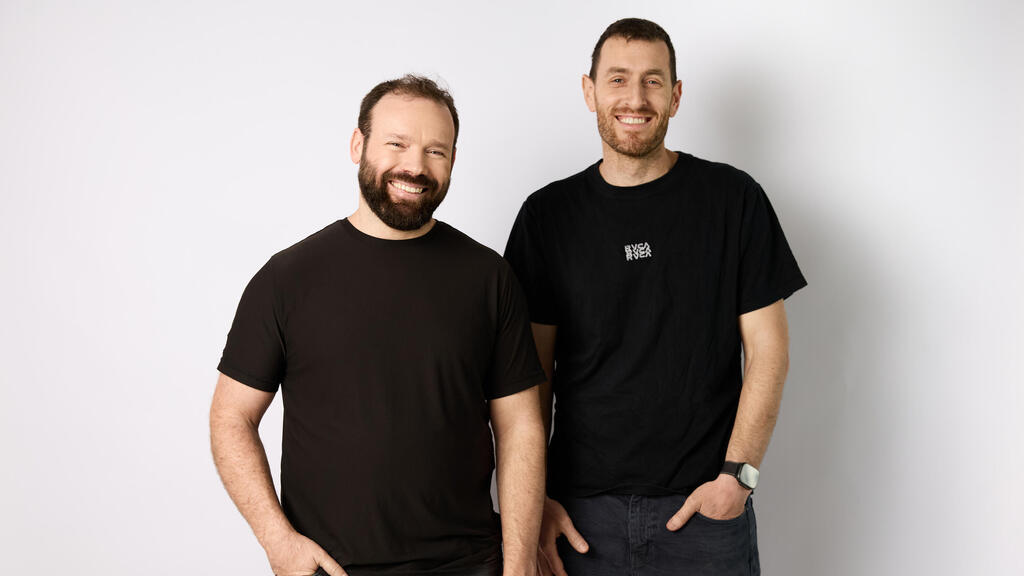
“The shortage of English teachers in Israel’s education system has been known for years and is glaring,” said Mor, who also serves as the company’s CEO. “Even when teachers are available, the way English is taught undermines students’ ability to learn a language that is essential for their lives.”
How does the app solve that problem?
“Loora is based on conversational artificial intelligence, which powers the virtual teachers,” he explained. “It allows every student to speak fluent English through lessons tailored to their specific needs and interests. The app is essentially a private tutor that enables real speaking practice, adapts to the learner’s level and interests, identifies mistakes in real time and provides immediate feedback, at a price most people can afford.
“If the average yearly cost of a private English tutor is estimated at around $2,000, the app costs between 400 and 800 shekels ($110-$220) a year, depending on the subscription plan.”
Mor, 40, was born and raised in Jerusalem and now lives in Tel Aviv with his wife and two young sons. Levin, also 40 and known to friends as “Yonti,” was born and raised on Kibbutz Hatzerim. He also lives in Tel Aviv with his wife and two young sons.
It would not be inaccurate to describe the relationship between the two as a long and stable partnership, in friendship as well as business.
“We met on the first day of our military service, 22 years ago,” Mor said. “We spent our first night in the same reconnaissance-unit tent and haven’t separated since. We’re close friends, our families are close and we work together.”
Not every friendship survives a business partnership. Sometimes it is a recipe for trouble.
“That’s true. You can’t go into business with every friend. We’re lucky,” Mor said with a smile. “We’re interested in the same things, share the same ambitions, are close friends, highly motivated and ambitious. In the end, our ability to work together is built on our relationship. We always knew we enjoyed working together. There’s no ego between us. It’s us against the world.”
Joining the AI revolution
The two began their military service in the Israeli Air Force flight academy but dropped out after more than a year when they refused reassignment from the fighter pilot track to other programs. They later joined the IDF’s elite Sayeret Matkal commando unit.
“We ended up in flight school almost by accident. From the start we wanted Sayeret Matkal,” Mor said. “We weren’t surprised to discover we weren’t destined to become great pilots. The decision to leave was easy.”
Levin ultimately served in the unit for about a decade as an officer and team commander. Mor served for five years.
After completing their military service and post-army travels, Mor enrolled in electrical engineering and physics studies at Tel Aviv University. Levin chose the same path.
“Studying that field at age 26 probably proves poor judgment,” Mor joked. “During our studies, Yonti and I fell in love with AI. At the time, the field wasn’t very popular, but it always fascinated us. Since it wasn’t taught in undergraduate programs back then, we started studying it on our own, knowing we wanted to work together in the field.”
As part of that vision, Mor left a job at a cybersecurity company and joined Mobileye, founded by Amnon Shashua, which developed vision systems capable of identifying vehicles through cameras.
“I traveled to Jerusalem several times a week. It was an incredible school for learning how to build a product, a company and technology,” he said.
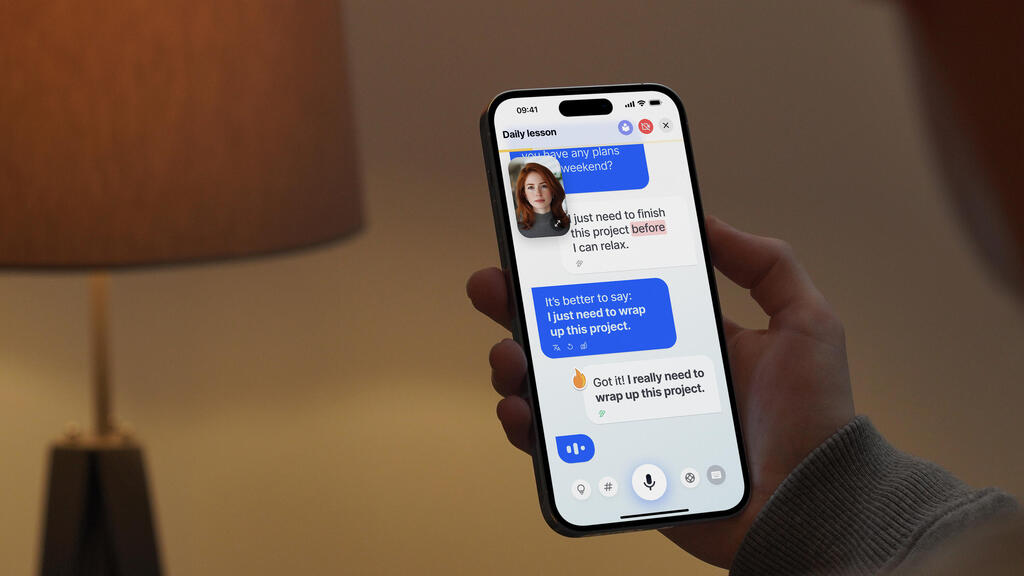
Loora app
(Photo: Courtesy)
After completing his undergraduate degree while working, Mor earned a master’s degree in computer science and began a doctorate. A month later, he decided to leave academia.
“When I started the Ph.D., I had a feeling in my gut that it wasn’t what I truly wanted to do,” he said. “That was when we decided to found Loora.”
Even during their undergraduate studies, the pair worked together on freelance AI projects. “We realized it was important to both of us to build something with impact — more than publishing academic papers and indulging my love for mathematics and theories,” Mor said.
“So we decided to join the AI revolution, but in fields like education or medicine, where you can do good for users rather than harm. It’s similar to cybersecurity — working in defense rather than offense.”
What attracted him to AI technology at a time when it was still undeveloped?
“It was clear something huge was happening that hadn’t yet reached the general public,” he said. “By 2012, a revolution had already begun in autonomous vehicles and medicine, but it hadn’t yet reached language or what is now called artificial general intelligence.
“In 2020, we identified the potential of AI for language learning. We understood it was coming soon and wanted to be part of that revolution. That’s when we started working on Loora.”
The app launched in 2021. Why choose an Arabic name?
“Beyond being short and catchy, it came from personal frustration,” Mor said. “In Arabic, the word means ‘language.’ The idea came when I was frustrated with language learning, which I believe is extremely important in today’s world.
“At the time, I felt my English was deteriorating because I had no one to speak with. My French and Spanish, which I used in sales, were also getting worse. I went to teachers because language apps back then were mostly aimed at people who wanted to play around, but private tutors didn’t always discuss topics that interested me. The name also connected to my frustration over failing to learn Arabic.”
Who was the app designed for?
“Our vision was that English would never be what prevents someone from developing professionally or personally and achieving their dreams,” Mor said. “We initially focused on helping students, but the app was designed to serve as many audiences as possible, at every age, for both personal and professional needs.
“In today’s global world, lacking strong English skills is a major barrier to many jobs and to professional and personal success. Yet most people still don’t have sufficient access to effective English instruction, which blocks many opportunities.
“As the most widely spoken language in the world, especially in business, English proficiency is an essential tool and an entry requirement for a growing number of professions. Despite the high demand for English learning, the solutions on the market are either very expensive or not effective enough, whether private tutors or other apps.”
Where does Loora outperform competitors such as Duolingo, ELSA or Learn English Daily?
“Most existing apps are aimed at beginners or people learning a language as a hobby and don’t enable users to achieve a high level of English,” Mor said. “Even products that recently started integrating AI rely on generic models and only use it as an add-on, offering a very limited solution for people who seriously want to learn English.
“To become fluent and improve pronunciation and accent, you need frequent conversation practice. Private tutors don’t allow that because of high costs and limited availability. Many people are also afraid or embarrassed to speak with native English speakers.”
There’s someone to talk to
Mor shared a statistic that surprised the company about users’ motivations for learning English.
“According to our data, 71% of learners want to improve their English for professional reasons,” he said. “When we started, we thought the people who needed it most would be young adults entering the workforce. But we discovered it wasn’t only young people.
“Today, from age 12 to 90, everyone feels they need and want English proficiency for career development, personal growth and simply to be part of the world.”
According to Mor, the company has regular users in their 80s and 90s.
“The desire to learn never disappears,” he said. “I remember my late grandmother earning a master’s degree in history at Hebrew University at age 80. People at those ages still want to keep their minds active, and the app also solves loneliness because they have someone to talk to.
“The workplace has changed as well, and people work into older age, requiring strong English skills. Some of our users are casual learners studying for fun, for example before traveling abroad. For them it’s almost like using TikTok. Most of our app isn’t designed for that audience — there are other apps for that.
“Our focus is on people who need the language to improve their lives, for work and personal needs. That’s our biggest market. We’re focused on building a conversational product that allows people to speak, gain confidence and achieve fluency. To give them the best teacher for them, like a real teacher would, in a nonjudgmental environment where they can talk about anything.”
Mor said the company’s technological advantage lies in its use of “hundreds of millions of data points” to personalize learning.
“That’s technologically difficult and what makes us unique,” he said. “In my opinion, we’re among the only companies in the world that have solved this need. That’s why our students stay with us longer, and as we grow, the experience improves and we outperform competitors.”
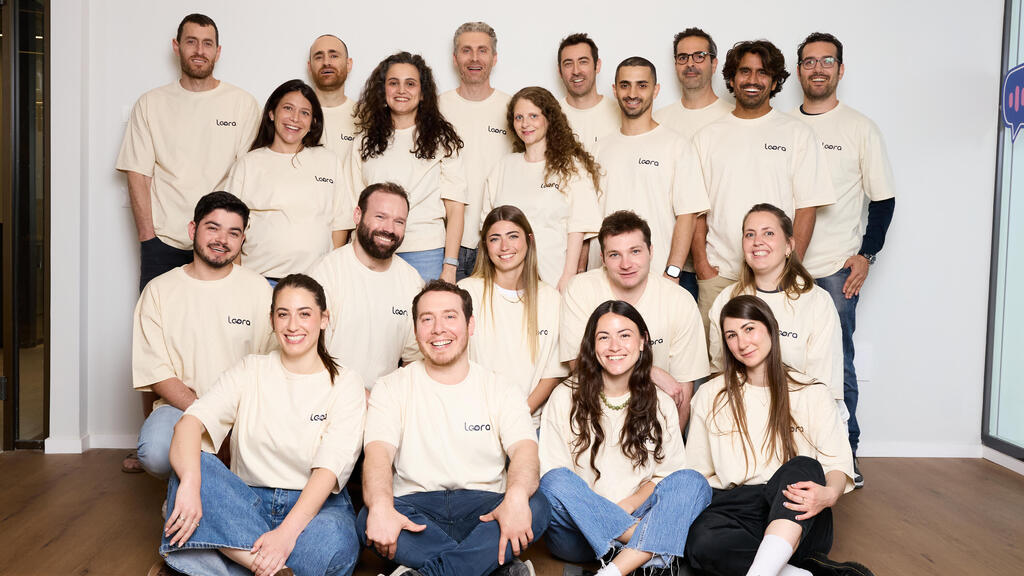
Loora team
(Photo: Courtesy)
'An exit? Absolutely not'
Mor said the company currently has more than 15 million users worldwide, including about 200,000 in Israel.
Subscriptions cost 69.90 shekels ($19) a month for a three-month plan and 33.32 shekels ($9) a month for an annual plan, totaling 399.90 shekels ($110) a year. Conversations with Loora are unlimited.
The company employs 35 people at its headquarters in Israel and is currently recruiting about 30 more employees, including engineers, product managers and sales staff.
“We’re selling the product for tens of millions of dollars annually. It’s a real startup,” Mor said proudly.
Do they have plans for an exit?
“Absolutely not,” he said. “We feel we have an opportunity to build a huge company and change the way education works.”
The company raised about $9 million in seed funding and later another $12 million, for a total of roughly $21 million.
“That’s a vote of confidence in our product,” Mor said. “There’s something else in progress right now, but I can’t talk about it yet.”
Who are the investors?
“Venture capital funds and amazing Israeli angel investors who supported us from day one,” he said. “They understand the mission and its importance and have the patience required for this kind of investment.”
Looking back, did they imagine reaching these numbers?
“We always thought big, but our thinking evolved,” Mor said. “At first, we told ourselves that if even one person enjoyed learning and saw results, we had succeeded. Then we thought about 1,000 users, then a million. Every year the goal grows.
What comes next?
“We currently have plans to teach Arabic,” Mor said. “Not additional languages at the moment. Arabic is highly relevant in Israel for work and because of the nature of the country.
“Most other languages are less necessary in Israel, and globally Arabic is becoming more prominent. Learning most other languages is a different kind of product, more aimed at entertainment. We want this app to focus on learning and work.”
The company is also expanding into partnerships with organizations to reach users who cannot afford the app themselves, including workplaces, universities and government bodies.
“The goal remains the same: helping people who genuinely need language skills to gain opportunities in life,” he said. The company is also considering adapting the app for younger children, including preschoolers.
“That’s when language acquisition should begin,” Mor said. “But the app would need to be more visual for those ages.”
Returning to their Sayeret Matkal service, what did they take from it that applies to entrepreneurship?
“We took determination and persistence, which are essential for success,” Mor said. “But for me,” he paused, “the greatest and most important value I gained during that time was friendship. My teammates are friends for life.
“Maybe that’s also part of our success, but I don’t think about it as work. Personally, for me, it’s the most important thing.”