

Some advertisements try to sell a product. Others try to sell a lifestyle. And then there are campaigns designed, above all, to make everyone talk about them. Sydney Sweeney’s new campaign for U.S. sports prediction platform Novig has done exactly that.
In the “Just Sports” commercial, Sweeney appears partially covered by balls and other sports equipment as she promotes the ability to trade predictions on sporting events. The provocative campaign quickly went viral, drawing more than 22 million views within two days.
Gallery
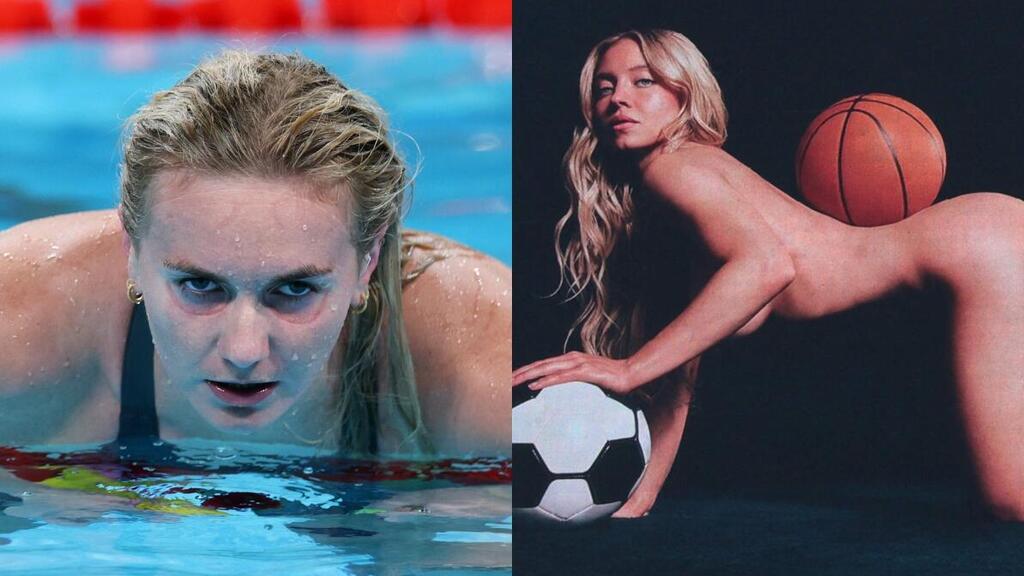
Sydney Sweeney’s provocative sports campaign reignites debate over women’s bodies in advertising
(Photo: Michael M. Santiago / GETTY IMAGES NORTH AMERICA / AFP, Adam Pretty/Getty Images)
For Novig, a company previously known mainly among people who closely follow sports prediction markets and trading, the campaign delivered enormous exposure. But with that attention came a backlash, much of it led by women in sport.
‘This is what women in sport look like’
British sprinter Amy Hunt was among the first prominent athletes to respond. Following a fourth-place finish in the 200 meters, Hunt turned the conversation away from Sweeney and toward what female athletes represent, pointing to sprinter Melissa Jefferson-Wooden’s performance.
“Sydney Sweeney, this is what women in sport look like,” Hunt said. “21.4 seconds. Muscles. Hard work, blood, sweat and tears.”
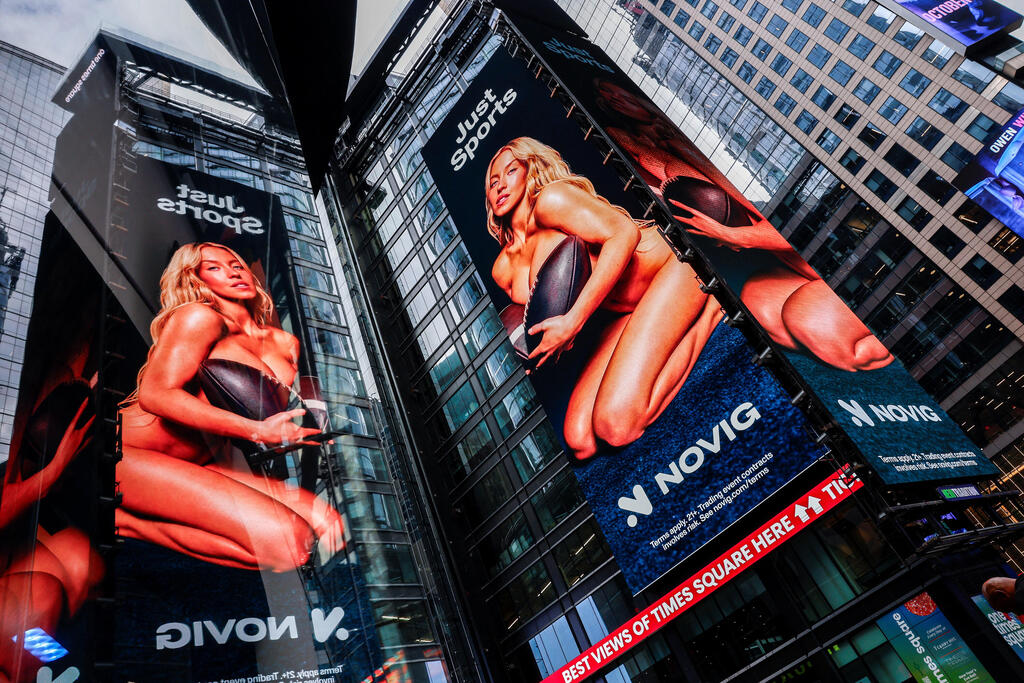
Campaign billboards in New York featuring Sydney Sweeney
(Photo: REUTERS/Jeenah Moon)

שלטי חוצות של הקמפיין בניו יורק. סידני סוויני
(Photo: Michael M. Santiago / GETTY IMAGES NORTH AMERICA / AFP)
For Hunt, the issue was not simply how the female body looks, but what that body can do and the work required to reach elite level.
She also connected the debate to a broader concern over girls leaving sport. Research by Women in Sport cited in the debate found that nearly 64% of girls stop taking part in physical activity before age 16.
From Hunt’s perspective, the controversy therefore goes beyond a single advertisement. It is about the cultural environment in which girls decide whether sport is a place where they belong.
Maria Hasler, who works in talent and marketing partnerships and previously worked with Nike and Arsenal, said the campaign comes at a particularly sensitive moment after years of efforts to change how audiences perceive women’s sport.
The message, she said, has increasingly shifted from “what does she look like?” toward “who is she and what can she do?”
Hunt was hardly alone.
Olympic cycling champion Sophie Capewell also questioned the way women were being represented through the campaign.
Australian swimmer Ariarne Titmus, a four-time Olympic champion, was similarly critical. For Titmus, the issue was not one actress or one commercial, but what sport is supposed to represent for women: “teamwork, friendship, dedication, excellence and unity.”
American gymnast Gracie Kramer responded by posting a series of videos showing herself performing as an athlete.
“I don’t know what Sydney Sweeney was doing, but this is what a woman in sport looks like,” she wrote.
The post drew more than a million likes and became part of a wider social-media response in which female athletes showed themselves competing, training, sweating and pushing their bodies to their limits.
Cyclist Maddie Nutt posted images of herself racing through mud, contrasting that reality with glamorous depictions of women in sport. Her message was that female athletes look like determination, sweat and tears, not merely sexuality.
“We fought for years for women’s sport to get the respect it deserves,” she wrote.
Tour de France Femmes champion Demi Vollering also joined the debate, saying that while it may be positive that the advertisement sparked a discussion, it was disappointing that women were still having to have the conversation at all.
‘Have we gone back to the 1970s?’
The criticism extends beyond athletes themselves.
Jenny Mitton, a leading figure in women’s sports marketing, said the advertisement reminded her of an era in which women were often treated primarily as decoration in the sporting world.
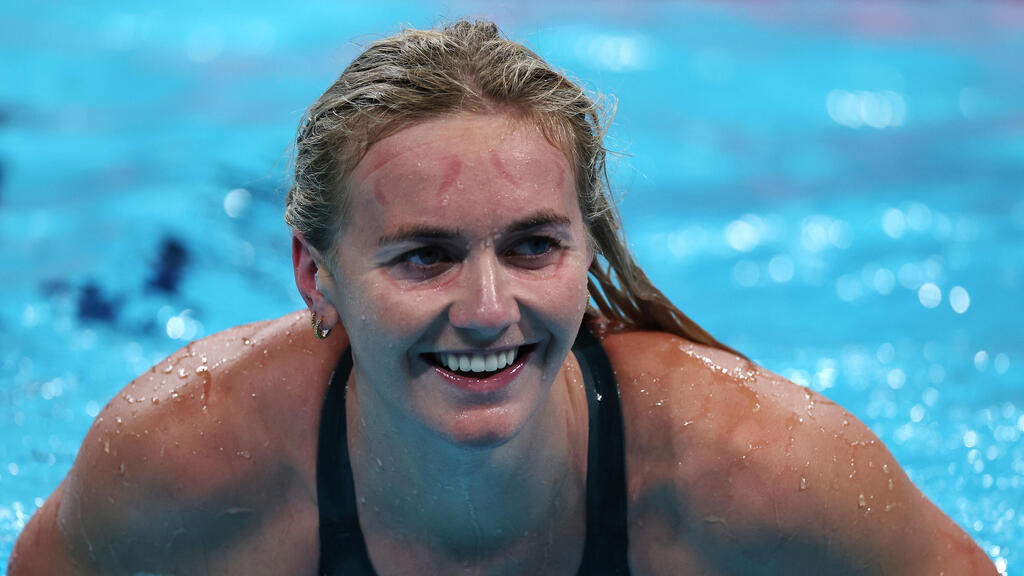
Australian swimmer Ariarne Titmus
(Photo: Al Bello/Getty Images)
She compared the imagery to Britain’s former Page 3 tradition and the “grid girls” once commonly used in motorsports, raising the question of whether sports marketing was moving backward.
Page 3 disappeared. Grid girls largely disappeared. Yet for critics, the Novig campaign revived a visual language associated with the 1970s and 1980s.
That is particularly sensitive for female athletes because comments about their bodies remain a constant part of their lives online. Women are routinely told that they look too muscular, too big or otherwise fail to fit a particular ideal of femininity.
The argument, then, is not that women’s bodies should disappear from sports imagery. It is that the body should not overwhelm the athlete.
Over recent years, women’s sports marketing has deliberately attempted to shift attention away from appearance alone and toward ability, character and achievement.
But what if it was Sweeney’s choice?
That leads to the other side of the debate.
Sydney Sweeney is not a professional athlete. She is an actress. And the Novig advertisement does not present itself as a celebration of women’s sport. It is an advertising campaign for a sports prediction company trying to attract attention.
From Novig’s perspective, that was precisely the point.
Company CEO Jacob Fortinsky defended the campaign, arguing that Sweeney commands attention and that the advertisement succeeded in creating a national conversation around the company.
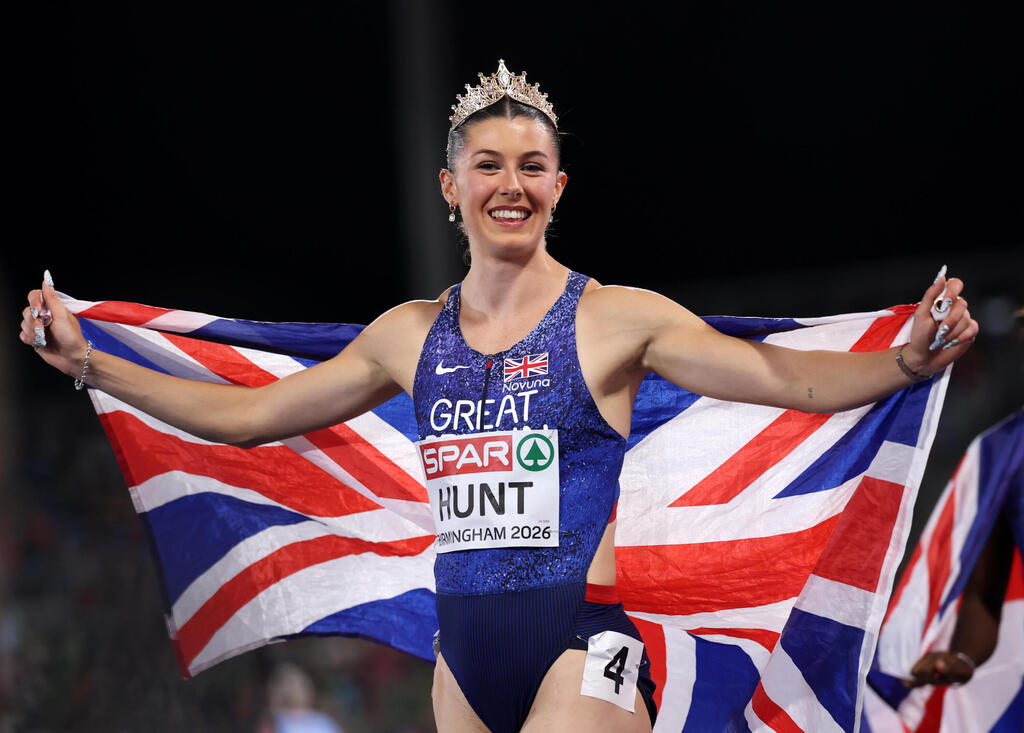
British sprinter Amy Hunt
(Photo: Julian Finney/Getty Images)
According to Fortinsky, Sweeney was herself involved in the creative process and had approached Novig regarding a business partnership.
Sweeney’s own response took the argument in another direction.
Rather than directly confronting the athletes criticizing her, she shared images of male and female athletes who had posed for ESPN’s famous Body Issue, including Serena Williams, Sue Bird, Megan Rapinoe and Myles Garrett.
The implicit argument was straightforward: professional athletes themselves have sometimes chosen to present their bodies publicly. If displaying a body can represent confidence and autonomy in one context, why should an actress making a similar choice automatically be viewed as a problem?
That is where the dispute becomes less straightforward.
James Swanson, an expert in commercial sports marketing, drew a distinction between a woman choosing how to present her own body and a company using a woman’s body to sell a product.
A woman can absolutely decide how she wants her body to be seen, he argued. But there is a difference between a woman using her body to tell her own story and a brand using a woman’s body as a commercial device.
When Sweeney controls her own image, the argument goes, she is exercising agency. But when a brand uses the language and imagery of sport to sell a product, it is also borrowing some of sport’s cultural meaning, and must consider how that message will be interpreted.
In other words, not every image of a woman’s body is objectification, just as an image that avoids sexuality is not automatically empowering.
Context matters.
Sports broadcasters rethink the female body
The timing of the controversy is also significant.
Only two months earlier, European broadcasting and athletics organizations published new guidelines aimed at changing how women’s athletics competitions are filmed.
The 23-page document called on directors and camera operators to focus primarily on athletes’ performances rather than camera angles that could be viewed as sexualizing or embarrassing.
The guidelines did not call for women’s bodies to be hidden or for broadcasters to reduce their coverage of female athletes.
Instead, the principle was that camera choices should help viewers understand the sporting performance.
Among the recommendations were reducing rear close-ups, avoiding low upward-facing angles and reconsidering slow-motion replays that offer little sporting value.
The distinction mirrors the argument now surrounding Sweeney: the presence of the female body is not necessarily the issue. The question is what the image is being used to communicate.
When Sweeney herself becomes the story
While athletes and marketing experts focused primarily on bodies, representation and advertising, USA Today opinion columnist Ingrid Jacques offered another interpretation of the uproar.
Jacques argued that at least some of the reaction was less about the advertisement itself than about the accumulated controversy surrounding Sweeney as a public figure.
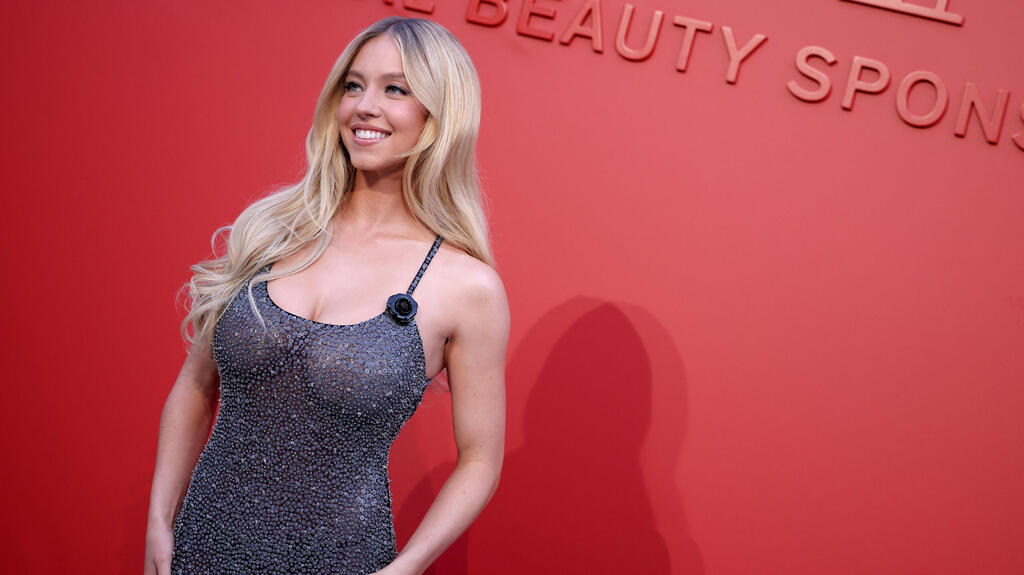
(Photo: Carlo Paloni/Getty Images)
In her view, “the uproar around Sydney Sweeney is less about the advertisement and more about Sydney Sweeney.”
Jacques linked the latest dispute to previous political arguments around the actress, including reports about her voter registration, suggesting that Sweeney has increasingly become a symbol onto which wider cultural and political disputes are projected.
It is not Sweeney’s first advertising controversy.
Last year, an American Eagle jeans campaign featuring the actress triggered an intense debate over a play on the words “jeans” and “genes.” The discussion soon expanded well beyond clothing, with questions about beauty standards, race and politics becoming attached to the campaign.
The latest Novig controversy can therefore be read in two different ways: as a specific fight over the sexualization of women in sport, or as another chapter in the culture war surrounding one of Hollywood’s most scrutinized stars.
From ‘look how beautiful she is’ to ‘look who she is’
What makes the debate more significant than an ordinary advertising controversy is how dramatically the marketing of women’s sport has changed.
Campaigns such as “This Girl Can” helped popularize a different visual language, presenting ordinary women exercising without demanding that they conform to a single beauty ideal.
Later campaigns increasingly blended female athletes with fashion, pop culture and entertainment without necessarily reducing them to their appearance.
The underlying message shifted.
Instead of simply saying, “Look how beautiful she is,” sports marketing increasingly began saying, “Look who she is.”
That does not mean sexuality has no place in how female athletes or celebrities choose to present themselves. Nor does it mean that displaying the body is inherently exploitative.
The harder question exposed by the Sweeney campaign is who controls the image, what the image is being used to sell and what cultural meaning a brand borrows when it wraps that image in the language of sport.
Novig wanted people talking about “Just Sports.”
Instead, it helped reignite a much larger debate over women, sexuality, choice and who gets to decide what empowerment looks like.