

Thirty kilometers in, on a cold night, in open terrain near Modi’in, a flat tire brings everything to a halt. Mati Weiss, 18, sits on her bicycle reading a book, waiting patiently as her coach, Ohad Tanami, fixes the punctured wheel.
As he works, Ohad finds himself thinking of a sentence his battalion commander, Nati Alkobi, used to repeat: “Do the very best, and then a little more, and we will have a different country.”
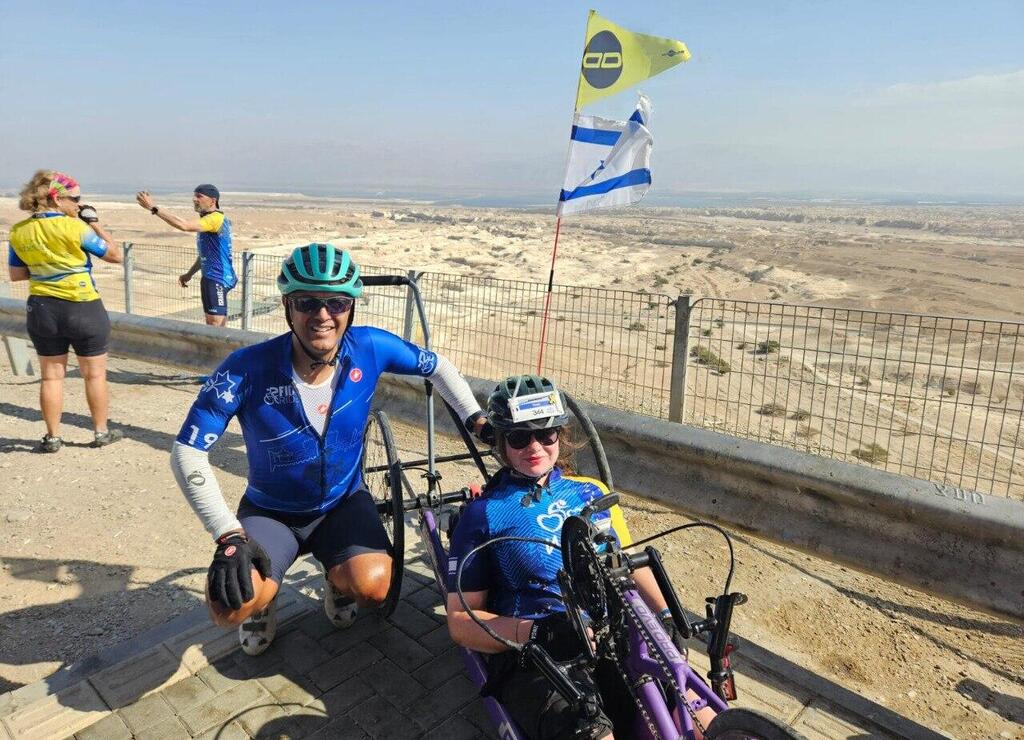
Nati was killed in combat in Khan Younis, four days before the end of Ohad’s first reserve duty rotation in the war. The sentence stayed with him. It accompanied them not only throughout the 260 kilometers of the cycling journey completed by Mati, Ohad and the rest of the group, but throughout the emotional journey they have traveled since October 7. “After Nati was killed, I needed time for myself,” Ohad shares. “I was diagnosed with post-traumatic stress. I lost close friends. I felt I couldn’t commit to a journey like the one we did the year before.”
After several months, he decided to return. For Mati. For himself. For Nati.
Rehabilitation on wheels
Ohad has known Mati for several years, since she joined the cycling group for children at ALYN Hospital, a rehabilitation center in Jerusalem. When she was one year old, doctors discovered a tumor in her spine. After surgeries and treatments, the tumor was removed, but the lower half of her body remained paralyzed. “At one of my routine checkups at ALYN, the physiotherapist suggested incorporating sports into my rehabilitation,” Mati says. “He especially recommended cycling. I tried it, and over the years I slowly fell in love with it. As a child, I never imagined doing sports, let alone going on a journey of dozens of kilometers on a bike powered by my hands.”
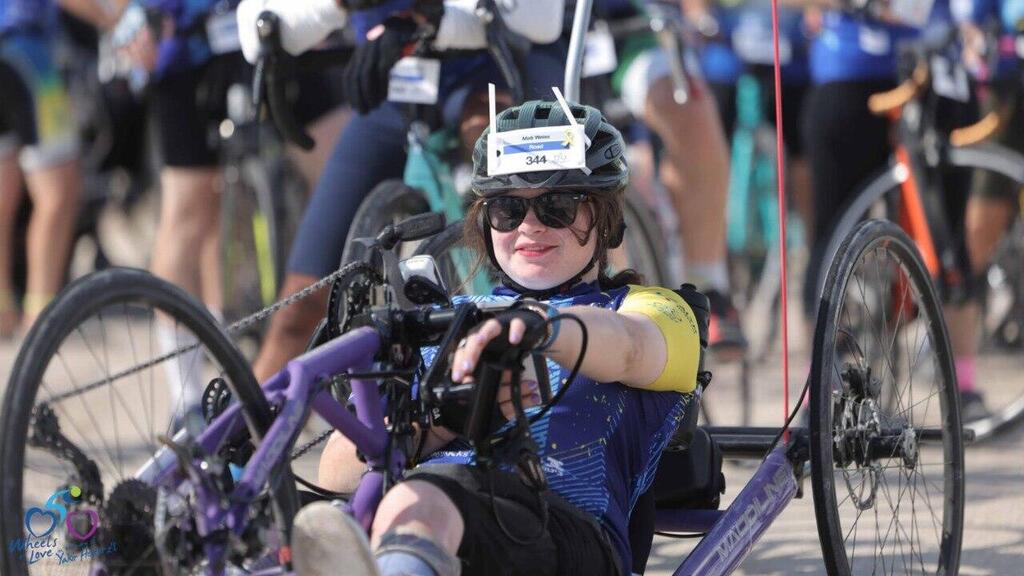
Mati during the journey, 'As a child, I never imagined doing sports'
(Photo: ALYN Hospital)
Ohad, 48, from Jerusalem, married and a father of six, began training children with disabilities 15 years ago. “I competed in mountain biking for several years,” he explains. “At some point, I felt something was missing. I wanted a purpose. So I replaced competitions with working with children with disabilities.”
Later, he joined ‘The Fast and the Brave’, a cycling group for ALYN children founded 13 years ago by a physiotherapist who sought an additional rehabilitation method. The idea was simple: pair an experienced cyclist with each child, train together every two weeks, and help them understand that they are capable of anything.
Some children ride special bicycles attached behind an experienced cyclist. Others, like Mati, ride hand cycles powered by their arms. Some ride side by side with their volunteer partner. “This is a deep process,” Ohad says. “It’s not just sports training. It’s about rebuilding confidence in their physical and emotional abilities.”
The results are striking. Children and teenagers who believed they would never be able to do sports began cycling dozens and even hundreds of kilometers, experiencing a powerful sense of achievement.
On October 15, 2023, the group was scheduled to set out on its annual ride, ‘Wheels of Love’, dedicated to supporting ALYN children. Ironically, the journey was planned to begin at Kibbutz Be’eri near the Gaza border. Hamas’ murderous terrorist attack days earlier shattered those plans. Instead of preparing for the ride, Ohad, who serves in a reserve battalion attached to the Gaza Division, was called up on October 7 to fight in the border communities, alongside his son. “Since the war began, I’ve completed more than 380 days of reserve duty,” says Ohad, currently in his fifth deployment.
Mati Weiss: 'the sport is no longer something she does only as part of her rehabilitation, but has become a central part of her daily life. She added that she is thankful she no longer needs rehabilitation, but that cycling has stayed with her, giving her a sense of freedom and helping her cope with different challenges in life'
Training with Mati came to a halt. Ohad was in the field. Mati stayed home. Nati was killed. Then two more friends from the battalion, Yair Cohen and Ziv Chen, also fell. “It was an extremely difficult time,” he recalls. “But after a few months, Mati and I decided we had to return and complete our preparation for the journey. We started training again.”
The return was not easy. Ohad often arrived straight from the field, sometimes still in uniform, before even going home. “There were difficulties, and not everything was easy,” he says with a proud smile. “But the goal we set helped us not give up.”
300 cyclists and 17 dreams
This week, more than two years after the original date, the 26th ‘Wheels of Love’ journey finally set out. About 300 cyclists from Israel and abroad, most from North America and Western Europe, lined up at the starting point. Alongside them rode members of ‘The Fast and the Brave’, 17 children and teenagers rehabilitating from traffic accidents, traumatic injuries or congenital illnesses, who made cycling part of their daily lives.
The four-day journey is the hospital’s most important annual fundraising event. Since the war, donations to Israeli nonprofits have dropped sharply, sometimes by tens of percent. ALYN, which operates as a nonprofit and receives minimal government support, relies on these funds to bridge the gap between funding rates and the real cost of care.
“Wheels of Love is much more than a sporting event,” says Dr. Maurit Beeri, CEO of ALYN Hospital. “It’s a meeting of inspiration. The cyclists inspire the children, and the children inspire everyone who sees them. This year is especially moving, because some of the graduates are now mentoring new participants themselves.”
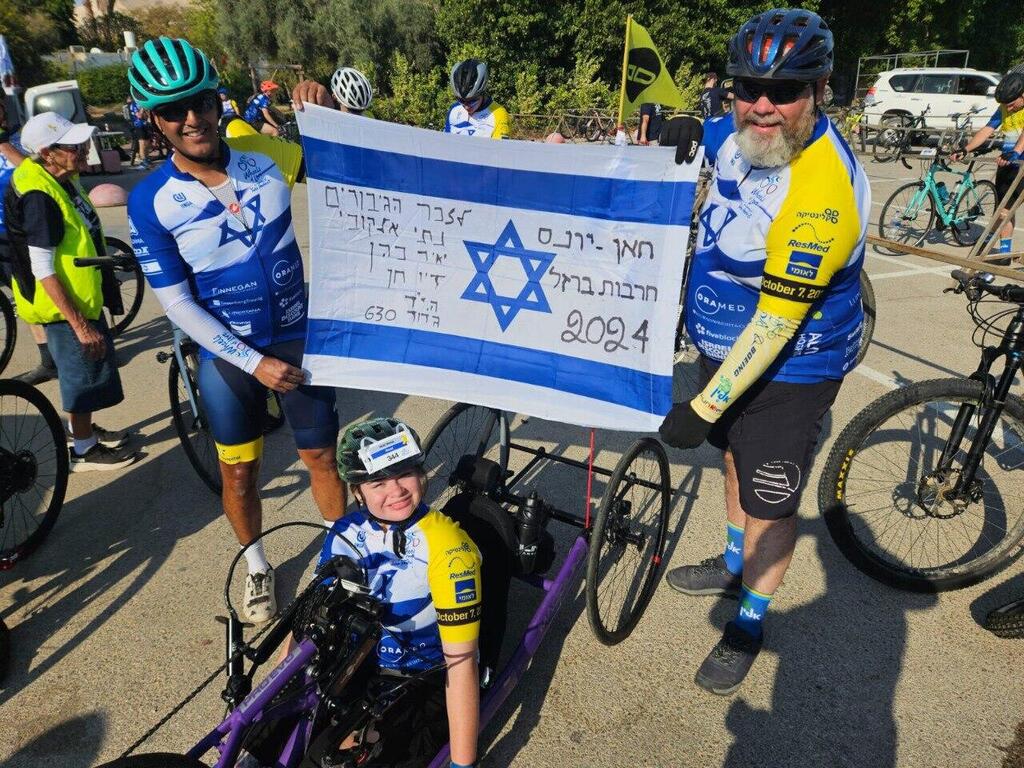
Mati and Ohad during the journey with the flag the battalion carried out of Khan Younis, 'It symbolizes the process we went through over these two years'
(Photo: ALYN Hospital)
Mati is one of them. This is her sixth year participating. She has come a long way since her first ride and now completes all four days, 260 kilometers, becoming a source of inspiration for the younger riders. “The moment we entered the hospital at the end of the first day,” Ohad pauses, taking a deep breath, “was one of the most emotional moments of my life, certainly in recent years.”
During the journey, Ohad carried an Israeli flag in his jersey pocket bearing the names of his fallen friends: Nati, Yair and Ziv. “I carry the flag we took out of Khan Younis,” he explains. “It symbolizes the process we went through over these two years. Not just Mati and me as a pair, but the entire group.”
Ohad Tanami: 'After Nati was killed, I needed time for myself. I was diagnosed with post-traumatic stress, I lost friends, and I felt I couldn’t commit to the journey like I did last year.' But after several months, he decided to return. For Mati, for himself, for Nati
For him, the journey is far more than sport. “I’ve adopted a way of life where I gather the people around me, from the reserves, from civilian life, and Mati as well. Their presence helps me keep going, even when things are very hard.”
Mati agrees. “Sport is no longer something I do just as part of rehabilitation. It’s become a central part of my life. Thankfully, I no longer need rehabilitation, but cycling stayed with me. It gives me freedom and helps me cope with different challenges. It’s an incredible way to heal and overcome difficulties.”
Was the connection with Ohad immediate, or did it take time?
“I met him through the cycling group, and from the first moment we connected really well,” she says. “When he started training me, I immediately knew he was the right person for this. The training was different. He gave his heart and soul so I could succeed. From session to session, I kept improving. That’s largely because he never let me quit, even when it was hard.”
Ohad took special leave from reserve duty to participate in the journey, which began in northern Israel and ended at ALYN Hospital in Jerusalem. The day after he left for the ride, one of his sons was called up to reserve duty in Gaza, where Ohad himself serves. Two other sons are currently serving in the military as well. But during those four days, despite everything happening around him, he was there. With Mati. With the flag that reminds him of Nati and the friends he lost. With 300 cyclists and 17 brave children who refuse to give up, just like him.
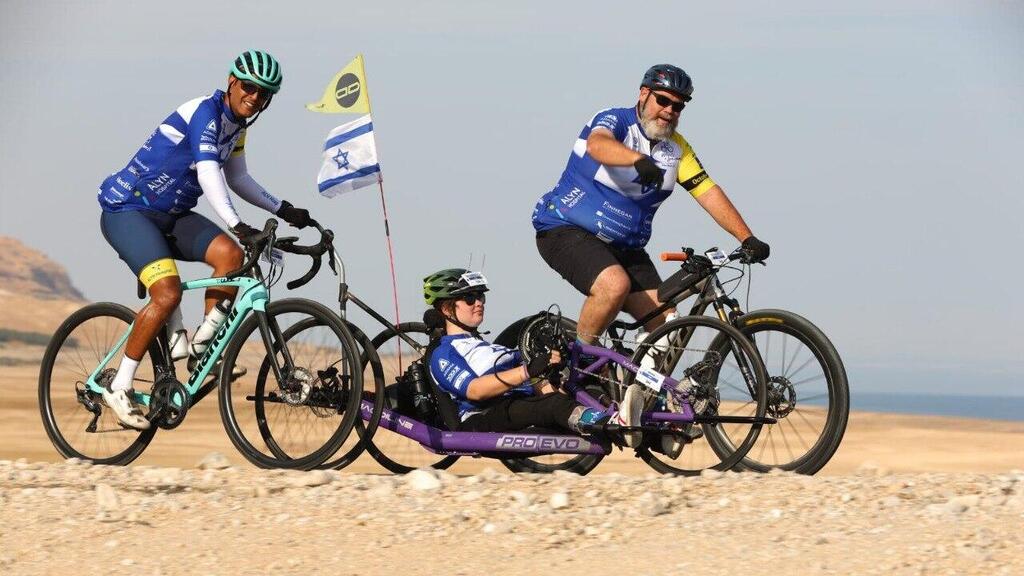
Mati and Ohad during the journey, 'He never gave up on me, even when it was hard'
(Photo: ALYN Hospital)
“One of the happiest moments of my life,” he says emotionally, “was seeing Mati and her parents crying with joy after she completed the goal she set for herself. Sport is an incredibly powerful tool for healing and building resilience.”
He closes the interview with a sentence that will remain etched in his memory: “Do the very best, and then a little more. Because we have no other country.”