

Beaches of red sand, deep salt caves and a valley painted gold — all on one small island that has captivated global attention in recent weeks.
At first glance, it sounds like an intriguing vacation destination, the kind that feels almost otherworldly, or at least somewhere worth showing off after returning home. But before checking flights, it is worth understanding exactly where it is. That is likely where plans come to a halt.
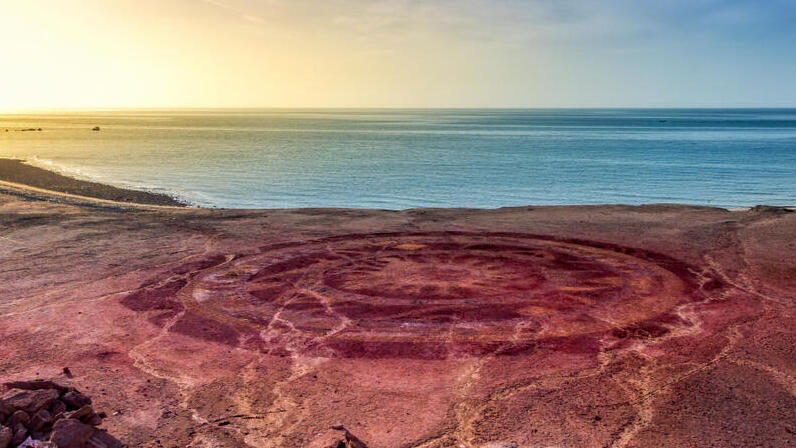
Hormuz Island, covering about 40 square kilometers (15 square miles), lies just 8 kilometers (5 miles) off Iran’s coast, in the strategic Strait of Hormuz that bears its name. The unconventional destination has recently found itself at the center of rising regional tensions. Even now, amid a ceasefire, travel there remains uncertain, and official advisories are still in effect.
Still, it is hard to ignore what the island has to offer. Over the years, it has mainly attracted adventurous travelers while remaining largely off the mainstream tourism map. Tear-shaped Hormuz features surreal landscapes formed by layers of volcanic rock, salt and minerals that paint the ground in a range of colors.
Ben, an avid traveler who has visited more than 50 countries, described it as “the most diverse and beautiful island I’ve ever been to.” In another video, he marveled at what he called “some of the most magical places I’ve seen in the world,” adding that it “feels like another planet.” The best way to get around the island, which can be crossed in about 40 minutes, is by tuk-tuk or rental scooter.
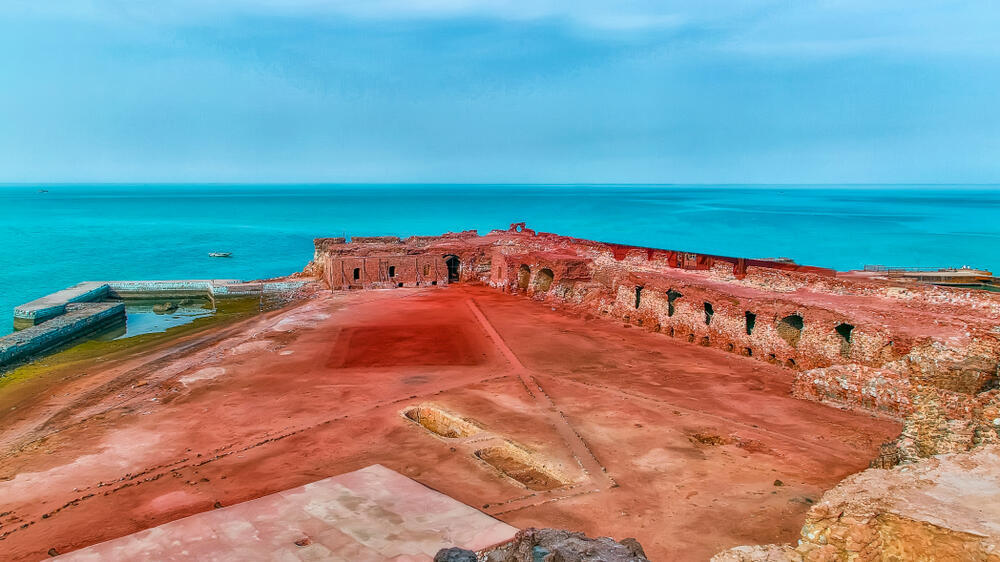
The Fortress of Our Lady of the Conception, also known as the 'Portuguese Fort'
(Photo: MORTEZA YOUSEFI/ shutterstock)
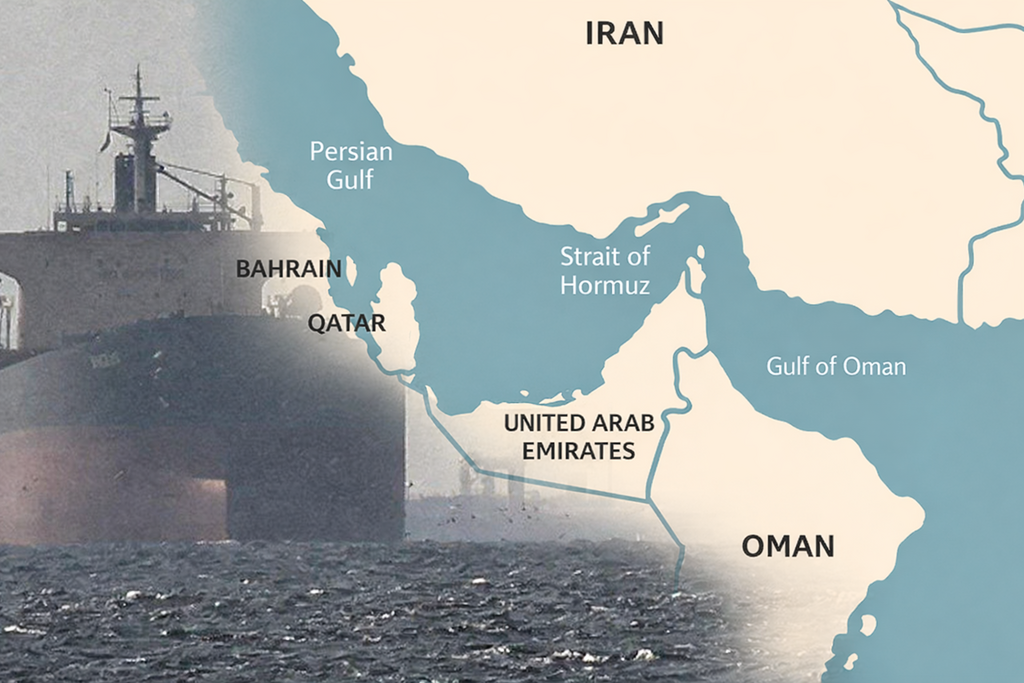
Strait of Hormuz
Hormuz’s colors peak in Rainbow Valley, where streaks of green, orange, purple, pink and red cut across the terrain. The vibrant palette has earned it the nickname “Rainbow Island.” On the western side, visitors can find the “Goddess of Salt,” a shimmering mountain made entirely of salt crystals. Locals believe the formations have healing properties, said to dispel negative energy and promote positivity, giving rise to another name, “Energy Mountain.”
“It looks like we’re on another planet,” said another traveler, Yiftah Hadelund, adding that the landscape closely resembles Chile’s Atacama Desert.
Deeper inland, Saffron Valley adds another burst of color, with bright yellow and deep golden hues reminiscent of blooming saffron fields. The terrain, rich in iron oxide and other minerals, makes it a draw for travelers seeking dramatic views as well as geologists and nature enthusiasts.
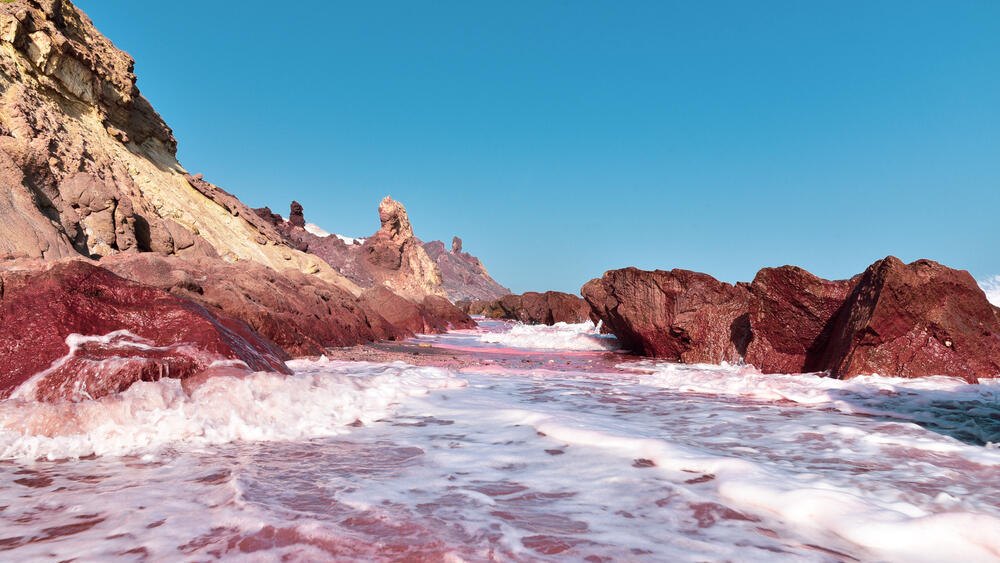
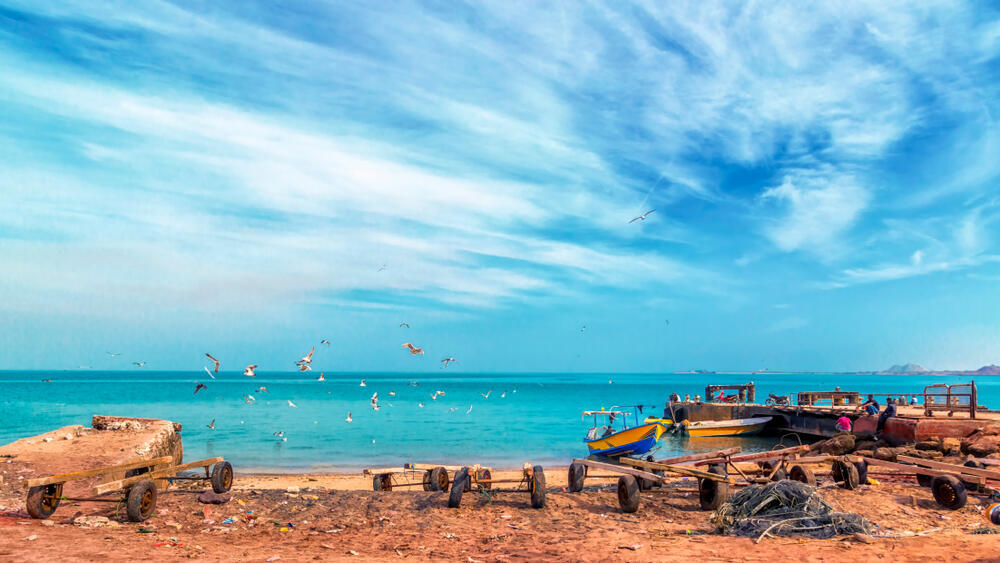
Another striking feature is Red Beach, where crimson sand stretches to the water’s edge. The island is rich in red soil known locally as “gelack,” which is unusually considered edible and is high in iron oxide. According to the local tourism office, it is even used in regional cuisine as a spice in sauces and jams. The material also has industrial value, used in dyeing and in the cosmetics, glass and ceramics industries.
Hormuz
(Photo: Andrea Lehotska / shutterstock)
When it rains, water flows over the ground, creating bright red streams. Content creator Ankita Kumar described it as “a literal blood bath.” The phenomenon, which occurs year-round, drew global attention last year when videos circulated on social media showing rainwater turning the shoreline a vivid red. Floodwaters cascading over rocks at the site created striking waterfalls and left behind a dramatic trail of color. A local guide, known as hormoz_omid, shared footage on Instagram that drew nearly a million likes and stunned reactions.
The effect is caused by the high concentration of iron oxide in the volcanic soil, which mixes with seawater and gives the beach its distinctive color.
Artists often use the shoreline to create massive sand carpets, transforming the beaches into sweeping works of art.
“To mimic nature, they also built these colorful, sustainable homes you can stay in,” Kumar said in one video, referring to Majara Residence, a bohemian-style complex that is part of a project called “Presence in Hormuz.” The site includes 17 domes made of compressed earth and sand, designed to reflect the island’s vivid landscape and provide eco-friendly accommodations. More traditional lodging options include Red Beach Hotel and House of Sun.
Not just wild nature: History and local culture
Hormuz’s history is as turbulent as its landscape. Because of its strategic position along a major maritime trade route between Europe and Asia, it has seen repeated conquests and conflicts. In 1507, the Portuguese captured the island and built a massive stone fortress to secure control over Gulf trade routes. The remains of the “Portuguese Fort,” which stands along the shoreline and blends with the island’s red soil, still stand today and attract history buffs and photographers.
Portuguese rule ended in 1622, when combined Persian and British forces retook the island.
(Photo: MORTEZA YOUSEFI / shutterstock)
Beyond its geology and historical sites, the region is also known for the culture of the Bandari people — residents of southern Iran’s coastal regions. Local women often wear a traditional face covering known as a boregheh, a rigid, colorful mask sometimes shaped with geometric, mustache-like lines. Originally designed to protect the skin from intense sun, it has become a marker of identity and status, with variations indicating a woman’s village or ethnic group.
Elsewhere on the island, Turtles Cliff is said to resemble Australia’s idyllic beaches. The largely untouched site is one of the country’s most important habitats for sea turtles, according to the travel site Walking In Iran. In spring and summer, countless turtles come ashore to lay eggs.
Hormuz remains remote, surreal and largely unvisited. It is difficult to reach — and difficult to forget. Access is only by ferry from Bandar Abbas or the nearby island of Qeshm, and for now, even amid a fragile calm, it remains isolated.