

“The need to investigate and take things apart has been with me since childhood, and it still is,” Yossi Torati says. “I used to take apart electronic devices and put them back together. But at 17, I also took apart the foundations I had grown up on.”
Years later, he says, he watched the film “Gravity,” in which an astronaut, played by Sandra Bullock, is tethered to a spacecraft by a cable. When the cable suddenly snaps, she is left floating in space, disconnected from everything. “That was exactly the feeling I experienced,” he says.
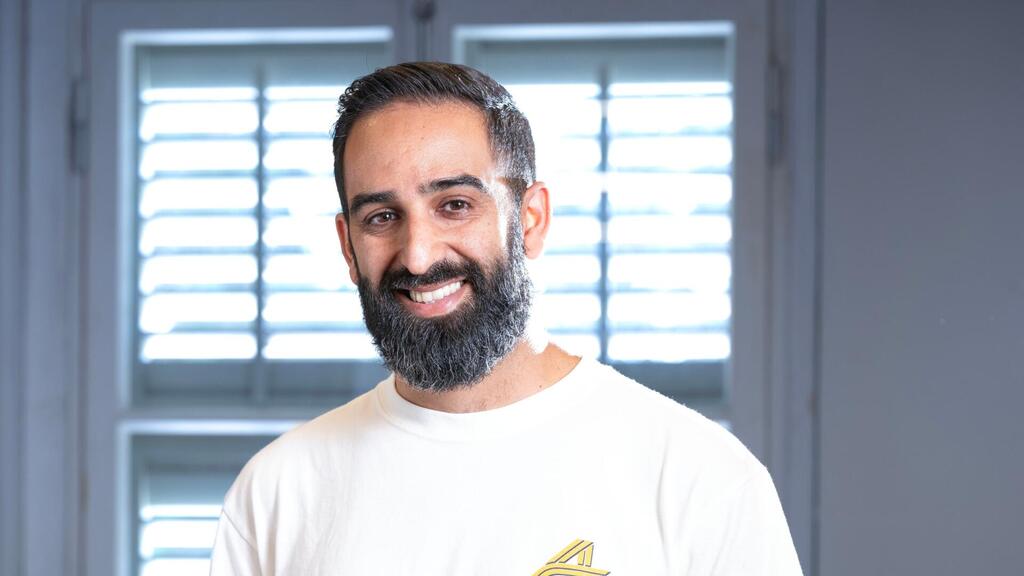
That feeling, of being between worlds, has never quite left him. In a few weeks, Torati, 38, will pack up with his wife, Aiden, and their 3-year-old son and move to New York, where he will build the sales headquarters for A Security, the company he leads as CEO. “There’s no way around it,” he says. “If we want to build a strong company that can properly serve the American market, we have to do it there from the beginning. The development, of course, will stay here.”
A Security, the cyber startup which Torati co-founded with two partners, is only about a year and a half old. Until roughly three weeks ago, it was still considered one of Israeli high-tech’s best-kept secrets, as much as a company can remain secret while employing 80 top-tier talents in one of the country’s most central locations: a beautiful Templar building in Tel Aviv’s Sarona complex.
5 View gallery
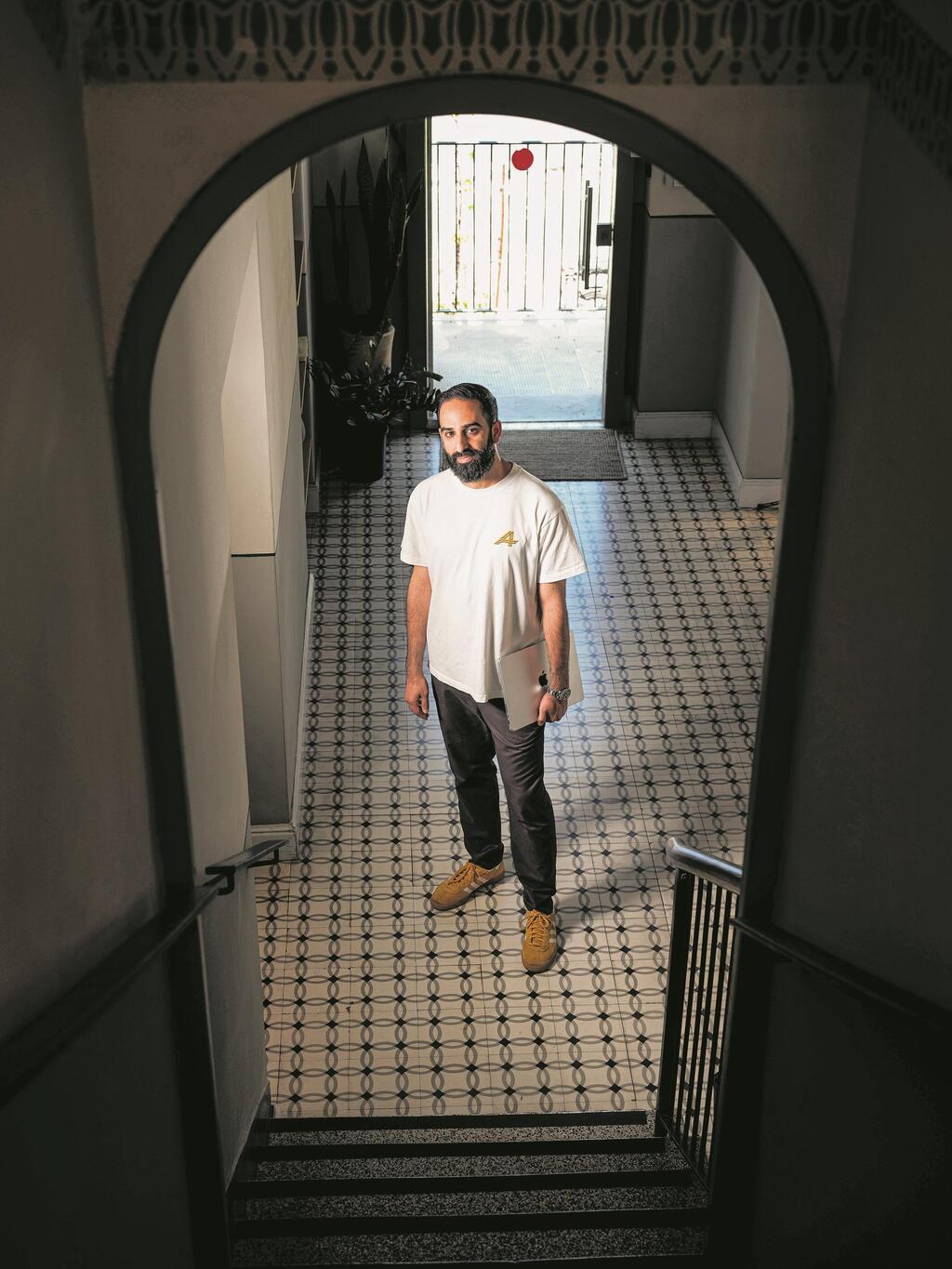
"The need to investigate and take things apart has been with me since childhood". Yossi Torati
(Photo: Yuval Chen)
The company might have been remembered, or forgotten, as one more name among the roughly 500 cyber companies operating in Israel. Then it announced a $37 million seed round backed by major funds and entrepreneurs, including Wiz-linked investors: Cyberstarts, led by Gili Raanan and Hila Zigman, Lightspeed, and Wiz CEO Assaf Rappaport himself. It was an unusual vote of confidence in a startup taking its first steps.
Torati, too, could have been mistaken for another Israeli cyber CEO, if not for how far he is from the industry’s usual profile. He did not graduate from an elite science-track high school, did not serve in Israel’s famed 8200 military intelligence tech units and does not have an academic degree.
He was born in Jerusalem’s ultra-Orthodox Mea Shearim neighborhood, the son of Haredi immigrants from Iran, grew up in the southern Israeli town of Kiryat Malachi and studied at a prestigious yeshiva in Bnei Brak. He later left the Haredi world, having never studied core curriculum subjects (such as English, math or science), and has no academic degree. For many of his peers in Israel’s high-tech startup scene, that would come as a surprise. Like his secretive company, A Security, his story is being told here for the first time.
A Security focuses on one of the threats now unsettling the cyber world: preventing AI-powered attacks. The concern is not theoretical: last week, the U.S. administration moved to suspend two powerful new AI models developed by Anthropic. AI is giving cyber attackers capabilities once reserved for nation-states and well-funded intelligence agencies, and it is doing so at breathtaking speed, even as much of the world remains unprepared for the shift.
“We are on the defense side,” Torati says. “We give defenders the same AI capabilities the attackers have. Through those capabilities, we find all the ways attackers can enter an organization, move inside it, reach their target and carry out what they came to do, and we make it possible to block them. “The goal is not just to ‘find vulnerabilities.’ That is an old practice, and it is no longer relevant to the new era. The issue is full attack paths, from entry into the organization to the execution of the objective.”
A Security’s advantage is that it was born into the AI era rather than forced to adapt to it. Unlike older cyber firms now trying to retrain workforces and rebuild products around AI, the company was designed around the problem from day one. It is already active and generating millions in revenue, with clients including the Tel Aviv Stock Exchange and U.S. software company PTC.
5 View gallery
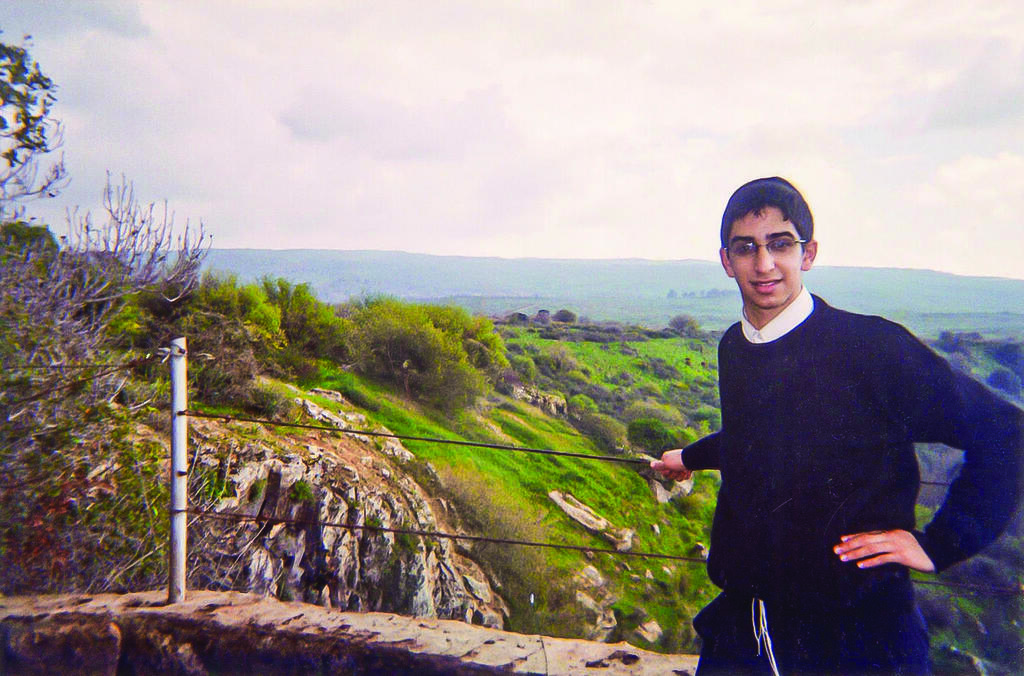
Torati as a yeshiva student. “I was curious and began to understand that things were more complex”
(Photo: Courtesy)
Torati was born in Jerusalem’s Mea Shearim ultra-Orthodox neighborhood. His father fled Shiraz in 1982, three years after Iran’s Islamic Revolution, crossing through mountain passes near the Turkish border. In Israel, he was ordained as a rabbi and entered yeshiva life. He later married Torati’s mother, who also came from a traditional Iranian family and had dreamed of marrying a kollel student. She worked, and still works, as a teacher. “At some point we moved to the Ramot neighborhood in Jerusalem, and later to Kiryat Malachi in the south,” Torati says.
The family lived modestly. “As modestly as possible,” he says. “Four children, a three-room apartment, no car. But we did not feel poor.” In Kiryat Malachi, he studied at a Shas Talmud Torah in the religious-Haredi moshav of Yesodot. After eighth grade, his father wanted him to continue in a strong Sephardic yeshiva, and Torati was sent to Tiferet Moshe in Bnei Brak, a respected institution known for its rigorous, Lithuanian-style approach to Talmud study.
Given what I already know about your abilities, you were not exactly an average student.
“No,” he says with a smile. “I was among the best, the protégé of my rabbi.”
So what happened?
“Haredi society is a closed world, with a very defined way of looking at life,” he says. “I was a curious teenager, and around 16 or 17 I began to realize that things were more complicated than I had been taught. It was a long process, lasting more than a year, and it began with a chance conversation about evolution with someone who lived near the yeshiva. That opened a door for me.”
“Until then, I understood evolution only as something secular people or non-Jews used to explain the creation of the world,” he says. “But when I began looking at it seriously, I found it fascinating. There was logic there, a scientific way of thinking that drew me in. I told myself, wait, I need to investigate this.”
His search for answers led him to an Internet café on the third floor of Jerusalem’s Central Bus Station, where access cost 15 shekels. “I sat down at the computer and simply typed search terms one after another,” he says. “I was interested in everything: chemistry, physics, biology, art, music. Everything. Suddenly I was exposed to endless information. That feeling has stayed with me ever since.”
And you certainly know how to investigate.
“Yes. I think one of the positive things about Haredi society is that the people held up as role models are those who sit and study. You can argue about what is being taught and about the need for core curriculum subjects, but the underlying principle is the importance of learning.”
How did the yeshiva respond?
“For a long time, my rabbi tried to keep me close,” he says. “He even invited me for Shabbat meals with his family. The idea was that if there are doubts about faith, you have to pray harder and everything will become clear. There were also attempts to give me an intellectual answer, but Haredi society has its own paradigm, which shapes the way it deals with these kinds of questions.
“After I had already left the yeshiva, my rabbi told me he had dreamed about the verse, ‘For I have given you good teaching; do not forsake my Torah.’ In Hebrew, ‘my Torah’ is ‘Torati,’ also my surname. He understood the message literally: do not abandon Yossi Torati.”
Internet cafés cost money, and all that investigating must have taken time.
“That’s true, but in the end there were also things I could read outside the internet,” he says. “And as part of that process, I also met people who had gone through a similar journey. Some organizations help people who leave the Haredi world, but they do not work with minors under 18. So through Tapuz, then a major Israeli online meeting place, I entered forums for people leaving religion. Some of the people I met there are still among my closest friends.”
And during that period, you were still attending the yeshiva?
“It was a gradual process,” he says. “At first, I thought I could live with it. But at some point, a kind of mutual understanding developed between my rabbi and me: it would simply be better if I stopped coming to the yeshiva, so I would not influence others. So I went back home to Kiryat Malachi.”
And your father, knowing you were a good kid, must have called your rabbi to ask what was happening with his son.
“I don’t know what they told him, but I do know he tried to talk to them,” he says. “My father is well known, a highly respected Torah scholar who essentially functions as a community rabbi, though he never held an official position because he did not want to turn Torah into a livelihood. Many people come to him for advice.
“I won’t go into what was said between us, but there was an understanding that I would not continue in the yeshiva. That new situation opened other possibilities for me.”
Such as?
“To pursue the things that interested me,” he says. “As a child, I was very drawn to technology. This was the era of physical cassette tapes, with magnetic reels that could only be erased by recording over them. I took apart the tape recorder and experimented with it until I discovered that running the magnetic tape backward would erase it. That is how I built a device for erasing tapes.”
5 View gallery
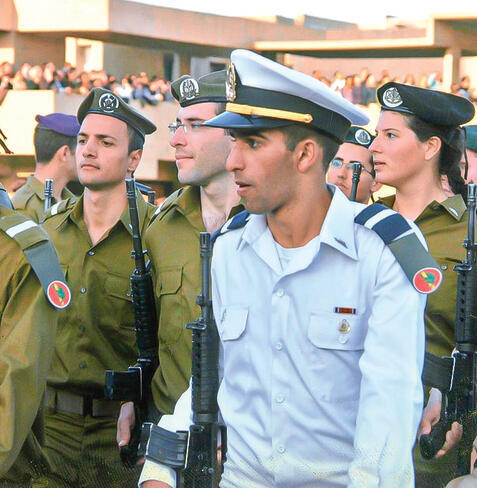
During his military service. Assigned to the IDF’s special advancement track, he went on to become an outstanding officer recognized by the chief of staff
(Photo: Courtesy)
As an older teenager, he briefly considered enrolling in a regular high school. Then he realized it was not practical. “I really remember that night,” he says. “I decided I wanted another way. That was it.” Out of his love for technology, he walked into a computer store in Kiryat Malachi and asked for a job. The answer, unsurprisingly, was no. His mother tried to help and managed to persuade the owners to let him at least sit there as a volunteer.
"That is how I began learning computer networks and teaching myself English. After a while, I became the store’s chief technician. I was also exposed to hacking, which fascinated me for the same reason other fields had: it involved dismantling, rebuilding and investigation.
Later, he got a driver’s license, bought a car and began working as a mobile laptop technician, going to clients’ homes.
“When my first IDF draft notice arrived, I approached it the way I approach anything that requires investigation,” he says. “I discovered that among people who had left the Haredi world, there were two schools of thought. One said: Don’t waste your time, don’t enlist, because you will arrive in the IDF without the minimum qualifications and they will just throw you into some marginal role. The other said the opposite: This is your entry ticket into secular Israeli society, and it will open doors for the rest of your life. I enlisted.”
‘You cannot become an officer’
The kippah was already in his pocket, but the lack of a matriculation certificate created a major barrier. Torati decided to cooperate with the system, understand it and then work from within. “When I was told I was headed for Makam,” he says, referring to the IDF track for soldiers with low entry data, “I did not get angry. I said, fine. I immediately also said that I wanted to be an officer. They told me: ‘With your starting scores, Yossi, you cannot become an officer’."
"From the moment I reached basic training, I began making calls, checking options, sending letters and activating contacts from the community of people who had left the Haredi world. I completed basic training with honors and managed to reach a navy computer technician course. I completed that with honors too, and was kept on to command the course for three years.
"Throughout that period, I worked to improve all my personal army data. I even succeeded in changing my quality score, retaking tests with one goal in mind: officer training."
The effort paid off. Torati was accepted to officer school, completed both officers' training base Bahad 1 and the navy’s technological corps training with honors, and later served as the computer and information security officer of the navy headquarters. For that role, he was named an outstanding officer by the IDF chief of staff.
He left the army as a captain after seven years of service. “From the moment I was discharged, it was clear to me that my goal was to found a company in the cyber world,” he says. For the next six years, he worked at Bynet. Near the end of that period, he tried to join Sygnia, the Israeli cyber company that protects major infrastructure worldwide, and was rejected. “I lacked offensive knowledge in cyber,” he says.
So, as usual, he studied. For a full year, while working intensively at Bynet and volunteering as an ambulance driver, he taught himself the field. He returned for another interview and was accepted. At Sygnia, he worked for about six years, managing some of the world’s most complex cyber incidents and assisting major corporations and crypto exchanges during attacks that threatened billions.
Why an ambulance driver?
“It began during my military service,” he says. “I used to take the bus to the base, and a few times people fainted next to me. I said to myself: If something breaks at home, I immediately jump up to fix it, so it makes no sense that I do not have the basic ability to treat human beings.
“I did a six-month ambulance driver course, and when I understood that without volunteering I would not be able to retain the knowledge, I volunteered with Magen David Adom for three years. I think that also helped me develop the ability to jump straight into a crisis and function calmly inside it.”
Alongside his work at Sygnia, Torati logged 130 days of IDF reserve duty over the past two and a half years as a major in Navy cyber operations. Then he met Yuval Itzchakov, one of his two partners in founding A Security. Yitzhakov and Omer Gull already knew each other and had worked together. The connection with Torati was made through a mutual friend.
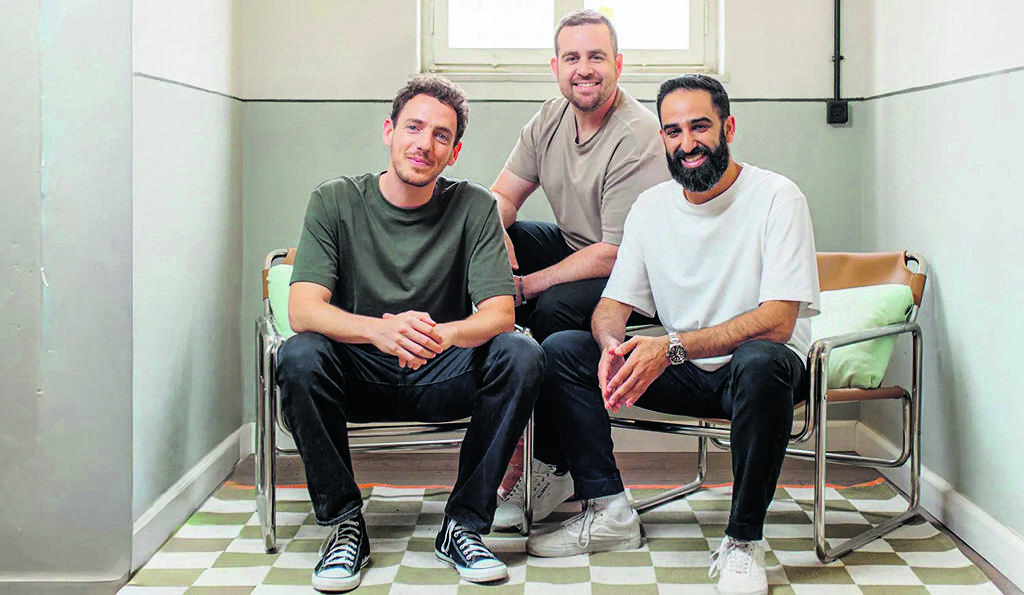
In the big leagues
Are you sure you’re not overstating it? Why should we be so worried about what artificial intelligence will do to cyberattacks?
“Our defenses were built until now for a human attacker,” he says. “Today’s attacker is not human. In the past, we were used to the idea that only about six months after a new attack technology was discovered, defense capabilities would begin developing for it. Today we are in an era of insane development. We have never experienced such a pace.
“AI gives attackers, first of all, a high ability to discover complex vulnerabilities in computer systems, an ability that was once reserved for very, very unique talents. Second, it enables processes to run in parallel at enormous speed. In the old era, after a talented researcher discovered a vulnerability and reported it, the vendor had 90 days to fix it, and then an update was distributed. Today, any attack group can find a vulnerability and exploit it immediately.”
Do you think this process will spill over into conflicts between states? In other words, will AI become a tool of war?
“I think it is already happening,” he says. “These capabilities are no longer theoretical. We know what the technology can do today.”
So how does that change your job?
"A Security’s job is to identify in advance where an organization can be attacked. We know how to connect vulnerabilities in a sophisticated way and present the full expected attack path."
There are thousands of cyber companies in the world today, hundreds of them good and dozens of them excellent. What is still left to innovate in this field? I assume what you’re describing is something Check Point already understands and Palo Alto has already figured out.
“There is no niche in cyber that has no competitors,” he says. “Competition is healthy, and it is also an indication that you are going in the right direction. But the real answer is that we understand better than others how to solve this problem, we brought the right people who know how to do it, and our way is different from that of all the other companies.”
“In the six years I was at Sygnia, I accompanied giant incidents in nearly 40 countries, in almost every possible industry, with my area of expertise being crypto,” he says. “I led incidents against almost every possible attack group in the world, from North Korea, Russia, China, Eastern Europe and Iran.
“When you are at the center of the event, inside the 'hurricane', you see all the cyber products that exist, what works and what does not, what just makes noise and what just wastes resources. That picture is the best school in the world for understanding how cyber should be done.”
Will A Security replace a giant like Check Point?
“Check Point is a huge company. It has a broad product basket, part of which is needed in our defense array. But some of the services that giant companies like it provide will indeed be replaced by our product.”
Or perhaps a giant company will simply buy A Security and turn it into one of its products.
“There is such a practice in the industry,” he says. “We are building a company whose goal is not to be sold, but to build real value for the world.”
Can a company of 80 people in a small building in Tel Aviv compete with the biggest names in cyber?
“In the AI era, we can do a lot,” he says. “To grow, we are raising capital. We have now raised $37 million, and that enables us to recruit very unique talents, the best in the industry, to build the machine that will do this. Some of them have years of experience in finding vulnerabilities, and they are now building the machine in their image. The AI will essentially replace the specific, unique abilities of these people. It will be their virtual twin.”
You are a new Israeli company in a world that is not exactly fond of Israel right now. Do you encounter any hesitation when pitching your product to companies abroad?
“In the environments where we operate, we do not meet hostility. On the contrary, clients show empathy and appreciate Israeli technology. I do not hide my Israeliness, and neither does the company. But between us, their need is so great that I do not think they have the privilege of showing hostility.”
Gaps that are hard to bridge
How far removed are you today from the religious world?
“In the end, I am an Israeli Jew. My wife also comes from a religious immigrant family from New York. On our first date we had a lot in common. It is clear that Judaism and tradition will be part of our family's foundation. I want my child to grow up knowing where he comes from and understanding the Jewish sources.
What is your view on drafting yeshiva students?
“I think we are in a very complex period in Israeli society, and as with the danger of cyberattacks, in the end we will come out of it stronger and more resilient. Here too, we are currently seeing a convergence, and I believe that eventually an answer will be found, because we have reached a point where it is burning for everyone, on both sides. We see only our side, but processes are also taking place inside Haredi society, and reality will force a solution.”
Your unusual abilities could seem to support the Haredi argument that a yeshiva student does not need core curriculum studies, and that with enough intellectual sharpness, he can easily catch up later in English, math and physics.
“That is not true. The gaps in core studies are very significant and hard to bridge. Many people who leave the Haredi world deal with major difficulties in English and mathematics, and a lot of effort is invested in helping them, not always successfully. These are basic skills that every person needs in our era.”
And yet, you reached a place most people never do.
“My English is good because I am married to an American and because I have been working in this for years. And there are also advantages to my autodidactic nature, learning exactly what is needed to solve what is on the table at that moment. But I do not minimize for a moment the importance of structured learning.
“I am missing the broader foundation,” he says. “I am constantly filling in gaps. Whenever I feel I lack knowledge in a certain field, I define the gap, break it down and study it thoroughly. I have no choice but to do that. If I had gone through a standard educational track, I would not have had to make up so much ground, and I believe I would be further ahead today.”
As a lesson from your own story, are A Security’s hiring requirements different from the usual standards high-tech checklist? Don’t you require a degree?
“I do not look at education. I check whether there is potential and a fit for the company’s needs. That allows anyone who wants, from any sector or community, to enter. That is what matters. In the end, one of the reasons I am telling my story is so people understand that the tools are out there. If there is enough will, those tools can be connected. Anyone who wants to move forward has to find the right tools and the right path, and if they keep going despite the difficulties, they can succeed.”
Did you ever go back to Tiferet Moshe, the yeshiva he left behind?
“Yes. I visited once. They welcomed me nicely. I still get regards from my rabbi, and I send regards back.”