

There are founders carved into stone, printed on currency and recited in classrooms. Then there are the founders who left no grand estate, no dynasty of power, no famous portrait hanging in the national imagination.
Haym Salomon belongs to the second group.
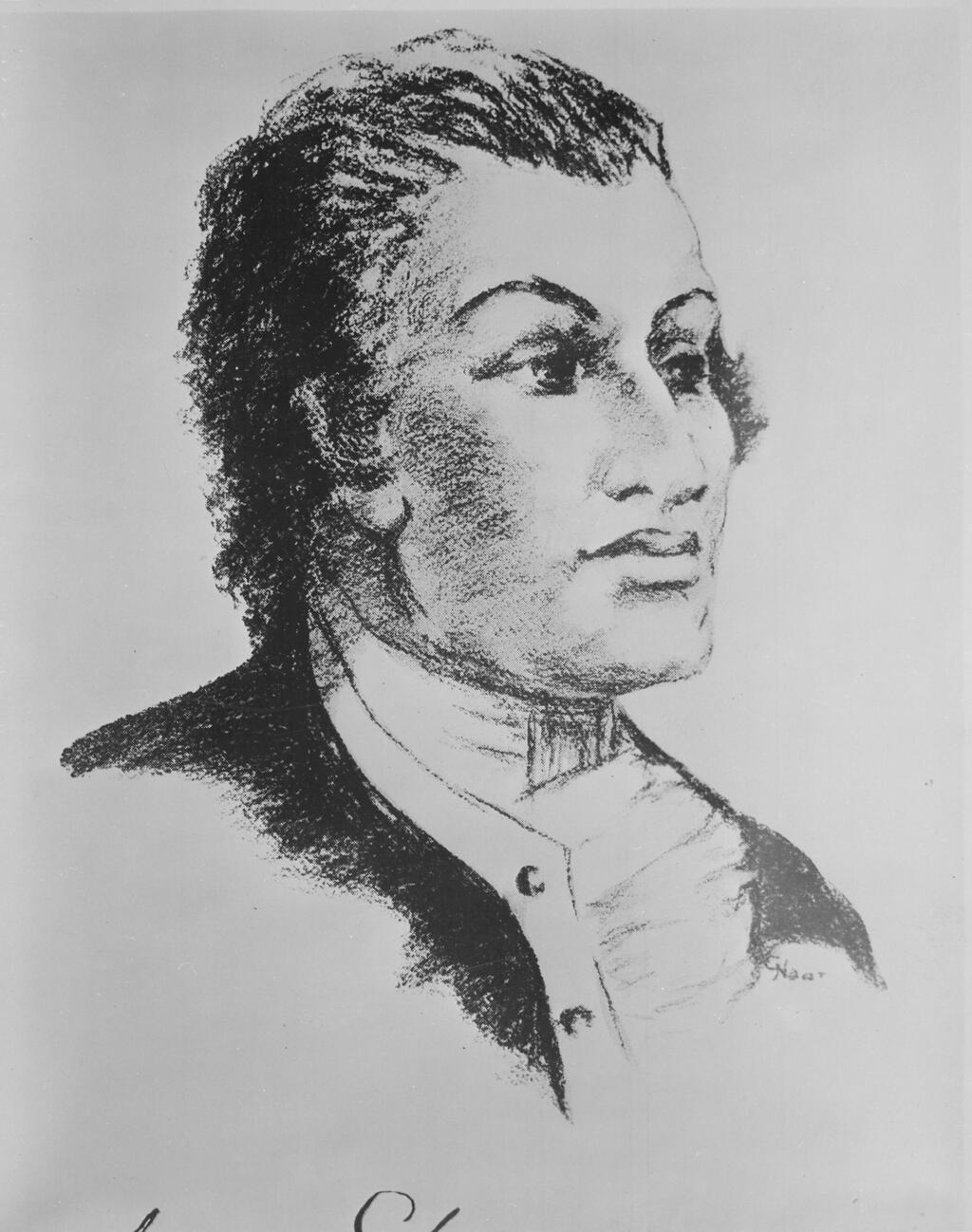
He was not a general. He did not draft the Declaration of Independence. He did not become president, secretary of state or chief justice. He was a Jewish immigrant from Poland, a broker by profession, a man of languages, credit, contacts and nerve. And at one of the most dangerous moments in the American Revolution, when the army was close to collapse and the government had no money, George Washington needed exactly that kind of man.
The story usually told about American independence is a story of ideals and battlefields: liberty, tyranny, muskets, winter camps, bold declarations and decisive victories. But revolutions also run on cash. Soldiers need food. Armies need shoes. Wagons need horses. Debts must be honored, or at least believed. By 1781, belief was running out.
The Continental Congress was broke. Its paper money had been degraded almost beyond use. Soldiers had gone unpaid. Supplies were scarce. The war had dragged on long enough for exhaustion to become a strategic threat. Washington could have the right plan, the right allies and the right moment, but without money, the plan could still fail.
That is where Haym Salomon enters the American story, not from the marble front door, but through the side entrance where the bills were due.
He was born in 1740 in Leszno, then part of the Polish-Lithuanian Commonwealth, into a Sephardic Jewish family. Like many Jews of his time, he grew up with the knowledge that belonging could be conditional and safety temporary. He traveled through Europe, learned finance, acquired languages and eventually crossed the Atlantic, arriving in New York in 1775, just as the colonies were tipping from protest into war.
He might have chosen caution. He had just arrived. He was an immigrant, a Jew, a businessman trying to establish himself in an unstable city. Instead, he chose the Patriot cause almost immediately.
Salomon joined the Sons of Liberty in New York, the underground movement resisting British rule. His skills quickly made him useful. He understood money and trade, but he also understood people. He spoke languages. He could move between worlds. Those same talents made him dangerous to the British.
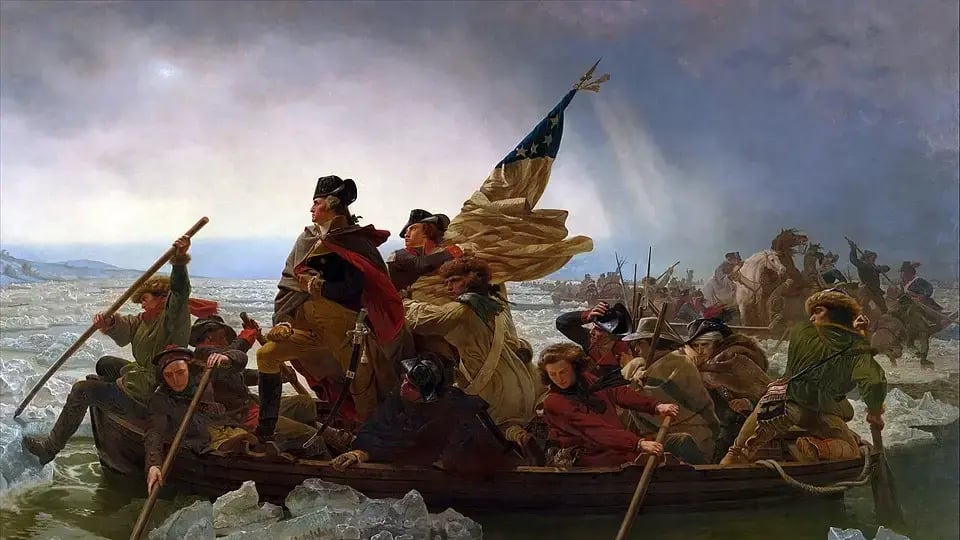
Washington Crossing the Delaware
(Painting: Emanuel Leutze, 1851)
In 1776, they arrested him on suspicion of spying. Because he spoke German, the British put him to work as an interpreter for Hessian mercenaries. It was a practical decision, and a costly one. Salomon used the position to help American prisoners escape and to encourage Hessian soldiers to desert. Even in captivity, he was still working for the Revolution.
He was arrested again in 1778. This time, the charge was more serious and the outcome nearly fatal. He was accused of espionage and sentenced to death. Somehow, before the sentence could be carried out, he escaped. He fled British-held New York and made his way to Philadelphia with his family.
Many men would have disappeared into private life after that. Salomon did the opposite. In Philadelphia, the capital of the Revolution, he rebuilt his brokerage business and placed himself at the center of the young country’s financial emergency.
By then, the Revolution had become a test not only of courage but of solvency. Robert Morris, the Superintendent of Finance, was trying to hold together a government that had almost no reliable revenue and almost no credit. Salomon became one of the men Morris relied on. He helped sell bills of exchange, converted foreign loans into usable money and found buyers for government paper few others wanted to touch.
This was not glamorous work. It was not the stuff of battlefield paintings. But it was essential. A revolution that cannot pay for powder, bread and transport is a revolution waiting to collapse.
Salomon also lent and gave money personally. Members of Congress, including James Madison, relied on him when they had little of their own. He did not behave like a lender squeezing a desperate government for advantage. He often asked for little, delayed repayment or refused compensation. In a city where the Revolution’s leaders were trying to create a nation while struggling to pay rent, Salomon became a quiet source of survival.
Then came Yorktown.
In 1781, Washington saw a chance to trap British Gen. Charles Cornwallis in Virginia. The French were ready to cooperate by land and sea, but the opportunity had a deadline. The army had to move. The men had to be supplied. The campaign needed money immediately.
Washington needed about $20,000, a huge sum at a moment when Congress had no money and no credit left. Morris reportedly told him there was nothing available. Washington’s answer became the line that defines Salomon’s place in the Revolution: “Send for Haym Salomon.”
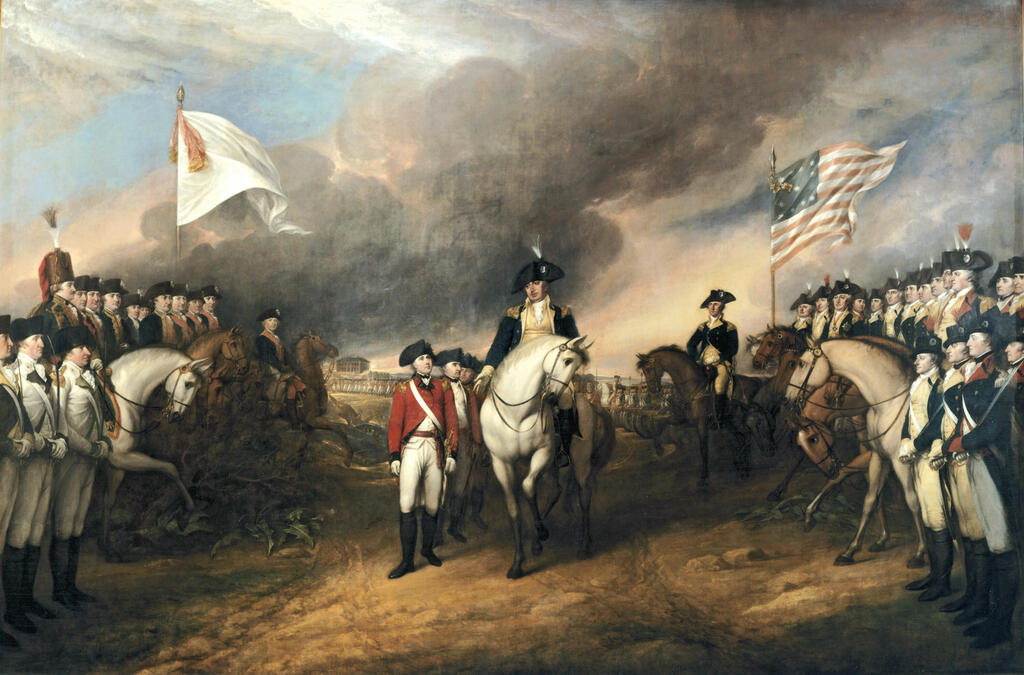
Surrender of Lord Cornwallis
(Painting: John Trumbull, 1820)
Salomon raised the money. The army moved. Cornwallis surrendered at Yorktown. The victory did not formally end the war overnight, but it broke Britain’s will to continue and opened the way to American independence.
That is the plainest version of Salomon’s importance. At the decisive moment, when the Revolution needed cash to become victory, he found it.
But his story is not only about money. It is also about the kind of country America was trying, and often failing, to become.
Salomon was a patriot, but he was also a Jew in a new republic whose promises of liberty did not automatically include everyone. In Philadelphia, he became deeply involved in Jewish communal life. He was a member of Congregation Mikveh Israel and made a major donation toward the construction of its synagogue. He helped build institutions for Jewish life in the same city where the American government was being improvised.
He also fought for religious liberty in practical terms. Pennsylvania’s constitution included a religious test oath that effectively barred non-Christians from holding public office. Salomon joined other Jewish leaders in opposing it. The effort succeeded, and the discriminatory requirement was removed.
In 1784, responding to antisemitic attacks in the press, Salomon wrote a sentence that still carries force: “I am a Jew; it is my own nation.” He did not hide his identity in exchange for acceptance. He asserted it as part of his claim to equal citizenship.
That is what makes Salomon more than a useful financier. He was helping fund a republic while demanding that the republic make room for people like him. His life sat at the intersection of two American arguments: the fight for national independence and the fight over who would be allowed to belong.
The ending was cruel.
Haym Salomon died in Philadelphia in January 1785, only 44 years old. The war had been won. The country he helped sustain existed. But he did not live to enjoy wealth, repayment or public honor. The government debts and securities he held had lost value. Money he had advanced was not returned. His family was left in poverty.
The man who helped finance American independence died with little to his name.
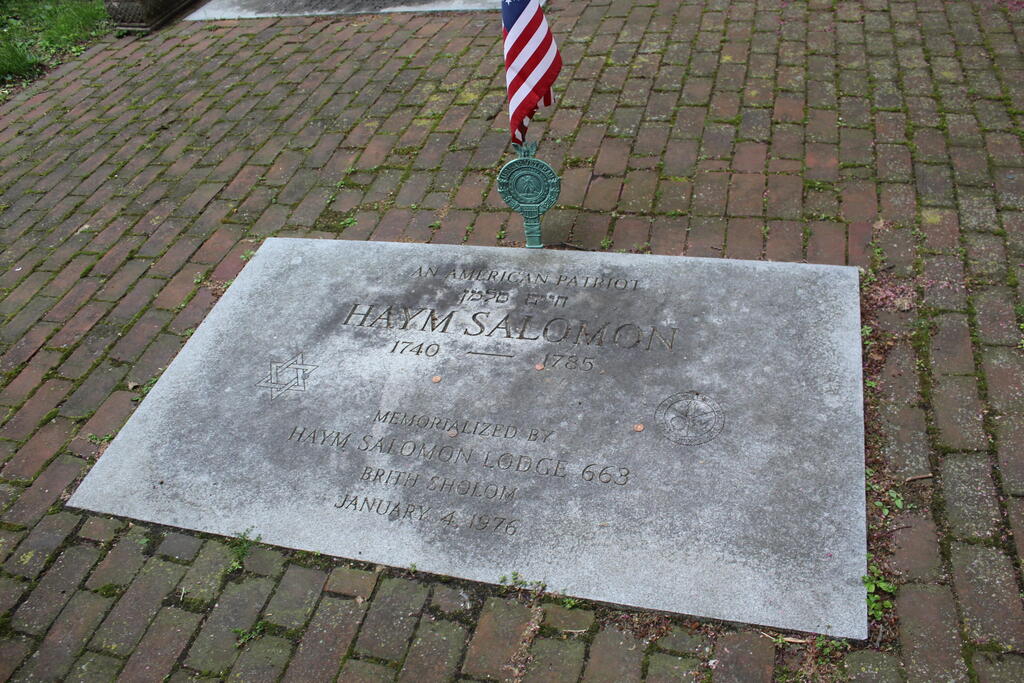
Haym Salomon marker, Mikveh Israel Cemetery, Philadelphia
His obituary remembered him as a skilled and honest broker, a generous and humane man, a native of Poland and “of the Hebrew nation.” It was a respectful tribute, but not the beginning of lasting national fame. His grave in Philadelphia’s Mikveh Israel Cemetery is unmarked. Monuments, plaques, a postage stamp and local memorials came later, but they never lifted him into the central cast of America’s founding story.
Part of the problem is that Salomon’s work was invisible by nature. Armies can be painted. Surrenders can be staged. Declarations can be quoted. Finance is harder to mythologize. A man selling bills of exchange in Philadelphia does not look like the Revolution, even when the Revolution depends on him.
Another part is that his story complicates the familiar picture. He was not an English-descended Protestant gentleman of Virginia, Massachusetts or Pennsylvania. He was a Polish-born Jew, an immigrant who arrived as the war began and threw himself into a country still uncertain about religious equality. He was indispensable, but not easily absorbed into the national mythology that later generations preferred.
So legends grew around him instead. One popular claim says the stars on the Great Seal of the United States were arranged like a Star of David in his honor. There is no solid evidence for that. The myth is revealing, but not because it is true. It shows a hunger to place Salomon visibly inside the American symbol system, to correct by legend what memory failed to do by fact.
The facts are enough.
He was arrested by the British and risked execution. He helped prisoners escape. He rebuilt his life after fleeing New York. He became one of the financial operators the Continental Congress relied on. He raised money at the moment Washington needed it for Yorktown. He supported public officials out of his own pocket. He helped build Jewish communal life in Philadelphia. He fought religious exclusion. He died unrepaid.
On Independence Day, America celebrates the men who declared freedom and the soldiers who fought for it. Haym Salomon’s story adds another necessary truth: freedom also had to be financed, negotiated, improvised and rescued from bankruptcy.
The Revolution did not only need battlefield courage. It needed trust at a moment when trust had become almost impossible. It needed someone who could turn paper into money, foreign aid into usable funds and personal reputation into national survival.
For a brief, decisive period, that someone was Haym Salomon.
Nearly 250 years later, his name still feels like a discovery. That is the injustice of it. A man can help save a country and still be left outside the story that country tells about itself.
Haym Salomon gave America money when it had none, loyalty when victory was uncertain and faith in a republic that had not yet fully made room for him. He died poor, and history made him smaller than he was.
The debt remains.