

This Rosh Hashanah, Deni Avdija would have loved to celebrate like most Israelis: around the holiday table, at home in Israel, surrounded by family. Instead, the holiday finds him back in Portland, the place that has become his home in recent years. A few days before the Jewish New Year, he flew to the United States to prepare for his seventh season in the NBA, but at times like these, the distance still hurts.
It has been a glittering year for Avdija. A breakout season propelled him into the NBA’s upper tier and culminated in his first appearance in the league’s All-Star Game. Israelis began waking up in the middle of the night to watch him play, some of the biggest players in the world praised him, and he even emerged as something of a fashion icon. He could hardly have asked for more.
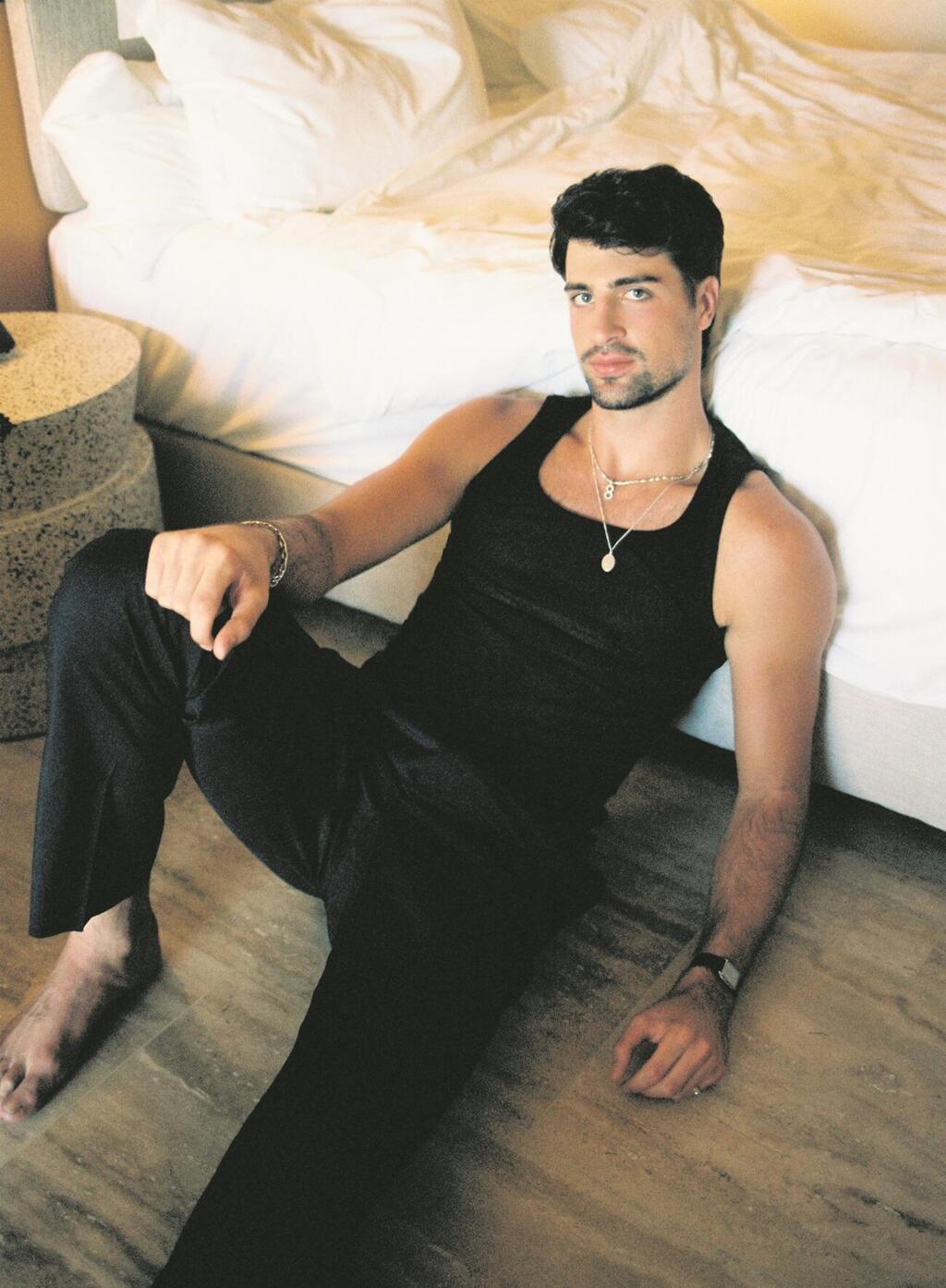
But success comes with sacrifices: another holiday away from home, more time with family and friends lost, and a routine that can be deeply lonely. At 25, Avdija understands exactly what the dream he is living demands of him, even if missing home has not become any easier.
“I really miss this holiday period. It’s such a fun time in Israel,” Avdija says. “Year after year I get older and understand that this is my life and this is what I signed up for. I sacrifice a lot and I’m aware of it. I’m a very family-oriented, warm person who loves being around people, especially during the holidays, but I also know I won’t play basketball forever and I’ll have plenty more holidays. There’s a lot of loneliness, but fortunately I have good people around me who are willing to sacrifice their own time and come visit me, and that’s great.”
If you had to explain the Israeli holiday season to the average American, what would you say?
“Togetherness, family, equality.”
Equality?
“When you’re at a meal and everyone is sitting around the table together, it doesn’t matter how much money you have or don’t have. In the end, it’s you and the people you love most, all together, and you have the privilege of meeting, talking and catching up.”
Everyone is summing up the past year for you. How do you sum it up?
“It was a surprising year for me. I didn’t really know what my limits were as a player. I didn’t truly know how far I could go or what my ability could produce. At the end of the season, I blinked and looked at everything that had happened along the way, and I couldn’t believe I’d had the opportunity to break through so many glass ceilings in a single year. Obviously the standards are higher now, but it’s fun knowing you’re capable of things you didn’t necessarily think you would achieve.”
“People lost a little perspective. I’ll be the first one there for the national team. The national team has given me so much, and I owe it so much. Yes, I missed two windows, and yes, the team needed me, and it really wasn’t easy watching from the outside. But saying I’m obligated to come no matter what?”
How would you describe this season in one word?
“Educational. Overall, I think I was in a position I’d never been in before, and I learned a lot from it. I learned what it means to be a leader. I learned what it’s like when teams try to knock you out of your rhythm every game and get inside your head. And with all the pressure and craziness there was in Israel around everything, you learn a lot about yourself because you reach places and heights you’ve never been before. That brings a lot of responsibility and expectations. People and teammates look at you differently, and you have to learn how to deal with all that. It isn’t simple.”
And heading into the new season?
“There’s a lot of excitement. I feel like I had a good summer and was really able to recover from last season and from the nagging injury I had, and come back refreshed mentally and physically. I don’t really know what will happen. There’s a new team, a new owner, a new coach, but I believe in the team and I want us to succeed. I’m coming in with a lot of hope and optimism.”
Avdija’s road to this point began long before he became a familiar name in the NBA. He grew up in Maccabi Tel Aviv’s youth system and made his debut for the senior team at 16, going on to play three seasons there.
In 2020, he made the leap everyone had anticipated when the Washington Wizards selected him ninth overall in the NBA Draft, the highest draft position ever for an Israeli player. After four seasons in Washington, he was traded to the Portland Trail Blazers in the summer of 2024 while playing under a four-year, $55 million contract, and gradually developed from an intriguing prospect into one of the team’s central players.
After a season in which almost every professional limit he knew seemed to shift, capped by his first career All-Star selection, Avdija enters the new year from a very different place. Success has made him far more recognizable and important as a player, but perhaps the bigger change has taken place away from the court. Distance from home and a life that has forced him to mature quickly have changed the way he looks at himself.
You’re only 25, but you’ve already been through things some athletes don’t experience in an entire career. In what sense do you feel more mature?
“Honestly, this year I felt the most mature I’ve ever felt. The way I conducted myself here was very different. I spent much more time by myself, looked less for reasons to go out and do things, and focused more on finding the mental quiet to calm down. I learned how to be my own best friend, spend a lot of time with myself and understand what I really want from Deni away from the court.
“I understood a lot of things this year, and a lot of things clicked for me along the way, whether about career choices or people. I’m a much more private person now, more discreet. I’m not someone who likes sharing much about his personal life.”
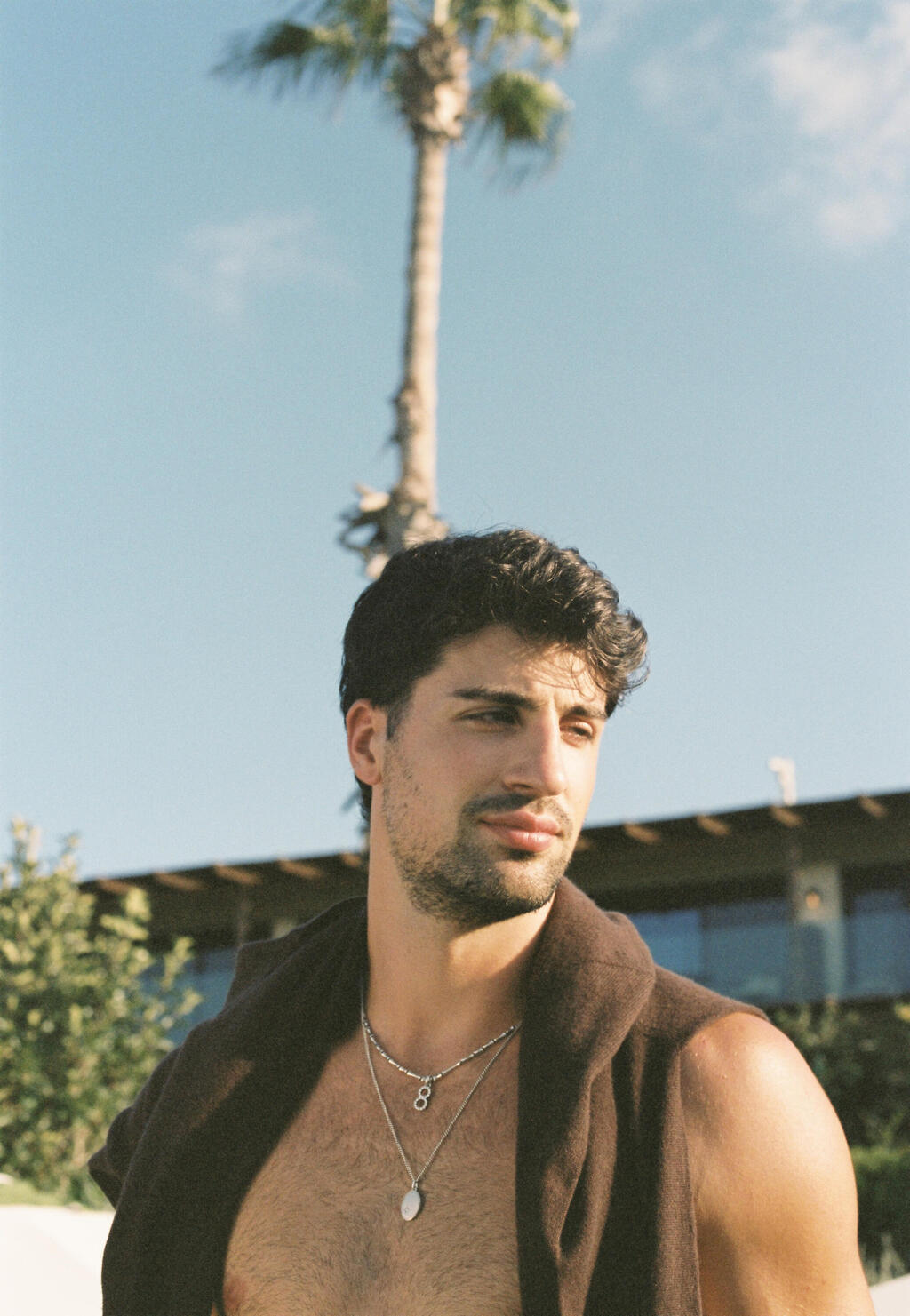
(Photo: Shai Yehezkel)
When do you actually feel your age?
“When I’m with people I love. I’m very much a kid. I have a big sense of humor and I love to laugh. I have a childish side that the people closest to me really know, but in front of the cameras or on the court I usually can’t show it that much.
“I’m not desperate to show that side to the public, but over time I think I’m becoming a little more comfortable. Everyone has lots of layers and sides. Sometimes there are better sides and not-so-good sides. That’s legitimate. I have sides that are less good too.”
Basketball was part of Avdija’s home long before it became his profession. His father, Zufer Avdija, played for the Yugoslav national team and captained Red Star Belgrade, while his mother, Sharon Artzi, who grew up on Kibbutz Beit Zera, was also an athlete and basketball player.
He grew up in a home where competitiveness, discipline and sport were part of everyday life, but where family remained the central anchor. Between his father’s Balkan toughness and the extremely close relationship he has often described with his mother, Avdija grew from a basketball-obsessed child into a player whose career has gone far beyond what even a sporting family might have imagined.
“I think I had more room to make mistakes when I was 18,” he says. “I felt like I could be more of a kid. I had already entered the adult world, but I still had room to fool around, make mistakes and really figure out who and what you are. Eighteen is a fun age because you’re discovering yourself, and you’re younger, so you look…” he says, laughing. “Now I take better care of my body and my lifestyle. There’s more awareness.”
Is there anything you regret from that period?
“I wasn’t the best student in the world. I’m not someone who cries over spilled milk, and I don’t regret anything, but intellectually I think I had more potential than I showed at school. Other things interested me then, and I couldn’t really concentrate.
“It was a period that wasn’t easy for me. I knew I was dependent entirely on basketball. It was do or die for me, and I went all in. There was a lot of stress. I didn’t know where my career was going, what I could do or whether it would support me financially.”
If I take basketball out of your life right now, who is Deni?
“I use basketball to do things I love, whether it’s traveling, meeting new people, being creative or starting things. Maybe I don’t have as much time as I’d like for all the things that interest me, but I have a lot of interests.
“If you take basketball away, there’s a deep person there with broad general knowledge. When I’m in the U.S., if there’s a subject I want to learn about, I just go on YouTube and learn about it. Most of the things I learned at school didn’t interest me as much, but now, in real life, if something interests me, I research it.”
“We’re in a period where, let’s face it, people don’t exactly love us, to put it mildly. Everyone knows I’m Israeli, and I try to be the good Israeli, the guy who gets along with everyone, who’s cool, funny and decent, and show that there’s another side.”
Like what?
“The whole world of classic cars. I really like learning how a car works and about all its parts. It’s an entire field of knowledge. People look at mechanics and sometimes think it seems easy, but it’s a really interesting profession.
“I also love airplanes. I wanted to understand how a plane lands. If something interests me, why not? I have free time. When I’m in hotels or at home, without friends or other people around, I have a lot of hours in the day when I’m not just sitting there scrolling on my phone.”
What do people think they know about you but get completely wrong?
“I feel like a lot of people think I’m a snob, maybe because of my height and sometimes my style, but the image I project on the outside is the opposite of who I am inside. I’m the friendliest person in the world. I love people. I can get into an elevator with a complete stranger and start a conversation.
“I genuinely respect everyone. It doesn’t matter who or what you are. I give everyone respect and time. I feel like that’s also part of being Israeli.”
What’s harder for you today: finding quiet or allowing yourself to be quiet?
“Allowing myself to be quiet. Once you become a more recognizable player, your commitments grow, whether to companies you represent, projects you’re building or people around you. In the end, there’s only a small slice of the pie left for yourself. You become a little more everyone else’s. That’s just how it is.”
You’re also doing a lot outside basketball, from campaigns to the ice cream brand you created. That’s very different from the typical Israeli athlete.
“The market here in Israel is tougher and smaller. I feel athletes aren’t appreciated in Israel the way they are abroad. We do love our athletes, but there are a lot of people doing incredible things who don’t get a platform.
“Our sports culture is a little lacking. Forget about me for a moment. I’m in the NBA and have exposure that others don’t. There are athletes here who work unbelievably hard and achieve major things, but in the end we give a platform to people who I’m not sure are the ones we want the next generation learning from.
“Instead of teaching our generation excellence, hard work and perseverance, today you go on a reality show and land advertising campaigns. And that’s fine, I’m not disrespecting anyone, but there are athletes here who are killing themselves to get where they are, and it bothers me to see them not getting the credit they deserve.
“And it’s not only athletes, by the way. Musicians, television and film actors too. I’m sure there are plenty of people who don’t get the opportunity.”
Is there anywhere you manage not to measure yourself?
“I’m super competitive and I really love succeeding for myself. Over the years you understand there will be better seasons and worse ones, but I don’t think I measure myself as a player. I measure myself as a person.
“At the end of the day, the things I say in interviews are who I am. Whether people connect less or more with the things I say, that’s my personality. I’ve stopped trying to please everyone. Whoever likes Deni likes him, and whoever doesn’t, doesn’t. That’s OK too.
“I try to do as much good for people as possible. I’m improving as a person, and if I make a mistake, I apologize for it. Most of the time, I’m at peace with the things I do.”
When was the last time you did something you were really bad at?
“Making an omelet. The last omelet you made was absolutely terrible,” his agent, Matan Siman Tov, answers for him.
“No, no,” Avdija quickly says in his defense. “I cook well now. My friends will tell you I’m a great cook. The omelet was four or five years ago. I’ve improved since then. My friends say I make restaurant-level bolognese.
“My mother is an amazing cook, so I grew up around food. I love going to restaurants. Just recently I was at a restaurant in Tel Aviv and really loved the pasta with tomato sauce. I went over to the chef and he said, ‘Take my number. I’ll teach you how to make it.’”
Alongside Avdija’s interests in cars, airplanes, cooking and those moments when he is simply trying to be a 25-year-old, there is another side to his life, one with far less lightness. As his status grows, so do the pressure, expectations and need to find people and places where he can briefly lower his guard.
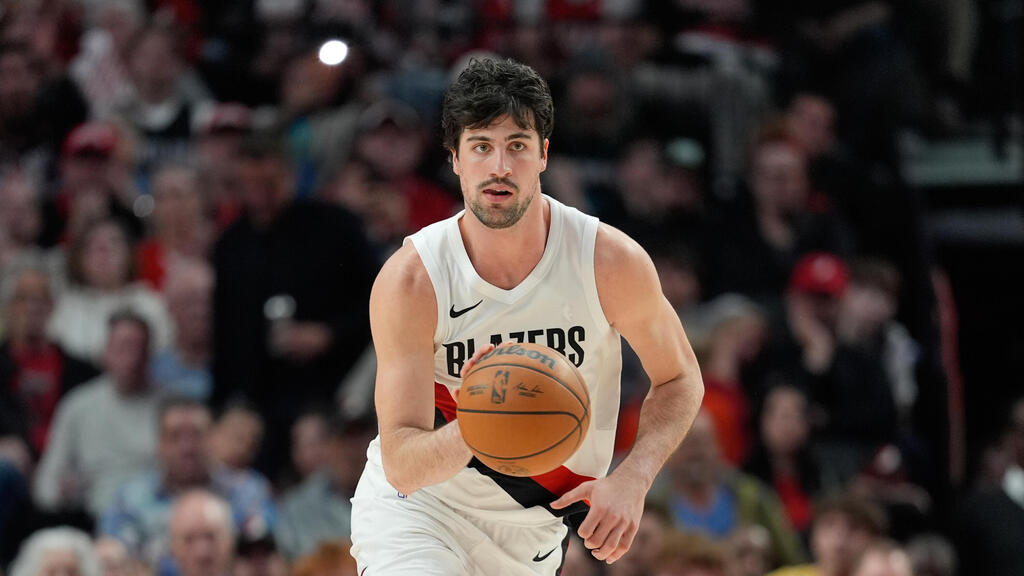
(Photo: Jenny Kane/AP)
How do you deal with all the pressure?
“When I first came to Maccabi, Oded Shalom coached me. Heading into my fourth year in Portland, when things started becoming a little more difficult for me, he called me.
“We started talking about things from the root, things that happened from eighth grade onward, things from childhood that suddenly came back in a slightly different form. He’s known me since I was little, and we suddenly started talking weekly, and he really helps me.
“He never sugarcoats reality for me, and that’s why I think it worked better for me than a psychologist, because with a psychologist you come to unload, but they don’t really know you or haven’t experienced your career.
“Oded is someone who watched me develop every day as a kid. He understands my mind and knows my patterns, so it’s much easier for him to get to the root of things.”
“I feel like a lot of people think I’m a snob, maybe because of my height and sometimes my style, but the image I project on the outside is the opposite of who I am inside. I’m the friendliest person in the world. I love people. That’s also a little bit part of being Israeli.”
Who do you call when things are really bad?
“My mom. She knows everything. I can’t hide anything from her. I’m an only child, so all her focus is on me and she knows me so well.
“I think she’s a witch. She knows things before they happen. My friends who understand what a mother’s intuition is will also tell you she’s really something unusual.”
What stays with you more, 100 compliments or one hurtful comment?
“As you go through life, you train yourself to think positively. But in the end, when someone says something negative about you, especially if it comes from someone important or close to you, it stays with you.
“But that’s good, because I think that’s what keeps us on our toes and makes us improve all the time. I know my height and size can be misleading, but I’m actually quite a sensitive person.”
You’ve said before that music is your way of turning inward.
“I have a really nice habit after games. I put a Bob Marley record on the turntable and eat dinner. I feel like he’s so positive in his songs that it suddenly disconnects me from everything. I feel like I’m some surfer from Jamaica.”
A song you especially love? If they made a movie about you, what would be on the soundtrack?
“‘Simple Man’ by Lynyrd Skynyrd. To me, it represents something much bigger than basketball.
“The whole movie could be about the journey, the successes, the difficulties, the pressure and expectations that come with a career like this, but in the end the important question is who you remain through all of it.
“The song is about the most basic things: being a good person, staying true to yourself, not letting money, status or success define you, remembering where you came from and finding happiness in the things that really matter.
“I love that it isn’t a song saying, ‘I reached the top’ or ‘I beat everyone.’ It’s the opposite. It says that after all the noise, what really matters is remaining simple, authentic and at peace with yourself.”
Do you miss being able to walk down the street without anyone recognizing you?
“It makes me feel amazing when people support me and love me, but every once in a while I want to go to the market on a Friday. Say I want to go to Yamit 2000 water park now. I always have to think tactically: how many people will be there, whether I should take a table in the corner.
“When I go somewhere, I want to sit with my friends and focus on them and our conversation, enjoy myself and laugh. At the end of the day I’m a person. There are days when I wake up and don’t feel like seeing anyone.
“But I think I’d actually be upset if I walked down the street and nobody recognized me. That would worry me more. I’ve been blessed that people look at where I’ve reached and want to get there too. That means you’re doing something right.
“I think I saw how insane the support is, and how much strength our people have, when All-Star voting opened. I checked the voting for the first time and suddenly saw that I had more votes than LeBron James. I saw 2.6 million votes. That’s crazy. It’s a third of the country.
“It was just fun. I’m not sure I would have gotten there without all that support. I hope this won’t be the last year people support me like that.”
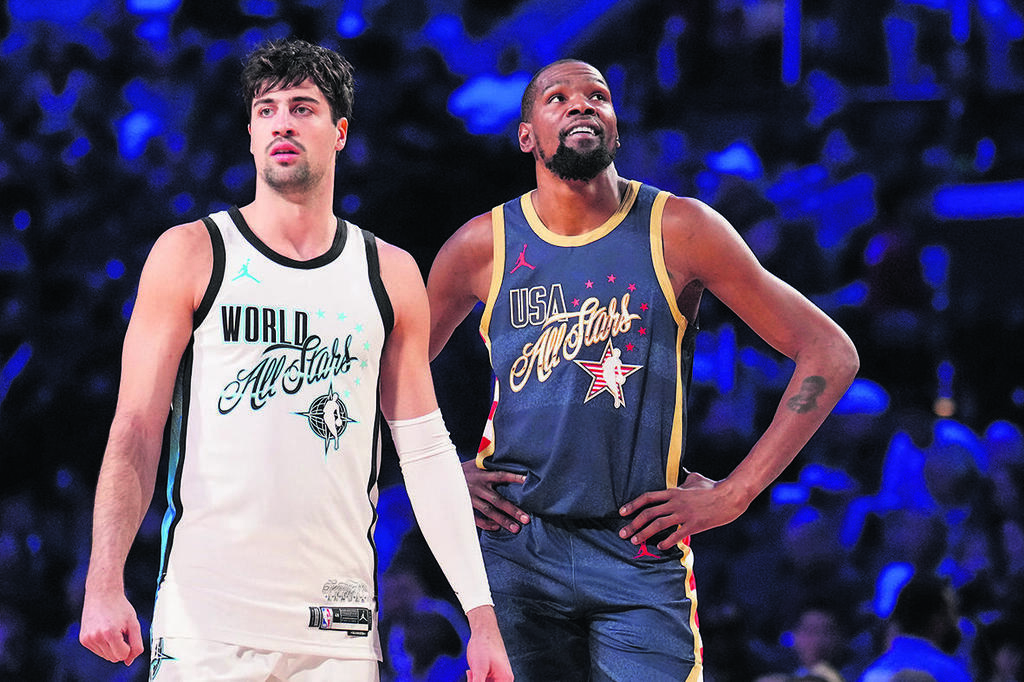
Deni Avdija at the NBA All-Star Game alongside Kevin Durant
(Photo: Jesse D. Garrabrant/Getty Images/AFP)
And during the All-Star Game itself, did you manage to stay in the moment and enjoy being on the court?
“No. It was my first All-Star Game. There’s no way around it, you’re paying attention to everything except the game. I was looking at everything: the stage, the players beside me, the crowd that had come to see me.”
Even in the rare moments when Avdija manages to disconnect, it is difficult to completely separate Deni the private person from the public figure he has become.
In recent years, and especially since his breakthrough last season, he no longer represents only himself. Almost every arena he enters also carries the weight of his Israeli identity, at a time when that identity is more complicated and politically charged than ever.
“I feel like Israeli sports looks at me under a magnifying glass,” he says. “A lot of people are looking at my path, and I understand that I have to set an example.”

(Photo: Shai Yehezkel)
Do you feel like you’re carrying the country on your back?
“We’re in a period where, let’s face it, people don’t exactly love us, to put it mildly. Everyone knows I’m Israeli, and I try to be the good Israeli, the guy who gets along with everyone, who’s cool, funny and decent, and show that there’s another side.
“People usually see only the negativity in what’s happening in the world, and I think sports brings people together. Fans sometimes tell me, ‘We have a hard time with Israel, but we love you.’
“If they end up loving what I do on the court and my personality, then it gives them another perspective on Israel. So yes, I feel there’s a kind of pressure on me, but I actually like having the opportunity to show the good sides.”
There are certainly moments when that magnifying glass comes out.
That was the case during the controversy surrounding the absence of Israel’s most successful basketball player from national-team games. Avdija did not join the roster for Israel’s previous two qualifying windows after Portland declined to release him because of the back injury he had been dealing with and insurance issues.
During the most recent window, Israel was officially eliminated from the 2027 FIBA World Cup qualifiers. Avdija’s absence drew widespread criticism, eventually prompting him to publish a social media post explaining what had happened.
“The post wasn’t an apology. I explained,” he says. “People can criticize me from today until tomorrow. I wasn’t responding to the criticism.
“First of all, I owe explanations to my national-team teammates, the coaches and the staff. Those are the people I care about and the people I owe explanations to.
“People on the outside claimed I didn’t want to come. Anyone who knows me knows I arrive with my tongue hanging out after seasons, even with a painful leg or an unhealthy back, and give 100 percent on the court.
“In the end I’m not alone in this story. There’s an organized franchise behind me that cares about one of its most important players. I still have a long career ahead of me. There are many more windows, many European championships and, God willing, Olympics and world championships.
“It wasn’t my decision. I flew specially to the U.S. to try to talk things through and find common ground. They were less interested. They like me healthy, and so we decided it wasn’t the right thing to do. Why can’t people respect that?”
So why not write that post before everything started?
“We had already put out a statement explaining why I wasn’t coming, that there was no insurance and Portland wasn’t willing to release me. So why do I then have to write a post too so people can say, ‘Oh, OK, fine, sorry’? Why?”
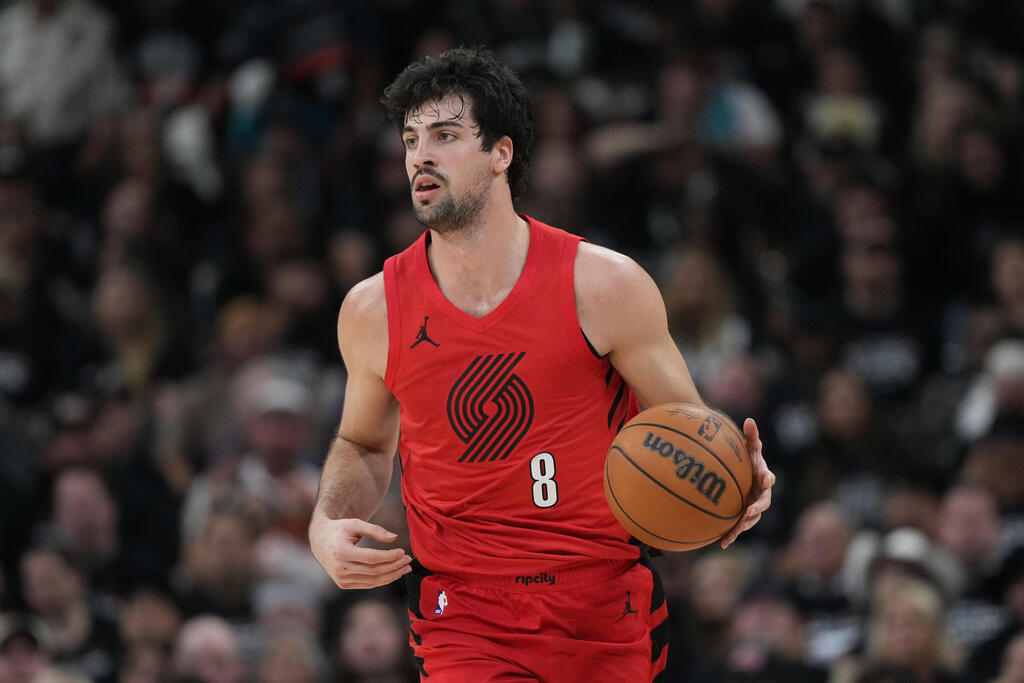
Deni Avdija in a Portland Trail Blazers uniform
(Photo: Eric Gay/AP)
So why did you write it in the end?
“Because it was important to me. I think people lost a little perspective. I’ll be the first one there for the national team. The national team has given me so much and I owe it so much.
“It gave me a platform to play, gave me championships and toughened me as a player. Yes, I missed two windows, and yes, the national team needed me, and it really wasn’t easy watching from the outside.
“But from there to saying I’m obligated to come, or people saying I should have traveled with them and cheered from the bench… I have things to do here too, like recovery and physiotherapy so I can be ready for the season and heal.
“There’s a strategy and a reason behind everything I do. Not everyone likes it, and that’s OK.”
What bothered you more, the criticism or the fact that people questioned your commitment to the national team?
“The questioning. It isn’t fair. It sucks. Trust me, there’s a good enough reason.
“At the end of the day I’m a human being, and I care about my health first. Sometimes I play with broken legs, I have no problem with that, but when the franchise that backs me and is basically the one paying me isn’t willing to risk me, I’m not going to run into a wall.
“I did what I could and it didn’t work.”
The criticism over his absence from Israel’s previous two national-team windows may be the clearest example yet that Avdija is no longer simply a basketball player. Every decision becomes a headline, every statement is examined, and his success on the court has brought status, exposure and, of course, significant money.
Yet in conversation, he appears just as preoccupied with what those things do to the person behind the player, and what he wants to remain even as the numbers in his bank account change.
What does money represent to you today?
“Security. For myself and for my family. Knowing everyone is living well. I like buying things for my mother because when I was a kid, she bought things for me.”
What can money not change?
“The journey. I don’t like shortcuts, and sometimes money creates shortcuts. I like the long road. I will never sell my soul or my values for money.”
Just before the turn of the year, Avdija picked up another title, this time one that was not earned on the basketball court. Israeli entertainment magazine Pnai Plus named him its most eligible bachelor of the year.
Do you think about those things: a home, a relationship, a family?
“Of course. In the end there are things more important than basketball: family, health, the next generation. I value those things just as much, if not more.”
What kind of father do you think you’ll be?
“The best in the world. My child’s education will come first. I’ll teach them the values I was given as a person and as an athlete: first of all to stay humble, work hard, respect everyone and be loyal. Those things are very important to me.”