

In 2020, shortly after leaving her job at the Israeli Prime Minister’s Office, Noni Kofman dreamed one night that she and her mother were at the airport in Buenos Aires. Her mother was holding an old slide viewer containing a black-and-white photograph of a young man in a floral shirt, staring directly into the camera.
“It was the last photograph of my father,” Kofman says. “It was taken at a Museum in Tucumán, in northern Argentina, and sent to my mother shortly before all trace of him disappeared.” The last thing the family learned was that Jorge Kofman had been taken off a bus at a military checkpoint.
“That was on June 10, 1975,” she says. “His fate, like that of tens of thousands of people who disappeared during that era in Argentina, remains unknown.”
The photograph still sits framed in her mother’s study beside the computer. “In the dream, my mother positioned me and pointed the slide viewer at me so that I could be seen next to my father,” Kofman says. “In reality, we never met.”
She woke with an unsettling feeling and decided to write down the dream. That became the foundation for her first novel, Shkufiot (slides), a historical suspense novel rooted in both family history and imagination. It combines mystery, memory and documentation while focusing on the people condemned to live in the shadow of an absence that never ends.
Born into hiding
“I was born into a reality in which my father was already missing,” says Kofman, 51, who lives in Kfar Saba with her husband and two children and works as a sales consultant for startups.
She was born in Córdoba, Argentina, two years after her older brother, to Beatriz Gerber and Jorge Kofman, both 23-year-old Jewish students, Zionists and political activists. “They grew up in Hashomer HaTzair and eventually moved from social activism into political activism,” she says.
In 1973, when Gen. Juan Perón began his second term as president of Argentina, the country descended into chaos. Numerous political organizations on both the right and the left were seeking to overthrow the government and replace the existing regime, and each underground group had its own ideology.
“My parents were active in the People’s Revolutionary Army. The organization’s underground newsletter was printed in their home, and my father took part in various operations, including breaking into a prison to free political prisoners.
“In 1975, he joined the movement’s armed wing in northern Argentina, against my mother’s wishes. By then she already had a toddler and was pregnant with me. Both of them were wanted and were forced to move from place to place.
“In June 1975, after two months in the north with very little communication between them, he decided to return home. His bus was stopped at a military checkpoint, and he was taken off along with a priest who was later found dead. My father disappeared without a trace. My mother only learned several weeks later that he was missing. When she gave birth to me in hiding, she still didn’t know.”
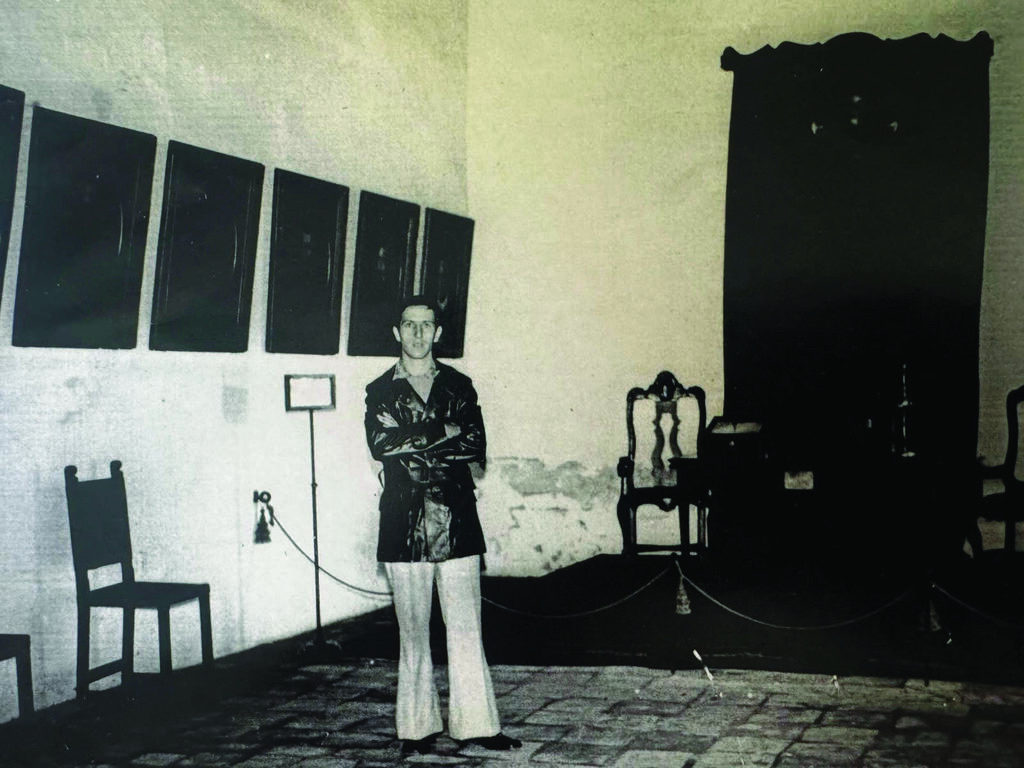
The last photograph of Jorge Kofman, June 1975
(Photo: Private album)
Her mother named her Patricia after an underground activist who had been killed, but the nickname Noni stuck.
“For the first two years of my life, my mother was mostly on the run, without us. She was wanted, and by then it was already known that the authorities were abducting the children of regime opponents and placing them for adoption with people connected to the government.
“My brother and I spent most of that time with my father’s parents. My maternal grandparents had another daughter who was active in the underground and had been arrested. When she was temporarily released, they took the opportunity to leave with her for Israel in 1976.”
The search for Jorge was led by Kofman’s grandmother, Celina Kaufman, a retired school principal who became active with the Mothers of the Plaza de Mayo organization, formed by mothers searching for children who had disappeared. Their decades-long protest became an international symbol of nonviolent human rights activism, helping pave the way for many of those responsible for the abductions to face trial after democracy returned to Argentina.
No secrets
Kofman arrived in Israel at age 2½ with her mother and brother. They had been hidden before eventually being smuggled out of Argentina, she says, “thanks to my mother’s resourcefulness, courageous people and a lot of luck.”
Her earliest memory is from a home in Be'er Sheva, sitting on the shoulders of Ari Kumpel, her mother’s second husband, himself originally from Argentina. “He is the first and only father I know,” she says. “He is my children’s grandfather.” Her sister was born when Kofman was seven.
“We were an immigrant family,” Kofman says. “We spoke Spanish at home and listened to Spanish-language music. My mother, who had studied medicine in Argentina, started out working in nursing in Israel and eventually became head of the infection prevention unit at Meir Medical Center. She still works there as a retiree.”
When Kofman was eight, the family moved to Barcelona to join friends living there. Three years later, they returned to Israel, this time settling in Kfar Saba.
When did you learn that Ari was not your biological father?
“The Argentine story was always there. There were no secrets. I always knew Ari wasn’t my father. He came into my life when I was four.
“It was important to my mother that I know the real story. When I was six, she sat me down and told me about my father, that they had tried to build a better world and that he was missing.
“We had other friends from Argentina whose father had been active underground and was murdered, and another father raised them. But they had a grave. The obvious advantage is that they had certainty. There were no questions. They knew where he was. My father’s absence and that constant sense of a divided identity followed me throughout my life.”
After graduating from high school, where she specialized in French, Kofman served in the IDF as an education instructor. “It was difficult for me to wear a uniform because I felt that my father had been killed by people in uniform, but I did it with my family’s support and encouragement,” she says.
After completing her military service, she traveled through South America, spending most of the trip in Argentina. “It wasn’t my first encounter with the country where I was born. I had been traveling there to visit family since I was 15, and I speak Spanish. In 1999, during one of those visits, my mother, my brother and I decided to travel north to the area where my father disappeared. We also visited the last place where he was photographed before he vanished.”
How did you feel standing in the last place where he was known to have been?
“I thought I would be emotional, but I didn’t feel anything. At the time, heroic stories were still being told about him by relatives in Argentina and human rights organizations. My mother, on the other hand, never built a heroic narrative around him. I knew she had also taken part in underground activity, but she didn’t support taking up arms.
“She didn’t believe the country could be liberated through weapons, and she didn’t want to kill people. He believed that was the only way.”
Who am I?
Kofman first married at 24 and moved with her husband to the United States. They divorced four years later.
“We lived in Michigan, where I worked for an Israeli high-tech company and studied Latin American literature for both my bachelor’s and master’s degrees. I did very well academically, received scholarships and was on track for a doctorate on street theater in Argentina in the 1930s.
“I deliberately stayed away from the more politically explosive period. I felt I didn’t want to carry my parents’ burden on my back. In Michigan, I volunteered as head of the university’s Amnesty International chapter and was involved in human rights issues, but at some point I felt I had to find out who I was without this story.
“After six years in the United States, I came to Israel for an extended vacation and never went back. After my divorce, I met Guy Tabarovsky, my current husband and the father of my children. Around the same time, I began working in staff positions at the Prime Minister’s Office.
“During my 13 years there, I had my two children and Guy founded a successful startup. Five years ago, I left, returned to high-tech and completed an MBA in entrepreneurship at Reichman University.”
When, if ever, did you begin to feel angry with your father?
“At 30, after I returned to Israel, I started thinking more seriously about the choices I had made in life. I asked myself whether I was living through the story of my missing father, and how much my decisions were shaped by the expectations of a father who was no longer there.
“That was when I realized there is a kind of cult around the hero who goes off to fight for his ideals, while the real heroism belongs to those left behind to deal with the consequences. My grandmother, for example, devoted decades of her life to the Mothers’ struggle, right up until her death. And then there was my mother, who was left in an extraordinarily difficult position and had to fight the battle of everyday life.”
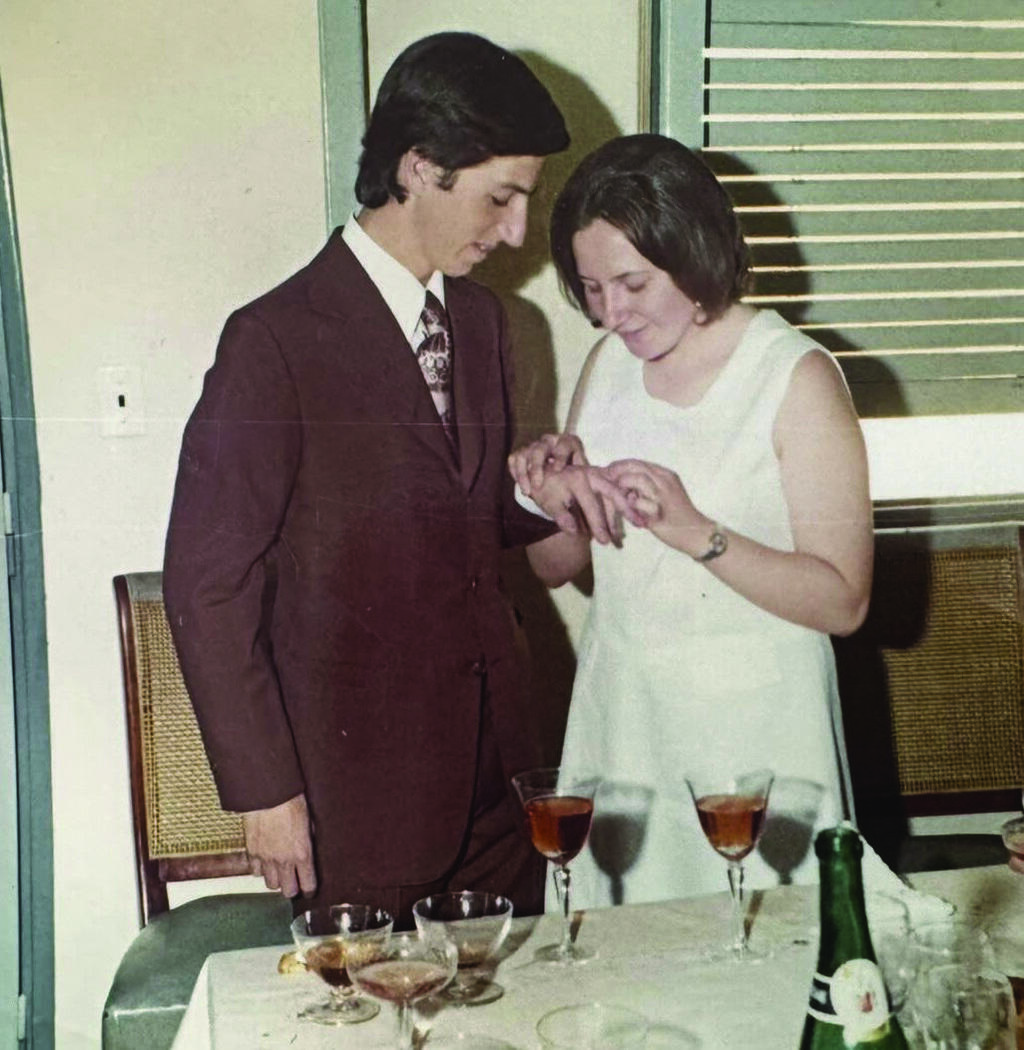
Jorge Kaufman and Beatriz Gerber at their wedding
(Photo: Private album)
“There’s something a little naive about going off to fight for your ideals and believing that society will take care of your children if something happens to you. It feels good to believe you’re on the side of the good guys, fighting for freedom and willing to sacrifice yourself for everyone else, but there is a family left behind, carrying the burden and paying the price in pain.
“By the time I was 30, I found it hard to relate to that innocence. I realized I didn’t want a hero. I just wanted a father. Once I allowed myself to be angry, I also felt a sense of release, to the point that I found myself going to work in Israel’s security establishment and actually enjoying it.”
Are you still angry with him today?
“Not anymore. I don’t judge him. His ideals and intentions were good, but he and his friends didn’t fully understand the forces they were up against. I think he was naive. At 23, it’s hard not to be naive and idealistic. From his perspective, he genuinely believed he was trying to do something good.
“And I don’t think that at that age you have the perspective to understand the void you might leave behind, while still believing completely that you are not abandoning the people you love.”
When did you decide to write a book connected to his disappearance?
“Months after that dream, I opened the file again and decided to continue the story from the moment the dream ended.”
And did it become a memoir?
“No. It’s fiction, with fictional characters, though some of what happens to them is real. I looked at the final photograph of my father and asked myself: Why would a wanted revolutionary enter a museum and pose for a photograph in the middle of a conflict? Was he trying to send his wife a clue?
“That is where the plot begins. The book’s protagonist and her mother return to Argentina to solve the mystery and decipher the clues he supposedly left behind.”
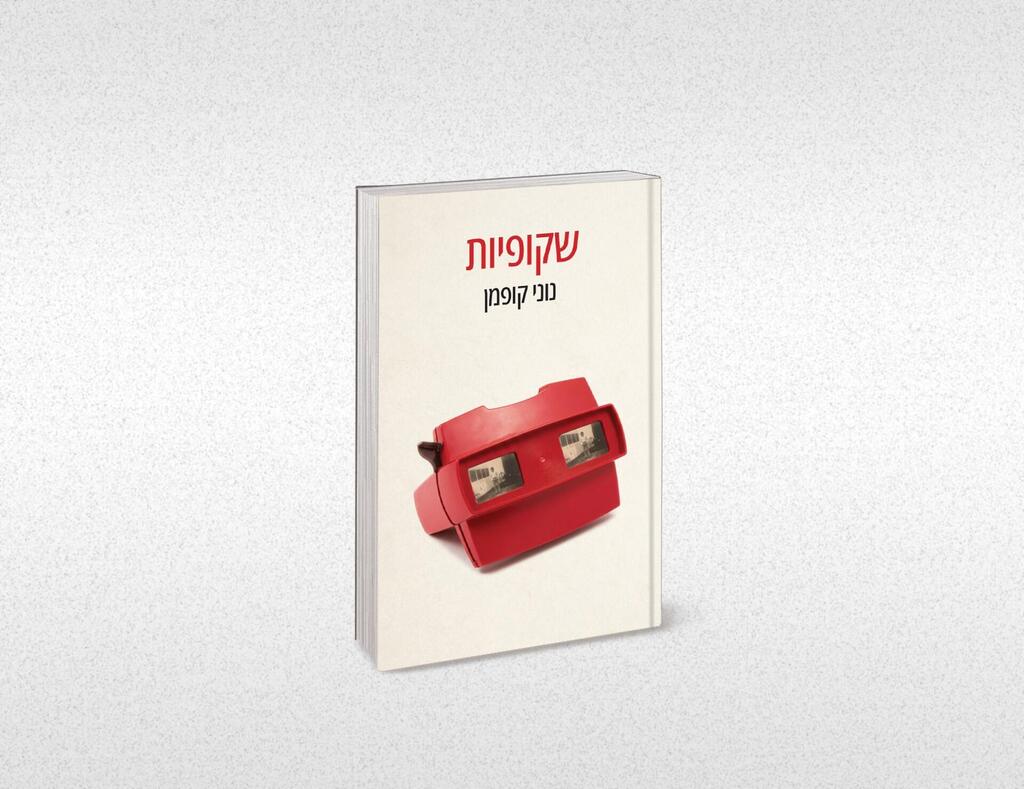
The cover of Shkufiyot (Slides)
(Photo: Private album)
Did you consult your mother while writing it?
“I told her I was writing it and emphasized that it wasn’t our family story. She was happy and encouraged me. While I was writing, she read it and liked it. In the first draft, she told me that the daughter needed to be angrier. I changed the story accordingly. She is angry at her mother because her father isn’t there to absorb that anger.”
Are the main characters based on you and your mother?
“The daughter is very different from me and from who I am, although we share a similar sense of cynicism and humor. The mother is also very different from my own. In the book, she hides the full story from her daughter, which creates a deep sense of mistrust. My mother, by contrast, never hid anything from us. She has no regrets, but she has always been critical in ways she expressed both at the time and later.
“My mother is the real hero of our family story. At 25, with two small children, she secretly got us out of Argentina, arrived in Israel with nothing, built an extraordinary career and created a life for us. Alongside her work, she is also a swimmer and has a house full of medals from masters competitions. She has lived a full life defined by optimism and humanism.”
How long did you work on the book?
“Three years, on and off. The wonderful editor Hagar Yanai came on board after I finished the second draft of the book. My goal was to bring this difficult story to readers unfamiliar with it in a way that was accessible and engaging, without turning it into something didactic.
“Judging by the reactions, I feel I succeeded. My mother loves the book and is proud of it. I think she needed people here to know this story. She may be Argentine by birth, but she has been Israeli since she was 25. Israelis love Argentina and tend to associate it with soccer, Maradona, Messi and alfajores, but they know much less about this side of its history.”
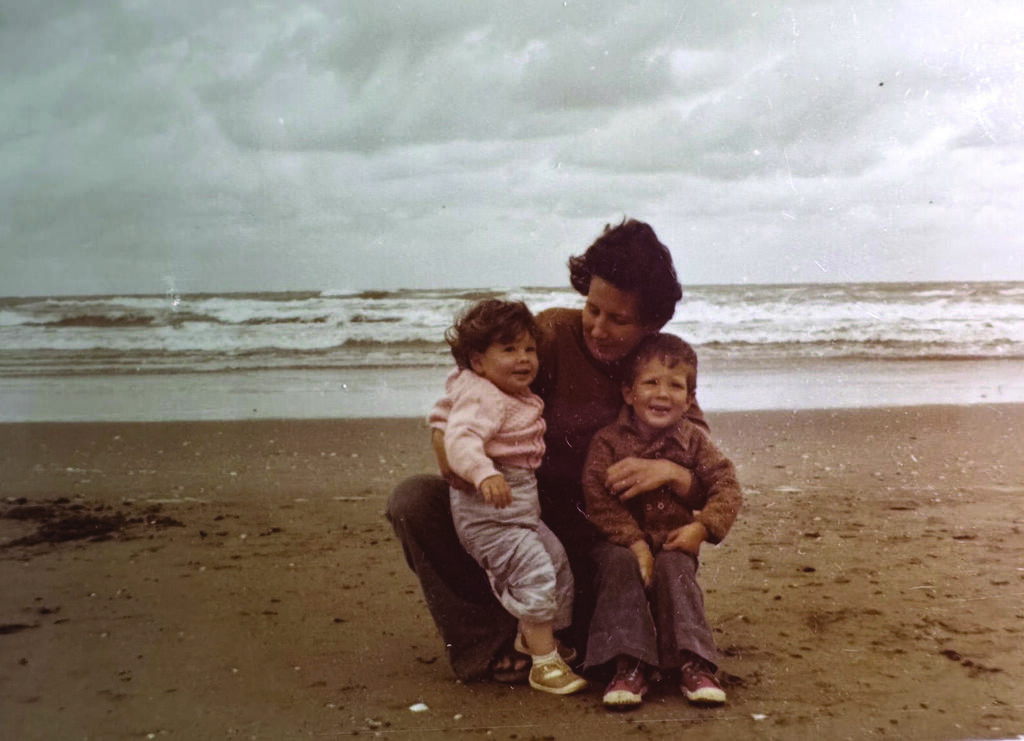
Beatriz Gerber Kofman and her children
(Photo: Private album)
What does your family think of the book?
“My daughter is reading it now, my son tells everyone about it, and my husband is waiting for the TV series that will be made from it.
“There will also be a Spanish translation, and all our relatives in Argentina are already waiting for it with curiosity.”
Do you see the book as a kind of closure with your father?
“Yes. I created my own private sense of closure because the chances that he will ever be found, or that we will discover exactly how he died, are almost nonexistent.”
Given what happened in Argentina at the time, do you see circumstances in Israel that could lead to a similar civil conflict?
“I think some of the things that happened in Argentina are already happening here. The divisions are so deep and significant. I am definitely concerned, because things like that can happen anywhere.”
First published: 14:56, 09.12.26