


After nearly a year of operational service, during which he took part in dozens of complex and covert missions against terrorist organizations and dangerous crime families, Jerry, a Belgian Malinois police dog, accompanied officers from the Border Police's Tactical Brigade into the fierce fighting at Re'im on October 7, 2023.
According to his handlers, Jerry emerged from the battle with symptoms resembling post-traumatic stress, making him the only police dog in the unit known to have developed such a condition following the massacre. After two years of rehabilitation at the Tactical Brigade's base, he was transferred to a special police kennel for dogs retired from operational service, where his health has gradually improved.
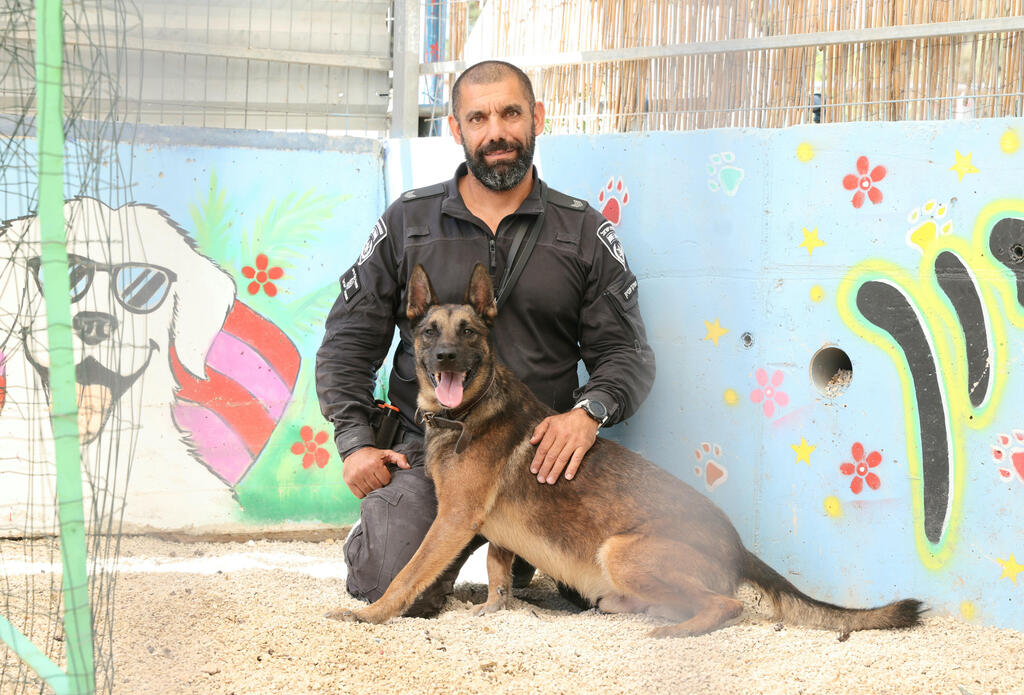
Now five years old, Jerry was brought to Israel from the Czech Republic and joined the Tactical Brigade, considered one of the Border Police's elite units, responsible for responding to terrorist threats and serious criminal activity.
The brigade operates 22 working dogs. Some specialize in detecting drugs, cash, explosives and weapons, while others carry out tactical assignments, including clearing buildings and open areas of hostile suspects. Jerry belonged to the second group.
"On October 7, the brigade was called up by its commander at the time, Chief Superintendent Yaron Dahan," said Chief Sergeant Major Zvi Blumenberg, commander of the Tactical Brigade's canine unit.
"The officers were deployed to different fronts around the Gaza border communities, while the tactical dog handlers and their specially trained dogs were sent to Re'im. For hours, they carried out meticulous searches to clear houses, all while coming under intense fire from dozens of terrorists."
After the officers identified a building occupied by armed terrorists, Jerry was sent inside to search it.
"During the search, an RPG was fired toward the area where Jerry was operating," Blumenberg said. "That left him in a condition where he could no longer function."
Jerry had arrived at the unit when he was just one year old and completed four months of professional training before becoming a fully operational tactical police dog.
"He participated in dozens of operations against criminal and terrorist threats and was considered one of the best and most promising dogs in the unit," Blumenberg recalled. "We expected him to have a brilliant future. During operations, he saved our officers' lives more than once by being the first to enter buildings and putting his own life at risk."
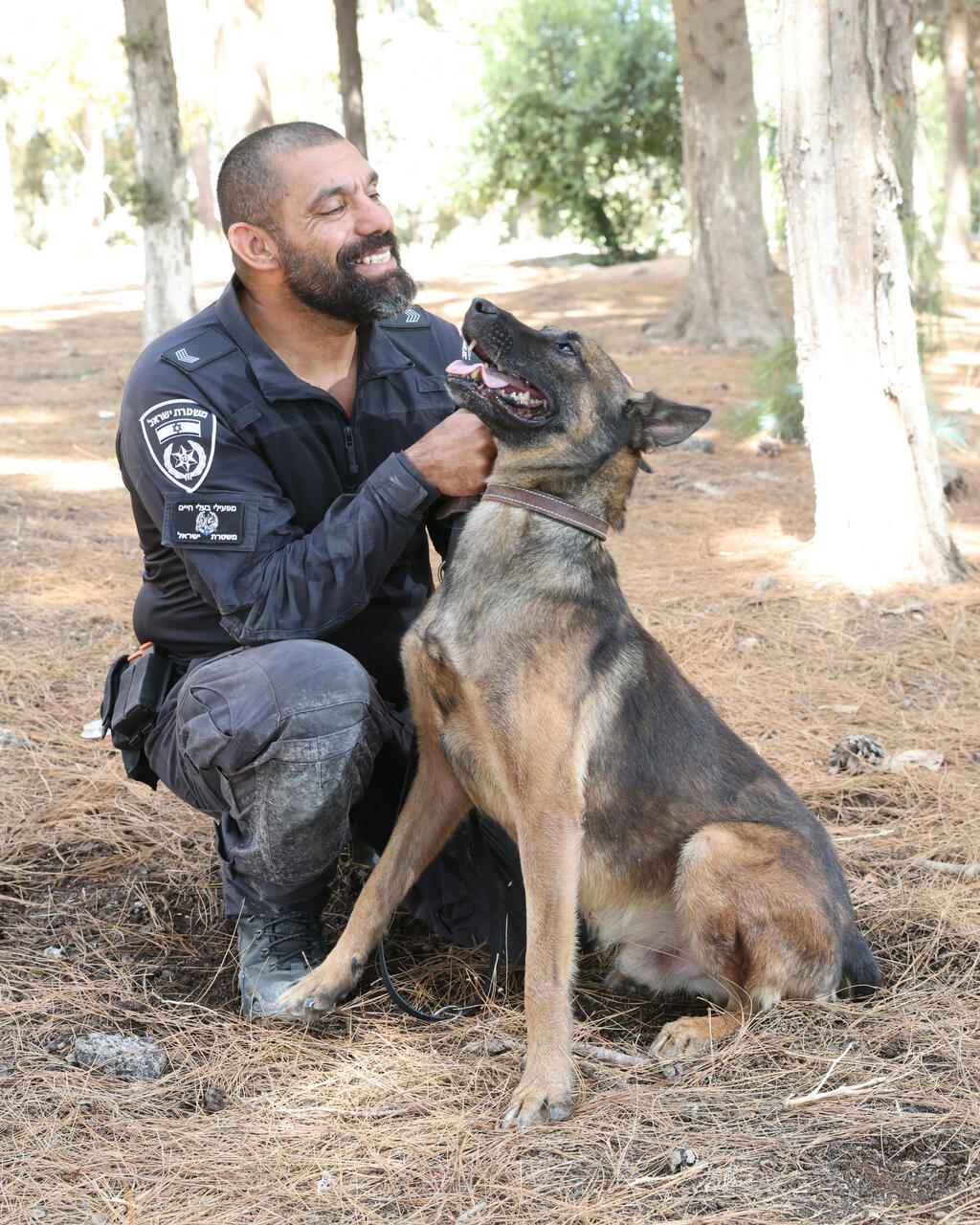
(Photo: Elad Gershgoren)
But the incident at Re'im changed everything. "Within minutes of the RPG fire, Jerry stopped being the dog we knew," Blumenberg said. "The handler responsible for him realized something was wrong. Suddenly, Jerry seemed completely disconnected from what was happening around him, from the intense battle itself. If he had remained in action, he would have endangered both himself and his team."
Blumenberg explained that a tactical dog that loses its ability to respond to commands can become a serious operational liability.
"When a dog loses control, it can become dangerous. If the handler fails to recognize that and sends it into a building, the dog may not understand what it is being asked to do. The team would then have to enter a building that had not been properly searched or cleared to rescue it, putting both the officers and the dog at risk."
Fortunately, Jerry's handler recognized the problem immediately. "He understood that Jerry was experiencing a breakdown, withdrew him from the operation and brought him to one of the unit's designated vehicles for treatment," Blumenberg said.
The officers continued fighting in Re'im while the canine team evacuated Jerry to the brigade's home base. Initially, his handlers hoped that a few days of rest would be enough for him to recover. Instead, his condition deteriorated. "We conducted training exercises at the base and discovered that Jerry could no longer function, not even during training," Blumenberg said.
"He stopped eating, lost his appetite and became apathetic. We consulted the police veterinarian, who began a series of comprehensive examinations. The conclusion was that Jerry was suffering from stress and anxiety following the intense fighting."
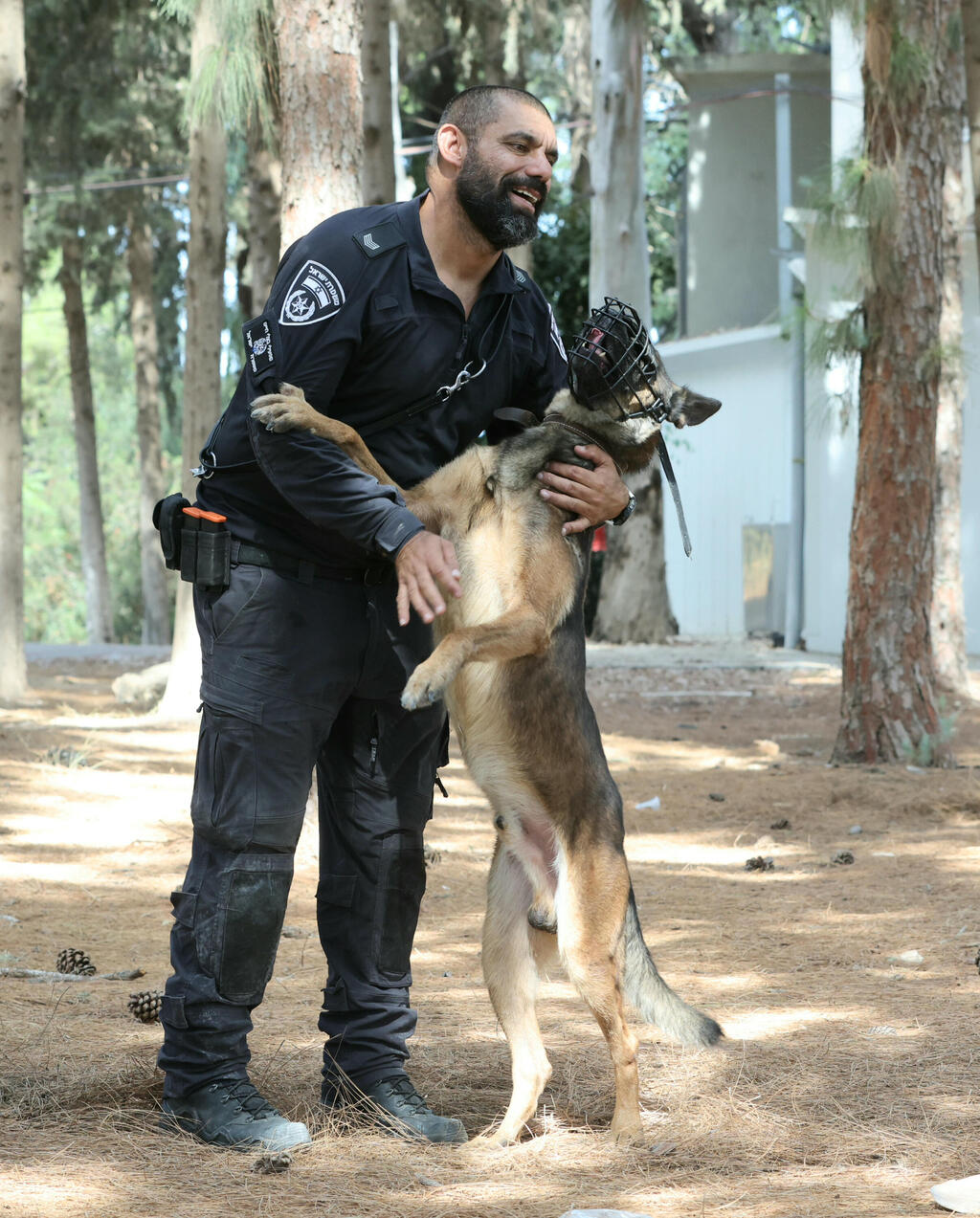
(Photo: Elad Gershgoren)
The unit had never encountered anything like it. "We had never experienced a disaster like October 7, and we had never encountered a dog suffering from post-traumatic symptoms," Blumenberg said. "Once we understood his condition, we continued looking after him with dedication and love at our base until he was transferred to the special kennel."
For Blumenberg, Jerry's suffering is especially painful because of the dog's years of service. "We treat him the way we would treat a heroic soldier who was wounded in a difficult battle and needs medical care," he said. "It makes me sad to see a heroic dog struggling with post-traumatic stress."
He will never return to operational duty
The special police kennel was established about a year ago at a police facility that previously housed the police training academy. It currently accommodates 10 dogs that have retired from operational service. The oldest is 12 years old, while the youngest is just three, having been removed from active duty because of a medical condition.
Chief Sergeant Major Zaher Daher, who manages the Israel Police's canine retirement kennel and also serves as a dog evaluator in the police Animal Division, has overseen Jerry's treatment and rehabilitation over the past year. "Jerry is the only police dog suffering from post-traumatic stress," Daher said. "He fought in Re'im on October 7. Afterward, he became severely malnourished and nearly died because he had lost so much weight."
Jerry's psychological distress was reflected in his behavior. "He was afraid of everything. Every noise startled him, and he even bit two handlers. That was his way of coping with the trauma he had experienced. He had lost his confidence."
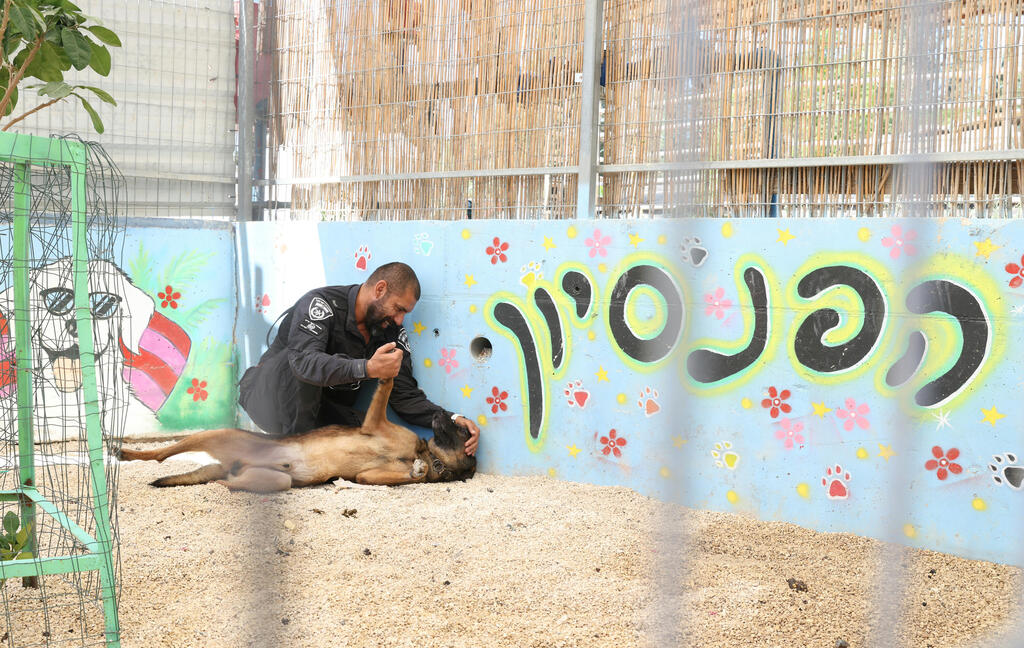
Jerry was transferred to the police retirement kennel
(Photo: Elad Gershgoren)
Since arriving at the kennel, Jerry has received individual attention and a carefully managed rehabilitation program, including more time outdoors. "I take care of him as though he were my own child," Daher said. "He needs a lot of warmth and affection."
"The goal is to give him the emotional and psychological support he needs. I monitor his condition regularly, and every Sunday we weigh him."
The changes, Daher said, have been encouraging. "I feel we've managed to rehabilitate him. He has gained a significant amount of weight, he's more relaxed, he interacts with more people and he looks much better physically."
Still, the effects of the trauma have not disappeared. "Because of his post-traumatic symptoms, he can go into a panic and bite people," Daher explained. "My team takes him for walks off-leash when there are no people or vehicles nearby. We also drive him to wooded areas so he can relax. We give him as much warmth and affection as possible."
Jerry also undergoes blood tests every two weeks. "There is no chance he will ever return to operational work," Daher said. "As far as I'm concerned, he's a disabled war veteran. He's the only dog in my kennel dealing with post-traumatic stress."
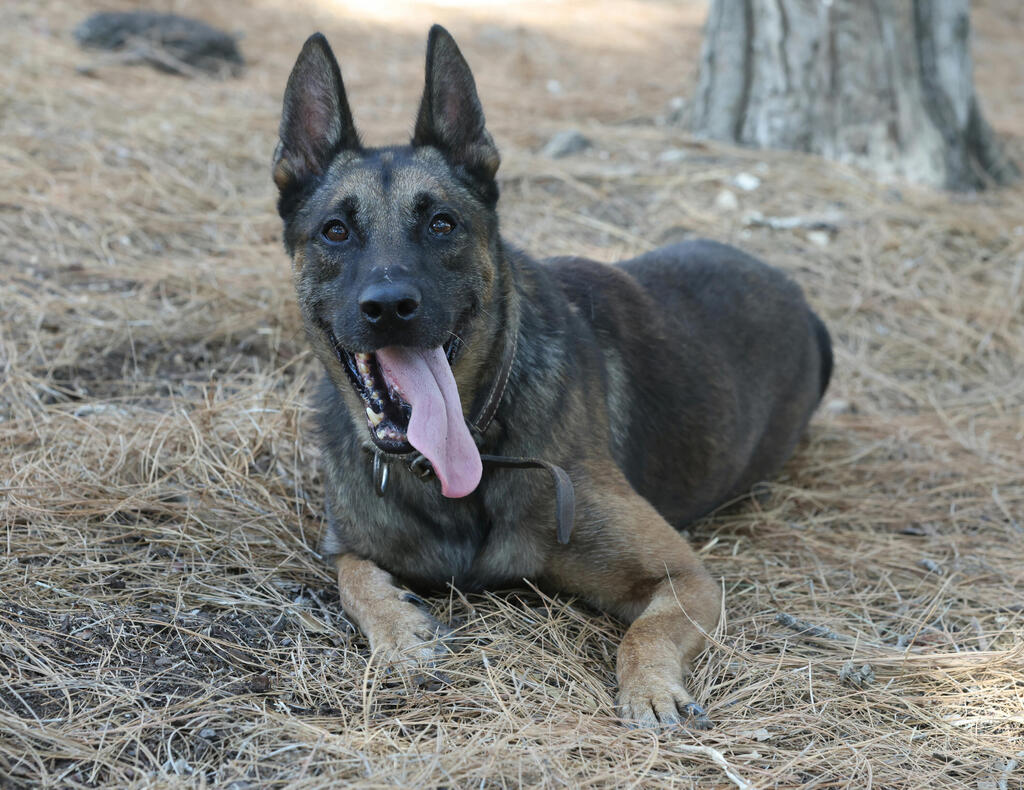
Jerry
(Photo: Elad Gershgoren)
Chief Inspector Dr. Uri Arieli, the Israel Police's chief veterinarian, has been responsible for Jerry's medical treatment over the past year. When Arieli first examined the dog, his physical condition was alarming. "Jerry came to me in very poor physical condition, having lost about 25% of his body weight and suffering from low protein levels," he said.
"He also had an intestinal disease, which may have been caused or aggravated by stress. It is very plausible that different illnesses could emerge or worsen following a traumatic event."
Arieli emphasized, however, that he does not make behavioral diagnoses in dogs and therefore cannot independently confirm the handlers' assessment that Jerry suffers from post-traumatic stress. "I do not diagnose dogs behaviorally, so I cannot comment on the handlers' diagnosis regarding post-traumatic stress," he said.
Jerry currently receives medication every morning and evening to manage his intestinal illness. "We are gradually reducing the dosage," Arieli said. "His condition is improving, he's gaining weight and he appears much more energetic."
Jerry is also fed a specially formulated medical diet, making him the only police dog receiving that particular nutritional treatment. Although his handlers and veterinarians agree that his operational career is over, that has not diminished the commitment to his care.
"Even though he will never return to being an operational working dog, we continue to provide him with the best possible treatment," Arieli said. "From our professional perspective, he deserves the highest standard of care even when we know he will never return to active duty. It's a matter of values."
For Jerry, that commitment means a permanent home at the police kennel, surrounded by the people responsible for his recovery. "Jerry is expected to remain at our kennel for the rest of his life," Arieli said, "receiving all the care and conditions that the police provide for animals that have served the force."